TTG Asia
Asia/Singapore Tuesday, 7th April 2026
Page 1228

Strong baht could drive tourists from Thailand to neighbouring countries

0
Trade players have mixed feelings about whether deterred travel to Thailand is good or bad news for neighbouring countries

As travel to Thailand becomes more expensive due to an appreciating Thai baht, tourism traffic could shift to neighbouring countries, according to operators in Thailand, Laos, Cambodia and Myanmar.

“The Thai baht peaked within the last four months and is now contributing to higher costs and expenses. International visitors will avoid visiting Thailand and look to other destinations instead,” said Luang Prabang- and Bangkok-based Padej Jantarasorn, executive marketing consultant and regional sales representative for Villa Santi and Santi Resort & Spa in the Laotian city, speaking to TTG Asia at the recent TTM+ in Pattaya.
Trade players have mixed feelings about whether deterred travel to Thailand is good or bad news for neighbouring destinations

Compared to the last three or four months, the average total cost of travel for Europeans visiting Vietnam (including flights, hotels, meals, activities, etc) costs five to 10 per cent less than to Thailand. Cost of travel to Seam Reap in Cambodia and Luang Prabang in Laos seem relatively unchanged but prices for both destinations become more attractive as travelling expenses in Thailand go up.

Om Pharin, chairman and CEO of Charming Cambodia Tours, said more foreigners flocked into Cambodia this year, with arrivals expected to keep growing thanks to competitive prices.

“The political situation in Cambodia is very stable and its currency has not changed much so tourists have (little reservations about coming here),” he remarked. Furthermore, Cambodia has been promoting more attractions including beaches and islands along with expanding airports and major roads across the country.

Khaing Khin Thar, representative of Myanmar Tourism Federation, said Myanmar should take advantage of its more competitive prices as cost of travel to South-east Asia’s most popular destination continues to rise.

“The stronger baht and higher cost of travel may force many tourists to shift to other countries, not only Myanmar but also to Laos, Cambodia and Vietnam,” she added.

According to Amy Poulton, marketing specialist for Wayfairer Travel in the UK, many European customers continue to travel to Thailand and elsewhere in South-east Asia. Despite the region’s rising cost of travel, it is still more affordable to travel to South-east Asia compared to the US or within Europe, she explained.

On the other hand, a strong Thai baht may not entirely benefit other South-east Asian countries, Padej suggested. A decline in the number of tourists to Thailand could also impact businesses in neighbouring destinations, as many tourists start their trips from Thailand as the main gateway into the region.

Even before the baht peaked, Thailand’s tourism faced difficulties arising from the smog crisis in the first quarter of the year. The Ministry of Tourism and Sports reported that Thailand received 13.9 million foreign tourists during first four months, up 2.1 per cent from the same period last year.

Despite China remaining the top source market, its growth rate dropped 3.4 per cent. Meanwhile, the entire Middle East dropped 8.7 per cent and overall Europe arrivals dipped by 1.6 per cent.

Building bridges in Indonesia’s hospitality workforce

0
Prakoso:

Having spent more than 15 years working in the hospitality industry, Wing Prakoso, co-founder at Hore! Indonesia, only knows the staffing issues in the sector too well.

He said: “It is difficult to get competent daily workers, especially when hotels have events or are fully booked. The problem is not because no one can be employed, but because millennial workers lack motivation and commitment to work, and also have attitude problems.”

Prakoso: staffing issues in hospitality sector led to forming of hiring platform

On the other hand, he is also concerned about the growing number of vocational school and university graduates who remain unemployed as hotels cut back on manpower amid current economic situation.

Keen to address this challenge of supply and demand, Wing and two friends in January 2018 launched Hore! Indonesia (which stands for Hire On Ready & Educated) as an platform for hospitality recruiters to hire ready and educated staff to complete daily jobs.

Through the platform, hoteliers can access a ready pool of qualified workers, who have been interviewed, filtered and tested for their abilities. For young people, Hore! offers a flexible way to earn money and build up their experiences while providing flexibility in work hours.

Wing elaborated: “Hore! Indonesia is similar to Grab and Go-Jek. Hotels select the workers, who will then respond whether he or she can or cannot do the work.”

To become members, interested hotels and workers just have to sign up on the website. How then does Hore! ensure that its pool of workers are competent and ready for hire?

Wing explained: “Every worker who registers as a member of Hore! must go through several stages before being allowed to find work. First, they must fill in the profile data and be interviewed by our team, who then gives a review and rating. After that, we will provide training (to them) based on reviews and ratings.”

Hotels or parties can also rate the services of the workers. The higher the rating, the higher the renumeration rate for a worker. The rating also determines the quality and performance of the worker.

He added: “The rating also applies to hotels. Workers have the right to give an assessment, whether the hotel gives a reasonable fee, treats workers well, among others. This is to ensure the welfare of our members.”

Both hotel or workers can submit complaints, which will be followed up by an Hore! staff to mediate and seek a solution for both parties.

Workers who have received complaints will be temporarily suspended and sent to a training or workshop, Wing told TTG Asia.

To date, 1,350 workers have joined Hore! Indonesia as members. The platform has also established cooperation with 40 hotels, 10 restaurants, two event spaces, and one catering service in Surabaya, while in Jakarta it has partnered with seven hotels, one event space and one catering service.

Going forward, Wing hopes to attract more young people to join the platform and increase the workers’ hourly wages, which are currently paid at an average of 120,000 (US$8.40) to 150,000 rupiah.

Next on the start-up’s agenda is expanding into other cities, such as Yogyakarta, Bandung and Bali.

“We hope to work more with big (hotel or restaurant) brands. We also intend to collaborate with tourism institutes and vocational schools.

“We aim to be the platform that will empower young generations for a greater good and to contribute to Indonesia’s hospitality industry,” Wing concluded.

WTTC study finds low level of future tourism growth readiness among SE Asian cities

0
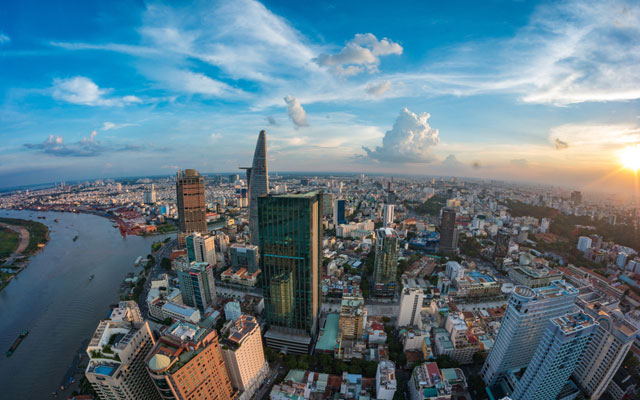
Ho Chi Minh City

The majority of South-east Asian cities in a new study on future tourism growth readiness were recommended to evolve tourism policy and improve infrastructure.

The global index report from WTTC and JLL assessed the preparedness of 50 cities for future travel and tourism growth, and placed them in one of five typologies, namely Dawning Developers, Emerging Performers, Balanced Dynamics, Mature Performers and Managing Momentum.

Ho Chi Minh City classified under Emerging Performers

Five of the six South-east Asian cities the study looked at were classified under Emerging Performers and Dawning Developers. According to WTTC and JLL, cities in these categories tend to be in emerging countries, with a lower level of urban readiness.

To improve their preparedness, efforts should be focused on developing and enhancing urban infrastructure such as airport connectivity, accommodation stock and addressing environmental issues such as waste and water quality.

Kuala Lumpur and Manila were classified Dawning Developers alongside Bogota, Delhi, Buenos Aires, Cairo, Chengdu and more

Bangkok, Ho Chi Minh City and Jakarta were named Emerging Performers along with Cape Town, Delhi, Istanbul, Mexico City, among others.

Both categories are characterised by emerging urban readiness and tourism infrastructure. Dawning Developers are in the stage of “slower tourism growth, and lower visitor concentration” while Emerging Performers are experiencing “growing tourism momentum and increased pressures”.

The recommended policy response for the former group of cities is to address areas for development to further enhance urban readiness, achieve incremental wins by focusing on and evolving tourism policies that enable tourism growth at a pace that the city can support, the report said.

And for Emerging Performers, the research recommends investing in infrastructure development to support sustainable tourism growth;
monitor potential crunch points and implement progressive policies as
needed.

Singapore is the only South-east Asian city to fall in the Balanced Dynamics classification. It sits with the likes of Beijing, Dubai, Hong Kong, Osaka, Shanghai and Tokyo.

These cities are described to have established urban readiness and
tourism infrastructure. They are often financial hubs with higher share of business travel than average.

Among the policy recommendations is to seek opportunities to attract a greater proportion of leisure travel by investing in leisure attractions.

Travel & tourism is an essential industry that contributes 10.4% to global GDP and was responsible for the creation of one in five new jobs over the last five years.

According to research, of the 1.4 billion international visitors crossing borders in 2018 for tourism purposes, 45% are travelling to visit cities. Furthermore, international arrivals to the 300 largest city travel destinations accounted for over half a billion trips last year.

Gloria Guevara, president & CEO, WTTC, said: “Tourism authorities in many major cities around the world are working incredibly hard to prepare for the future. However, for a city to truly thrive and for travel & tourism to develop in a sustainable manner, city planning authorities, developers, investors, legislators and community groups, need to understand how prepared the city is for future expected growth in tourism and the resulting challenges and opportunities it may face.”

New hotels: The Royal Park Canvas Osaka Kitahama, Sofitel Beijing Central and more

0

The Royal Park Canvas Osaka Kitahama, Japan
Royal Park Hotels and Resorts has launched the third Canvas – a millennial-driven brand – hotel in Osaka. The property offers 238 rooms across six categories, ranging from the 15m2 Comfort Double up to the 45m2 Suite. All rooms are non-smoking, except for several designated rooms on the second level. Also on the second level is the Canvas Lounge which offers snacks and drinks to hotel guests at no extra charge; the gym; and laundry room.

Sofitel Beijing Central, China
Standing a short walk away from the Jianguomen subway station in the heart of Beijing’s civic and diplomatic area is the 345-key Sofitel Beijing Central. Aside from the three dining outlets, other facilities include a day spa, fitness centre and indoor pool. There will also be the Club Millésime Lounge – for Club guests – launching at the end of 2019. For event planners, the property boasts more than 1,500m2 of event space, comprising nine flexible meeting rooms that can hold a maximum of 400 delegates.

Ozo Phuket, Thailand
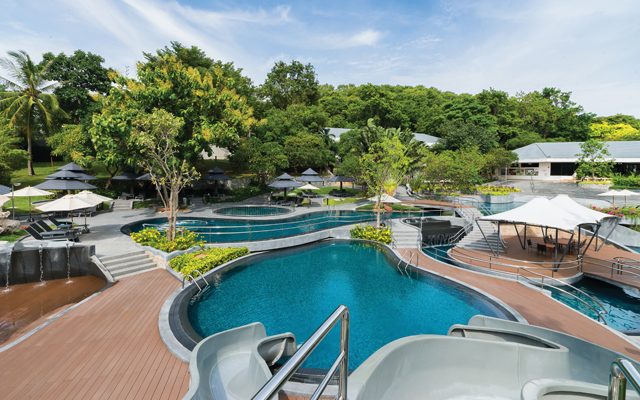
Onyx Hospitality Group’s latest opening is situated in the heart of Phuket’s Kata Town, offering 255 guest rooms and suites across nine different categories in a series of five-storey buildings. Amenities include two swimming pools with water slides; an indoor air-conditioned relaxation space for reading or a game of pool; as well as showers and storage lockers for travellers arriving before arriving early or departing late. As well, the two F&B options are the all-day dining restaurant where guests can order a a selection of Thai, Asian and international cuisine; and the Pool Bar which serves up pizzas and snacks.

Zagame’s House, Australia
The boutique hotel is the result of an A$18 million (US$12.4 million) transformation of the former budget Downtowner hotel on Lygon Street in Melbourne. The transformed design-led property offers 97 rooms complete with minibars, king-sized beds, European pillows, and organic UK toiletries brand, Cowshed. There is also a private event space, wine shop and bar, and café, on-site. This is the first of a series of boutique hotels that the owning Zagame family plans to expand in Australia.

New design-led hotel to open in Hong Kong come 2020

0
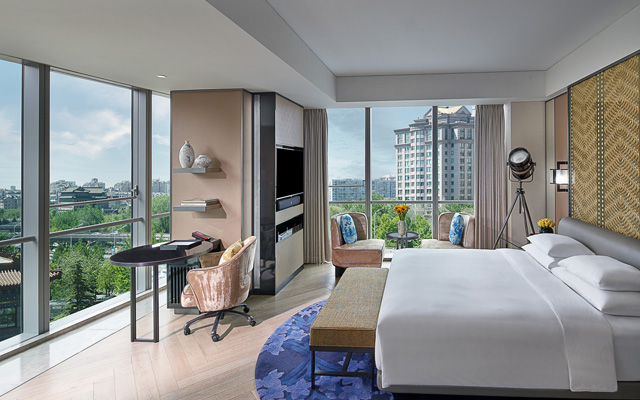
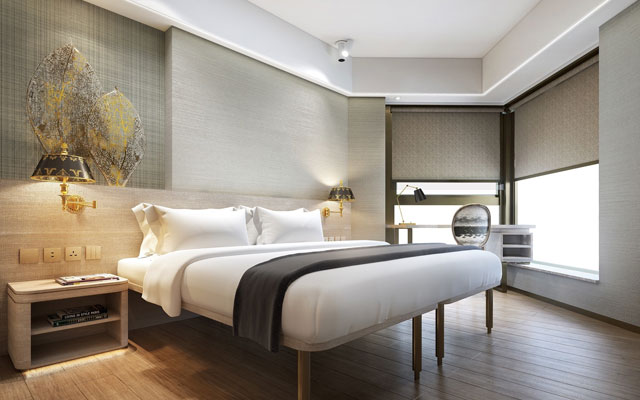
Guestroom at Hotel Alexandra

Situated at the heart of Hong Kong Island, along the North Point waterfront, the new-build Hotel Alexandra is set to open its doors in early 2020.

The property is the latest addition to the line of hotels managed by Harbour Plaza Hotels & Resorts, which offers a collection of standalone hotels.

Guestroom at Hotel Alexandra

Hotel Alexandra is designed to meld Victorian elegance and modern concepts to create an atmosphere evocative of Alice’s Adventures in Wonderland.

The hotel will offer 840 rooms and suites, many offering views of the harbour and city. Rooms are categorised by card suit names, from Diamond for two pax to Spade for six, through to the King Suite.

Facilities include onsite dining outlets, an outdoor swimming pool, a fitness centre, versatile function spaces, meeting rooms and a ballroom.

The property is approximately two minutes’ walk from MTR Fortress Hill Station, 10 minutes from Hong Kong Convention and Exhibition Centre, and 40 minutes from the Hong Kong International Airport.

Travel data co-op expands in India with sales director appointment

0

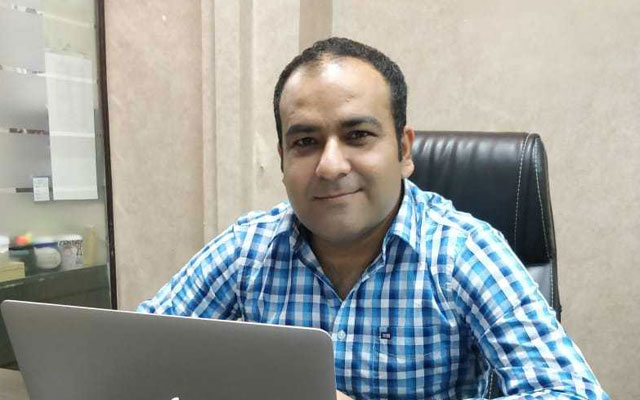
Adara, a travel data co-op and provider of traveller intelligence for travel brands, is expanding operations in India with the appointment of Suchit Huria as sales director.

Huria brings over 13 years of sales experience in the digital marketing industry. Prior to joining Adara, he was sales director at Httpool, where he led sales for performance and brand solutions.

Based out of New Delhi, Huria will be responsible for growing Adara’s footprint in India and expanding the pool of data partners to deliver consumer insights to travel marketers.
Since its expansion into the Asia-Pacific in 2014, Adara has established a strong presence in the region with offices and key hires in Singapore, Australia, Japan and Hong Kong.

The company is looking to partner with hotels, airlines, online travel agencies and other travel players in India.

“In a large and dynamic market like India, there is a huge opportunity to leverage data-driven insights for creating personalised travel experiences that can address the varied and evolving needs of consumers,” said Brandon Meyers, chief revenue officer at Adara.

“We have seen some great traction in our early days in India. With Huria onboard, we look forward to growing our operations and bringing our travel data offerings to travel marketers across the country.”

Royal Cliff Beach Hotel

0

Location
Royal Cliff commands one of Pattaya’s most enviable addresses from its Phra Tamnak Hill location, about three kilometres from the city centre where the walking street, bars and shopping malls are found, thus offering a tranquil beachfront stay with easy access to the city’s key landmarks. From Bangkok Suvarnabhumi Airport, it’s about a 75-minute drive to the resort.

Room
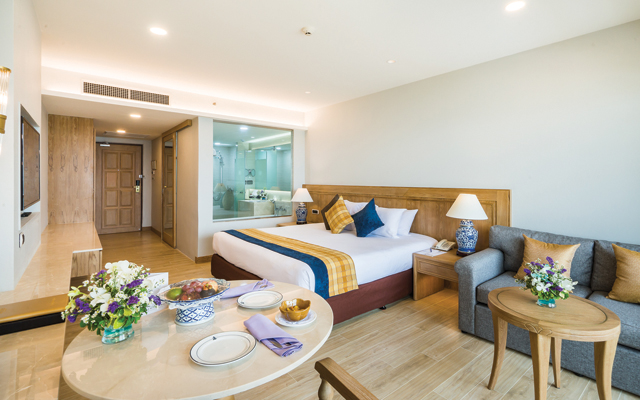
Stepping into my Ocean Deluxe Room, I was blown away by the stunning views of the Gulf of Thailand. The horizon was formed by an azure sky meeting the turquoise sea, punctuated with speedboats and their white water trails; while a trio of crystal blue pools sparkled in the foreground.

As part of the resort transformation led by renowned Thai architect Duangrit Bunnag, Ocean Deluxe rooms – together with the Mini Suites – were transformed with new bathroom features installed. The ensuing result is an expansive 36m2 interior featuring a pleasing white-and-lightwood palette accented with Thai decorative touches.

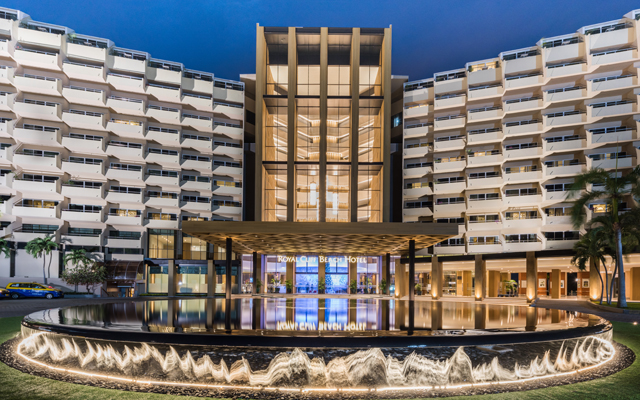
I stayed at the 474-key Royal Cliff Beach Hotel, which together with the 88-key Royal Cliff Beach Terrace, 373-key Royal Cliff Grand Hotel and 85-key Royal Wing Suites & Spa, make up the Royal Cliffs Hotel Group.

Facilities
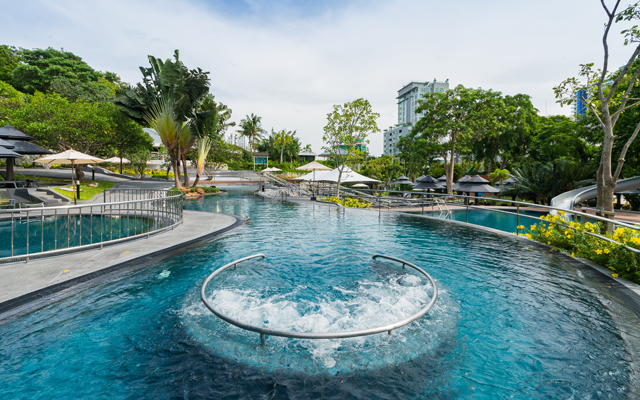
A destination unto itself, the sprawling 26ha beachfront estate is home to myriad amenities. Architect Bunnag once again oversaw the construction and design of the property’s new features.

Fitness and sports fans should head to the Fitz Club – Racquets, Health & Fitness, which was transformed to sport an Amazon vibe in addition to fun slides. The upgraded Funtasea kids club and variety of pools promise hours of fun for families. As well, the infinity pool as well as private beaches are definitely popular in-resort lounging spots, especially during sunsets.

Other recreation facilities include seven tennis courts, the Nah Pah Thai Cooking School, a cigar lounge and luxury spas, among others.

Already a dominant player in Pattaya’s MICE space with its PEACH convention centre on-site, Royal Cliff is now pushing into the lifestyle and sporting segments with the creation of its own events – e.g. a one-night show by UK comedian Bill Bailey – making it an even more attractive destination for families and leisure groups alike.

F&B
The vast hotel complex boasts 11 restaurants and six bars, offering options from Asian to European fusion. Notable dining outlets include Chamu for Japanese, Maharani for Indian, Huang Chao for Cantonese, and Rossini for Italian flavours.

Overlooking the pools and sea, all-day-dining Panorama is where international buffet breakfasts are served. In the lobby, which has also undergoing a redesign, stands a new lobby bar and bakery.

Service
Service was pleasant and efficient – and delivered with smiles.

Verdict
A grand dame that has stood the test of time, its recent makeover has given it greater shine as a sanctuary for relaxation.

No. of rooms 474
Rates From 4,000 baht (US$126) for rooms with ABF
Contact details
Tel (62 38) 250 421
Email success@royalcliff.com

Uber Air trials taking off in Melbourne

0
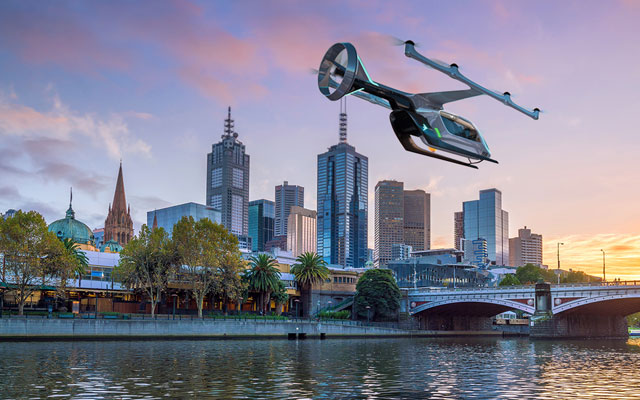
Melbourne chosen as first international pilot location for Uber Air after a number of countries including Japan and India were shortlisted last year

Melbourne will be the first international pilot city for Uber Air, with test flights scheduled to start from 2020 and commercial operations to commence from 2023.

Taking Uber’s tech to the sky, Uber Air aims to open up urban air mobility, and help alleviate transport congestion on the ground. In the long term, Uber’s vision is for electric vehicles to transport tens of thousands of people across cities for the same price as an UberX trip over the same distance.

Melbourne chosen as first international pilot location for Uber Air after a number of countries including Japan and India were shortlisted last year

Susan Anderson, regional general manager for Uber in Australia, New Zealand and North Asia made the announcement at Uber’s global Elevate (Uber Air) Summit in Washington on June 11.

She said: “Since we entered the market in 2012, Australians have embraced Uber wholeheartedly. Today, over 3.8 million Aussies regularly use Uber as a reliable way to get from A to B, and governments across the country have recognised the important role ridesharing plays in the future of transport for our cities.”

“Australian governments have adopted a forward-looking approach to ridesharing and future transport technology. This, coupled with Melbourne’s unique demographic and geospatial factors, and culture of innovation and technology, makes Melbourne the perfect third launch city for Uber Air. We will see other Australian cities following soon after.”

According to Anderson, the state government of Victoria, Australia has been highly supportive of the programme.

Congestion is a growing concern for cities around the world, and Australia is not immune – congestion currently costs Australia US$16.5 billion annually and increasing to around US$30 billion by 2030.

Eric Allison, the global head of Uber Elevate, said: “As major cities grow, the heavy reliance on private car ownership will not be sustainable. Uber Air holds enormous potential to help reduce road congestion. For example, the 19km journey from the CBD to Melbourne airport can take anywhere from 25 minutes to around an hour by car in peak hour but with Uber Air this will take around 10 minutes.”

“Uber’s technology is changing the way people move around their cities – from bikes to pooled rides, we are always looking for ways to reduce the need for private car ownership. In the coming years, with Uber Air, we want to make it possible for people to push a button and get a flight.”

Uber also announced partnerships with leading Australian companies, Macquarie, Telstra and Scentre Group, owner and operator of Westfield in Australia and New Zealand and will work with key existing partners including Melbourne Airport who collectively will support the infrastructure and telecommunications needed to create a successful urban aviation network.

“As the gateway to Melbourne for tens of millions of travellers each year, we can see fantastic potential for Uber Air in the future. We look forward to continuing this exciting conversation, and working with government, regulators and our local communities to make this happen,” said Lorie Argus, chief of parking & ground access at Melbourne Airport.

Andrew Penn, CEO, Telstra added that the company will be working closely with Uber over the next 12 months to assess what network infrastructure, connectivity requirements and other capabilities would be needed to support airspace mobility in urban centres.

Air New Zealand ups frequency from Singapore on back of intensified campaigns

0
Wallace: Singapore an effective hub to serve growing travel demand from South-east Asia to New Zealand

Korean OTA achieves unicorn status after GIC, Booking funding

0
Yanolja is now valued at US$1 billion

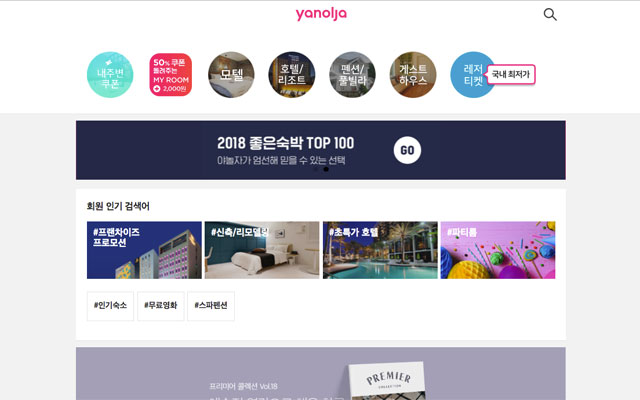
Yanolja, the largest online travel platform in South Korea, has raised US$180 million in Series D funding from Booking Holdings and Singapore sovereign wealth fund GIC, bringing its current valuation to more than US$1 billion.

Alongside its investment, Yanolja and Booking Holdings have entered into a strategic partnership and commercial agreement.

Yanolja is now valued at US$1 billion

With the partnership, Booking Holdings’ brand Agoda will have the ability to offer its customers access to Yanolja’s hotel accommodations in South Korea. Yanolja customers will also gain access to accommodations across the globe powered by Agoda and other Booking Holdings’ brands.

The South Korean OTA says it has accelerated sales growth at an annual rate of more than 70 per cent over the past five years, and is now the largest online travel platform in the country after becoming the industry’s first to surpass US$100 million in monthly transactions, It records 20 million accumulated reservations for accommodation and leisure activity booking.

The new funds will be used to further innovate in hospitality-related technology to automate hotel operations and achieve more pervasive connectivity across the value chain, according to Yanolja.

A portion of the newly raised funds will also be deployed to accelerate digitalisation and achieve growth potential in the global travel and leisure market, going beyond the traditional travel sphere.

Yanolja houses more than 200 hotels including recognised franchises across the country. Outside South Korea, Yanolja has invested in South-east Asia’s ZenRooms, which has more than 1,000 hotels across the region, strategically positioning itself for its global hotel franchise business.

Furthermore, Yanolja has developed a cloud-based property management system in South Korea, supporting all kinds of accommodation types.

Yanolja is also engineering a smart hotel that utilises key technologies such as artificial intelligence and the internet of things (IoT). Earlier this year, Yanolja, in collaboration with Korea Telecom, introduced the smart hotel concept on Jeju Island, expected to reap benefits such as cost efficiency and customer satisfaction.