TTG Asia
Asia/Singapore Friday, 10th April 2026
Page 1207

Four Asian markets account for 20% of global travel spend

0
The US remains the third most visited destination for travellers from mainland China; a Chinese tourist at the Grand Canyon pictured

Overnight visitors from mainland China, South Korea, Japan and Taiwan now account for 18.5% of global travel expenditure in the world’s top 200 cities, up from just 11% a decade ago.

This is according to Mastercard’s new breakout report, Global Destination Cities Index (GDCI): Origins, which ranks where the most international travellers originate, and the most popular destinations.
The US remains the third most visited destination for travellers from mainland China; a Chinese tourist at the Grand Canyon pictured

Business and leisure travellers from the top 10 origin markets comprise nearly half (49.1%) of all overnight international visitor arrivals to the 200 destinations and 48.4% of their total expenditure.

In 2018, the global travel industry contributed a record US$8.8 trillion and 319 million jobs, and these insights help drive decision-making on how to attract international travellers and better cater to their needs.

The top 10 origin markets are, respectively, the US, China, Germany, the UK, France, South Korea, Japan, Canada, Russia and Taiwan.

“What’s most fascinating for us from an Asia-Pacific perspective is the fact that, not only has this region’s spend contribution to global travel expenditure nearly doubled in the last decade, but we’ve barely scratched the surface in terms of percentages of the populations that are traveling overseas,” said Rupert Naylor, senior vice president, data & services, Asia-Pacific, Mastercard.

“This is particularly significant in mainland China, India and Indonesia – three of the most populated places on Earth – where only 1, 0.5 and 1.7 overnight international trips were made per 100 residents to the 200 destinations in 2018, demonstrating the vast and still emerging potential of tourism and travel from these markets. This represents significant opportunities for local governments and businesses to leverage these insights to better plan and promote their travel, tourism and retail offerings.”

The figures contrast sharply with Australia where 42.7 overnight international trips per 100 residents were made to the 200 cities in 2018.

The GDCI report also revealed other encouraging findings that illustrate the region’s potential economic growth from travel and tourism:

Asia-Pacific markets comprised 40% of the top 20 origins markets in the index with Australia coming in 11th, India 12th, Indonesia 19th and Malaysia 20th.

Residents of South Korea and Taiwan are travelling overseas more than ever – breaking into and recording the biggest jumps in the top 10, moving up six and four spots respectively since 2009.

While Indonesia, the world’s fourth most populous country, ranks 19th on the origins index (with a 4.6% CAGR), its travellers rank seventh in terms of travel expenditure growth over the past decade (9.7%), demonstrating their increasing and outsized purchasing power.

Travellers from Asia are still largely choosing to visit destinations within the region which bodes well for intra-Asia growth.

Meanwhile, the US remains the third most visited destination for business and leisure travellers from mainland China, and the number one most visited by residents of Japan and Australia (when adding up the sum of visitors to all GDCI cities within each market).

Amadeus rolls out new API with NDC capabilities

0
Amadeus Travel API. This NDC-enabled solution will give travel agencies worldwide access to new content and fares from our airline driver customers via an NDC connectivity.

Amadeus has launched a new enhanced version of its flagship Web Services solution called Amadeus Travel API, which integrates with travel agencies’ existing systems and allows agents to build their own customised travel booking applications.

Set to be rolled out globally on a gradual basis, this NDC-enabled solution – co-designed with Travix, a driver customer of Amadeus’ NDC [X] programme – will give travel agencies worldwide access to new content and fares from Amadeus’ airline driver customers via an NDC connectivity.

Amadeus Travel API will give travel agencies worldwide access to new content and fares from airline driver customers via an NDC connectivity

In addition, the solution will offer greater functionality for Amadeus’ travel agency customers in the following ways:

Access to new airline content and fares via an NDC connectivity, alongside content from traditional technology such as EDIFACT, and other APIs. NDC is an integral part of the Amadeus Travel Platform – a platform which brings together all travel content from multiple sources in one place.

  • Simplified workflow of shop, order, pay, ensuring a smoother experience which mirrors the consumer journey.
  • Cross-sell of ancillary services and up-sell of branded fares.
  • Change and cancellation functionalities to include refund, void or exchange options.
  • Acceptance of both credit card and cash payments with integrated reconciliation to mid and back office technology, ensuring NDC bookings are fully integrated in the down-stream processes of agencies.
  • Optimised to work across multiple interfaces so customers have the flexibility to start a booking on a mobile device and can choose to finish the booking on a desktop, or vice-versa.

Some early adopters include AERTiCKET, American Express Global Business Travel, BCD Travel, House of Travel, and TUI.

In the coming months, Amadeus will also be launching the NDC-enabled version of its leading cloud-based travel agency solution, Amadeus Selling Platform Connect.

Cross Hotels & Resorts picks up third management deal in Phuket

0

Cross Hotels & Resorts, recently rebranded from BHMA Hotels & Resorts, has signed a hotel management agreement with Three Land for its third Phuket property.

Set to open in mid-2021, the X2 Vibe Phuket Patong Center will offer 323 guestrooms, alongside facilities such as an all-day dining restaurant, gym, kids’ club, meeting rooms, and a swimming pool with underwater speakers.

Phuket Le Coral

It will be located in the centre of Patong Beach, a 50-minute drive from Phuket International Airport and a 10-minute walk to Patong Beach and Bangla Walking Street.

The latest signing follows the May 2019 announcement of Away Phuket Le Coral, which is currently undergoing renovation with completion scheduled for late this year. Located on the beachfront of Natai Beach in Phang Nga Province, the 58-suite hotel is a 40-minute drive from Phuket International Airport.

Cross Hotels & Resorts CEO Peter Lucas said the signing of three hotels in Phuket within the past 12 months is reflective of the company’s “development aspirations of acquiring quality hotels with large inventories in the world’s most popular visitor destinations and gateway cities”.

“Phuket has been clearly identified as a key target destination for Cross Hotels & Resorts now and into the future,’’ he added.

Cross Hotels & Resorts currently operates 25 hotels across three brands; X2, X2 Vibe and Away in Thailand, Vietnam and Indonesia.

Radisson rolls out multi-brand platform

0

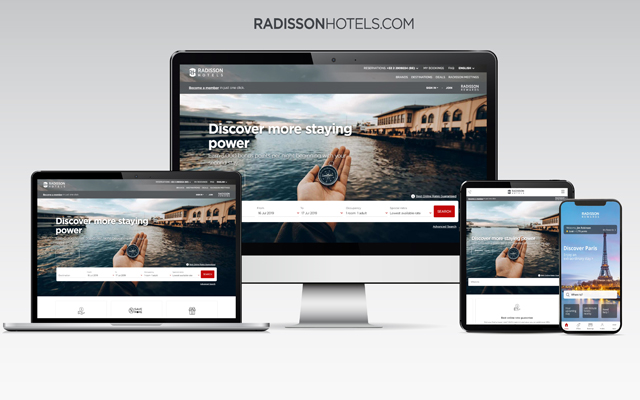
Radisson Hotel Group has introduced a new multi-brand global website RadissonHotels.com, which will be complemented by a mobile app launching by the end of July 2019.

The enhanced site allows access to the group’s entire portfolio of over 1,100 hotels worldwide, spanning across seven brands – Radisson Collection, Radisson Blu, Radisson, Radisson RED, Park Plaza, Park Inn by Radisson and Country Inn & Suites by Radisson, as well as the art’otel brand managed by PPHE Hotel Group.

Members of the hotel’s Radisson Rewards loyalty programme will also be able to check and redeem their points and benefits via the platform and app.

The full website will initially be available in English, Arabic, Dutch, French, German, Italian, Norwegian, Polish, Portuguese, Russian, simplified Chinese, Spanish and Swedish. Additional language support will be brought online progressively.

The Radisson Hotels App has been developed for Android and iOS devices, and will be available globally on Google Play and App Store.

Watch Hong Kong’s fire dragons come alive for Mid-Autumn

0

A 67m-long dragon will light up Hong Kong’s night sky this coming September 12-14, as the destination celebrates the three-day-long Tai Hang Fire Dragon Dance, part of the Mid-Autumn Festival.

Meliá veteran Manuel Ferriol takes charge of Ho Tram resort

0

Manuel Ferriol has been appointed to the helm of Meliá Ho Tram Beach Resort in Vietnam.

The Spanish-born hotelier has been with Meliá Hotels and Resorts for the past 15 years, steadily rising through the ranks before becoming acting resident manager at Gran Meliá Fenix in Madrid, and resident manager at TRYP Palma Bellver By Melia in Mallorca.

In 2014, Ferriol was appointed director of operations at Meliá Hanoi, the Spanish group’s flagship hotel in Vietnam, and spent two years as general manager at Meliá Danang prior to his latest appointment.

AAT Kings sets up team in Singapore to support expansion in Asia

0
AAT

Australian coach tour company AAT Kings, owned by parent company The Travel Corporation (TTC), is establishing a team based in Singapore on the back of its expansion into the Asian market.

Led by YK Wong, senior sales manager wholesale, Asia, AAT Kings will promote its bespoke tours and services to Asian travellers, who are becoming increasingly “discerning”, said Wong at a trade outreach session in Singapore last week on July 18.

Aside from day tours, AAT Kings also organises multi-day itineraries, that the Asian market may not be too familiar about; Uluru in Australia pictured

Wong explained that a majority of the Asian market are familiar with AAT Kings’ day tours, but not much is known about its longer and multi-destination itineraries.

As such, the new team aims to raise awareness in Asia of such products, as well as their ability to execute highly customised and luxury tours. Besides a 20-seater coach with leather-bound seats, AAT King’s tours offer experiences such as visiting Aboriginal villages and dining at Uluru.

TTC’s managing director Asia Nicholas Lim told TTG Asia: “AAT Kings has always been known for its day tours, but we want to show the trade that we can do much more, especially for travellers who want to spend a few more days (on the road).”

Lim shared that the company will now focus on building brand awareness in this region, which will ride on other already-known TTC brands such as Contiki and Trafalgar. For example, a booking made on Trafalgar could be tied in and fulfilled through AAT Kings’ services.

Lim also expressed that the coach tour operator has been “buoyed” by an “encouraging” year-on-year growth of 36 per cent, as well as Asia’s market potential.

After Singapore, AATKings will conduct a similar trade outreach session in Manila, before returning to Singapore to participate in the NATAS Holiday Fair on August 2-4.

Safety, medical marijuana tourism high on agenda of new Thai tourism minister

0
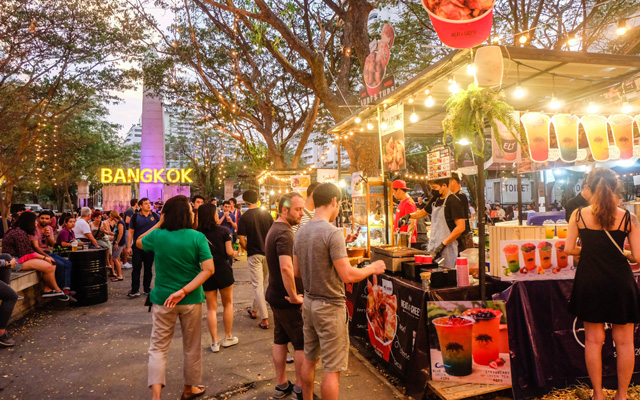
Tourists milling about an outdoor market in Bangkok

Thailand’s new tourism and sports minister Pipat Ratchakitprakan, who replaced Weerasak Kowsurat, has prioritised the setting of safety standards to regain the confidence of foreign tourists to the country, according to a Bangkok Post report.

Speaking in his new capacity when he assumed his role last week, Pipat said the ministry would launch an initiative later this year to engage volunteer police in communities to supervise visitors in each tourism area.

Tourists milling about an outdoor market in Bangkok

The new tourism chief also plans to promote medical marijuana tourism, especially Thai traditional medicine and message, reported Bangkok Post.

Tourists from Europe and the US, who have a positive perception about medical marijuana, would be key targets for these marijuana tourism packages.

The report added that Yuthasak Supasorn, governor of the Tourism Authority of Thailand, is ready to implement medical marijuana tourism promotion to build quality tourism because the target segment tends to spend more than average tourists.

Pipat is a key Bhumjaithai Party leader, who party campaign promises included the liberalisation of marijuana cultivation for medicinal purposes as well as the legalisation of ride-hailing and home-sharing apps and sites.

The Tourism and Sports Ministry is expected to work with the Transport Ministry to legalise ride-sharing services, following the presentation of the party’s policies to the prime minister.

In light of the strong Thai baht which has made the country more expensive for foreigners, Pipat also intends to talk to the Finance Ministry and the Bank of Thailand about reducing the currency strength.

According to the Bangkok Post report, Pipat also plans to talk to the private sector about enhancing tourism attractions in all provinces, and pushing local tourism to the forefront as well.

Attracting big sporting events and tournaments to Thailand would be encouraged too, said Pipat.

Legal or illegal lodging? The choice is yours, says hospitality chief

0
Kiong: there will always be a market for serviced residences despite homesharing enroachment

Home-sharing platforms have been steadily gaining traction since its commencement as an affordable “couch-surfing” accommodation option. It has become one of the preferred ways for the “I want to live like a local” traveller demographic – the group of travellers who wish to experience how the people of the destination live, and become one of the locals.

However, governments and the hospitality industry were unprepared for this rapid growth in home-sharing platforms. Rules had to be enforced, but how and what to put in place was a concern. Existing residents were raising complaints against strangers entering their residences. And most importantly, security has been an ongoing issue for the guests. In fact, a recent report by Investment Property Exchange Services found that one out of 10 home-sharing guests have found a hidden camera during their stay.

From licensing to the minimum-stay period for rentals – countries in South-east Asia have been setting strict regulations on home-sharing platforms. But hospitality industries need to work in tandem with the governments as well.

The need for hospitality players to step up
As hospitality players, it is important for us to understand travellers’ psychographics and preferences. Knowing and catering to guests’ needs is one of the key driving factors of industry growth.

Today, people travel for work, for leisure or for memorable family staycations – the reasons vary. And hotels need to recognise these different profiles in order to stay relevant.

Take, for instance, a family of six travelling for two-weeks in Singapore. Chances are, a standard hotel room will be too small, and an extra room will be costly. But this doesn’t mean that this family needs to turn to a home-sharing platform. Instead, they can consider a serviced residence.

Changing the perception of serviced residences
Many view serviced residences to be for business or relocating travellers, but they aren’t limited to just these profiles.

They can be for anyone who prefer more space, less amenities that they do not need, and a bit more privacy than from hotels.

By 2030, it is predicted that travellers will travel to experience life as a local for a unique and personalised trip. A growing number of travellers prefer an accommodation that makes them feel at home while having the comfort of a hotel.

Serviced residences are one growing accommodation option that can provide guests the “home-away-from-home” sentiment. Simply put, they offer guests the chance to live like a local, with more freedom to stay as they would at home. They have the room to cook, do laundry, personalise the space as if they are continuing on with their daily routine, all with security as a standard.

Serviced residences are also unique in the sense that it serves different target markets and opens up new expansion opportunities for the industry. They can be catered towards modern travellers and offer contemporary living spaces. Or, for travellers who are conscious of their wellness, there are serviced residences that provide amenities such as fitness centres, tennis courts and swimming pools for use.

“Better safe than sorry”
Countries like the US, Canada, France, England may be more welcoming to home-sharing platforms because they have the space to host. However, home-sharing platforms bring about an immense challenge in Asia, largely because there is an uneven playing field.

Asia has strict property regulations due to our environment. There is limited land to build residential areas, and owning property is scarce and viewed as a privilege. As such, these nations often have strict minimum rental periods – not just for tourists, but for citizens as well.

So, for anyone planning a trip to Asia any time soon, remember this – no one has the answer to how long home-sharing platforms will be regulated. But we do know that our industry is, and always will be, legal.

Oyo founder invests US$2 billion to raise stake in company

0
Agarwal: excited about the potential impact that Oyo's continued expansion will bring

Oyo Hotels and Homes’ founder and CEO Ritesh Agarwal will be investing US$2 billion, through the entity RA Hospitality Holdings (Cayman), to increase his stake in the startup he founded.

Agarwal will be buying shares from existing investors Lightspeed Venture Partners and Sequoia India, which will remain backers of the startup, the company said in a statement.

Agarwal: building a brand that is focused on bringing a better lifestyle for the common man

The deal is currently remains subject to shareholder and regulatory approvals.

Agarwal said in a statement: “It is a very exciting time for Oyo right now as we make great living spaces come alive across all corners of the world from Texas to Tokyo. Our endeavour continues to be to become the most loved hospitality brand in the coming years.”

Both Lightspeed India Partners Advisors and Sequoia Capital have voiced their support for the move, and have indicated they remain committed to supporting Agarwal and his company.

This year, the India-based company has seen a 4.4 times year-on-year growth in revenue in June 2019 (vs June 2018), with one million rooms under management across hotels and homes; with over 200,000 rooms in India.

Earlier this month, Oyo published a statement hailing itself the world’s third largest hotel chain by room count as of June 2019, where its portfolio comprises more than 23,000 hotels and 46,000 vacation homes.