With the coronavirus outbreak taking its toll on travel businesses across the region, Indonesia’s Ministry of Tourism and Creative Economy (MoTCE) is looking to cover the shortfall by targeting more domestic and regional tourists, as well as lobbying airlines to reroute their flights.
The Ministry will work with the industry and other government agencies to boost domestic tourism, particularly, in destinations most hurt by the drop in Chinese tourism like Bali, Manado and Bintan.
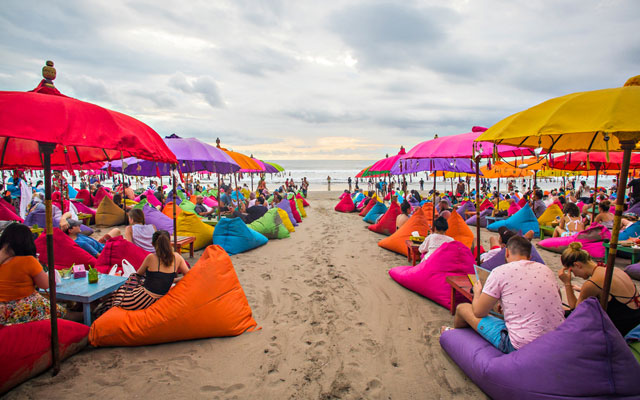
Indonesia looks to domestic and regional tourism to make up for the shortfall from China; tourists at Seminyak Beach in Bali pictured
Indonesia’s minister of tourism and creative economy and head of TCE Board, Wishnutama Kusubandio, said: “We will develop promotions to attract Indonesians to travel domestically and encourage government agencies and corporates to conduct events in (the most affected) destinations.”
The government will also lobby airlines that have cancelled their services to China to reroute their flights to the country’s favoured destinations, including Bali, which has been projected to lose about four million dollars due to the Indonesian government’s travel ban to and from mainland China amid concerns over the coronavirus outbreak.
Wishnutama said that he and Budi Karya Sumadi, minister of transportation, would discuss this issue with around 30 airlines in a bid to bolster local tourism.
“I know that this will not be easy as you cannot simply switch destinations like that, but we will work on it,” he said.
He would also propose for those airlines to reroute to North Sulawesi and Bintan Island in Riau, which he said were Chinese travellers’ favourite destinations.
“As we know, two million Chinese tourists visit the country every year … This means that we will probably lose about four million dollars a year from China alone. This is a big challenge for the tourism sector. But again, our main priority is to protect Indonesian people (from the outbreak),” he said.
Apart from promoting domestic tourism, the government will also be targeting other markets, including Malaysia, Singapore, South Korea, Japan, Australia, Canada, and the US, according to Wishnutama.
This move has been welcomed by Bambang Sugiono, director of marketing and overseas promotion of Bali-based RD Tours, whose business has been hard hit from the virus outbreak, given that 70 per cent of around 5,000 inbound clients who had planned to visit Bali in February were from China.
He said he received a deluge of cancellations from groups and FITs from China who had planned to visit Bali for leisure in February and March, in the wake of the travel restrictions.
“I hope that the Indonesian government will eye India, Nepal, and Pakistan because it is easy to travel from there to Indonesia,” he said.
Hasiyanna Ashadi, managing director of Marintur Indonesia and chairperson of ASITA Jakarta chapter, supported the government’s plan to lobby airlines to reroute their flights to Indonesia, but she pointed out that Malaysia and other South-east Asian countries which are also facing similar loss of visitors from China might make a similar move.
Hence, the government should focus on select source markets, Hasiyanna said, hoping that Wishnutama would prioritise neighbouring countries, which can quickly make up for the shortfall in Chinese visitor numbers.
She also named India as a potential country to plug the gap. “Yes, there is no direct flight connecting India and Indonesia but the number of Indian tourists in the country is prodigious,” she said.
For AB Sadewa, corporate secretary of Panorama Destination, lobbying airlines is not enough.
He argued that the first thing the government should do is leverage Indonesia’s status as a coronavirus-free country to promote the country since as of today, no infected cases have been found in Indonesia.
Doing so might help edge out the competition from other countries who might also try to approach airlines for rerouting, he added.
Sadewa also said the government should collaborate with local tour operators in Indonesia which have B2B partnerships in targeted countries.
“In Europe, for example, the one who lures people to go on vacation is not the airlines but travel agents. They know how to influence travellers to switch their trip from China to Indonesia,” he said.
Malaysian Inbound Tourism Association (MITA) is organising a week-long e-travel fair in late March, with the date to be confirmed, to push for the recovery of the domestic sector in view of the coronavirus outbreak.
It is heeding the tourism minister’s call to focus on domestic tourism as a quick fix to overcome the current slowdown in the tourism sector.
MITA will be organising an e-travel fair in March to boost domestic tourism amid coronavirus outbreak
MITA president Uzaidi Udanis said many of its members, including hotels, inbound agents, retailers and transport companies, have been badly affected by the overall slowdown in the tourism sector.
He added that MITA has negotiated special deals with discounts up to 70 per cent to be offered by local airlines, hotels and attractions during the travel fair.
Unlike previous fairs, this one will see MITA introducing digital platforms to sell the packages as well as a physical fair in Kuala Lumpur.
Malaysian inbound tourism players who have been dealt a devastating blow from the wave of cancellations from Chinese groups due to the coronavirus outbreak are calling on the authorities for assistance to tide over the crisis.
Malaysian Inbound Tourism Association (MITA) president, Uzaidi Udanis, shared that its 60 members who are active in the Chinese inbound business have reported 80 per cent in cancellations.
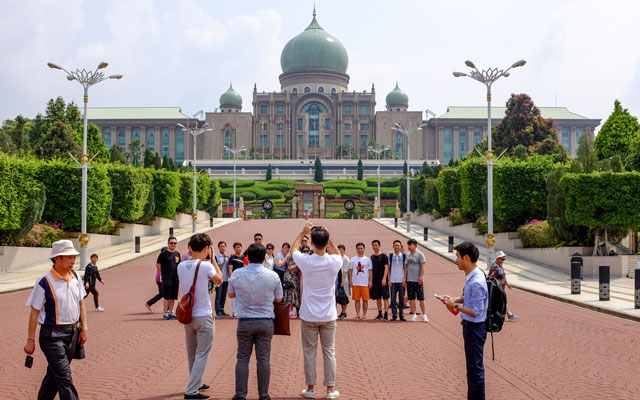
Malaysian tourism industry calls on the government for assistance to pull through the coronavirus crisis; group of Chinese tourists in front of the Prime Minister’s Office of Malaysia pictured
He said that MITA had expected around 300,000 mainland Chinese tourists to enter Malaysia via the Second Link checkpoint over this Chinese New Year period.
Udanis added: “Our members who own buses and have to service their loans are in trouble. Some members have 100 registered coaches. The monthly repayment for each coach can be as much as RM10,000 (US$2,400). Without any income as there are no Chinese groups coming in from Singapore, it will be almost impossible for them to service their loans.
We have informed the Ministry of Tourism, Arts and Culture (MOTAC) which in turn, has asked the Ministry of Finance to assist. We hope Bank Negara Malaysia will issue a circular to the banks to be more flexible on the repayment of loans for the tour coaches.”
Udanis also said that MITA has approached hotel associations to assist its members with refunds for cancelled groups.
“Some hotels are keeping the cancellation fee as a floating deposit for future groups. This is not a wise move as it involves a big amount and the money is needed by our members to cover their operational costs during these trying times,” he said, adding that the association is compiling a list of those hotels to send to the MOTAC to seek assistance.
At the same time, MITA has requested for incentives, such as special tax breaks and soft loans, to help its members – comprising tour operators, restaurants, retail outlets and hotels – tide over this difficult period.
On their part, the Malaysian Association of Tour and Travel Agents (MATTA), alongside key industry partner Malaysian Association of Hotels (MAH), has proposed to the government for a monetary and financial stimuli, including a temporary deferment of loan repayments, permits and licensing fee waivers, and a temporary lifting of the tourism tax.
MATTA president, Tan Kok Liang, said in a statement: “The various ministries could reduce or waive contributions and taxes such as those mandatory for the Employees Provident Fund, Human Resources Development Fund, tourism tax, road tax, and fees for various company licenses and vehicle permits. Financial institutions could give out special loans, reduce interest rates or allow deferment in loan repayment as tour buses are idle more often than running.”
Furthermore, MATTA has also proposed to MOTAC and Tourism Malaysia a series of recovery measures to tackle falling tourist arrivals to Malaysia due to the coronavirus crisis.
Tan shared: “We have proposed an increase of promotion and marketing initiatives for domestic and inbound tourism, easing the criteria and requirements for matching grants, and a review on the tourism tax rate to encourage more tourists to choose Malaysia as a preferred holiday destination.”
He added that other proposed measures include stepping up marketing efforts to correct misbelief that Malaysia is not safe; to promote cross-border tourism; to ease visa requirements, especially for Indian tourists, to make up the shortfall of Chinese arrivals; and harnessing the power of big data to create retargeting and other smart strategies that can be applied immediately to give the Malaysian tourism industry a leg up.
Some of the strategies proposed by MATTA and MAH to stimulate the local tourism industry include a social marketing campaign highlighting that #MalaysiaIsSafe through content created by industry stakeholders and the public; a coordinated marketing plan headed by Tourism Malaysia with content and input from various industry associations; more government events and functions to be held in hotels; as well as expanding the scope and easing the restrictions of the government’s matching grant.
The duo is also calling on the authorities to create a separate emergency fund for a digital marketing matching grant to encourage stakeholders in the private sector to widen their customer reach in a more cost-effective manner; streamlining and easing cross-border clearance to encourage more overland tourism; as well as issuing of frequent health and travel advisories or updates in multiple languages.
Tan said: “MATTA is hopeful that the economic stimulus package to be announced soon (by the government) would far exceed the RM8.1 billion growth plan rolled out in 2003 to help Malaysians mitigate the impact of the SARS outbreak, or the RM60 billion stimulus package announced in 2009 to invigorate vital sectors in the face of the global economic downturn.”
Hotel occupancy in mainland China showed a 75% decline over a two-week period during this year’s Chinese New Year holiday, according to preliminary data from STR, which said performance was significantly worsened by the outbreak of novel coronavirus.
“The Chinese New Year holiday week, extended by three days this year, normally sees a significant shift in travel patterns across the country with very specific hotel occupancy movements,” said Jesper Palmqvist, STR’s area director – Asia Pacific.
China hotels see a 75 per cent occupancy plunge over this Chinese New Year period: STR
“This is due to less business travel, school closings and many individuals who return home to spend the holiday with family. At the same time, it is normal to see ADR rise during the time of the holiday. What our preliminary analysis shows this year is that performance changes were even greater as coverage of the coronavirus outbreak has intensified.”
Mainland China’s occupancy reached 70% on January 14, but fell to a lower absolute level each day thereafter. On the final day of STR’s analysis (January 26), occupancy dropped to just 17%, meaning that eight of 10 rooms on average were left unoccupied.
ADR began to increase on January 19, and reached a monthly high of CNY754 (US$108) on January 26, which represented a 61% increase from January 19.
Since 2015, mainland China’s occupancy has fallen to an absolute level of roughly 55% during the week of Chinese New Year. Data from a shortened holiday week period in 2020 (January 24-26) showed average occupancy of 22%.
ADR, usually between CNY650-CNY700 for the holiday week, reached a preliminary average of CNY711. That 2020 preliminary occupancy figure represented a 71% decline from the comparable time period last year, while ADR was up 10%.
“While it is understandable to look for comparisons with the SARS outbreak that began in 2002, it is important to consider the significant differences in the market over the last two decades,” Palmqvist said.
“Dependence on smartphone technology, the widespread use of social media, significant differences in hotel inventory, greater volume in international arrivals to mainland China and overall economic conditions make it difficult to use that previous outbreak as an indicator this time around. There is also greater potential for hotel performance impact in other markets around the world because of the increase in Chinese outbound travellers.”
Tourism Economics, STR’s forecast partner, noted a potential 28% drop in visits to the US from China in 2020. That would equal a loss of 4.6 million hotel room nights sold and US$5.8 billion in visitor spending.
The Philippine Department of Tourism (DoT) has partnered Makati-based school iACADEMY to launch the Experience Philippines, an augmented reality app which houses a treasure chest of visuals and information about the history of Intramuros, the famed walled city of Manila.
Currently, the AR feature only works on the DOT logo and certain sites in Intramuros, including the Gallery of Presidents, the Fort Santiago Gate, the Ayuntamiento, the Manila Cathedral, San Agustin Church, and the Churches of our Lady of Lourdes, of San Ignacio, of San Francisco, and of Recollects.
DoT has launched the AR app Experience Philippines which dives into the past of Intramuros city
There are hopes to expand this technology to other tourist sites around the country, according to DOT secretary Bernadette Romulo-Puyat.
Tourist sites that the DOT is eyeing for AR development include the Banaue Rice Terraces, Corregidor, Mt. Samat, Puerto Princesa, Pampanga and Mt. Pinatubo.
Intramuros administration administrator Guiller Asido believes the app will help attract more visitors to the city. “Culture buffs will enjoy Intramuros more with this app as they will be able to see how Fort Santiago and other historical sites looked like before,” he said.
The Experience Philippines app, which is available through Google Play and the Apple App Store, also serves as a compact version of the www.philippines.travel.
Japan’s JTB Corp has launched its revamped Rurubu Travel and JAPANiCAN.com websites, in collaboration with Asia-based OTA Agoda.
The websites, which leverage Agoda’s technology expertise in marketing optimisation, machine learning and AI capabilities, are the OTA’s first white label ventures of this scale.
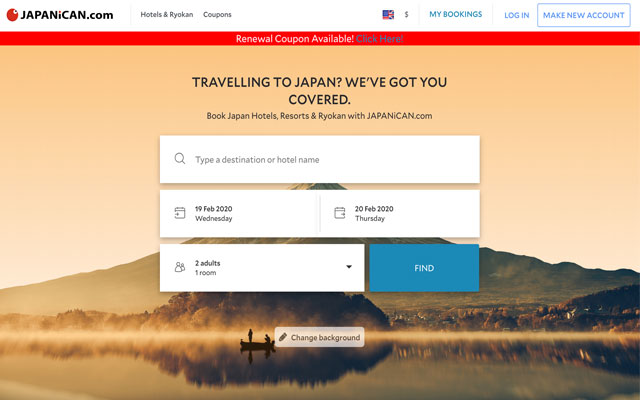
JTB Corp unveils its revamped JAPANiCAN.com and Rurubu Travel websites
The newly refreshed websites will feature 12,000 properties on Rurubu Travel and 8,000 on JAPANiCAN.
As part of the partnership with JTB, Agoda will also have preferred access to the 12,000 properties in JTB’s inventory, which will allow its customers access to a greater variety of properties throughout Japan.
For the past year, over 100 engineers, designers, product and marketing specialists and business development and relationship managers from JTB and Agoda have collaborated on developing back-end and front-end technology to improve customers’ interaction experience with the websites by reducing search and booking journey inefficiencies, designing a more user-friendly interface, and improving connectivity response speeds for search results and booking.
In addition, Agoda’s AI and machine learning tools have helped to deliver personalisation of searches, showing relevant choices of types, location and budgets of accommodation, thus making it easier for consumers to find what they are looking for, much more efficiently. This is combined with Agoda’s marketing optimisation technology which will help JTB track and target travellers with the right selection of properties.
While the revamped sites leverage Agoda’s technology and infrastructure, Agoda worked closely with JTB to customise the look and feel of the sites to Rurubu Travel and JAPANiCAN’s branding, as well as tailor certain processes and features specific to their market.
That includes integrating payment flows through JTB’s preferred payment gateway, and meal plan and occupancy settings for ryokans to meet the expectations of Japanese customers and requirements of traditional Japanese accommodation partners.
“This hasn’t been just a facelift; this project has been a complete reengineering of how these websites’ function by Agoda to improve connectivity and processes, and ultimately help accelerate JTB’s digital and e-commerce ambitions,” explained John Brown, CEO, Agoda.
Agoda and JTB will continue their collaboration with other projects, including the development of an extranet to allow JTB partner properties to dynamically manage their content and inventory.
Swiss-Belhotel International will be launching 12 new properties in Indonesia by 2022.
The new properties will encompass four brands: Swiss-Belexpress, Zest, Swiss-Belinn, and Swiss-Belhotel. They will be located across the archipelago, including Cilegon, Bali, Surabaya, and Jakarta.
Swiss-Belhotel to launch 12 new properties in Indonesia by 2022; Swiss-Belhotel Makassar in Losari Beach pictured
Nine of the new properties will open this year, namely, the 115-room Swiss-Belexpress Cilegon; the 163-room Swiss-Belhotel Arjuna, Legian, Bali; the 88-room Swiss-Belhotel Cendrawasih Biak; the 227-room Swiss-Belhotel Darmo Surabaya; the 316-room Swiss-Belhotel Kelapa Gading, Jakarta; the 252-room Swiss-Belhotel Solo; the 138-room Swiss-Belinn Cikarang; the 95-room Zest Parang Raja Solo; and the 53-room The Gamat Bay, Bali.
The 118-room Zest Ambon will open in 2021, followed by the 239-room Swiss-Belhotel Puri Indah Jakarta, and the 269-room Swiss-Belhotel Purwokerto in 2022.
Larapinta Trek (Photo Credit: Graham Michael Freeman, Great Walks of Australia)
Australian Walking Holidays has launched a seven-day Central Australian experience that combines three highlights of Australia’s Red Centre.
The new Larapinta, Kings Canyon and Uluru in Comfort trip brings active travellers to explore the Larapinta Trail, the Kings Canyon and the sacred site of Uluru.
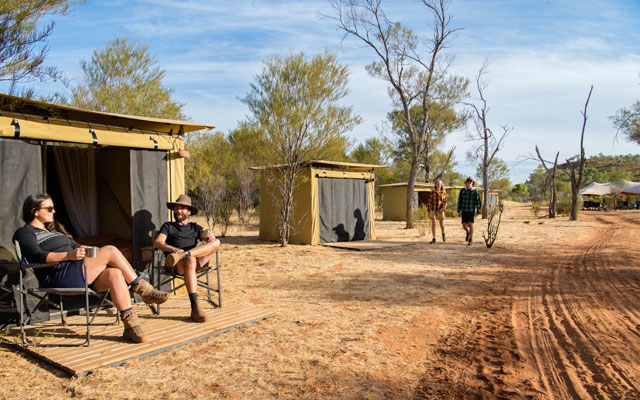
Australian Walking Holidays' Central Australia experience
1 of 3
Larapinta Trek (Photo Credit: Graham Michael Freeman, Great Walks of Australia)
Fearless Campsite (Photo Credit: Shaana McNaught, Australian Walking Holidays)
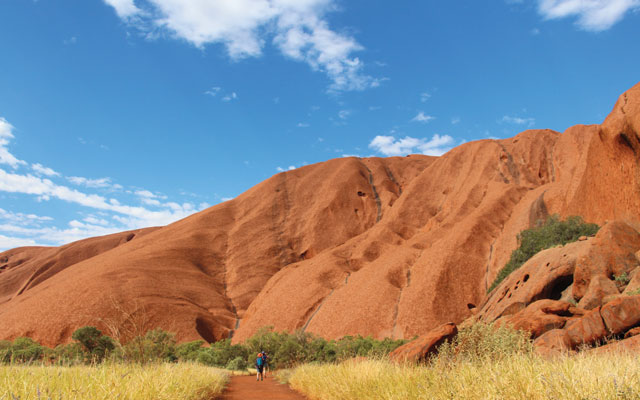
Uluru in Northern Territory, Australia
Professionally guided and fully supported throughout, guests will stay in exclusive eco-campsites on the Larapinta Trail near Alice Springs, as well as permanent campsites at Kings Canyon Resort and Uluru.
The trip costs A$3,395 (US$2,274) per person (twin share), and departs on June 2 and July 28, 2020.
The price includes airport transfers, all meals, all accommodation, services of professional wilderness guide and support staff, fees to Aboriginal Traditional Owners and National Parks, and all transport during the tour.
BRUNEI
Ulu Temburong National Park is on my 2020 radar as the 30km Temburong bridge linking Brunei-Muara to Temburong will be opened, thereby reducing travel time between the two districts and making it easier to promote and market the national park as a tourist attraction. – CP Foo, general manager, Century Travel
Brunei’s Ulu Temburong National Park is home to virgin rainforest
CAMBODIA
In 2020, the Ministry of Tourism will be actively promoting ecotourism offerings in the provinces of Stung Treng, Rattanakiri, Mondulkiri and Kratie. Visitors will have the opportunity to mingle with indigenous tribes and see wild elephants in Mondulkiri. River dolphins are renowned in Kratie, as are the many natural wonders in Stung Treng and Rattanakiri. – Prak Vuthy, director of overseas tourism marketing and promotion department, Ministry of Tourism Cambodia
Ecotourism is growing in rural Cambodia and we have created itineraries to cater to its demand. Kratie is a good destination for viewing endangered Irrawaddy dolphins, and there are plenty of homestay options in both the province and Mekong River islands. We will also be promoting more community-driven products in lesser-known provinces such as Stung Treng and Rattanakiri. – Mak Kun, product manager, VLK Royal Tourism
Fishermen at Tonle Sap Lake, Kratie, Cambodia
INDONESIA
President Joko Widodo has mandated the development of five “super-priority destinations” (Labuan Bajo, Mandalika, Borobudur, Lake Toba and Likupang) to encourage visitors to explore the archipelago beyond the popular tourist resort island Bali.
The ministry has earmarked Rp9.4 trillion (US$668 million) in developing their infrastructure, amenities, destination marketing and other aspects. It is then important to create an ecosystem of preserving culture and empowering communities economically to ensure continuity in sustainable tourism. We project the growth of new businesses and job creations with more international tourism events happening in Indonesia. – Wishnutama Kusubandio, Indonesia minister of tourism and creative economy
Our focus in 2020 is to develop train tours in West Java, as some routes have been built or reopened. Bandung’s municipal government is in talks with Kereta Api Indonesia with developing alternatives to support existing train routes from Jakarta via Bogor.
The reopened Bogor-Sukabumi route features a number of historical attractions such as a megalithic site on Gunung Padang. Train journeys will also enable travellers to pass the longest bridge on Java Island – named (Jembatan Cikubang) – and tea plantations – both of which have been around since the Dutch colonial era.
Air-conditioned trains also connect Bandung to other tourist destinations such as Pangandaran and Garut in West Java. – Daniel Nugraha, director, Exotic Java Trails
Aerial view of Cikubang Bridge in West Java, the longest active train bridge in Indonesia
LAOS
Due to improvements in infrastructure and air connectivity, we are expecting significant tourism growth for Laos in 2020. Heritage boutique hotels in the UNESCO site of Luang Prabang, in particular, have proven to be a huge draw for customers seeking new experiences. This means we can offer additional options as an add-on extension for those travelling in other Indochina countries. – Ian Woods, group business development director, ICS Travel Group
Nagas Luang Prabang, a boutique hotel in Laos’ former royal capital
MALAYSIA
A new destination highlighted in our domestic and international promotions is Desaru Coast in Johor, which is relatively unknown to international markets. Launched in July 2019, this integrated destination has attractions and facilities that will appeal to both leisure and business travellers. Desaru Coast spans over 1,600ha along a pristine 17km beachfront. Tourists can stay at upscale hotels, play golf and have fun at Adventure Waterpark Desaru Coast, which is home to one of the biggest wave pools in the world. – Musa Yusof, director-general, Tourism Malaysia
Langkawi is a very good destination for ecotourism, and its UNESCO Global Geopark status adds to its touristy appeal. It is also a duty-free island where alcohol can be purchased at a lower price compared to other parts of the country. The availability of liquor, good resorts, sun, sand and sea make this the perfect destination experience for western markets, which we wish to grow. – Nigel Wong, director, Urban Rhythms Tours, Adventures & Travel
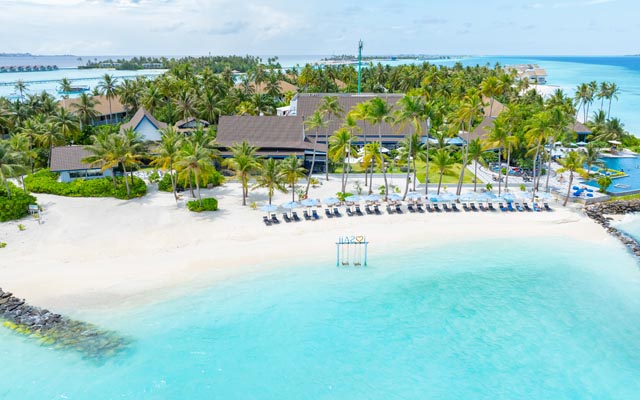
Tanjung Rhu Beach in Langkawi Island
MYANMAR
Myanmar is a country with diverse attractions offering culture, nature, heritage, food and festivals. In 2020, we will introduce Tanintharyi Region as a destination ideal for adventure trips and island stays with its abundance of natural rainforests and unspoilt marine resources. – May Myat Mon Win, chairperson, Myanmar Tourism Marketing Association
Recent developments in infrastructure have led to growth in cruise and tour operations in the Mergui Archipelago, a hidden paradise that I believe is turning into a hotspot. – Zarni Htwe, managing director, Adventure Myanmar Tours & Incentives
Myanmar’s Mergui Archipelago is seeing more cruise and tour operations
PHILIPPINES
Iloilo is a prime tourist area not only for leisure travellers but also for MICE thanks to its beaches, sustainable urban development, rich cultural heritage, and cuisine that fuses Spanish, Chinese and local influences.
The presence of an international airport and wide thoroughfares also make Iloilo more accessible to travellers while the rehabilitation of the Iloilo River, completion of the scenic 8km Esplanade, and renovation of historic and heritage buildings and sites are all targeted at the development of sustainable tourism. – Bernadette Romulo-Puyat, tourism secretary, Philippines
Puerto Princesa, El Nido and Coron islands in Palawan are popular among tourists due to their diversified offerings, ranging from underground river wonders to karst and limestone scenery. The pristine white beaches of Palawan’s San Vicente are also meriting a number of enquiries.
Those from the US, Australia and other longhaul markets usually spend 8D/7N exploring these destinations. – Irine Maliwanag, general manager, Im-ACTIVE Tours, Events, MICE Management & Services
Miagao Church, a historical landmark in Iloilo, the Philippines
SINGAPORE
Following the recent close of the Jurong Lake District’s Expression of Interest exercise, we are reviewing concepts from interested parties in 2H2020. We will consider attraction concepts such as nature or tech-based edutainment that appeal to families and working adults, as the site will complement the neighbouring Jurong Lake Gardens and the new Science Centre.
We hope the new tourism development will be a world-class leisure destination with attractions, hotels, and other lifestyle offerings. It will be aligned with the wider vision of the Jurong Lake District becoming a vibrant mixed-use business and leisure district that leverages its unique waterfront setting and surrounding greenery. – Jean Ng, executive director, attractions, entertainment and tourism concept development, Singapore Tourism Board
We are looking at going into more heartland areas, as there are many pockets still unexplored by tourists in Singapore. Our Ang Mo Kio Bird Singing Club tour is doing very well, so we hope to explore other neighbourhoods such as Toa Payoh. For our customers who are mainly from Europe and America, and especially those who have visited Singapore before, they are looking for experiences beyond attractions such as the Merlion and Sentosa. – Jasmine Tan, co-founder, Oriental Travel and Tours
Oriental Travel & Tours takes visitors into Singapore’s heartland
THAILAND
The Tourism Authority of Thailand will continue to focus on promoting linkages between major and emerging destinations to balance the seasonality factor and achieve a better distribution of tourist arrivals between urban and rural areas.
For the longhaul markets, we are creating awareness in emerging destinations offering a combination of natural and cultural travel experiences such as Nakhon Si Thammarat, Trang, Phatthalung, Chiang Rai, Nan, Phayao, Chanthaburi and Trat.
For the shorthaul markets, including South-east Asia, we are promoting Surat Thani, Ko Samui and its vicinity as affordable luxury destinations. Our Get Active Retreat Islands initiative will encourage responsible tourism and diving activities. – Yuthasak Supasorn, governor, Tourism Authority of Thailand
Ayutthaya, Thailand’s ancient royal capital, is the destination to look out for this year. Dotted with red-brick ruins where kings and queens once lived and worshipped, the city is on the cusp of a renaissance with new cafés and boutiques popping up, bringing in a fresh, youthful vibe with lots of Instagram-worthy venues. Guests can travel by helicopter to see the ruins and countryside from a different angle, or take a more leisurely route with an immersive overnight journey along the river from Bangkok. – Tim Cook, country manager, Thailand, Cambodia and Laos, Abercrombie & Kent
Wat Chaiwatthanaram, one of Ayutthaya’s best known temples
VIETNAM
Hoi An, Hue and Dalat will undoubtedly see an increase in traffic for 2020, as they offer unique experiences from Hanoi or Ho Chi Minh City. Phuc Quoc is gaining attention too, with direct flights from Kuala Lumpur and its year-round accessibility.
Personally, I hope Phong Nha gets more attention. Their cave system and landscape are serene and captivating. Access and infrastructure remain limited but this will change in the next few years. – Ken Lau, CEO/founder, Adventoro Travel
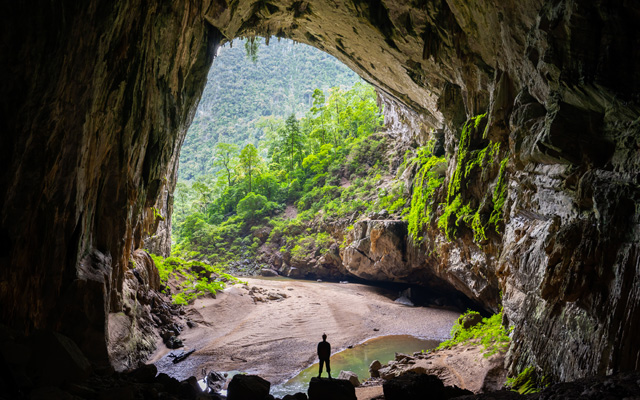
Son Doong, the largest cave in the world, is at the heart of the Phong Nha Ke Bang National Park in Quang Binh, Vietnam
Despite the threat of a global economic recession, travellers across the world, including Indonesian travellers, are increasingly prioritising value over cost, according to Travelport’s Global Digital Traveler Research 2019.
Hence, savvy travel providers need to consider how they can come up with the best values to entice Indonesian travellers, said Raymond Setokusumo, president director of Galileo Indonesia Perdana, Travelport’s operator in Indonesia.
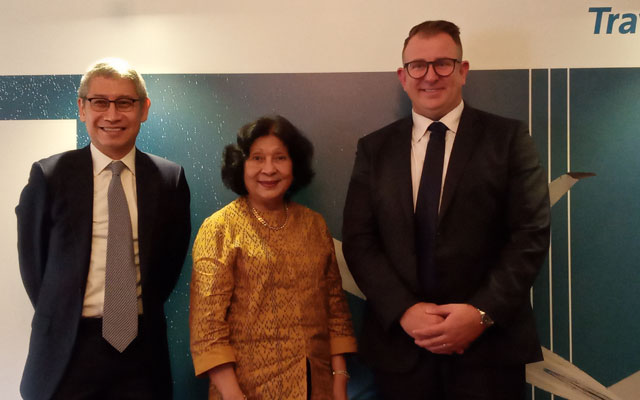
Technology key to unlocking the best value, personalised offers which Indonesian travellers seek, says Travelport’s Gary Harford (far right; pictured alongside Galileo Indonesia’s Raymond Setokusumo, and ASTINDO’s Elly Hutabarat)
The report, which surveyed 23,000 people from across 20 countries, including 500 from Indonesia, found that in terms of choosing an airline, for example, value is a top priority for nearly nine out of 10 travellers in Indonesia (88 per cent), with just six per cent booking solely on cost. They seek to personalise their flights with add-ons, such as extra legroom and meal upgrades.
Travellers in Indonesia prioritise airline reliability (91 per cent vs the global average of 86 per cent), great customer service (88 per cent vs 81 per cent), good on-board experience (88 per cent vs 77 per cent) and ideal route/timing (88 per cent vs 80 per cent).
On the other hand, Travelport reported that more than half of the travellers in Indonesia (52 per cent) are frustrated that they are unable to speak to a human being when using technology to make travel bookings.
Also, when attempting to personalise their experiences, a growing number of these Indonesian travellers are frustrated at not being able to understand what is included as standard (61 per cent, a massive 40 percentage point increase from 2018). Similarly, not knowing what add-ons are available is another pain point for 63 per cent of these travellers.
Speaking at the report’s launch in Jakarta on January 30, Gary Harford, regional director APAC operator territories, said: “Travellers expect an experience from travel providers that is as simple and engaging as any other retailer. Our research shows that technology is crucial to this – whether it’s in serving the personalised offers which travellers in Indonesia expect, or helping them find the best value.”
Commenting on the findings, Putu Ayu Aristyadewi, vice president of marketing communications at Smailing Tour, agreed that Indonesian travellers today demand value, not only when booking their tickets but also their holidays. Therefore, she prefers to listen to the needs of her clients, who are largely made up of high-end travellers.
To understand them better, Putu said, Smailing Tour rolled out Smailing Xperiences, a programme that allows travellers to craft their itineraries based on best values that they sought, thereby bypassing the traditional travel agency to plan their holidays.
As timing is top of mind for Indonesian travellers, Putu added that she set Xperiences at flexible times and dates.
However, South Tangerang-based Safa Tour owner Khairul Gumay dismissed the survey’s finding that Indonesian travellers prioritise value over cost, pointing out how certain segments of travellers still sought out affordable airfares when booking flights.
Case in point: To cater to the growing number of budget-conscious millennial travellers, Safa Tour rolled out low-cost semi-backpacker tour packages, such as 5D4N Japan Trip priced at 12 million rupiah (US$876).
“In Japan, for example, everything is expensive. So, for this package, we bring guests to a hostel, instead of a hotel. This is not a big deal for them because at least, their desire to visit Japan has become a reality,” he said.