TTG Asia
Asia/Singapore Monday, 6th April 2026
Page 1057

Thai hospitality staff locked out of government wage aid by absence of hotel closure directive

0
  • Thailand’s lockdown has snuffed out hotel business but hotels are denied an order to shutter
  • Without a hotel closure order, full-time staff are blocked from accessing their Thai Social Security Fund
  • Government’s other wage support has limited scope and is oversubscribed

Thailand has set clear lockdown policies in all provinces to combat the spread of Covid-19, but the same cannot be said of the authorities’ decision on hotel closure. Without a firm official directive for all hotels to close, millions of hotel employees will be left with no governmental support in this crisis.

According to the Thai Hotels Association (THA), of the 32,564 hotels registered in Thailand, some 95 per cent, or 30,936, expect to have zero revenue in April when they temporarily stop operations due to the lockdown.
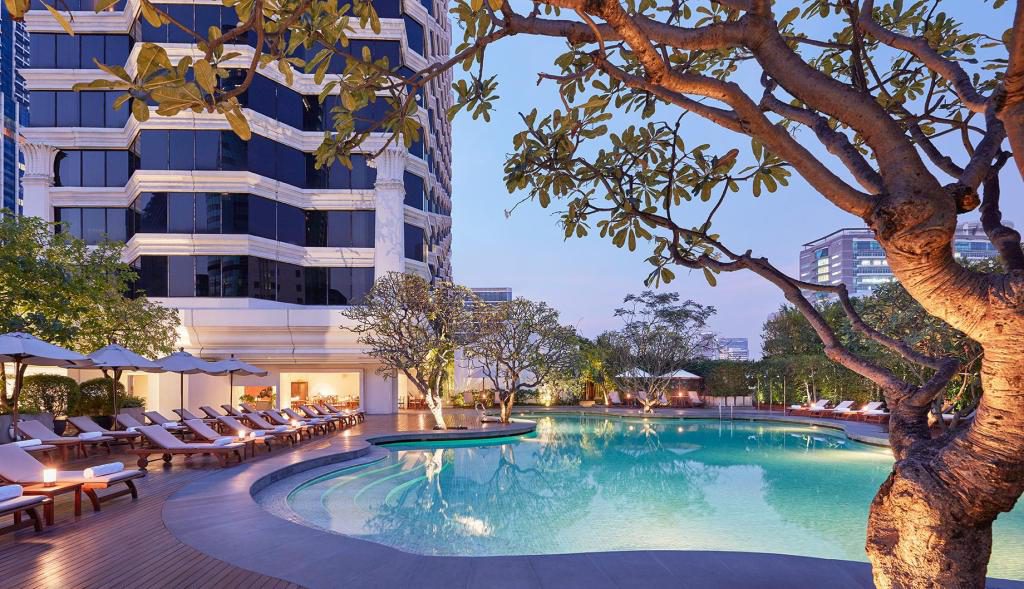
Thai Hotels Association estimates that 95 per cent of the 32,564 hotels registered in Thailand will have zero revenue in April

Phuket is the latest tourism magnet to close all entry and exit points from April 10 to 30, or further notice.

Unless hotels are ordered to shutter, full-time, formal hotel employees will be ineligible for financial aid from the Thai Social Security Fund (SSF). The only other exception to access this fund is when their employers have physical contact with an infected individual, in which case they are entitled to receive 50 per cent of their monthly salaries up to a maximum of 7,500 baht (US$226) for no more than 180 days.

“THA had a discussion with the Labour Ministry last week, but failed to achieve the goal of protecting our workers,” Surapong Techaruvichit, THA adviser, told the Bangkok Post. “Operators in each province have to help themselves by urging their governors to officially approve the closure of hotels in order to get SSF payment for affected employees.”

Some 1.63 million workers in the hotel business, particularly the more vulnerable 978,252 minimum-wage employees, are now likely to be left without any governmental support despite their regular monetary contributions to the SSF. The Thai social security programme is funded by monthly deductions of 10 per cent from a worker’s salary, with the employer and employee paying half each.

Pattamon: government restrictions have dismembered hotels, leaving them with only rooms

“Now we are forced to weigh how long we can carry on and carry our staff, who are like family, along with us. We think it’s about time the government issues some subsidies for hospitality businesses,” lamented Pattamon Mekavarakul, vice president of five-star Cape Dara Resort Pattaya.

According to Gavin Vongkusolkit, a board director of The Erawan Group, one of Thailand’s largest hotel investment companies with over 6,100 rooms in 56 properties, the unfolding crisis may force hotels to be closed for nine months or longer.

“Most of our hotels are already closed. As a big group, we have the financial resources to weather through this crisis. In any case, given the apparent effectiveness of the Stay Home campaign, we think we might be able to reopen sooner than initially anticipated,” Gavin told TTG Asia.

He added, in his capacity as the owner of the independent 58-room boutique hotel Ad Lib Bangkok, that the situation is much different for smaller hotels. “Smaller hotels with limited access to funding will have to figure out a different solution,” he said.

Assistance oversubscribed
The government’s offer to support contract workers, entrepreneurs and freelancers outside the social security coverage, with 5,000 baht monthly payouts for April, May and June, has attracted 21.7 million applicants since the application opened on March 28.

While the Ministry of Finance had only expected 3.5 million applications, it made a decision early this week to grant eligibility to nine million of those applicants. This will cost the ministry 135 billion baht.

“The state has enacted measures to support those in the informal economy – I don’t have anything against that, but it is not fair to businesses like ours that have been contributing to the SSF for years and now receive nothing in return,” Pattamon told TTG Asia.

“We were forced by the government to close our fitness centres, spas and and restaurants. We aren’t allowed to host events. They cut off our arms and legs – and left us with only rooms,” she said.

“As a five-star hotel, if even one client books with us we have to maintain our gold standard which means we have to provide the full staff and facilities, which is very costly. That’s why (the closure order) matters to us, and many in THA are sharing this message on Facebook and social media. We hope this will reach the ears of the government,” she added.

Save one, save all
La-iad Bungsrithong, president, THA northern chapter, stressed that all chapters in every region of Thailand have been calling out for the government to support the local hospitality industry. As one of the mainstays of the country’s economy, supporting it could help ensure a quicker rebound for Thailand after the crisis.

La-iad: a trying time for the entire tourism industry

“What’s important at this moment, is achieving clarity for hospitality businesses about how these financial aid measures will be applicable to them, and exactly which categories of handouts will specifically apply to hospitality workers. That isn’t clear now. Meanwhile, we have to come alongside all our members and support them because this is a very trying time for the entire tourism industry,” said La-iad, who is also general manager of RatiLanna Riverside Spa Resort, Chiang Mai.

The sentiment that the Thai government needs to look after the hospitality industry more was shared late last year in a press conference by hospitality veteran Pramookpisitt Achariyachai, founder of Phuket’s first hotel chain Kata Group.

“I feel that the government needs to pay even closer attention to the hospitality industry than it is doing. It’s one of Thailand’s key industries, but the government seems to pay attention only when it wants to boost the economy. Other times, we are mainly forgotten.”

THA has asked members to look after the welfare of workers by, for example, offering them accommodation and meals, but it is hard for operators to keep up their support as nobody knows how long the crisis will last, said Surapong. – Additional reporting by Nophol Techaphangam
Singapore steers cruise recovery efforts in Asia

0

The Singapore Tourism Board (STB) is rolling out a host of measures and initiatives to support cruise companies operating in Singapore, tiding one of the worst hit industries through the Covid-19 storm.

Supplementing the Cruise Development Fund, which typically provides support to cruise lines and in-market travel agents in their cruise marketing efforts, is enhanced support for companies that have committed to Singapore deployments through Cruise Development Fund partnerships.

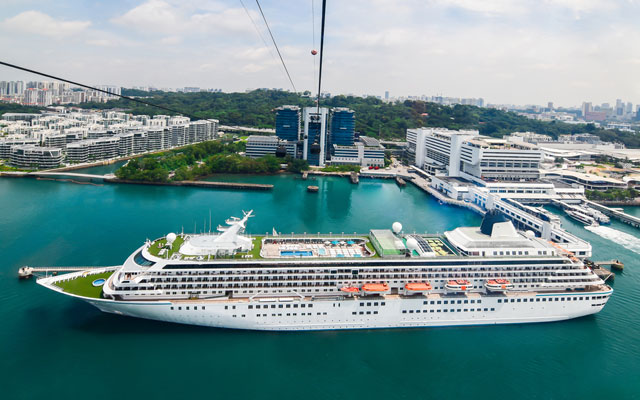
Singapore will be supporting cruise companies in their path to recovery from Covid-19; aerial view of luxury cruise ship in Singapore Cruise Centre pictured 

STB will also be fine-tuning the reimbursement process to enable partners to receive these funds more quickly and easily, and is working on relief measures to help terminal operators cope with Singapore’s port closure.

Cruise vessels that require marine services such as bunkering, resupply and repairs will find these services available for them at anchorage in the Port of Singapore.

The support comes on top of the S$48 billion (US$33.4 billion) Resilience Budget announced by the Singapore government last month that includes assistance for local tourism companies, including cruise terminals, affected by the outbreak. STB is currently exploring its options and assessing if further support can be provided.

“We recognise that there are concerns on the safety of cruising and a need to reverse such negative sentiments and correct misperceptions. While the Covid-19 situation is in uncharted waters, Singapore is committed to playing its part with the global cruise industry to revive cruise tourism when the market rebounds,” said Annie Chang, director, cruise, STB.

She added that STB’s measures will focus on supporting the cruise lines that have invested in Singapore, strengthening consumer demand to sustain healthy occupancy and yields for the ships, skilling up cruise agents to sell cruise travel packages more effectively, as well as galvanising regional governments to restore popular South-east Asian itineraries in the recovery phase.

“We are exploring how we can leverage on this downtime to ramp up training and accreditation for travel agents. Given that 80 per cent of cruise packages in the region are sold through travel agents, and cruise is a nascent product, this would be a good opportunity for travel agents to skill up,” she shared.

To repair the public sentiment on cruising, STB is working with the National Environment Agency and other government bodies to roll out the SG Clean campaign, which aims to improve public awareness that local businesses, including cruise terminals, are maintaining high standards of cleanliness and sanitation.

When sailings resume, STB will also work with Singapore’s key homeported brands to understand their enhanced safety and sanitation measures.

The tide is expected to turn for Asia’s cruise industry in the long run. Chang explained: “The growth potential for cruises in Asia remains strong and our industry is resilient. For one, we have had many years of good growth, which underlines our strong foundation as a cruise hub.

“Singapore remains well-poised to capture the growing demand, due to our geographical location and good infrastructure.”

From 2015 to 2019, Singapore’s compound annual growth rate of cruise throughput stood at 15.6 per cent. Last year, the country’s foreign cruise throughput grew by 3.5 per cent despite supply constraints, with strong in-market demand from mid- and long-haul markets, noted Chang.

She expressed confidence that the volume of cruise passengers sailing in South-east Asia will maintain its expected growth rate of 4.6 per cent to 6.4 per cent per annum to reach up to an estimated 4.5 million passengers by 2035.

Diamond Princess certified fit to sail after deep clean

0

Diamond Princess, which was caught in a web of negative headlines after Covid-19 infections were found among its guests and was subjected to a two-month-long quarantine at a Yokohama port, has finally been certified by the Japanese Ministry of Health, Labor and Welfare (MHLW) as being fit to sail with no traces of Covid-19 on board.

The welcome development comes after an intense disinfection of its entire premises, including all public and crew access areas, staterooms, crew cabins, dining and entertainment areas, by US-based BELFOR Holdings, Inc.

Japanese authorities confirm the Diamond Princess cruise ship is now free from any traces of Covid-19

BELFOR was selected from among many top service providers that responded to Princess Cruises’ global request for proposal and was approved by the MHLW which instituted the quarantine of the ship.

Working with oversight by Princess Cruises and MHLW authorities, BELFOR conducted level-three cleaning procedures according to the protocols established, specified, monitored and approved by the Center for Toxicology and Environmental Health (CTEH), MHLW and Princess Cruises.

Implementing the highest regard for the safety and well-being of all individuals involved in the disinfection process, technicians have been cleaning using high-grade, full personal protective equipment (PPE). The process entailed first the removal of all linens, bedding, and other material. Then, the team disinfected the entire vessel (all areas in which guests and crew interacted with the vessel) including all high touch surfaces (corridors, handrails, door handles, etc.) and the application of disinfectant.

Disinfection and cleaning also included carpet and hard-surface flooring as well as the entire heating, ventilating, air conditioning systems through-out the ship.

Hundreds of team members from BELFOR’s Japan and North America operations have been working around the clock since early March to complete the project.

As planned, Diamond Princess has moved from its present location at Daikoku terminal in Yokohama harbour to a nearby shipyard to complete hotel refurbishment – including the replacement of all mattresses, linens, games, toys, and other service items – as well as some planned technical projects. This phase is expected to be completed in May 2020.

Princess Cruises had previously voluntarily paused global operations of its 18 cruise ships until May 10. Details of subsequent cruise departures will be published in due course.

Asia’s branded hotel residences market booms

0

Hotel branded residences in Asia is flourishing, having seen a strong upward trajectory over the past two years, with the region now accounting for more than a third of global stock, according to new research by C9 Hotelworks.

This robust growth is reflected by 79 projects in the pipeline, which will see the addition of more than 16,130 units for the upscale through luxury tier properties in Asia by 2025.

Thailand leads the hotel branded residences sector in Asia with the most number of projects in the pipeline

The top pipeline project location in Asia, volume-wise, is Thailand, which boasts a total of 30 projects and more than 4,700 units, accounting for 29 per cent of the total upcoming residential units. This is followed by the Philippines and Vietnam with 12 and eight projects, respectively.

In contrast, China has a large number of existing luxury branded residences, with over 57 per cent of the projects located in the first-tier cities.

Phuket and Bangkok continue to be an investment hub for hotel residences, with 13 and eight upscale and luxury pipeline developments, respectively.

“Despite the current headwinds facing Asia’s real estate markets from the Covid-19 crisis, we expect the region to lead the global property recovery
cycle,” said Bill Barnett, managing director, C9 Hotelworks.

More affordable offerings are entering the market, driven by rising demand for hotel branded residences; while the entry of upscale and upper upscale hotel products is also seeing an upswing.

In addition, both urban and resort destinations have seen a rising number of sustainable eco-focused projects.

The demand for upscale and luxury hotel branded residences comes on the back of the rise in the number of affluent individuals over the past decade.

Within Asia, pipeline projects in upscale to luxury segments are highly concentrated in the South-east Asia region, which accounts for more than 90 per cent of total pipeline stock. Nearly 50 per cent of the upcoming supply is affiliated with luxury hotel brands.

The key affiliated hotel groups for branded residences are Marriott, Accor, Dusit, Hyatt, Shangri-La, IHG and Wyndham, which combined represent 58 per cent of the total pipeline projects in the region. In terms of the brand chain scale, the luxury segment is the mainstream product while the remaining supply is evenly shared by upscale and upper upscale brands.

While over 51 per cent of the completed properties are located in urban areas, pipeline projects are in favour of resort destinations which represent 58 per cent of the total upcoming properties.

Alila, Anatara, Mövenpick and Dusit D2 are the most active brands in resort destinations while in urban destinations, brands are distributed more evenly.

In terms of supply growth, the top resort destinations in Asia are Phuket, Bali, Phu Quoc, and Pattaya; while the top urban destinations are Bangkok, Kuala Lumpur, Manila, and Jakarta.

Possible Idul Fitri exodus ban adds to Indonesia tourism industry’s woes

0

Indonesia’s trade is eyeing a longer, bleak future as the government mulls over a plan to ban this year’s Idul Fitri mass homebound exodus to prevent the wider transmission of the rapidly-spreading virus, following a spike in the number of infected cases and a rising death toll in the country.

Ramadan is set to take place from April 23 to May 23, followed by the Islamic holiday on May 24 and 25.

Transportation Ministry plans to prohibit vehicles from entering Greater Jakarta

This Idul Fitri holiday was expected to see some 20 million people travel to their places of origin, resulting in a massive stream of urbanites to rural communities, according to a report by The Jakarta Post.

As of March 31, the country has reported 1,528 confirmed cases with 136 fatalities, the highest death toll in South-east Asia. As Jakarta topped other affected cities with 747 cases and 83 deaths, the capital is increasingly considered the epicentre of Indonesia’s coronavirus outbreak.

As such, the Transportation Ministry plans to prohibit vehicles from leaving Greater Jakarta, which includes Bogor, Depok, and Bekasi in West Java, and Tangerang in Banten, and heading further to its neighbouring provinces of Central and East Java. The office will also reduce the passenger quota of flights by up to 50 per cent.

Meanwhile, the central government is formulating a policy scheme, dubbed No Exodus, No Idul Fitri Vocation 2020, according to coordinating maritime affairs and investment minister Luhut Binsar Pandjaitan, who is also the acting transportation minister overseeing the annual mass exodus.

Military personnel will guard vital points, such as entrance of toll roads to limit access to vehicles.

“We have to consider a variety of scenarios for the safety and security of holiday exodus travellers and the entire (nation),” the minister said in a statement.

According to a survey conducted by his office, 66 per cent of respondents said that they will not take part in the Idul Fitri mass homebound exodus if it is banned by the government. Half of them said that they are “worried” about the virus while 48 per cent are “really worried”.

The survey findings back a proposed campaign directed at parents to help influence their children not to join the mass exodus, which also calls for an increase in the number of interesting TV programmes to entice people to stay at home, and the introduction of Internet access in rural areas.

It also calls for the closure of tourist destinations and intercity routes connecting affected cities as well as suspension of public transportation.

President Joko Widodo has urged Indonesians to stay at home and to ditch their plans to travel, as well as observe physical distancing to curb the spread of Covid-19.

The country is now in a state of emergency, which the government has extended until May 29.

Khairul Gumay, owner of Safa Tour, shared that the latest development has resulted in a wave of airfare cancellations by people in Greater Jakarta who were planning to go home during the Idul Fitri holiday.

He added that he had granted clients full refunds for outbound and domestic tour packages booked for the holiday, despite not being able to secure full refunds from airlines himself.

According to Khairul, there are still clients who are insistent about travelling abroad, such as to Dubai. In response, Khairul has chosen to pay them full refunds to discourage their trips.

He explained that despite the financial losses, allowing his clients to proceed with their travel plans could pose even bigger problems, such as them being unable to return to Indonesia or getting infected with the virus.

“Travel agents also have an educational role to play,” he said.

Khairul has stopped selling outbound packages from March to June, and has asked his staff to go on no-pay leave.

While Indonesia had earlier planned on targeting domestic travellers to keep the tourism industry afloat, Khairul said the closure of several tourist destinations in the country has made it impossible to encourage any domestic trips.

“We will probably start selling packages again in September, but people’s travel confidence might only return in December. So, 2020 looks set to be a difficult year overall,” he said.

AB Sadewa, corporate secretary of Panorama Destination, said his company is now reducing operational expenses and preparing travel packages for the rebound.

Sadewa expressed hopes that the government could step up efforts to curb the virus, such as spreading the message of physical distancing in the native language of Bahasa Indonesia, instead of English.

The sooner the virus is stemmed, the quicker the industry could recover, he said.

Amid the current challenging situation, both Sadewa and Khairul expressed hopes that the government would help the industry through income tax relaxation or tax deduction for operational costs such as employee salaries and electricity charges.

Trip.com rolls out Covid-19 international traveller’s guide

0

Trip.com has launched the COVID-19 International Traveler’s Guide, a one-stop information source designed to make planning travel safer and easier during this period of uncertainty around the coronavirus.

On the upgraded page, users can avail of a suite of tools, information and news to make informed decisions about future travel plans.

Trip.com’s COVID-19 International Traveler’s Guide lets users see at a glance if they can travel to a destination

The Country/Region Entry Restrictions tool now allows users to input their desired destination and travel history, to get up to speed on travel restrictions around the globe.

Users can also find on the page the most recent cancellation provisions from Trip.com, updates on relief efforts, and statistics on the state of the global pandemic.

RedDoorz partners SE Asia governments to solve housing needs in crisis

0

Online hotel management and booking platform RedDoorz is working with
South-east Asia governments to provide free temporary accommodation across multiple locations for frontline healthcare personnel and emergency first responders battling the pandemic.

The Red Heroes regional initiative will also see RedDoorz distributing to guests well-being kits that contain washable face masks, alcohol-based hand sanitisers, energy drinks and droplet hats.

RedDoorz Plus @ Thamrin is one of two hotels activated in Indonesia for the initiative

“As a regional company deeply rooted in South-east Asia, we have been closely monitoring the ever-evolving situation and the impact of Covid-19 in our region. The pandemic outbreak has resulted in immense stress across countries and industries, in particular for the tourism, hospitality and now healthcare sectors. As a result, we identified ways in which we could lend our support in offering targeted aid for those on the frontlines of this crisis,” said Amit Saberwal, CEO and founder, RedDoorz.

“We are positive that we will be able to overcome this challenge if we stand together. We hope more companies with the means to support the initiative will participate during this challenging time,” added Saberwal.

The Red Heroes initiative will be launched in the Philippines, Indonesia and in Singapore.

In the Philippines, the initiative supports the Department of Tourism and Manila City Government in accommodating medical practitioners residing in the capital amid the Luzon-wide lockdown.

In Indonesia, the initiative supports the Ministry of Tourism and Creative Economy in providing free rooms for frontline healthcare practitioners and emergency first responders treating Covid-19 cases in the local hospitals.

Over in Singapore, the initiative is executed with the Ministry of Manpower and is aimed at housing foreign workers entering and returning to Singapore who have been issued with a mandatory 14-day Stay-Home-Notice as well as Malaysian employees in Singapore who have been affected by the Malaysian lockdown.

In addition, RedDoorz is also looking at alternative ways to support the various government initiatives, including the supply of rooms for frontline healthcare professionals.

Nanjing to welcome a Radisson property in 2024

0

Radisson Hotel Group has signed on what will be its first property in Nanjing, China come 2024.

Located in Nanjing South New Town, a rapidly emerging commercial area that will become the city’s new CBD, the upscale Radisson Blu Hotel Nanjing South New Town will feature 300 keys, an extensive collection of event spaces, three restaurants, a lobby lounge, an indoor swimming pool, and a fitness centre.

Artist’s impression of the Radisson Blu Hotel Nanjing South New Town

The hotel’s events capability shines through two exhibition areas spanning more than 3,200m2, a large ballroom as well as seven other meeting and function spaces.

Radisson Blu Hotel Nanjing South New Town is part of a larger complex which houses a high-end shopping mall and an office tower.

Katerina Giannouka, president, Asia Pacific, Radisson Hotel Group, said: “Nanjing has always been one of China’s most important cities; its name literally means Southern Capital, which reflects its historical influence. Today, Nanjing remains one of China’s 21st century most vibrant destinations and the rise of Nanjing South New Town will further enhance its development.

“With its world-class accommodation, facilities and conference space, Radisson Blu Hotel Nanjing South New Town will be a central landmark in this exciting new district.”

The property is being developed by Nanjing South New Town Exhibition Centre Development Co.

HK travel agents call for more government relief

0

Hong Kong’s travel and tourism players are urging the government to roll out a fresh round of relief measures to help the battered industry counter the triple whammy of prolonged protests, the unresolved US-China trade war, and the global Covid-19 pandemic sweeping the globe.

The city’s severely-hammered tourism sector reached a new monthly low in February, with arrivals plunging to 199,000, down more than 96 per cent from the same month last year, according to the Hong Kong Tourism Board.

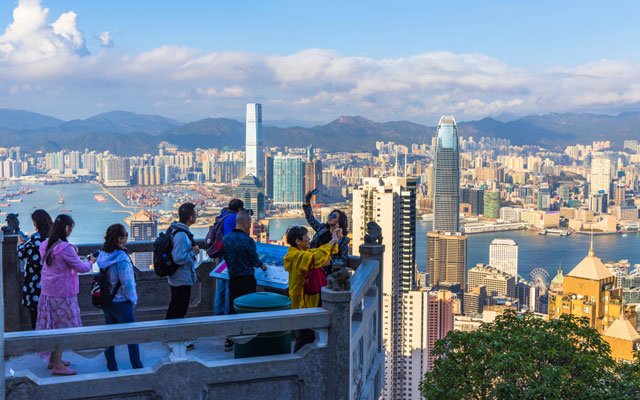
Hong Kong’s tourism sector urges government for more financial aid; tourists at the Victoria Peak viewpoint in Hong Kong pictured

On February 8, the government announced major border closures to further stem the Covid-19 spread.

The ensuing massive cancellations and postponements has dealt a further blow to the city’s tourism industry already struggling to survive, and resulted in two travel agencies, We Fly and GoGoGo Travel, folding in March amid the coronavirus chaos.

In a Facebook post, We Fly said that it ceased trading as its major shareholder had filed a winding-up petition to the court. It also asked consumers to contact Travel Industry Council (TIC) for assistance if they had any questions.

TIC chairman Jason Wong attributed the shutdown of both agencies to the economic impact of the virus outbreak and poor internal management.

With both inbound and outbound traffic grounding to a halt, Wong said that tourism businesses are chalking up huge losses, with no business trickling in. To fight for survival, tour operators are resorting to cost-cutting measures like implementing no-pay leave, pay cuts, and even retrenchments.

He also called on the government to provide more financial assistance to businesses, such as wage subsidies to keep staff employed.

“For instance, some overseas governments like the UK and Singapore are subsidising workers’ wages. Hopefully, ours will implement something similar, like paying about 70 to 80 percent of staff wages up to three months for the existing 20,000-30,000 agency employees,” he said.

Hong Kong Association of Travel Agents chairman, Ronald Wu, said that a lot of small travel agencies are currently in “hibernation” mode, having ceased operations temporarily till the storm is over.

He added that as for medium- and big-sized companies, the key to survival was implementing cost-cutting measures, such as closing some outlets, laying off employees and forcing staff to take no-pay leave.

As part of a HK$25 billion war chest prepared by the government to help individuals and businesses, a total of 1,350 travel agencies each received a one-off subsidy of HK$80,000. In addition, there are two schemes in place to help agencies out, namely, the Travel Agent Incentive Scheme and the Green Lifestyle Local Tour Incentive Scheme.

“However, those cash incentives can only be disbursed after we have serviced the guests. As there are virtually no business activities now, we hope that the government can provide additional funding relief for the purpose of staff payroll, and rental costs, which is the biggest expense for most travel agents,” Wu said.

Travel Agent Owners Association president, Freddy Yip, believed existing well-established licensing system and stringent supervision has keep incompetent operators out of the trade.

“This explains why our country has less cases on agents going bust. I am sure our role (as agents) will not be replaced or become extinct,” he said, citing the example of how Hong Kong travellers who were stranded overseas during the virus outbreak were given timely assistance by tour operators.

He added that he expects the government to roll out more supportive measures for the trade in its second relief package, which he hopes would provide relief to unemployed or underemployed agents in the industry.

“If the date for China’s annual parliamentary meeting is confirmed, it’d be a good sign that travel is on the rebound and it may restore travellers’ confidence to start travelling again,” he said.

“Once the green shoots appear, my advice to trade partners is to maintain a reasonable price tag rather than a cut-throat pricing strategy to vie for clientele and market share. It’s a vicious cycle that will benefit no one.”

Given the unprecedented global impact from the Covid-19 pandemic, Klook COO & co-founder, Eric Gnock Fah, opined the situation has thrown many tourism players into a sink or swim scenario.

“While we are privileged to be in strong financial health, this is not true across the board. We know that our merchants and partners are facing a really challenging time, and we are exploring different ways to support them.

“Beyond this, Klook continues to work closely with various NTOs and is part of some recovery task forces. This enables us to obtain and relay first-hand information to our partners, ensuring they are prepared to quickly leverage any potential opportunities when the rebound in the industry occurs.

Gnock Fah added that despite the challenging conditions, he believes that it is also an opportune moment to optimise resources, sharpen operations, enhance efficiencies and strengthen relationships.

“For instance, we have started developing learning programmes for our people, working to enhance and strengthen their core competencies. We want to empower and prepare our employees well so that they will be able to hit the ground running when the opportunity arises.

“We are not sitting idle. I believe one of our key strengths is our ability to pivot, try new things and move quickly. Instead of focusing on the negatives, the current dynamic situation pushes us to think of creative solutions around what we can offer customers.”

Fusion appoints Stuart Lyall to manage new Vietnam property

0

Wellness-focused hospitality group Fusion has appointed Stuart John Lyall to manage a new Vietnam property, Fusion Suites Vung Tau, which is opening in April.

Lyall’s most recent role saw him guide Selong Selo Resort & Residences in Lombok through its soft opening phase as general manager. Prior to his time in Indonesia, Lyall was also general manager at Our Jungle Camp from 2017 to 2018.

Before his move to Asia, he was with Australian cruise company, Travel Marvel, where he served as regional product manager of Asia and India from 2013 to 2017.

Prior to that, Lyall spent time in other capacities, such as general manager of sales and marketing for South Sea Horizons; regional product manager Asia Pacific with Peregrine Adventures; an international travel and hotel consultant for Flight Centre; and Asia-focused tour director for Intrepid Travel.