Bali is stepping up efforts to address key infrastructure challenges, including waste management, traffic congestion, water distribution and energy security.
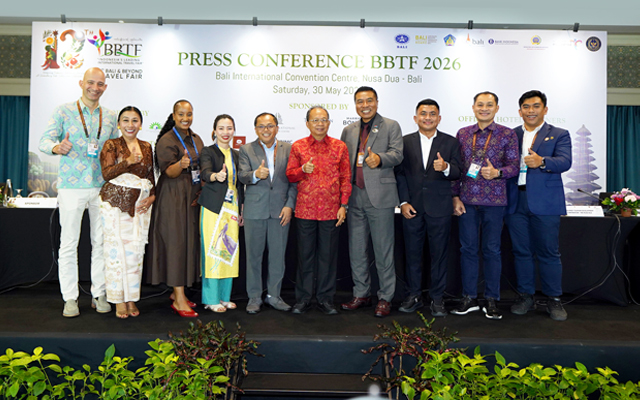
Speaking at the Bali and Beyond Travel Fair (BBTF) 2026, Bali governor I Wayan Koster said: “Bali will have waste-to-energy plant funded by Danantara and the project will break ground this June with a target to complete by late 2027.”
The facility will process 120 tonnes of waste daily, with Koster aiming for a garbage-free Bali by 2028.
To address traffic congestion, the provincial government is working with the central government to improve land and sea transport connectivity, with projects targeted for completion by 2030. Water challenges will be addressed through improvements to distribution networks, while Bali is also developing local clean energy facilities to strengthen energy self-sufficiency.
These initiatives support Bali’s target of achieving net-zero emissions by 2045 through rooftop solar deployment, virtual power plant technology, and large-scale solar projects in Nusa Penida and Muara Nusa Dua.
Koster said these infrastructure projects are important to support Bali’s tourism-driven economy, which has continued to grow following the pandemic.
“In 2025, foreign arrivals reached a historic high of 7.5 million visitors, proving Bali’s enduring appeal despite weathering intense negative media campaigns in late 2025,” he said.
“Last year, visitor arrivals to Bali increased by 350,000 tourists compared to 2024, meaning Bali alone contributed (nearly) 46 per cent of Indonesia’s 15.4 million total foreign visitors in 2025.”
Bali generated 176 trillion rupiah (US$11 billion) in tourism foreign exchange earnings, accounting for 55 per cent of Indonesia’s total tourism revenue.
According to Koster, tourism contributes 66 per cent of Bali’s economy and helped drive economic growth of 5.8 per cent, the fifth highest among Indonesia’s provinces.
To support continued growth, the regional government has introduced stricter enforcement measures.
“Tourists who violate legal regulations or disrespect Balinese cultural values will face swift deportation under newly established enforcement systems,” he said.
Koster said Bali’s hotel and restaurant tax revenue reached 2.89 trillion rupiah during the first five months of the year.
“The hotel tax increased from 1.7 trillion rupiah to 1.8 trillion rupiah, and the restaurant tax also increased from 885 billion rupiah to one trillion rupiah; the data is clear because this is an online system,” he said.
While conflict in the Middle East contributed to a nine per cent decline in international arrivals in April, the decrease narrowed to seven per cent in May as demand began to recover.
“So the negative trend is slowing down, but if we look at the impact on hotel occupancy rates and the impact on hotel taxes, it is actually increasing, meaning that even though the number of foreign tourists has decreased, the impact on PHR has not dropped,” Koster noted.
Looking ahead, the Bali government will focus on ensuring visitors stay in licensed accommodation, as many travellers are currently using unlicensed properties that do not contribute tax revenue.