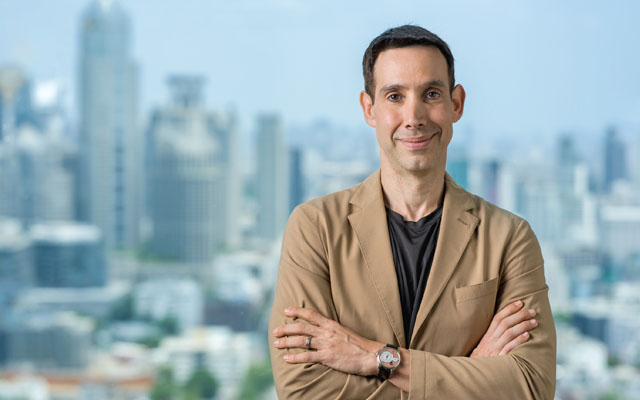
In an interview with TTG Asia, Agoda CEO Omri Morgenshtern discusses AI commerce, moving up the booking funnel, and changing roles in travel operations
 What are the biggest misconceptions in the travel industry right now about agentic AI and AI commerce?
As AI reshapes hospitality innovation, travel platforms are racing to redefine how consumers plan and book their journeys. To cut through the theoretical hype, it requires looking at AI through the rigorous lens of software architecture and user experience testing.
There is an underlying assumption that everything will eventually begin in some sort of horizontal, chat-like layer. However, it is not clear that the world is heading in that direction. Generative AI fundamentally allows us to change user interfaces and collect more personalised data. Yet, travel remains a highly visual, infrequent, and high-expense undertaking for most consumers. In that environment, an out-of-the-box chat experience falls short because travellers want to research thoroughly, view rich sources, and establish a high degree of trust that they are getting the best rate and service. The user experience will undoubtedly evolve, but it is not clear that it becomes a pure, horizontal agent doing all the negotiation and booking immediately.
You mentioned that AI is giving OTAs the power to become the new search. How do you plan to compete in the trip-planning layer?
Travel commerce functions in three layers: the inspiration layer, the itinerary planning layer, and the search-and-book layer, which is where OTAs have traditionally operated. Generative AI has very clearly opened the door for OTAs to compete in that middle layer – trip planning – which historically took place on search engines like Google.
Changing customer habits functions as both a powerful defensive moat and a significant challenge. Today, anyone can ask a standard chatbot for a three-day Bangkok itinerary and receive a massive blob of text, but that is not the user experience travellers desire. They need interfaces that allow them to edit plans, save them for later, and seamlessly interact with booking engines. The ultimate winner in this space will be the platform that builds an easy-to-use experience connecting robust supply, competitive pricing, integrated booking, and comprehensive customer support. Because we already understand the search, booking, and fulfilment layers so well, we believe we are uniquely positioned to build that itinerary planning layer. To be clear, we are not looking to entirely replace search engines; our opportunity is moving higher up the funnel to increase our direct traffic share from roughly 60 per cent today to even more over time.
You mentioned in your talk at Vantage ’26 that AI is helping 1,000 engineers essentially gain the capacity of 10,000. With that in mind, what is the realistic timeline for mastering engineering efficiency with AI?
I believe we will see one engineer doing the work of 10 within a two-to-three-year range, depending on how new models develop. Engineering is far more than just coding; it involves integration, code reviews, defining product specifications, and identifying security vulnerabilities. To solve that complex pipeline, you need distinct AI agents handling each phase and communicating with one another. Initially, integrating these agents actually distracts developers, causing engineering efficiency to drop before it gradually climbs. Exponential multipliers only happen when all those automated components function perfectly together.
Agoda opened its new Bangkok office for 4,000 staff at One Bangkok on April 1, 2026, and you have spoken about building the ‘Silicon Valley of Asia’. With internal AI tools handling more coding and data tasks, is your hiring shifting towards AI managers rather than traditional developers?
We are still hiring developers, supply managers, and marketing professionals. The job titles haven’t changed, but what it means to be a good software developer today is completely different than it was two years ago. They must integrate coding with new AI tools that simply didn’t exist before. The fundamental goal remains the same; we want to achieve more, but AI changes our ability to execute at scale with the talent we have.
When will consumers begin to experience this fully realised, AI-driven search interface?
Consumers are already starting to experience elements of it, but we are constantly experimenting and A/B testing because the perfect interface is not yet a solved problem. You will see various bots interacting with you on our platform, but the AI behaves differently depending on whether you are at the top of the funnel or on the final payment page. We will not release a flashy demo just to show off if it destroys value at scale. We only deploy tools once we have perfected the user experience and are confident they solve actual customer issues.
Can you share a concrete example of how Agoda deploys AI to help neutralise traveller anxieties down the funnel?
AI must be utilised to solve real problems and remove friction. Customer support is an area where AI changes everything. Instead of relying on manual calls to verify details, we now deploy AI voice agents capable of having reasonable conversations with suppliers, rapidly understanding user intent, and resolving complex issues. A resolution that used to take an entire day can now happen in five minutes because we automated the stream. Additionally, for third-party inventory, we can utilise AI to pre-emptively call and verify that the hotel has the booking details before the traveller even arrives, securing a flawless experience for the consumer without massive scaling issues.
As Agoda moves higher in the funnel, how can DMCs and tourism boards partner with you?
By moving up the funnel, we are capturing travellers who are still undecided about their final destination, making it much easier to influence their decision-making. Travellers are incredibly price-sensitive so if we can highlight an affordable rate in a city they previously assumed was too expensive, we can actively shift traveller behaviour. We currently have teams embedding city and destination travel organisations into our funnel, and that collaborative product offering will continue to grow.
Finally, how can hoteliers successfully sell their unique vibe, F&B packages, or room upgrades in this evolving AI landscape?
The good news is that the core fundamentals do not change. I do not believe the booking journey will become entirely text-based. Rich content – videos, high-quality images, varied food types, localised language support, and exceptional service levels – will continue to matter dramatically.
Hoteliers shouldn’t worry excessively about how the broader industry is changing above them; instead, they should focus entirely on how their specific operational role can evolve. An F&B manager must evaluate how AI can help them serve more languages, cater to diverse palates, and increase their operational output by 30 per cent or 100 per cent. The genuine risk is not the technology itself, but being out-executed by industry peers who utilise AI better within their daily jobs. Properties that successfully deploy technology to broaden their service capabilities will emerge as the absolute winners.