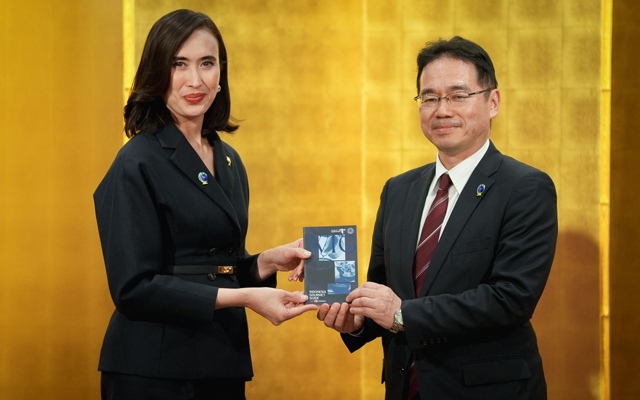
Indonesia and Japan have signed a Memorandum of Cooperation (MoC) on tourism on March 30, marking the first formal bilateral framework in tourism between the two nations.
The agreement was signed by Widiyanti Putri Wardhana, Indonesia’s minister of tourism, and Yasushi Kaneko, Japan’s minister of land, infrastructure, transport and tourism (MLIT), in Tokyo, coinciding with the state visit of Indonesian president Prabowo Subianto.
The MoC follows two years of negotiations and targets a wide range of strategic sectors, including business events, wellness tourism, gastronomy and the development of sustainable tourist villages, according to a Ministry of Tourism statement.
Widiyanti said in her speech: “Japan continues to be a key strategic partner for Indonesia. In 2025, over 380,000 Japanese travellers visited Indonesia, a 12 per cent increase over the previous year, with an average length of stay of nearly eight days.”
She emphasised that air connectivity is the primary driver of these flows.
“Currently, the Tokyo-Jakarta and Tokyo-Bali routes serve as the backbone of mobility, with potential for expansion into destinations such as Yogyakarta and other major cities in Japan,” she said.
Direct flight capacity between Indonesia and Japan currently stands at approximately 685,000 seats per year across 46 weekly flights, which is below potential tourism demand, according to Widiyanti.
“We hope that Japan Airlines can explore opportunities to expand its services to Indonesia, including increasing flight frequencies to Bali and opening access to priority destinations,” Widiyanti said.
Japan’s MLIT minister Yasushi Kaneko stated: “This is the first time such a tourism cooperation agreement has been signed between our governments. Through this, we will strengthen efforts in joint promotion, information exchange, and collaboration to attract tourists to regional areas while promoting sustainable development.”
Last year, people-to-people exchanges between Japan and Indonesia exceeded one million for the first time. To maintain this momentum, Japan is developing inbound strategies that encourage tourists to explore diverse regions across the country, he said.
To ensure the agreement leads to immediate action, a Joint Working Group will be established to monitor implementation and draft specific action plans for investment and joint promotion.
During the state visit, Widiyanti also held meetings with Japan Airlines, the Japan Tourism Agency and the ASEAN-Japan Centre to step up collaboration.
With this partnership, Indonesia aims to strengthen tourism ties with East Asian countries. It also serves as a mitigating step against ongoing global geopolitical uncertainties, such as developments in the Middle East that could impact international travel flows.