Provincial stakeholders in Indonesia must ensure their destinations are fully prepared to welcome tourists before expecting expanded air connectivity.
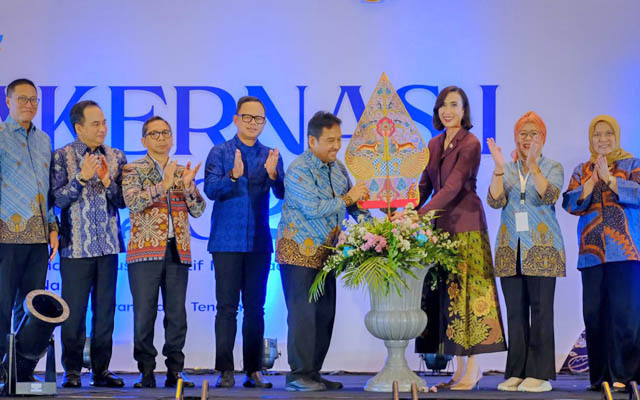
Speaking at the 2026 IHRA National Working Meeting in Semarang, Central Java, Bima Arya, deputy home affairs minister, noted that while many regions have tourism potential, they often lack clear differentiation and a cohesive ecosystem. To address this, he proposed pilot programmes with selected regional heads to strengthen local leadership capacity.
Positioning his ministry as a facilitator, Bima emphasised that focus should be placed on regulatory harmonisation and infrastructure mapping.
“When we talk about tourism, not all regional heads fully understand the potential of their areas, especially in terms of city branding,” Bima said. He suggested starting small.
“We don’t need to be overly ambitious. Let’s start with a few regional heads who are ready and have a clear vision. We test the model first, then replicate it.”
He cited the transformation of Banyuwangi, East Java, as an example of how local leadership could successfully reposition a destination’s image to eventually attract airlines.
Indonesia Hotel and Restaurant Association (IHRA) chairman, Hariyadi Sukamdani, welcomed the proposal but underscored the importance of risk management and careful selection.
“We need proper mapping. Identify regions with strong leverage but controlled risk. We need success stories that can be replicated,” Hariyadi stated, adding that concentrating investment on the most prepared destinations was more effective than dispersing efforts without priorities.
Airline executives echoed this sentiment, affirming that destination readiness is a critical factor in flight sustainability. Eddy Krismeidi, expert staff at Indonesia National Air Carriers Association and head of Indonesia Affairs at Indonesia AirAsia, pointed out that coordination in Indonesia remains uneven compared with other countries.
“Many local governments don’t understand how to sustain a route, as routes typically bleed in the first three to six months,” he noted. Using a potential Bangkok-Yogyakarta service as an example, he explained that even iconic attractions like Borobudur require joint groundwork to be viable.
Farshal Hambali, chairman of the Board of Airline Representatives in Indonesia, added that joint marketing was essential to ensure that “aircraft load factors and hotel occupancy grow in tandem”.