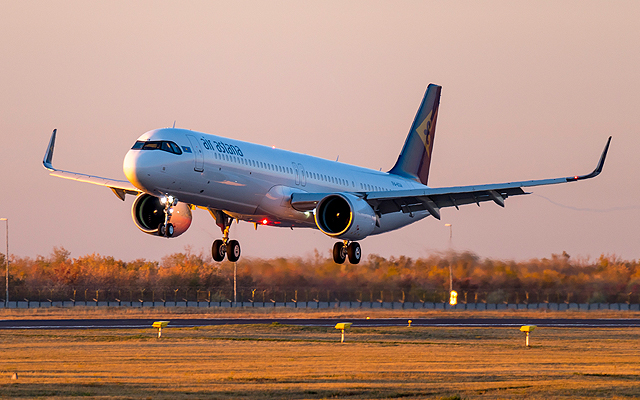
Air Astana Group is benefiting from changing aviation flows between Europe and Asia, increasing capacity as geopolitical uncertainty makes some traditional transit routes through the Middle East less predictable.
“We have seen a significant increase in transit traffic through Kazakhstan in recent months. During 1Q2026, Air Astana Group’s international transit traffic increased by 65 per cent year on year, including a 158 per cent increase in March alone,” Yerbolat Baissalykov, senior vice president, revenue management and commercial planning, Air Astana Group, told TTG Asia.
In response to disruptions in the Middle East, the group redeployed around 18 per cent of its network capacity within a month, shifting resources to higher-demand markets including China, South-east Asia, the Commonwealth of Independent States (CIS), the Caucasus and selected European routes.
Europe continues to perform strongly. “In March 2026, ASK growth to Europe increased by 10 per cent year on year, while RASK growth reached 53 per cent, reflecting both stronger demand and improved yields,” Baissalykov said.
He believes the increase in traffic is part of a broader change in regional aviation patterns rather than a short-term reaction to geopolitical events.
“We are seeing stronger demand not only for transit connections between Europe and Asia, but also for travel into Kazakhstan itself as the country gains visibility as both a tourism and business destination,” he said.
Air Astana Group sources around 70 per cent of its fuel requirements domestically, providing stable access to supply. However, Baissalykov said the group’s position is also supported by operational and financial discipline and a young, fuel-efficient fleet.
Air Astana expects to receive two Boeing 787 aircraft in 2026, supporting fleet growth from 67 aircraft this year to 86 by 2030.
The group currently serves 104 routes and plans to launch 11 new routes this year, including services from Astana to Shanghai, Guangzhou, Larnaca and Dalaman, alongside additional seasonal routes.
While Air Astana continues to evaluate opportunities across Europe, Central Asia and South-east Asia, Baissalykov said Asia remains the immediate growth priority.
“Asia is currently the primary growth focus, particularly China and India, where demand growth remains very strong. Capacity allocation to China has tripled compared to pre-crisis levels, and the group continues to expand frequencies and destinations across the region,” he said.
China has become one of the group’s most important growth markets. Following the launch of Shanghai services in March, Air Astana plans to more than double flights to China this summer, while low-cost subsidiary FlyArystan is preparing to announce additional destinations in the market.
Looking ahead, the group will continue to assess opportunities based on demand trends, fleet availability and long-term network sustainability.
“Our focus is not opportunistic short-term growth, but building a sustainable Eurasian network that strengthens Kazakhstan’s role as a key connector between Europe and Asia,” Baissalykov concluded.