Travelodge Hotels Asia (TLA) and a capital partner advised by TLA has acquired former 2ND by hotel androoms Sapporo and 2ND by hotel androoms Nagoya Nishiki.
The hotels will undergo rebranding and reopen in early 2023 as Travelodge Sapporo Susukino and Travelodge Nagoya Sakae respectively, and represent the third and fourth hotels for TLA in Japan, following the successful opening of Travelodge Honmachi Osaka and the upcoming launch of Travelodge Kawaramachi Shijo Kyoto.
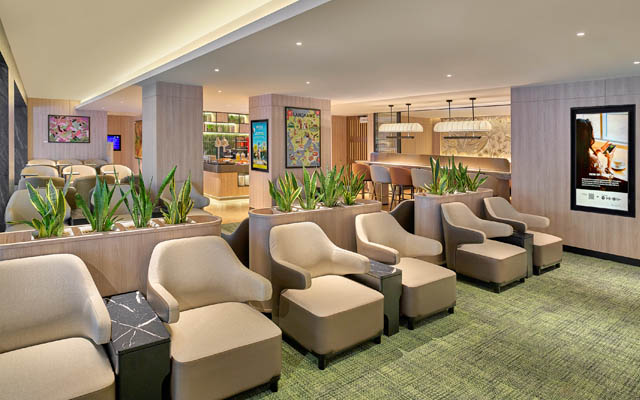
2ND by hotel androoms Nagoya Nishiki will be rebranded as Travelodge Nagoya Sakae
Built in 2019, the Sapporo hotel is located in Susukino and features 212 rooms across 14 floors. The Nagoya hotel was built in 2017 and is centrally-located in Nishiki. It features 211 rooms across 13 floors.
A new tourism campaign, titled Live fully in Viet Nam, will kick off for 2022-2023, with a focus on casting the country in a “safe, friendly and hospitable” light.
Sharing details on the new campaign on October 5, ahead of the country’s hosting of the Mekong Tourism Forum in Quang Nam next week, deputy minister of culture, sports and tourism, Doan Van Viet said the marketing plan would centre on “smart and sustainable tourism development followed by green and responsible travel”.
Doan: Vietnam is developing modern and holistic infrastructure to benefit the tourism industry
Quang Nam, named the green destination of Vietnam’s national tourism year 2022, is said to play “an increasingly important role as part of our tourism cluster strategy”.
Quang Nam, according to Doan, is regarded as a visitor-friendly destination, thanks to its “natural resources and wonderful coastline” as well as “vibrant culinary scene, many cultural attractions, and a diverse history”.
“For tourists seeking a sustainable travel experience where (they) can learn as well as appreciate nature, Quang Nam is home to productive farms, handicraft villages, rivers, mountains, and unspoiled natural attractions,” he added.
Besides Quang Nam, Vietnam is also working towards developing more regions for tourism under the Viet Nam Tourism Development Strategy to 2030.
“The strategy clearly defines our goal in developing modern and holistic infrastructure, especially transport infrastructure in tourism clusters, national tourist sites and areas with tourism potential. We are taking an inclusive approach to tourism infrastructure development, which focuses not only on international-class tourism destinations, such as Hoi An, Sapa, Ha Long, Da Nang, Nha Trang and Phu Quoc, but also on secondary tourism destinations, especially ones with potential to connect to regional tourism networks,” he details.
Vietnam has been part of the Greater Mekong Subregion cooperation for the last 20 years, participating in four regional tourism infrastructure development projects sponsored by the Asian Development Bank. The latest project is the Second GMS Tourism Infrastructure for Inclusive Growth Project.
“These projects were designed to improve the accessibility to secondary tourism destinations in provinces along GMS economic corridors as well as enhance the environmental conditions and urban infrastructure for tourism development,” he said.
With Vietnam’s support of the 2022 Mekong Tourism Forum, Doan said he hopes to achieve three outcomes: “First, to strengthen linkages between the leaders of the sub-region’s tourism industry, with the aim of rapidly recovering the tourism industry in a sustainable, resilient and comprehensive way, to promote the sub-region’s tourism as a common destination.
“Second, to introduce the city of Hoi An, voted as one of the 25 best cities in the world; also, to introduce Quang Nam in Central Vietnam as an ideal destination for green and sustainable tourism, rich in cultural values, full of amenities of a top-class beach resort.
“Third, the Forum demonstrates the recovery of the tourism industry, the return of sellers and buyers in the region, after a period of travel freeze. Our aim is to promote a rapid recovery of international tourism and create sustainable tourism supply and demand.”
He urged tourism leaders and delegates at the event to “focus on practical goals that make the travel and tourism industry better for the benefit of our populations”.
Two OTAs, Booking.com and Klook, have agreed to a long-term partnership that allows travellers to access Klook attractions and experiences directly on Booking.com.
Travellers can now visit the Attractions tab on Booking.com to purchase attraction tickets or experiences provided by Klook. Currently, Klook experiences are live in over 175 cities, across over 30 markets on Booking.com, and the majority of these are available in Asia and Oceania.
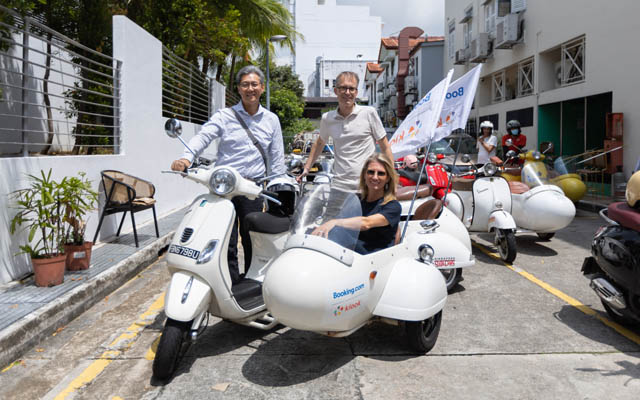
From left: Klook’s Wilfred Fan, and Booking.com’s Matthias Schmid and Laura Houldsworth
This means that when a family makes an accommodation booking on Booking.com, the algorithm will then recommend bookable family-friendly attractions and experiences through Klook.
The Klook partnership follows Booking.com’s earlier collaboration with Viator and Musement for the North American and European markets respectively.
In 2020, Booking.com made several attempts to build an attraction vertical, but “outsourcing was not the avenue to go”, Matthias Schmid, senior vice president, Booking.com Trips division, revealed. “We were very strong and very good in generating global traffic, but it’s not our core competency, which is why we decided to build strategic partnerships (in the attractions space).”
“Borders are opening up, restrictions are easing, and travellers are once again traveling and showing more enthusiasm and vigour than ever before. With everyone keen to get the most out of every opportunity, experiences are more important than ever. They make a trip special, meaningful and above all, memorable,” noted Schmid.
Although the three partnerships are not exclusive, Schmid stressed that Booking.com is not looking to “proceed with additional integrations”, and it is more about “strengthening” current commitments.
He said: “The focus during the pandemic was on scaling the attractions vertical, which means putting all these products on the shelf. The next step is to improve the customer’s experience to make sure that our system learns to make the right product recommendations to our customers.”
Meanwhile, Wilfred Fan, chief commercial officer, Klook, added that this partnership will help merchants “reach an even larger customer demographic globally and accelerate travel recovery in the region”.
He pointed out: “(During the pandemic,) we had to go really deep to explore things that even the locals were interested in. We have helped to open up more experiences for people (in Singapore for example) to discover, which is now available to all customers globally.”
When asked about getting service providers to be more responsive to customers who have booked experiences, Fan shared that it is a “continuous education product” for the South-east Asian market, and trainings to directly interact with customers are conducted regularly.
“This is because people in South-east Asia are used to face-to-face service. But once it comes to online communication, they are not used to it, and there is a loss of (communication) due to language issues or it is just not general practice,” Fan said.
Meliá Hotels International has launched its new Travel for Good campaign, shaping it around four key areas – environment, people, community and good governance.
A number of initiatives has been rolled out in South-east Asia as part of the campaign, such as the 360° Cuisine concept at Meliá Chiang Mai which creates a circular flow between the hotel and its 8,093m² organic farm.
The 360° Cuisine concept at Meliá Chiang Mai is one of the initiatives for the Travel for Good campaign
The company is also providing educational opportunities and training to Vietnamese students through a collaboration with VinUniversity – this arrangement comprises hotel internships, Future Leader Development programmes, a mentorship programme, guest lectures from the Meliá team, and joint research projects, among other initiatives.
In addition, Meliá Bali is the first hotel in Asia to receive the EarthCheck Master certification from the international body for environmental management and sustainability.
Over the coming months, Meliá will present each of the actions in more detail through a campaign on its social media profiles.
“Our passion for hospitality drives us to respond to global challenges, viewing sustainability as a fundamental driver behind the transformation of the travel model to ensure a positive legacy for our planet and our society,” said Gabriel Escarrer, vice president and CEO of Meliá Hotels International.
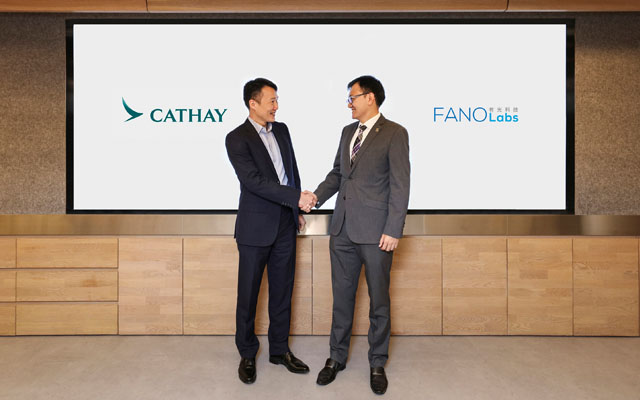
Cathay, in partnership with Fano Labs, has launched an advanced conversational artificial intelligence (AI) to enhance its customers’ digital experience.
The new conversational AI will improve the efficiency and productivity of the airline’s AI chatbots, enabling them to provide more accurate responses to customers’ queries – all in anticipation of the increase in the volume of call and chat traffic.
From left: Cathay’s Lawrence Fong and Fano Labs’ Miles Wen
The airline has seen a shift in customer behaviours, turning from traditional hotlines to digital channels such as WhatsApp and WeChat for more instant responses. Digital channel usage has experienced monthly growth of 10 to 20 per cent over recent months, as Cathay continues to add back more flight capacity.
Building an AI chatbot typically requires human AI trainers to look at historical data to see how customers interacted with the chatbot. However, the partnership is one of the first in the market to have successfully developed and launched the Conversational AI Training Excellence platform that uses AI technologies to train AI chatbots.
The trainer AI leverages Fano Labs’ Callinter product to analyse interactions with customers, including voice calls, live chats, messaging systems, and automatically group these data into different categories for further processing, before presenting the results to a human supervisor for review and approval. The AI chatbot then learns from the data extracted by the trainer AI, reducing the training time by half, enabling Cathay to take on a significantly greater volume of training data and ramp up its ability to discover new topics and improve the accuracy of chatbot responses.
Lawrence Fong, director digital and IT, Cathay, said: “This collaborative effort in Conversational AI technology is the latest example of how we can work together with start-ups to develop mutually beneficial partnerships and ultimately bring benefits and enhanced service to our customers.”
Miles Wen, co-founder and CEO, Fano Labs, said: “Our partnership with Cathay started in 2019 under the introduction of Hong Kong Science and Technology Parks Corporation. This successful collaboration is a strong showcase of Hong Kong’s thriving innovation and technology ecosystem.”
Family-friendly Village Hotel Sentosa (VHS) has officially reopened its doors with a bevy of new and interactive experiences that will allow children to learn and develop new skills through play.
From a brand-new Mini Hotelier Experience that provides children with the opportunity to try out different professions to meet-and-greet sessions with VHS’ adorable mascots, and an array of activities and workshops, the new experiences have been specially curated to nurture their imagination and create great memories.
The Mini Hotelier Experience gives children the opportunity to try out different hotel professions
The Village Playcation package lets guests experience the hotel’s new offerings including a two-night stay in a Family Room, choice of one mini hotelier experience, and unlimited access to Playtivities.
Children will also enjoy local childhood snacks at the Village Cart, balloon sculpting; free-flow ice cream and popcorn; meet and greet sessions with the hotel’s adorable mascots – Village Explorers: Vin and Vee, and more.
For the Mini Hotelier Experience, children can pick from five different jobs: Mini Artist, Mini Housekeeper, Mini Engineer, Mini Chef and Mini Gardener.
In addition, VHS will offer a host of fun-filled activities that are bound to keep the entire family engaged and entertained during their stay – from family aqua Zumba to movie screening, resin art, sand art and Pilates for kids, the options are endless.
The Village Playcation room package is priced from S$1,180 (US$828) and available till December 23.
The co-living model is an investor magnet and the space is getting crowded in Asia, especially in saturated hotel markets such as Singapore.
Already, consolidation is happening, as seen in the share swap merger between Singapore’s Hmlet and European co-living player Habyt in April. A month earlier, another co-living player, Singapore’s Assembly Place, share-swapped with Libeto, which operates Commontown.
Boutique co-living experiences through shared facilities are offered at Hmlet Cantonment
Hmlet’s consolidation, however, is widely attributed to brazen growth by the start-up, which started with strata units in 2016 and grew to 1,500 units in Singapore, Hong Kong, Australia and Japan. In May, Hmlet’s troubles came to light when Australian media reported its exit from the market with unpaid debts amounting to more than A$500,000 (US$350,670).
On the other hand, the Assembly Place/Commontown merger shows that increasingly, scale is needed in the co-living segment as more competitors enter the market. It gives Assembly Place a portfolio of 600 units, including 120 rebranded Commontown units.
Hmlet and Habyt boast 8,000 units and gain global presence post-merger.
Giselle Makarachvili, CEO of Hmlet, said the Australian exit was largely driven by the prolonged closure of borders.
Brazen or not, the co-living space is set to expand further post-lockdown. JLL’s Hotels & Hospitality Group reported that Singapore, one of the first Asian countries to lift most travel restrictions, bounced back the quickest with transaction volumes approaching US$900 million in 1H2022. Most active was the mid-market space where investors identified opportunities to convert properties into a co-living product to boost performance, JLL said.
In diverse company
Aside from pure co-living players, serviced residences giant Ascott wants a hand in the next-gen product too. Ascott has eight Lyf properties in operation and 10 under development, four of which will open this year. The 18 Lyf properties represent 3,400 units in nine countries.
Ascott is targeting to have 150 Lyf properties with 30,000 units by 2030. Scale matters for operational effectiveness to drive better margins, said Kevin Goh, CEO for lodging, CapitaLand Investment, in an interview.
“In addition to growing the Lyf brand via management contracts, we also see attractive opportunities for our private funds and our hospitality trust, Ascott Residence Trust, to deploy more investments into this product class,” he said.
Global hotel chain Accor also wants to play, fielding its co-living concept, Jo & Joe. In the game too is Singapore-listed Katrina Group, whose subsidiary ST Hospitality (formerly Straits Organization) operates four co-living properties in the city, branded ST Signature.
Then there is a string of small independent players. There are at least 10 in Singapore alone, such as Colliwoo, Hei Homes, Cove and Figment.
“I think it’s natural for serviced apartment players to try and maximise yield by generating some shorter stay income, and likewise for hotel operators to tap the more reliable income and certainty offered by longer stay products. So, we should expect to see both sides reaching into each other’s pocket,” said Robert Williams, head of hotels & hospitality Asia Pacific, Watson Farley & Williams.
“Ultimately it’s all lodging, and it is about capital that likes the space and operators plus brands that can truly demonstrate performance.”
The question is whether small players can withstand an onslaught from larger players in future.
“Niche players play a part in pioneering trends. But sooner or later it’s a matter of eat or be eaten,” said Bill Barnett, managing director, C9 Hotelworks, Thailand.
ST Signature properties outperformed the market in occupancies
Jackpot
Co-living, as its name suggests, is all about staying in the same place and making new connections at shared communal facilities in a property. It hits a sweet spot with the next-gen and budget travellers, and a jackpot with Covid-19, which has fuelled trends such as work-from-anywhere and fewer trips but longer stays.
Co-living’s appeal to travellers also hinges on it being anything but cookie-cutter. No two co-living concepts, designs or spaces are alike, but all tend to be trendy and more affordable than a hotel room or serviced apartment. Most are high-tech with check-in/out and distribution (direct or via OTAs), and try to connect guests with one another and to local communities.
ST Signature, for instance, has 24-hour hosts to guide guests on where to find the best chicken rice and other destination insider tips.
The rate for the lowest category unit at ST Signature is from S$80 (US$58) a night, said Katrina Group’s COO of accommodation business, Andreas Lorenz.
During Covid-19, ST Signature properties outperformed the market in occupancies, he said.
“The market has been on the rebound since Singapore lifted restrictions (late last year). Millennials haven’t travelled for two years due to Covid-19 and we’re seeing demand returning from the neighbouring countries and Europe,” said Lorenz.
Bulk of the market
According to a McKinsey report, millennials and Gen-Zs will form half of consumers in Asia-Pacific by 2025, surely a factor that puts co-living development in the minds of investors.
As well, in an era of labour shortage, co-living properties, like serviced apartments, are “low maintenance” compared with traditional hotels. Fewer transient guests check-in and out, and they tend to take better care of their home-away-from-home, Goh said.
Despite its potential, sexiness and cost-effectiveness, lodging investment consultants and hospitality CEOs doubt co-living would challenge the dominance of serviced apartments.
Said Robert Hecker, managing director Pacific Asia, Horwath: “It’s a reaction to perceived opportunities in the younger generation market or emerging demand segments (such as longer stays and work-from-anywhere). There’s nothing particularly more favourable about co-living than serviced apartments in profitability and returns.
“Perhaps the per square foot revenue is better in a three-bedroom co-living apartment than a three-bedroom in a traditional serviced apartment (occupied by one family), but I don’t see the cost structure being any different. Or perhaps the need for slightly larger common areas in a co-living situation ultimately spreads out the revenue so there’s no difference in revenue per square foot.
“I think co-living has its limits, so it may outpace for a bit, but ultimately serviced apartments serve a perennial need/demand.” Arthur Kiong, CEO of Far East Hospitality, said he is not seeing co-living as a more favourable investment than serviced residences.
“Yes, co-living is very popular and something we are also looking into. However, we are careful if this is just a passing trend or it will endure. And if it does, what the long-term market expectation with regards to product, services and technology, is” said Kiong.
“My mantra has always been, what sounds good may not actually be sound. So, we are still watching this space with an open mind.”
Co-living operators beg to differ, of course.
Said Hmlet’s Makarachvili: “We are of the view that co-living or what we call ‘flexible living’ at Hmlet, whether it resides in serviced apartments or residential buildings, will continue to gain traction as a new generation of renters come of age and enter the market.
“Ironically, as we emerge from lockdowns and Covid-19, we have never been more connected online via Zoom and other social media platforms, yet we have never felt more alone. This generation of consumers are tired of isolated and antiquated lodging products. There is increasing demand for the option of a seamless housing solution that also offers a sense of belonging and community. Flexible living opens a new way of housing and lifestyle for all generations – from students, working professionals to families to seniors.”
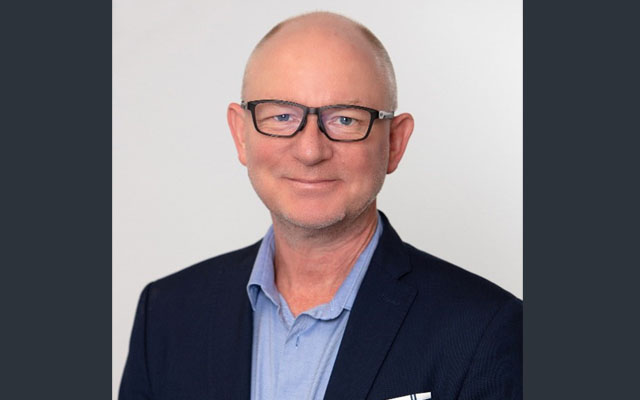
Brij Hotels has appointed Shiv Kumar Mehan as chief executive officer. He joins the senior leadership team to forefront operational excellence, innovation in brand building efforts and strategic development for the company.
His in-depth industry knowledge and expertise spans across three decades, having successfully launched and operated many hotels, resorts and various hospitality models. Over the years, he has led dynamic hospitality teams and has been instrumental in establishing multiple ventures in markets across the country.
Prior to joining Brij Hotels, he was the chief operating officer at Leisure Hotels Group.
With New Zealand borders reopened since August, Tourism New Zealand is eyeing to attract ‘value’ travellers in India who are seeking unique experiences with a strong connection to its people, culture and nature.
“What we are looking at from the Indian market is not much about volume but value of travellers who are coming in. So, we want to tap Indian travellers who can connect with local communities and explore lesser-known places in the country. We are seeking curious travellers who are ready for the unexpected,” said Gregg Wafelbakker, general manager, Asia, Tourism New Zealand while speaking to TTG Asia on his recent visit to India.
Wafelbakker: recovery for the tourism sector will happen gradually
Wafelbakker shared that the average length of stay of Indian visitors to New Zealand has been 14 days in the past, which is more than any other international market. The number of Indian tourist arrivals to New Zealand doubled from 2015 to 2019 with 60,000 Indian visitors.
“India has been the fastest growing market for us prior to the onset of the pandemic. Indian travellers traditionally have engaged in more activities than other markets. However, as sustainability has become critical as we look to rebuild tourism, we want Indian travellers to contribute both economically and socially,” added Wafelbakker.
Going ahead with the strategy above, Tourism New Zealand introduced its new campaign If You Seek in the Indian market in September, associating with trade partners including Thomas Cook, MakeMyTrip and Kulin Kumar Holidays. As part of the campaign, Tourism New Zealand has curated special itineraries for travellers that include variety of experiences like relaxing in the hot pools of He Puna Taimoana to swimming with dolphins at Kaikoura Dolphins.
“If You Seek is a unique campaign targeting high-quality visitors to New Zealand and will create curiosity among end travellers to explore the destination deeper. It simplifies the magic of New Zealand to step out of one’s comfort zone and seek more,” said Pratik Shah, chief operating officer, Kulin Kumar Holidays.
“We are encouraged with the forward bookings for New Zealand from the Indian market. We understand that recovery for the tourism sector will happen gradually and we are encouraged by what we are hearing from our trade partners,” said Wafelbakker.
Indonesia Ministry of Tourism and Creative Economy (MoTCE) will focus on growing the domestic travel next year with a target of 1.4 billion movements while boosting the quality and sustainability for the international market.
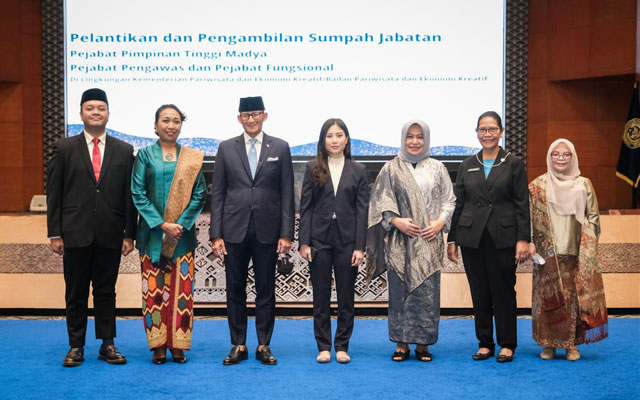
This statement was made by minister of tourism and creative economy Sandiaga Uno during the inauguration of new MoTCE deputies in his office on October 3.
The inauguration ceremony of new Ministry of Tourism and Creative Economy deputies (Photo: MoTCE)
Ni Made Ayu Marthini is deputy for tourism, taking over from Nia Niscaya, who is now the deputy for strategic policies. Marthini was formerly director of the manufacture product export development for Ministry of Trade.
The new deputy for resources and institutional affairs is Diah Martini Mohammad Paham, who has built her career at MoTCE in the communications and marketing departments. She was previously director of inter-agency relations.
Sandiaga said: “Our (domestic travel) target of 500 million movements this year has been passed. By August, domestic travel movements have reached more than 600 million. Next year, domestic travel will be the focus.
“International arrivals have started to recover in number, but we want to improve its quality and sustainability.”
Aside from accelerating campaigns like #inDOnesiaCARE and #DiIndonesiaAja, Sandiaga shared that president Joko Widodo has given instructions to travel ‘di Indonesia saja’ (just in Indonesia) to optimise the potential of Indonesia’s varied nature and culture, adding that this would resonate with #BanggaBuatanIndonesia (proud of the Indonesian products).
He said that not only should they be proud of buying Indonesian products but also travelling within Indonesia, making sure that the domestic market becomes mainstream and an on-going trend.
Sandiaga’s instruction to Diah was to expand and improve the quality of manpower in the tourism and creative economic sectors though upskilling, reskilling and new skilling pro-grammes to be ready for the 5.0 era.
“The target is to create 1.1 million new job openings in 2022 and 4.4. million by 2024,” he said, and also emphasised the importance of materialising regional and international MoUs and other collaborations.









 Prior to joining Brij Hotels, he was the chief operating officer at Leisure Hotels Group.