TTG Asia
Asia/Singapore Tuesday, 7th April 2026
Page 1565

First flights from South Korea spark new tourism fervour in Johor

0
Tourism players in Johor eager to better understand and cater to the market

Johor is set to get its first direct flights from South Korea when Jin Air commences twice weekly Incheon-Johor Bahru services on January 2, 2018, prompting new tourism initiatives and partnerships in the Malaysian state to better cater to the market.

The flights are expected to boost South Korean tourist arrivals into Malaysia, which dipped 5.7 per cent to 189,002 for the first five months of the year. From January to July 2017, a total of 72,000 tourists from South Korea visited Johor.
Tourism players in Johor are eager to better understand and cater to South Korean tourists

To ensure the flights get sustained interest, an MoU was recently signed between the airline, Malaysian Inbound Tourism Association (MITA) and Malaysian Chinese Tourism Association (MCTA).

Uzaidi Udanis, MITA president, shared that the association will work with Jin Air, Tourism Johor, Tourism Malaysia, hotels in Johor and local transportation companies to organise a fam trip for South Korean outbound agents in conjunction with the inaugural flight.

Uzaidi shared: “The fam trip will include a product presentation on Johor as well as a brainstorming session with South Korean agents for Malaysian inbound agents to (gain) a better understanding of the South Korean market.

For now, there is an awareness that South Koreans enjoy golfing, which the state, with its over 20 golf courses, could provide. But beyond that, Uzaidi said there is still much to learn about the market. “We need more information, such as who are the golfers? Are they corporate clients, millennials?”

MITA currently intends to coordinate with inbound members in Johor to come up with packages, which will include golf rounds and one-week elementary English courses for adults and children.

Another challenge is the lack of Korean speaking guides in Johor. To tackle this problem, Uzaidi said Jin Air has agreed to provide complimentary airfares to tour leaders from South Korea for confirmed tour packages of at least 10 people, while MITA will work with the hoteliers in Johor to provide free accommodation.

This would be a win-win arrangment, he pointed out, with Malaysia’s inbound sector benefiting from having tour leaders act as interpreters, while outbound agents in South Korea can enjoy lower costs when selling group packages.

Johor Tourism’s domestic trade and consumerism committee chairman, Tee Siew Kiong, who witnessed the MoU signing, added that the state government will look into long-term solutions such as by providing Korean language courses for industry frontliners and offering tourism information pamphlets in the Korean language.

Meanwhile, the flights are also expected to boost visits from Johor to South Korea. MCTA Johor Chapter chairman, Kelvin Ang, told TTG Asia that its members are committed to ensure the outbound sector from Johor to Incheon has good loads. He said: “We have to fill up about 10 per cent of the aircraft which translates to around 40 seats per flight, or 80 seats per week. We don’t see this as a problem as we have 80 members in Johor selling outbound.

“For Johorians planning a holiday to Seoul, the flights offer convenience and cost savings as they need not travel to Singapore for a connection to Seoul.”

TTC brings Luxury Gold brand to the Philippines

0
Yap: Philippines the second most important market for the brand

The Travel Corporation’s (TTC) Luxury Gold brand, a luxury spinoff from Insight Vacations, has kicked off in the Philippines with nine new tours in destinations as varied as Japan, Croatia and Montenegro, and Scandinavia as part of its 2018 tours.

The Philippines is the most attractive source market after Singapore (Malaysia comes third), TTC’s Asia president Robin Yap said, explaining that Singaporeans travel two shorthaul and two longhaul a year because of the size of the city state, while Filipinos travel twice a year usually as a family, with five to six minimum members, making them a “very lucrative market”.

Yap: Philippines the second most important market for the brand

Moreover, compared to Filipinos, Singaporeans tend to be more concerned with price than how good an experience they will get, said Yap. “The Philippine market understands what luxury is about. (The) lifestyle here is about enjoyment, celebration, travelling in style”.

“We have been here for 37 years and we see how the market has grown. Typhoons and volcanic eruptions don’t stop the people from travelling. They’re very resilient,” said Yap.

Aileen Clemente, president and chair of Rajah Travel – TTC’s GSA in the Philippines – added that there is growing demand for luxury travel as Filipino travellers who started with budget trips become more mature in their travel preferences.

Luxury Gold hence focuses on curated destinations and service targeting luxury seasoned travellers seeking attractions where others lack access, Yap shared. The brand’s group tours take small groups with a maximum of 25 pax instead of over 40 pax. Its concierge-style services offer, for example, behind-the-scenes access to an opera production, a booking at a Michelin star restaurant which normally has to be booked six months in advance, or a private limo transfer at the Vatican.

To further enhance the travel experience, Luxury Gold features the Chairman’s Collection curated by TTC chairman Stanley Tollman. The collection offers experiences such as lunch with an Italian Count at his grand Tuscan villa, visiting the gardens of Alnwick Castle with the Duchess of Northmberland, all with select departure dates.

Chinese business travel budgets to get fatter

0

Chinese organisations are expecting expanded travel budgets in the coming year, but many continue to be concerned with budget management with client-facing travel given high priority compared to internal meetings, based on findings from CITS American Express Global Business Travel’s 2017 China Business Travel Survey.

Reflecting increasing business confidence, 31 per cent of Chinese companies expect travel budgets to rise over the next twelve months, compared to only 17 per cent last year. Meanwhile, the survey also shows that 40 per cent of Chinese organisations plan to expand travel budgets because of opportunities presented by the Belt and Road initiative.

Client-facing travel continues to be important

Yet, 20 per cent of larger companies surveyed state they are likely to replace close to half of all internal meetings with video or teleconferencing within the next year.

Client-facing travel, on the other hand, remains a priority. Ninety per cent report that increased client-facing travel would likely increase revenue; and 53 per cent believe an increase in client-related travel would improve overall revenue by 10-20 per cent. Developing new business relationships, and maintaining existing clients were also listed as the top two reasons for business travel.

“Our research indicates an intent to increase business travel budgets over the next year, (but) when we look deeper we find that the intention to increase spending also comes with some strategic reallocation of expenditure. This is particularly noticeable when considering the number of organisations that have reported plans to reduce spend on internal meetings. It is apparent that businesses continue to acknowledge the importance of client-facing travel,” observed Kevin Tan, vice president of CITS American Express Global Business Travel.

The report further suggested that organisational goals must be balanced with traveller concerns, as the survey revealed Chinese organisations currently view traveller comfort and wellbeing as being equally important to cost, while safety considerations are most important.

Inflexible travel policies (30 per cent) and complex reimbursement processes (23 per cent) were reported as the top two complaints for business travellers. Moreover, 30 per cent of companies reported travel policy compliance below 75 per cent.

“Companies that balance traveller concerns with appropriate cost saving measures are the most likely to see a significant financial benefit. The barometer’s findings indicate that the strictest cost-savings measures, such as an inflexible travel policy, are likely to result in false-savings due to lower policy compliance,” advised Tan.

South Korea gets onboard Asia Cruise Cooperation

0
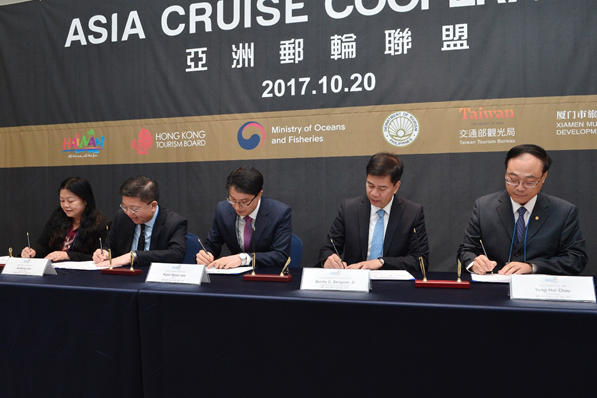
ACC members gather in Busan, South Korea to welcome their newest ally; (from left) HPTDC's Luo Yan; HKTB's Anthony Lau; Mr Anthony LAU, Executive Director, Hong Kong Tourism Board (HKTB) MOF's Yoon Hyun-soo; PDOT's Benito Bengzon Jr; TTB's Yung-Hui Chou

South Korea is now represented in the Asia Cruise Cooperation (ACC), with its Ministry of Oceans and Fisheries (MOF) recently becoming the group’s sixth member.

Founded by the NTOs of Taiwan and Hong Kong in 2014 with the aim of bringing destinations together to expand the regional cruise market, ACC’s existing members were Hainan Provincial Tourism Development Commission (HPTDC), Hong Kong Tourism Board (HKTB), Philippine Department of Tourism (PDOT), The Taiwan Tourism Bureau (TTB), and Xiamen Municipal Tourism Development Commission.

ACC members gather in Busan, South Korea to welcome their newest ally; (from left) HPTDC’s Luo Yan; HKTB’s Anthony Lau; MOF’s Yoon Hyun-soo; PDOT’s Benito Bengzon Jr; TTB’s Yung-Hui Chou

ACC stated that the addition of South Korea means more harbours belonging to members have been made available to provide stronger support for international cruise companies operating in Asia.

Luo Yan, director of HPTDC, further expects the addition of South Korea to enhance ACC’s influence, in addition to reducing the cost of promotion and bolstering the international competitiveness of members.

Meanwhile, Yung-Hui Chou, director-general of the Taiwan Tourism Bureau, hopes the addition of South Korea will help realise the group’s original purpose of “(replacing) competition with cooperation” in the region’s cruising industry, as well as help ACC members better leverage their unique advantages.

The move comes as South Korea accelerates the reinforcement of port infrastructure in hopes of attracting more cruises to homeport in the country, said Yoon Hyun-soo, director of MOF’s shipping policy division.

WTTC urges tourism sector to report sustainability impact

0
The Sustainable Development Goals are a collection of 17 global goals designed to be a "blueprint to achieve a better and more sustainable future for all".

WTTC is calling on companies in the travel and tourism sector to measure, monitor and report their sustainability impact as it launches new guidance on Environmental, Social and Governance (ESG) Reporting for the Travel & Tourism Sector.

Gloria Guevara, president & CEO, WTTC, said: “We know that travel and tourism has a significant role to play in reducing poverty, protecting the environment, and contributing to the inclusive and sustainable growth (the UN Sustainable Development Goals) aspire to.

The Sustainable Development Goals are a collection of 17 global goals designed to be a “blueprint to achieve a better and more sustainable future for all”.

“Sustainability reporting – that is integrated into financial reports or presented as a separate activity – shows commitment to and progress against these goals. What is more, Goal 12 specifically calls on companies to report their ESG impacts.”

The new WTTC report covers sustainability reporting trends, including that of governments and stock exchanges mandating such reports, and of companies refining reports to be more engaging for audiences.

It also includes a 12-step guide to reporting and specific guidance on how to report on the issues of climate change; community; energy; governance, risk and compliance; supply chain; waste generation and diversion; water; and workforce.

Guevara continued: “Our aim with this guidance is to support companies, large and small, as they take this journey; and provide them with the mechanism to communicate their progress. As a sector which accounts for 10 per cent of the world’s GDP and generates 292 million jobs, we have a responsibility to ensure that growth is sustainable.”

The report is available to download from www.wttc.org/Sustainability-Reporting.

Jaya legacy lives on with launch of namesake hotel brand

0
First property under the brand will be the Jaya Lombok, scheduled for 2020 opening

After being on the drawing board for nearly five years, Jaya Hotels & Residences has finally been brought to fruition with partner Two Roads Hospitality Asia, and as an enduring legacy of late interior designer Jaya Ibrahim.

The brand is the brainchild of the respected Jaya, whose sudden passing in May 2015 took the hotel and design world by surprise and temporarily halted the project.

First property under the brand will be the Jaya Lombok, scheduled for 2020 opening

Jaya’s team later found a partner in Two Roads Hospitality – an Asian-American Group operating nearly 100 properties worldwide under a family of five brands – and the two went on to develop the brand and put forth a design-cum-management luxury model.

Several Jaya Hotels & Residences projects in Asia-Pacific will soon be announced.

Malaysia Airlines promotes local COO to the top post, replacing Bellew

0

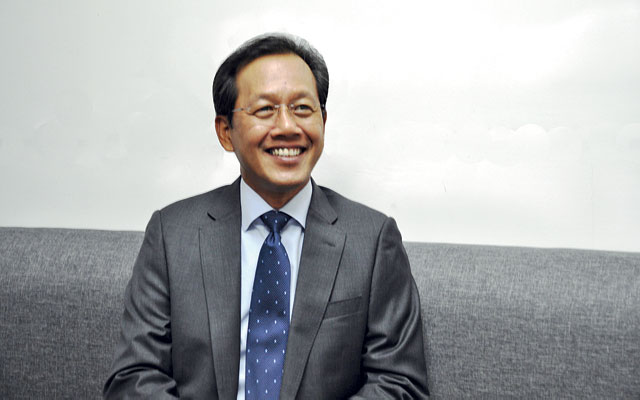
Malaysia Airlines (MAS) has appointed its COO Izham Ismail as executive director and group CEO-designate effective October 20, in the wake of the resignation of its CEO, Peter Bellew, who will return to Ryanair on December 1 to assume the role of COO.

A statement said Izham’s appointment is in line with the 12-point MAS Recovery Plan (MRP), which provides for the development and succession of Malaysian leadership talent.

Izham Ismail: ready to take the reins

To ensure a smooth transition, a Board Executive Committee will be in place for up to six months, to be led by chairman Md Nor Yusof.

Izham will assume the role of group CEO on December 1 when Bellew, who is currently on administrative leave, leaves.

The statement said Izham has been integral to the airline’s ongoing turnaround effort. As COO, he was responsible for the operations division, which includes flight and airport operations as well as engineering. He led the restructuring of the engineering division for more efficient and leaner operations, and was also responsible for the airline’s fuel savings initiative

He has 38 years of experience in the aviation industry, having started his career with MAS as a pilot in 1979. He broke world aviation records when he flew MAS’ first B777-200 eastward from Seattle to Kuala Lumpur and back. The flight set new world records for longest flight and fastest round-the-world flight by a commercial airliner, with a total flight time of 41 hours 59 minutes over a distance of 23,310 miles.

Appointed to a management position just 10 years after joining MAS, he has climbed through the ranks over the years, including as senior instructor pilot, fleet manager and director of operations. Prior to becoming COO in 2016, he served as CEO of MASwings, MAS’ sister company in Sabah and Sarawak.

Izham said: “I am extremely honoured to be entrusted with this position. My entire career has been spent with Malaysia Airlines and it is very much my family. Helming the national airline is a big responsibility. I am humbled and at the same time, ready for the challenge. We are on track towards a full and complete transformation as outlined in the MRP, and I am looking forward to working with my MH colleagues to make this airline the pride of the nation again.”

Malaysian Association of Tour and Travel Agents (MATTA) president, KL Tan said: “It is good to know that transformation is on track and in a matter of time, Malaysia Airlines will return to profitability.

“We have every confidence in Captain Izham and that he is the right man for the job. Technically, it is the board of directors’ responsibility to ensure Malaysia Airlines success and direction. We look forward to the national carrier improving and increasing air connectivity which is crucial for boosting tourism. We wish Peter Bellew the very best.”

Fears of billions in lost revenue especially for Barcelona from Catalonia crisis

0
Forward bookings for Catalonia down; fears of Barcelona impact

As Catalonia’s separatist drive wages on, Spain’s tourism industry as a whole faces losing revenues of 1.2 billion euros (US$1.4 billion) this quarter, a sum that could rise to 1.8 billion euros if there were to be more street protests, nationwide tourism lobbyist group Alianza para la Excelencia Turística (Exceltur) warns.

Visitor fears of further demonstrations and uncertainty over the region’s political future have reduced advance bookings for Catalonia for the final three months of 2017 by some 20 per cent compared to last year, according to the group.

Forward bookings for Catalonia down; fears of Barcelona impact mount

José Luis Zoreda, executive vice president of Exceltur, said member companies consulted were particularly worried about the impact on the regional capital, Barcelona, which benefits from its southerly location in Europe for attracting winter and especially MICE tourism.

“It is now right in season for conferences and leisure and shopping tourism,” he pointed out, at a time when Spain’s popular beach holiday season wanes.

While the region’s instability was not yet affecting other parts of Spain, a 20 per cent drop in Catalonia would cut the expected annual growth for Spain’s tourism as a whole from 4.1 per cent to 3.1 per cent.

While there has been no news yet of tourism companies moving their headquarters out of Barcelona, as has been happening with other industries, Zoreda said a brake has been put on scheduled investments.

In comparison, the terror attacks in Barcelona and the nearby resort of Cambrils in mid August at the height of the sun and beach holiday season have had “a very limited impact on tourism.”

“It is very positive to underline that (nationwide) revenue is growing faster than visitor numbers,” said Exceltur’s director of research, Oscar Perelli.

The average tourism spend in the country in peak summer had risen by almost seven per cent, while year on year business travel spending was up by over 22 per cent.

HNA touts digital transformation worth billions

0

China’s HNA Group will invest RMB50 billion (US$7.5 billion) to transform its business strategy by consolidating online and offline resources as well as merge its technology, investment, finance and services business segments.

The group said an important component of the transformation is HiApp, a digital tourism platform with a global cloud service database, in addition to airline products and services, scheduled for roll out by year-end.

For HNA Group, it is “necessary to work out thorny issues in the market and achieve integration of passenger flow, business flow and information flow as well as the offline-to-online transition”.

Through a digital upgrade, the group hopes to not only further optimise its asset efficiency, but also take future market initiatives in terms of developing and extending industry resources.

The group also expects to offer innovative cloud services and products to enterprises and start-ups, drive the development of technology, finance, investment and services segments, while connecting offline tourism resources with innovative industries for upgrading.

A Fortune Global 500 company, HNA Group has offline resources and operating experience in the air travel industry value chain, hotels, travel services, business centres, residential communities and more.

Meituan-Dianping lands US$4bn, and Priceline is in

0

Meituan-Dianping has raised US$4 billion in its Series C financing round led by Chinese Internet giant Tencent and which saw The Priceline Group come in as a new investor.

With the new funding, Meituan-Dianping intends to strengthen the positions of its four core business groups (Travel & Leisure, In-Store Dining, Lifestyle & Entertainment and On-Demand Delivery) as well as its newer diversified lines.

Commented Wang Xing, CEO of Meituan-Dianping: “Meituan-Dianping presently has the largest service-focused e-commerce platform in China, but even so, numerous parts of our diversified business are in early stages of growth and the opportunities for further expansion are enormous. We look forward to investing wisely to build out our platform and offerings and to fully leverage AI-based and analytics-driven technology, for the benefit of our consumers and merchant partners.”

Todd Henrich, global head of corporate development of The Priceline Group, said: “Our commercial relationship between Agoda.com and Meituan-Dianping will help each company benefit from the other’s expertise and capitalise on the opportunities presented by China’s exceptionally large travel market.”

Other key investors in the funding round include Sequoia Capital, GIC, Canada Pension Plan Investment Board, Trustbridge Partners, Coatue Management, IDG Capital, Tiger Global Management, and China-UAE Investment Cooperation Fund.

In the past year, Meituan-Dianping enhanced its Travel & Leisure business group with the launch of a consolidated travel platform, Meituan Travel. It is already China’s second largest hotel reservation platform, according to a Meituan-Dianping statement, having reached 36 per cent market share.

The service-focused e-commerce giant this year also achieved 86 per cent market share for In-Store Dining and 61 per cent for On-Demand Delivery, on top of entering new verticals such as B&B accommodation.

The company stated it will continue to invest in “cutting-edge technology to create innovative solutions and drive efficiencies for local businesses”, as well as focus on expanding into “key target verticals with high potential and that complement the company’s existing services”.

Launched in 2015, Meituan-Dianping today connects more than 280 million annual active buying consumers with more than five million annual active local merchants across China.