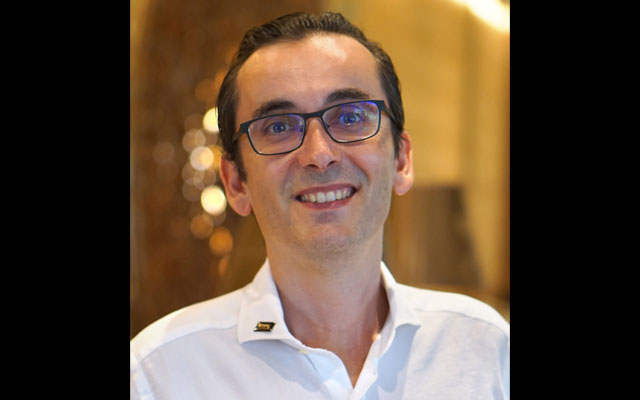
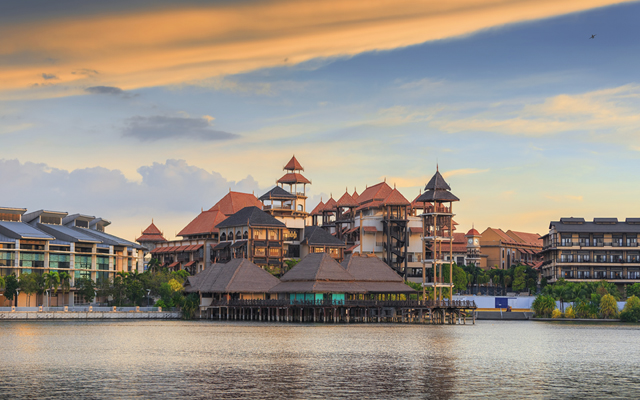
Oriol Montal has been appointed as general manager of The Westin Resort Nusa Dua, Bali and the adjacent Bali International Convention Centre.
A seasoned hotelier with over 20 years of experience, he was most recently the general manager for JW Marriott Phuket Resort & Spa.
The Spanish national first entered the hospitality sector in 1994 as assistant F&B manager with Hotel Barcelona Sants, before joining The Ritz-Carlton Hotel Arts in Barcelona.
An extensive career with the Ritz-Carlton brand then followed, which saw Montal taking up various positions at Ritz-Carlton properties in Dubai, Portugal, Japan, Puerto Rico, Germany, Turkey and the US.
Thompson still has Michelin-star Thai restaurant Long Chim to his name (photo credit: Instagram/@longchim)
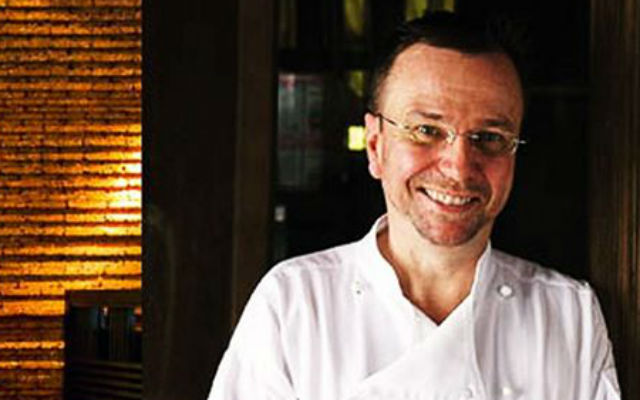
Today will mark Nahm’s final dinner service under chef David Thompson, who created the restaurant with Como Hotels 18 years ago.
Thompson made the decision to part ways with the restaurant last year to continue exploring Thai food and flavours and to pursue new opportunities through Aylmer Aaharn, the Thai food group he co-founded in 2014.
Thompson still has Michelin-star Thai restaurant Long Chim to his name (photo credit: Instagram/@longchim)
Nahm was first created at COMO’s Halkin Hotel in London, earning a Michelin star within six months, before the current Nahm opened at the Metropolitan Hotel in Bangkok in 2011. The restaurant has remained on the World’s 50 Best Restaurant list for seven consecutive years and was recently awarded a Michelin star in Bangkok’s inaugural year of the guide.
Thompson was presented a lifetime achievement award in 2016 for his dedication to Thai food culture at Asia’s 50 Best.
Thajiwas Glacier, Sonamarg, Jammu and Kashmir, India
Travellers are developing a taste for an adventure in India, with a study conducted by India’s major experiential travel booking platform, Thrillophilia, revealing a 178 per cent increase in demand for adventure and active travel during the past three years.
Twenty-eight per cent of respondents claim that on an average they indulge in at least five adventure trips in a year and 16 per cent are comfortable travelling solo, according to the Thrillophilia study, which surveyed 10,000 travellers and 1,800 travel partners.
Thajiwas Glacier, Sonamarg, Jammu and Kashmir, India
Notably, the report shows that adventure tourism is gaining popularity not just with travellers in their youth, with 36 per cent of respondents aged above 35 preferring offbeat travel experiences as well.
The survey further reveals that trekking has gained popularity in India, and is the most popular activity with 26 per cent preferring to take treks during their trips; while water sports was the second favourite, preferred by 25 per cent.
As for the travel region, 27 per cent believe the Himalayas to be the best for adventure activities.
Moreover, travellers are spending more on their trips, Thrillophilia says, with the average expenditure per person per trip rising 13 per cent between 2015 and 2017.
Thirty-two per cent of respondents claim that the content on social networking sites, especially Instagram, is one of the major factors that roused their interest in experiential travel.
Abhishek Daga, co-founder, Thrillophilia, added: “The increase in demand for experiential travel in India can be largely attributed to the efforts made by the government bodies like Adventure Tour Operators Association of India, Ministry of Tourism and Indian Mountaineering Foundation to promote adventure tourism in India.
“Some landmark steps have been taken by the government which include granting funds to improve infrastructure in remote areas and giving security clearance for opening of 104 additional peaks in Leh area of Jammu & Kashmir.”
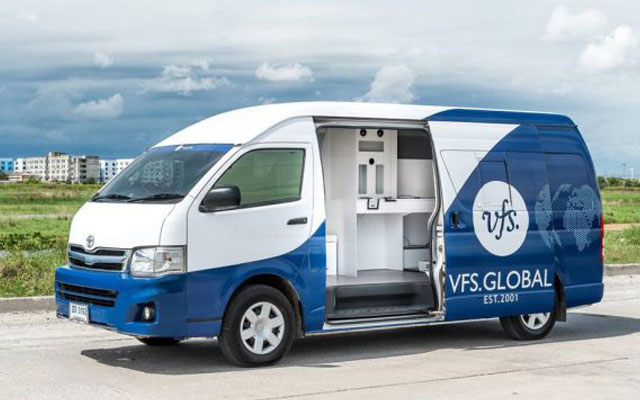
The van is equipped with end-to-end technology
to enroll biometrics and accept visa applications remotely from any location
VFS Global has unveiled the first-of-its-kind ‘Visa Application Centre on wheels’ for UK visa applicants in Bangkok.
The Mobile Visa Application Centre (MVAC) is equipped with end-to-end technology to enrol biometrics and accept visa applications remotely from any location for individual or group submissions.
The MVAC will be available at two locations in the city of Bangkok
VFS Global’s MVAC caters to applicants – including governments and authorities – who may face challenges accessing the nearest fixed Visa Application Centre and would therefore prefer the centre to come to them, it stated in a press release.
According to VFS Global, other benefits of the mobile facility includes the ability to schedule requirements on demand at short notice to service applicant-surges or emergencies at any location; and the capture and transfer of data through secure and certified systems.
Jiten Vyas, regional group COO, VFS Global, remarked: “With state-of-the-art technology for secure submission of biometric data, the MVAC is a cost-effective solution as it does not require a permanent physical infrastructure and acts as a reliable backup to a physical Visa Application Centre with its round-the-clock service capabilities.”
Nick Crouch, regional director for UK visas and immigration in South and South-east Asia, added: “By producing this innovative, technology-led solution VFS Global can now offer a more flexible and creative offer for customers, ensuring the 80,000-plus Thais who apply for a UK visa each year can now do so in a more modern and convenient way.”
To avail the service, applicants must choose Bangkok as the location and select ‘Mobile VAC- Crystal Design Center’ or ‘Mobile VAC- Thanya Park’ in the appointment category. Applicants can fill the online application form and book appointments at https://www.gov.uk/check-uk-visa.
The mobile visa facilities are stationed at Crystal Design Centre (CDC) (Monday 09.30-15.00); and Thanya Park (Tuesday 09.30-15.00).
There is a minimal fee of 3,800 baht (US$120) per application which must be paid online through credit card.
ITB China has unveiled its conference programme for this year, which will spotlight topics such as customised travel and travel tech, and will launch its inaugural Business Travel Day.
The ITB China Conference will kick off on May 16 with opening keynotes by James Jianzhang Liang, co-founder and executive chairman of the board at Ctrip, who in addition to other speakers like Eduardo Santander, executive director of European Travel Commission, and Yiyi Jiang, head of international tourism research, China Tourism Academy, will make up the morning session.
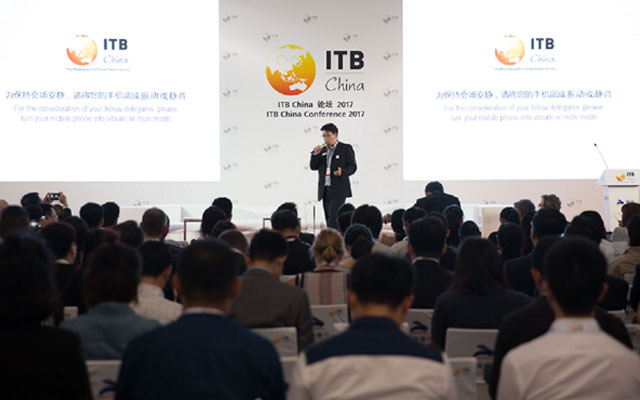
A speaker at the ITB China Conference last year
The afternoon sessions on May 16 will cover the topics of destinations and customised travel. For the destination segment, Phocuswright founder Philip Wolf will moderate panel discussion on the ECTY, looking at how to make Europe more attractive to Chinese tourists; Joseph Wang, chief commercial officer, TravelDaily China, will moderate a panel discussion on Connecting Destinations with Chinese Millennials; Iris Cai, co-founder, UniqueWay, will speak on The Implementation of AI and Big Data in Customised Travel, while executives from Abercrombie Kent as well as Lushu will present keynote speeches on how to design customised travel products.
The conference sessions on the second day of ITB China will focus on Travel Tech, which will see presentations by Chinese industry experts such as Mafengwo.com vice president Bin Du and Fliggy vice president Fisk Yu, as well as a panel discussion looking at hotel distribution.
Meanwhile, the Business Travel Day will kick off with a panel on “How Technological Innovations Are Transforming Business Travel”, moderated by Jonathan Kao, BCD Travel’s managing director from Greater China, followed by discussions with key players in the Chinese corporate travel scene.
Alicia Yao Hong, regional vice president, PCMA ICESAP will set the scene for the MICE session with a keynote speech and a case study on the “Belt and Road Initiative – How Does It Affect the Business Events Industry in China?”. A further discussion led by Philip Pang, PCMA ICESAP’s marketing and membership manager, will follow.
This year’s edition of ITB China takes place in Shanghai from May 16 to 18.
Marriott International, which first entered into a partnership with Alibaba last year to court Chinese travellers, is enhancing its collaboration with the Chinese e-commerce giant with the rollout of Fliggy’s Post Post Pay (PPP) functionality across more than 1,000 Marriott hotels globally.
As part of Marriott’s first phase of service enhancements, its new storefront on Fliggy – Alibaba’s travel service platform – starting this month features approximately 6,000 hotels from across its global inventory of 30 brands, presented in a Chinese traveller-friendly layout.
Marriott is enhancing services for Chinese guests through redesigned Fliggy storefront and its own Li Yu programme
Through the storefront, Fliggy’s PPP functionality will be offered to qualified Fliggy users at more than 1,000 hotels globally, including more than 270 hotels in the Greater China region, where the service is already available, and in high-demand locations throughout the Asia-Pacific region, such as Australia, Japan, the Maldives, Singapore, South Korea and Thailand.
To complement these enhancements, Marriott expects to certify over 1,000 hotels globally in its Li Yu programme, designed to cater better to Chinese guests.
Shanghai Disney Resort welcomed its first guests to Disney·Pixar Toy Story Land last week, the first major expansion at the resort since its grand opening in 2016.
The resort’s seventh themed land features three new attractions – Slinky Dog Spin, Rex’s Racer, and Woody’s Roundup – a themed Character greeting area called Meeting Post and new shopping and dining experiences at Al’s Toy Barn and Toy Box Café.
The expansion comes as Disney parks celebrate 2018 as the Year of Pixar. Apart from the opening of Disney·Pixar Toy Story Land, there have also been reimagined favourites like the Pixar Play Parade at Disneyland Resort, the addition of Toy Story Land at Walt Disney World, and Pixar Pier and Pixar Fest at Disneyland Resort.
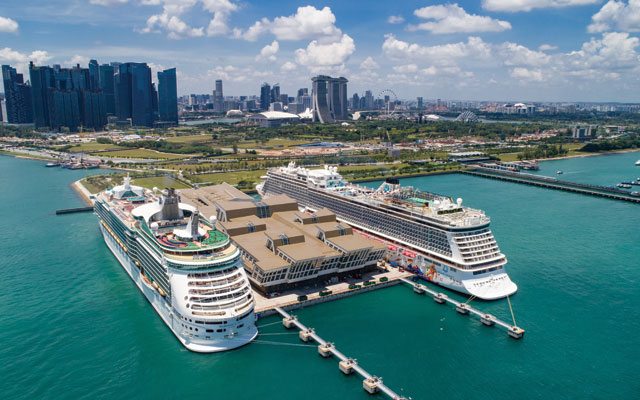
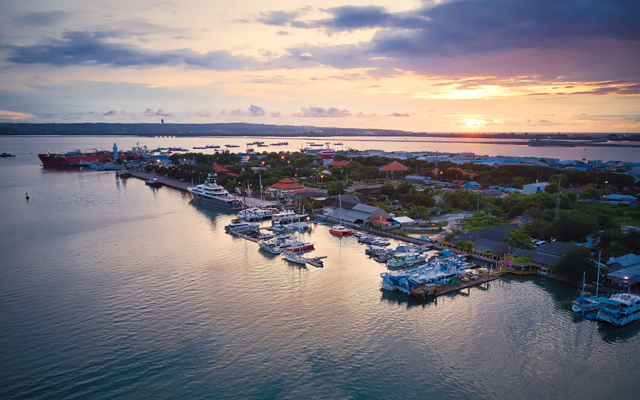
New cruise terminal will be able to accommodate volume brought in by 44 Boeing 737 planes, some say
2017 picture
Indonesia’s most popular cruise port of call received 68 calls in 2017, up from 53 in 2016. It welcomed 98,208 passengers last year, 30 per cent higher than 62,859 in 2016. Seabourn Encore, Europa 2, Costa Luminosa, Queen Mary 2, Seven Seas Voyager and Golden Princess were among the ships which called at Benoa in 2017.
Need to know
Benoa port has a 3.2km long access channel and offers two berths. The port has a tourist information centre, batik shop, massage corner and a mini market. Popular tourist areas like Nusa Dua, Sanur, Kuta and Denpasar lie within easy access via taxis.
Incentives
For maiden calls at the port, the Ministry of Tourism will offer welcome receptions. Welcome receptions are available upon request.
Port development
When the Benoa port completes its overhaul by end-2018, a new cruise terminal added will be able to accommodate two ships carrying up to 5,000 passengers, at a berth 12m deep and 200m wide.
Supporting facilities such as hotels, shopping centres, restaurants and convention facilities are expected to be added to turn the terminal complex into a lifestyle spot in future.
TANJUNG EMAS, SEMARANG
2017 picture
In 2017, Tanjung Emas received 16 cruise ships carrying a total of 11,673 passengers, down from 16,936 passengers from 16 cruise calls in 2016.
Among the cruise ships calling Tanjung Emas last year were Sea Princess, Seabourn Encore, Silver Shadow, Bremen, Aurora, Albatros, Star Clipper, Artania and Insignia.
Need to know
Most cruise ships can anchor and dock at Tanjung Emas Seaport, which has a 10m channel and a 575m wharf, with pilotage and tug service available. The terminal can accommodate up to 3,500 passengers, and has free Wi-Fi, souvenir shops, currency exchange, tourist information centre and a taxi information desk.
The gateway to the Borobudur Temple in Central Java, the port is located five km from the city centre.
Incentives
Semarang City Government will provide a welcome reception with traditional dances at the terminal arrival hall upon request.
Port development
Pelindo III plans to develop a reclamation area of 22ha on the east side of the port, but no further details are available at press time.
MALAYSIA
BOUSTEAD CRUISE CENTRE, SELANGOR
2017 picture
This dedicated cruise terminal in Port Klang received 166 cruise calls in 2017, versus 146 cruise calls in 2016. The total volume of cruise passengers received in 2017 was 262,383, up from 182,088 in 2016.
Cruise lines calling at Port Klang include AIDA Cruises, Royal Caribbean Cruises, Star Clippers, TUI Cruises, Norwegian Cruise Line, Silversea Cruises, P&O-Orient Lines, Celebrity Cruises, among others.
Need to know
As a docked port, Boustead Cruise Centre can comfortably handle one mega cruise ship and two mid-sized cruise ships at a time. Facilities at the terminal include free Wi-Fi, foreign exchange counters, restaurants, a travel agency and souvenir shops. It is about an hour’s drive to Selangor and 1.5 to two hours to Kuala Lumpur, depending on traffic.
Incentives
On request, Tourism Selangor will provide a 30-minute welcome reception at the terminal arrival hall.
Port development
There are proposed plans to expand the centre to berth two mega cruise liners at a time. Details are still being ironed out at press time.
SWETTENHAM PIER CRUISE TERMINAL, PENANG
Ovation of the Seas at Swettenham Pier Cruise Terminal
2017 picture
Swettenham Pier Cruise Terminal (SPCT) in 2017 received 270 cruise calls and 438,369 passengers, a leap from 182,277 passengers from 117 cruise calls in 2016, and overtook Port Klang as the leading port in Malaysia for the first time.
Among the cruise lines SPCT welcomed in 2017 are Princess Cruises, Royal Caribbean Cruises, Star Clippers, Norwegian Cruise Line, Hapag-Lloyd Cruises, Cunard Cruise Line, Seven Seas Cruises, Celebrity Cruises and Regent Seven Seas Cruises.
Need to know
As a docked port located within the Penang’s UNESCO Heritage Zone, SPCT is located near Penang’s key attractions. The terminal is equipped with free Wi-Fi, an aero-bridge for embarkation and disembarkation of passengers, foreign exchange counters, retail outlets and restaurants.
Incentives
Cruise ships that call in Penang with a minimum of 1,500 passengers are entitled to a special welcome ceremony at the cruise terminal, courtesy of Penang Global Tourism.
Port development
Penang Port is collaborating with Royal Caribbean Cruises in a joint venture to improve SPCT’s facilities, including the extension of the berths from 480m to 688m, to enable the terminal to berth two mega cruise liners carrying over 4,900 passengers.
PHILIPPINES
PORT OF MANILA
Manila Harbor at port of Metro Manila, Philippinese
2017 picture
2017 was a bumper year for Manila in terms of port calls and cruise passengers. The port reported 52 cruise calls, double the 26 cruise calls in 2016. These cruise ships brought in 195,751 passengers last year, 157 per cent greater than the 76,068 passengers recorded in 2016.
Among the cruise companies that sent ships to Manila in 2017 were Royal Caribbean Cruise Line, P&O Cruises, Hapag Lloyd, Celebrity Cruises, Ponant Cruises, Costa Cruises, Azamara Club Cruises, Oceania Cruises and Seabourn Luxury Cruise.
Incentives
Welcome and send-off reception. As the Philippine Department of Tourism is a member of the Asia Cruise Cooperation (ACC), the destination benefits from ACC’s marketing support such as itinerary planning and research incentives to cruise lines.
Need to know
The Port of Manila is for alongside docking, with Pier 15 in the Manila South Harbor used for cruise ships. It is mere minutes away from Manila’s key attractions like the Walled City of Intramuros and Rizal Park, and is about an hour to the business and shopping centres in Makati.
Port development
Manila South Harbor Pier 15’s passenger terminal is undergoing refurbishment, a project by Asian Terminal Inc (ATI) and Star Cruises. Ongoing enhancement of the bollards in Pier 15, a joint project between ATI and Royal Caribbean Cruise Line, is targeted for completion end-2018. There are also plans to build a dedicated cruise port along Roxas Boulevard, not far from South Harbor.
BORACAY
2017 picture
Boracay is a rising star in cruise tourism, welcoming 24 port calls from 17 ships last year, more than double the 2016 record of 11 port calls from 10 ships. The number of cruise passengers surged 145 per cent to 185,631 last year from only 75,818 in 2016.
Cruise companies that favoured Boracay last year included Celebrity Cruises, Costa Cruises, Dream Cruises, Seabourn Luxury Cruise, Royal Caribbean Cruise Line, Crystal Cruises, Princess Cruises, and Regent Seven Seas Cruises among others.
Incentives
Welcome and send-off reception, plus ACC benefits similar to the Port of Manila.
Need to know
This tender port in Caticlan can accommodate only small ships. Boracay is a small island which can be explored on foot from end to end in just several hours.
Port development
There are plans to develop a cruise terminal in the reclamation area of the Caticlan Jetty Port.
SINGAPORE
SINGAPORE CRUISE CENTRE
2017 picture
Singapore Cruise Centre (SCC) received 253 ship calls in 2017, comprising cruise companies such as Azamara Club Cruises, Costa Cruises, Oceania Cruises and Silversea Cruises, to bring more than half a million cruise passengers last year.
Incentives
The port’s “efficient, fast turnaround services and operations” draw cruise lines, said Christina Siaw, CEO, SCC.
Need to know
SCC is a docked port connected to VivoCity shopping mall and the Regional Ferry Terminal, withSentosa Island and Universal Studios Singapore just minutes away. For fly-cruise transfers, Changi International Airport is a 30-minute drive away.
Port development
Infrastructure and service improvement opportunities will be explored, Siaw said.
MARINA BAY CRUISE CENTRE
Marina Bay Cruise Centre
2017 picture
Marina Bay Cruise Centre (MBCC) handled 168 ship calls and 876,753 passengers in 2017, from all cruise lines calling in South-east Asia. These include Royal Caribbean International, Celebrity Cruises, Princess Cruises, Costa Crociere, Dream Cruises and Azamara Cruises.
Incentives
MBCC offers welcome ceremonies for maiden calls and marketing collaborations with cruise companies.
Need to know
MBCC is a docked port with two berths, and is located 450m from the Marina South Pier train station.
Port development
The port has enhanced its infrastructure in recent years, including adding retail spaces such as duty free shops and an expanded F&B area.
THAILAND
LAEM CHABANG PORT, CHONBURI
2017 picture
The passenger terminals received 59 cruise calls in 2017, versus 56 cruise calls in 2016. Both terminals in 2017 received 243,525 cruise passengers, up from 228,888 in 2016.
International cruise ships that called last year include Norwegian Star, Aidabella, Seabourn Sojourn, Costa Victoria, Crystal Symphony, Mariner Of The Seas, Queen Mary 2, Pacific Eden, Mein Schiff 1, Superstar Gemini, among others.
Incentives
Welcome ceremonies for cruise lines making inaugural calls.
Need to know
Laem Chabang is a docked port. Terminals A1 and C0 are passenger terminals, with the former mainly used to berth passenger ships of up to 70,000 DWT. The cruise terminal boasts souvenirs and massage shops, a shopping centre and a supermarket. It is two hours south of Bangkok and an hour’s drive from Pattaya.
Port development
Plans to build a second passenger terminal and upgrading the existing terminal are being studied.
PHUKET
2017 picture
Phuket port received 186 cruise calls in 2017, surging from 89 cruise calls in 2016. The total volume of cruise passengers last year soared to 286,156 from 162,818 the year before.
Cruise lines that called last year include Aegean Odyssey, Albatros, Celebrity Constellation, Costa Luminosa, Legend Of The Seas, Lirica, SuperStar Libra, Ocean Dream, Sapphire Princess,Seven Seas Navigator and Silver Discoverer, among others.
Incentives
None.
Need to know
Phuket Deep Sea Port was designed to receive cargo ships but it currently also serves cruise ships. It is a docked and tendered port, with a few souvenir shops and restaurants. It takes 45 minutes to Patong beach.
Port development
Phuket Deep Sea Port announced its expansion plans last year to widen the port from 360m to 420m in order to handle big cargo ships and passenger ships at the same time. However, the starting date of the expansion is yet to be revealed.
VIETNAM
PHU MY PORT
2017 picture
Cruise companies calling include Princess Cruises, Norwegian Cruise Line, Regent Seven Seas, Celebrity Cruises and Royal Caribbean.
Need to know
Phu My Port, referred to as the gateway to Ho Chi Minh City, sits about 130km, or 1.5 hours, from the city. It is a commercial port where cruise ships dock at container terminal piers. The port has a depth of 9.3m, with the maximum vessel size accepted 60,000 DWT.
Port development
While there are currently few tourist attractions located within the industrial area, plans are being discussed to create Vung Tau Marina City nearby, which will house a tourism complex and amusement park.
Expectations are high among hoteliers in Kuala Lumpur, Langkawi and Putrajaya that 2018 would bring stronger performance for the Malaysian hospitality sector, bolstered by an improving domestic economy, greater destination promotion efforts by Tourism Malaysia as well as being the host nation of PATA Travel Mart 2018.
A recent refresh of Pullman Putrajaya Lakeside had led to higher weekend occupancies
The PATA Travel Mart (PTM), which will be held in Langkawi in September, will provide extra mileage in showcasing Berjaya Langkawi Resort, one of the show’s official partner hotels, said Berjaya Hotels & Resorts’ CEO Henley Chew.
Chew expects the hotel to be fully booked during the mart and the increased exposure arising from the mart will result in higher average occupancy for the hotel this year, after closing 2017 at nearly 70 per cent.
The Westin Langkawi Resort & Spa had chalked up a good year in 2017, thanks in large part to its close proximity to Langkawi International Convention Centre (LICC), which attracted international MICE events, as well as four Indian destination weddings that brought in excess of 1,000 guests altogether, said Rajiv Kapoor, general manager of both the resort and convention centre.
With the LICC as PTM venue and The Westin Langkawi as a partner hotel, the show’s spotlight on Langkawi this year will certainly lead to greater awareness among international buyers and generate business leads, Kapoor added.
Furthermore, with increased promotional efforts by Tourism Malaysia in key markets this year in the lead-up to Visit Malaysia Year 2020, holidaymakers who have already been to Bali, Phuket and Koh Samui will likely seek a new destination in Langkawi, added Kapoor, who is optimistic that 2018 will perform even better than last year for The Westin Langkawi.
Elsewhere in the country, the year-end opening of Resort World Genting’s (RWG) 20th Century Fox World Malaysia is set to benefit hotels in Kuala Lumpur and Putrajaya, as RWG is easily accessible from both cities by car.
The new RWG attraction is expected to draw more tourist traffic from the region as well as China and India for Berjaya Times Square Hotel, Kuala Lumpur, which saw an uptick in leisure traffic last year from volume markets of China, India and South Korea, Chew said.
Genting’s outdoor theme park launch, too, is likely to attract more business opportunities for Le Méridien Putrajaya, according to the hotel’s director of sales & marketing, Tan Lee Fong.
“As we are 30 minutes’ drive from KLIA and klia2, tourists may wish to stay in Putrajaya for some sightseeing before proceeding to visit Genting for a day trip or few nights and then return home,” she explained.
Tan is projecting a four per cent increase in average occupancy for Le Méridien Putrajaya, and efforts to market to and attract more South Korean and Japanese golfers will be stepped up, leveraging the 18-hole Palm Garden Golf Course near the hotel.
It’s also a sanguine picture painted for 2018 at Pullman Putrajaya Lakeside, which last year embarked on a rejuvenation project to add an infinity swimming pool facing Putrajaya Lake and a children’s pool, bringing the total number of swimming pools to four.
“The reinvestment of our facilities has paid off with higher weekend occupancies from staycationers,” the hotel’s general manager Roberts Ejubs told TTG Asia. “We had record occupancy in 2017 since the hotel opened over a decade ago.”
Ejubs, who is also the area general manager of AccorHotels in Malaysia, added: “Putrajaya was once a hidden secret and I am glad to see more awareness and more tour operators promoting the destination… Tourism Malaysia’s increased investment in global promotions will certainly benefit the destination as a whole.