The Hong Kong Tourism Board (HKTB) has appointed Raymond Chan as regional director, South-east Asia.
In his new role, Chan will lead the development and implementation of HKTB’s marketing strategies in the South-east Asian region. He will be based in Singapore, and takes over from Simon Wong.
Prior to this appointment, Chan was the senior manager, trade development for the South-east Asia region for the HKTB.
Chan joined HKTB in 2012 and has held different senior positions for marketing, public relations and trade development in Taiwan and the South-east Asia region.
Fans at the run dressed up as their favourite Star Wars character
The two-day May the 4th be with you Festival in Singapore concluded with a bang on Saturday after drawing legions of fans from the lion city and around the region.
Presented by event organiser Esprimo and supported by the Singapore Tourism Board, the festival included the Star Wars Run, a special appearance by Albin Johnson, fan performances and costume marches.
Fans at the run dressed up as their favourite Star Wars character
The second edition of the Star Wars Run saw over 10,000 local and overseas participants across three race categories, including the competitive 10km, non-competitive 5.4km and the inaugural 540m Young Jedi Dash – a category specially designed for children aged four to nine years.
Runners in the non-competitive 5.4km were roused up in a flag-off where Light and Dark side participants ran in opposite directions, and were treated to a pyrotechnics display that illuminated the Singapore skyline.
Fans got up close and personal with Albin Johnson, founder of 501st Legion, the international Star Wars costuming organisation, who was roving festival grounds with his special pink astromech droid, R2-KT.
Festival-goers were also treated to a line-up of classic themes by Singaporean Star Wars tribute band Dark Empire, who performed famous pieces such as The Imperial Suite, The Imperial March “Darth Vader’s Theme” and Star Wars Main Theme.
Dusit Thani Hua Hin has appointed Pipat Patthananusorn as general manager.
A Thai national, Pipat brings with him more than 22 years of managerial experience in luxury hotel chains since starting his career in the sales department of Shangri-La Hotel Bangkok. Spells with Royal Orchid Sheraton, Four Seasons and Anantara Siam followed, serving as the executive assistant manager of the latter. He also had a stint as general manager of Pacific World Bangkok.
In 2008, he was elected to the Thailand Incentive and Convention Association’s executive board of directors as co-chairperson of the service development committee, a position he still holds.
Amadeus wants to be the company to pull together private and public sectors to enhance connectivity within smart cities
Asia’s Smart Cities market is burgeoning and Amadeus Asia-Pacific is firing on all cylinders to be the leader in the travel & tourism segment that holds the promise of millions of dollars worth of contracts.
Amadeus identifies at least three Smart Cities projects in Singapore, Thailand’s Eastern Economic Corridor and Hong Kong that it wants ‘in’ and believes two cities in Australia will also soon offer opportunities. In Singapore, it is already in talks with the Economic Development Board, Singapore Tourism Board and Changi International Airport, according to Simon Akeroyd, Amadeus Asia-Pacific’s vice president, corporate strategy and business development.
Smart Cities, simplistically, refers to the effective use of information and communication technologies to save people’s time and improve their quality of life. In Asia-Pacific, more advances have been made in sectors such as fintech and security surveillance than travel & tourism, Akeroyd said.
Amadeus wants to be the company to pull together private and public sectors to enhance connectivity within smart cities
“There are three Smart Cities or zones projects I see in Asia that are being RFP-ed (request for proposals) today or will be in the next six months. If they put up an RFP, we will respond with our portfolio (of IT solutions). Getting one of those for me will be a coup,” he said.
The expected scope of the projects is, however, nebulous at present. For example, a major focus of Thailand’s Eastern Economic Corridor is “to improve existing connectivity and foster innovation” in the three eastern Thai provinces Chonburi, Rayong and Chachoengsao which span over 13,000km2. Core areas of development in the travel & tourism sector are the expansion of U-Tapao airport, the development of high-speed railways and facilitating an increase in arrivals to the Eastern seaboard.
Akeroyd acknowledged: “The scope is very broad and not very defined. It’s a problem but also an opportunity. What the government means is, ‘help us, tell us what we need to do’.”
Amadeus in turn has defined four large actions it wants to offer:
Attract: Help attract more arrivals through travel intelligence, digital advertising and Amadeus Video Solutions
Facilitate: Help facilitate smart travel with the various solutions it has. One such example is iCUSS, movable check-in kiosks that can be rapidly deployed and relocated for use by the traveller or the airport staff to provide full-service operations, giving greater freedom and flexibility to passengers throughout their journey to and around the airport. It has worked with Hong Kong International Airport on this.
Connect: Help connect travellers to smart commuting through solutions such as Amadeus Ambient Service that enables ambient interactions that deliver the right service at each step of a traveller’s journey.
Serve: Support cities to serve first-hand tourist information to their visitors via solutions such as Mobile Amadeus CheckMyTrip and Amadeus Destination Content.
Amadeus is not the only one in Asia that wants a piece of the pie. Think Accenture which has introduced ‘The Connected Traveller’, or SITA, a leader in providing IT seamless travel solutions to airports and airlines. But Akeroyd sees opportunity, not competition, to connect the fragmentation in the sector. He aims to position Amadeus as the technology company that helps pull together the private and public sectors to advance the development of seamless door-to-door travel experiences.
“It’s a similar approach to Amadeus Next (the startups platform he launched in Asia-Pacific), which is to create a kind of a central meeting point for all the interested parties. We would invite them – startups, airport authorities, DMOs, NTOs, etc – to gather around this initiative of Smart Cities. We try to attract them to a community that’s not Amadeus-only business. With Amadeus Next, for example, we bring people together and, if we have the money, we’d jump in for sure. The idea is to promote the idea of mobility initiatives, smart travel & tourism, not just us being commercial,” he said.
Added Akeroyd: “The ambitions and requirements of smart cities are so varied that it is unlikely that any one player will be able to do everything. So, we will all most likely have to collaborate. Therefore I suspect that the key to becoming the ‘Smart City leader’ is to be the best collaborator.”
But why is Amadeus Asia-Pacific jumping up and down about this now?
Two reasons. The region is the epicentre of urbanisation, with 22 of 39 megacities (by population size) worldwide being in Asia-Pacific, 11 in China alone, according to CityMayors Statistics cited by Amadeus. Additionally, travel & tourism is surging in Asia. A recent WTTC study shows the world’s top 10 fastest growing tourism cities are all in Asia.
Not only that, governments in Asia have made “an amazing step forward” in digitising cities and have been more open about sharing information, Akeroyd said. On the other hand, the private sector is investing in enabling true mobility across the entire travel journey.
“When I talk about, say, bike share in Europe, Europe does not get it. I tell them it is not just about bike share in Asia. For these startups, it’s a new way of creating critical mass – they’ve got hundreds of millions of users using their apps in a habitual way and will start moving from bikes to selling bus and train tickets, shorthaul low-cost air tickets – I suspect it is something that will surprise Europe,” he said.
Asia is the ideal testbed for Smart Cities initiatives compared to Europe, Akeroyd added. “Asia is less legacy system bound. It is also more excited than burdened by the idea of innovation. Sometimes in Europe, innovation is treated as a problem. Asia sees it as a positive step to grow; Europe sees it as ‘how do we accommodate the innovation’.”
The second reason is Amadeus has, over the last five years, been building its back end, which makes it equipped now to pursue Smart Cities initiatives, said Akeroyd.
“Originally we’re known for making search technology and booking. But we’ve been buying the IT back end of many parts of the travel journey, programmes that run hotels, rail, airports, airlines, etc, that it enables us to connect the journey, increase the amount of touch points for travellers moving down the line,” he said.
Last year, Amadeus said it committed US$800 million to R&D for innovation globally, half directly linked to technologies that furthered its Smart Mobility initiatives including biometrics, traveller identification, IoT, massive data platforms and passenger handling solutions.
The National Heritage Board (NHB) of Singapore has refreshed its Bukit Timah Heritage Trail with new historical sites and updated features for easier accessibility.
The trail now features a total of 38 heritage landmarks, including the newly added Bukit Timah Railway Station, St Joseph’s Church, Former Command House and Fuyong Estate.
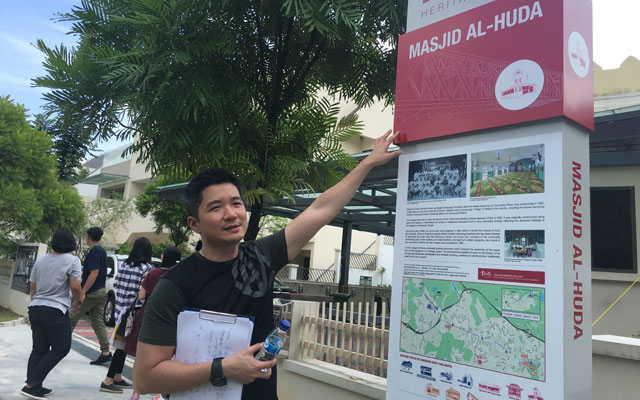
Alvin Tan introduces one of the historical sites located along the trail
NHB has also installed eight new trail markers to highlight and describe sites on the trail, as well as introduced three 2.5km-long thematic routes for visitors to explore different segments of Bukit Timah.
Themed trails include the Kampong Life Trail, WWII Legacy Trail and Leisure and Learning Trail, and vary between one to two hours each.
Alvin Tan, assistant chief executive (policy & community) of NHB, said: “Recent travel trends have shown that there is an increasing demand for more local and authentic experiences. Through our heritage trails, we hope to encourage tourists to explore the other parts of Singapore, not just the usual tourist landmarks.”
The trail has also helped place heritage buildings such as Masjid Al-Huda and Hoon San Temple – religious sites in what was once a kampong village – on the radar for visitors.
Goh Su Pheng, admin manager of Hoon San Temple, told TTG Asia that he is expecting more visitors with increased awareness of the heritage temple the trail is likely to bring.
Information, guides and route maps for the Bukit Timah Heritage Trail are available in English, Chinese, Malay and Tamil on NHB’s heritage portal, roots.sg, and at selected locations such as the National Museum of Singapore, the Asian Civilisations Museum and the Former Ford Factory.
Tan revealed that NHB is currently working on a walking trail through Orchard Road, which will be unveiled in July or August this year.
Branagan, former chief technology officer at GTA, will assume the role of technology director of the group
Following an integration with Tourico Holidays and GTA, Hotelbeds Group has announced technology updates, including the appointment of a technology director for the whole group and the transition of all its bedbank brands onto the same technology platform by year-end.
Further to confirmation of the company’s top leadership team and new departmental structure in January, Chris Branagan, previously chief technology officer of GTA, has now been appointed director of technology for the group.
Branagan, former chief technology officer at GTA, will assume the role of technology director of the group
Branagan will become a member of the company’s executive committee and be responsible for the development and implementation of technology across the group’s platforms, systems and tools to enhance the bedbank’s technology offering.
The group has also revealed that all its bedbank brands – Hotelbeds, Bedsonline, Tourico Holidays, and GTA – will all be transitioned onto the same technology platform by the close of this year.
“We will be updating our partners in due course to explain how they will benefit from these changes,” said Branagan.
Following the integration, there is now a portfolio of over 170,000 hotels selling to over 60,000 travel intermediaries globally via the group´s proprietary B2B technology platform.
To focus on its bedbank core, the group is also selling its destination management division back to TUI.
Artist impression of Holiday Inn Melbourne Coburg, scheduled to open in 2020
At least five new hotels will open in Melbourne over the next few years, among them two Hyatt Hotels and three from InterContinental Hotels Group (IHG).
Firstly, Hyatt has entered into into a management agreement with PEC Portfolio Springvale for a 200-key Hyatt Place hotel. The hotel will form part of a mixed-used complex, which will also include co-working facilities and retail stores.
Artist impression of Holiday Inn Melbourne Coburg, scheduled to open in 2020
Hyatt Place Melbourne Springvale will be located at the intersection of Springvale and Dandenong Roads in the heart of the Monash Employment and Innovation Cluster, which is home to a number of academic institutions, businesses and medical facilities. It will become the second Hyatt Place hotel in Australia upon its expected opening in 2020.
Over in Melbourne’s CBD, a Hyatt Centric is also expected to open in 2020 on Downie Street, a management agreement with developer Little Projects.
Hyatt Centric Melbourne will feature 280 guestrooms and suites, a restaurant, and rooftop bar offering views of Melbourne’s Yarra River and Southbank. Located close to Melbourne Convention & Exhibition Center and the Crown Entertainment Complex, this will mark the second Hyatt Centric-brand hotel in Australia.
Also upcoming in the CBD in 2022 will be a dual-branded Hotel Indigo and Holiday Inn. The property will front onto Bourke Street Mall on one side and Little Collins St on the other.
The A$200 million (US$150 million) mixed-use development will include international retail stores and a combined 453-room hotel – 181 in Hotel Indigo Melbourne Little Collins and 272 in Holiday Inn Melbourne Bourke Street Mall. There will also be F&B outlets, a gym, meeting spaces, and a distinct guest lobby and room experience for each brand. The development will enjoy shared back-of-house services and facilities that create common-sense efficiencies.
IHG has also signed a deal with Barnes Capital to open a design-led Holiday Inn in the Coburg suburb.
When it opens in 2020, Holiday Inn Melbourne Coburg will enjoy views across the town and its surrounding landscape, including Coburg Lake Reserve. It will feature a gym and large meeting facilities, as well as a bar and all-day dining restaurant. The 150-room new-build will show off a bold, new design statement for Holiday Inn, created by architects Hachem.
IHG currently has 47 hotels operating under four brands – InterContinental, Crowne Plaza, Holiday Inn and Holiday Inn Express – in Australasia with another 17 in the pipeline.
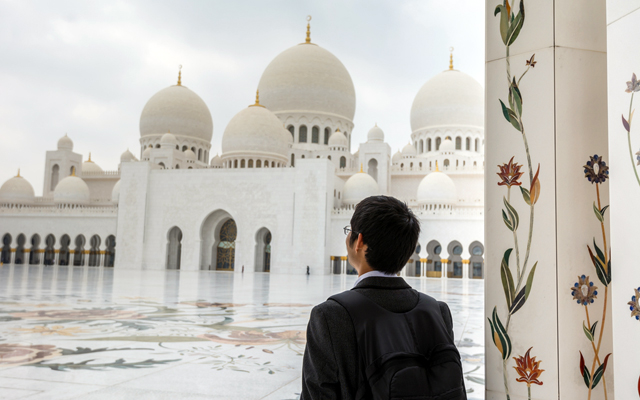
Abu Dhabi recorded a 61 per cent growth in Chinese arrivals last year; Sheikh Zayed Grand Mosque in Abu Dhabi pictured
The UAE’s implementation of visa-on-arrival for Chinese tourists in November 2016 has yielded dramatic results, spurring greater efforts from tour operators and hoteliers to reach out to Chinese visitors.
Speaking to TTG Asia at the recent Arabian Travel Market in Dubai, Naveen Saldanha, managing director at Royal Arabian, observed: “The UAE has been promoted in China for the last 10 years but the tremendous change and growth came after the visa-on-arrival facility was introduced for Chinese citizens. We saw a year-on-year growth of 30 per cent from the Chinese market last year.”
Abu Dhabi recorded a 61 per cent growth in Chinese arrivals last year; Sheikh Zayed Grand Mosque in Abu Dhabi pictured
Similarly, Mark Kirby, general manager of Armani Hotel Dubai, remarked that the visa-on-arrival facility “has resulted in strong growth” from the Chinese market.
The hotel recorded a year-on-year growth of 70 per cent from China in 2017. Year-to-date, the growth has been 40 per cent compared to same period last year.
Jamal Abdulnazar, CEO, Cozmo Travel, shared: “The visa relaxation inspired us to open our offices in China. Our focus is on tier-two cities in China, where there is an excellent volume of business.”
On top of the relaxed visa policy, inbound tour operators said the UAE’s tourism offerings – including newer products – has also helped to attract Chinese tourists and better compete with other popular destinations in Europe and Asia.
“More and more Chinese are looking to visit new and unexplored destinations. The UAE offers a host of new and unique leisure attractions like Louvre Abu Dhabi, which debuted last year,” added Jamal.
Even emirates like Fujairah, currently getting few Chinese tourists, are devising strategies to tap this market.
“Our source markets have been European countries like Germany but now our focus is also on China. We are planning to open our representation office in China to help us market our destination. We are also meeting many tour operators from China to understand the needs of travellers from there,” said Omar Bani Hamour, coordinator, marketing and exhibitions, Fujairah Tourism and Antiquities Authority.
Hotel players such as Emaar Hospitality Group are also working towards making its properties appealing to the Chinese market through initiatives like launching a website in Mandarin.
Armani Hotel Dubai’s Kirby also shared: “Besides translating our website in Mandarin, we have hired Chinese-speaking staff not only in the front office but also in our kitchens. We have also introduced signage in the hotel in Chinese. Going ahead, we plan to use popular social media platforms in China like WeChat and Weibo to target affluent Chinese travellers.”
Official figures show that Dubai recorded 764,000 overnight tourists from China in 2017, a growth of 41 per cent over 2016, while Abu Dhabi recorded more than 372,433 hotel guests from China last year, up over 61 per cent. And with a growth of 45 per cent over the previous year, Sharjah recorded 126,000 hotel guests from China in 2017.
A recent report by the consultancy firm Colliers International projected Chinese tourist arrivals to the UAE to grow by 20 per cent in the coming years.
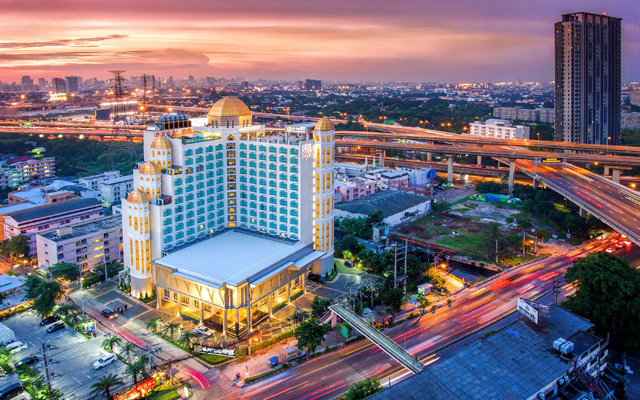
Al Meroz Hotel, a halal hotel in Bangkok, is offering the Ramadan Delight stay package to usher in the Muslim holy month.
Running from May 15 to June 17, the offer includes one night’s stay in a superior room, breakfast Suhoor and Iftar, round-trip transfer from to and from the airport, complimentary late check-out until 15.00, free in-room coffee/tea set, free shuttle service to a nearby shopping complex, as well as a welcome fruit plate and drink.
The package is priced from 4,900 baht (US$155) net per room night for single occupancy, 5,900 baht for double occupancy and 7,400 baht for triple occupancy.