TTG Asia
Asia/Singapore Friday, 10th April 2026
Page 1464

The fighting spirit of independent chains

0
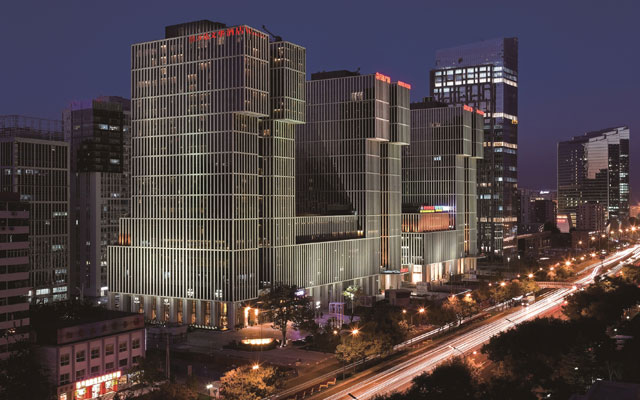
Wanda Vista in Beijing is a Preferred member; in Phuket

Reclassifying their portfolios. Launching the right kind of loyalty programmes. Adding more resources in development and sales. These are busy days for CEOs of independent hotel groups who – far from being cowed by competition from the home-sharing economy or a slew of new soft brands launched by international hotel chains – are showing they love a good challenge. Have a look:

PREFERRED HOTELS & RESORTS
Preferred is 50 years old this year, but shows no signs of a mid-life crisis. A new female leadership will have none of it anyway.
Wanda Vista in Beijing is a Preferred member

In March, the first non-Ueberroth president, Michelle Woodley, was named, along with a new chief marketing officer, Kristie Goshow, and a new executive vice president corporate communications & PR, Caroline Michaud. The move was designed to harness the skills sets in key functional areas of experts outside the family, said CEO Lindsey Ueberroth.

Preferred ended 2017 with a 22 per cent year-on-year increase in reservations revenue to US$1.4 billion, and the addition of 103 new properties, validating its rebranding in 2015, where each of its 650-plus member hotels was aligned with one of five collections: Legend, LVX, Lifestyle, Connect and Preferred Residences. The idea of the exercise, said Ueberroth, was to provide a more intuitive way for consumers to search and book their lodging based on the type of luxury experience they are seeking, rather than by the ‘brand/hotel type’ way that hard brands had taught them to do.

It has paid off, not just in the increased revenue and bigger membership, but by only serving to enhance the large degree of repetitive, indistinguishable products hotel chains have in their network.

“The process of reclassification allows traditional independent hotel groups to organise themselves into meaningful collections that make it easier for a consumer to understand their diverse portfolio without compromising on individual hotel personalities,” Ueberroth told TTG Asia.

“While it is a key advantage to offer a great deal of variety in accommodation choices, authentic experiences and unique global destinations, we must also be easy to sell and easy to buy, regardless of the member’s reason for travelling. Therefore, transparency in pricing and breadth of information on these hotel choices are paramount.”

To support the differentiation of brand collections and the audience they resonate with, its loyalty programme I Prefer was enhanced through the launch of a mobile app and exclusive member rates.

“These new offerings fuelled an 84 per cent increase in stays, more than 50,000 downloads for the I Prefer mobile app (available on iOS and Android), and more than US$8 million in member rate reservations revenue for participating hotels. To-date, I Prefer has more than 2.5 million members worldwide,” said Ueberroth.

Plans are to continue enhancing the benefits and offers for I Prefer members, and to further strengthen engagement with them. At press time, details are under wraps but Ueberroth emphasised two key phrases, “true loyalty” and “gratitude”.

She said: “The consumer has been educated to expect instant gratification due to the proliferation of rewards programmes in every aspect of their daily lives, from supermarkets to healthcare. In fact, most of us will receive benefits before we have actually demonstrated any loyalty to a brand.

“Consequently, loyalty programmes must work significantly harder to deliver on their true intent – brand loyalty – especially in the hotel space where the traditional ‘earn and burn points’ model isn’t as effective as it once was. Loyalty is fast becoming a singular focus that necessitates a reward framework based around the needs ‘of one’ rather than ‘the loyal community’.”

Preferred will also relaunch its website in the third quarter. This will include a dedicated section on Preferred Residences which, according to Ueberroth grew significantly in 2017 and now has 70 members.

WORLDHOTELS
In March, WorldHotels reclassified its 350 members into three collections, WorldHotels Distinctive, WorldHotels Elite and WorldHotels Luxury, from two collections previously, WorldHotels and WorldHotels Deluxe.

Distinctive covers upscale properties, Elite upper upscale and Luxury is, well, as the name says. In general, WorldHotels members became part of WorldHotels Distinctive while members that were WorldHotels Deluxe became part of WorldHotels Elite. The very best hotels became part of WorldHotels Luxury.

“The reclassification clarifies the market positioning of our collections, so our sales team can sell our hotels to our clients with greater confidence,” Geoff Andrew, CEO of WorldHotels, said.

“Therefore, travel agents as well as guests get a better understanding of the accommodations and the services they can expect before they book with WorldHotels.”

He added: “The creation of the new collections signals that we will be taking a more focused approach to the quality levels within each segment. Hotels that don’t meet our quality standards will obviously be addressed and given the opportunity to resolve these issues. If a hotel doesn’t improve its quality standards, it is possible that it will be excluded from its collection and the overall WorldHotels’ portfolio.

“As the brand continues to grow and expand, new properties will have to continue to adhere to the standards for each collection to maintain the integrity of each.”

So is WorldHotels shifting towards the high-end? Said Andrew: “WorldHotels has always been involved with luxury, high-end properties.

“The overall WorldHotels portfolio, however, ranges from upscale to luxury and we will continue to serve all of them. Because of the upper upscale and luxury portfolio of our sister company ALHI (Associated Luxury Hotels International), we do see an opportunity to grow within the high-end market. However, this does not mean we will be shifting solely towards the high-end.”

Since ALHI parent, Associated Luxury Hotels, acquired WorldHotels in February 2017, work on leveraging the two brands has been going on in earnest. ALHI handles global sales, particularly meetings & incentives, for its membership comprising more than 250 luxury hotels and resorts, primarily in the US. WorldHotels’ portfolio, on the other hand, comprises 350 properties, many outside the US.

Andrew said WorldHotels is leveraging the luxury aspect of ALHI to elevate the overall brand of WorldHotels. ALHI too has been generating leads of clients they can’t place in their own portfolio to WorldHotels.

“Between us, we have 150-odd sales people and 600 hotels. One of the things that we’re looking at is, what services can we add that will benefit both organisations and members?” he said.

WorldHotels is targeting a massive growth from its present 350 hotels to 500 properties within the next three years. Asia-Pacific is a clear target of growth, as seen in two key promotions in April, James Koh as regional vice president of hotel development Asia-Pacific, and Ganessan Suppiah as regional vice president of sales Asia-Pacific. Both have served WorldHotels for over 11 years.

Outside Asia-Pacific, a global director of travel industry partnerships, Tim Burke, has been hired, based in Dallas, along with a regional director of sales based in Los Angeles, Fernando Carranza.

“WorldHotels is currently making significant investments to enhance its service offerings for independent hotels including the expansion of its already extensive global sales and e-commerce force along with new additions to its development team,’ said Andrew.

A new global loyalty programme, The List, will also be launched this summer, emphasising instant benefits for guests, such as an arrival ritual and upgrades on availability, and harnessing the collective marketing resources of participating member hotels.

Andrew won’t give away the details, and only said: “Guests have a new set of expectations. They expect loyalty programmes to offer greater flexibility and personalisation; they are looking for individualised value and they want more than just points.”

He added: “In hospitality, loyalty programmes will see a lot of changes within the next years. The industry needs to redefine what hotel loyalty is in order to adapt to changing consumer behaviours and hotel (members) expectations. Today, independent hotels want loyalty programmes to help them drive more direct bookings and reduce their dependency on OTAs and other third parties.

“That is why WorldHotels has been rethinking how loyalty is recognised and rewarded and will introduce a new loyalty programme this summer.”

SMALL LUXURY HOTELS OF THE WORLD (SLH)
SLH launched a new look and feel in 2015, and was the first among independent hotel chains to reboot their loyalty plan to suit today’s needs. It launched Invited, which replaced Club of SLH, last October.
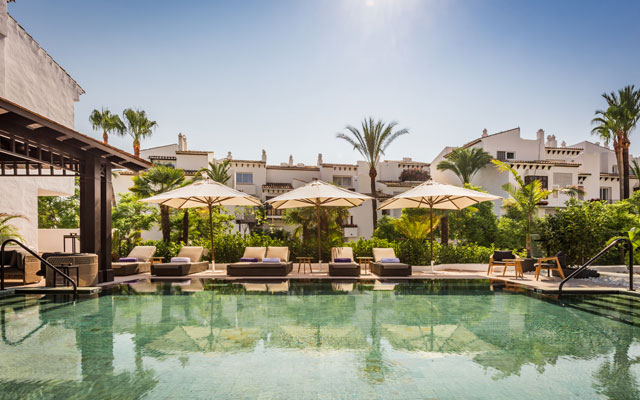
Nobu Hotel Marbella, one of SLH’s newest members

Invited does reflect the pivot indie hotel groups are trying to make, from the typical point-based redemptions for free nights or upgrades offered by big-name chains, to what SLH CEO Filip Boyen described as “being more responsive to distinctive experiences”.

Guests want immediate gratification and tailored communication, he said. Points accumulation is tedious. It’s the “basics” that now count.

“No one is interested in lounge access if they have to then pay for breakfast each morning at their hotel. Our members do not want points because it takes effort to work out meaningful value. What members want is simplicity and Invited delivers just that – the more a member stays, the better it gets with SLH,” Boyen pointed out.

Three new crucial Invited offerings are:
• Hotel benefits such as room upgrades and late check-outs which members see as extremely valuable remain, but are now implemented consistently across SLH’s 500-plus independently-owned hotels.
• New and more frequently awarded benefits such as reward night vouchers, birthday gifts, recommend a friend, and small luxuries to surprise guests.
• Members are recognised not only for the number or value of bookings that they make, but for their overall interaction with the brand.

SLH figures that the new loyalty programme will also give rich insights into 400,000-strong Invited members’ travel patterns which it wants to leverage to raise the booking conversion through “highly personalised emails” and more engagements with the brand. Ultimately this will lead to greater brand loyalty from members.

Like Preferred, SLH is reaping rewards of the initiatives taken since 2015.
Said Boyen: “I’m asked all the time now about how the big hotel chains launching soft brands has affected our business – frankly, it hasn’t.

“Business for us increased 16 per cent last year, and we added 57 new hotels in places like Dubai, Havana, Panama, the US, Rome and Japan. This year we have some really exciting new hotels joining the brand, including our second Nobu Hotel in Marbella, The Sukhothai Shanghai and 7 Secrets Resort and Wellness Retreat in Lombok, just to name a few.”

Boyen said SLH’s new look and feel was not just skin deep. “We also made quality a real focus for the business and now all our hotels are inspected every year – and hotels that fail these inspections must leave the brand. This way our guests know all SLH hotels, whether a modern city centre hotel, or a historic country retreat, meet our strict criteria.”

Superior products, experiences drive consumer loyalty better than financial rewards: EAN

0
Brands seem to believe that product quality has the largest impact on loyalty, but their actions show otherwise

Asia-Pacific travel brands are driving loyalty by improving their product offering versus creating membership programmes, according to Expedia Affiliate Network (EAN) and Points’ new Travel Loyalty Report: A wake-up call for sleepwalking loyalty programmes.

Ariane Gorin, president, Expedia Partner Solutions, said: “Today’s savvy travellers are looking beyond price as they choose their preferred brands. To drive loyalty, travel companies need to look beyond existing solutions like discounting, vouchers and points schemes. Lasting loyalty will be won by companies who really tune in to consumer expectations, deliver a diverse product offering and invest in superior user experiences.”

Brands seem to believe that product quality has the largest impact on loyalty, but their actions show otherwise

Assessing the state of customer loyalty in the travel industry across multiple geographies and travel sectors, the study shows that despite widespread doubt in their efficacy, discounts and coupons remain the most popular tactic brands use. Sixty-one per cent of respondents admit to relying heavily on them, and the proportion is 72 per cent in Brazil alone.

Awarding points and miles is used by 52 per cent of respondents, and 82 per cent in the UK, the highest among markets surveyed.

In Asia-Pacific however, just 24 per cent of respondents are using points and miles to drive loyalty, while 26 per cent of are not offering a loyalty programme at all.

Globally, 71 per cent rate “quality of offering” as having the greatest impact on loyalty, while customer experience and an improved breadth of product and service offering are also valued above discounting methods.

Despite this, there seems to be a gap between insight and action, with only half of respondents saying they are actively working to improve their product range and customer experience, and even less (33 per cent) to improve their breadth of product and service offering.

Rather than an improved product, the majority of survey respondents cite external factors such as a stronger economy (70 per cent overall, 88 per cent in the UK and 71 per cent in China), increased marketing spend (72 per cent in the UK and 73 per cent in Japan) and changing customer demographics, as the key to their loyalty gains.

This is markedly different in Asia-Pacific, where over 50 per cent say that they expect loyalty to increase due to continual improvements in their product offering.

Even though new ideas like personalisation and gamification are believed to be effective, particularly by the airline industry, very few companies are doing it (30 per cent and 57 per cent, respectively). A higher percentage of Asia-Pacific countries cite gamification to be an effective method in driving customer loyalty, rising to a peak of 75 per cent in South Korea.

Thai sustainable tourism standard gets GSTC recognition

0
Recognition harmonises national and international standards

Thailand’s Sustainable Tourism Management Standard, published by Designated Areas for Sustainable Tourism Administration (DASTA) – a government agency under the Prime Minister’s Office – has become the first tourism-related standard in the country to receive the Global Sustainable Tourism Council (GSTC)-Recognized status.

Being GSTC-Recognized means that the sustainability standard has been reviewed by GSTC technical experts and the GSTC Accreditation Panel and deemed equivalent to the GSTC Criteria for sustainable tourism, without suggesting that the certification process is reliable.

Recognition harmonises national and international standards

Nalikatibhag Sangsnit, director-general of DASTA, said that the agency will be working towards achieving GSTC-Accredited status, which affirms that the certification process follows the highest international standards.

“By gaining GSTC-Recognized status, another step has been achieved in harmonising national sustainability standards, set by DASTA, with global sustainability standards, set by GSTC,” said Randy Durband, CEO of GSTC.

“This harmonisation provides clarity for the management and market-facing communication of the application of these standards. That message includes the inclusion of the four pillars of sustainability: sustainable management, social/community, cultural and environmental issues.”

To date, 10 destination standards, and 30 hotels and tour operators standards have achieved GSTC-Recognized status.

Best Western has new director of development for Asia

0

Best Western Hotels & Resorts has appointed Cyril Czerwonka as its new regional director of development – Asia.

Czerwonka joins Best Western’s Asia head office in Bangkok, where he will focus on seeking new hotel development opportunities for the company across the region.

He had his start in the hospitality industry with AccorHotels, focusing on Thailand, Cambodia, Laos, Malaysia and the Maldives. His hospitality experience also includes five years at The Ascott, where he was business development manager for Europe and North Africa.

Then in 2013, he joined Dusit International as assistant director of development for EMEA, based in the UAE.

Diethelm appoints partner reps in France and Turkey

0
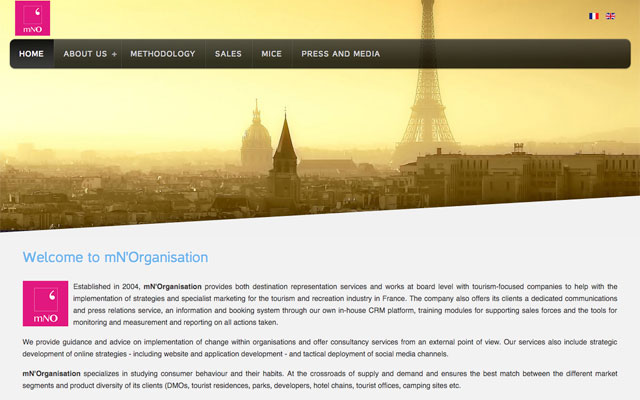
mN'Organisation will be responsible for the French market

Diethelm Travel Group has appointed two companies in France and Turkey to serve as its representatives in the respective markets.

France-based mN’Organisation will be responsible for supporting the French-speaking markets across France, Belgium and Luxembourg.

mN’Organisation will be responsible for the French market

The company also has plans to further enhance its French-language capacity within operation and reservations levels to better connect with and serve this crucial market.

In Turkey, Opus Travel has been named the new Diethelm Travel Group representative. The relationship marks a move into the region which holds a number of high-value accounts and MICE opportunities.

The new representatives from both markets will report to Victor Mogilev, Diethelm Travel Group’s group director of sales, and work closely with the rest of the Diethelm Travel team implementing sales activities, identifying new market opportunities and representing the brand’s array of Asia travel products.

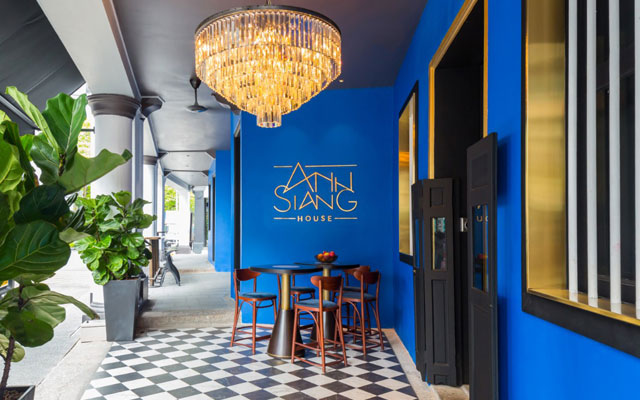
Ann Siang House, Singapore

0

Location
Ann Siang House occupies a restored shophouse that dates back to the early 1920s, in an area that was once home to Chinese clan associations.

The boutique property is a six-minute walk from Telok Ayer MRT. Within a five-minute walking radius are local hawker centres such as Maxwell and Amoy Street; bustling eateries such as Park Bench Deli, and Luke’s Oyster Bar & Chop House; and popular watering holes like Oxwell & Co and Bitters & Love.

Deluxe Room

Room
Ann Siang House offers 20 rooms – 16 Deluxe Rooms, two Executives and two Suites. The main difference is that the Executives and Suites come with kitchenettes, and the Suites have an extra bathtub.

We stayed in Deluxe corner room 303. The 30m2 space is tastefully furnished, and felt spacious even though there was a work table, four chairs, coffee machine and a minibar (items are all complimentary).

Regular mod-cons include a flatscreen Samsung smart TV, Tivoli Audio Bluetooth speaker system and unlimited Wi-Fi access. There was a Handy Phone provided as well, and I thought that this newer version was more responsive and intuitive than its predecessors seen at other hotels.

The Hypnos Firenze king-sized bed felt luxurious to the touch, and was extremely comfortable. It came complete with four fluffy pillows. I felt like I had a good night’s rest as I went to work feeling refreshed the following day.

It’s relatively quiet during my weekday stay at Ann Siang House, but we could hear the garbage truck outside our room in the wee hours of the morning. Note that on weekends, it may be noisier at night due to the numerous bars along Ann Siang Road. However, the boutique property does offer ear plugs and a white noise machine (upon request) to ensure guests have a peaceful night’s rest.

Exterior of Ann Siang House

F&B At press time, there are three F&B brands currently occupying the spaces around the lobby. The space on the right is currently occupied by coffee bar Cult (daytime)/and contemporary eatery The Guild (night-time). On the left is Italian restaurant Perbacco but it was not open when I was there. I understand it opens for lunch on weekdays and on weekend evenings.

There is no hot buffet breakfast, but Ann Siang House has partnered with Cult to offer guests a breakfast box comprising a muffin, yogurt with granola, croissant, fruit and a small bottle of orange juice.

Just round the corner – but part of the same building – is cosy pizzeria Blue Label Pizza & Wine. In my opinion, this place serves up some of the best pizzas in town. A must-try is the Umami Bomb: a cornmeal pizza topped with a generous amount of shiitake mushrooms, spinach, onions, anchovies and goat’s cheese. This brilliant combination resulted in a glorious savoury explosion with every bite. Yum.

A phase two for Ann Siang House will be unveiled later this year, and its website states that it’ll be “celebrating local purveyors and uniting Singapore’s independent F&B heroes to continue to evolve as an exciting, integrated F&B and events destination”.

Facilities There is an in-house washer and dryer, provided with the hotel’s compliments.

Service Staff members were polite, constantly smiling and made me feel at home. When we had trouble with our TV, the manager came up within minutes to help us troubleshoot.

Also, the breakfast box idea was thoughtful, and affirms that the hotel takes guests’ well-being seriously.

Verdict Personally I loved the boutique hotel’s proximity to the many fantastic F&B options in both the Ann Siang and Telok Ayer area. Both leisure and corporate travellers will certainly appreciate its convenient location and proximity to tourist attractions and the CBD respectively.

No. of rooms 20
Rates From S$250++ (US$190++)
Contact details
Tel: (65) 6202 9377
Email: stay@annsianghouse.com

New hotels: Fujino Kirameki Fuji Gotemba, Courtyard by Marriott Siem Reap and more

0

Fujino Kirameki Fuji Gotemba, Japan
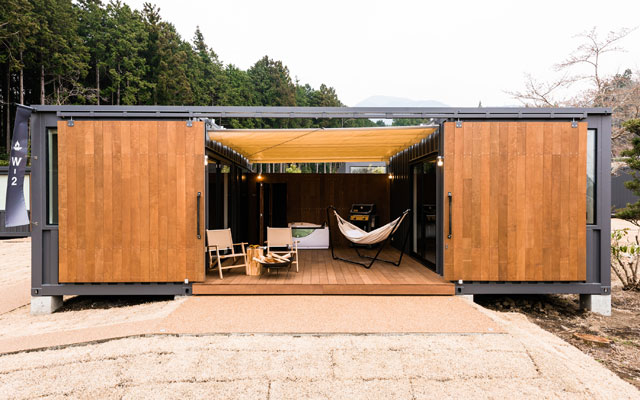
Japanese hotelier Fujita Kanko has launched its first glamping property in Gotemba in Shizuoka Prefecture, the gateway city to Mount Fuji. Located a 90-minute drive from Tokyo, the 1.6ha property offers 20 cabins across four categories ranging from 54m2 to 153m2 in size; the largest can accommodate up to six people. Each cabin is air-conditioned, and furnished with a toilet, shower, outdoor jet bath, and outdoor deck with a grill and fireplace. Facilities on the grounds include a children’s play area, dog run and event space.


Courtyard by Marriott Siem Reap, Cambodia
Marriott International’s first hotel in Cambodia, the Courtyard by Marriott Siem Reap offers 233 guestrooms and suites, all of which are furnished with modern furniture and amenities such as a 43-inch flatscreen TV, as well as have private balconies with views of the pool, city or gardens. Facilities on-site include all-day-dining restaurant Lok Lak, rooftop bar Upper Deck, Quan Spa, outdoor saltwater pool, fitness centre, kids’ club and recreation room. Corporate planners can choose from the 410m2 Grand Room or five meeting rooms to hold their events or meetings.


Wyndham Opi Hotel Palembang, Indonesia
Wyndham has opened its first property in Palembang, Indonesia, in the Jakabaring precinct just next to the OPI Mall. The hotel has a total of 257 rooms across six room categories, ranging from Superior rooms to the two-bedroom Presidential Suite. Amenities on-site include all-day dining restaurant 9 Rivers, the Lotus Lounge, a spa, infinity pool and gym. Wyndham Palembang is also home to the the city’s largest convention facility comprising two ballrooms – the larger ballroom being able to seat up to 2,500 delegates – and six meeting rooms totalling 2,260m2.


Grand Hyatt Kochi Bolgatty, India
The five-star waterfront hotel on Kochi’s Bolgatty Island covers 10.5 hectares, and features 264 luxurious guestrooms including 38 suites and four private villas with plunge pools. Aside from complimentary Wi-Fi and four F&B venues, recreational facilities include a spa, kid’s play area, 24-hour fitness centre, tennis courts and three swimming pools. Events can also be held on the property’s 3,000m2 of function space including a waterside amphitheatre and yoga lawn. The 10,000m2 Lulu Bolgatty International Convention Centre is just next door.


Vibe Hotel North Sydney, Australia
Mixed-use development Northpoint in Sydney is now home to the 187-key Vibe Hotel North Sydney. Situated on the corner of Miller Street and Pacific Highway, amenities on-site include complimentary Wi-Fi, a rooftop pool and bar, fitness facilities, four flexible meeting and conference room options. Although there are no restaurants, hotel guests will have access to Northpoint’s new eat street and casual dining atrium.

Making cybersecurity a priority

0

Recent hacking cases in the travel industry are driving home the message that the digital age presents immense opportunities for the travel industry, but also insidious dangers.

In Hong Kong, three cyber attacks on mid-scale travel agencies have sounded a wake-up call for agents to take cybersecurity seriously or run the risk of losing their client database, business disruption or blackmail by hackers.

Besides the recent cases in Hong Kong, the Travel Industry Council (TIC) says it is aware of similar cases overseas. For instance, in 2016, JTB, InterContinental Hotels Group, HEI Hotels & Resorts and Dallas-based Omni Hotels & Resorts were hacked. Last year, the Association of British Travel Agent’ website, and one of the reservation systems of Sabre Hospitality Solutions were also compromised.

TIC executive director Alice Chan said: “The recent cyberattacks on travel agents have definitely created a sense of crisis for our members. In this digital age, to be cyber-vigilant is of paramount importance not only for TIC members but also members of all industries that are in possession of customer data, because they have a duty to protect the data privacy of their customers. It is also most undesirable for their business operations to be disrupted by such attacks.

“Cyberattacks are on the rise… It is obvious that growing reliance on IT and increasing inter-connectivity have made travel agents increasingly vulnerable to cyber incidents.”

Elaborating on the susceptibility of businesses to such attacks, Jebsen Insurance Brokers’ senior manager Kenneth Leung said that as long as a company relies on computers to handle everyday business – i.e. incoming and outgoing emails, client database, system payment gateway for online payment and smartphone access to company resources – they are prone to risks like virus infection and cyberhacking. The impact of such attacks on businesses are undeniable, Leung added.

“The potential loss for the first party could be how to recover and restore system and data, which means paying more money to rebuild their system and input all data again. But if the system is hacked or locked as in recent cases, agents may have to suspend services temporarily, so annual income will be affected. In terms of third party liability, if it involves large amounts of personal information of clients or business partners, these parties may sue the company.”

While this paints a sobering picture of the threats that lay in wait in the cyber world, Blue Sky Travel’s director, Angela Ng, said the small-scale operator is not a target.

Apart from its Facebook page, the company leaves little trace on the Internet.
“We don’t plan to build any powerful website with online storage due to costly installation and maintenance. Frankly, I find it risky to store clients’ information on cloud, so (our) data is kept in hard disk without online access. We are a small agent and serve mostly repeat clientele.”

Others argue that the cybersecurity investments are costlier for smaller businesses.

However, TIC’s Chan stressed that all types of travel agents are vulnerable to cyberattacks unless they are completely offline.

“Every agent should be aware of the risks, stay vigilant and take the necessary preventive measures to guard against such attacks. SME travel agents may have limited resources but should still exercise great care in upholding the integrity of their information systems, or else not only their operation, but also their reputation, will be at stake,” she said.

While their cost concerns are valid, SMEs in Hong Kong have subsidies available to them. The 2018-19 Government Budget announced in early March increased funding of the Pilot Information Technology Development Matching Fund Scheme for Travel Agents by HK$20 million (US$2.6 million), bringing the total support to HK$30 million.

The scheme matches each eligible travel agent’s spend on technology that goes towards upgrading productivity, service quality and competitiveness.

Moreover, agents can make up for the lack of in-house expertise by outsourcing.

“With the rapid acceleration of (technological change), it’s impossible for SMEs and their staff to keep pace with new skills so there is a need to rely on suppliers,” said teaching fellow at Hong Kong Polytechnic University’s Department of Computing, Walter Fung, who spent over 20 years building up his expertise in computer management before taking up his university post.

“Both security capacity and maturity need to be addressed. Apart from periodic reviews of a system, backup is vital. If you hope to recover something in a short time, it’s key to (have) a high-calibre technological supplier, (invest) in backup or disaster recovery (and foster) internal staff cooperation.”

A hard-to-attain but increasingly popular standard agents can strive towards is ISO27001 certification, he shared. “This covers a wide spectrum (of criteria) like the ability to recover when things happen, security policy do’s and don’ts, having staff change passwords regularly as well as staff education.”

Associations are also stepping up efforts to educate agents on the importance of cybersecurity. Since 2017, TIC started organising seminars for its members. Two seminars were conducted in January and February 2018 respectively.

And in late January, the Hong Kong Association of Travel Agents engaged specialists to speak to members about technology risk management and information security.

Announcement of new Singapore tourism chief imminent

0
Yeo pushed for yield-driven quality growth, public-private collaborations and more

The Singapore Tourism Board (STB) is expected to announce a new CEO shortly as the current chief, Lionel Yeo, is reaching the end of a second three-year term in June – possibly the only STB CEO to have served for six years.

The STB is a statutory board under Singapore’s Ministry of Trade and Industry. Yeo has been an officer with the Singapore Administrative Service since 1996 and was formerly dean and CEO of Singapore’s Civil Service College and deputy secretary (development) in the Public Service Division of the Prime Minister’s Office.

He is leaving the STB position on a high note, with both visitor arrivals and tourism receipts reaching historical highs – 17.4 million and S$26.8 billion (US$20 billion) respectively in 2017 over 2016, contributing about four per cent to Singapore’s GDP. But beyond the headline numbers, Yeo is widely credited for taking Singapore tourism through the industry’s changing landscape in the past six years.

Yeo pushed for yield-driven quality growth, public-private collaborations and more

Among his clarion calls are the need to focus on yield-driven quality growth, and for STB and tourism industry players to collaborate, innovate and create value together for increasingly discerning travellers. Under Yeo, STB launched a slew of initiatives and funds to help sectors that are hard hit by disruption to transform themselves, particularly the travel agency business, while encouraging new innovative players to enter the industry.

As a public service officer, Yeo advanced tourism’s role in reinforcing Singapore’s image as not just an attractive destination but a magnet for capital, businesses and talent. The latest branding Passion Made Possible, for example, is a unified brand between STB and the Economic Development Board, marketing Singapore not just for tourism, but business purposes. At the same time, he used tourism as a tool to enhance the quality and leisure options for local residents themselves.

In one of his earlier interviews with TTG Asia, Yeo said: “I didn’t expect the tourism sector to have such a wide impact on the country. It impacts the Singapore national brand – how the rest of the world perceives Singapore – and it impacts how Singaporeans feel about their own country. Tourism contributes a lot to the narrative about how we (Singapore) attract capital and are a hub for knowledge and talent. By making the place more attractive, we’re also an attractive place for talent, which fuels other parts of the economy.”

“I think Lionel has done good work with STB,” said Loh Lik Peng, director, Unlisted Collection, which runs a string of luxury boutique hotels and curated F&B concepts in Singapore and abroad, and is vice president of the Singapore Hotels Association (SHA) executive committee. “We were well north of 17 million tourism arrivals last year and are set to hit 18 million this year, so undoubtedly the headline numbers are strong.

“I feel within the hotel industry he is well liked and regarded. At the SHA and SHATEC (Singapore Singapore Hotel and Tourism Education Centre) level, we had many close interactions with him and he supported quite a few initiatives for industry transformation such as manpower and technology. I really hope to see that continuing because that sense of partnership with industry is important. STB in this environment must be more than a regulator and promoter but an organisation that can be more entrepreneurial and business like.”

Added Mike Barclay, group CEO of Mandai Holdings, whose Wildlife Reserves Singapore clinched the Best Attraction Experience at Singapore Tourism Awards last Tuesday: “Lionel has shown exceptional leadership at STB over the last six years. He has done a brilliant job of promoting Singapore by not only highlighting our exciting locations, attractions and events, but also raising the profile of how Singaporeans celebrate life through our rich culture, traditions, architecture, wildlife and, of course, food!

“Lionel has also been great at reminding all attraction operators to keep a strong focus on appealing to locals as much as to overseas visitors. This serves both to enrich the lives of Singaporeans and to attract tourists who like to visit places well frequented by locals. We will miss him very much.”

Whoever comes after Yeo will have to think up growth from a high base, for a small city whose resources like skilled manpower are stretched to the max, and ways to help tourism sectors transform and survive the new economy.

As Yeo warned at the recent Singapore Tourism Industry Conference: “The prospect for quality tourism growth in Singapore is bright, but it is also dynamic and subject to further disruption and transformation.”

Global tourism’s carbon footprint much bigger than thought

0
Cathay Pacific, JetBlue, Lufthansa, Qantas, and United have made investments by forward-purchasing 1.5 billion gallons of SAF

Tourism has been revealed to be responsible for almost a tenth of greenhouse gas emissions, with flights a major component, according to a world-first study that quantifies tourism’s footprint across the supply chain, from flights to souvenirs.

According to the research – led by the Integrated Sustainability Analysis supply-chain research group at the University of Sydney – the global footprint of tourism-related greenhouse gas emissions is four times greater than previous estimates.

Co-author Ya-Yen Sun, from the University of Queensland’s Business School and the National Cheng Kung University, Taiwan, said a re-think about tourism as ‘low-impact’ was crucial.

Aviation is main contributor to tourism’s carbon footprint

The report further highlights a gap in the Paris climate agreement, which leaves out tourism, a trillion-dollar industry growing faster than international trade.

“Given that tourism is set to grow faster than many other economic sectors, the international community may consider its inclusion in the future in climate commitments, such as the Paris Accord, by tying international flights to specific nations,” she said.

Small islands attract a disproportionate share of carbon emissions, considering their small populations, through international arrivals, while the US is responsible for the majority of tourism-generated emissions overall.

In recent years, key emitters like the US has been joined by countries like China and India, where the middle class is growing.

Lead researcher from the University of Sydney, professor Manfred Lenzen, said the study found air travel was the key contributor to tourism’s footprint and that the carbon-intensive industry would comprise an increasingly significant proportion of global emissions as growing affluence and technological developments rendered luxury travel more affordable.

“We found the per-capita carbon footprint increases strongly with increased affluence and does not appear to satiate as incomes grow,” Lenzen said.

For holidaymakers, Lenzen said paying for robust, long-term carbon abatement could increase the price of a trip significantly.

A key recommendation by the researchers, hence, is to fly less and pay more, as an example for carbon abatement.

“Carbon taxes or carbon trading schemes – in particular for aviation – may be required to curtail unchecked future growth in tourism-related emissions,” Sun added.

The researchers also recommend financial and technical assistance to help share burdens such as global warming on winter sports, sea-level rise on low-lying islands, and pollution impacts on exotic and vulnerable destinations.

Corresponding author Arunima Malik, from the School of Physics at the University of Sydney, said the research took year and a half to complete and incorporated more than an estimated one billion supply chains and their impacts on the atmosphere.

“Our analysis is a world-first look at the true cost of tourism – including consumables such as food from eating out and souvenirs – it’s a complete life-cycle assessment of global tourism, ensuring we don’t miss any impacts.”

Malik added that the research fills a crucial gap identified by the UNWTO and World Meteorological Organization to quantify the world’s tourism footprint.