TTG Asia
Asia/Singapore Sunday, 21st December 2025
Page 1442

New casino deal will put more of Boracay at stake – and peril

0
Casino project introduces further concern among industry players

The travel trade is baulking at the consequences of allowing a multi-million dollar casino project in Boracay, approved by the Philippine government at the same time that it announced closing the island next month for rehabilitation from environmental problems caused by unbridled development.

While the industry’s current focus is taking care of the island’s rehabilitation and determining its real carrying capacity, “for years we have been calling for a moratorium on buildings” and adding more facilities “might not be to the best interest of Boracay”, Tourism Congress of the Philippines’ president Jojo Clemente said yesterday in a joint press conference by Boracay’s stakeholders who favour its rehabilitation but not its closure.

Casino project introduces further concern among industry players and observers alike

The industry expressed concern that Boracay is being stretched to its limits as the Philippine Amusement and Gaming Corp (PAGCOR) earlier this week approved the US$500 million casino to be built by Hong Kong-listed Galaxy Entertainment Group and its local partner Leisure & Resorts World Corporation, following the approval of another casino in 2014 as well as the mammoth 1,001-key Hotel 101 Resort-Boracay.

It is “ill-advised to spread the casino footprint” to Boracay, said Bill Barnett, managing director of hospitality and consulting firm C9 Hotelworks. “I’d be very concerned by the prospects of gaming on Boracay, as the sheer scale conflicts with environmental issues being faced”, he explained.

Teody Espallardo, Alta Briza Resort Boracay’s director of sales and marketing, surmised that the influx of tourists from China, now Boracay’s top foreign market source, could be the reason behind allowing casinos on the island. Many attempts to build casinos in the past were not allowed, said Espallardo, who previously worked with Pagcor for nine years.

An industry leader lamented the move as “surreal” and “double standard”. “The government is not even hiding the fact that they are opening casinos in the world-famous beach destination. We will be in Boracay for our entire lives but they (government officials) are up to six years only”, he stated, referring to the term of office of government in the Philippines.

Intas DMC managing director Sonia Lazo said casinos will likely translate into “a loss of tourists coming to Boracay” as her clients and source markets do not favour such gaming projects.

It’s the absence of proper regulations and policies that has led Boracay to its current state of demise, acknowledged Lazo. “If they plan this casino on the island, it would mean more responsibility, more governance and they need to double the effort (in governance),” she said.

“This call of closure of Boracay is a red flag that we’re not doing something right. It affects our image as a destination,” remarked Lazo.

Serious yoga, Ayurveda fans a transformative segment for India

0
Yoga and Ayurveda products can help disperse traffic from hotspots; pictured, meditation near Virupaksha temple in Hampi

India’s Ministry of Tourism is hoping to promote a new perception and better understanding of yoga and Ayurveda as a holistic way of life to attract more health-conscious, high-end travellers deeper into India.

In an interview with TTG Asia at the recent ITB Berlin, Alphons Kannanthanam, the minister of state for tourism, said: “There is already a strong fan base for yoga and Ayurveda, but there are misunderstandings that yoga is just a form of exercise and that Ayurveda is a spa treatment. If we are able to (correct) that misperception, we will be able to attract more health-conscious travellers to India and perhaps even more millennials, as this is a generation that greatly values a balanced way of life.”

Yoga and Ayurveda products can help disperse traffic from hotspots; pictured, meditation near Virupaksha temple in Hampi

B Venkatesh, senior general manager, inbound-sales, with Cox & Kings India, agrees, further explaining that yoga and Ayurveda on their own “can be practised anywhere in the world” but only when they are combined and recognised as a serious medical solution will they be strong magnets for health-conscious travellers.

Kannanthanam believes that yoga and Ayurveda will help drive international arrivals deeper into India, away from just the big cities, and bring much needed tourism spend to the rural communities. This is because “yoga and Ayurveda are often practised in quieter, rural districts”, he explained.

“Furthermore, as yoga and Ayurvedic retreats are often lengthy, running for a week or more, we will be able to keep travellers longer with us and have them spend more in the community for lodging, food, sightseeing and others,” he remarked.

The minister pointed out that these wellness retreats “don’t come cheap”, which fulfils India’s desire to attract higher yielding travel markets.

According to Biju George, director-overseas marketing, Somatheeram Ayurveda Group, a seven-night package inclusive of accommodation, treatments and full-board meals could cost from 875 euros (US$1,083) for a single standard room to 7,532 euros for a 14-night double deluxe suite.

Somatheeram Ayurveda Group is recognised as one of India’s leading Ayurveda specialist provider, offering five resorts in Kerala and treatments that are certified by the National Accreditation Board for Hospitals and Healthcare Providers.

Venkatesh noted that there are also ultra-luxury resorts in India that offer a combination of yoga and Ayurveda, such as Ananda in the Himalayas and Carnoustie Ayurveda & Wellness Resort, where treatments carry a hefty price tag of 9,000 euros and up per person for a week of stay and treatments.

“Wellness travellers are rarely price-sensitive, as their focus is on tuning their bodies and mind, and recovering from whatever that ails them,” he said.

While Cox & Kings India gets wellness demand from all over the world, Somatheeram Ayurveda Group sees Europe as its dominant market, making up 75 per cent of bookings.

Baby Mathew, chairman and managing director of Somatheeram Ayurveda Group, hopes to do more to court travellers from Asia where he has seen stronger interest in recent times.

“We will open our sixth resort this November, the five-star Somatheeram Amruth in Kerala. With more room inventory and treatment facilities, we will be better able to attract even more people,” Mathew said.

Chinese growth gives Philippine tourism its strongest two months yet

0
Tourists going on the Underground River boat tour in Palawan, Philippines

Arrivals into the Philippines crossed 1.4 million in the first two months of 2018 for the first time, up 16.2 per cent year-on-year, driven by growth in the Chinese tourist market, according to the Philippine Department of Tourism (DOT).

“The warming relations between the Philippines and China plus the Chinese New Year seven-day holiday strengthen the platform for us to jump-start our campaign of achieving 1.5 million Chinese arrivals for this year,” DOT secretary Wanda Tulfo-Teo said.

Tourists going on the Underground River boat tour in Palawan, Philippines

Chinese tourists recorded 256,880 arrivals, the most improved market at an impressive 56.4 per cent growth rate, next to South Korea at 354,700, which remains the country’s top tourist source market.

America came in third with 193,985, followed by Japan at 117,300 and Australia at 50,404.

Completing the top 12 markets are Canada, 48,191; Taiwan, 40,856; the UK, 33,554; Singapore, 28,117; Malaysia, 24,334; India, 23,064, and Hong Kong, 22,920.

Last year, the Philippines came in ninth in a ranking of top destinations for Chinese outbound tourists according to TravelChinaGuide, a leading Chinese travel agency.

Based on the 2018 Spring Festival Travel Forecast Report issued by Ctrip, China’s largest online travel provider, and the China Tourism Academy, the Philippines was also named the eighth most popular Chinese travel destination during the Chinese New Year.

Teo said the continued rise in the number of foreign guests bodes well for the higher targets set by the DOT amid controversy on the government’s plan to temporarily close Boracay to tourists and rehabilitate its drainage, sewerage and road systems to address water pollution, flooding and traffic problems.

Tuzki, Cartoon Network characters bound for Six Flags in China

0
Rendering of the upcoming Six Flags in Zhejiang

Six Flags Entertainment Corporation, Riverside Investment Group and Turner Asia Pacific, are joining hands to bring Turner’s original, branded experiences to Six Flags parks throughout China.

The first addition is a dark ride themed after Tuzki, a Turner-owned rabbit IP that has become a household name in China, with millions of Tuzki emoticons exchanged through instant messaging apps each day.

The ride will join attractions at Six Flags Zhejiang and Six Flags Chongqing, scheduled to open in 2019 and 2020 respectively.

Rendering of the upcoming Six Flags in Zhejiang

Ricky Ow, president of Turner Asia Pacific, said: “This is the first time Tuzki’s loyal fans will be able to experience their favourite emoticon in such a tangible and authentic way.”

In addition to the ride, both parks will also feature Tuzki theming and new retail locations offering branded merchandise.

The agreement between Turner and Riverside Investment Group also allows for other Turner-owned IP from Cartoon Network’s portfolio of characters and shows to be featured inside Six Flags Kids World. The family-friendly park will be built adjacent to both Six Flags Zhejiang and Six Flags Chongqing.

Tourism supports one in five jobs created in 2017

0
One in 10 jobs globally can be traced to travel and tourism

One in five of all new jobs created globally in 2017 are attributable to travel and tourism, according to new research from the World Travel & Tourism Council (WTTC).

WTTC’s annual Economic Impact Research shows that the industry was responsible for the creation of seven million new jobs worldwide. Overall, travel and tourism accounted for one in 10 jobs globally.

The report also showed that 2017 was a bumper year for the sector which grew at 4.6 per cent, 50 per cent faster than the global economy as a whole (three per cent growth during 2017). Travel and tourism also showed stronger growth than all other sectors, including manufacturing (4.2 per cent), retail and wholesale (3.4 per cent), agriculture, forestry and fisheries (2.6 per cent) and financial services (2.5 per cent).

Asian countries continue to drive global tourism growth, with North-east Asia growing at 7.4 per cent and South-east Asia at 6.7 per cent. China leads the way at 9.8 per cent.

One in 10 jobs globally can be traced to travel and tourism

WTTC projects that over the next 10 years over one third of absolute GDP growth and nearly half of employment growth will be generated by China and India.

Europe’s performance was better than previously expected with 4.8 per cent growth as longhaul demand recovered, accompanied by strong intra-regional travel thanks to the strength of the European economy.

Meanwhile, Latin America showed a decline of 1.4 per cent in tourism GDP, largely a result of a contraction in international spend to the largest Latin American economy, Brazil, of 18.1 per cent compared to 2016, and compounded by the ongoing political and economic problems in Venezuela.

Gloria Guevara, WTTC president and CEO, said: “2017 was the best year on record for the travel & tourism sector. We have seen increased spending as a result of growing consumer confidence, both domestically and internationally, recovery in markets in North Africa and Europe previously impacted by terrorism and continued outbound growth from China and India. This is great news for the millions of people who depend on our sector for their livelihoods.”

Last year, direct, travel & tourism’s indirect and induced impact accounted for US$8.3 trillion contribution to global GDP (10.4 per cent); 313 million jobs; US$1.5 trillion exports (6.5 per cent of total exports, 28.8 per cent of global services exports); and US$882 billion investment (4.5 per cent of total investment).

Forecasts for 2018 suggest that growth will continue, albeit at a slower rate than in 2017 as a result of higher oil prices.

Onyx appoints new Greater China head in push for growth

0

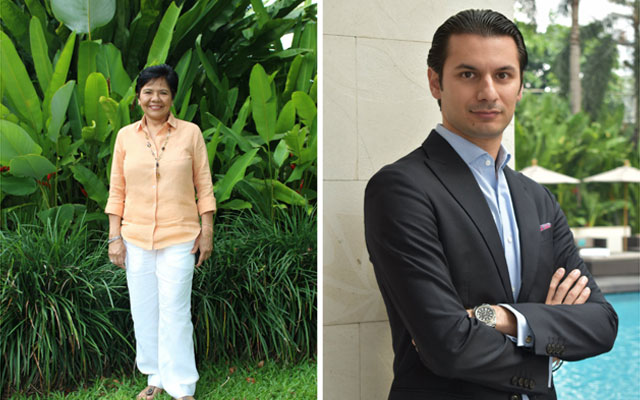
Bangkok-based Onyx Hospitality Group has appointed Gina Wo to the newly created role as senior vice president and head of Greater China, effective March 26, 2018.

Joining Onyx after over 16 years at InterContinental Hotels Group, Wo will oversee all aspects of the company’s growth and expansion in China. Based in Onyx’s regional headquarters of Shanghai, she will report directly to president and CEO Douglas Martell.

Key priorities of Wo in her new role will be to increase Onyx’s corporate talent capabilities in Greater China by reviewing the existing manning and structure, as well as strengthening the company’s regional operations, hotel openings and commercial expertise, the company said in a release.

New hotels: Sofitel Inle Lake Myat Min, Hotel Nikko Bali Benoa Beach and more

0

Sofitel Inle Lake Myat Min, Myanmar
Myanmar’s first Sofitel has opened on the shores of Inle Lake. The hotel features 101 rooms – 36 Luxury Rooms, 25 Junior Suites, 12 Prestige Suites, 27 Opera Suites and one Imperial Suite – with high-speed Internet, Bluetooth speakers and IPTV. For F&B, guests can choose from two restaurants (an all-day dining and fusion Burmese concept) and two bars, including one by the lake. Facilities include two swimming pools – one of which is an infinity adult pool set directly by the lake – fitness centre and spa, clubhouse, kids club, Mac corner and games room.

Hotel Nikko Bali Benoa Beach, Indonesia
Marking the return of the Hotel Nikko brand to Indonesia, Hotel Nikko Bali Benoa Beach has opened about 15km from Ngurah Rai International Airport. The 188-key hotel features a lagoon swimming pool, a range of F&B options and a spa, with the shores of Tanjung Benoa just steps away for guests.

Hotel Wing International Premium Kanazawa Ekimae, Japan
The Forbes Co.-operated Hotel Wing International Premium Kanazawa Ekimae will open its doors on April 1. Located a five-minute walk from JR Kanazawa Station, the hotel will feature traditional Japanese elements across hospitality, design and food. Breakfast, for example, could be done in the style of Hokurikuzukushi no Kamameshi Gozen, comprising kamameshi (rice in a pot) and side dishes made out of seasonal local ingredients. All rooms are air conditioned and equipped with a TV, coffee machine and kettle as well as private bathroom complete with a bathtub.

Golden Tulip Bund New Asia, China
The Golden Tulip Bund New Asia hotel offers 266 keys, housed in a nine-storey building once regarded as the first European-style skyscraper in Shanghai. It also features six function rooms, the largest being Baiyun Hall for 230 guests; a business centre; dim sum restaurant Taste; and a fitness centre, among others. Guests will also be able to select a free set of fragrances from the hotel’s Body Care Bar. Located in Shanghai’s Hongkou District, the hotel puts guests within easy reach of various convention centres, sightseeing spots and two airports.

Mercure Chennai Sriperumbudur, India
The first international brand hotel in the Sriperumbudur industrial and automobile belt, Mercure Chennai Sriperumbudur offers 100 guestrooms, including six suites. Each room comes equipped with complimentary high-speed Wi-Fi. F&B options include an all-day dining restaurant, sports bar, deli and poolside restaurant. For events and gatherings, the hotel features six meeting rooms with banquet facilities. Mercure Chennai Sriperumbudur is a 45-minute drive from Chennai International Airport and an hour’s drive from the historic monuments and beaches of Mahabalipuram.

Shangri-La Hotel, Colombo

0

Location
Sitting along the picturesque Galle Face promenade and close to the upcoming Colombo financial city, the hotel’s location makes it ideal for both business and leisure. It is also a stone’s throw from shopping malls, street markets and office blocks.

Ambience
Serviced apartments feature plush interiors – with contemporary light wood, lush carpeting and rich marble blend – creating exquisite spaces that are both lavish and cosy.

Rooms/Apartments
In addition to its 500 hotel guestrooms, Shangri-La Hotel, Colombo also has a residence component offering 41 fully furnished one-bedroom and two-bedroom apartments for both short- and long-term stays.

I stayed in a two-bedroom apartment, which boasts a spacious living room, a fully equipped kitchen, signature Shangri-La Beds, an en-suite bathroom, complimentary Wi-Fi, 49-inch LED TV with cable channels and plush amenities.

Apartment guests can can order from any of the hotel’s six restaurants and bars, on top of room service. And for those who would like to put the kitchen to use, a mall opening in mid-2018 and also managed by Shangri-La will include supermarkets, food court and other conveniences.

Shangri-La Hotel, Colombo’s two-bedroom apartment

All units are well equipped for a longer stay – with a cooker, dishwasher, washing machine, refrigerator, cutlery, bread toaster, rice cooker, large frying pan and microwave, etc.

Long-stayers will also be happy to know there is ample storage space in the form of built-in wardrobes and drawers (also a completely bare room which I figured could work as additional space for baggage).

Moreover, the apartment can be transformed into a discussion room for groups of five to seven, ideal for small meetings. And after a long night of drinks and networking, any tired local colleague could use the spare bedroom for a night rather than travel a long distance to get home.

Facilities
The hotel has over 3,500m2 of events space including two ballrooms – including a pillarless one, the largest in the city – several function rooms and a private outdoor lawn.

Horizon Club Lounge

The Chi Spa on the fourth floor is a great place to unwind with a massage, which I was more than happy to test out. I chose the Signature Asian Blend Massage, which involved a hot towel being placed under the neck – a small touch that went a long way to sooth my neck muscles.

I recommend catching the sunset at the Horizon lounge on the 32nd floor, exclusively for Horizon Club members. The feeling of the sea breeze brushing against your skin as you watch rows of traffic, old colonial buildings of a forgotten British and Dutch era and listen to the occasional toot of a train or ships blowing their horns from the nearby Colombo harbour. For me, that made for great relaxation after a day’s work.

F&B
Offered the choice of having dinner in one of the restaurants or a meal in the comfort of the apartment, I opted for the latter. The four-course meal comprised sautéed prawns for starters; asparagus bisque; a main course of pan-seared barramundi; and classic baked cheesecake for dessert.

Among the hotel’s seven restaurants, several stood out. Shang Palace serves Sichuan, Dongbei and Cantonese cuisine. Apart from its striking name, Sri Lankan restaurant Kaema Sutra also benefits from the star power of chef Dharshan Munidasa (of Ministry of Crab fame) and Bollywood actress Jacqueline Fernandez, who is of Sri Lankan origin.

Service
Staff is warm, engaging and ready to accommodate every need.

Verdict
The Shangri-La Hotel, Colombo is a good choice for premium travellers seeking to experience the comfort of home with five-star service levels.

No of rooms/apartments: 500 hotel guestrooms, 41 apartments
Rates: From US$270 (one bedroom)

Contact details
Tel: (94) 11 788 8288
Email: reservations.slcb@shangri-la.com
Website: www.shangri-la.com/colombo

A forgotten island

0
Sentosa Island

Sentosa Island and its neighbouring attractions are ostensibly absent from the first wave of Passion Made Possible campaign videos, leading some in the trade to wonder where they fit into the country’s new destination branding.

Sentosa’s no one-trick pony, say the island’s operators

“Many years ago, the highlight used to be the HarbourFront/Sentosa area… If you visit STB’s website (now), a majority of the content and marketing is directed at the Marina Bay or Tanjong Pagar areas,” pointed out Philip Cyril Raj, group general manager of Bay Hotels & Resorts.

Lynette Ang, chief marketing officer, Sentosa Development Corporation (SDC), observed: “We find that many have an age-old perception that Sentosa is still the same place it was 20 years ago.”

Judy Lum, general manager, Diethelm Travel (Singapore), opined that Passion Made Possible’s “abstract” message is “probably why many attractions in Singapore did not get the headline in this campaign”.

As such, operators in the Harbourfront area and Sentosa are carving out their own means to increase visitor volumes.

Yue Weng Leong, general manager, KidZania Singapore, shared that the Sentosa-based attraction is expecting more demand from families that “rely heavily on reviews and word-of-mouth”.

One Faber Group – an autonomous subsidiary of SDC that manages attractions such as Sentosa’s iconic Merlion structure, Singapore Cable Car and Faber Peak Singapore – has launched its own brand material and will promote them to target markets such as India and China.

However, the prevalent sentiment is that the district has a place in Singapore’s new identity.

Tracy Lui, assistant director, marketing & communications, One Faber Group, said: “In a Passion Made Possible video, there is a scene of the Henderson Waves, which is actually located at Mount Faber Park. We hope to use that platform to extend the reach wider for tourists to visit the park… and, using the cable cars, continue their journey into Sentosa.”

Raj suggested: “A HarbourFront guide in line with the Passion Made Possible campaign should be done up and promoted to tourists as well.

“The walking trail along Mount Faber should be promoted more to bring out the passion for exploration in visitors. There is a lot of good food options in the area too and that should bring out the foodies in travellers.”

But hope is not lost for the precinct. TTG Asia understands that SDC is “working closely with STB”, revealed Ang.

She continued: “What STB has released to the market is just the beginning of a multi-year branding effort. Sentosa is working closely with STB in several markets to be part of the future phases of this brand building effort.

“Sentosa is not a one-trick pony. Our overall value proposition as The State of Fun will continue to come out more strongly through our own brand and campaigns,” Ang concluded.

Let’s walk to a different beat

0

With support from the NTO and a dash of ingenuity among a new generation of entrepreneurs, a fresh wave of walking tours has taken off in Hong Kong over the last five years, all wanting to show visitors the local characteristics and colours of the city.

Food is a central experience for many walking tours. A night market in Sham Shui Po pictured

The new ideas are, in part, spurred by Hong Kong Tourism Board’s (HKTB) New Tour Product Development Scheme, which was launched in 2012-13 to encourage the local trade to create unique and diverse experiences and tours for visitors to the city.

By the seventh round of the scheme in late 2017, about 46 tour products had been launched to date, covering living culture, nature/outdoor, food & wine, heritage and arts & culture. Selected tours are subsidised dollar for dollar, up to a limit of HK$500,000 (US$63,900), for one to three years of marketing support.

The initiative has also spurred the growth of small-scale agents specialising in niche products that big operators seldom venture into.

One beneficiary of the HKTB initiative is Walk in Hong Kong, which was established in 2014 and currently operates more than 20 curated walking tours routes, mostly covering Kowloon and Hong Kong Island.

“Our vision is to unveil various interesting facets of our city. Instead of shopping, we visit old shops, street corners and even cultural scene,”  said co-founder and CEO Paul Chan.

Finding the city’s tourism products lacking the depth and quality that overseas walking tours offer, Ling Ho established Ho Ho Go Experience in 2015 to offer cultural walks, community tours and hiking excursions; the enterprise has since received HKTB’s funding twice.

Said Ho: “What sets us apart is the in-depth aspects of our tours. Our cultural hosts all possess a university degree and some are retired professionals.”

Hong Kong Foodie Tasting Tours is another walking tour operator that focuses on the city’s culinary culture. Tasting locations so far only cover Sham Shui Po, Taipo, Central and Sheung Wan, with more spots to come later this year.

Its tailor-made tours are catered for small groups, led by licensed tour guides with an emphasis on interaction and offering knowledge about the local neighbourhoods, director Cecilia Leung told TTG Asia.

“We visit small family-run eateries with a unique history behind them instead of large chain restaurants without any character,” she stated.

Besides direct online bookings and digital marketing, the outfit also works with travel agents to attract different clienteles.

Hotels are also looking for off-the-beaten-track experiences like neighbourhood tours for their guests, noted Chan. Walk in Hong Kong recently collaborated with Marriott Hotels in Hong Kong to provide exclusive tour programmes for its guests.

“Unlike traditional operators targeting the mass market with marketing dollars on leaflets for hotels, we sell it online. Young visitors skip asking hotel concierges for information and search online for something unusual,” Chan added.

Walking tours are also starting to receive attention from outside the tourism and hospitality sectors, as they are seen as a way to rejuvenate and engage the local community. For instance, Link Real Estate Investment Trust’s four community tours (Kowloon, Stanley, Taipo and Yuen Long where its malls are located) encompassed 20-plus themed tours covering four curated routes to let participants experience the authentic Hong Kong lifestyle from different perspectives. The initiative ended last December, with only the Kowloon Tour still being run upon private request.

A group spokesman said Link is currently in discussion with tour operators to explore the feasibility of running the guided tours again this year.

While enthusiasm for such immersive walking tours run high, operators acknowledged the challenges of running these programmes.

“It’s not easy money and requires immense efforts to nurtue tour guides with passion,” pointed out Leung.

Getting experts to lead the tours also translates into higher operating costs. “The key challenge is that a lot of sub-standard operators in the market copy ideas and offer tours at very cheap prices,” said Ho.

“It means our operations are dearer compared with traditional tours, but are definitely of high-quality caliber,” she added. “That’s why we are not yet in the profit stage.”

Sharing similar sentiments, Chan shared: “(Walk in Hong Kong) hasn’t yet grown into a cash cow and requires our persistence and foresight to find irreplaceable cultural content and guides for organic growth.”

However, Chan believes that the “emerging” walking tours concept will soon become mainstream when the group tours travel preferences diminish in future and more visitors opt for experiential and immersive experiences.

Which is why the trade does not view the entry of Airbnb into the touring space through its Experiences  programme as a threat but a reflection of a new travel mindset and phenomenon. Said Chan: “My concern is whether they can tap more visitors to Hong Kong and make the pie bigger.”