TTG Asia
Asia/Singapore Thursday, 2nd April 2026
Page 1400

Alibaba pumps US$5m into Taiwan instant booking app FunNow

0
FunNow says it offers 20,000 activities and services to 500,000 users through the app

FunNow, an instant booking app for activities in Taiwan, has raised US$5 million in a Series A funding round led by Alibaba Entrepreneur Fund, with plans to use the proceeds to expand to cities in South-east and North Asia.

Existing investor Taipei-based CDIB Innovation Accelerator Fund as well as new investors Darwin Venture and Accuvest also participated in the round.

FunNow says it offers 20,000 activities and services to 500,000 users through the app

Together with the US$1.5 million raised in a pre-Series A funding last July, this investment brings FunNow’s total to US$6.5 million.

The startup plans to use the funding to expand and accelerate its business to Asian cities, including Hong Kong, Okinawa, Kuala Lumpur, Bangkok, Bali, Osaka and Tokyo, according to an e27 report.

TechCrunch reported that Alibaba made the investment through its startup fund amid efforts to beef up its online-to-offline offerings and capture share in China from Meituan-Dianping, which is going public in Hong Kong.

Launched in November 2015, FunNow allows users to instantly book activities including short getaways to neighbouring cities and massages. Its search engine and patented algorithm of real-time availability calculation, combined with geolocation technology, allows customers to view available activities within their perimeter almost instantly.

In the last two years, FunNow says it has signed over 3,000 selective vendors, providing more than 20,000 activities and services daily for its 500,000 members to book instantly.

The firm expects its 2018 revenue to reach US$16 million, triple that of 2017.

Looking back, and steering ahead for growth

0

What are your proudest achievements during your time as managing director, Asia-Pacific?
We’ve seen rapid growth throughout the region, which led to increased cruising out of Singapore. When I started in this office three years ago, we had the Mariner of the Seas season that started in mid-October (2015) to end of February (2016), and we were able to extend that in the last season. It was our longest ever season, with 76 sailings from September (2017) to June (2018) on three ships. That really fuelled double-digit growth in Malaysia, Indonesia, Singapore, India, and even smaller markets like Vietnam which were non-existent a couple of years ago. Voyager of the Seas will return in September this year.

Also, it used to be that Asia would get the slightly older ships. But we’ve been able to launch Ovation of the Seas for a season of 10 sailings, after Quantum of the Seas first came here. And recently we’ve announced Quantum of the Seas coming for a full season (November 2019 and April 2020), and Spectrum of the Seas coming next May (with three different itineraries, sailing off from Singapore on May 18, May 21 and May 25).

We feel that we’ve played a part in changing the game for Asia and for Singapore.

Do you think Asia is also getting the newer, bigger ships because of how demand here has evolved?
It has a lot to do with the travel agent education. That’s the number one reason. Asia is still a very early-stage market for cruises. That’s different in Singapore though, as this is a more mature travel market. But in the other Asian cruise markets, there has been a significant change in the number of travel agents who are familiar with cruises and are now selling cruises.

This is also thanks to trade partners like TTG that are helping to spread the word on cruises, as well as Singapore Tourism Board and Changi Airport Group that are working with us to invest in travel agent awareness and training.

We have a CLIA (Cruise Lines International Association) office here in Singapore which is doing a lot of work to educate travel agents in Singapore. That has made a lot of difference.

A vast majority of our business comes from travel agents and this will continue to be the case for a long time to come. They are the ones who can best explain to the customer the difference between a land and cruise holiday, and how much value a cruise holiday brings, and that cruises are not boring and not just for old people (laughs).

Cruises in Asia once had the reputation of being a floating casino, but that is changing because of the quality of ships that are coming into the region.
Yes, that has completely changed. And again, it is the travel agents who have done a great job in explaining the variety of facilities onboard. On Royal Caribbean ships, we’ve got FlowRiders (surf simulators), DreamWorks Experience, ice-skating rinks, different restaurants, shopping, and more.

Are all these developments in the region what you had expected when you first arrived into Asia?
Oh, it exceeded my expectations! We always knew Asia was the next frontier for cruising, but normally it takes a lot of time to build a brand. We went from a season of 30-odd sailings to more than doubling that in just a few years’ time. Not a lot of markets besides China have seen that kind of growth.

What are your big markets here?
India is the number one cruise market for sailings out of Singapore, while Indonesia is a huge market for us with still a lot of growth potential because of the size of the growing middle-class. We are only scratching the surface.

We are also seeing great growth out of Malaysia although a lot of our sailings out of Singapore go to Malaysia. They really love our product.

Some of the smaller Asian markets are starting to be not so small, like Vietnam and Thailand. We are now looking at growing Myanmar and Cambodia.

For sailings beyond Singapore, Europe is a big destination for us with most demand coming out of Japan and South Korea. We are also seeing good demand for Alaska, and Ovation of the Seas which has gained a strong following in Asia and will be going to Alaska next year.

The Caribbean (sees relatively weaker) Asian demand because it is a long flight from here, but we have some exciting things coming up there which we hope will grow Asian interest. We are launching our Perfect Day Island Collection of private island experiences.

(With the first in the collection, Perfect Day at CocoCay, Bahamas,) we have the tallest water slide in North America as well as the only over-water cabanas in the Bahamas. I think this will resonate with the Asian market.

Is the demand for farther cruises still coming mostly from experienced, repeat cruisers?
Typically. The only rare exception is seen in Europe where people recognise the value of going on a cruise to see multiple destinations in the region. Cruising is much cheaper than coaching and then staying in multiple hotels as a way to explore Europe.

As the number of our guests in Asia grows, we will be seeing more bookings for sailings in the other regions.

What would you have liked to see being accomplished in Asia-Pacific before leaving for your new, bigger role in Miami?
I’d have liked to see more support development although we’ve started on the path and I’m confident I will see more of it. Now that we are getting the newer ships, having more ports that we can go to is ever more important.

We are very excited about our joint venture in Penang (announced in March 2017, Penang Port and Royal Caribbean Cruises will jointly upgrade and improve Swettenham Pier Cruise Terminal in Georgetown to accommodate berthing of larger cruise ships at its facilities). You will hear more details on that soon.

We need a few more projects like that for when we get even bigger ships like those in the Oasis Class or two Quantum Class ships (at the same time) which will happen some day.

Let’s talk more about Royal Caribbean’s role in supporting regional port development. Penang is open to this collaboration so that is able to happen. But how do you get around destinations you wish to call at but are lacking in modern ports to support your new generation ships?
This requires a lot of cooperation. Singapore Tourism Board and Singapore have really played a leadership role (in cruise development). We’ve been very fortunate that ATF 2017 was here in Singapore and what really gave us confidence – and that’s why I’m very confident that things will change very soon for cruising in this region – is that all the ASEAN markets recognised the potential for cruising now.

It takes time and money to build a port but we were able to get all the tourism ministers out to see the Marina Bay Cruise Centre and onto the Mariner of the Seas. They saw the potential tourist numbers cruises could bring to a destination.

There’s a lot of talk (about developing cruise capability) now across the region. Indonesia is developing 10 cruise ports now, for instance.

When I started, it was just Singapore and a little bit of Malaysia and Thailand talking about cruises. Now, it is the whole region.

What else is exciting at Royal Caribbean?
Earlier this year we announced a Sea Beyond initiative where we are investing in new technology such as facial recognition systems which allow customers to just walk through immigration when getting on and off our ships.

For now, this frictionless arrival technology is unique to us, and we are launching it this November at a terminal in Miami for Symphony of the Seas. But with everything else, this will eventually be copied (laughs).

We are also testing a new technology that allows customers to order a drink on their handphone anywhere in the ship and our waiter will know where to find them. (The technology will also let customers) open the door to their cabin and adjust the lighting in their cabin with just one touch. That’s being tested on four ships and we will likely begin to see it in the market next year.

Is the implementation of these high-tech stuff a bait to lure the younger travel market?
Technology is more important to the younger folks but all of us are getting used to technology and the ease it brings. We want all our customers to have an easier time onboard having more fun and spending less time queueing for drinks and services.

Finally, tell me about the new role you’ll be taking up.
I’ll be in charge of international strategy, so I will continue to keep a close eye on Asia, looking at the development of new markets and helping our existing markets be even more profitable.

And because we are having a lot of exciting, new products in the Caribbean, Latin America will be my other main focus. (I’ll be looking at) how we will build our cruise presence in some Latin American markets like Mexico, Brazil, Columbia, Chile and Argentina.

How different or similar will the two regional markets be?
There are some similarities. In both Asia and Latin America we have good trade partnerships but the consumer awareness level is still low. Also similar is that both regions are big on multi-generational family travel.

I’d say that the differences are that in Asia people take shorter holidays while in Latin America they get breaks of a week to 10 days. Also, economically, Asia is probably in a better place.

But the biggest difference is that here in Asia I’ve got a large and established team in Singapore, whereas I’ll have to build a new team over there. I will definitely be using some of the successes we’ve had here and taking the ideas over to Miami for Latin America.


Japan, Singapore rugby events to get a boost from new partnership

0
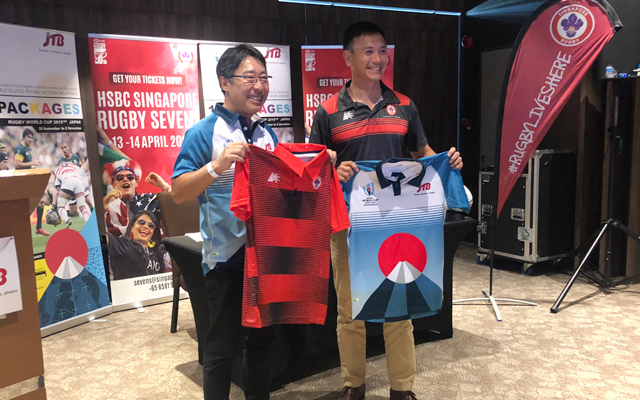
JTB's Shinya Kurosawa and SRU's Terence Khoo

The Singapore Rugby Union (SRU) and JTB have inked a 12-month partnership to promote rugby tourism to Japan and Singapore.

The two entities will cooperate to achieve goals such as encouraging travel from South-east Asia to Japan during the Rugby World Cup Japan 2019, and from Japan to Singapore for the HSBC Singapore Rugby Sevens next year.

JTB’s Shinya Kurosawa and SRU’s Terence Khoo

This will see the size of JTB’s delegation at the HSBC Singapore Rugby Sevens 2019 increase by three to fourfold from this year’s three, said Shinya Kurosawa, president and CEO of JTB.

JTB will promote 12 Rugby World Cup tour packages to Singaporeans that include two match tickets and two nights’ accommodation in Japan. Kurosawa states that rugby fans following the tournament can spend up to 47 days in Japan, making it a “big opportunity” to generate tourism dollars.

“The surrounding prefectures in Japan are using the Rugby World Cup to promote inbound tourism,” he shared.

These packages will be launched at the NATAS Holidays 2018 Fair taking place this weekend in Singapore.

In return, JTB will be able to offer SRU the outreach given its “strong network”, explained Terence Khoo, president of SRU.

He added that instead of competing with the prolific Hong Kong Sevens, the Singapore tournament will continue to develop its unique selling point as a “sports and family event“.

Automated check-in counters arriving soon at Swissôtel The Stamford

0

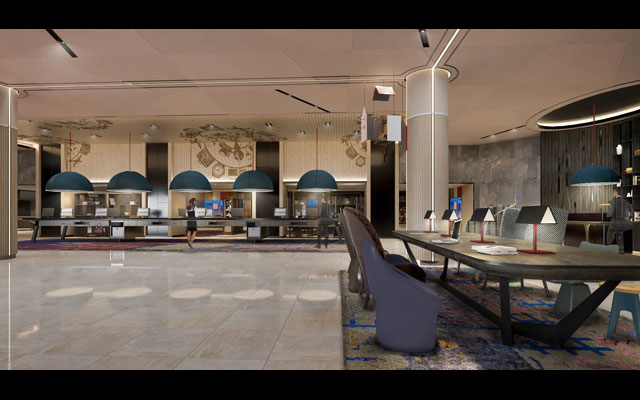
As part of a multi-million-dollar hotel transformation programme, Swissôtel The Stamford is introducing automated check-in and check-out counters at its lobby, along with an industry-first biometric facial recognition security feature, by the end of August.

The new technology enhancement is said to help complete check-in in under a minute per guest. On arrival, guests input their reservation details, allowing the system to authenticate the booking confirmation before requesting for a valid identification document scan and information collection.

A rendering of how the lobby will look like

As a security measure, the in-built biometric facial scanner verifies each guest’s identity before the system completes the payment and check-in process.

The technology is a biometric system capable of uniquely identifying or verifying a person using a comparison and analysis of facial contour patterns and mapping these back to the image provided through the scanning of the guest’s identification documents.

Additionally, the automated check-in platform offers options for guests to purchase room upgrades as well as other select hotel promotions and services to enhance their stay.

The automated check-in and check-out counters will help ease check-in queues

Payment and room key creation are also done via this system which displays step-by-step visual instructions to guide guests on usage.

There will still be hotel staff at the lobby to anticipate guests’ needs and offer assistance.

For members of AccorHotels’ loyalty programme, Le Club AccorHotels, the check-in process has been further simplified. Members are only required to scan their membership number for express check-in and identity verification.

The transformation of Swissôtel The Stamford began in April last year and covers a complete rejuvenation of all 1,252 guestrooms and suites. In addition to adding new room categories, the transformation also includes a complete refitting and modernising of the executive lounge spanning an entire floor on level 65. The project is targeted for completion by the end of 2018.

Gaw Capital acquires Melbourne complex for A$157 million

0
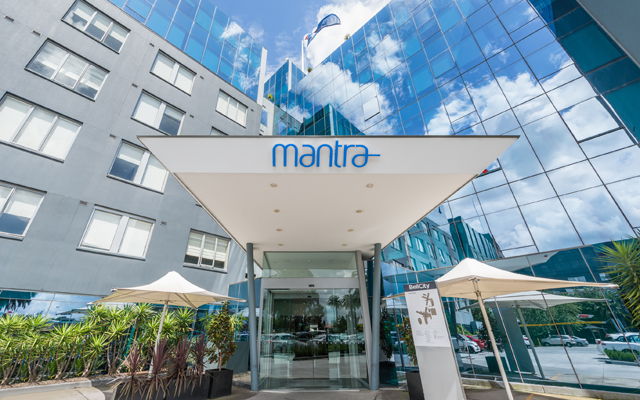
Mantra Bell City hotel in the mixed-use development

Announcing its second hospitality acquisition in two months, Gaw Capital Partners is purchasing the Bell City mixed-use development in Melbourne for A$157 million (US$114 million) through funds under management and its hospitality arm, GCP Hospitality.

In July, the Hong Kong real estate and private equity firm acquired a 50 per cent stake in Spain’s Hospes Hotel Group, forming a joint venture with a Spanish investment company, Omega Capital.

Mantra Bell City, one of two hotels within the mixed-use development

The Bell City complex, located 20 minutes from Melbourne Airport and the CBD, consists of two hotels totalling 844 guestrooms under the Mantra and BreakFree brands, a conference complex, commercial tenancies, a 600-space car park and serviced offices.

GCP Hospitality will work to incorporate a ‘co-living’ concept with social areas, a co-working hub, a fitness centre, restaurants and bars, and an outdoor pool.

The group will also roll out its modern student shared accommodation brand, Campus, which has been launched in Hong Kong with another opening slated in Perth come January 19, said Christophe Vielle, CEO & co-founder of GCP Hospitality.

Kenneth Gaw, president and managing principal of Gaw Capital Partners, said: “In addition to giving us a foothold in the Melbourne market, this major hospitality asset will allow us to effectively roll out multiple concepts within the same project. After this acquisition, we look forward to further expansion opportunities in the Australia market.”

GCP Hospitality’s brands include Hotels G, The Strand Hotel & Cruise, Campus Co-Living Hubs, Hospes Hotels (JV in Spain) and Journal Hotels (JV in USA). It currently runs over 39 properties with 7,450 keys worldwide, and has regional offices in Bangkok, Beijing, Hong Kong, Perth, San Francisco, Singapore and Yangon.

WIT Singapore: travel industry through the looking glass

0
The conference will look beyond the travel industry and address the question of how travel businesses should brace themselves for the future

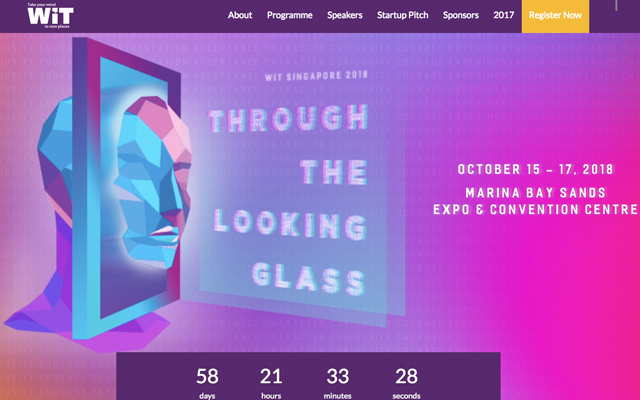
At this year’s WIT Singapore 2018 Conference, taking place at Marina Bay Sands Expo & Convention Centre from October 15 to 17, attendees will be encouraged to imbibe the values of curiosity, courage, experimentation, acceptance and character.

Themed Through the Looking Glass, WIT Singapore 2018 will look beyond the travel industry to explore and discover other verticals including tech, media, retail and banking.

The conference will look beyond the travel industry and touch on new technologies and new forms of disruptions

“Lines are blurring and traditionally separate industries are melding together in new and unforeseen ways. The travel industry can no longer afford to work within the neat lines of its fortified silos. As the world continues to become more connected and daily life becomes increasingly inseparable from technology, we must look beyond ourselves,” said Yeoh Siew Hoon, founder and managing director of Web In Travel (WIT).

Issues WIT hopes to tackle include new technologies such as blockchain, artificial intelligence and voice, the evolution of personalisation, new forms of disruption coming from all fronts from messaging to marketplaces and ride-sharing, payments, the evolution of content and storytelling, trends in digital marketing, and the increasingly sensitive issue of privacy in the world of big data.

WIT Singapore 2018 will be seeking answers to how travel businesses should brace themselves for the future and, more importantly, come out ahead of the pack.

The conference will be complemented by its other flagship event, the WIT Bootcamp (October 15), featuring the semi-finals of WIT’s famed Startup Pitch – an annual competition that celebrates young businesses (aged 0-5) for their unique approaches to solving travel issues and pain points familiar to the industry.

WIT Singapore 2018 will also see the second annual WIT Hall of Fame, an event that recognises and celebrates the industry’s pioneers that have had the most significant impact and influence on the advancement of digital travel in their respective sectors.

Last year’s inductees include Ctrip’s Jane Jie Sun, Agoda’s Robert Rosenstein, Tujia’s Melissa Yang, AccorHotels Asia-Pacific’s Michael Issenberg, Queen’s Road Capital’s Fritz Demopoulos, MakeMyTrip’s Deep Kalra, AirAsia’s Tony Fernandes and Peach Aviation’s Shinichi Inoue.

Over 500 delegates are expected to attend the conference this year. The programme features more than 100 speakers and is supported by over 30 sponsors and partners.

Indonesia hotel takes walk down memory for Asian Games

0
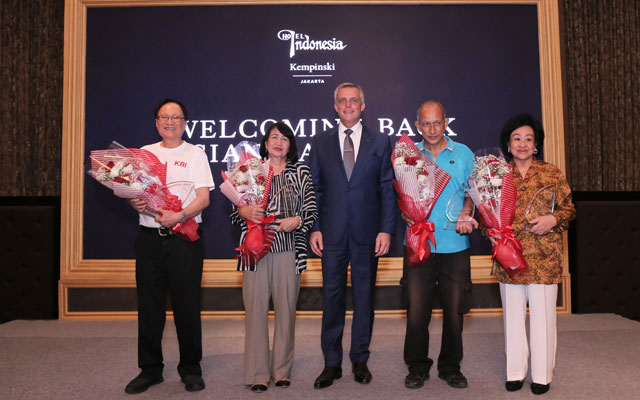
Foto 1; Legendary athletes (left to right) Tan Joe Hok - badminton, Lany Kaligis - tennis, Yustedjo Tarik - tennis, Lanny Gumulja - platform diving pictured together with General Manager Hotel Indonesia Kempinski Jakarta, Sjefke Jansen (middle)

With the Asian Games returning to Indonesia after five decades, the hotel that hosted the game delegates in 1962 is commemorating the event with the launch of an exhibition.

Hotel Indonesia opened in Jakarta in 1962 as the first international-standard hotel in South-east Asia, mere days before the Asian Games kicked off.

From left: Legendary athletes Tan Joe Hok – badminton, Lany Kaligis – tennis, Yustedjo Tarik – tennis, Lanny Gumulja – platform diving; pictured together with the general manager of Hotel Indonesia Kempinski Jakarta, Sjefke Jansen (middle)

Fifty-six years later, Hotel Indonesia, now a Kempinski, is staging a sports and heritage photo exhibition during the Asian Games, which takes place from August 18 to September 2 in Jakarta and Palembang (South Sumatra).

On display at the main lobby and Nirwana Lounge are medals and memorabilia of Indonesian legendary sports champions, traditional clothes of Palembang and historic photos, paintings, chinaware of the hotel.

The exhibition was launched yesterday, graced by several Indonesia’s sports living legends including Tan Joe Hok, a badminton athlete who won three medals at Asian Games 1962; Irma Hadisurya, the first Miss Indonesia (crowned in 1969); and Arifin Pasaribu, former public relations of Hotel Indonesia (1963-1988), who later became the director of the Indonesia Tourism Promotion Office in London.

Sjefke Jansen, general manager of Hotel Indonesia Kempinski Jakarta, commented: “The series of events is our way to welcome the Asian Games back to Indonesia, as we were a part of this international event (then).”​

New hotels: Grand Mercure Yangon Golden Empire, QT Perth and more

0

Grand Mercure Yangon Golden Empire, Myanmar
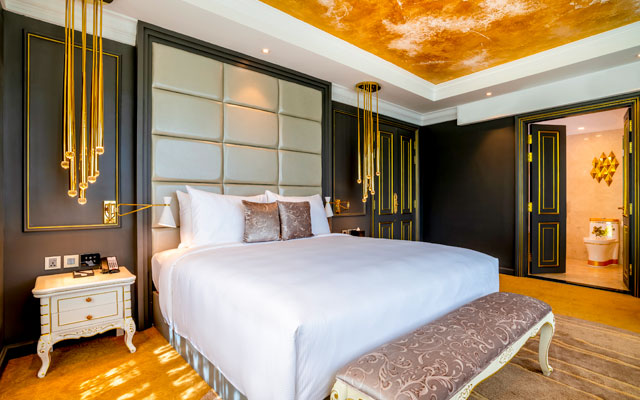
The first Grand Mercure in Myanmar, which overlooks the Schwedagon Pagoda, boasts 175 guest rooms and suites designed by local artist Pyar Dade, and sizes from 30m2 for superior rooms up to the 340m2 two-bedroom suites.

Amenities on-site include a restaurant, deli, pool bar, two state-of-the-art ballrooms that can host up to 400 guests with a large pre-event function area, and seven meeting rooms. The wellness area comprises an outdoor swimming pool, children’s pool and a fitness centre. There is also a spa complete with open-air Jacuzzi, sauna and steam bath, while a nearby golf course completes the suite of leisure facilities.

QT Perth, Australia
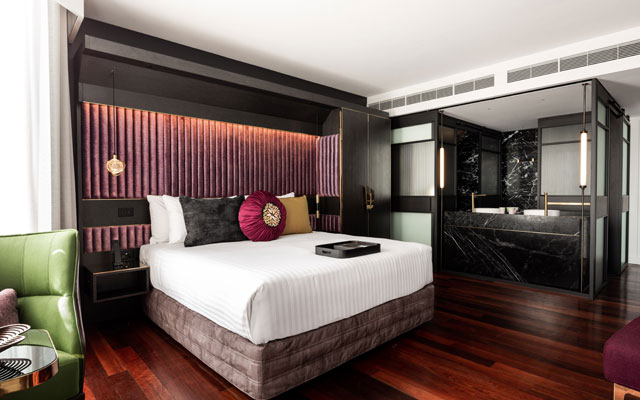
QT Hotels & Resorts’ first property on Australia’s West Coast is located on the doorstep of the Murray Street Mall and less than a minute walk to Perth’s shopping hub. The 18-storey hotel boasts 184 guestrooms, and facilities include a bar & grill restaurant concept, cafe and another bar on the rooftop which doubles up as a function venue. There are seven conference rooms, which can accommodate up to 315 people.

Citadines Regency Saigon, Vietnam
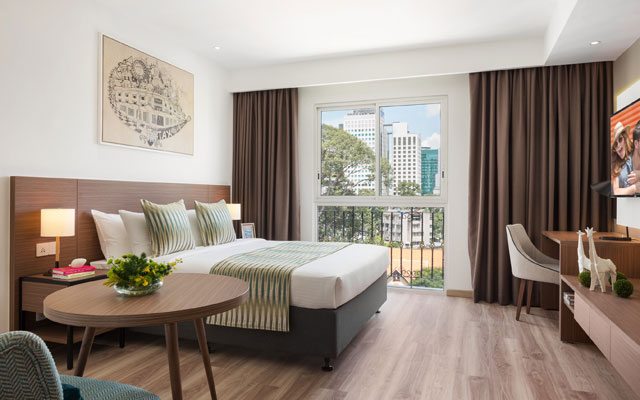
The serviced residence in Ho Chi Minh City’s District 3 offers 229 keys from classic rooms to one-bedroom apartments, some of which are connected. Facilities include a swimming pool, fitness centre, children’s wading pool, sauna room, café, restaurant and launderette. Citadines Regency Saigon is also within walking distance to tourist attractions such as the Reunification Palace, Notre Dame Cathedral and War Remnants Museum.

Dorsett Hartamas Kuala Lumpur, Malaysia
Located in the township of Hartamas, the four-star Dorsett Hartamas Kuala Lumpur boasts 290 guestrooms and suites. Facilities include all-day dining space Table Talk, fitness studio, kids’ play pen, and rooftop sky pool on level 27 (opening at a later stage). There are also three multifunctional venues which can take 40 to 120 people in a theatre set-up.

7 Questions Before Getting Started on Function Space Revenue Management

0
Two persons working on their laptops

Brought to you by IDeaS Revenue Solutions

This article is taken from IDeaS eBook Revenue Perspectives: Quick Hits for Strategic Revenue Insights. Vol. 3 Enhancing Non-Room Revenue. Download a copy here.


Hotel revenue management today has a rather established set of tools, business processes, and expertise to support effective room revenue optimization. Revenue Managers are generally comfortable with the theory and technology in rooms revenue management for their strategic planning and day-to-day decisions. However, when it comes to managing meetings, events and other ancillary revenue streams which for most hotels makes up 40-60% of their revenue, the science of revenue management is still at its infancy.

With the advent of big data and new analytical technologies the current data-driven approach to optimizing revenue performance is no longer sufficient. Thus we hear many hotels beginning to talk about the emerging approach of the future, Total Revenue Performance (TRP). TRP builds upon rooms revenue management to add automated revenue management capabilities to other vital hotel revenue streams.

Total Revenue Performance Approach Introduces New Complexities

Total Revenue Performance has always been the aspirational vision for hotels worldwide and it is becoming increasingly within reach for hotels, beginning with meetings and events revenue management. Whilst there are several areas of overlap between guest rooms and meetings and events revenue management, there are many areas which are different. Examples include:

  • The mutual impact of the demand that exists for both guest rooms and function space on one another
  • There are many revenue streams with different levels of profitability
  • Function rooms accommodating different capacities in different set-up styles
  • Demand and Wash expectations are difficult to predict
  • Upgrades are not as desirable as they are in guest room bookings (nobody wants to have an intimate boardroom meeting in a ballroom)
  • Multiple internal teams are involved in the management of this inventory
  • Each of these items brings some key considerations for expanding your revenue management practice into function space revenue management.

Getting Started in Function Space Revenue Management

When getting started with function space revenue management, it is recommended that you take a holistic look at your team alignment, business processes, and technology requirements. Here is a quick list of questions to get your hotel thinking about function space revenue management:

Team Alignment:

  1. Are your cross-functional teams of sales, catering, and revenue management aligned and working effectively?
  2. What educational and training support is needed to ensure that your teams successfully manage your function space inventory in a scientific and methodological way? 

Business Processes:

  1. Do you prefer establishing sales and catering management processes into your revenue management team or expanding your revenue management practices into your salesn and catering team? How could you accomplish both of these?
  2. Do you have effective market segmentation for meetings and events and is it being used consistently?
  3. Are you regularly and reliably updating your systems as booking status changes?

Tools and Technology:

  1. What tools, technology, and systems will be required to support my teams?
  2. How will a new tool fit into the day-to-day operation and decision making?

Such questions are critical to answer for revenue managers, general managers, and sales and marketing teams to monitor all revenue information from a shared and centralized discipline. This perspective allows these teams to coalesce their efforts around a single, common goal: driving better revenue performance for the organization as a whole.

Interested in joining a free workshop on this topic? You can even bring your own data to work on during the workshop so that you can take home an action plan to start your meetings & events revenue journey!

Seats are limited! Register today!

Sri Lanka scraps controversial minimum room rates

0
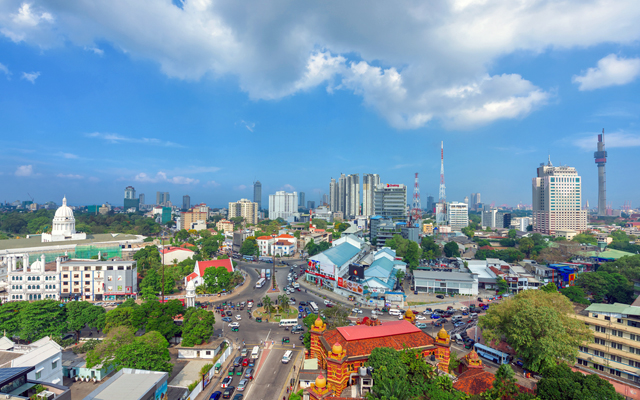
The latest announcement brings relief to five-star hotels in Colombo and travel agents

The Sri Lankan government has announced the removal of a nine-year-old minimum room rates scheme for hotels in Colombo, a move that is expected to be boon for five-star hoteliers in the capital city.

The scheme was unpopular with five-star hotels, which believed their competitiveness was diminished as a result, but found favour among lower hotel categories.

The latest announcement has brought relief to five-star hotels in Colombo and travel agents

Minimum room rates of US$125++(or around US$185, inclusive of taxes) for five-star hotels were enforced in late 2009 at the end of Sri Lanka’s bloody internal conflict, in anticipation of increasing tourist arrivals and following complaints by small hotels of price cutting by five-star hotels.

For four-star hotels the minimum room rate was US$95++ and three-star US$85++.

The scheme was a fitting move at the time it was imposed as room rates then were as low as US$40, said Hiran Cooray, a veteran hotelier whose family owns the Jetwing Hotels chain.

“But it’s high time this is removed as market forces should now determine prices,” he noted.

On Monday, chairman of Sri Lanka Tourism Development Authority (SLTDA) Kavan Ratnayaka announced the removal of the minimum room rates to “allow market forces to decide the room rates rather than (have) the SLTDA dictate terms to them”.

Harith Perera, president of the Sri Lanka Association of Inbound Tour Operators (SLAITO), welcomed the move, saying “we have always said (minimum rates) won’t work and were opposed to it.”

According to a spokesperson for the Sri Lanka Convention Bureau (SLCB), minimum rates also hindered progress in the meetings and business events sector as they were unable to get competitive rates from city hotels for delegates.

“Now with the freedom for the market to dictate rates, our MICE market can be more competitive,” she added.

Two years ago, tourism minister John Amaratunga announced that the scheme would be abolished in 2018. While this was not made official until now, some industry players told TTG Asia that the government has been lax about enforcing minimum rates in recent months.

The SLCB spokesperson shared that the gazette notification enforcing the minimum rates was allowed to lapse on March 31 this year and was not renewed.

In fact, she said the SLCB had sought and won government approval for special five-star rates of US$100++ for MICE travellers and US$90 ++ for four-star accommodation.

A Colombo hotel manager added that for the past few months, city hotels have been offering their own rates. “The authorities have not been strict on the minimum rates.”

Meanwhile, managers at two three-star hotels in Colombo, who declined to be named, expressed fears of an ensuing price war due to oversupply in the city.

Over past two years, more than 600 new rooms have been injected into Colombo’s supply while several hotels including the Sheraton and Grand Hyatt are due to open in the next two years.