TTG Asia
Asia/Singapore Friday, 3rd April 2026
Page 1389

Japan reeling from double whammy as quake strikes Hokkaido

0
An earthquake struck an area near Sapporo, the capital of Hokkaido, early Thursday morning

Japan was still picking up the pieces from Typhoon Jebi when an earthquake measuring 6.7 on the Richter scale struck the country’s northern island of Hokkaido this morning.

According to media reports, at least 19 people were missing and 120 injured in Hokkaido after the earthquake struck near Sapporo at 03.08 this morning, which triggered a landslide that caused serious structural damage.

An earthquake struck an area near Sapporo, the capital of Hokkaido, early Thursday morning

The disaster also hit Hokkaido’s main airport, New Chitose Airport, which will be closed for at least Thursday. Shinkansen trains have also been halted in some areas.

A series of smaller shocks, including one with a magnitude of 5.4, followed the initial quake, the Japan Meteorological Agency (JMA) said.

Residents have be cautioned to brace for potential big aftershocks in the next few days, although JMA stated that the quake posed no tsunami risk.

The country is still reeling from what’s said to be the worst typhoon it has seen in 25 years. On Tuesday, Typhoon Jebi battered western Japan, killing 11 people and injuring hundreds more, according to media reports.

A bridge to Kansai International Airport was damaged after winds of up to 216km/h sent a 2,500-ton tanker slamming into the bridge.

Some 3,000 travellers were stranded overnight, before boats began ferrying people out of the airport yesterday. After safety inspections, buses were also allowed to run on one side of the bridge.

Some countries issued advisories on travel to Japan after the disaster. Singapore’s Ministry of Foreign Affairs said: “In view of the situation caused by Typhoon Jebi in Japan, Singaporeans should defer non-essential travel to Osaka during this period. Singaporeans in the affected areas are advised to take all necessary precautions for their personal safety, monitor the local news closely and heed the instructions of the local authorities.”

It added: “Singaporeans whose flights have been affected should also check with your airlines or tour operators for up-to-date flight schedules, and may wish to consider alternative transport arrangements, including flights out of nearby airports such as the Kobe Airport.”

SIA, Hotelbeds team up in holiday packaging pact

0
SIA customers will be able to choose from airlines' flight and more than 170,000 hotels

Hotelbeds Group and Singapore Airlines (SIA) have joined forces to launch a holiday packaging partnership, offering bundled flights and hotel accommodation solutions to the airline’s customers.

Through this new collaboration, SIA customers will be able to curate their own holiday packages leveraging Hotelbeds Group’s dynamic packaging platform, with real-time selection of flights from the carrier’s network plus more than 170,000 hotels. More than 24,000 transfer routes and 18,000 activities such as theme parks and museums from Hotelbeds will be made available progressively.

SIA customers will be able to choose from airlines’ flight and more than 170,000 hotels

Packages will first be introduced in Australia, and will be progressively made available on SIA’s website across Singapore and other parts of Asia Pacific, as well as Europe, India and North America. SIA customers will also be able to earn KrisFlyer miles on the total package value purchased.

Meanwhile, Hotelbeds Group will also provide a dedicated team – primarily based in Singapore – responsible not only for promoting the wide range of hotels available for the ‘Singapore Airlines Holidays’ product but also for customer service, pricing and product optimisation.

Disney magic comes to Orchard Road this Christmas

0
The stretch between Ion Orchard (pictured) and Mandarin Gallery is the designated zone for the Mickey Mouse and Friends light-ups

Characters from Disney and Disney-Pixar are coming to Singapore’s Orchard Road shopping belt this Christmas for the annual A Great Street light-up event.

The first branded light-up in the event’s 35 years history is a result of a three-year partnership between the Orchard Road Business Association (OBRA) and The Walt Disney Company Southeast Asia (Disney).

The stretch between Ion Orchard (pictured) and Mandarin Gallery is the designated zone for the Mickey Mouse and Friends light-ups

It is also supported by the Singapore Tourism Board’s (STB) Leisure Events fund. Ranita Sundra, director, retailing and dining, STB, said: “The event, along with the other Christmas festivities in store, are part of our ongoing efforts to redevelop Orchard Road into an integrated lifestyle and leisure precinct.”

Named Disney Magical Moments, the event runs from November 10 to January 1 with four themed zones, Disney Princess, Mickey Mouse and Friends, Frozen and Toy Story.

The Great Christmas Village, launched last year, will return for a longer run at Ngee Ann City Civic Plaza. It will run from November 15 to December 26, featuring an array of activities including amusement rides and a duplex carousel complete with a special seat carriage for wheelchair riders.

Timbre Group, as an OBRA partner, will also oversee the Timbre X Food Village, comprising food kiosks operated by local brands such as New Ubin Seafood and Two Wings.

Mandarin Oriental to check into Phuket’s secluded Laem Singh

0
View of Laem Singh Beach

Come 2022, Mandarin Oriental Hotel Group will manage a new luxury resort on Phuket Island.

Mandarin Oriental, Phuket will be located on one of the few undeveloped beachfront sites left along Millionaire’s Mile’s winding coastline, the hotel company announced in a statement.

View of Laem Singh Beach

Occupying 9.5ha of land in Laem Singh Bay, all the hotel’s 105 rooms, including 37 pool villas, will provide views of the Andaman Sea.

The site encloses a white sand beach with rocky outcrops, providing access for snorkelling and swimming.

Mandarin Oriental, Phuket will also offer an all-day dining venue, specialty restaurant, sunset bar, beach club, spa, fitness centre, kids’ club, two outdoor swimming pools, as well as flexible function facilities.

Club Med uncovers Asia-Pacific’s snow hunters

0

The snow holiday market has seen rapid growth in Asia-Pacific, and continues to be dominated by the higher-income travellers, according to the region’s first snow holiday report launched by Club Med.

The study, supported by market research specialist Insightzclub, sampled 5,500 respondents across 11 markets from China to Australia.

In the last three years, there were 238 million travellers in the region’s snow holiday market – and over half (138 million) were recorded in the last 12 months.

Japan is a top choice for a snow holiday in the region; Tateyama, Japan pictured

Top snow hunters in Asia-Pacific
Not surprisingly, China is the largest market of snow enthusiasts, followed by India and Japan.

However, markets with little or no snow such as Hong Kong, Singapore and Indonesia are showing strong growth, albeit from a smaller base, as they seek more experience-based holidays and fresh, clean air.

Currently snow holidays remain the preserve of the new affluent class and above. Some 85% of Asian snow holiday goers enjoy a household income of US$4,000 or more – 33% higher than the comparable general Asia-Pacific population.

While the average age of the snow holidaymaker is 38 years old, countries with large millennial populations such as China, Malaysia, Indonesia and India are a younger average age of 34 years old. Japan is the oldest average age of 45 in line with its national demographic.

Women hit the slopes
Notably, while holidays are traditionally male dominated, the report shows some markets pointing to a strong female bias and growing interest in outdoor snow adventures beyond skiing and snowboarding.

Hong Kong (57%), Singapore (56%), Malaysia (58%) and Australia (54%) led the ranking bias towards more female snow holidaymakers, while Japan (83%) and India (70%) were clear male strongholds.

Beyond winter sports
Unlike in North America and Europe markets which are very ski and snowboard centric, Asia-Pacific travellers are looking for a much more diverse snow experience, sometimes with no ski/snowboard practice at all.

With food at the heart of many Asian cultures, it is not a surprise to see eating local delicacies (53%) top the list, followed by spending time with family and friends (51%) and other mountain fun activities (50%) rounding off the top three.

Local attractions (47%) and contact with nature (47%) are also popular considerations. Spa makes into the top 10 activities for a well-rounded holiday with resorts expected to be well-equipped with access to all the necessary facilities.

Significantly, 29% also cited doing nothing as a reason to go to a mountain destination indicating a desire to just get away from it all and enjoy their environment.

Where snow hunters are going
Nine out of 11 markets reported Japan as their top choice for a snow holiday in the region.

Behind Hokkaido, resorts in South Korea were attractive across Asian markets, ranking second while the nascent Chinese snow holiday scene came in a strong fourth. With the conclusion of the Winter Olympics, PyeongChang in South Korea in 2018 and the Beijing Winter Olympics in 2022, interest in both these destinations continues to be fuelled.

The surprise came from Switzerland, ranking third regionally and first among longhaul destinations.

For Indian snow enthusiasts, Switzerland was the most popular destination, partly fuelled by the prominence of the country in its Bollywood movie scene. St Moritz in Switzerland was the top longhaul destination for Asians looking for a snow getaway.

Tapping into networks

0

With increasing competition and demanding tech-savvy, modern consumers, hoteliers are facing technology pressures to innovate on dual fronts: retaining current customers, while also attracting new ones by utilising their existing networks.

Vasudevan Venkatakrishnan

Amazon recently announced a partnership with Marriott International to roll out their voice-controlled Echo devices across select properties in the US, aimed at deepening guest engagement through seamless voice-first experiences.

However, as much as technology is the next big thing that will transform the hospitality industry, the technologies used are incredibly fragmented. These include systems for property management, central reservation, customer relationship, revenue management or channel management systems. Global trade association Hotel Technology Next Generation, for example, lists just under 50 product categories on its website for systems commonly used in hotels.

There is also resistance to change and adopt newer technologies such  as IoT, artificial intelligence and robotics, not just because of the technical challenges and added cost in integrating these systems, but because we need to be convinced that new technology can positively impact the bottom line.

At the same time, hotels of today are also being reminded that customers and a committed staff remain at the heart of hospitality. At a recent international hospitality forum, Peter Verhoeven, global director of partner services at Booking.com, said: “Everything you do has to be customer-centric. If the customer doesn’t find what they want, they will leave and never come back.”

The message is clear: The hospitality industry is a business where the bottom line matters, and at the centre of the business is the customer.

For hotel employees and management, sensors throughout the hotel can help track guests’ locations, the facilities currently in use, as well as to signal staff when additional amenities are needed. Hotels can now deploy service robots for example, to deliver items to guestrooms, allowing for staff to be deployed elsewhere.

Through judicious use of technology, hotels can find ways to maximise guest satisfaction. Hotels can look to apps and sensors to streamline the guest registration process and unlock a room door. Once checked in, guests might request for extra towels, or order room service via a mobile app. IoT-enabled technologies like LED lighting and automated climate controls help make for a personalised and comfortable stay, while smart TVs allow guests to catch their favourite TV shows.

Whether for the guest or employee, seamless experiences should be built on the back of an efficient network system – from the Wi-Fi access points to the switch, cloud and IoT.
Studies have shown that free Wi-Fi is the hotel amenity travellers want the most, while 65 per cent of guests log in to the Wi-Fi within seven minutes of arriving. With mobile and online customer service channels, staff can quickly jump on top of any customer issues that might pop up. For hotel staff involved in back-end operations, the ability to access critical work applications via mobile and handheld devices make for a more flexible and agile way of working.

Looking beyond technology, hoteliers shouldn’t forget that their customer-facing employees, who work closely with both the hotel systems and guests, can be tapped on to provide deeper insights into the gaps existing within the various systems and processes of a hotel business.

At the end of the day, when used right, technology can not only translate knowledge of guest preferences into crucial action plans to help hoteliers improve the guest experience, but also be the difference between the guest having a good or a great stay. And if hoteliers can consistently ensure great experiences for their guests, they’ll keep coming back.

Ruckus Networks, an ARRIS company, builds secure wired and wireless access networks for organisations that place a premium on connectivity experiences for end-users with their partners.

AirAsia’s China LCC ambitions thwarted

0

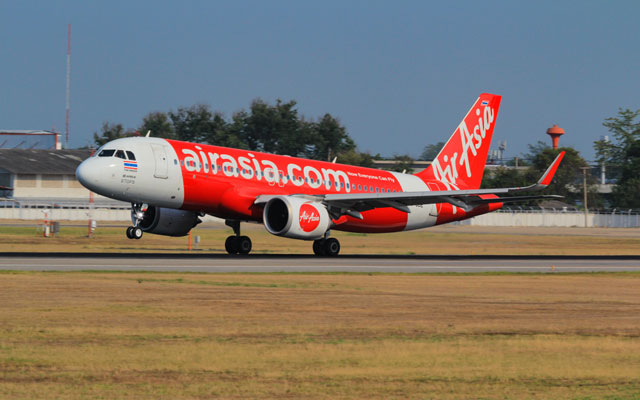
AirAsia Group’s plans to get a Chinese LCC off the ground has been quashed after failing to secure a deal with partners.

In a filing, AirAsia said that a non-binding agreement signed last year for a joint venture with China Everbright Group and the Henan government has lapsed and would not be extended.

AirAsia abandons its plan to set up an LCC in China

Among other factors for the non-renewal of the agreement is the inability of the LCC in obtaining a licence to operate domestic flights, AirAsia co-group CEO Kamarudin Meranun told The Star.

He was also quoted to have said that the airline might revisit its plan to establish a LCC in China if the time is right.

When the agreement was inked last year, AirAsia group CEO Tony Fernandes had stated that China represents the final piece in the LCC’s Asia expansion. It already has affiliates in Indonesia, Thailand, India, Japan and Vietnam.

According to a Bloomberg report, Malaysia’s prime minister Mahathir Mohamad is currently reviewing projects signed by his predecessor, at the risk of ruffling feathers in Beijing. He had previous criticised Chinese investment in his country.

Hotel veteran named Hilton’s president of development in Greater China & Mongolia

0

Hilton has appointed Jerry Huang as president of development in Greater China and Mongolia, effective September 10, 2018.

In his new role, Huang will oversee the team responsible for the overall development strategy for China. He will be based in Hilton’s China regional office in Shanghai and will report to Matt Fry, senior vice president, development for Asia-Pacific.

The industry veteran has more than 30 years of experience under his belt. A 25-year spell at InterContinental Hotels Group saw him lead the development and operations teams, before becoming their president of Greater China. More recently, Huang was president, Greater China, of Artyzen Hotels Group.

A former vice chairman of the China Tourism Hotel Association, Huang also serves as a member of the China National Tourism Administration Platinum Five-Star Grading Committee.

Aviation roundup: Drukair, Cebu Pacific and more

0

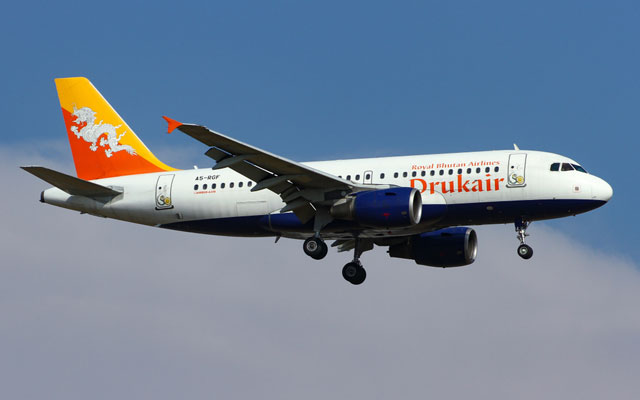
Drukair to connect Singapore and Guwahati
Drukair, Royal Bhutan Airlines, has launched its latest route between Guwahati, a city in the north-east Indian state of Assam, and Singapore.

It is the only international flight that connects Paro to Singapore via Guwahati.

From September 29, KB540 will depart Paro at 07.30 on Wednesdays and Saturdays, land in Guwahati at 07.55 and take off at 08.35, and arrive at its final destination in Singapore at 15.35 on the same day.

On the return leg, KB541 will take off on Thursdays and Sundays at 06.30 from Singapore, arrive in Guwahati at 08.30 and depart at 09.10, and arrive at Paro at 10.30 on the same day.

Drukair currently operates two flights via Guwahati to Bangkok.

Cebu Pacific to resume flights to Boracay
Cebu Pacific will resume flights to and from Caticlan – the main gateway to Boracay – effective October 26, 2018.

From October 26 to 27, Cebu Pacific will operate the following flights between Manila and Caticlan.

From October 28 onwards, Cebu Pacific and subsidiary Cebgo will fly up to seven-times daily between Manila and Caticlan; twice daily between Cebu and Caticlan; and once daily between Clark and Caticlan.

Emirates expands codeshare partnership with Jetstar Pacific
Emirates and Jetstar Pacific have announced a new codeshare agreement, expanding the existing partnership between the Dubai-based carrier and Jetstar Group.

The new codeshare services from Ho Chi Minh City and Hanoi connect Emirates passengers to 14 Vietnamese cities beyond Ho Chi Minh City and six cities beyond Hanoi. Emirates will also operate codeshare flights with Jetstar Pacific between the latter’s hub in Ho Chi Minh City and Singapore, as well as Bangkok, both of which serve as connections for Emirates passengers continuing to Brisbane, Melbourne or Sydney.

The Vietnamese cities covered by the new codeshare routes include Ban Me Thuot, Phuquoc, Dalat, Quinhon, Tamky-Chulai, Hue, Pleiku, Nha Trang, Vinh City, Tuy Hoa, Dong Hoi, Thanh Hoa, Haiphong and Danang, in addition to Ho Chi Minh City and Hanoi. Under the agreement, Emirates’ flight number will be placed on Jetstar Pacific’s services to all codeshare destinations.

Passengers booking flights from 16 destinations in Vietnam, in addition to Hong Kong, Osaka, Taipei, Singapore, Guangzhou and Bangkok will be able to connect in Ho Chi Minh City or Hanoi and fly with Emirates to other destinations worldwide.

Furthermore, Emirates travellers wishing to explore Vietnam can enjoy the flexibility of open-jaw flight bookings where they can fly into either Ho Chi Minh City or Hanoi and depart from the other city.

China Airlines begins codeshare services with Japan Airlines
Since September 4, China Airlines has commenced codeshare flights with with Japan Airlines on seven domestic routes in Japan.

The new routes are Sapporo-Niigata, Sapporo-Hanamaki, Fukuoka-Miyazaki, Fukuoka-Hanamaki, Fukuoka-Amami, Kagoshima-Amami and Kagoshima-Tokunoshima.

China Airlines launched its first codeshare service with Japan Airlines on the Taipei (Songshan) – Tokyo (Haneda) route in 2010. In 2017, the two carriers became full partners on all international routes between Taiwan and Japan.
The expansion of the China Airlines network increased flights to Japan from 180 to 230 a week. The latest expansion into tier-two cities increases the number of weekly flights to nearly 350 for Taiwanese travellers.

China Airlines currently flies to 15 destinations in Japan including Tokyo (Haneda), Tokyo (Narita), Osaka, Sapporo, Nagoya, Shizuoka, Fukuyama, Hiroshima, Takamatsu, Fukuoka, Kagoshima, Okinawa, Ishigaki and Kumamoto.

Indonesian financial institutions to pump billions into tourism development

0
Funds will go a long way in helping to support small business owners, such as this food vendor in Lombok

Indonesian financial institutions are stepping up their support for tourism development in the country – to the tune of billions of US dollars – with the sector expected to boost foreign exchange earnings and in turn lower the current account deficit.

The Indonesian Financial Services Authority (OJK) recently announced its funding programme for small- and medium-scale (SMS) industries in the 10 New Bali destinations.

Funds will go a long way in helping to support small business owners, such as this food vendor in Lombok

The funding will not only come from banks, but also through the capital market and microcredit programmes.

OJK has set a programme based on the type of lending for 2019-2024, and a budget of 228 trillion rupiah (US$15.3 billion). For the period of 2018 and 2019, OJK has budgeted to finance 6,000 homestay rooms with an estimate of 45 million rupiah per unit and 20 trillion rupiah for other SMS tourism businesses.

Wimboh Santoso, chairman of the board of trustees of OJK, said in a statement that the move could accelerate the process of national tourism development.

“Lending (on such developments) is currently scattered and not well coordinated,” he said, adding that the lack of integration of the tourism industry was the major reason why credit lending in the sector remained low.

“The integration of transportation, infrastructure and other facilities will (increase the eligibility) to get credits because as soon as they are integrated people will see the risk is small,” he added.

Bank Indonesia (BI), the central bank, last week hosted a co-ordination meeting on tourism with the central and regional governments in Yogyakarta, yielding nine strategies to help reach the tourism targets.

Perry Warjiyo, governor of BI said: “The government has set a long-term target of international arrivals to reach 25 million with US$28 billion in earnings by 2025.” The target next year is 20 million arrivals and US$17.6 billion in earnings.

Among the strategies outlined is enhancing payment accesses for people in tourist destinations. In this case, OJK will issue a regulation on microcredit programme for tourism businesses as well as the lending procedures, Perry said.

The other strategy is to intensify BI’s digital payment system services in all tourist destinations, and Bali will champion the pilot project during the IMF-Wold Bank Meeting next month.

An outcome from the meeting was the decision to strengthen the synergy of tourism promotions between the central and regional governments with BI. This synergy kicked off with the Indonesia Investment Day in Singapore on August 31, which saw the attendance of 300 investors.

Lauding the funding support for tourism, Horamsyah Thaib, head of the Working Group for the Acceleration of the Development of the 10 Tourism Priority Destinations, said: “The SMS tourism industry needs lending from the banking and other financial institutions to enable them to develop businesses.”

Ng Sebastian, owner of INCITO Vacations, South Sulawesi, said: “We do not know the details of BI’s programme to intensify the digital payment… but I would like to see a system which is economical for both the suppliers in the destination and easy to (use) by the tourists in the source markets.”

He explained that for corporations, receiving payments by international bank transfers, credit cards or payment gateways were not a problem.

“However, nowadays there are more individuals (travellers) overseas buying products from microbusinesses in Indonesia. The transaction fees are sometimes more expensive than the price of the product itself,” he said, adding that BI’s existing National Payment Gateway could only ease domestic transactions.