TTG Asia
Asia/Singapore Friday, 3rd April 2026
Page 1378

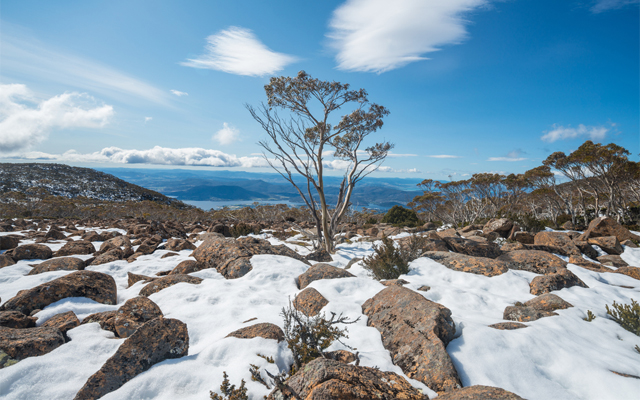
Tasmania turns on winter charm for Asian holidaymakers

0
Wind shelter on the summit of Mt Wellington in Hobart city, Tasmania

With destination awareness maturing in Asian travel markets, Tourism Tasmania is looking to highlight winter experiences to the region’s travellers to grow low-season holiday demand.

Tourism Tasmania recently completed the Malaysia and Hong Kong legs of its Asian Tourism Mission, which is also taking the tourism promotion body to other markets including Singapore.
Wind shelter on the summit of Mt Wellington in Hobart city, Tasmania

Travel from Asia to Tasmania doubled in the last four years, surging from only 150,000 to 300,000 for this year.

Malaysia is among the top seven international arrival markets for Tasmania, after Asian markets such as China, Hong Kong and Singapore. From Malaysia, Tasmania has seen a 68 per cent year-on-year increase in total visitor nights to 364,000 nights for the year ending March 2018.

Meanwhile, the destination recorded 26,000 visitor arrivals from Hong Kong, up 25 per cent year-on-year.

Tourism Tasmania CEO John Fitzgerald told TTG Asia on the sidelines of the mission in Hong Kong last week: “The Hong Kong market has matured and so has its understanding of Tasmania. However, we want to work with market… to develop ways to entice people to travel in Tasmania’s snowy winter months. We need to determine how we can offer not just a totally different experience but also a contrasting seasonal one, attracting more travellers in low season.”

Playing up the destination’s winter appeal, Fitzgerald pointed out that Tasmania’s “pricing is more competitive than summer while at the same time, seafood and produce are at its best”.

Attractions include easy accessibility to wildlife, self-drive tours and gastronomy. Soft adventure attractions such as glamping is also on the rise, Fitzgerald shared.

Most of the 15 Tasmanian exhibitors involved in this mission, already successful in the summer months, are looking to supplement the success with better low season business.

Bridestowe Lavender Estate, already known for its flower season lasting two months in the summer, has created all-year-round tour experiences such as soap making classes, tea tasting, cooking and craft demonstrations.

Another seller, Shannon Wells, managing director of Par Avion Airlines of Tasmania, said the company was promoting a product launched this month – scenic flights over Freycinet Peninsula and Wineglass Bay, targeted at the Asian markets. The three-hour programme flies over the east coast and includes an exploration of the Maria Island National Park.

In Hong Kong, Alex Lee, general manager of Miramar Travel, acknowledged that “Tasmania’s winter is attractive and outside of the water sports, there are authentic activities like star gazing, fishing and outdoor BBQ”, in addition to being about 20 per cent cheaper on land compared to the summer season.

However, he pointed out: “The down side is the lack of direct access, and transit flights mean more cost for airfares.”

Still, new domestic flights from Adelaide (launched April 2018) and Perth (launched in September 2018) are boosting air capacity and providing access to Tasmania for international travellers.

Moreover, Hobart International Airport’s runway extension completed this April, allowing it to service widebody jets. The international terminal is scheduled for completion by December 2019, revealed Fitzgerald.

In Malaysia, Fitzgerald also shared that Tourism Tasmania is working to attract direct flights from South-east Asia, and is expected to be “a game changer” for the destination when that happens.

In terms of hospitality infrastructure, the Australian island will see at least 1,200 additional hotel beds in the next 18 months. International brands investing in the area include Marriott (165 rooms), Crowne Plaza (295 rooms) and Hyatt Centric (206 rooms).

  • Additional reporting by S Puvaneswary

Hong Kong gets on board China’s high-speed rail network

0
Hong Kong now linked to China's high speed rail network

Following years of delay and cost overruns, the 26km rail link connecting Hong Kong to mainland China’s high-speed rail network was finally launched on Sunday.

With the Guangzhou-Shenzhen-Hong Kong Express Rail Link (XRL) now complete, travellers will be able to ride from Hong Kong to 44 destinations in mainland China destinations without changing trains, making the city an ideal starting point for multi-destination journeys through China.

In particular, the new rail link puts Hong Kong in easier reach of nine neighbouring cities in Guangdong province and heralds a major boost to tourism in the Greater Bay Area. With frequent direct high-speed trains linking Hong Kong to Shenzhen and Guangzhou in as little as 48 minutes, travelling within the Greater Bay Area will be faster and more convenient than before.

The Hong Kong section of the High Speed Rail network runs from West Kowloon Station. Visitors can enjoy views of iconic Victoria Harbour by walking along the Sky Corridor on the station’s rooftop.

The tourism hub of Tsim Sha Tsui ls is a short walk away from the station, which is also connected by public transport to neighbourhoods including Sham Shui Po in Kowloon, or Old Town Central on Hong Kong Island.

Directly outside the station is Hong Kong’s new arts and cultural hub, the West Kowloon Cultural District. The hub will soon offer visitors the opportunity to enjoy exhibitions, performances, and cultural events.

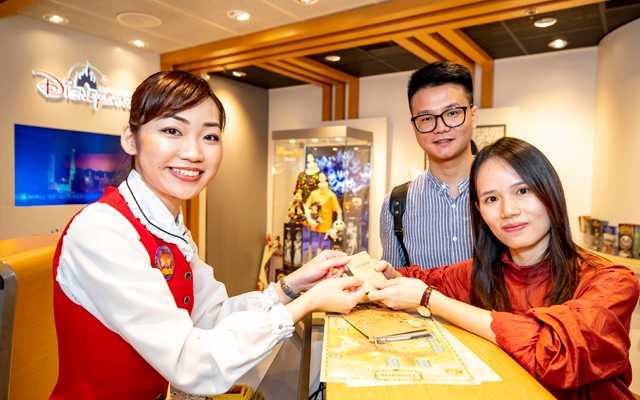
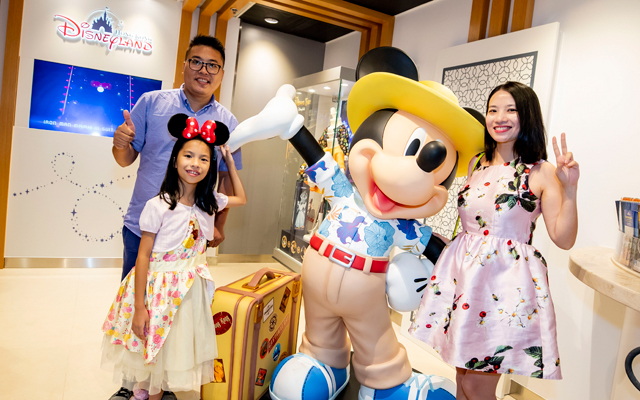
Capitalising on the increased connectivity from mainland cities, the Hong Kong Disneyland Resort (HKDL) opened a guest service centre at West Kowloon Station on the same day XRL commenced service.

Named the Magic Gateway, the disney centre will provide in-town check-in, baggage transfer and free shuttle bus service for guests with a reservation at any of the three Hong Kong Disneyland themed hotels.

Magic Gateway will also provide information on HKDL offers, and electronic park ticket purchase service.

Commented Samuel Lau, managing director of HKDL: “Last year, about 30 per cent of guests at the park came from the mainland. As the opening of the XRL Hong Kong section introduces more flexible and convenient transportation options, we are capturing the opportunity by strengthening the promotion of HKDL’s experiences and products to attract more guests from mainland China, especially from the cities along the national high-speed rail network such as Changsha, Wuhan and Fuzhou.”

Grab, Uber fined by Singapore watchdog over anti-competitive merger

0
Grab says the Uber app will continue to operate for two weeks, while Uber Eats will run until the end of May

The Competition and Consumer Commission of Singapore (CCCS) has issued fines and pro-competition directions to Grab and Uber, having found that their March merger has “led to a substantial lessening of competition in the provision of ride-hailing platform services in Singapore”.

After launching an investigation on March 30, and considering feedback from industry players, stakeholders and the public, CCCS found that the merger infringed section 54 of the Competition Act, and that “it will be difficult for potential new entrants to attain a sufficient network” and compete effectively against Grab without intervention.

Grab says the Uber app will continue to operate for two weeks, while Uber Eats will run until the end of May

In a statement, CCCS said it has received “numerous complaints” from riders and drivers on the increase in fares and commissions by Grab post-merger, such as via a decrease in amount and frequency of driver promotions and incentives. Grab also reduced the number of points earned by riders per dollar spent as part of its rewards scheme, and increase the points required for redemptions.

Overall, CCCS found that effective fares have increased between 10 and 15 per cent.

Moreover, Grab has imposed exclusivity obligations on taxi companies, car rental partners and some of its drivers, which have made it difficult for potential competitors to scale and expand in the market. According to CCCS, Grab now holds about 80 per cent market share.

To level the playing field for new players, CCCS has issued directions, including for Grab to remove exclusivity arrangements with drivers and taxi fleets, as well as to maintain its pre-merger pricing algorithm and driver commission.

The watchdog has also slapped financial penalties – around S$6.5 million (US$4.8 million) each on Grab and Uber – taking into account “the relevant turnovers of the parties, the nature, duration and seriousness of the infringement, aggravating and mitigating factors (such as whether the parties were cooperative)”.

CCCS said Grab and Uber were informed of potential penalties that come with anti-competitive mergers, and had the option to notify the transaction for clearance prior to completing the deal. The two however proceeded with the transaction and began the transfer of assets immediately, “thus rendering it practically impossible to restore the pre-transaction status quo”.

Indonesia’s Sahid to make international debut with Uzbekistan hotel

0
From left: Sahid Hotels & Resorts' Yanti Sukamdani and Hariyadi Sukamdani; Royal Palace's Sadhullokhon Mavlyludov; and Uzbekistan's ambassador to Indonesia Ulugbek Rozukulov

Indonesia-based Sahid Hotels & Resorts is set to foray outside the country with an Uzbekistan property opening mid-2019.

Under the Operational Management Agreement signed in Jakarta on September 19, Sahid Hotels & Resorts will manage a three-star hotel owned by Royal Palace in Samarkand, one of the largest cities in Uzbekistan.

From left: Sahid Hotels & Resorts’ Yanti Sukamdani and Hariyadi Sukamdani; Royal Palace’s Sadhullokhon Mavlyludov; and Uzbekistan’s ambassador to Indonesia Ulugbek Rozukulov

The 65-room Sahid Royal Palace Samarkand will be the company’s launch property. There are also plans for further expansion in the city, including a 200-room hotel in the memorial complex of Imam al-Bukhari.

Vivi Herlambang, director of business development, sales & marketing of Sahid Hotel & Resorts, shared that Sahid Royal Palace Samarkand will target travellers from China, Europe, Japan, and countries around Central Asia.

Hariyadi Sukamdani, president director Sahid Hotel & Resorts, said that as a country that has just opened up after being separated from the Soviet Union, Uzbekistan has seen extraordinary development.

He remarked: “The government is committed to developing the country and strongly encourages tourism to advance and become the main sector. After doing research, we see the big and untapped potential of Uzbekistan. The population is also big, so we want to invest there.”

In addition, Uzbekistan would make an interesting destination for Indonesian Umrah pilgrims as it is home to many relics of Muslim civilisation, such as the memorial complex of Imam al-Bukhari.

Hariyadi added: “Usually the Umrah package goes to Turkey or Jordan, now it can be offered to Uzbekistan as well.”

Ulugbek Rozukulov, ambassador of the Republic of Uzbekistan to Indonesia, said that the presence of the Sahid Hotel & Resorts in Uzbekistan represents potential to strengthen cooperation between the two countries.

“Currently there are no direct flights from Indonesia to Uzbekistan, but flights can be made through Kuala Lumpur,” Ulugbek said.

In addition, there are now direct flights from Jeddah to Uzbekistan.

Not only is Uzbekistan interested to bring the Sahid Hotel & Resorts brands into the country, it is also keen in developing human resources.

Vivi explained: “We have the Sahid University with (high) standards of education, especially in tourism. They realised that skilled human resources are the key to the future of Uzbekistan tourism so we are collaborating to educate the young generation here.”


Mekong region mulls single visa for five Chiang cities

0
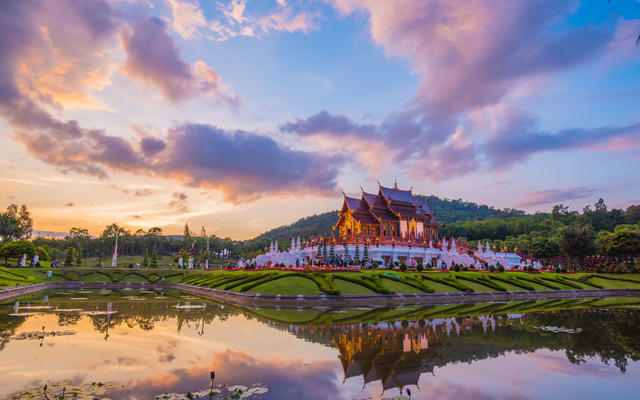
Ho Kham Luang in Chiang Mai

A single-visa scheme for five Chiang cities across Thailand, Myanmar, China and Laos is in the works.

The five cities comprise Chiang Rai and Chiang Mai in Thailand, Chiang Tun in Myanmar’s Shan State, Chiang Rung in China’s Jinhong (Yunnan) and Chiang Thong in Laos’ Luang Prabang.

Ho Kham Luang in Chiang Mai

According to a Bangkok Post article, the policy was initiated “a while back” by the Chiang Rai Chamber of Commerce, along with private and public sector players, to leverage the strength of Thailand’s two Chiang hubs to promote Thai tourism.

The scheme is expected to help the two cities in Thailand benefit from the flow of tourists from China, South Korea, Japan and France, the report said, quoting president of the Association of Northern Tourism Federations, Kitti Tissakul.

Kitti was also quoted as saying that the scheme could be treated as a pilot of one-stop services and a single-visa policy while the ASEAN bloc sets sights on a scheme for the region.

Hotel service robots to roll out of Alibaba AI Labs

0
The robots will have semantic map, autonomous navigation system and facial recognition capabilities

Come October, Alibaba AI Labs will introduce a robot designed specifically for the hospitality sector.

“Alibaba AI Labs’ robot is the next step in the evolution towards smart hotels,” said Chen Lijuan, general manager of Alibaba AI Labs, adding that the development will help “bridge the gap between guest needs and the response time they expect”.

The robots will have semantic map, autonomous navigation system and facial recognition capabilities

From its deployment in October, the new robot will be able to deliver food or laundry to guests, offering a glimpse into the future of hotel service. Guests can talk to the robot, using voice commands, touch and hand gestures. Its answers are powered by AliGenie, the software behind the Tmall Genie smart speaker made by Alibaba AI Labs.

The robot, slightly under one metre in height, moves at a speed of up to one metre per second. It is cased in aluminium and features multi-sense data functionality, along with parallel computing, for fast responses.

Onboard are a semantic map, autonomous navigation system to identify and dodge obstacles, a communications system to control elevators and facial-recognition technology for ID verification.

The global market for service robots is on the rise. Citing the International Federation of Robotics, Alibaba says there the market is growing between 20 and 25 per cent from 2018 and 2020, with sales during that period totalling around US$27 billion for the professional service segment.

After trialling the service robot at hotels, AI Labs will determine whether it’s suitable for use in hospitals, restaurants and offices.

PPHG expands resort footprint in Malaysia

0

Pan Pacific Hotels Group (PPHG) is on its way to open two more resorts in Malaysia, after seeing success at its Penang property.

Lothar Nessmann, CEO, PPHG, said: “Parkroyal is an established brand in Malaysia, where we already operate a hotel, serviced suite and resort in the key cities of Kuala Lumpur and Penang. We are expanding our portfolio of resorts in this market after seeing the popularity of Parkroyal Penang Resort, which underwent an RM55 million (US$13.3 million) transformation recently.”

Rendering of Parkroyal Langkawi Resort

Parkroyal A’Famosa Resort will open in 2019 within a resort precinct located 40 minutes from the Malacca town, a UNESCO World Heritage Site.

The resort will offer dining options including a lobby lounge, all-day dining restaurant, Chinese specialty restaurant, club lounge and pool café.

For corporate retreats, teambuilding and other events, the resort offers seven meeting rooms, an outdoor garden, an open rooftop and a grand ballroom that can accommodate up to 700 pax.

Guests will also have access to a range of facilities and activities in the A’Famosa integrated resort, such as a water theme park, animal safari, bowling, horse riding, fishing, tennis, BBQ, in addition to a kids’ club, activity centre, outdoor swimming pools and playgrounds.

A five-minute stroll from the resort are the A’Famosa Resort Golf Course, a 27-hole international championship golf course and the Freeport A’Famosa Outlet, which offers more than 70 fashion, sports and lifestyle brands.

Opening in 2020, Parkroyal Langkawi Resort is nestled at a beachfront location on Pantai Tengah Beach, the longest stretch of beach in Langkawi.

It will offer 294 guestrooms, including premium suites complete with “sky dipping pools” and seven villas.

Facilities include an all-day dining restaurant, a Japanese restaurant, a beach bar, and multi-tier outdoor swimming pools.

The resort is a 20-minute drive from Langkawi International Airport and 18 km from the nearest town centre, Kuah Town.

Radisson boosts China expansion with trio of appointments

0

Radisson Hotel Group is beefing up its expansion plans in China with three key appointments made for the development team.

Eric Cheng, senior director, development, China, recently joined the company from the UAE’s Emaar Hospitality Group where he held the position of head of business development, China.

From left: Kang, Chai and Chen

Knight Kang, senior director, development, China, has joined Radisson from AccorHotels where he was most recently senior director, development, Greater China.

Kevin Chai, director, development, China, joins Radisson from Centara Hotels & Resorts, where he was previously director of business development, Greater China.

Cheng and Kang will report to Ramzy Fenianos, chief development officer, Asia-Pacific, while Chai reports to Cheng. They will work alongside Chloe Fei, director, development, China, to drive the growth of Radisson Hotel Group’s portfolio throughout the country.

Earlier this year, Radisson Hotel Group secured a series of milestone signings in China. As well, Radisson Ningbo Beilun, Radisson Suzhou and Radisson Blu Zhengzhou Huiji are also on track to open their doors in 4Q2018.

Radisson Hotel Group’s growth strategy in China is a key initiative in Destination 2022, its five-year strategic operating plan. With 35 properties in operation and under development across 21 cities in China, the group plans to triple its portfolio of hotels by 2022.

The Phantom of the Opera returns to Singapore

0
Cast of the world renowned musical

Andrew Lloyd Webber’s much-beloved The Phantom of the Opera is coming back to Singapore next year.

The renowned musical will make a long-awaited return to the Sands Theatre, Marina Bay Sands (MBS), Singapore for a limited season from April 24, 2019. It last played to the Singapore audience in 2013.

Cast of the world renowned musical (photo credit: Johan Persson)

Tickets are now on sale through www.MarinaBaySands.com/ticketing or www.sistic.com.sg, or telephone +65 6688 8826.

Base Entertainment Asia, the resident producer, programmer and manager of live entertainment at MBS’ Sands Theatre, also offers an exclusive concierge service for all partnerships, sponsorships, corporate and group bookings.

Travel agents and corporate planners seeking to curate unique experiences at the theatre for their clients can contact BasXclusive, the client services and group sales division of Base Entertainment Asia.

For more information, contact: BaseXclusive@baseentertainment.com.sg

SE Asia rises as new target market for Guam

0
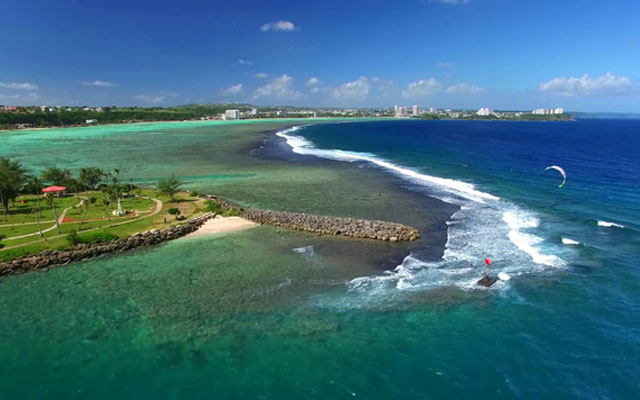
Guam is an island in Micronesia in the Pacific Ocean

South-east Asia is emerging as the new darling of Guam, as the US island territory steps up promotion efforts in the region in hopes of attracting travellers from key markets like Singapore and Malaysia.

Guam Visitors Bureau’s (GVB) marketing manager – North America & Pacific, Mark Manglona, told TTG Asia at the recently-concluded PATA Travel Mart: “Our main tourist markets are Japan, South Korea, the US and Taiwan, so we’re trying to diversify our visitor market profile. We hope to meet agents from Malaysia, Singapore and other parts of South-east Asia.”

Guam, an island in Micronesia in the Pacific Ocean, is looking to diversify its markets and attract more visitors from South-east Asian nations

Travellers from Singapore have been on the rise, and the bureau has begun monitoring Malaysia’s arrivals since January, he said.

Earlier this month, its delegation held a presentation in Kuala Lumpur with Philippine Airlines and Korean Airlines to 15 local travel agents. In Singapore, the bureau has brought a product showcase to key travel agents, accompanied by Philippine Airlines (PAL), United Airlines and other US commercial travel services.

“Guam is still a relatively new destination to this part of the world. Ninety per cent of the people we met did not know that Guam is a US territory or that there is a visa waiver for Malaysian passport holders. It’s going to take a lot of education and marketing efforts,” said Manglona.

He added that GVB has been working closely with travel agents and airlines. For example, Kuala Lumpur-based Apple Vacation has been selling travel packages to Guam, and PAL is pushing out promotional prices for flights to Guam.

Agents will soon be invited on a fam tour via Philippine Airlines, shared Manglona.

Concurrently, GVB is escalating its marketing efforts in traditional markets like South Korea and Japan, despite dipping arrival numbers from the latter.

“We get a lot of repeat visitors from Japan and a healthy number of arrivals year after year,” Manglona remarked. “We have aggressive plans to revive the Japan market, and we also have airlines adding additional seats to Guam.”