TTG Asia
Asia/Singapore Sunday, 5th April 2026
Page 1353

What’s old is new again

0

While swanky hospitality brands like Andaz are calling towering skyscrapers homes in Singapore, a crop of new hotels are finding love in the city’s older buildings, wooing travellers with a meld of history and modern comfort.

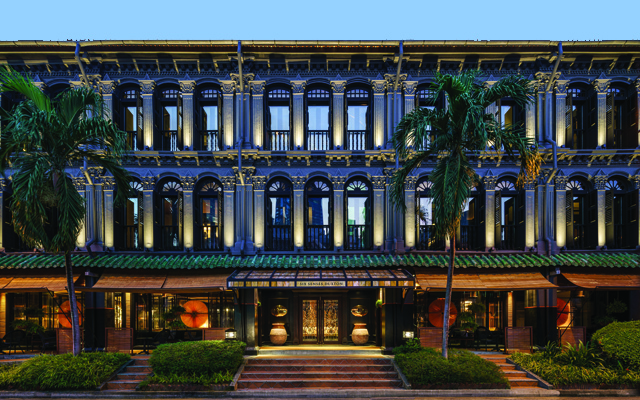
In 2017, The Lo & Behold Group set up camp in the old warehouses of Robertson Quay, originally built in 1895 for liquor distilleries and opium dens. Then in April this year, luxury resort brand Six Senses opened within a row of shophouses in the Tanjong Pagar district.
Six Senses plants its first flag in Singapore within restored heritage shophouses

Most recently, Cube Boutique Capsule Hotel at Kampong Glam – located in restored shophouses along the Kampong Glam Heritage Trail – opened in July under Singapore real-estate firm RB Hospitality.

Sonia Anya Tay, COO and co-founder of CUBE Boutique Capsule Hotel, said: “Our capsules are built in restored conservation shophouses or authentic pre-war buildings with a rich history and sited in popular tourist areas.”

She explained that Cube caters to a new generation of guests that “(doesn’t) need a swimming pool or spa facilities on the premises” and are “price-sensitive”, but who also appreciate the immersive experience of staying in a heritage building.

“(Our guests) are identified as digital-savvy global explorers in the 18-35 age group,” Tay said.

Conserved heritage sites are hardly a novel setting for Singapore hotels. The Fullerton Hotel Singapore occupies a National Monument: the Fullerton Building, commissioned in 1919 as a part of the British colony’s centennial celebrations; Grand Park City Hall sits on a century-old conservation site; Link Hotel was converted from art-deco residential blocks from the 1950s and 1960s; and the iconic Raffles Hotel Singapore opened in 1887 with 10 rooms in an old bungalow-style building.

But this recent rush of new blood to the scene has reawakened the old dames, who have launched rejuvenation campaigns and technological innovations to remain competitive.

Link Hotel has reopened after a major renovation, and is now part of the Tiong Bahru Heritage Trail.

As part of its restoration, Raffles Hotel Singapore will introduce a new line-up of dining experiences by celebrity chefs such as BBR by Alain Ducasse; La Dame de Pic by three-Michelin-star chef Anne-Sophie Pic; and yì by Jereme Leung, a Singapore-born chef who was a judge on Masterchef China. This heritage icon is slated to reopen in 1Q2019.

Grand Park City Hall is also undergoing the final phase of its transformative masterplan – scheduled to complete soon – which will integrate it into an upcoming mixed-use lifestyle precinct, City Hall Square. It will be the first hotel in Singapore to launch mobile check-in facial recognition technology, reducing check-in time from five minutes to a minute.

“The new Grand Park City Hall appeals to travellers looking for unique experiences that are infused with Singapore’s stories, and have an appreciation for arts and history. These guests also embrace seamless experiences empowered by technology today,” said John Kockan, general manager, Grand Park City Hall.

Meanwhile, The Fullerton Hotel has taken its 90th anniversary this year to introduce year-round events and promotions. These include the inaugural Fullerton Concours d’Elegance showcase of more than 90 vintage and classic cars; and a series of theatrical drama tours that retell the history of the national monument.

Cavaliere Giovanni Viterale, the hotel’s general manager, said: “I believe there is an air of romance and mystique that surrounds Singapore’s heritage buildings, especially one like the Fullerton Building. Beyond the aesthetic appeal of heritage building, each stay is enhanced by authentic stories and experiences that are hard to replicate.”

Easing the congestion

0

Just as Cebu’s tourism development is picking up pace, the island province’s worsening traffic congestion is beginning to take the shine off one of the most visited destinations in the Philippines.

Urbanisation, the lack of arterial roads and limited transport system combine to worsen Cebu’s traffic gridlock – which some say is even worse than Manila’s – over the last couple of years, forcing tourists to limit their activities and stay in one area rather than fully exploring the destination’s rich offerings.

Mactan Cebu International Airport’s spanking new Terminal 2

Congestion was even more acutely felt in recent months as Cebu became the top alternative destination for tourists who would have otherwise flocked to Boracay, were it not for the latter’s temporary six-month closure, said Margie Munsayac, vice president sales and marketing, Maribago Bluewater Resorts.

Travel Experts’ inbound manager Girlie Malaran said the traffic jam is a big consideration for visitors to Cebu, to the extent that properties on Mactan Island benefit from their nearer proximity to the Mactan Cebu International Airport (MCIA), whereas hotels farther in Cebu City are less favoured as transfers will be exacerbated by traffic jams.

Another travel agent shared that even for business events, they are forced to choose hotels near MCIA and confine their activities in the hotel to avoid the traffic rush.

Aware of the traffic problem, Colliers International’s research manager Joey Bondoc said that property developers are replicating Manila’s mixed-use developments in Cebu, which integrate offices, residential units, hospitals and shops, while providing transport as well from these developments to other destinations.

Bondoc added that major infrastructure projects planned over the next four years, including the Cebu-Cordova Link Expressway, Metro Cebu Expressway, Cebu-Negros Link Bridge, Cebu-Bohol Link Bridge and Bus Rapid Transit System, should help to ease traffic in the province.

Such infrastructure projects “should spur the demand” for more hotels and resorts outside the metro Cebu corridor, comprising Cebu City, Lapu-Lapu in Mactan and Mandaue, and attract more tourists, Bondoc said.

Despite its ongoing traffic woes, Cebu received 4.9 million foreign and domestic travellers last year, and is projected to enjoy a 10 to 15 per cent annual growth in visitor numbers over the next two or three years.

Its hotel occupancy rate, sustained at 78 per cent on average last year, should hover between 70 and 75 per cent over the next three years, according to a report by Colliers International.

The completion of MCIA’s modern and efficient Terminal 2 for international flights paves the way for bullish tourism prospects for Cebu as it will triple the airport’s annual handling capacity from 4.5 million to 12.5 million travellers.

It also helps that GMR Megawide Cebu Airport Corp, operator of MCIA, is actively working closely with Cebu Pacific to connect the airport with various destinations in Cebu, and neighbouring provinces by land and water.

Meanwhile, Cebu Pacific, the largest carrier operating in MCIA, will increase flights to Cebu by 20 per cent next year to serve the growing tourism industry, according to Michelle de Guzman, the airline’s overall in charge for marketing.

With these upcoming infrastructure developments, tourism prospects for Cebu are looking bright as it grows into a hub linking up different destinations within the Philippines, allowing visitors to bypass Manila, said Travel Experts’ Malaran.

Grab nabs US$200m investment, partnership deal from Booking Holdings

0
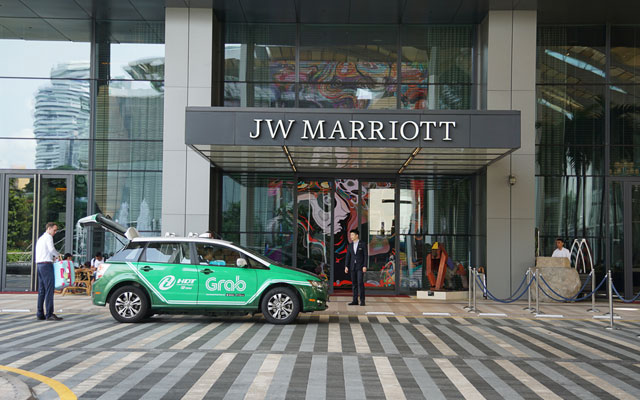
The latest Booking partnership will enable travel-related services to be booked through Grab

Booking Holdings has sealed a strategic partnership with Grab, alongside an investment of US$200 million into the Singapore-based company, now a ride-hailing leader in South-east Asia.

With the partnership, Grab users will be able to book travel-related services powered by Booking and agoda for the first time, and pay using the GrabPay digital wallet.

The latest Booking partnership will enable travel-related services to be booked through Grab

Booking Holdings’ brands will also be able to offer Grab’s on-demand transport services through their apps.

The deal comes as Grab works to become a super app, having expanded beyond ride-hailing to digital payments and delivery solutions, and now travel services.

Ming Maa, president of Grab, said: “The online travel market in South-east Asia is set to nearly triple by 2025 and we see numerous synergies between travel and transportation that will allow us to capitalise on this huge opportunity.”

Furthermore, with Booking Holdings’ latest investment, Grab is now on track to raising US$3 billion after bagging over US$2 billion in its current round of financing.

More Singaporeans getting adventure fix in Australia’s Northern Territory

0
Ayers Rock, or Uluru,

Singaporeans are eschewing Australia’s traditionally popular cities like Sydney and Melbourne in favour of the Outback for their adventure fix.

Known for Ayers Rock in the Uluru-Kata Tjuta National Park, the Northern Territory (NT) has recently been attracting the interest of Singaporeans with its national parks and outdoor activities.

Ayers Rock, or Uluru, in the Northern Territory is a large sandstone rock formation that is a sacred part of Aboriginal creation mythology

“A lot of our customers have been to Australia before, and now they’re looking for new things to do. NT has things that the rest of Australia is not offering,” said Holiday Tours’ head of MICE and leisure, Cindy Loo.

Adventure-focused travel agency Travel Wander has also identified NT as a unique Australian destination where travellers can engage in outdoor activities while appreciating “undiscovered” natural attractions, said the agency’s founder Sheryl Lim.

Recognising this demand, Tourism Northern Territories last week brought its sales mission back to Singapore after a hiatus of four years. The roadshow connected Singapore and Malaysia travel agents with 18 territory operators under the Adventure NT theme.

The Northern Territory Government’s minister for tourism and culture, Lauren Moss, told TTG Asia: “Numbers have been increasing from Singapore, as well as Greater China and Japan.”

NT saw 29,000 visitors from Asian countries outside Greater China and Japan in 2017, and for the year ending March 2018 received 49 per cent more visitors from China to reach 13,000. This number is projected to reach 30,000 by 2020, said Moss.

She added that this region has “untapped potential” for tourism into NT, and the government will be channelling more resources into marketing in countries such as Singapore, such as an additional A$103 million (US$73 million) for its two-year tourism budget.

Moss: NT offers something different from other Australian cities

These funds will go towards new attractions to be rolled out “over the next couple of years”, said Moss. These include opening up new swimming spots in Litchfield National Park and a A$12 million mountain-biking trail through the Red Centre.

She said: “People are well-acquainted with places like Melbourne and Sydney, and now they’re looking for different experiences. We know that people are looking for authentic opportunities to experience aboriginal culture so we’re focusing a lot more on that.

“We are moving towards demonstrating a more modern NT and the new experiences you can have there.”

New expressway from Hanoi a likely boon for Halong Bay cruising, day trips

0
The new Hanoi-Halong expressway will make it easier for XX

A new expressway halving travel time between Hanoi and Halong Bay will lead to a surge in cruising and day trips to Halong Bay, industry experts predict.

The Ha Long-Hai Phong Expressway, which opened in September, runs from Hanoi through to Dinh Vu port in Hai Phong, reducing the journey between the Vietnamese capital and Halong Bay from about four hours to less than two-and-a-half hours.

The new Hanoi-Halong expressway will make it easier for tourists heading to Halong Bay 

Coupled with the opening of a new seaport dock in the area and the slated opening of Van Don International Airport in December, as well as the hosting of the ASEAN Tourism Forum in Halong Bay next January, visitor interest to the northern Quang Ninh province is set to grow.

Jeff Redl, managing director of Diethelm Travel Vietnam, expects this to spark a rise in demand for cruises, especially day trippers. He said leisure and business tourists as well as MICE groups enjoying a short stay in Hanoi may now consider a day cruise in Halong Bay.

Added Redl: “Due to the transfer time, we offered few day cruises from Hanoi in the past. By considerably reducing the time spent in a vehicle, we will be more confident at offering such a service.”

Armand Cheveux, Bhaya Group’s director of marketing, agreed the road upgrade will lead to an increase in cruising in Halong Bay, while stressing that it is vital that measures be taken to ensure this does not impact the environment.

He said: “The number of boats will have to increase to supply this increase in demand. This scenario would result in more pollution of the area. As the day boats are ageing, we expect that by the time a significant increase in passengers arrive, less old boats will be available and newer, more environmentally-conscious operated boats will cruise in Halong Bay.”

Pham Ha, CEO of Heritage Cruises, said: “Travellers can cruise longer in the Halong Bay region from the Cat Ba Archipelago to the ancient trading seaport Van Don in Bai Tu Long Bay. (Overall), travellers have more choices for cruising and there will be a boom in interest in Cat Ba Archipelago.”

But Pham also expressed concern over mass tourism in the future, adding that vital investment should be ploughed into creating new experiences in the area rather than “cable cars, ugly planning of Halong City and amusement parks that are packed in the summer with Vietnamese holidaymakers”.

Funding declines for new travel startups

0
XXXXX

New travel start-ups in Asia-Pacific will face difficulty in getting funded as investors bet on galloping horses that were formed earlier.

And that’s not the only bad news. New entrants face “unprecedented obstacles”, including incumbents that have become more powerful through consolidation; product expansion into travel by the likes of big brands such as Google or Amazon; and maturing start-ups that are being oiled by investors who prefer winners established within the past few years (think India’s Oyo or Hong Kong’s Klook).

It is not as easy for start-ups to obtain funding from investors in recent times

That’s not to say, however, that funding has dried up for new start-ups, sessions during the recent WIT 2018 Bootcamp and interviews conducted on the sidelines of the event, heard.

“It is not impossible for new start-ups to raise money,” said Coney Dongre, Phocuswright’s research analyst based in Bengaluru, India.

The consensus is, the further away a start-up is from transactions, the less attractive it is to investors. Phocuswright’s research shows the top three verticals that failed (from 2008-1H2018) were non-transactional Inspiration, Itinerary and Destination content.

“Social networking sites or inspiration-based sites may help travellers, but investors question the revenue source,” said Dongre.

Yet, it is difficult to get traction with transactions unless the product has sufficient differentiation and marketing means, especially when the start-up is up against giant incumbents such as Booking and Expedia. Thus, interest from investors have shifted to B2B, from B2C, in the last two years.

However, there is still hope for small B2C start-ups. They could play in B2B too, in areas such as personalisation or experience improvement, pointed out Bart Bellers, founding partner and CEO of Xpdite Ventures.

Or, said Mizuho Hiraguri, corporate development, Recruit Holdings, they might transform themselves into another type of business, more mobile for instance, provided they had begun with a core business and had a clear value to offer.

Added Dongre: “Categories such as software or product as a service have seen phenomenal growth because of the interest in B2B. Nobody likes to have a legacy system that would require millions of dollars to be invested and see not much of the product being used.”

But Norman Tan, CEO of uBingo, a China travel start-up, remains optimistic. He believes declining funding is “a normal cycle”.

“In the last couple of years lots of money were pumped into travel and travel-related startups such as Uber. People felt good, so a lot tried to get a piece of the pie. But many were not sophisticated investors. Now, it’s winter, and we see those funds go away.

“(The funds) will return because good companies are still surviving in China. These focus on product and service. Some 100 million new passports are expected in China in the next few years, and these are new outbound travellers who need trustworthy product and service,” said Tan.

Asia also has emerging markets such as the Philippines, where opportunities for new travel start-ups are aplenty and are expected to be watched by investors.

Worldwide, start-ups have raised US$19 billion from 2008-1H2018, but funding has been sliding since 2014, said Dongre, citing a Phocuswright study.

North America leads with 38 per cent share of start-ups. Last year was a phenomenal year for Asia-Pacific, with 42 per cent of total funding raised for start-ups here, including OYO’s US$1 billion deal.

SE Asia a key market as Finnair’s APAC growth picks up pace

0

Having seen a 20 per cent increase in longhaul capacity since winter 2017, Finnair is now looking to accelerate its growth in the South-east Asian, Australian and New Zealand markets.

The airline has appointed Tamas Hanyi as general manager Asia-Pacific, based in Singapore. Hanyi is tasked with the development of Malaysia, Indonesia, Australia and New Zealand source markets, using Singapore as the transfer point to Helsinki and beyond.

Hanyi was at the recent ITB Asia to reinforce the message that Finnair offers the shortest and fastest route between Asia and Europe, with the airline flying to more than 100 destinations in Europe via Helsinki.

While China, Japan and South Korea are the biggest Asian growth markets for the airline today, South-east Asia is also important, Sebastian Grossmann, Finnair’s regional manager – Singapore, Malaysia and Indonesia, shared in a separate interview with TTG Asia.

He added that South-east Asian feeders are showing “a good amount” of growth, especially from Singapore to the Nordic countries.

Watch the full interview with Grossmann here:


Jonne Lehtioksa, area vice president, Asia & Oceania, commercial unit at Finnair, described Singapore and Australia as high growth, critical markets for business and leisure traffic to Helsinki and beyond. Approximately 30 per cent of seats on the Singapore-Helsinki flights were filled by Australians.

Lehtioksa also noted the different buying behaviours in the markets. The Singapore market comprised mostly a millennial crowd that sought new European destinations such as Iceland and Sweden, and travellers were more digitally savvy and willing to book online. Australians and New Zealanders, on the other hand, relied more on travel agents.

Millennium Hotels seals partnership with Hotelbeds Group

0
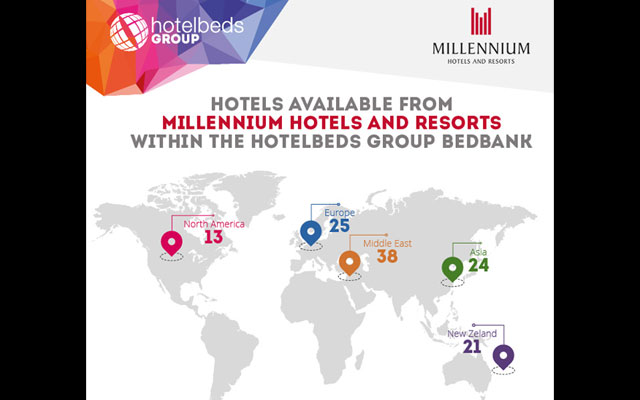
The agreement powers up all of the Hotelbeds Group brands – including Hotelbeds, Bedsonline, Tourico Holidays, and GTA - with direct real-time access to MHR’s 1.4 million-plus annual room nights in over 60 leading global business and leisure travel destinations.

Hotelbeds Group and Millennium Hotels and Resorts (MHR) are joining forces in a new strategic partnership.

The agreement will enable the global bedbank’s brands – including Hotelbeds, Bedsonline, Tourico Holidays and GTA – with direct real-time access to MHR’s 1.4 million-plus annual room nights in over 60 destinations worldwide.

The agreement give all of the Hotelbeds Group brands with real-time access to MHR’s more than 1.4 million annual room nights in over 60 destinations

Meanwhile, MHR will be able to step up distribution through Hotelbeds’ portfolio of 60,000-plus travel distributors in more than 140 markets with the new alliance. These channels of distribution help hotels access a wider international reach and end customers’ profiles, who typically reserve with longer lead times and have lower cancellation rates.

Mark Redmond, head of global chains at Hotelbeds Group, said: “This will be a strong relationship delivering special rates and availability across the MHR portfolio to our 60,000-plus clients, while giving MHR access to higher-margin, niche segments of the travel market.”

Nayan Peshkar, senior vice president digital, distribution & revenue strategy, Millennium Hotels and Resorts, added: “This supports the group’s wider distribution strategy of reducing reliance on static rate and room agreements in the leisure segment. Our guests are now able to get the best rates at all times across all channels. Deeper penetration of Hotelbeds’ client base will support higher margins and propel a more dynamic customer relationship.”

VFS to provide Germany visa services across APAC

0
VFS Global has been awarded the Regional Contract to provide Germany visa services in the Asia Pacific

VFS Global has been awarded a regional contract by Germany’s Federal Foreign Office to provide Germany’s visa services in the Asia-Pacific region.

Under the terms of a new contract, VFS Global will operate visa application centres in 36 new locations across 14 countries – Brunei, Fiji, Cambodia, Laos, Malaysia, Mongolia, Myanmar, Papua New Guinea, Singapore, Vietnam, Indonesia, Philippines, China and Thailand. China alone will see the addition of centres in 15 cities.

VFS Global has been awarded the contract to provide Germany visa services in APAC

VFS Global is expected to start operations in the new application centres during 1Q2019. The visa outsourcing application company has worked with the German government for the past 13 years since 2005 but on a smaller scale.

In addition to these facilities, VFS Global will also offer a mobile biometric service in 24 locations throughout the region, enabling applicants to submit their documents and biometric information from a location of their choice, e.g. from their home or office, eliminating the need to visit a visa application centre.

Chris Dix, head – business development, VFS Global, remarked: “VFS Global currently operates 59 Germany visa application centres across 16 countries – this new contract will take the total number of countries which have centres operated by VFS Global to 30.”

Emirates to launch ‘biometric path’ for passengers at Dubai airport

0
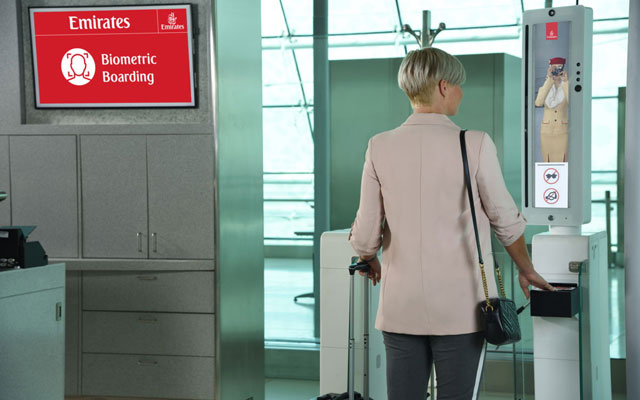
An Emirates passenger going through the biometric gates

Emirates is gearing up to launch the world’s first “biometric path” for passengers at the airline’s hub in Dubai International Airport.

Utilising the latest biometric technology – a mix of facial and iris recognition – Emirates passengers can soon check in for their flight, complete immigration formalities, enter the Emirates lounge and board their flights.

An Emirates passenger going through the biometric gates

The latest biometric equipment has already been installed at Dubai airport’s Terminal 3. This equipment can be found at select check-in counters, at the Emirates Lounge in Concourse B for premium passengers, and at select boarding gates. Areas where biometric equipment are installed will be clearly marked.

Trials for the Smart Tunnel, a project by the General Directorate of Residence and Foreigners Affairs in Dubai (GDRFA) in collaboration with Emirates, was launched on October 10. It is a world-first for passport control, where passengers walk through a tunnel and are “cleared” by immigration authorities without human intervention or the need for a physical passport stamp.

Once its internal tests are completed, Emirates will launch trials for biometric processing at other key customer points at the airport – check-in, lounge and boarding gate – and subsequently at transit counters/gates, and for its chauffeur drive services. All biometric data will be stored with GDRFA, and customers invited to participate in the trials will be asked for their consent.

Adel Al Redha, Emirates’ executive vice president and COO said in a statement: “All systems will eventually be linked with each other resulting in better service to our customers and a happier journey whether arriving, departing or transiting in Dubai.”

The airline’s “biometric path” aims to improve customer experience and customer flow through the airport with less document checks and less queuing. Eventually, the “live” passenger tracking capability will also enable the Emirates airport team to locate and assist ‘late’ customers who would otherwise miss their flights.

Initially focused on First and Business class travellers, Emirates intends to speedily extend the “biometric path” to Economy class travellers in Dubai, and potentially extend the service to other airports outside of Dubai, and also for its own dedicated crew check in facility.