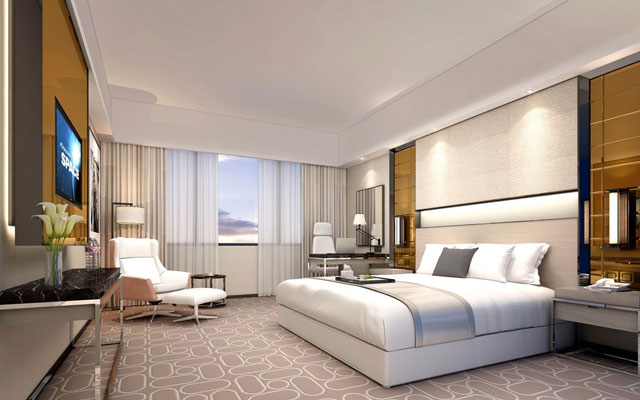
Wyndham Acmar Klang will open in 3Q2019 as the first international upscale hotel in the Malaysian city of Klang.
Housing KLIA, Malaysia’s main international air gateway, and Port Klang, one of the world’s busiest container ports and Kuala Lumpur’s main cruise hub, Klang is an integral part of Malaysia’s national economy.
Rendering of the upcoming property
“As the commercial gateway to Malaysia and a highly connected urban centre, Klang is at the core of Malaysia’s economic success. The entire Klang Valley area is enjoying tremendous growth making this an (opportune time) to introduce a world-class hotel,” said Joon Aun Ooi, president and managing director, Wyndham Hotels & Resorts, South-east Asia and Pacific Rim.
Wyndham Acmar Klang will offer 488 guestrooms across two wings – from Deluxe Rooms to 188 suites. Guests staying in the suites can also make use of the Executive Lounge which provides private check-in, daily breakfast and all-day drinks and snacks.
For meetings and events, the hotel has a Grand Ballroom seating up to 2,200 guests. A selection of 11 other flexible spaces provides options for every type of event.
Facilities include an outdoor pool, spa, fitness centre, retail outlets and a selection of dining venues including Japanese and Chinese restaurants and an all-day dining outlet serving Malaysian favourites and Western cuisine. Also available are a lobby lounge; pool bar; and a sky lounge.
At present, Wyndham Hotels & Resorts has a portfolio of four hotels and resorts across Malaysia, including a Days Hotel & Suites property in Kuala Lumpur and Ramada-branded hotels in Kuala Lumpur, Melaka and Johor Bahru.
Gone are the days where travel agents are needed to plan and book simple beach vacations or run-of-the-mill packages, a trend that DMCs and tour operators are only too keenly aware of.
But the earlier prediction of travel agents going obsolete with the rise of the Internet and OTAs did not entirely come true. While some agents died out, quite a few remain in business and offer a stronger value proposition than before.
The growing demand for immersive, authentic experiences tailor-made to individual liking and preferences actually bodes well for travel expert, driving many tour operators to carve our clearer positionings and niche segments for themselves, anything from VIP services and expert-led itineraries to bona fide, once-in-a-lifetime voyages of discovery.
David Kevan of UK-based Chic Locations believes that “there is still good scope for tour operators but (they) cannot be all things to everybody”.
“For Chic Locations, independent experience-led touring holidays is the way to go, combining at least three different places and maybe using three different airlines – things that clients have neither the confidence or expertise to arrange themselves,” said Kevan.
The ability to curate and “find gems that (clients) can’t find on the Internet” is precisely how Asie Voyages’ Philippe Roussel sees his strengths as a French tour operator specialising in the Far East.
Particularly in South-east Asia, it’s “not easy to find gems” without guidance from a travel expert, he is quick to point out.
That is where the local destination knowledge and expertise of DMCs come in, said Stephan Roemer, CEO of Diethelm Travel Group.
“We cannot sell (standardised tours) anymore,” he said. “But what I can sell is a simple noodle shop, where locals sit on stools for lunch. It’s an authentic experience and (our clients) love it. It’s our job to find the best noodle shop (in a destination)… and that’s how we make a difference and create added value.”
Personalisation: harder work, but greater profitability
Travel players speak of the greater dividends found in customising tours, an area where many companies have devoted attention and efforts to.
Even though classic tours still make up business “volume” for Go Vacation Thailand, the demand for classic group series and SIT tours have declined over the years, shared business development director Tobias Fischer.
Growing demand for personalised travel has put a spotlight on the expertise of travel agents
In place, Fischer sees a clear pivot towards private group tours as traveller can better dictate what they want in their itineraries and elements adjusted to their liking.
Along with “bigger profit margins” that tour customisation has brought is “more work”, admitted Fischer, who added that Go Vacation has a tailor-made department to cater to such requests.
“But that’s precisely where the future of DMCs and travel agents lie. It’s the future of what the market wants, especially for repeaters,” he emphasised.
Likewise, Nicola Scaramuzzino, country manager of Panorama Destination (Thailand) noted that the tailor-made market, which is characterised by organic growth, has yet to deliver volume for the company. In the mean time, he asserted DMCs still need both segments to stay viable, with group series generating quicker cashflow while tailor-made tours offer bigger opportunities in profitability.
Complexity in ‘fitting puzzles’
The growing demand for customised travel has opened up several concerns for travel experts, including greater time, effort and knowledge needed to draw up a value proposition for their clients.
Creating a customised programme requires strong industry knowledge as well as interpersonal skills, pointed out Scaramuzzino, as travel designers “need to know the psychology of customers and ask a lot of questions in order to provide correct products”. “It’s like putting pieces of a puzzle together,” he opined.
At the same time, the growing tailor-made wave has opened up a more “interesting” career path for reservations staff, noted Scaramuzzino. As reservations staff acquire industry knowledge and hone their skills by “learning tricks to create the right package for the right people”, they can eventually rise up to become travel designers.
“You cannot be a chef without learning to chop onions,” he added, drawing the analogy to a professional kitchen.
Travel experts also spoke of constraints in delivering quotations for a customised itinerary within a short turnaround time, the result of consumers having constant access to information and their mobile devices in a hyperconnected world.
Said Scaramuzzino: “(In an age) when booking flights take longer than five seconds, replying (to clients) within 24 hours is considered a long time.”
The ever-shortening response time expected of travel agents is something Roussel is all too familiar with. “But a la carte tours don’t happen with clicks, it would take more time (for us) to get back (to requests),” he stressed. “(Furthermore), it takes about 10-15 requests to translate into one booking.”
That said, travel experts told TTG Asia said that totally fresh demands that require conceptualisation from scratch are far and in between, with most customised requests falling in an area where existing itineraries can be used and adjusted to customers’ preferences.
Scaramuzzino shared: “Anyone requesting for something entirely new are very few. You can classify customers into a few broad profiles – nature, beach and culinary – and from there send them sample standard programmes (according to their profile types) to gauge interest.
“There’s usually a 50-50 chance of acceptance,” he said.
Wither the DMC-tour operator relationship?
As more tourism players get into the personalisation game, the supplier-DMC-tour operator-retail agent-travel customer chain also comes under greater scrutiny.
Kevan argues that the need for a DMC is now lesser in a mainstream destination like Thailand, which has a high repeat visit factor and where clients’ itineraries are generally less complex – characterised by longer average length of stay, fewer stops and local sightseeing booked on the spur of the moment – than ‘newer’ destinations the likes of Vietnam and Sri Lanka.
“If you are established in (a destination), you probably have a direct rapport with your main hotel partners, so from a financial and operational view you have more control of the booking, which in turn leads to a better (and more seamless) experience for the clients,” said Kevan.
He added: “Most DMCs work to set office hours and (outside of that are) contactable via an emergency number, but that would not include booking tours. By contrast, the hotel concierge is available at least 18 hours a day and can arrange something totally personalised within 30 minutes.”
But hotels’ encroachment into offering personalised travel services could pose existential concerns to tour operators too, Kevan acknowledged, while stressing that competition is not new in the travel sector.
“The days of tour operators working in tight collaboration with airlines and hotels are gone; in many ways we are competing against each other,” he remarked.
While tour operators worth their salt would have built up personal relations with hotels and have some kind of data protection agreements in place to limit the scope that hotels can approach clients directly” the reality is that many of the hotels want direct bookings, he opined.
Ultimately, the best form of insurance for business survival will be “added value”, stressed Roemer.
“Any link in the value chain has to provide visible additional value, and that goes from the travel agent to the DMC and the provider. The client can nowadays book his hotel and transportation directly without travel agent. The added value however makes the difference and has to prove its value for money.”
How did the merger of Diethelm and Tourasia come about?
The owners (Keller family) of Diethelm and I met from time to time; they saw what Tourasia did and I knew what they did. It was late 2016 when they approached me and asked ‘why not bring our ideas together?’
At that time Diethelm had a different focus and we had a different focus. I don’t need to be a big player but I need to be a special player. Tourasia was like a handicraft – we offered small details which others probably would not go that far for. That were the niches of our companies, and we were very successful with that.
When Diethelm offered me an opportunity to merge with each other, I was quite quickly convinced because (Tourasia’s) model was such a small-scale niche that we couldn’t scale up or develop further; and for Diethelm I didn’t see at the time much chances for them to grow with their model (otherwise).
The business (of travel) has changed completely and that made me decide (to take) Diethelm and our smaller companies into the 21st century with a clear strategy.
What were the first things you did following the merger?
The first thing after I came here was to start a clear positioning turnaround at Diethelm – what do we want and where do we stand? Diethelm didn’t have a clear positioning at that time, they were doing everything. I was convinced you cannot do everything.
Number two was Diethelm’s organisation structure – it was not a modern organisation any more and nobody changed that. If you want to steer forward, you need to have the vehicle to steer forward, not with a huge truck behind, which was the case with Diethelm.
After the repositioning I started to work on the organisation. Our organisation is now much faster, much leaner and much more accurate. We underwent a complete change and had considerably less executives.
What are the results of this flatter organisation structure?
We have considerably less management positions, but the positions we have are now entrepreneurs; they are not just managers any more. I have to change the mindset of the company and management. It’s a process; it’s not done from today to tomorrow.
We changed the organisation completely by giving competences to the front. I knew from the beginning it’s a risk because mistakes would happen and mistakes have happened but there will be less and less with time. If I do my calculations, it certainly costs me less at the end of the day to have a smaller (reporting) chain than a bigger one, and in the future there will be less mistakes.
Can you imagine if you’re close to the client and you (want to) make a decision in favour of them, but if you have to refer the decision (upwards), most likely the (outcome) will (not) be made in favour of the client. Staff closer to the clients think, act and decide for them – this is what we see already. We are much, much more client driven.
So the recent changes were more about introducing a clearer positioning for Diethelm.
Yes, very much so. Actually it was more a consolidation. We let certain clients go and we gained a number of new clients – and quite a big number of new clients and even some former clients of Diethelm came back. Because they see what we do and we can show them where our position is nowadays – it’s a hard fact.
And within a year at the driver’s seat, you managed to steer the company of the doldrums.
Yes, we did. The two quarters (1Q and 2Q in 2018) were the best over the past 10 years in terms of profitability. I expect to come close to a balance out in the fiscal year, and we’re aiming for profitability, which was not the past case. 2019 will be profitable. 2018 will certainly be on a solid, balance out level, considering the losses that were written out before.
What about the recent merger with Travel Center Asia (TCA)? Has that brought any synergy?
There are synergies, yes. TCA is exactly following an added value philosophy, which fits ours. TCA also has a succession question – owner Thomas Maurer is of retirement age – but their clients are not willing to move somewhere and are looking for someone who can provide what they had in the past. Maurer has a high responsibility and would certainly not just let his clients go, and he approached us with the idea if we could provide what he’s doing.
We saw an opportunity in TCA. One, we can take over the business aspect. Two, we can give a future for their staff and we needed professional staff. Third, Diethelm has been in this building* for 30 years, and we questioned being in such a prestigious but expensive location in Bangkok, (when the office) did not have more modern facilities. I need an office that’s 21st century compatible with daylight and modern air-conditioning system, so we reconstructed our office there (at TCA premises).
What do you see in the future of tour operating?
One, we have to be much closer to the clients, and two, our jobs have changed with digitalisation; if you don’t add value you’re out of the chain and not needed anymore. You have to consider that every client can book a hotel directly – whether they book it with me or the hotel they get the same bed. So I need to put added value to every service or entire package. The 21st century business is added value, otherwise we don’t need to exist anymore, and that is what I’ve been changing (at DTG).
We make holidays the way clients want it. What I’m giving (to clients) is the complete package on an added value. He exactly tells me what he likes to do and we do it the way he wants, we provide him all the facilities that we have and he benefits from that, he actually enjoys his holiday much more than he would had he done it by himself.
*Editor’s note: DTG was still based in its old office at Kian Gwan II Building on Bangkok’s Wireless Road at the time of interview. The company has since relocated to its new premises at ITF Tower on Silom Road.
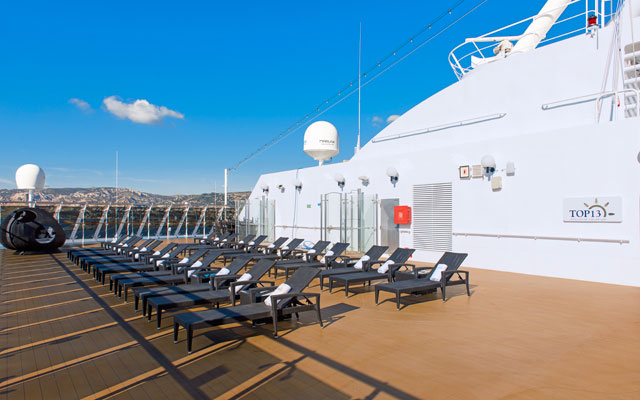
Authorities and MSC Cruises in talks to dock MSC Lirica (pictured) in Tokyo during the event
Concerned about a significant shortage of hotel accommodation when Tokyo hosts the 2020 Olympic Games, the Tokyo Metropolitan Government is working with travel agencies and cruise ship operators to use luxury liners as floating hotels for the duration of the event.
Just 16 months ahead of the opening ceremony for 2020 Tokyo Olympics, Mizuho Research Institute has released a study suggesting that there will be a shortfall of 14,000 hotel rooms each night during the Games.
Authorities and MSC Cruises in talks to dock MSC Lirica (pictured) in Tokyo during the event
The Tokyo government is in discussions with Switzerland-based MSC Cruises over docking the 65,000-ton MSC Lirica at Tokyo’s No 15 pier for the duration of the event. The cruise liner has 992 guest rooms.
“Our cruise ship has all the facilities of a hotel and would be suitable, but the discussions with the city authorities are ongoing and no final decision has been reached yet,” said Hiromi Tomioka, head of the the cruise operator’s marketing department.
Using cruise ships as moored hotels is “complicated,” she admitted, as a ship needs to meet the city’s regulations on conventional hotels, such as the removal of waste and the provision of water.
Domestic travel giant JTB Corp has overcome those problems and started to market rooms aboard the Sun Princess, which will be docked in Yokohama during the games. Rooms aboard the 1,011-cabin vessel start at 30,000 yen (US$271) per night, but rise to 600,000 yen (US$5,411) for the ship’s best suites.
“We knew there was going to be a shortage of accommodation in Tokyo during the games and that it was important for us to be able to secure rooms for our clients, so we believe this is an innovative and relatively easy solution,” said Kaori Mori, head of branding for JTB Corp.
She added that the travel agencies that have started offering packages aboard the vessel during the Olympics have been receiving “a lot of inquiries, in part because it is going to be totally different from staying in a hotel.
“A lot of people like the idea because they’re getting the experience of a cruise at the same time as being able to attend the Olympics.”
Cruise ships were also used to provide additional accommodation at the last two Olympic Games, in Rio de Janeiro and London.
A record 31.2 million foreign tourists arrived in Japan in 2018, up 8.7 per cent on the previous year to mark a new record high. Tourism authorities here expect to hit the government’s target of 40 million arrivals in 2020.
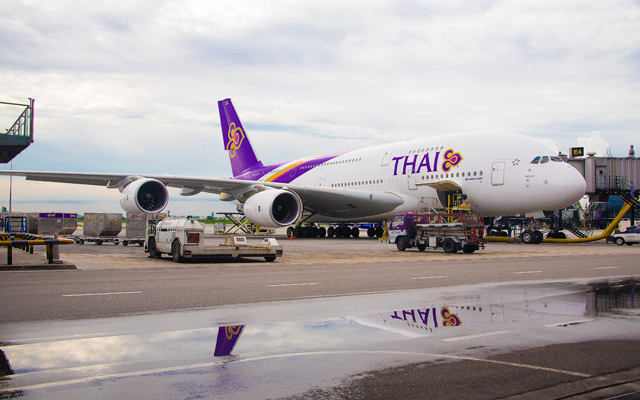
Thai Airways reports loss, but RPK was up from previous year
After routes from South-east Asia to Europe were disrupted due to the closure of Pakistani airspace, airlines have gradually resumed operations.
Singapore Airlines rerouted all flights over the affected airspace on Wednesday and Thursday.
Thai Airways reports loss, but RPK was up from previous year
Thai Airways International (THAI), which was seeking approvals from the relevant authorities to divert its flights, has resumed normal operations to Europe, having received permission to operate through China’s airspace.
THAI’s flights from Bangkok to Europe today (March 1) will operate as follow:
Meanwhile, budget carrier Scoot cancelled its Singapore-Amritsar return service on Wednesday, following the closure of the airport in north India, according to the Straits Times.
The LCC has since resumed operations. Its relief flight left Changi Airport at 17.00 on Thursday.
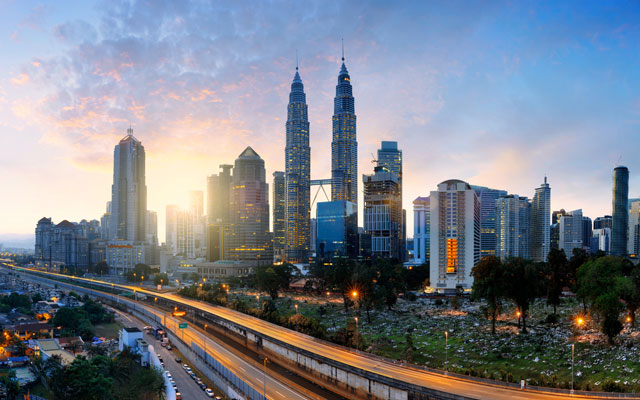
Despite marginal decline in arrivals in 2018, Malaysia’s tourism sector is optimistic that intensified promotions this year could bring the country closer to its 2020 target.
The country saw a 2.9 per cent increase in tourist receipts from RM82.2 billion (US$20.2 billion) in 2017 to RM84.1 billion in 2018. Per capita expenditure of tourists also saw a small increase of 2.9 per cent over 2017, recording RM3,257 in 2018.
No big change in arrivals, tourism spend in Malaysia last year
Musa Yusof, director-general, Tourism Malaysia, shared: “For the third consecutive year, shopping receipts overtook accommodation.”
Last year, shopping contributed 33.4 per cent of tourism receipts, followed by accommodation at 25.7 per cent and F&B at 13.4 per cent. Shopping receipts exceeded accommodation, growing from 32.7 per cent share in 2017 to 33.4 per cent share in 2018.
Meanwhile, despite a 0.4 per cent dip in tourist arrivals over the preceding year to 24.8 million, the average length of stay of tourists increased by 0.8 nights to 6.5 nights, Malaysia’s tourism, arts and culture minister, Mohamaddin Ketapi, announced at the press conference on Wednesday.
Arrival growth was seen in Central Asia (+81.9 per cent), Africa (+49.1 per cent), Americas (+26.3 per cent), West Asia (+25.3 per cent), East Asia (+24.3 per cent), South Asia (+13.4 per cent) and Europe (+7.8 per cent) while declines were recorded for Oceania (-0.8 per cent) and South-east Asia (-7.0 per cent) markets.
Overall, the medium-haul and longhaul markets made good recovery with a 19.3 per cent growth from 2017, thus positively impacting upon the average length of stay and tourism receipts.
Mohamaddin shared that Malaysia’s inbound tourism sector will get a big boost at the upcoming ITB Berlin where Malaysia is the partner country. He said: “Based on previous records, countries that had been ITB partner country had generated an increase of tourist arrivals of between 8 to 20 per cent within one to three years after becoming ITB partner.
This augurs well for Visit Malaysia 2020, where the government hopes to attract 30 million tourists and RM100 billion in tourism receipts, from this year’s target of 28.1 million tourists and RM92.2 billion receipts.
ITB Berlin will also be the platform for the launch of Visit Malaysia 2020 and publicity campaign in Europe.
The helicopter carrying Rabindra Prasad crashed near Pathibhara
Nepal tourism minister Rabindra Adhikari was killed in a helicopter crash, the Hindustan Times reported.
Hindustan Times understood that the tourism minister and other officials had planned to visit Pathibhara Temple before flying to Panchthar to observe the under-construction airport at Chuhan Danda.
The helicopter carrying Rabindra Prasad crashed near Pathibhara
Others on board the helicopter with the minister were the pilot, captain Prabhakar KC, tourism entrepreneur Ang Chhiring Sherpa, security personnel Arjun Ghimire, the prime minister’s close aide Yubaraj Dahal, deputy director general of Civil Aviation Authority of Nepal (CAAN) Birendra Shrestha, and CAAN engineer Dhruba Das Bhochhibhaya.
All seven on board the helicopter were killed in the crash near Pathibhara in Taplejung district, the article said quoting a CAAN spokesperson.
The crash reportedly happened when Adhikari’s team was returning to Kathmandu after offering worship at the temple.
Moments after the helicopter was reported missing, local residents in the Pathibara area informed the police about a huge flame at the crash site.
The Office of the Prime Minister and Council of Minister has called an emergency cabinet meeting at the official residence of the prime minister in Baluwatar, according to Hindustan Times.
Hyatt and Homeinns Hotels Group, an affiliate of the Shanghai Stock Exchange-listed BTG Hotels, are in a strategic joint venture to create a new upper midscale hospitality brand built specifically for Chinese travellers.
Described as homegrown and independently managed, the brand is expected to be unveiled in gateway cities such as Shanghai, Beijing, Guangzhou, Shenzhen and other cities in China in the next five years.
The new brand has yet to be named
The partnership is meant to combine the collective strengths of Hyatt’s global experience in premium hospitality and BTG Homeinns’ scale as one of China’s largest hotel chains.
“There is a definite opportunity for us to make a mark in the growing upper-midscale segment,” said David Sun, general manager of BTG Homeinns Hotels Group, chairman & CEO of Homeinns Hotel Group.
According to China’s Ministry of Culture and Tourism, domestic tourism revenue saw a 13 per cent increase last year, recording nearly RMB5.1 trillion (US$762 billion) in revenue. As income levels continue to rise, China’s middle class is seeking higher-quality offerings and travel experiences.
“With 70 hotels and a pipeline of more than 100 properties in Greater China, Hyatt is committed to a long-term strategy of purposeful growth in the region, said Stephen Ho, president of Greater China, global operations, Hyatt. “This collaboration is expected to provide Hyatt with deep China insights, build brand awareness and grow loyalty with a new set of travellers.”
BTG Homeinns Hotels Group operates one of China’s largest and fastest-growing economy hotel chain – boasting a presence of about 3,900 hotels in more than 400 cities.
In recent years, BTG Homeinns has invested in expanding its portfolio of midscale hotel brands to meet the growing demand amongst Chinese travellers seeking to upgrade their travel experience. It has developed a strong presence of about 600 midscale hotels across China, under brands such as Yitel Premium, Homeinnplus and Homeinn Selected.
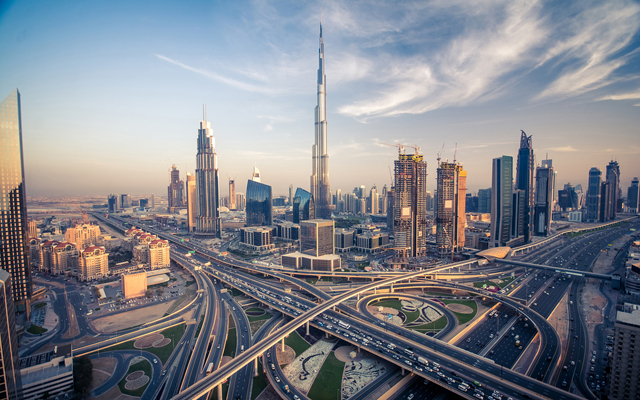
Destinations of the World, based in Dubai (pictured), will give WebBeds 5,600 unique direct hotel contracts
The UAE is predicted to witness particularly strong growth from China and Russia following Expo 2020 and its legacy, District 2020, according to research from Colliers International, in partnership with the Arabian Travel Market (ATM).
Expo 2020 and District 2020 are expected to have a long-term influence on the growth of inbound arrivals to the UAE from the country’s top five source markets between 2018 and 2023, the study projects.
Looking at the country’s top three source markets, the number of Indian visitors travelling to the UAE will increase at a CAGR of seven per cent to three million in 2023, while arrivals from Saudi Arabia and the UK will witness an increase of two per cent and one per cent to 1.8 million and 1.3 million respectively over the same period.
Expo 2020 taking place in Dubai expected to sustain arrivals growth
While the UAE’s top source market rankings are expected to remain mostly unchanged post-Expo 2020, the research reveals the Russian and Chinese source markets will show above average annual growth rates for inbound passenger arrivals.
Danielle Curtis, exhibition director ME, ATM, said: “The number of Russian tourists travelling to the UAE will increase at a CAGR of 12 per cent to 1.6 million in 2023, while the number of Chinese tourists visiting the UAE will increase at a CAGR of eight per cent to 1.27 million over the same period, according to the data.”
Looking to acquire their share of these high-growth markets at ATM 2019 will be the tourism boards from the UAE’s seven emirates with major exhibits from Dubai, Abu Dhabi, Ras Al Khaimah, Sharjah, Ajman and Fujairah as well as over 93 other UAE exhibitors such as Emirates, Emaar Hospitality Group and Dubai Airports Corporation.
Curtis said: “Taking a look at the other key drivers, besides Expo 2020, Russian visitors to the UAE have grown in recent years, due to the introduction of additional and direct airline routes. Russian visitors also now benefit from relaxed UAE visa regulations and rising oil prices are helping to strengthen the Russian rouble, making the UAE more affordable.
“Regarding Chinese visitors, according to some analysts China’s middle-class will swell to 338 million households by 2020, a 13 per cent increase in just five years. Moreover, by 2030 35 per cent of China’s 1.4 billion population will have US$10,000 of annual disposable income, up 10 per cent from 2018. Therefore, the growth potential for both markets is significant.”
With 20 million annual visitors expected to visit Dubai by 2020, plus an additional five million between October 2020 and April 2021 – 70 per cent of which will come from outside the UAE – the overall hospitality supply in the emirate is expected to increase by 39 per cent from 59,561 keys in 2017 to 82,994 in 2021 to meet this demand.
Meanwhile in neighbouring emirate Abu Dhabi, the number of rooms across three-, four- and five-star properties is forecast to grow 13 per cent from 21,782 in 2017 to 24,565 in 2021.
“Just as Dubai and Abu Dhabi have their own unique set of visitor attractions, we are now seeing the northern emirates carving stronger identities, supported by their respective tourism authorities. And, while Ras Al Khaimah, Sharjah and Fujairah are smaller than Dubai and Abu Dhabi in terms of supply, they are evolving quickly,” Curtis said.
Ras Al Khaimah is working on an unprecedented pipeline, which will more than double the number of hotel rooms, from 4,019 in 2017 to 9,078 in 2021, the largest proportionate pipeline in the GCC.
The number of hotel rooms in Sharjah is also expected to more than double between 2017 and 2021, taking the total number of hotel rooms in the emirate to 5,295 by 2021. Meanwhile, Fujairah will add almost 500 keys over the same period taking its total stock to 2,543 rooms.
Taking place from April 28 to May 1, ATM 2019 will feature cutting-edge technology and innovation as its main theme, which will be integrated across all show verticals and activities, including focused seminar sessions, featuring dedicated exhibitor participation.
ATM welcomed over 39,000 people to its 2018 event, showcasing the largest exhibition in the history of the show, with hotels comprising 20 per cent of the floor area.
Pierre-Charles Grob, who initiated the merge, is now CEO of D-Edge
Hotel technology solutions provider Availpro and digital marketeer Fastbooking are being merged under the D-Edge brand, with the aim of creating a new value proposition for the hospitality industry.
Pierre-Charles Grob, CEO of D-EDGE and initiator of the Availpro Fastbooking merge, said: “By combining Availpro and Fastbooking expertise, we are able to offer complete end-to-end solutions to our customers and help them approach their distribution strategy in a comprehensive manner.”
D-Edge CEO, Pierre-Charles Grob, initiated the merge
D-Edge has a portfolio of more than 20 solutions, a customer base of 11,000 hotels, and presence in more than 100 countries in Europe and Asia-Pacific.
Its solutions are presented in five families: Central Reservation System (booking engine, channel manager, GDS, central inventory, payment automation), data intelligence (price recommendation, price monitoring, online reputation, performance analysis ), Connectivity Hub (connection to 500+ third parties solutions: PMS, RMS, CRM, OTAs, etc), Digital Media (display ads, search and metasearch marketing) and Website Creation (web design and development, content creation, media production).
The D-Edge brand is now live, replacing Availpro and Fastbooking.