Taiwan has urged the Philippines on Tuesday to lift a travel ban on its citizens after Manila included Taiwanese nationals in an arrival ban to curb the spread of the coronavirus, reported Today Online.
Along with the travel ban, Philippine Airlines and Cebu Pacific have suspended flights to and from Taiwan.
Taiwan has urged the Philippines to lift a travel ban on its citizens after Philippine Airlines and Cebu Pacific suspended flights to and from Taiwan
Taiwan’s Foreign Ministry said it had been in close touch with the Philippines to lift the ban since it was implemented earlier this week, causing some Taiwanese to be stranded at airports in the Philippines, said the report.
“We are proactively in communication and have lodged representations with the Philippines, including the presidential office and foreign ministry, to tell them that we are not a virus area of China,” spokeswoman Joanne Ou said at a news briefing in Taipei.
Ou added that the foreign ministry has notified its embassies and representative offices to advise host nations around the world that Taiwan is not part of China’s infected area; Taiwan’s own cases are limited and under control.
To date, Taiwan has just 18 infections, compared to more than 42,000 in China.
Taiwan representatives are unhappy that the World Health Organization’s decision to classify Taiwan as part of China’s virus cases has misled countries into believing she poses the same health risk as China, resulting in the same travel restrictions being placed on Taiwan.
The Tourism Authority of Thailand (TAT) has taken a sporty spin to its destination marketing efforts in Japan, where it hopes to position the kingdom as a year-round “world-class international sports destination”.
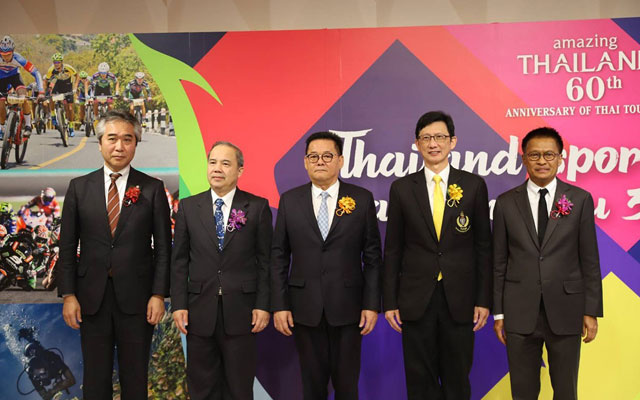
Thailand’s numerous stadiums, courses and arenas, which are used for sports training, were showcased at the Thailand Sports Tourism 365 Days Amazing You event in Tokyo on Monday, organised in collaboration with the Ministry of Tourism and Sports (MOTS), Sports Authority of Thailand, and Royal Thai Embassy.
From Left: JATA’s Masahiko Inada; Royal Thai Embassy, Tokyo, Japan’s Singtong Lapisatepun; vice minister of tourism and sports Napintorn Srisunpang; Sport Authority of Thailand’s Nattavuth Ruengves; and TAT’s Kitsana Kaewtumrong at the press conference to promote Thailand as a sports tourism destination in Tokyo
Kitsana Kaewtumrong, TAT executive director for advertising and public relations department, said: “In the past few years, we have seen a growing trend of sports enthusiasts seeking a unique competitive moment and memorable holiday. Our strategy now is to promote Thailand as a (dream destination for sports tourism).”
Besides sports hardware, Thailand boasts an array of sporting events that will add flavour to the campaign.
The TAT / TG Golf Cup at Chee Chan Golf Course in Pattaya is part of a number of global activities organised in collaboration with various tour operators for the 60th anniversary of TAT and Thai Airways International this year.
Five competitive marathons will also be held this year, and every year forward, following their launch by the MOTS in December 2019 as part of the MOTS-led Thailand Road Racing Standard campaign. They are Bang Saen Marathon (Chon Buri), Buri Ram Marathon, Chombueng Marathon (Ratchaburi), Phukethon and Bangkok Midnight Marathon.
Three TAT offices in Japan plan to collaborate with the Sports Information Centre to create a marathon tour package in Thailand.
In 2019, Thailand recorded 1.8 million travellers from Japan, generating 89 billion baht (US$2.8 billion), up by 9 per cent and 11 per cent, respectively.
The AC Hotels by Marriott brand, rebranded from its previous name Vistana, recently made its debut in Malaysia with the opening of a trio of properties in Kuala Lumpur, Penang and Pahang.
The properties – AC Hotel Kuala Lumpur Titiwangsa, AC Hotel Penang Bukit Jambul, AC Hotel Kuantan City Centre – also mark the Spanish brand’s entry into the Asia-Pacific region.
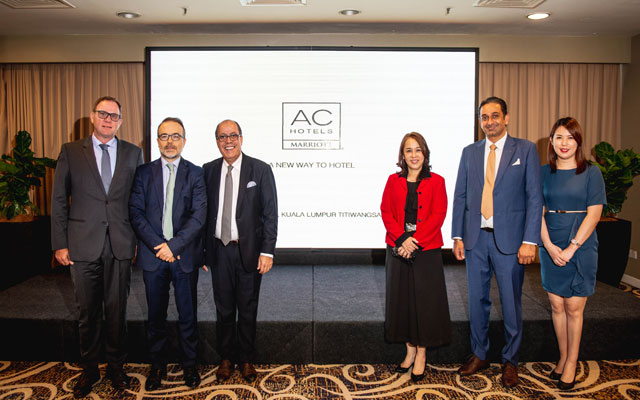
From left: Asia Pacific Marriott International’s Peter Gassner, Ambassador of Spain to Malaysia José Miguel Corvinos Lafuente, Marriott International & YTL Hotels’ Mahmoud Skaf, alongside colleagues Sharon Ang, Kirinjit Singh and Samantha Wong, at the launch of AC Hotel Kuala Lumpur Titiwangsa
Mahmoud Skaf, area general manager of Marriott International & YTL Hotels, shared that YTL Hotels is the sole franchisee of the upscale AC Hotel brand in Malaysia.
He added that the company plans to open 15 to 18 hotels across all 13 states in Malaysia within the decade.
Despite the AC Hotels brand being well-known in Europe and the US, much work has to be done to drum up publicity in the Asia-Pacific region, which accounts for more than 70 per cent of tourist arrivals in Malaysia, said Skaf.
The rebranding from Vistana to AC Hotels was a “seamless” one, with the three former Vistana hotels having gone through major refurbishments over the last three years with the brand change in mind, according to Skaf.
The rebranding exercise boasts numerous benefits: Besides the marketability of an international brand to global travellers, guests also gain access to the Marriott Bonvoy loyalty programme.
Targeted at the business traveller, the AC Hotels feature a lounge which serves tapas and drinks through the day, as well as meeting spaces. All three hotels are introducing a fresh take on corporate meeting packages that incorporate team building programmes to facilitate team work and boost team performance outings and participation.
The conversations on climate change and tourism has started to become more frequent and also deeper, as aspects of climate change began to cause shifts in the way traditional travel experiences are consumed. And, the nicest or most attractive places sometimes or quite often tend to be the ones hit hardest or most vulnerable to impacts of climate change.
Climate change has been known to cause resource scarcity, and what that means in tourism is the threat of decreasing resources (cultural, natural) and declining value and attractiveness to the tourists.
The presence of wildlife gets affected, and both tourists and local people become affected too. The changes in temperatures and other variances in weather bring about socio-cultural impacts as changes in seasons start to happen a little differently. The earlier than usual blooming of the cherry blossom in Japan, is an example.
Climate change threatens the existence of resources like nature. Flora and fauna are threatened by changes brought about by climatic variations; their availability threatens to impact tourist numbers, and in places where the presence of the tourists is critical, that could be detrimental to locals’ livelihoods.
Climate change also threatens the existence of cultural resources; food availability is threatened by various aspects of climatic changes, and that in turn has implications to the existence of cultures and heritage. Rising sea levels cause intangible cultural heritage to disappear; people start moving or relocating and that causes part or whole of cultures to be lost.
Global warming’s impacts on food sources mean that traditional recipes are being threatened. Warming temperatures is one of the main causes of the destruction found in the Great Barrier Reef (GBR) in Australia, and it is often said that international co-operation will be needed to save the GBR. This international cooperation will include the need for tourism firms to work together and to contribute to lessening the impacts their business will have on the GBR.
Unexpected changes in weather and seasons, brought about by climate change, can bring about socio-cultural impacts to tourism. Local people have to get used to seeing festivals and events somehow changing dates, the annual cherry blossom event in Japan being an example. Global warming means that the flowers are blooming earlier and this could have profound effects on the ways events are commemorated or celebrated.
Climate change’s impacts on buildings frequented by tourists add another layer of challenge to the tourism industry. The Taj Mahal in India testifies to the alarming impacts global warming is causing destinations. For many built environments, maintenance costs rise in response to worsening effects of global warming’s impacts on building interiors and exteriors. Damage risks increase and controlling of crowds become very urgent.
On the other hand, scarcity is something that often makes people feel attracted to places and things. People like visiting places where something might no longer be around in the next number of years. And the tourism industry can also contribute to reviving dying or threatened cultures through increased demand and the financial muscle it provides.
The element of being a saviour to places, cultures and nature could be a critical step in marketing of touristic experiences. Perhaps, the strength of the tourism industry will include the ability of the industry to adapt to climate change.
In conclusion, climate change’s impacts on tourism are real, and often perhaps, here to stay. The tourism industry has to get used to dealing with the new norm, and also to explore new opportunities this “new norm” presents. Tourism in the future depends not just on how to adapt to climate change but also how to ride on climate change’s presence in the industry.
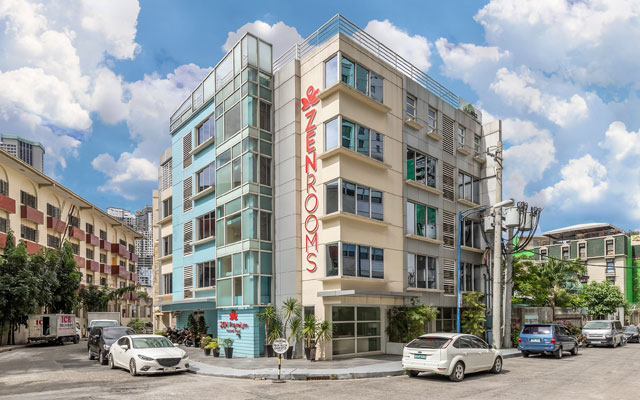
South-east Asian budget and mid-range hotel group, ZEN Rooms, has signed a landmark agreement with hospitality technology solution provider eZee to help its hotels increase revenue streams and improve operational efficiency.
The alliance more than 1,000 properties under the ZEN umbrella to access eZee hospitality software.
eZee and ZEN Rooms have joined forces
According to a press statement, this is the largest deal for hospitality technology deployment in South-east Asia.
The technology boost for ZEN comes after the October 2019 announcement of its partnership with eZee and South Korean travel group, Yanolja to develop Y Flux, a fully-integrated and automated environment that allows real-time communication with guests and features to guests such as early check-in, late check-out, mobile concierge, mobile keys, room service by robots, vending machines for amenities, and more.
eZee was recently acquired by Yanolja.
ZEN Rooms own and partner properties will be the first to start using this technology in the first half of 2020.
“In today’s increasingly demanding and competitive market, technology is the way to improve the industry, make it safer and more affordable, benefiting the travellers and the well-being of hoteliers,” said Nathan Boublil, the co-founder and CEO at ZEN Rooms.
According to Aeijaz Sodawala, the CEO of eZee, the company supports 13,000-plus hotels and restaurants in more than 160 countries. The company established itself on innovative technology for small to big hotels, hotel chains and restaurants, and has gradually expanded to support other industry segments like hostels and B&Bs.
Hong Kong’s Ovolo Hotels have taken on a fresh look and identity with the unveiling of a new brand campaign, Wonder. Full., created in collaboration with branding and identity agency THERE.
The campaign, which adopts a fresh approach to art direction, is aimed at “capturing moments of wonder, inspired interiors and delightful details”, and to better convey “each hotel’s unique character and offerings”.
Ovolo Hotels’ new brand positioning
As part of the hotel group’s rebranding, artworks will be featured across a suite of key guest touchpoints, from hotel key cards and in-room loot bags to the company’s website and social media assets.
“A major component of Ovolo’s brand evolution was realigning the identity with the overall and unique hotel experience. Sophisticated yet creative and quirky interiors, and an increasingly design-savvy audience gave us an opportunity to elevate our brand whilst maintaining the innovative, disruptive yet cheeky spirit that continues to drive us in everything we do,” Ovolo Hotels founder and CEO, Girish Jhunjhnuwala, said.
In addition, Ovolo has also unveiled the By Ovolo Collective, a new collection of hotels including Nishi Apartments Canberra, The Sheung Wan Central Hong Kong (previously Mojo Nomad Central), and Ovolo’s new Bali property, which is slated to open in 4Q2020.
Banyan Tree Hotels and Resorts will be raising the Angsana flag in Malaysia, with the launch of Angsana Teluk Bahang, Penang in 2Q2020.
The 250-key resort will offer a variety of room and suite categories, with the most extravagant accommodation option being the penthouse which will come with a private sky garden and outdoor jet tub.
A rendering of the Angsana Teluk Bahang, Penang
Resort’s facilities include five F&B outlets; an infinity pool by the Jubilee Pavilion, a unique extended deck for relaxation; a second pool that comes with a children’s waterplay area; a spa; a gift shop; a kids’ club; and a wellness and fitness centre.
For meetings and events, the resort will offer a Kebaya Ballroom, which can accommodate up to 300 guests; and three smaller meeting rooms which are suitable for private meetings and intimate events of 10 to 40 persons. There is also the Jubilee Pavilion by the infinity swimming pool deck area, which can accommodate 30 to 200 persons.
Offering a peak into the resort’s interior design, resort general manager, Nigel Fisher said inspiration was drawn from Penang’s Peranakan heritage.
“Its architecture and interior design will incorporate the vibrant colours and intricate floral with geometric patterns of the Straits Eclectic Style, as well as pay tribute to Penang’s status of being a UNESCO (the United Nations Educational, Scientific and Cultural Organisation) world heritage destination,” he said.
Wyndham Hotels & Resorts has appointed Andy Flaig as head of development for the South-east Asia and Pacific Rim (SEAPR) region.
He replaces David Wray who has completed his transition agreement with the hotel company and will remain with Wyndham Destinations Asia Pacific.
Andy Flaig
Based in Singapore, Flaig will lead a team of developers to drive the development strategies for Wyndham Hotels & Resorts through the expansion of its brands and portfolio of managed and franchised hotels across the SEAPR region.
Flaig joins Wyndham Hotels & Resorts with more than three decades of experience in the hospitality sector. He served in multiple senior leadership roles within the industry and was most recently the group chief development officer at Next Story Group where he was responsible for the growth of their hotel and lifestyle co-working brands.
Previously, he also spent four years with Carlson Rezidor Hotel Group as executive vice president, development and technicalsServices for Asia Pacific, and eight years as managing director of Jones Lang LaSalle’s Hotels and Hospitality Group’s Advisory business in Asia.
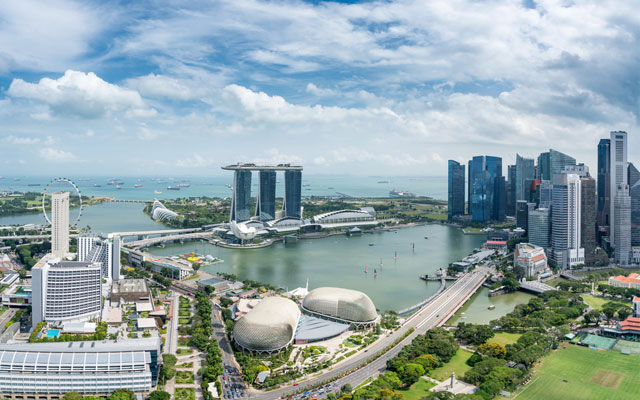
Singapore Tourism Board (STB) will form a joint task force through a public-private partnership to map out tourism recovery strategies for Singapore as part of the tourism board’s multi-pronged effort to help tourism businesses that have taken a significant hit from the Novel Coronavirus.
Tourism arrivals and receipts for 2020 have tumbled in the wake of the coronavirus crisis, with the commercial fallout likely to persist, due to travel restrictions and fears over the dangerous outbreak.
STB will form a joint task force to map out tourism recovery strategies for Singapore in wake of coronavirus
Besides China, which accounts for around 20 per cent of international visitorship, arrivals from STB’s other key source markets are also expected to fall due to lower travel confidence globally.
Based on the current situation, STB expects visitor arrivals this year to fall by about 25 to 30 per cent.
However, Singapore’s tourism sector is aiming for a strong recovery on the back of “four years of consecutive growth, a compelling pipeline of tourism investments, and efforts to build new capabilities”, said STB in a statement.
In addition, the government will form a public-private sector Tourism Recovery Action Task Force (TRAC) to lay out the plans for recovery and future growth.
The task force, which will map out recovery strategies and plans for tourism in Singapore, will comprise tourism leaders from both the private and public sectors to leverage the strengths of both sectors and to coordinate recovery efforts.
TRAC’s work will include identifying opportunities arising from the crisis, driving and implementing measures to instill confidence in Singapore’s tourism establishments, as well as co-creating and initiating recovery plans. More details will be announced at a later date.
STB CEO Keith Tan said: “Singapore’s tourism sector is facing its biggest challenge since SARS in 2003. But unlike SARS, we are now better prepared and more resilient. Our destination remains attractive; we have a strong pipeline of tourism products, and our market portfolio is diverse.”
He added: “The growth that we have enjoyed over the past four years reflects our strong tourism fundamentals. With the support of the industry and through our joint taskforce, we will continue to build our capabilities, transform our tourism businesses, and rebound strongly from the Novel Coronavirus.”
To provide immediate support for affected tourism businesses, STB had earlier unveiled measures to support hotels, travel agents and tourist guides.
Additional support measures will be announced at the Budget on February 18.
As the situation is expected to persist, STB will continue to identify targeted and effective ways to support the tourism industry and tourism employees, said STB in a statement.
Together with tourism industry partners, STB will maintain its plans to enhance Singapore’s destination attractiveness, with work progressing on the Mandai Nature Precinct, the Jurong Lake District, the Sentosa-Brani masterplan, the rejuvenation of Orchard Road, and the expansion of the Integrated Resorts.
“It is more important than ever to invest in tourism to support our businesses, build confidence in tourism, and boost our destination attractiveness – so that when things start to improve, Singapore can ride on the recovery for strong growth. STB remains committed to our mid- to long-term tourism plans to ensure that Singapore has a steady pipeline of new and repeat visitors,” Tan said.
Japanese realtor Yamaman will be making its first foray overseas, with the launch of a hotel in Myanmar on February 17.
Situated in the Yankin area between downtown Yangon and Yangon International Airport, the Wishton Hotel Yangon will be operated by Yamaman’s Myanmar arm, Hotel Yamaman.
Wishton Hotel Yangon will open its doors to the public this month
The Japanese-style accommodation will be supported by Japanese-speaking staff. Each of the 91 rooms will be equipped with a bath, with prices ranging from US$70-80 per night. Half of the rooms are designed for long-term stays, and feature a kitchen and washing machine. Guests can also enjoy a Japanese breakfast buffet.
By offering affordable, diverse accommodations near the international airport, Yamaman hopes to attract tourists, business travellers and long-term guests to the hotel, which will become the company’s test case for expansion in Myanmar.
Sanae Tani, Yamaman overseas operations department executive, told TTG Asia: “We decided to open the hotel (in Yangon) because of the potential for future growth in Myanmar and the warm personality of the Myanmar people.”
Tani said that Yamaman’s mix of Japanese hospitality and ability to accommodate longer-stay guests is filling a gap in the market.
“In Myanmar, the number of serviced apartments for long-term stays has increased dramatically, but there are still few Japanese-style facilities and services available, especially for Japanese businesspeople,” she said.
Although no concrete plans are in the pipeline, the company is eyeing more hotel ventures outside Japan.
“We would like to open five or six hotels in Myanmar and hope to develop our business in other South-east Asian countries too,” Tani said.