Travel services firm Thomas Cook India (TCIL) has completed its corporate restructuring process, after receiving approval from the National Company Law Tribunal (NCLT) Mumbai and Bengaluru.
The composite scheme of arrangement and amalgamation among TC Forex Services and Travel Corporation (India) and TC Travel Services and SOTC Travel Management and TCIL and Quess Corp and their respective shareholders (the Scheme) has become effective on November 25, 2019.
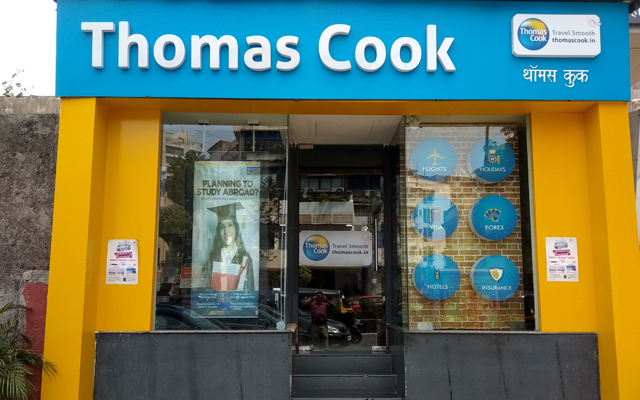
Thomas Cook India completes corporate restructuring; Thomas Cook India in Bandra West, Mumbai pictured
The appointed date from which the scheme will take effect is April 1, 2019.
Madhavan Menon, chairman & managing director, TCIL, said: “Post approval of NCLT Mumbai and Bengaluru on October 10, 2019 and November 7, 2019, respectively, the board has announced the completion of the demerger of Human Resource Services Business of Thomas Cook (India) into Quess Corp on a going concern basis.
“With this restructuring now completed, we are confident that the new simplified group structure will further enable both Thomas Cook India & Quess to grow independently & consolidate their positions in their segments with far greater clarity of focus from an industry and growth and opportunity point of view – for investors, management and teams.”
The board also took on record the amalgamation of residual Travel Corporation (India), TC Travel Services and TC Forex Services with the Company with effect from November 25, 2019, said the company.
Each shareholder of TCIL will accordingly be issued 1889 shares of Quess Corp of Rs10 (US$0.14) for every 10,000 fully paid up equity shares of Re 1 each held as on the record date in TCIL, it added.
Friendly intergovernmental relations, visa-free entry, and growing air connectivity have been key drivers of the Chinese travel boom to Nepal, but the South Asian nation is keen to woo even more visitors from its neighbour.
“The China market was number one for us in the last two months, and for the whole of last year, it was the second highest,” Suman Ghimire, manager tourism marketing & promotion department, Nepal Tourism Board, told TTG Asia.
Ghimire: China is a growing force to be reckoned with in Nepal’s tourism industry
He attributed Nepal’s rising visibility as a tourist destination to strong bilateral ties with China. In October, Chinese president Xi Jinping visited Kathmandu (the first state visit to Nepal by a Chinese head of state in 23 years), which greatly deepened China-Nepal relations as Xi pledged to enhance connectivity and deliver more economic benefits – including tourism – to both countries.
Ghimire pointed out that being a member of China’s Belt and Road Initiative has also brought several economic benefits, such as making the landlocked nation more accessible to the world, and accelerating infrastructure development of highways and airports.
And more collaboration is underway. PATA Nepal Chapter, together with Visit Nepal Year 2020 and Nepal Tourism Board, will be organising the inaugural Nepal-India-China Expo in February 2020, which is expected to attract some 1,000 delegates from the three countries.
On the tourism front, the upwards trajectory of Chinese visitor numbers was also a result of waived visa fees for Chinese nationals, introduced since 2015 for Nepal to rebuild its tourism industry after two devastating earthquakes.
Air connectivity is also strong, with direct flights from major cities such as Kunming, Beijing and Chengdu to Kathmandu.
“Chinese tourists visiting Nepal have constantly grown every year since (free visas were introduced). They are a key contributor to our Visit Nepal 2020 target (of two million tourists),” Ghimire said.
Nepal attracts Chinese travellers from three main segments, namely recreational, adventure, and spiritual tourism.
Ghimire elaborated: “Many Chinese tourists are becoming more interested in trekking; it is no longer just the Europeans and Americans.”
Nepal is also gaining prominence as a spiritual tourism destination, with Buddhist pilgrims from China visiting the country to pray at holy sites such as Lumbini, the birthplace of Buddha.
“In the long run, China will become our main market. The market is huge, which will bring about a higher economic growth for Nepal,” concluded Ghimire.
Sojern, a provider of digital marketing solutions, has appointed Noreen Henry as chief revenue officer.
In this role, she will oversee all global sales and account management teams servicing 8,500 travel clients in more than 100 countries. She has also been tasked with accelerating the growth of Sojern’s hotel marketing solutions globally and deepening relationships with enterprise travel customers. Henry will play a key role in expansion into growth areas like tourism and the attractions space.
The travel industry veteran brings more than 25 years of experience to the role. She previously served as CEO of WayBlazer, an artificial intelligence travel technology start-up; chief revenue officer at DHISCO, a hospitality distribution company; and senior vice president at Travelocity Global, a travel e-commerce site.
Hertz Global Holdings has appointed Angela Brav as president of Hertz’s international division.
Most recently the CEO of InterContinental Hotels Group’s (IHG) European region, Brav has 25 years of executive experience with IHG in multiple operational and strategic roles in the US and Europe.
She is based at the car rental company’s international headquarters near London, and will report to Hertz’s president & CEO Kathryn Marinello.
Radisson Hotel Group will be bringing its Radisson Red brand to Australia for the first time, following the signing of Radisson Red West Perth.
Scheduled to open in 2022, the 129-key hotel will feature a restaurant, a swimming pool, a rooftop bar, hangout spots, communal work spaces, and three function rooms spanning over 160m² of space.
Radisson Red West Perth slated to rise come 2022
Radisson Red West Perth will rise on the corner of Wellington Street and Colin Street, directly opposite the Harold Boas Gardens. The hotel will be located just a short walk from the Perth Arena and Hay Street, and a three-minute drive from the Perth Convention & Exhibition Centre.
Radisson Hotel Group currently operates hotels in Sydney and Melbourne, and recently secured its first Radisson Collection hotel in the Blue Mountains.
The red-hot experiential travel trend is fuelling the rise of young tour operators in Singapore, as the National Association of Travel Agents Singapore (NATAS) has reported an influx of new members that include young and rising players.
Speaking at the Singapore Tourism Board’s Travel Agent Industry Forum last week, NATAS’ president Steven Ler said: “We are seeing a lot more millennial tour operators in Singapore becoming more active now, (offering) many types of local and curated tours. NATAS is engaging this group of new tour operators to understand what their needs are.”
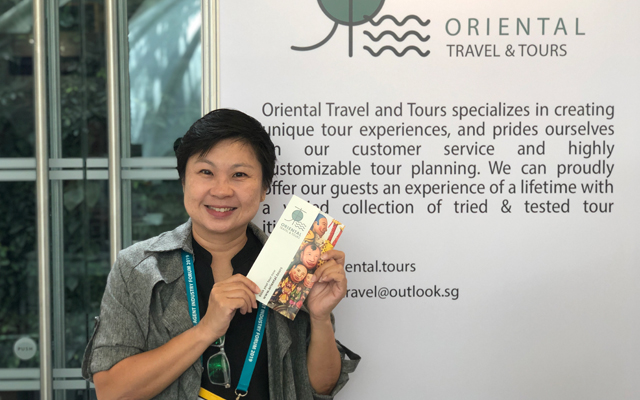
Oriental Travel and Tours’ Jasmine Tan wants to provide travellers with off-the-beaten-track experiences
These needs include advice and support in regional marketing, social media outreach and partnerships with other travel companies, he elaborated. Some 50 new agencies joined NATAS in 2019, bringing the association’s current membership count to more than 400.
“These are newer agencies with newer ideas, and we have been engaging them to find out how we can support them. We also work with our inbound community to help drive more traffic into Singapore, which can definitely benefit this group of tour operators,” said Ler.
One such operator that NATAS is working with is Oriental Travel & Tours, which brings visitors to uncommonly toured areas in Singapore, such as Ang Mo Kio’s Bird Singing Club and Tanglin. Soon to come is the Creepy Tales of Singapore night tour that will bring guests to explore mysterious World War II locations with a guide wielding ghost-detecting gear.
“We believe we can make a difference in the industry, as travellers are showing a lot of behavioural changes. Our customers are mainly from Europe and the US, and they are looking for something different to do beyond attractions like the Merlion and Sentosa, especially tourists who have visited Singapore more than three times. There are many pockets of the island that they can explore,” said Jasmine Tan, co-founder, Oriental Travel and Tours.
Another new operator, Kayak Fishing Fever, was started in August 2018 by founder Aaron Ang to take visitors and locals alike to Singapore’s prime fishing and kayaking spots. The operator has risen in popularity among Americans, Europeans and Australians, and Ang is now looking to boost its name among Asian travellers.
“We appeal to people who want to explore the real Singapore, especially travellers who like fishing and nature,” he told TTG Asia. “A lot of people don’t know that something like this even exists in Singapore, so I want to bring awareness to it.”
Despite having the world’s largest Muslim population, Indonesia has yet to effectively tap the halal tourism boom, something the trade hopes to change as the government steps up pursuit of the growing Muslim travel market.
Halal travel is projected to contribute US$274 billion revenue in 2023 worldwide, up from US$177 billion in 2017, according to the State of the Global Islamic Economy Report.
Indonesia looks to cash in on halal tourism boom
Stakeholders in Indonesia therefore need to consider the forecast seriously in order for the country to take a bigger bite of the growing halal tourism pie, said Anang Sutono, senior advisor for economy and tourism development, Ministry of Tourism and Creative Economy.
Speaking during the recent Indonesia Halal Tourism Conference at Jakarta Convention Center, he said that Indonesia aims to attract six million Muslim travellers to the country by 2024, nearly double from the current target of 3.6 million. Their expenditure is also projected to increase from the current target of US$4.5 billion to US$7.6 billion in 2024.
Indonesia Halal Tourism Association’s chairman Riyanto Sofyan stressed that the development of halal tourism in Indonesia is important to boost international Muslim tourist arrivals as spending from this segment drove a large part of Indonesia’s GDP.
Muslim travellers make up around 20 per cent of the total inbound tourists to Indonesia every year, according to Riyanto. In 2018, the country drew around three million Muslim travellers, contributing US$3.9 billion to the economy.
However, Riyanto noted that the number of Muslim visitors from the Middle East to Indonesia was less in numbers as compared to inbound arrivals from Malaysia, India, China, Australia and Europe. “The average spending of a Muslim traveller from the Middle East ranges from US$2,000 to US$2,500 per visit,” he said.
“Most of the Muslim travellers from Europe hail from Germany, the UK, and France. European visitors in Indonesia spend, on average, US$1,300 per visit. They are also our target,” he added.
However, efforts in developing halal tourism across the archipelagic country have been met with resistance by locals in some areas with religious minorities, who fear that the halal branding clashes with their customs and habits.
“We have to do more campaigns to disseminate information about halal tourism so that there won’t be any misleading information about it,” Anang stated. The government will also strengthen collaboration in the development of Muslim-friendly facilities and attractions and improve the quality of human resources through certification.
To overcome the lack of understanding, industry stakeholders have to spread the word about halal tourism and convince people that the development of halal facilities would benefit the local economy in each region, according to Anwar Bashori, chairman of Sharia Economy Team, Indonesian Economist Association, who spoke to TTG Asia on the sidelines of the conference.
“Halal tourism is not exclusive to Muslims. Even predominately non-Muslim countries like Japan and Thailand have already provided facilities for Muslim travellers,” Anwar said, adding that more seminars about halal tourism were necessary to solve this misinformation issue.
To help halal tourism gain wider acceptance in majority non-Muslim regions in Indonesia, Nouraddin Yau-Tzu Ma, managing director of Taipei Grand Mosque Foundation, urged the Indonesian government to appoint influential public figures in each city to give talks about halal tourism to the the locals.
Once they understand the concept, the government can encourage them to share it with others in their community – a strategy adopted by the Taiwanese government to garner initial public support for the development of halal tourism across the island.
With better understanding and acceptance of halal tourism, Indonesia will be in a better position to retain its top spot on the Mastercard-CrescentRating Global Muslim Travel Index (GMTI) 2019, said Australia-based Globothink Consultants’ CEO Irshad Cadar.
Citing Global Islamic Travel Tourism’s report, Irshad added: “Out of 16 million tourists coming to Indonesia in 2019, four million are halal tourists. This is not enough. (Indonesia) should be increasing the numbers.”
Airbnb Experiences has introduced a new category of bookable experiences that will “unlock the hidden culinary traditions of families all around the world”, adding to the existing Adventure and Animals categories on the platform.
The Cooking on Airbnb Experiences, which offers guests access to 3,000 unique recipes across over 75 countries globally, not only presents a new way for guests to understand culture through food, but is also an avenue for them to form human connections, Airbnb said in a statement.
Travellers can now discover hidden culinary gems around the world via Cooking on Airbnb Experiences
Hosted by families, farmers, pastry cooks and more, local hosts can now highlight the deeper meaning behind the food they eat, teaching traditional recipes and sharing stories in intimate settings around the world, it added.
To protect the personal nature of each recipe, each experience has been vetted against guidelines inspired by Slow Food, a grassroots organisation whose mission is to prevent the disappearance of local food cultures and traditions, according to Airbnb.
Through this vetting process, Airbnb said that it has verified that each host of an Airbnb Experience “communicates the unique essence of every dish through their personal stories and has proven (to have) a deep knowledge of the heritage of the cuisine that they share”.
“Ever since the very first guests travelled with Airbnb, we have realised that sharing a meal is the key that unlocks culture and fosters connection. Through Airbnb Cooking Experiences, we want to bring back the tradition of people coming together to make and share meals, and through this, help preserve unique recipes that are shared within family kitchens around the world,” said Brian Chesky, Airbnb’s CEO and co-founder.
Building on its partnership with Airbnb, Slow Food will also be introducing 15 special Airbnb Cooking Experiences, including Walk Cook & Eat in the Amalfi Coast and Let’s Rescue Food in Cartagena, Colombia.
Cooking on Airbnb Experiences boasts renowned hosts such as British TV presenter and culinary entrepreneur Prue Leith, Mexican chef Enrique Olvera, and Singaporean culinary icon and MasterChef judge Damian D’Silva.
Other highlighted experiences in this new category include a maize workshop with Enrique Olvera in Mexico City; traditional Uzbek home-cooking in Brooklyn, New York; French pastry making in Paris; and soba noodle making in a traditional home in Tokyo.
To celebrate the launch of Airbnb Cooking Experiences, the company is running a campaign calling on eligible Airbnb users to apply or nominate their favourite home cook via airbnb.com/cooking. Applications are open till December 23, 2019.
The top 100 applicants will be flown to Italy where they will learn to refine their family recipe and cement their legacy in an Airbnb cookbook, planned for 2020. They will get to study alongside experts, including Momofuku chef and founder David Chang and his mom, Sherri, during a course at Slow Food’s University of Gastronomic Sciences in Pollenzo, Northern Italy.
Singapore-based luxury hotel group Banyan Tree Holdings will be opening a new resort in Krabi, Thailand, come 2Q2020.
Now under development in a location on Tubkaek Beach beside the lush forests of Mu Ko Phi Phi and Khao Ngon Nak national parks, a 45-minute drive from Krabi Airport, Banyan Tree Krabi will offer 72 pool suites and villas, including seven two-bedroom options and one three-bedroom villa.
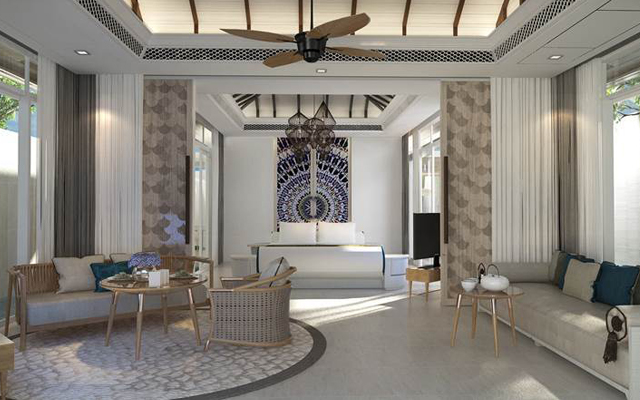
Banyan Tree Krabi
1 of 3
Ocean View Bedroom
Presidential Suite Dining Area
One-Bed Pool Villa Living Area
Facilities include all-day dining, a ballroom, a wedding chapel, a beach club, a kids’ club, a fitness centre, and a rainforest-themed spa.
Banyan Tree Krabi is expected to open its doors to guests on April 1, 2020, according to the company.
The desire for authentic cuisine experiences is one of the biggest factors influencing travellers’ vacation decisions today, according to a survey by Travelzoo.
Trying new food and experiencing the culinary culture of the destination is ranked as the second most popular reason (39%) for going overseas, just behind getting to see famous landmarks (41%).
Travellers thirst after culinary experiences, says Travelzoo survey; street food in Chinatown, Bangkok, Thailand pictured
Travelzoo’s 2019 Fall Travel Trends Survey, which polled 9,000 people across nine countries, also found that today’s travellers make an effort to support the local community and economy while on culinary trips.
As well, more than half (53%) of the respondents have gone on vacations for food or food-centric activities. Younger people aged 25 to 44 are twice as likely to go on these journeys of culinary discovery than people who are 55 or older, according to the survey. Local cuisines are the most preferred as travellers want to try something new and special (62%) and/or have an authentic experience to explore the local culture (54%).
Italian, Chinese and Japanese are the three most popular cuisines among respondents from all the surveyed countries, while Thai, Vietnamese and Korean food are the top three cuisines that respondents are curious to try in the future.
Travelzoo’s survey also found that Chinese consumers are today’s most adventurous foodies. A huge number (96%) of Chinese respondents have been on a break or vacation centred around food or culinary experiences, and 70% of them have tried food on vacation that they had never even heard of before. When asked whether they would be willing to try non-traditional foods, such as insects or live animals, the Chinese were three times more willing to do so out of curiosity than travellers from other countries, found the survey.
When abroad, Chinese consumers usually spend US$95 per person, per day, on food – about 80% more than the global average, said Travelzoo. The use of social media to show off foodie experiences is popular among travellers, and tech-savvy Chinese travellers do this the most, with 94% posting food images on social media. That number is twice as high as that of any other nation in the survey.
The survey also showed that travellers are becoming much more receptive to responsible travel solutions and sustainability concerning food during travel. When asked what they would take into account when dining abroad, 77% said they want their food to have been sourced locally, to help support the local economy and community. Millennials are twice as likely to consider the ethical and sustainable factors around food than older demographics.
Almost half (43%) of the respondents stated in the survey that supporting local people and local communities gives them a different and valuable experience to be close to the culture of their chosen destination.
Two-thirds of travellers report that they usually conduct intensive research to find the best food and restaurant options. It’s clear that curated culinary trips and local dining tips will inspire today’s travellers to explore more new destinations, concluded Travelzoo in its findings.