As Indonesian airlines restart domestic flights, local travel companies are shut out from reaping the benefits of resumed flights as a circular from the Ministry of Transportation (MOT) dictates that only airlines are allowed to issue flight tickets.
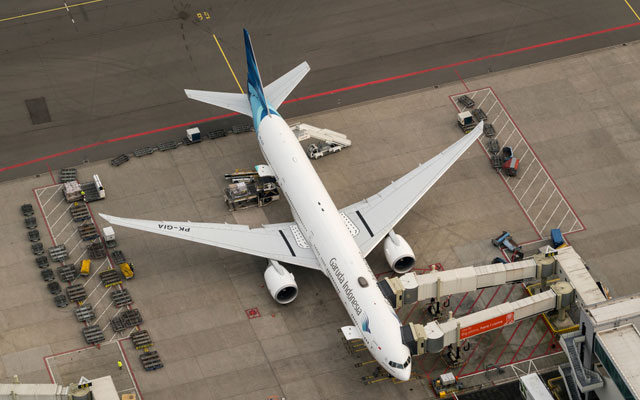
Airlines which have resumed domestic flights are Sriwijaya Air, Garuda Indonesia, Citilink, and Lion Air Group’s members Lion Air, Wings Air, and Batik Air.
A circular issued by Indonesian authorities stating that only airlines are allowed to issue flight tickets has travel agencies feeling left out in the cold
Last week, the Covid-19 task force, which represents the central government, rolled out a circular allowing certain passengers to travel, on the basis that they provide relevant health and travel documents.
Passengers allowed to travel include state officials and business people from the health and essential service sectors, repatriated Indonesian nationals, as well as individuals with emergency needs, such as seeking medical care and performing pilgrimages for the sake of deceased family members.
In response to the resumption of flight services, Novie Riyanto, air transportation director general at MOT, issued a new circular about its operational guidance, regulating that only airlines are allowed to issue flight tickets, leaving travel agents out in the cold.
Expressing disappointment, Budijanto Ardijansyah, vice chairman of the Association of Indonesian Tours and Travel Agencies (ASITA), pointed out that travel companies are the strategic partners of airlines, and that the government should not overlook the former when drafting policies.
ASITA has voiced its concern to the ministry, he shared, and added that it planned to hold a web meeting with MOT officials to discuss the issue.
Pauline Suharno, secretary-general of Indonesian Travel Agents Association (ASTINDO), said she had sent protest letters to the ministry, the airlines, and the Indonesia National Air Carrier Association (INACA).
She questioned why the MOT had scrapped travel companies’ rights to issue flight tickets, especially since travel companies were willing to adhere to the requirements set out by the Covid-19 task force.
Like airlines, experienced travel agents have the ability to run background checks on passengers and ensure they meet the criteria before issuing tickets to them, as required by the Covid-19 task force, Pauline claimed. Moreover, travel firms would not allow junior staff to handle that task, so the government should not doubt their capability, she added.
She said that if travel companies were allowed to issue tickets, it would help them to build and maintain customer relationship amid the pandemic.
Pauline added that although the clients of travel agencies could still book air tickets via the agency’s portal that provide links to airlines, the problem was that the travel agent would then have to make a trip to the airline’s office to get the ticket issued and they would have to pay in cash.
This would greatly inconvenience travel agents, and was a difficult task to do during this period, since most staff are furloughed amid the government’s call to stay at home due to the outbreak.
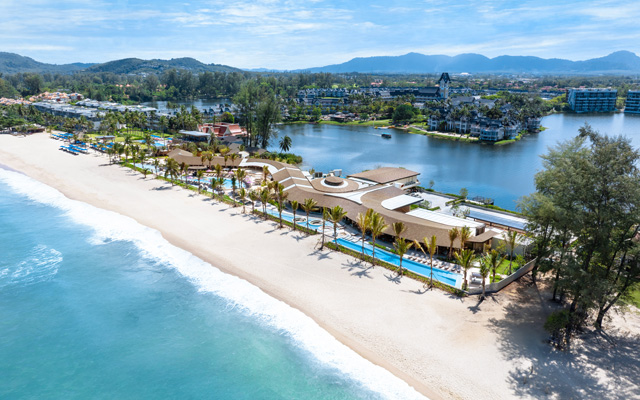
Minor International, which operates hotel brands such as Marriott, Four Seasons, Anantara and Avani, will raise 25 billion baht (US$782.5 million) in capital through perpetual bonds, a rights issue and three-year warrants.
In a statement issue on Monday, the company said the comprehensive funding strategy is a “proactive approach to ensure its ability to service its obligations and to maintain its commitment to the quality of he balance sheet”.
Minor International will raise 25 billion baht in capital between 2020 and 2023
The share capital increases, to be completed between 2020 and 2023, are subject to shareholders’ approval at the Annual General Meeting of Shareholders to be held on June 19.
The announcement came after company reported a loss of 1.77 billion baht in 1Q2020, versus a profit of 583.1 million baht a year earlier, as a result of the adverse impact of the Covid-19 pandemic on its three businesses across the globe.
Minor International comprises Minor Hotels, Minor Food and Minor Lifestyle.
Construction of the world’s longest rollercoaster at sea, the star attraction of Dream Cruises’ new ship Global Dream, is in full swing.
The coaster, which was announced by Dream Cruises and Maurer Rides last October, has been dubbed Space Cruiser and will be the highlight of the Dream Park at the Pier, the first-ever theme park at sea.
Pre-assembly for the world’s longest rollercoaster at sea is well underway in Germany
Currently, the rollercoaster is being built for testing on land in the immediate vicinity of the MV Werften shipyards in Germany.
The first photos of the construction process show the scope and scale of the world’s longest offshore rollercoaster.
After leaving the station, the ride starts with an acceleration section followed by two closely spaced inclined 90-degree curves.
The following two “camelbacks” provide a spectacular and breathtaking launch above the railing and the heads of the passengers, with a maximum speed of up to 60km/h.
A 360-degree downward and upward helix form the end of the 303m-long track before the vehicles reach the station again.
Expedia has launched the Travel from Home virtual tour series featuring a catalogue of virtual activities and experiences to satiate Singaporeans’ wanderlust during this stay-home period.
Curated with Expedia Local Expert partners around the world, the Travel from Home series, now available on Expedia.com.sg, offers nature, cultural, educational and entertainment virtual tour experiences.
Enthuse the kids with immersive storytelling from the heart of Paris with Expedia’s new Travel from Home series
History junkies can take a virtual trip to look at ancient Rome’s gladiatorial glory, relive the tragedy of Pompeii or marvel at the Palace of Versailles, while culture vultures can virtually visit some of the world’s national museums and architectural marvels. Those who prefer a guided experience can also participate in art-historian led tours to many of the world-acclaimed international galleries.
Elsewhere, aspiring master chefs can take cooking lessons from seasoned chefs or local home cooks from around the world, with recipes ranging from homemade pasta, authentic Italian tiramisu, and Spanish tapas.
Also available are fun options for the whole family, such as immersive storytelling from Paris, a virtual drive through the streets of Berlin, a live concert and music quiz, and interactive dance lessons from Greece.
Buffets giving way to served and in-room dining options
Guest activities being monitored to avoid crowding
Increased digital touchpoints to minimise cross-contamination
Guest experiences at hotels in Asia are set to change in the wake of Covid-19, as hotels tweak guest-facing services and activities to accommodate heightened hygiene and sanitising standards.
Among the changes, according to hoteliers who spoke to TTG Asia, are reduced sharing opportunities at F&B outlets, increased availability of digital touchpoints and new forms of greetings to welcome guests.
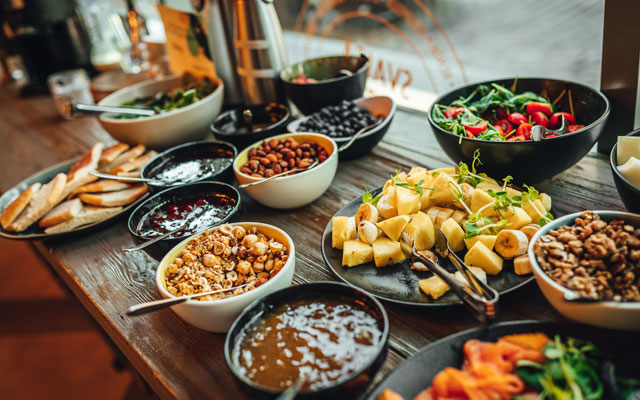
Hotel buffets may have to give way to a la carte and set meal options, as safety and hygiene measures are enforced
New ways of dining
With cross-contamination being of great concern, some hotels have done away with buffets while others have chosen to modify them to reduce contact between guests.
Javier Pardo, vice president of operations for Avani Hotels & Resorts, said doing away with buffet at his properties will “reduce the risk of guests touching shared utensils at the buffet (line)”.
Onyx Hospitality Group, on the other hand, has chosen to serve breakfast from a menu, which Charles Yap, vice president, marketing communications, believes will be a suitable move operationally as guest volume will be lower than usual in the first few months of travel and tourism recovery.
Over at Ovolo Group, the breakfast service could be served “to the guest in-room, or (as) a pre-packaged grab-and-go offering”, said Tim Alpe, the group’s chief operating officer, Hong Kong and Indonesia.
Ovolo has also recently launched a Restaurant-in-Room concept, offering catered meals from a local restaurant in the comfort of a serviced apartment.
While Yap believes that the much-loved generous morning spreads will return along with travel confidence, health and hygiene measures will remain for a longer time.
He said: “As buffets make their come back, we can expect to see the deployment of more acrylic or glass protection panels on counters, the introduction of individualised portions such as salad greens and sauces in personal-sized jars, and of course, more rigorous and frequent disinfection and replacement of serving utensils.”
Other changes in the hotel dining service include presenting personal serving spoons when delivering a shared dish, designing menus in single portions rather than a sharing size and paring down buffet spreads, suggested Kerry Healy, vice president sales Asia-Pacific at Accor.
Eating well
With the pandemic pushing health concerns to the forefront, some hoteliers are also predicting a greater demand for wellness cuisine as guests return.
Healy said: “Menus (at Accor properties) are likely to focus more on fresh, local ingredients… and we will look at introducing healthier options as we believe people are going to seek dishes that promote their well-being.”
Mark Thomson, spokesperson with Minor Hotels, agreed. He revealed that Anantara, one of the hospitality group’s brands, will roll out wellness cuisine that includes immune booster programmes, with specialist wellness chefs preparing fortifying meals and juices to help guests naturally boost their immune system.
Healy: Accor is looking into providing in-room exercise equipment for guests
Controlled interaction
Elsewhere in the hotels, shared facilities and group activities will see various operational changes to ensure health and safety measures are enforced.
At Anantara hotels, fitness classes will be modified. Guests will now be able to book personal training sessions or activities such as yoga and pilates as individuals, couples, or in small groups, with safe distancing measures adhered to.
At Onyx properties, guests are invited to reserve a gym session or sunbed space in advance to facilitate better crowd control.
Healy is exploring the feasibility of providing in-room exercise equipment for guests at Accor properties, while every public space will have “new cleaning and physical distancing measures” such as spaced out deck chairs.
Taking a step further, Avani properties will seal off every guestroom for 24 hours after cleaning and before the next guest can enter, shared Pardo. His team is also looking into a UVC light device that can disinfect a room in 30 minutes and the installation of air purifiers.
Digital shifts
More digital touchpoints will be introduced to minimise cross-contamination risks, and hoteliers stress that guests can have a technologically-enabled, contactless hotel stay and still find it personalised.
Pardo said: “We are introducing contactless service – digital check-in and check-out, bill payments via payment gateways, and a digital concierge app that is work-in-progress now.”
To bring warmth into these contactless changes, Pardo said “handshake-less greetings such as the traditional Thai wai greeting, Korean jeol bowing, and even the Vulcan salute popularised by Star Trek” will be used to demonstrate welcome.
For Alpe, instead of a typical face-to-face greeting, guests can be welcomed by personalised messages in their rooms – on the TV and iPad.
A new luxury train, The Vietage, will launch this July to take guests on a journey through the Vietnamese countryside.
The Vietage offers an opulent train ride through the Vietnamese countryside
On track for departure on July 1, 2020, The Vietage is a custom-designed 12-seater carriage that will be on the daily return railway route between Danang and Quy Nhon in South Central Vietnam. Amenities on board include a fully-serviced bar and massage area.
The Vietage will depart from Danang station every morning for the six-hour journey to Quy Nhon, and will return in the evening.
Employers from across global tourism are going beyond the call of duty in supporting their workers and communities, research carried out into the sector’s response to Covid-19 has found.
The study, conducted by the World Committee on Tourism Ethics – a subsidiary of the WTO – analysed the steps taken by businesses and trade associations to mitigate the impact of the pandemic.
Employers in tourism industries are playing their part to support workers and communities amid crisis
Studying the actions taken by the private sector commitment to the Global Code of Ethics for Tourism (GCET) in 25 countries, the research revealed that, in spite of staff furloughs, employers across the sector are stepping up their support for workers and communities.
Committee chairman Pascal Lamy, who touched base with the GCET signatories to learn about the mitigation actions being championed by tourism companies and trade associations, said: “It is evident that the sector’s engagement goes beyond symbolic CSR actions. The GCET signatories, although hit terribly hard by the crisis like their colleagues across the tourism sector, have shown that they indeed care for the societies they operate in while striving to keep their businesses afloat.”
UNWTO secretary-general Zurab Pololikashvili welcomed the initiative of the tourism sector while at the same time calling on governments to work with private employers to safeguard jobs and livelihoods.
He said: “Governments should not abolish the resources already allocated to tourism in their budgets for 2020. Tourism administrations also need to communicate to the general public what the sector is doing for the society in these troublesome times.”
The survey found that many companies are providing 24-hour psychological help for their employees, while also maintaining medical insurance and facilitating platforms with motivational videos, medical updates and training. Many are also offering free lodging and food for stranded international staff and their families.
As well, UNWTO noted in a press release that monetary donations have been given to city councils, underprivileged families and rural communities, and food and supplies have been sent to frontline workers and vulnerable groups.
Some businesses chambers are working with public, real estate, financial and legal entities to provide SMEs with funding and identify guarantors for those unable to receive a loan. Associations have engaged in local pandemic committees to flag up the most pressing issues and better articulate their support.
In addition, hotels have donated thousands of gift nights to medical staff for their holidays and remained open for them and Covid-19 patients whenever necessary. Elsewhere, guides offered virtual tours for voluntary contributions donated to hospitals, and transportation companies offered their channels to bring critical emergency equipment to save lives.
Furthermore, volunteer platforms have also been set up to create youth loans. Virtual solidarity groups gathered hundreds of travel agents with multiple jobs to exchange goods and support their livelihoods.
Planet Happiness has partnered the World Centre of Excellence for Destinations (CED) to strengthen excellence in destination management and the necessity of the sector to deliver destination well-being.
Under the partnership, Planet Happiness and CED will work together to promote mutual understanding of each other’s work among their networks and partners. They will engage on a range of topics related to excellence in destination planning, host community well-being and the imperative of the sector to respect and preserve living culture and cultural heritage.
Strengthening host well-being is key to building destination resilience, says CED’s François Bédard
By promoting destination well-being, the partnership aims to deliver solutions for host communities, governments, businesses and tourists.
François Bédard, director of CED, said: “Destination resilience depends on the industry’s ability to promote inclusivity, improve the quality of life of host communities and directly engage local residents in the tourism recovery effort.”
Amid this time of tourism collapse, with job and income losses punctuated by evolving realities in the wake of the pandemic, the partnership recognises the heightened importance of measuring host well-being in tourism destinations, said the companies in a joint press release.
As destinations move towards Covid-19 recovery, among many priorities, attention will inevitably be drawn to profound changes in host well-being and new normal pathways to rebuilding the quality of life, it added.
“Destinations at the forefront of the Covid-19 recovery curve need to be seen to be making clear, inclusive and informed decisions,” said Paul Rogers, co-founder and director of Planet Happiness, a project of the Happiness Alliance, an NPO specialising in happiness and well-being measurements.
He added: “Destinations need to promote their sites, ensure attractions and excursions are safe and responsible, and foster healthy and welcoming communities. This implies listening to the needs and concerns of industry employees and businesses, as well as the voices of the wider destination community. The Planet Happiness approach enables and facilitates dialogues that deliver win-wins and the strengthening of destination well-being.”
The Happiness Index survey, promoted by Planet Happiness, measures individual and destination well-being. Currently available in 24 languages, it includes indicators for health, standard of living, satisfaction with life, community engagement, as well as access to nature, the arts and life-long learning and other important contributors to well-being.
Patina Maldives, Fari Islands has appointed Marco Den Ouden as general manager, and Simone Broekhaar as director of sales & marketing.
In his new role, Ouden will prepare for the property’s launch in 1Q2021. He brings over 20 years of global experience in the luxury hospitality industry, four of which were spent with the Alila group, leading teams as general manager across three of their properties in Asia.
From left: Marco Den Ouden and Simone Broekhaar
Prior to joining Patina, he was general manager of Soneva Jani, Maldives. Other previous roles include working as an F&B hospitality consultant for the Les Amis Group, international general manager of Jin Jiang Hotel in Chengdu, and general manager of Huvafen Fushi by Per AQUUM, Maldives.
Similarly, Broekhaar holds over two decades of experience in the luxury hospitality scene.
She joins Patina Maldives from her role as director of sales & marketing of Capella Ubud, Bali, where she led a team of nine.
Prior to this, she was the regional director of sales & marketing for COMO Hotels & Resorts, Bali, where she oversaw the marketing activities for three properties – COMO Uma Ubud, COMO Shambhala Estate, and COMO Canggu.
She has previously held positions at The Datai, Langkawi and The Chedi, Muscat, as well as with international brands such as Swissôtel.
Patina Maldives, Fari Islands will be the first launch under Patina Hotels & Resorts, a new lifestyle brand by Capella Hotel Group.
More aircraft are returning to the skies, but it will still be a bumpy ride ahead for the industry, as supply outstripping demand means airlines face a long haul to return to profitability.
That forms the backbone of a latest study by Cirium, which was presented in a recent webinar hosted by Rob Morris, global head of consultancy, in which he drew on Cirium’s data to expound on the challenges that lie ahead for the aviation industry.
Headwinds ahead for the aviation industry, even as more airlines resume services
With the Covid-19 pandemic labelled the worst crisis the aviation sector has weathered, Cirium said that the need for a networked community response becomes even more crucial as attention now turns to the recovery effort – but it appears that airlines’ journey back to normal is paved with uncertainties.
Looking at current forward-looking schedule data, Morris shared data that presented a global capacity increase from -80 per cent at its peak drop earlier this year to around -20 per cent by the end of June. Airlines could however make further adjustments to these flight schedules depending on the changing environment surrounding coronavirus, he noted.
Green shoots in the Chinese domestic market, which has seen over 30 per cent of its capacity return in the last two months, is a positive sign for short-haul travel recovery.
However, the dramatic drop in capacity globally compared with 2019 remains in stark contrast to the forecast from the IATA in December last year, which projected capacity growth of +4.7 per cent in 2020.
It’s clear that, as some travel restrictions ease, it will be the domestic market which will start to return first. And while flight schedules are indicative of supply, they do not reflect the changes that airlines are making to their network on a daily basis.
Cirium’s flight status data shows that around one-fifth of the adjusted flight schedules globally are being cancelled on a near-term basis, underscoring significant uncertainty.
In light of the data, Cirium raised the possibility of the cancellations being due to the lack of demand as consumer confidence drops. Similarly, despite the recovery in China’s domestic capacity, the plateau could indicate that consumer confidence has yet to pick up.
The positive side is aircraft are starting to return to service and Cirium noted an uptick in domestic capacity in certain regions. Morris indicated that a “bottom point” has now been reached for aircraft being grounded, the hibernation phase has begun and passenger jet tracking data for May 4, 2020 shows a positive trend emerging.
Cirium’s “seven-day prior metric” shows active aircraft have increased by six per cent, flight cycles by 14 per cent, and hours flown by 13 per cent, compared with a week before on April 27, 2020.
However, year-on-year, active aircraft are down by 72 per cent, flight cycles by 82 per cent, and hours flown by 84 per cent, compared with May 6, 2019.
Additionally, aircraft utilisation remains dramatically lower than pre-Covid-19 levels for in-service jets, with single-aisle aircraft usage down 43 per cent on average since the start of year, said Cirium.
While the uptick in passenger jet flights is modest, Cirium noted that it’s encouraging to see aircraft returning to service. In particular, twin-aisle aircraft are returning to service, now down just 29 per cent on the start of the year, and the analysis here suggests these aircraft are being used for freight – some with cargo transported in the belly hold, and in some cases, main passenger cabins.
With tracked aircraft hours down, Morris explained that planning the required post-lockdown fleet will be complicated.
“It’s almost impossible to say when the bounce-back will start or end, and it would be unwise to speculate. Ultimately, it is airlines that will be in the best position to track the recovery as they assess their forward booking data,” he said.
As the aircraft going in to storage has passed its peak, Cirium is classifying the current phase as the hibernation phase. Around 13,700 aircraft, 62 per cent of the global passenger fleet, still remain parked around the world as of May 4, 2020.
For context, the in-service fleet of 8,320 aircraft per May 4, is approximately the same size as that operated in 1993.
However, more than 2,600 passenger jets have returned to service since March 1, with 31 per cent originating from the China domestic market as travel restrictions have eased in the country.
Looking ahead, the airlines face a number of hurdles to getting planes back in the air, not least an ageing passenger fleet.
Only 113 aircraft built between 2001 and 2016 have been stored for over a year, excluding Boeing’s 737 Max aircraft which were grounded before the pandemic.
There are more than 2,000 stored aircraft built in or before the year 2000. These jets may never return to service or could get a second lease of life, albeit as converted freighter aircraft.
The current demand scenario will likely result in premature retirements, particularly for stored wide-body aircraft built between 2001 and 2005, such as Airbus A340s and Boeing 777s.
Some owners will choose to monetise their assets and “part-out” jets that they no longer deem profitable as in-service aircraft.
The challenge of returning aircraft to service is also magnified by the geographical diversity and number of unique locations in which aircraft are currently parked around the world, Morris added.
A total of 719 different locations globally are home to one or more single-aisle or twin-aisle passenger jets.
More than a fifth of the global in-storage fleet is parked at the top 20 locations, 23 per cent by aircraft units and 27 per cent by aircraft value.
Top locations include Roswell International Air Center, Victorville Southern California Logistics Airport, Delhi Indira Gandhi International Airport, Istanbul Airport, and Hong Kong International Airport.
Only three of the top twenty locations globally are “typical” storage facilities.
With many aircraft stored at commercial airports rather than storage locations, if storage is prolonged, many will need ferrying to more suitable locations to mitigate risk of corrosion.
This is further compounded by passenger to freighter conversions. As some jets have had cabin furniture removed during the pandemic – with airlines operating all-cargo flights to shore up revenue – many will require restoration to passenger configuration.
Morris concluded that supply will inevitably outstrip demand for the foreseeable future, with aircraft being retired earlier than planned or subject to a part-out process as owners try to recoup costs.
As such, airlines face a long haul to return to profitable operations. It will take time to get aircraft flying again as demand lags behind capacity – and even longer to return to 2019 levels.
The sector is set to shrink in the short term but the current outlook helps to identify the route to a planned and predictable recovery for the aviation industry, with urgent need for a networked community response.