Malaysian Inbound Tourism Association (MITA) is working on several initiatives, including a live broadcasting event next month, to regain Chinese tourists’ interest to travel to Malaysia in the future.
MITA’s president, Uzaidi Udanis, shared that the association is working closely with its Chinese counterparts to host a three-hour event that will be broadcast live on a TV channel based in Shandong, China, to showcase Malaysia’s agro products and tour packages in a shopping programme.
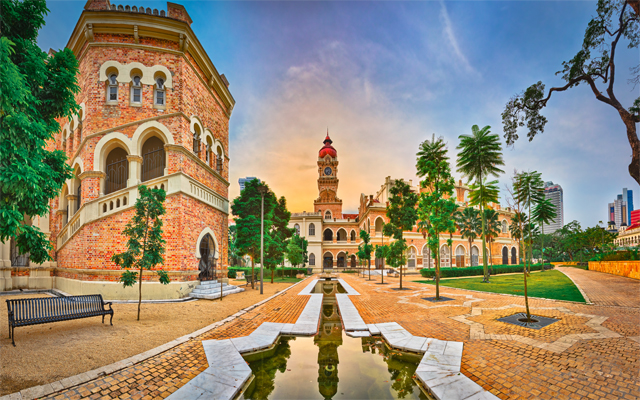
Travel agents in Malaysia ramp up focus on China market with a series of promotions lined up; Sultan Abdul Samad Building in Kuala Lumpur, Malaysia pictured
Uzaidi elaborated: “The tour packages are for ‘buy now, travel later’ and it offers good discounts of up to 70 per cent, and a validity period until December 31, 2022.”
In addition, MITA is also developing a B2B marketplace platform to cater to the Chinese market, focusing on products not sold by OTAs in China, such as homestays and eco-tourism tours. The platform is expected to be operational next year.
Furthermore, MITA is working with Tourism Productivity Nexus (TPN) to run online one-on-one consultations with tourism players to help them tackle challenges during this period and spur them to adopt ‘new normal’ practices as they start down the path of recovery.
Uzaidi shared: “When the border reopens, we expect to get more FIT travellers from China and elsewhere. If there are groups, it will be small, private groups of extended family members or friends travelling together. Big bus loads of Chinese tourists holidaying together in groups will be a thing of the past.”
Trends going forward include experiential travel and nature-based tourism, and MITA members are readying to tap into these new trends, he added.
Revenge spending is driving the recovery of travel retail in China, led by the resurgent Hainan market, according to ForwardKeys’ latest data.
Last year, Hainan was the second-largest market for duty-free shopping in China, accounting for 35 per cent of all sales. Fast forward to 2020, Hainan is now by far the biggest duty-free shopping area, with most of its competitors closed for business as planes are grounded.
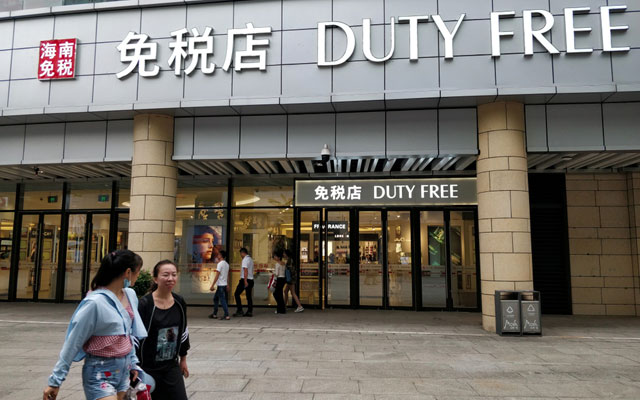
Hainan’s duty-free sales rebound following easing of lockdown rules; a duty-free shop in Hainan pictured
In April, duty-free shopping in the region grew by seven per cent year-on-year, making it the largest duty-free shopping market in China, according to ForwardKeys data.
The power of domestic tourism
With the government officials putting strict travel rules in place and limiting the flight capacity in and out of China, the real pick up has taken place on the roads of China.
Hotels have opened in key leisure destinations and tourist attractions are offering discounts to lure in the local traveller. Long distances to travel are not deterring people from shopping to cure their lockdown blues.
A previous study by ForwardKeys showed a lift in air tickets issued to Hainan in time for the five-day Labour Day weekend – showing the appeal the tropical island paradise has domestically as well as the desire to travel once permission to do so is given.
A shift in travellers
There appears to be a real thirst for revenge shopping in Hainan, especially from travellers from northern and southwest of China.
“There has been a 68 per cent increase in spending in Hainan which is a high month on month variation. We can see through our China Spend data that in April, shoppers have spent more in Hainan than last year,” said Marina Giuliano, director of travel retail and retail at ForwardKeys.
“Considering the lower number of travellers in the area compared to last year, that confirms that people really are looking forward to getting out of the house to go shopping,” added Giuliano.
Indeed, the flight ticket volume sold in June to Sanya remains behind 57 per cent of the tickets sold in June 2019, yet shopping results are on the increase. Seat capacity is the way forward for the region.
Further supporting this is the spending data of 2019 which highlights that the most common shopping audiences in Hainan came from Beijing (38.6 per cent), Shanghai and Chengdu (both 13.8 per cent), and Chongqing (10.2 per cent).
Shopping behaviour
Roughly around five per cent of the total shoppers made at least one luxury goods purchase in the past six months. The largest proportion of shoppers spend between zero to 500 yuan (US$70) in one transaction at a duty-free mall; however, the 2nd tier of shoppers spent more than 2500 yuan.
There is even more reason to keep an eye on this latter segment as spending big is something the Chinese officials are endorsing. Visitors to Hainan will be able to make duty-free purchases of up to 100,000 yuan per year, a considerable rise on the prior 30,000 yuan limit.
Travel retailers need to take stock of the offline shopping habits made in 2019 when markets were more stable and prepare their inventory more adequately this year in Hainan as the data is showing the real might the region has when it comes to duty-free shopping.
Banyan Tree Group has formed a joint venture with Thai growers The Boutique Farmers to develop ORI9IN, the first gourmet organic farm and restaurant in Chiangmai.
The farm will officially open to the public this October, with ticketed options for different journeys, including an exploration of a maize maze, and experiencing first-hand the practice behind crop planting and jam factories. Additionally, there will be venues on-site to host weddings and corporate events.
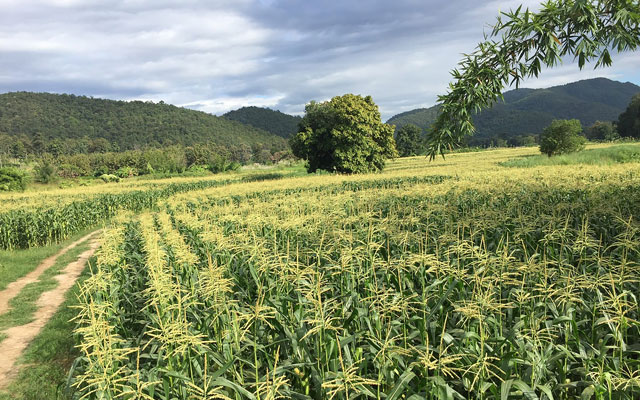
ORI9IN, Banyan Tree’s gourmet organic farm, aims to lead the curve in sustainable retained farming
Set on 141ha of land, the farm will feature rental spaces to grow specific ingredients as well as to test and plant overseas products for over 15 Michelin-star chefs from Thailand’s restaurants and hotels.
Families can also rent land, bond over farming and enjoy the harvest of vegetable and fruit salad, delivered to their home weekly. The farm’s community garden grows a variety of vegetables, and provides complimentary vegetables harvesting to villagers daily.
Furthermore, the farm will also feature a zero-waste fine dining experience, with almost all ingredients sourced from the farm itself or from local cooperatives within a 30km radius.
James Noble, chef-proprietor of Boutique Farmers, said: “Luxury is changing. Fine dining is changing. What people want from the new norm is to know where their food is coming from. They care much more about the process than whether there’s a white cloth on the table. This is the future.
“All guests just write their preferences on a white piece of paper, and they love the surprise factor of seeing what I’m able to come up with between that and when I put the dish in front of them. It’s in the moment, yet incredibly considered.”
The farm has created cooperatives in the community and help develop livestock farmers, fishermen and artisans who contribute to the menu from plates, furniture and food.
Noble added: “I really think business as usual needs to change. We should be in business not only for ourselves, but also to protect and improve the health and livelihoods of the local community. In my small way, I also hope to inspire people to rethink the way products are grown and prepared. Our children needs us to do things differently. We need to farm for the future.”
• Demand spike for hotel and resort buyouts in time of coronavirus
• More hoteliers bringing buyouts to the forefront, promising worry-free holidays, but at a hefty price
• Property buyouts seen as revenue saviours
As ‘safecations’ slowly take root as the newest travel trend, more luxury hotels and private island resorts are taking seclusion to a whole new lavish level, offering property buyouts for the ultimate private experience.
Anantara Hotels, Resorts & Spas is one example. The group recently launched a collection of buyout retreats in a host of destinations, from the Maldives to the Medjumbe Island off the coast of Mozambique. The price of such seclusion? A whopping US$20,000 to US$100,000 per night.
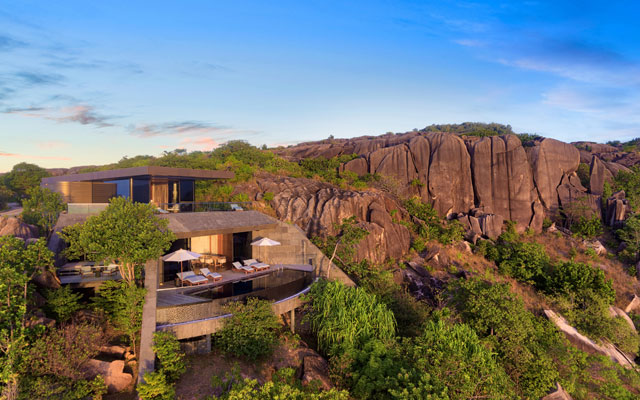
Six Senses Hotels Resorts Spas is getting interest in complete resort buyouts; Six Senses Zil Pasyon, Seychelles pictured
For instance, the 20 villas at Naladhu Private Island Maldives, a sister property to Anantara, offers takeovers for up to 50 guests, starting at US$35,000 per night, requiring a three-night minimum stay. The hefty price tag includes water excursions on a private yacht, a range of watersports activities, personalised butler service, and a resort doctor on 24-hour standby.
Thomas Meier, senior vice president for operations at Minor Hotels, said that while the group has previously offered exclusive-use properties, its recent deeper push into buyouts is in response to spiking demand.
He elaborated: “In the last couple of months, Anantara has seen a notable increase in enquiries relating to buyout opportunities in a number of destinations where we have properties, including in remote destinations and island resorts. We decided to collate a number of packages from some of our exclusive island resorts that have the potential to become ‘private islands’, and actively promote (them) for buyouts.”
These options, Meier shared, are aimed at high net worth travellers on a global level, and they have garnered interest from across the Middle East, Russia, India, Asia and Europe. “In terms of length of stay, this has varied from four nights up to 45, but the average request is for one to two weeks,” he added.
Anantara is among a growing pool of luxury resorts wooing deep-pocketed travellers with promises of complete peace of mind. Nihi Sumba, a luxury resort on the remote island of Sumba in Indonesia, is no stranger to buyouts, having since 2016 put the property up for exclusive hire, at a starting price of US$250,000 for three nights, inclusive of flight, guest experiences and private entertainment.
However, in light of post-lockdown needs, the 29-villa resort recently pushed out a million-dollar, month-long buyout with the tagline: Socially Distant, Wildly Connected. Offering up to 80 guests full run of the 233ha sanctuary, the rate includes meals, laundry, tour of the Sumba Foundation (the resort’s charity arm) projects, water activities, group yoga and meditation classes, as well as a five per cent donation to the Sumba Foundation.
Elsewhere in Seychelles, JA Enchanted Island Resort and Six Senses Zil Pasyon have also launched buyouts, for a starting rate of 9,950 euros (US$11,140) and 330,000 euros for a week-long stay, respectively. Access to the resort’s villas and facilities, bespoke dining experiences and a wealth of water activities are built into both resorts’ buyout packages.
For Bawah Reserve, a private island resort in Indonesia’s Riau Islands, the number of buyout enquiries have doubled.
Kristen Graff, director of sales and marketing, said enquiries had come from “as far away as Scotland and the US, while bookings have been made from countries closer to us, Singapore and Hong Kong”.
Customers are looking to stay between three and seven days.
“We have two corporate buyout bookings for November, both made during the Covid-19 crisis, and a potential wedding in the summer of 2021,” Graff revealed, adding that the resort will be launching destination wedding packages later this year and have spoken to several corporate groups who want to use the whole island for a retreat.
The safest vacation mode? As travel begins to arouse from its deep slumber, destinations that boast sea, sun and seclusion have become major draws for consumers in light of the current global threat. Private islands and luxury resorts set in remote locales seem tailor-made for socially distanced vacations. And what safer way to do so than a total takeover?
James McBride, CEO and partner, Nihi Hotels, said resort buyouts would greatly appeal to those seeking an unprecedented opportunity to experience a private resort fully on their own terms and at their own pace.
“Considering the current Covid situation, travellers’ desire for uncommon and extraordinary travelling experiences will stir toward extremely private arrangements to allow them to further enjoy their special occasions,” he added.
Agreeing, Burak Aydin, general manager, JA Resorts & Hotels, said: “We have entered a time where travelling and vacationing habits are changing. People’s priorities and needs are shifting focus. Renting a private island may have seemed like an extreme luxury in the past, however moving forward, it will be seen as a wise choice by many.”
For those still looking to travel, even as a cure for coronavirus remains elusive, buyouts seem like a ticket to a worry-free holiday. Beyond solitude, buyouts also offer the luxury of abundant space for extended families to come together.
Meier: notable increase in enquiries relating to resort buyout opportunities
Meier shared: “As we move into the ‘new normal’, the enquiries we’ve been receiving to date (for buyouts) are from large family groups or for celebrations with family and friends, allowing the opportunity to spend quality time together in isolation with the knowledge that they’ll not be having to see or interact with other guests.
“With peace of mind and safety being such a priority right now, we see that a higher number of customers are willing to spend more to ensure a safe and trusted experience.”
Bespoke buyouts can also be curated to suit guest needs. “Some groups may want all-inclusive with everything from transfers, F&B and experiences, while others may prefer solely accommodation or B&B – we are able to be very flexible and arrange bespoke solutions,” Meier said.
Additionally, the wildly wealthy who are also looking to social distance in the sky are opting to fly by private jets, once borders reopen.
Meier shared that Minor International’s MJets, which operates a small fleet of private jets out of Bangkok’s Don Mueang Airport, has seen an increase in enquiries for travel both within Thailand and regionally, in addition to further afield.
Recovering lost ground Even as travel restrictions loosen, virus fears persist, keeping tourists at bay. Thus, buyouts could offer hoteliers a way to make up for the revenue shortfall stemming from lower occupancy levels.
Aydin shared that this is the first time JA Enchanted Island Resort has been put up for private hire, after the pandemic’s crippling impact on tourism forced the resort to rethink strategies in line with current market trends.
He elaborated: “JA Enchanted Island Resort has always been popular for romantic getaways and has been preferred for its privacy and beautiful natural surroundings. The resort has been almost sold out throughout the recent years, thus, not allowing much flexibility in allocating the whole island as a buyout option. Now seems to be the perfect occasion to be able to enjoy this enchanting island all to yourself.”
Aydin added: “Our country is one of the few that are Covid-19 free and being an island resort only enhances this fact by offering an even more protected environment.”
Within the first week of launching, the buyout retreat drew interest from potential buyers from Europe, the UAE and the local market, made up of extended families and group of friends, according to Aydin.
Similarly, Six Senses Hotels Resorts Spas is looking to make up for the drop in tourist footfall by intensifying marketing efforts around buyouts. Requests have come in from Russia, the UK and China, according to Jad Frem, regional director of sales and marketing Indian Ocean of the company.
Frem added that island privatisation was not a new initiative by Six Senses, “but (we) have not proactively gone out into the market with a package previously, as under normal circumstances, the hotel would be operating with FIT bookings”.
Luxury hospitality management group, The Lux Collective, has signed four retreats along Yunnan’s legendary trade route, Tea Horse Road, with Lijiang Yulong Tourism Corporation.
The new retreats, to be located in the Chinese province’s most picturesque areas of Jibeike, Sangushui, Daju Village and Baoshan Stone Town, will complement two existing LUX* properties in Lijiang and Benzilan.
They will open in September 2020.
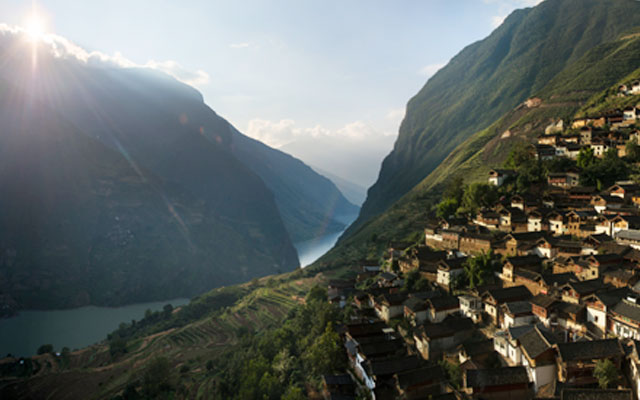
The remote Baoshan Stone Town will welcome a LUX* retreat this September
Tucked away in a valley of rolling hills and peach orchards, 2,642m above sea level, LUX* Tea Horse Road Peach Valley will be a 17-room boutique retreat that takes the surrounding rustic farmland into its chic design.
The six-room LUX* Tea Horse Road Stone Town sits in a remote village on a rocky cliff hanging over a river and the heart of Naxi culture. Its communal area promises striking views of the river and mountain peaks.
Located centrally in Sangushui village, LUX* Tea Horse Road Sangushui is a 15-room retreat that offers a peek into one of the world’s oldest living cultures.
The modern LUX* Tea Horse Road Daju Village is an 18-room sanctuary that blends mindful living with nature immersions. Surrounded by lush fields of grain and vegetables, the wild and beautiful Daju Village is the gateway to one of the world’s deepest canyons.
Commenting on the development, Karen Lai, The Lux Collective’s senior vice president – global business development, said: “We are confident that our strong collaboration (with Lijiang Yulong Tourism Corporation) will not only further enhance the group’s presence along the ancient passageway but will also offer the culturally curious a once-in-a-lifetime transformational journey along the mystical trade route.”
A further two more hotels, LUX* Tea Horse Road Dali and Pu’er, are anticipated to open in 1H2021.
Philippine travel agents are finding their current financial strain exacerbated by domestic airlines’ continued refusal to refund unfulfilled air tickets, revealed speakers at a Philippine Tour Operators Association webinar this week.
Money from paid up but unused air tickets are instead stored by airlines in a travel fund that can be used to book flights within a certain time period.
Philippine travel agents are struggling with airfare refunds which are said to be not forthcoming
This is tantamount to airlines getting interest-free financing from smaller players, said former tourism undersecretary Alma Rita Jimenez.
“If your money is tied up there (for) somebody else (to use), and that somebody happens to be richer than you are, it’s unjust,” Jimenez said.
Lax Junnel Mendoza, forced by the pandemic to close his 10-year old company, VYGR International Travel, said that Cebu Pacific had previously issued a statement that it would be giving cash refunds for air tickets to flights cancelled by the pandemic. However, that did not happen, and refunds were channelled into a travel fund for later use.
Mendoza said millions of pesos are parked with Cebu Pacific and other airlines, and the travel fund is useless now to passengers as it is uncertain when airlines will resume service.
He added that it was not always easy for passengers to understand that their refund was stuck with the airlines and not the travel agency.
This also causes agencies’ liquidity problems because the money is “sleeping with airlines” instead of being used by struggling agencies to invest or divest for survival, according to Mendoza.
Jimenez: airlines should be financed by government loans and not refunds meant for travel agencies and passengers
Elusive refunds are not unique to airlines, as travel agents revealed that some hotels and resorts are doing the same.
Mary Ann Ong, general manager inbound, Bridges Travel and Tours, said there were Chinese tour operators who paid in advance for Chinese New Year tour packages that never happened.
“Hotels in Boracay, Bohol and Cebu are not paying us back due to cash flow problems,” Ong said.
Jimenez, currently president of ASEAN Society Philippines, Management Association of the Philippines, recommended that a part of the 36 billion peso (US$713 million) soft loan portion of the proposed 58 billion peso tourism stimulus package be converted into a revolving fund that will reimburse all airline refunds.
She explained that it made better sense for the big airline companies to owe the government money, rather than the smaller travel agencies.
“We understand that airlines have liquidity problems but it’s unjust (to) borrow from much smaller companies,” she added.
The recommendation, which earned support during the webinar, will be part of the position paper that Jimenez is preparing to help the micro and small and medium tourism industries that are most affected by the pandemic.
Thailand’s second-stage airline relief will include indefinite waivers of parking fees as well as discounted takeoff/landing fees for all airlines operating on Thai soil.
The latest round of assistance, revealed by Civil Aviation Authority of Thailand’s (CAAT) director-general Chula Sukmanop during the Civil Aviation Committee (CAC) meeting on Tuesday, joins an existing 50 per cent discount on both aircraft parking fees and takeoff/landing fees for 11 countries in the region until the end of the year, introduced earlier in March.
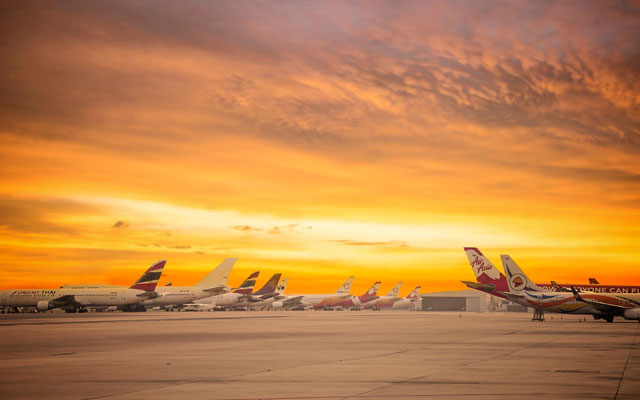
Grounded aircraft at Don Mueang International Airport
CAAT has also extended deadlines for airlines to pay the 15-baht (US$0.50) per passenger handling fee from 15 to 90 days with no late payment surcharge.
The Happiness Sharing Trips subsidy for domestic transportation – comprising two billion baht out of the 22.4 billion baht stimulus released last week – is intended to benefit domestic airlines as well; it will cover up to 40 per cent of fares capped at 1,000 baht per tourist.
The pandemic has placed Thai domestic airlines and national aviation organisations in a tight spot, especially as the country is further delaying the resumption of international tourism.
Bangkok’s Suvarnabhumi and Don Mueang international airports now see only 17,000 passengers a day from domestic flights. The plan to let in some international travellers starting July 1 is limited to around 50,000 travellers altogether.
Several agencies, such as the Department of Airport, which oversees 29 airports in the country, and Aeronautical Radio of Thailand, which draws its revenue from air traffic control fees, have requested financial aid or low-interest loans from the government.
Eight domestic airlines have requested soft loans totalling 24 billion baht from the Thai government.
Nok Scoot yesterday announced it will lay off over 50 per cent of its staff, scale down its fleet from five jets to three, and stop operations in Thailand altogether, stating that demand may not return to pre-Covid-19 levels until 2022 or 2023. Air Asia X plans to take over many of its routes.
Jebsen Holidays has appointed Lily Agonoy as managing director.
In her new role, she will oversee all existing Jebsen Holidays teams – Virtuoso, Leisure, Cruises, MICE and Inbound; and will report directly to COO & CFO Alvin Miu and the MF Jebsen Board of Directors.
No stranger to the industry, Agonoy was managing director of BCD Hong Kong, and was formerly part of MF Jebsen Group before the BCD divestiture.
Agonoy first joined MF Jebsen in 2012 to lead the BCD Hong Kong Corporate travel business. Prior to that, she was with Farrington American Express Travel.
Maldives will reopen her borders come July 15, welcoming travellers with neither compulsory quarantines nor swab tests upon arrival.
The announcement came on Tuesday from the country’s president Ibrahim Mohamed Solih, who also said that prayers in congregation are expected to resume, students will return to classrooms, and restaurants and cafes will reopen for dine-in service.
The Maldives has lowered barriers to travellers’ entry and established a fast lane with China
According to guidelines issued by the Ministry of Tourism on Tuesday, visitors will be given a free 30-day visa-on-arrival document, and will not be needed to undergo Covid-19 test and compulsory quarantine.
However, travellers displaying Covid-19 symptoms will need to take a polymerase chain reaction (PCR) test on arrival.
To enter the Maldives, travellers will need a confirmed booking in a registered tourist establishment, and must book their entire stay with only one resort or hotel. Exemptions will be made for transit arrangements.
While hotels and resorts on uninhabited islands will reopen on July 15, guesthouses and hotels on inhabited islands will only resume business in August when the country moves into her second phase of reopening.
According to local media reports, seven resorts in the destination will reopen in July while others will have staggered openings between August and October.
Meanwhile, airlines including SriLankan Airlines, Qatar Airways, Etihad Airways, Emirates, IndiGo, Singapore Airlines, SilkAir and Turkish Airlines have agreed to resume flights starting from July, paving the way for a return to tourism.
The president’s announcement was a relief for the local tourism industry, which is heavily dependent on foreign arrivals. As a result of the pandemic and near global lockdown of international borders, arrivals to the Maldives this year are projected to drop to 98,000, down by from the earlier target of two million and a record 1.7 million in 2019.
Soneva’s founder Sonu Shivdasani and Heritance Aarah & Adaaran Resorts – Maldives’ assistant vice president – sales and marketing, Suresh Dissanayake, have expressed delight at the progress.
While Dissanayake acknowledged that the tourist pick-up would not be immediate, the news positioned the Maldives as being back to “welcoming visitors”.
So far, Heritance has bookings for its Maldives properties from this September into 2021, with 60 per cent of them coming from the UK.
In a further demonstration of the Maldives’ determination to return to tourism normalcy, the government will launch a fast lane for Chinese travellers from July 15. China is the country’s biggest tourism source market.
Dissanayake: ready to welcome visitors again
President Solih explained that the fast lane would allow Chinese travellers to fly home from the Maldives without having to serve quarantine back in China. They will, however, need to take a swab test 48 hours before departing from the Maldives and when they land in China.
To support the relaxed border restrictions, all resorts in the Maldives will abide by the government’s guidelines for their guests. Compulsory measures include standard health and safety checks, designated isolation rooms for suspect Covid-19 cases, and a certified doctor onsite.
In an exception to the official rule, Soneva will conduct its own rapid swab test for all guests upon arrival at the airport. Thereafter, guests of Soneva Fushi and Soneva Jani will be escorted to their villa and asked to remain there until the test results are out – between six and 24 hours – and found to be negative.
Janice Tan has joined Vakkaru Maldives as director of sales and marketing.
The hospitality veteran has been in the industry for 20 years, having first embarked on her career at the Mandarin Oriental.
Her experience includes launching luxury resorts in the Maldives including Anantara Naladhu, during her tenure as Anantara Group’s cluster director of public relations; as well as Velaa Private Island and Accor’s Raffles Maldives Meradhoo, where she served on both occasions as director of sales and marketing.
She also spent time as regional director of sales and marketing for Como Hotels and Resorts’ Como Maalifushi and Como Cocoa Island.
She is currently based in both Singapore and the Maldives.