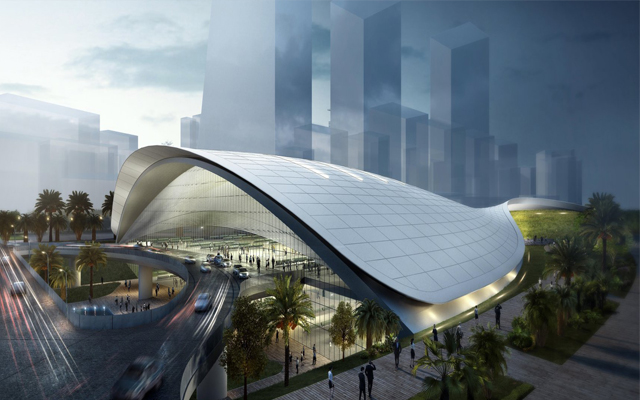
Artist’s impression of the HSR terminus in Jurong East
Singapore has agreed to Malaysia’s request for a seven-month extension to the High Speed Rail (HSR) project suspension, till year-end.
The construction of the HSR project linking Singapore and Kuala Lumpur has been suspended since two years ago.
Artist’s impression of the HSR terminus in Jurong East
Singapore’s transport minister, Khaw Boon Wan said in a Facebook post on Sunday (May 31) that Malaysia’s senior minister Azmin Ali wrote to him to request the extension to discuss Malaysia’s proposed changes to the project.
“As any project change requires our agreement, the extended suspension will allow both countries to assess the changes that Malaysia has in mind,” he said, adding that both parties have “agreed to a final extension of the suspension period to 31 December 2020”.
He further said: “This should provide sufficient time for Malaysia to clarify its proposal and for both sides to assess the implications of the proposed changes.
“The key is joint commitment to the project’s vision and mutual trust. Nevertheless, the HSR is a complex project, and both sides have to be convinced that the changes do not undermine the original intent of the project.”
Previously, in early September 2018, both sides had agreed to suspend the construction of the bilateral project until May 31, 2020 to determine the best way forward for the project. On Malaysia’s part, the government had been reviewing the project to identify ways to reduce costs.
Commenting on the project, Johor’s chief minister Hasni Mohammad expressed hopes that the HSR project will continue as it would benefit the economies of both countries and open many job opportunities, reported The Star.
“Besides workers, the project will also help the people and traders in the districts due to the economic impact that will be spurred along the HSR route,” the report quoted him as saying. “This project will also help improve connectivity around the country.”
In order to better understand how the industry is reacting to this shift in consumer demographics and behaviour, the insights team at Digital Travel APAC spoke to hundreds of travel brands across Asia-Pacific.
The study uncovers the following key trends as top priorities for travel operators in 2020:
• Perfecting Personalisation
• Mastering the use of messaging platforms and bots
• Mastering travel distribution
• Leveraging the use of alternative payment
• Increasing ancillary revenue
Also included in the published report are in-depth conversations with senior executives from some of the region’s biggest names in travel, including Line Travel and Trip 101, Grab, Tujia and Tourism New Zealand. These leaders behind their respective organisations walk the floor, and offer insights on how their organisations are responding to the new travel preferences, what their challenges are, and their thoughts on moving forward.
Uncover how apps have expanded in the travel space (and which of them have gained the largest traction in our region), how combining big data with travel technology translate into an astronomical growth and why an NTO has elected to dedicate more than 50 per cent of its resources to its digital destination marketing campaign.
Already 2.5 months in hiatus, Philippine tourism is still barred from reopening, although metro Manila and nearby destinations have shifted from extreme to a more relaxed general community quarantine (GCQ) from June 1 to 15.
Under the GCQ guidelines, businesses in the tourism sector, including airlines, hotels, and tourist attractions, are not allowed to operate. Employees from other industries may return to work, but subject to limitations, while certain public transport, as well as specific services and facilities, are permitted to restart.
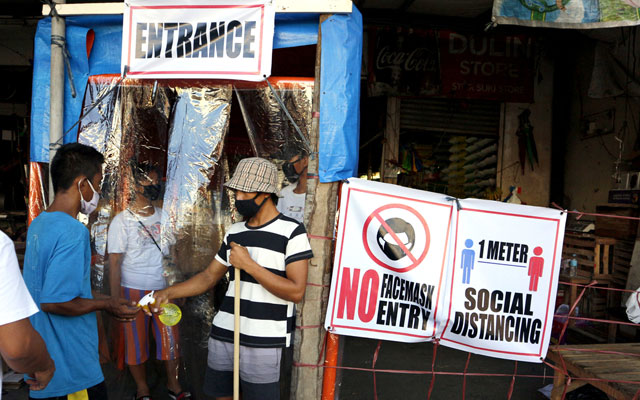
Tourism businesses in the Philippines are barred from operating, even as metro Manila and nearby destinations ease lockdown measures, a volunteer stands guard at the entrance of a public market to spray disinfectant onto visitors’ hands amid the virus outbreak pictured
The cautiousness about lifting restrictions too quickly comes as, despite most of the Philippines being placed under strict quarantine in the past months, the number of coronavirus infections in the country continue to soar, especially in metro Manila, the country’s epicentre of the pandemic.
Nationwide cases soared to 18,086 on Sunday, including 16 new cases and 846 late cases arising from testing backlogs. Deaths totalled 957, and recoveries, 3,909.
But if domestic tourism’s reopening were to depend on the flattening of the Covid-19 curve, it’s going to be an indefinite waiting game as the country still has no mass testing and contact tracing.
The impact of zero tourism has far-reaching consequences as this is an industry contributing to over 12 per cent of the country’s GDP, and employed an estimated 4.5 million workforce, not counting those in support establishments.
“We will die not of Covid-19, but of hunger,” wailed those rendered jobless who are entitled to only up to 13,000 pesos (US$230) worth of government financial assistance, comprising a one-time receipt of 5,000 pesos from the Department of Labor and Employment (DOLE) and between 5,000 and 8,000 pesos from the Social Security System/Department of Finance (SSS/DOF).
In a joint business assembly of PATA Philippine Chapter and Philippine IATA Travel Agencies Association on Zoom, DOLE officer-in-charge-assistant secretary Dominique Tutay disclosed that the accommodation and food service sector – tourism in general – is the third most affected by the pandemic, after wholesale and retail trade, repair of motor vehicles and other service activities.
Tutay said 81 per cent or 13,833 of tourism companies hiring a combined 222,424 employees were closed temporarily during the lockdown, which was enforced on March 18, while the remaining 19 per cent or 3,328 companies with a combined 88,910 workers have flexi work arrangements. Majority of them are classified as SMEs and micro-enterprises.
She said that out of the 1.6 million employees, hailing from all industries including tourism, who applied for the 5,000 pesos cash assistance, the cash-strapped DOLE could afford to pay only 650,000 of them. The SSS/DOF is said to have aided 500,000 in the tourism workforce.
From investors in airlines, integrated resorts and hotels to owners of travel agencies and tour operations, all are bleeding from zero business, but it’s not yet known which of their recommendations for fiscal and other government support will be granted and when.
Even if they are allowed to open, they will need fewer employees since under the new health and hygiene protocols, hotels, for instance, will be allowed only 50 per cent occupancy to maintain social distancing.
Hoteliers said a 50 per cent occupancy means operating at a loss, but it will help with cash flow and jumpstart tourism.
Having adopted stringent health and hygiene protocols in keeping with local and international standards, the tourism industry is longing and ready to open anytime.
But until health authorities get their act together in slowing down Covid-19 infections, it will be tough regaining travellers’ trust and confidence.
As Thailand enters the third phase of its lockdown on June 1, moderate-risk businesses including boxing stadia, massage parlours, spas and convention venues have been allowed to reopened, while the country observes a shortened curfew from 23.00 to 03.00.
Inter-provincial travel will also be permitted, although not yet encouraged, and provincial-level restrictions may be enforced.
Tourism attractions, such as the Ayutthaya historical park, have reopened, as Thailand enters the third phase of its lockdown
On May 26, Thailand’s emergency state was extended by another month until end-June, but the government is also in the midst of charting a possible course to completely end the lockdown by July 1, should there be no further outbreaks. That would entail the removal of the emergency state and curfew, stimulation of domestic travel and re-instigation of international travel, albeit with restrictions.
The National Security Council chief general Somsak Rungsita said that “the government has set July 1 for the lifting of all business and activity lockdowns” imposed to curb the Covid-19 spread, reported The Bangkok Post.
Prime minister Prayut Chan-o-cha has also announced plans for a cautious reopening to international tourists.
“If the country reopens to foreign travellers too quickly and they bring the virus with them, Thailand will have to go back into lockdown, which will be catastrophic,” the prime minister was quoted as saying by the report.
International travel has already been lifted in stages to specific groups of foreigners who must cover the costs of their own 14-day quarantines and medical certifications. The first group has been announced as those holding Thai work permits. There is no official word on when the quarantine requirements will be lifted, or when foreign tourists will be allowed back into the country.
The government is, however, turning its focus to domestic travel. With the launch of the Amazing Thailand Safety and Health Administration (SHA) certification, the Tourism and Sports Ministry intends to lift the domestic lockdown.
On May 26, the price of Thai hotel stocks including that of The Erawan Group, Minor International and Central Plaza Hotel PCL briefly surged more than 11 per cent each, following the National Economic and Social Development Board’s announcement that it would likely issue coupons in July to help reduce accommodation costs by 40 to 50 per cent. The move is hoped to stimulate domestic tourism, under a proposed 400 billion baht (US$12.6 billion) loan framework authorised by Royal Decree to the Ministry of Finance.
Post-lockdown, the three most popular activities among Thais have been having haircuts, travelling and eating out, according to global market research firm Ipsos. “The survey suggests the travel industry should bounce back after the lockdown due to demand among those with an income of more than 50,000 baht a month,” Aitsanart Wuthithanakul, a senior client officer at Ipsos, told the Bangkok Post.
Many of Thailand’s travel attractions are slowly reopening. Over the past week, thousands of domestic tourists visited the Ayutthaya historical park, according to official data. Elsewhere, the Temple of the Emerald Buddha and the Grand Palace will reopen to the public from June 4, and Damnoen Saduak Floating Market in Ratchaburi, from May 30.
Bangsaen beach in Chonburi will possibly reopen on June 1, pending a decision from the Chonburi Communicable Disease Control Committee. Phuket beaches remain closed indefinitely, but the open beaches in Hua Hin and Rayong are drawing scores of Thai and expat travellers indulging in self-drive holidays and social-distancing-friendly water sports like kitesurfing.
Over the past month, restaurants, shopping malls, businesses and venues in “white” and “green” low-risk categories throughout Thailand have reopened. Individuals use the Thai Chana app to check in and out of malls and shops to help with contact tracing.
Pubs, bars and night entertainment venues fall into the “red” or high-risk category of businesses that will be the last to reopen.
This article has been updated. An earlier version of this story incorrectly misstated the curfew time is from 21.00 to 03.00.
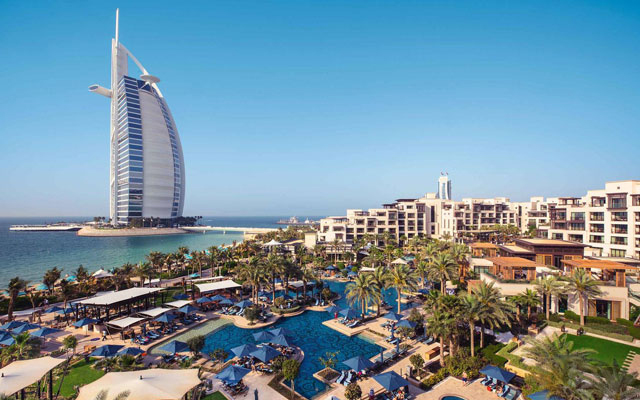
Jumeirah Al Naseem, a luxury hotel in Dubai, United Arab Emirates, has become the world’s first hotel to be certified with a Safeguard Label from Bureau Veritas, a leading testing, inspection and certification provider.
The five-star resort received the certification after Bureau Veritas ensured that it has achieved the appropriate safety standards, training and cleaning protocols.
Jumeirah Al Naseem’s rigorous health protocols have earned it the Safeguard Label from Bureau Veritas
Remote and field audits were also carried out to ensure that the property efficiently implemented protective measures, including usage of protective masks, daily temperature checks and extensive hygiene training for all staff, strict social distancing across all areas of the hotel, tripling fresh air in public areas, sanitisation fogging – up to three times a day, depending on footfall – and strict lift etiquette to ensure guests are travelling alone.
In guest rooms, housekeeping services take place daily, and the resort provides sanitising and hygiene amenities including face masks, sanitiser gel and disinfectant wipes. Pillows and duvets undergo a thermal hygiene process, while pillow and mattress protectors are changed after each checkout.
Additionally, rooms are left vacant for three days after each stay as an additional safety measure and, where this is not possible due to high occupancy, the room undergoes a complete sanitisation fogging process.
On-site dining venues also feature additional precautionary measures, including full restaurant sanitisation before each service, buffets redefined as á la carte, table distancing and hygiene amenities placed on each table for guests to utilise.
José Silva, CEO of Jumeirah Group, said that the luxury hotel chain will be working with Bureau Veritas to certify its wider portfolio.
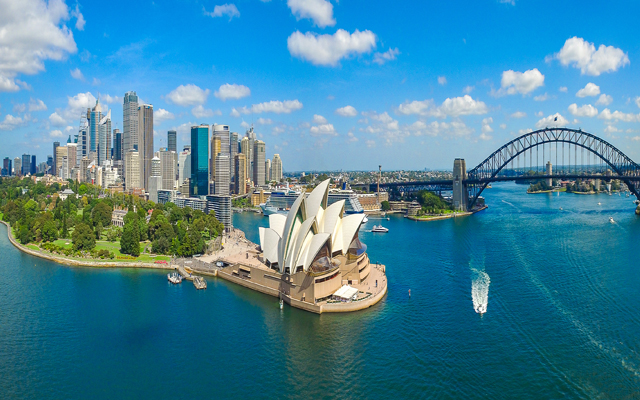
Hotels in Australia are finally welcoming guests back as state governments begin easing lockdown restrictions from Covid-19 to permit intrastate travel. Hoteliers are also expecting that regional and luxury accommodation will benefit most from initial pent-up demand.
Restrictions in New South Wales and Victoria begin easing on Monday (June 1) to allow for some domestic holiday travel and dining for 20 to 50 people, making it viable for several hotels to reopen their restaurants.
Hotels in Australia prepare to welcome guests again, as coronavirus lockdowns in the country begin to ease
“What we’re hearing is that there’s been some good bookings in regional locations, particularly with the Queen’s Birthday long weekend happening this month,” said Tourism Accommodation Australia CEO Michael Johnson.
“I think that CBD residents have been looking to get out of their cities after being in lockdown for 10 weeks, so they’re certainly looking to get out to the region,” he continued.
Australia’s Marriott hotels reported the first signs of market recovery about a fortnight ago, with bookings increasing and cancellations decreasing.
“As government restrictions eased, consumers started to see their way out of the current situation,” said Sean Hunt, area vice president, Australia, New Zealand and Pacific, Marriott International.
“Hotels in leisure destinations, particularly, started to see a pick up as the announcement of relaxed restrictions began across the country, which encouraged consumers to go from dreaming into planning mode and we believe these consumers will start to convert in the coming weeks.
“We are also seeing wedding enquiries and bookings pick up for 2021,” he continued, noting that Marriott’s lifestyle and leisure properties are currently taking the lion’s share of the bookings.
Elsewhere, Jerry Schwartz, the owner of 15 hotels across the country, said during an online webinar hosted by CBRE Hotels that he expects his least economical hotels in regional areas to ironically become his best performing when interstate borders reopen, and luxury hotels will do well as people are more willing to spoil themselves.
Australia’s new Tourism Restart Taskforce, formed by The Australian Chamber of Commerce and Industry, has proposed that all domestic travel should restart this long weekend. However, the final decision to open up borders lies with the respective states.
Less than 80 per cent of hotels in Australia remained open during the lockdown, buoyed by government assistance, but operating on average at 20 per cent occupancy levels. Hotels need to be trading at least 30 per cent occupancy to break even.
“Every time there is a positive message on the easing of restrictions from the government, we see an increase in bookings, and school holidays and Q4 are looking promising in the Pacific,” said Simon McGrath, chief operations officer of Accor Pacific.
“Following the lockdown, we expect people might want to travel differently, in a more responsible and safe way and to spend their time and consume differently, with a different mindset. We are working collectively to find, or even invent, the right answers to adapt to this new world,” he continued.
TAA’s Victoria CEO Dougal Hollis confirmed the “vast majority of hotels” in the state will reopen on Monday, noting that 7.9 million Australians who travelled internationally for leisure last year will now be looking for alternative options. But he conceded corporate bookings are more difficult to predict, given that changes in corporate communication methods employed during lockdown periods have introduced new practices.
“We’re mindful that corporate businesses will take longer to return and in fact may not fully come back because you might get people who have decided that they’re so used now to doing Zoom conferences that corporate travel frequency won’t be as high as pre-Covid-19,” said Hollis.
Hollis also told TTG Asia that it may take up to three years for hotel occupancy rates to get close to pre-Covid-19 levels, and that as many as 75 per cent of new hotel developments have been put on hold as their viability undergoes re-assessment.
YouTrip, Singapore’s first multi-currency mobile wallet, has partnered Dutch travel marketplace Withlocals to bring virtual travel to Singaporeans through an array of curated experiences from across 50 destinations.
This partnership hopes to recreate some parts of the travel experience online for vacation-deprived Singaporeans, said YouTrip in a statement, citing a strong desire to travel among its community of users.
YouTrip partners Withlocals to offer more than 100 virtual experiences, guided by local hosts
When the pandemic hit, the Eindhoven-based Withlocals brought their experiences online. Similar to offline experiences, travellers can take private or group tours and activities hosted by local hosts all over the world through video conferencing in the comfort of their own homes.
Boasting over 100 experiences, Withlocals offers travellers curated experiences from destinations like Amsterdam, Rome, and Athens. Guided by local hosts, virtual travellers can indulge in street-walking tours, cooking classes, mythical storytelling, or an exchange of local cultures.
Each online experience caters to group sizes of one to 14 participants, with prices starting from 22 euros (US$24) for a one- to two-hour session.
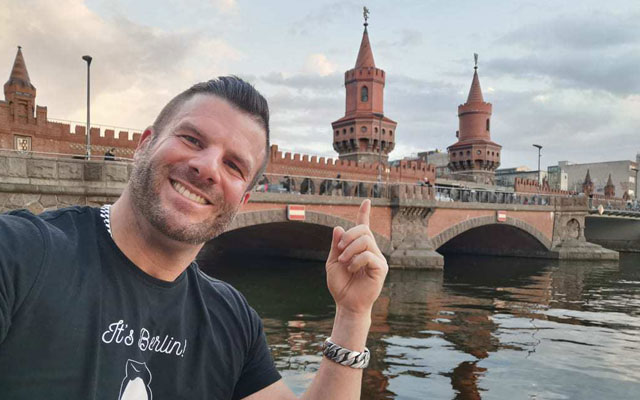
To mark the launch of the partnership, YouTrip and Withlocals will be a hosting a free online live event on June 6 from 17.00 to 18.00, where attendees can experience a virtual tour of Berlin, Pompeii and Amsterdam, hosted by locals from each city.
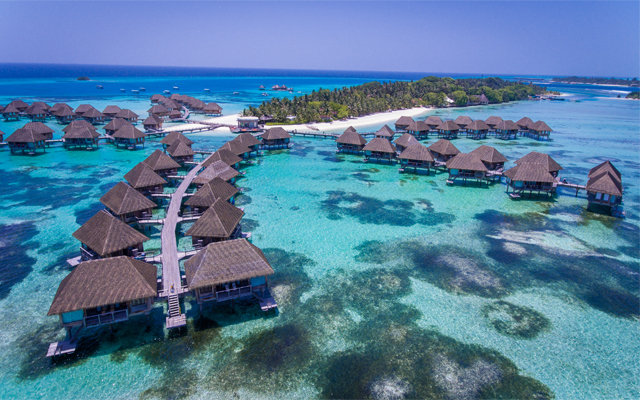
Maldivian authorities have bowed to requests from the tourism and travel industry to refrain from imposing new fees on tourist arrivals when the country reopens its borders sometime in July.
Draft guidelines issued earlier for the country’s reopening to tourism included the imposition of an entry visa fee of US$100 per arrival, and a mandatory Covid-19 swab test at the airport which will set each arriving passenger back US$100. Pre-pandemic, a 30-day free visa was issued on arrival in the Maldives for all nationalities.
The Maldives will reopen its borders to international tourists from July
In a statement on Saturday, the Ministry of Tourism said it will be reopening its borders to visitors in July – four months after the Maldives suspended issuance of on-arrival visas on March 27 to curb Covid-19 – and assured that guests will not be imposed any additional fees to enter the country.
Thoyyib Mohamed, managing director of the state-run Maldives Marketing and Public Relations Corporation, said the guidelines were sent to various tourism trade associations for their feedback, and that they decided to can the proposed fees imposed on tourist arrivals at the trade’s behest.
He said they are awaiting the government’s final approval of the guidelines. According to the draft guidelines released by the Ministry of Tourism, among the changes are a compulsory safe tourism licence of US$50,000 for every approved resort to operate.
As well, on-arrival visas will be granted to tourists committed to a minimum stay of 14 nights in the Maldives, but the entirety of the stay must be booked in one tourist facility.
In addition to taking a PCR test on arrival, also compulsory is the requirement of a negative PCR report dated a maximum of seven days prior to landing in the Maldives and/or a positive anti-body test report taken a maximum of two weeks prior to landing in the Maldives to be produced at the designated airport on arrival.
Check-in procedures at resorts will also change. Upon arrival, tourists shall be escorted directly to their rooms, where they will be given a detailed web-based check-in option to be completed in-room. Additionally, a safe distance of 1m shall be maintained between tourists and staff at all times.
The guidelines stipulate that tourists are to remain in their rooms until the receipt of their on-arrival PCR test results, which will be within 48 hours of sampling, with meals served directly to the room during this period.
Tourists are able to use the common facilities of the resort once they have confirmed to be negative. Buffets are banned at resorts, while a 2m spacing between tables are to be observed strictly.
As at Sunday, there were 1,672 Covid-19 cases in the Maldives, with five deaths.
Update, June 2, 14.15: Tourism Ministry officials have clarified that these are still draft guidelines and subject to change based on proposals and recommendations from the industry.
The Travel Corporation’s (TTC) luxury guided vacation brand, Luxury Gold, has released its Ruby Level as part of its eLearning Masterclass programme, in a bid to support travel advisors amid the recovery phase.
As the second level launched from the brand’s series, The Ruby Level was originally released with the first Sapphire level last September through TCC’s Travel Agent Academy.
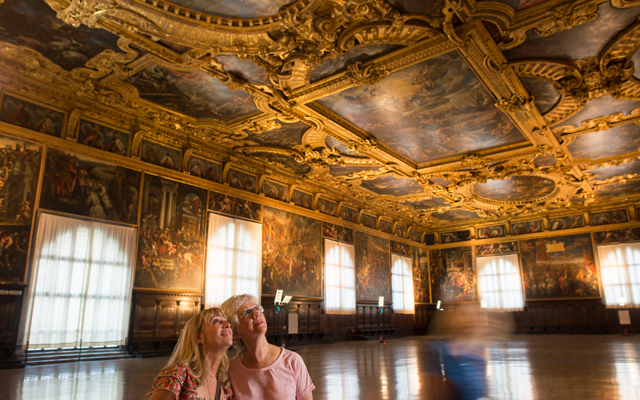
Luxury Gold guests touring Doge’s Palace in Venice during an after-hours private visit, which travel advisors will learn about by taking the Ruby Level masterclass
After completing the new Ruby Level, Travel Advisors will gain a deep understanding of the Luxury Gold difference, where the brand sits in the market, how to sell Luxury Gold journeys confidently, and gain in-depth knowledge of favourite journeys to Europe.
“We are all adapting to this changing world and as we pivot to rebuild our industry, we hope to help our valued Travel Advisors come out stronger than ever and together,” said Anthony Lim, managing director, Luxury Gold.
“Taking this time to develop skills and knowledge will benefit Advisors’ business in the long run, and our Ruby Level eLearning course will offer the ideal opportunity to focus on developing those skills we will need to recover.”
By completing the new Ruby Level eLearning programme, advisors will be able to confidently sell Luxury Gold’s immersive small group journeys and maximise commissions. In addition, they will become eligible for FAM trips and discounts on selected journeys, and be equipped with the necessary knowledge to share with their clients about experiential travel.
Travel advisors can now register for the Ruby Level of the eLearning programme here, by registering through the TTC Academy. After which they will receive a welcome email to sign up for and begin the second level of the Luxury Gold Masterclass.
Marcel Holman has been named managing director of The Langham, Hong Kong and regional vice president, operations – China for The Langham Hotels and Resorts.
In his new role, he will drive the strategy, operations and processes for all China hotels under the luxury brand.
With over 25 years’ experience, Holman was most recently the vice president, China for The Sukhothai Hotels & Resorts, and general manager of The Sukhothai Shanghai.
Prior to that, Holman held leadership roles at Shangri-La hotels for more than 11 years. In 2015, he was instrumental in the conceptualisation, preparations and execution of Shangri-La’s first external food and beverage complex (MEGA 50), comprising three lifestyle venues and a ballroom. During his time with the group, he also assumed the leadership role of general manager – projects for the Shangri-La Hotels & Resorts properties in Singapore, Shanghai and Jakarta.
The Dutch national started his international hospitality career in 1993, dabbling in various operational roles, followed by consecutive assignments at InterContinental Hotels Group, Rotana Hotels, and Shangri-La Hotels & Resorts in Australia, Greater China and the UAE.