TTG Asia
Asia/Singapore Wednesday, 14th January 2026
Page 997

Thailand’s tourism to get clean stamp of approval

0

Thailand authorities are drawing up a stringent set of health and safety certifications to be adapted by tourism players to lead the country into recovery.

At the latest meeting of the Mekong Tourism Advisory Group, Chattan Kunjara Na Ayudhya, deputy governor for international marketing at Tourism Authority of Thailand (TAT), unveiled plans for security and health administration certification to bolster confidence among tourists.
Thailand’s tourism authorities to propose new sanitation standards for tourism businesses; Thai hotel receptionist greeting guest with the wai, a Thai customary greeting, as an alternative to handshake to combat virus

Chattan said that TAT has outlined a set of hygiene protocols for tourism businesses to adhere to. “We want to create a standard where both proprietors and tourists can become more confident using tourism facilities and services,” he said.

He added that the board has identified 10 business groups, namely, restaurants and eateries; accommodation; amusement and recreation parks; transportation; travel agents and tour operators; spas, wellness resorts and retreats; department stores and shops; golf courses and driving ranges; theatres and cinemas; and souvenir shops.

The certification includes a raft of measures, such as availability of hand sanitiser in public areas, adequate soap in restrooms, high maintenance of cleanliness in every area of businesses, and sufficient ventilation.

Chattan added the proposal is currently in the preliminary stages and that TAT is working with relevant ministries and the private sector to develop the framework.

He added: “This is one of the most revolutionary moves we can make at this time. It’s a positive step, not only in creating confidence but in really protecting people who depend on the tourism industry, work in the industry and who visit us. Eventually, every country should have one.”

Thailand’s tourism players are also seeking to position Thailand as a safe and healthy country to visit once travel resumes. Daniel Fraser, CEO of Smiling Albino, is proposing Hygiene Plus. The campaign will see DMCs and other tourism players commit to a set of hygiene standards approved by a medical body.

He said: “We want to see Thailand emerge as a hygiene-friendly destination. We want to be able to (set out certain) standards and launch a series of commitments from when the guests leave the hotel to everything that happens in between until they come back to the hotel.”
Shibuya revitalisation a step closer to completion

0

Shibuya has entered the third and final stage of an ambitious urban development plan that aims to transform the bustling Tokyo district into a thriving, modern centre for business and entertainment by 2027.

Led by East Japan Railway, Tokyo Metro and developer Tokyu Land Corporation with support from the local government, the extensive enhancements centre around Shibuya Station and its surrounds.

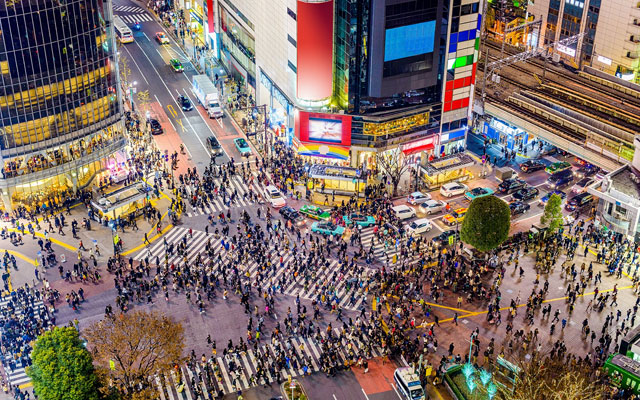
Shibuya is in the midst of a major facelift that is slated for completion in 2027 

In 2019, the second phase of the project was completed with the opening of three new complexes: Shibuya Scramble Square, Shibuya Fukuras and Shibuya Parco.

At 230m tall, Shibuya Scramble Square is the tallest building in Shibuya and houses Japan’s largest rooftop observatory called Shibuya Sky, which overlooks Shibuya’s famous scramble crossing. The skyscraper also has more than 200 outlets, including extensive F&B options.

Shibuya Fukuras, designed as a one-stop-shop for international visitors, comprises a bus terminal serving Haneda and Narita airports, a tourist information centre, luggage storage and delivery, and foreign currency exchange.

For entertainment, Shibuya Fukuras has an art centre while Shibuya Parco boasts a wide range of shops and a 636-pax theatre.

The facilities add to other recent developments that have increased Shibuya’s appeal as a location for business events.

Shibuya Stream, which is connected to the south side of Shibuya Station, is one example. Opened in 2018, its 250m2 multipurpose hall caters for seminars, exhibitions and concerts, hosting 700 pax standing and 294 pax theatre-style. Floors 9-13 are housed by the Excel Hotel Tokyu.

Two leafy outdoor spaces on the first floor beside the newly redirected Shibuya River offer sophisticated spaces for small-scale events or functions.

Still to come, in 2023, is the Shibuya Station Sakuragaoka East District Redevelopment covering 2.6ha. The Central and West Buildings of Shibuya Station are scheduled for completion in 2027, to coincide with the opening of the maglev service that will connect Tokyo and Nagoya in 40 minutes, reducing travelling time by 50 minutes.

Shibuya Station, which serves 2.8 million passengers daily, is also to get a boost, with some platforms and lines being consolidated or moved to improve service and connections.

Indonesia’s tourism players stress need for better online visibility

0

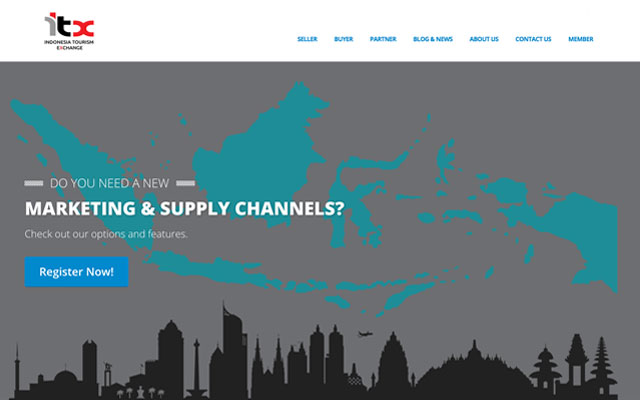
In anticipation of the eventual industry rebound, Indonesia’s travel trade is calling on tourism authorities to boost its online presence by enhancing the Indonesia Tourism Exchange (ITX) – a platform for tourism providers to market their products online – so that it is in a better position to compete with its regional and international counterparts.

With large-scale social restrictions currently in place, the need for tourism businesses to have an online presence post-Covid-19 becomes more crucial.

Indonesia tourism players call on the government to improve the existing Indonesia Tourism Exchange website

The trade’s appeal is in response to Indonesia’s minister of tourism and creative economy Wishnutama Kusubandio’s statement highlighting the importance of going digital during a recent web meeting with the Association of Indonesian Tours and Travel Agencies.

During the meeting, Wishnutama noted the rise of virtual meetings and webinars among tourism players amid the Covid-19 pandemic, urging the trade to ramp up digitalisation efforts.

Wishnutama promised that he would engage local e-commerce experts to build a new digital platform for Indonesian travel companies so that it could compete against foreign travel platforms when tourism resumes.

However, not all trade players are in favour of the idea.

Jongki Adiyasa, executive director of Ina Leisure Tour & Travel, said: “Making a digital platform is not like baking a cake. Based on my experience, it will take at least two years to make the platform work well, provided the travel company has very good IT staff.”

Though he acknowledged the importance of an online presence, Jongki said that it would be a costly endeavour for the country’s inbound players, who are mostly not tech-savvy, to go digital during the Covid-19, especially since their businesses have been hard hit by the pandemic.

He opined that rather than build a new platform, the government should work with inbound players and the makers of Indonesian marketplaces, such as TravelBiz, to enhance the existing ITX platform, especially in destination promotion efforts.

Lamenting how the current ITX platform does not sell tourism products crafted by Indonesians, Jongki hopes a refreshed version of the site will provide a space for inbound players to feature their products, such as tour packages and special bundled prices for attractions and accommodation.

Such improvement is not enough, argued Ng Sebastian, owner of Incito Vacations, adding that Indonesia needs a marketplace platform that enables potential inbound travellers to directly make online bookings.

For Ng, the most important thing that the government needs to take into account is that the platform has to adopt good SEO practices so that it can show up on the first page.

He noted that local industry players have already gone down the digital route a long time ago. “However, the question is how sophisticated our websites are. (Based on my observation), none of them is very good yet,” he said.

According to Indonesian travel companies that already operate online platforms, they face several difficulties in their digital marketing efforts, including failing to grow organic traffic, and improve SEO rankings.

Heritage Cruises to sail the coast of Vietnam

0

Heritage Cruises will launch its maiden voyage following the coastline of Vietnam in September 2020, on board four-deck, 20-cabin boutique ship Binh Chuan.

The first 10-day/9-night Heritage Binh Chuan Expeditions will depart from Halong Bay on September 7, 2020, and arrive at Nha Rong Saigon Seaport on September 17, with stopovers in Danang and Nha Trang. The return voyage will take place from September 20-29.

Heritage Binh Chuan will ply the coast of Vietnam come this September

The Heritage Binh Chuan Expeditions offers cruise holidays to more than four destinations in Vietnam and UNESCO heritage sites, such as Halong Bay, Hue, Hoi An, and Saigon. An array of onboard activities and shore excursions are also available.

After these maiden expeditions in September 2020, Heritage Binh Chuan will embark on two expeditions per month from September 2022, said a spokesman.

The maiden voyage from Haiphong to Saigon is a charter booked by an Italian group but the return trip from Saigon to Haiphong, also calling at Nha Trang and Chan May (Hue) seaports on the way back, are still available on a first come, first served basis, with prices start from US$5,200++ per person for the 10-day/9-night expedition.

Abu Dhabi rolls out e-learning platform for travel trade

0

The Department of Culture and Tourism – Abu Dhabi (DCT Abu Dhabi) has launched the Abu Dhabi Specialist Programme, an e-learning platform which will educate travel trade industry professionals with all destination-related information about the emirate through a series of online courses.

The programme will be rolled out in three phases in several languages across 17 markets, including the UK, the US, Canada, India, Australia, New Zealand, China, South Korea, Germany, France, Italy, Ireland and Russia, as well as GCC countries.

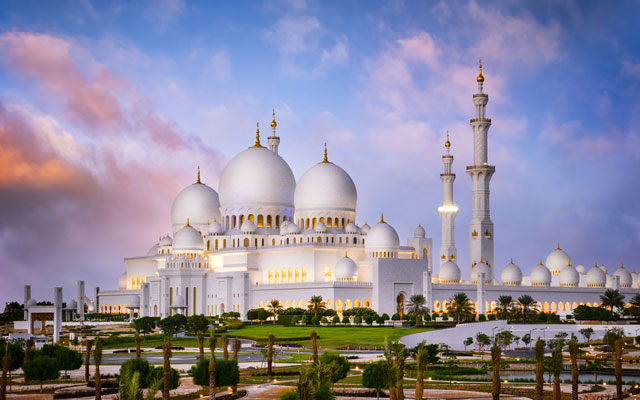
Abu Dhabi rolls out online courses for travel trade to learn more about the emirate; Sheikh Zayed Grand Mosque in Abu-Dhabi, UAE pictured

The first phase was launched on May 4, in the US, the UK, Canada, Australia, New Zealand and India.

Designed specifically for industry partners such as tour operators, travel agents and wholesalers, the Abu Dhabi Specialist Programme will equip travel trade professionals with up-to-date information about the UAE capital, so that they will be able to better promote the destination.

The e-initiative, which is part of DCT Abu Dhabi’s response to the Covid-19 crisis, aims to reach a larger number of travel trade agents worldwide, including previously untapped markets like Canada and New Zealand, according to Saood Al Hosani, acting undersecretary at DCT Abu Dhabi.

The courses encompassed in the programme cover information related to key attractions in Abu Dhabi, local events, accommodation options, and much more. Additionally, it includes a rewards section featuring incentive programmes, exclusively available for Abu Dhabi Specialists – travel trade agents who graduate from the main programme.

The Abu Dhabi Specialist Programme is now available for travel trade professionals on abudhabispecialist.com.

For the Indian travel industry, upon successful completion of two modules, agents can win an Amazon gift voucher worth Rs 10,000 (US$132). As well, upon successful completion of the Specialist Programme, agents stand to win the latest smartphones and a trip to Abu Dhabi.

Digitalisation, domestic travel to drive Philippine hotels’ recovery

0

Philippine hotels and resorts are preparing to reboot operations via an overhaul in their business processes, with a renewed focus on tapping the domestic market and advancing digitalisation for post-pandemic travel.

In a webinar run by WOFEX University, The Linden Suites general manager Celeste Romualdo said that the biggest challenge in charting business recovery plans is “what will be left of the market after the community quarantine” even as her property, one among a handful in Ortigas still allowed to open during this time as it has long-stay guests and medical frontliners, is already adopting new safety and social distancing rules.

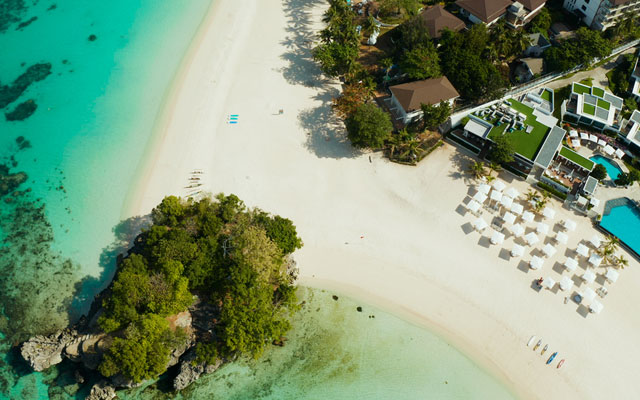
Hotels in the Philippines will need to adapt to new safety and health protocols when travel resumes, says industry players; aerial view of sandy beach and hotels in the Boracay, Philippines pictured

Romualdo added that there will be changes in how sales call are being carried out and the way meetings are set with clients, and that there will be an emergence of more online platforms and digital transactions as opposed to human-to-human contact.

In a webinar conducted by Hotel Sales and Marketing Association, Margie Munsayac, vice president sales and marketing of Bluewater Resorts in Cebu and Bohol, said that they will go after the local market, which will be their major source. “Most people are experiencing cabin fever so they will hit the beach,” she opined.

She shared that the plan going forward for hotels will be to operate on a lean management as there will be lower occupancy, in keeping with new safety measures such as social distancing. She added that properties should look at offering more flexible rates and cancellation policies.

Elpidio Beloso Jr, general manager, Holiday Inn Express at Resorts World Manila (RWM), suggested that business recovery plans should also include redirecting to digital marketing, revisiting unique selling points, as well as focusing on local markets and product enhancements.

In the aspect of ramping up digital promotions, Beloso said that RWM has launched a talent competition called Kwarto (Room) Guts Talent where they invite overseas Filipino workers who are quarantined in their properties to create a video displaying their talent, with the most creative and entertaining entries to receive vouchers for an overnight stay in one of three selected properties, and meal for two.

Maldives may reopen borders by July

0

Preparations are underway for the Maldives to resume tourism by July after a prolonged shutdown due to the Covid-19 pandemic, government and industry officials said.

Tourism minister Ali Wahed and finance minister Ibrahim Ameer have both said the most likely scenario is that the borders would be re-opened by July for tourist arrivals.

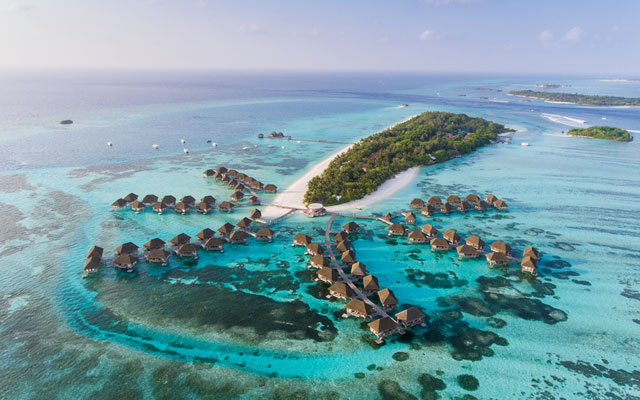
Maldives set to welcome tourists against in July

However, Abdulla Ghiyas, former President of the Maldives Association of Travel Agents and Tour Operators, said that the reopening of borders in July would also depend on the containment of Covid-19 cases.

Maldives has recorded 785 confirmed cases of Covid-19 as at May 6, including 528 foreigners, with a death toll of three, according to the country’s Health Protection Agency.

The infection of foreigners are mostly among Bangladeshi nationals who work in the capital Male as construction workers and in other unskilled jobs. The infection rate in resorts have been much less.

A government relief package has been offered as loans and debt moratorium to the private sector, which is largely made up of tourism businesses. Discussions about a second relief package are ongoing, according to Ghiyas.

Tourism represents more than 70 per cent of the business in the Maldives, with the government relying on tourism taxes and lease rentals of tourism islands to sustain the economy.

According to Suresh Dissanayake, assistant vice president – sales marketing at Heritance Aarah & Adaaran Resorts – Maldives, the government has plans to re-open its borders first to regional tourism traffic from India, China, Sri Lanka and other Asian countries by 3Q2020, followed by Europe in October or November.

China is the Maldives’ single largest tourism source market, but as a region, nearly 50 per cent of arrivals come from Europe.

Dissanayake said that both Emirates and Qatar are expected to resume flights from June, with the Maldives set to be among the first destinations to be served by the Middle Eastern carriers.

While most resorts in the Maldives are closed, about 10 to 12 resorts have been transformed into quarantine or isolation facilities. There are also another 10 resorts housing a combined 500 foreign guests, some who deem it safer to remain in the island-country than return to their own hometowns.

Repatriation flights have been operating intermittently to ferry foreign workers to their homeland.

The Maldives, which is home to some 200 resort islands, closed its air and sea borders to tourist arrivals on March 27.

Earlier in the year, the government was positive on tourism prospects, targeting two million arrivals this year after last year’s record 1.7 million. However, in light of the pandemic-induced shutdown, the number of tourist arrivals to the Maldives this year could drop by half of 2019.

Singapore births framework for tourism recovery, development

0

To help tourism businesses tide through the downtime amid the Covid-19 pandemic, the Singapore Tourism Board (STB) has developed a new framework featuring new platforms for easier digitisation and potentially faster recovery.

Under the three-step framework coined Learn Test Build, companies can learn to identify gaps and opportunities in their business models through the STB Tech College, as well as a new self-diagnostic tool, the Tourism Transformation Index (TXI).

Quek: tourism businesses hoping to survive and thrive in the new normal will need data, insights and ability to test and scale new products fast

TXI provides a holistic gauge of a company’s current state of digital transformation across six areas: leadership and organisation, process and operations, customer, innovation, technology, and data. Businesses can then identify the next steps that they should take to advance their state of transformation. TXI is being launched this quarter.

“TXI is like a company’s annual health check-up in this age of disruption. On STB’s end, this is an important first step that will allow us to identify areas of intervention for our stakeholders,” explained Quek Choon Yang, chief technology officer, STB.

Under the “Test” stage, STB will launch ThreeHouse, a new physical space at its headquarters where companies can collaborate, workshop and prototype new ideas and solutions. If successful, these ideas will be picked by STB to be scaled to a bigger platform. ThreeHouse will be launched in 4Q2020, and co-located with the Singapore Tourism Accelerator, another programme under the “Test” section of the framework.

Finally, the “Build” stage encourages businesses to formulate viable and lasting solutions. Besides information provided on open-sharing platform, the Tourism Information and Services Hub, STB has also opened its tourism data pool, the Singapore Tourism Analytics Network (STAN), to the tourism industry.

Businesses can now access 10 years’ worth of Singapore’s visitor arrival data broken down by market, region, visitor profile and mode of arrival. They will be able to gain consumer insights, create visualisations, analyse datasets and collaborate with other players on data analytics projects.

This platform is essential for businesses to “identify where the pockets of opportunities are once the tourism industry shows signs of recovery”, said Quek, elaborating that “certain sectors and certain source markets will recover quicker than others”.

He continued: “Post-Covid, we expect consumer behaviour and the norms for travel to change for good. Consumers are likely to come out of the pandemic with a heightened sense of hygiene, both personal and environmental.

“Hence, it is important for tourism businesses to build trust with consumers, provide safety for visitors and be able to influence consumer choices. To survive and even thrive in this new normal, businesses need to be armed with the right data, insights and ability to test and scale new products fast.”

STB will soon conduct an industry-wide capability upskilling programme and engage stakeholders, including hotels, attractions, business event companies and travel agencies, on how to adopt STAN and data analytics in their businesses.

Future updates for STAN include enhanced capabilities such as advanced data visualisation and analytics, as well as sandboxes for users to collaborate and co-create data models.

Malaysia extends partial lockdown until June 9

0

Malaysia has extended its conditional movement control order (CMCO) for another four weeks until June 9, announced prime minister Muhyiddin Yassin in a live broadcast on Sunday (May 10).

This marks the fifth time that the government has extended the country’s lockdown, which kicked in on March 18.

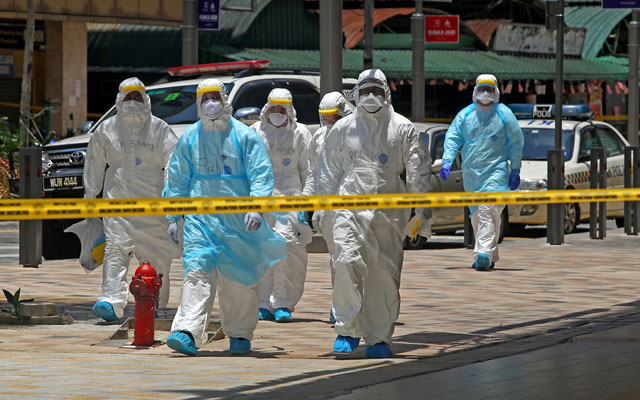
Malaysia is currently in its fifth phase of the conditional MCO; health workers donning protective suits on the streets of Kuala Lumpur pictured

The prime minister said that the extension was based on overall public sentiment wanting the government to continue taking measures to curb the pandemic.

He also announced a ban on interstate travel, noting that several major festivals fall during the CMCO period, including the Kaamatan and Hari Gawai, which are harvest festivals celebrated in Sabah and Sarawak, respectively.

However, friends and relatives living within the same state will be allowed to visit each other’s homes for the Eid festivities, as long as such gatherings are limited to 20 people at a time, he said.

Schools, worship venues and cinemas will remain closed under the new extension, while mass public gatherings outdoors are still banned.

Malaysian health authorities on Sunday (May 10) reported 67 new Covid-19 cases, bringing the country’s total to 6,656, with a death toll of 108.

International tourist arrivals could plunge up to 80% in 2020: UNWTO

0

The Covid-19 pandemic has caused a 22 per cent fall in international tourist arrivals in 1Q2020, and could result in an annual decline of between 60 per cent and 80 per cent year-on-year, according to the latest data from the UNWTO.

The UN body said that the dip in arrival numbers places millions of livelihoods at risk and threatens to roll back progress made in advancing the Sustainable Development Goals.

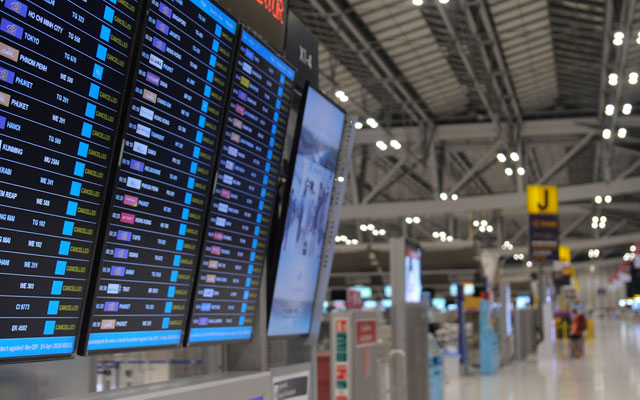
International tourist arrivals in 1Q2020 fell by 22 per cent due to the global pandemic; departure board displaying cancelled flights due to Covid-19 at an empty airport in Bangkok last month

UNWTO secretary-general Zurab Pololikashvili said: “The world is facing an unprecedented health and economic crisis. Tourism has been hit hard, with millions of jobs at risk in one of the most labour-intensive sectors of the economy.”

Available data reported by destinations point to a 22 per cent decline in arrivals in the first three months of the year, according to the latest UNWTO World Tourism Barometer. Arrivals in March dropped sharply by 57 per cent, as many countries went int lockdown, and unprecedented travel restrictions and worldwide border closures came into place. This translates into a loss of 67 million international arrivals and about US$80 billion in tourism receipts (exports), said UNWTO.

Although Asia and the Pacific shows the highest impact in relative and absolute terms (-33 million arrivals), the impact in Europe, though lower in percentage, is quite high in volume (-22 million).

Prospects for the year have been downgraded several times since the outbreak and uncertainty continues to dominate. Current scenarios point to possible declines in arrivals of 58 per cent to 78 per cent for the year. These depend on the speed of containment and the duration of travel restrictions and shutdown of borders.

Depending on when lockdowns and travel restrictions are lifted, UNWTO has outlined three possible scenarios for 2020, alongside the ensuing impact of the loss of demand in international travel:

  • Scenario 1 (-58 per cent), based on the gradual opening of international borders and easing of travel restrictions in early July, could see a loss of 850 million to 1.1 billion international tourists
  • Scenario 2 (-70 per cent), based on the gradual opening of international borders and easing of travel restrictions in early September, could see a loss of US$910 billion to US$1.2 trillion in export revenues from tourism
  • Scenario 3 (-78 per cent), based on the gradual opening of international borders and easing of travel restrictions only in early December, could put 100 to 120 million direct tourism jobs at risk

Calling this the worst crisis that international tourism has faced since records began in the year 1950, UNWTO said that the impact will be felt to varying degrees in the different global regions and at overlapping times, with Asia and the Pacific expected to rebound first.

Domestic demand is expected to recover faster than international demand, according to the UNWTO Panel of Experts survey. The majority expects to see signs of recovery by 4Q2020 but mostly in 2021. Based on previous crises, leisure travel is expected to recover quicker, particularly travel for visiting friends and relatives, than business travel.

The estimates regarding the recovery of international travel is more positive in Africa and the Middle East, with most experts foreseeing recovery still in 2020. Experts in the Americas are the least optimistic and least likely to believe in recovery in 2020; while in Europe and Asia, the outlook is mixed, with half of the experts expecting to see recovery within this year.