TTG Asia
Asia/Singapore Monday, 12th January 2026
Page 978

China’s tourists warming up to foreign travel again

0

Destinations across the globe are pinning hopes on China leading travel recovery, as a recent survey reveals 45 per cent are willing to travel overseas this year.

At last week’s inaugural Arabian Travel Market Virtual, panel members discussed a joint survey by Ivy Alliance Tourism Consulting, China Comfort Travel Group, and PATA, which revealed 60 per cent of Chinese intend to travel in 2020, with more than 45 per cent wanting to go abroad.
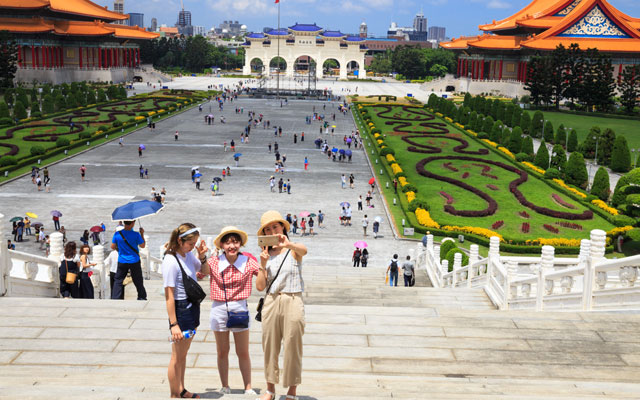
A recent survey showed Chinese travellers are keen to travel abroad, with more preferring to tour in small groups

Adam Wu, CEO of CBN Travel & Mice and World Travel Online, regarded the results as “very good news for foreign destinations (that) need to start planning for this”.

Tropical island and cultural destinations topped the choices, with a shift in travel trends to favour smaller group travel. Almost half of the respondents said they prefer group tours, however, the wake of coronavirus has led to a surge in demand for small group tours and FIT.

Tony Ong, chief business officer and vice president of HCG International Travel Group, said: “Groups will be smaller, reduced to 10-50 people, which will probably happen one to two months after borders have opened.”

Japan was the number one desired destination, followed by Thailand, Europe, the Maldives and Singapore.

Helen Shapovalova, founder and director of Pan Ukraine, predicts ecotourism will be a major trend with Chinese travellers once restrictions are lifted. She said: “Natural settings with green open spaces, mountains, rivers and fresh air will play a big part post-Covid-19.”

While shopping has always been a major drawcard for Chinese tourists, especially luxury goods, it is expected this may change as travellers balance risk management with the customer experience.

Destinations around the world need to start preparing for the rebound in China outbound tourism: Wu

Lisa Dinh, tourism director at VIA Outlets, said: “Trust is the new currency. The demand is still there, but health and safety and relationship-building will be key. Training will be essential to changing mindsets.”

Agreeing, Taleb Rifai, chairman of the International Institute of Peace for Tourism, said that destinations need to have solid health and safety measures in place if they want to capture the market.

He added global governments need to work together by signing bilateral agreements. An internationally-recognised certification programme would also help standardise levels of sanitisation and build consumer confidence.

Laguna Phuket’s marathon goes virtual

0

Banyan Tree’s Laguna Phuket, Asia’s first integrated resort, will be pushing forward with its annual Supersports Laguna Phuket Marathon (SLPM) – in virtual form – this weekend.

Held over the original event dates on June 13-14, the inaugural SLPM Virtual Weekend will be an interactive experience to remain connected with its keen runners and guests worldwide amid the Covid-19 pandemic, while encouraging them to keep fit.

Meanwhile, the resort still plans to hold a physical marathon year-end, with the 15th Supersports Laguna Phuket Marathon now set to take place from December 5-6, 2020.

Race organiser Go Adventure Asia welcomes participants to choose any preferred distance – the 2K Kids Run, 5K, 10.5K, Half or Marathon.

Entry is free to all existing SLPM registered runners. For new runners who have not yet registered for the SLPM in December, the exclusive entry fee is US$3 per person. All proceeds from ticket sales will be donated to the Kao Kon La Kao Foundation.

Participants stand to win prizes, donated by the luxury hotels, spas, golf and lifestyle facilities within Laguna Phuket. Runners are to complete their individual races anywhere worldwide on June 13-14, 2020, while following local public health regulations, and submit online from June 13-19, 2020.

Registration can be made here, and is now open until June 12, 2020.

Accor expects to reopen 70% of its properties by July

0
As countries emerge from lockdowns, Accor projects that 70 per cent of its global properties will reopen by July

As destinations across the world ease travel curbs, Accor predicts that more than 70 per cent of its global network will reopen by the start of July.

To leverage on the recovery in travel demand, the group said in a press statement that it will extend the flexible cancellation policy and other benefits for members of its loyalty programme, ALL – Accor Live Limitless.

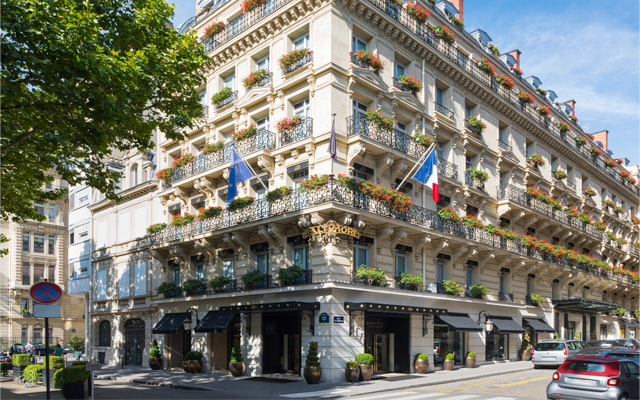
Accor has reopened more than 50 per cent of its properties, including the Sofitel Paris Baltimore Tour Eiffel (above) in France, and anticipates that more than 70 per cent of its global network will reopen by July

Accor said that it has seen hotel reservations doubling in the past few weeks. To provide added flexibility, the group will continue to allow members to cancel bookings made at flexible rates at no charge, up till the day of arrival.

For stays ending June 30 or earlier booked on non-flexible rates, the flexible cancellation policy has also been extended. Members can either shift their booking to another date within next 18 months at the same hotel, or receive a voucher with the full value of their stay.

In terms of status and points validity, Accor will extend the status that members achieved in 2019 till December 31, 2021. Expiry of reward points will be pushed to December 15, 2020, for guests with classic status; and to April 30, 2021, for guests with silver, gold or platinum status. Suite night upgrades left unused by end-2020 will be valid for another 12 months.

REST Collections plans live-stream holiday shopping for China market

0

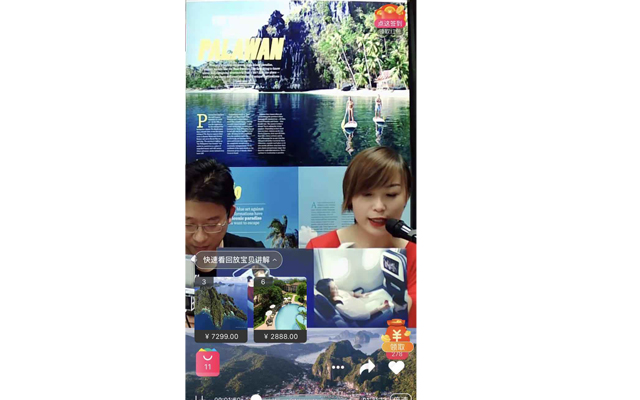
While China’s borders remain closed to non-essential travel, Shanghai-based REST Collections is ready to restart its sales and marketing engines for its hotel clients to get the Chinese outbound market to spend – this time by relying on live-stream shopping.

Calvin Tay, senior vice president of strategic partnerships (global travel & hotels) with the Shanghai-headquartered company, told TTG Asia that live-stream shopping – zhibo in Chinese language – has been a popular and effective channel for retailing a wide range of products, from food and fashion to property.

REST Collections leverages live-streaming to help hotels worldwide attract Chinese outbound travellers

“Some major OTAs in China have turned to live-stream channels to promote and sell tour packages to the Chinese market, but the products are for domestic travellers. We may well be the first to use live-stream to promote and market overseas hotels in China,” remarked Tay.

REST Collections, through its main office in Shanghai and branch offices in Singapore, Kuala Lumpur and Bangkok, helps regional hotel chains and independent properties to target the China outbound market as well as provide consultancy and design work around IT systems for reservations, housekeeping and more. It counts Thailand’s Cape & Kantary Hotels as well as individual properties such as Star Suites KL, Liu Men Hotel Melaka and The Pines Melaka in Malaysia; Rest Bugis and Hotel 1888 Collection in Singapore; and others among its clients.

His hotel clients are ready to shave 30 to 50 per cent off room rates and throw in complimentary meals for limited-time pay-now-stay-later deals that will be promoted and sold on the live-stream sessions from mid-June.

To bring a fresh angle to his clients’ live-stream sessions, Tay is working on partnerships with commercial organisations from outside of the travel and tourism industry.

“We are talking to a Chinese jewellery chain for cross-promotions. For example, our session could focus on weddings and honeymoon, where the audience could purchase engagement bands from the jeweller and get a special price for our honeymoon resort package,” he shared, adding that popular Chinese social media platforms such as WeChat, Xiaohongshu and Bilibili will be used to raise awareness of the sessions.

“China is a very competitive and tech-driven marketplace. Non-Chinese hotels wanting to succeed here must be ready to invest in digital channels and digital content. At the same time, they must be able to leverage all possible channels to get visibility. Our recent partnerships with Spring Airlines and China Southern Airlines will grant our hotel clients an additional platform to attract Chinese outbound travellers,” added Tay.

Hotels should work to sell rooms with attractive deals, ahead of the opening up of international borders: Tay

Tay is not discouraged by the existing travel barriers, saying that consumers emerging from the lockdown are all the more hungry for travel and consumption. “Most people are spending time at home and in their country for a good six months of 2020, and that desire to resume travels and to spend is growing in intensity, especially among those who are so used to frequent travels,” he said.

“It makes no business sense to sit and wait (for the barriers to be lifted), and to not stimulate market demand. The Chinese are starting to plan for their overseas vacations, for when it is safe to do so. Now is the time for us to introduce travel ideas to the market, to inspire them towards their next holiday.

“There is even an opportunity for transactions. If hotels are able to come up with very attractive buy-now-stay-later deals, travellers will grab,” he opined.

He predicts that the traditional outbound travel peak this July and August, when Chinese schools break for summer, will likely fall flat for overseas businesses looking to welcome again the Chinese. Instead, he is pinning his hopes on the October peak season, and is confident that the Chinese will snap up early bird travel deals in the next two months “when offers are at their best”.

Pandemic fast-tracks technology adoption among hotels

0

The Covid-19 pandemic has awoken many hotel players to the importance of digital solutions, and this new openness to innovation may reshape the entire hospitality experience in the post-Covid world.

Joseph Ling, founder and CEO of digital concierge operator Vouch SG, said: “Before Covid-19, the hotel industry as a whole was relatively resistant to technology disruptions, and lagged behind in digital transformation. But through this crisis, hotels have become more open to exploring contactless and bring-your-own-device solutions.”

More hotels are adopting new technologies to cater to changing demands in the post-Covid world; The Pavilions Phuket provides in-room customised smartphones (above) operated by Portier Technologies

Vouch SG – which counts Andaz Singapore, Capri by Fraser and Pan Pacific Singapore among its clients – has developed a standalone F&B takeaway and delivery ordering system geared towards hotels, as well as a temperature recording and health monitoring feature on its digital concierge platform.

As more hotels open up to digital innovations, interest in other solutions have come to the fore. Ling shared that one rising solution with high adoption rates is contactless ordering for dine-in customers. He said: “As customers return to dining in, they are going to have greater sensitivity to hygiene. Physical menus are surfaces constantly touched by customers and staff, and are therefore becoming less desirable. We foresee that customers will increasingly prefer to order from their own mobile phones to minimise unnecessary contact.”

He opined that when travel resumes, hotels should also challenge and review “outdated features of the modern hotel room”, such as in-room telephones and room service menus, which are common culprits of cross-contamination among guests.

Another tool that hotels are now “increasingly keen” on is mobile self check-in, of which there is still a lack as many are seeded in a hotel or brand app, a condition that introduces “high friction” to guest adoption.

Deniz Tekerek, CEO of Portier Technologies, concurred. He expressed: “The key focus when investing in technology is to determine its actual impact and ability to engage. Having technology that does many things is useless if guests fail to use (it). In that respect, I’d say that applications, for example, have no real place in the hotel industry, as they deliver undesirable engagement levels.”

An alternative would be the use of web-based services that guests can easily access on their phones, or a dedicated concierge device altogether.

Tekerek shared that the pandemic is serving “as an accelerator” for the adoption of such solutions with a “strong focus on reducing touchpoints, digitally educating guests about new measures, keeping guests safe when they explore the destination, and more”.

Portier Technologies operates a browser-based chat portal and customised smartphones, which are currently placed in Accor, Banyan Tree, Hyatt, and Marriott properties, as well as The Siam in Bangkok and Swiss Luxury Apartments in Geneva.

“The hottest topic in our sector is contactless engagement. The general sense for hotels seems to be the need to find different ways of staying engaged with guests, given that physical proximity might be a no-go, at least initially,” said Tekerek.

He revealed that the company is currently speaking with more than 300 hotels and resorts about the adoption of Portier Technologies solutions.

Indian hoteliers plan domestic revival as government eases lockdown

0

Hoteliers in India are looking to the local travel market for a business revival as the government lifts restrictions on hotel operations in safe zones from this week.

While some Indian states like Delhi have decided that hotels will remain shut, those that are moving ahead with business resumption are confident that local demand will ensure good occupancy rates.

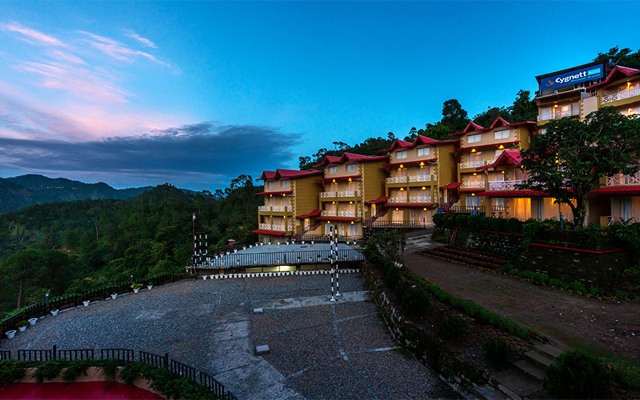
As India lifts lockdown restrictions, hotels like Cygnett Hotels & Resorts are looking to tap the domestic market in their initial recovery phase; Cygnett Resort Mountain Breeze Nainital pictured

Gaurav Taneja, corporate general manager, Amatra Hotels & Resorts, opined that local tourists who have not been able to travel overseas will turn to holidaying at home.

Sarbendra Sarkar, founder and managing director of Cygnett Hotels & Resorts, said: “To begin with, we will be targeting our existing guest database through e-marketing efforts. Our sales force will reestablish connections with domestic travel agents, and we are actively updating our travel agent network on the safety protocol put in place (at our hotels).”

Health and safety measures at hotels are of global concern now, as travellers return to activity in a world without a Covid-19 vaccine.

“The world around us has changed fundamentally and it has become imperative that we take even more stringent measures to ensure our guests and associates feel safe as we prepare to welcome them back again” remarked Anuraag Bhatnagar, chief operating officer of The Leela Palaces, Hotels and Resorts.

According to Indian credit rating agency, ICRA, hotels in the country have been operating at 10 to 15% per cent occupancy and losses are mounting. It has predicted that the hotel industry recovery may only begin after three to four quarters and contingent on a vaccine, while the normal state of business may only be seen in two to three years’ time.

Taiwan rolls out three-part plan to win back tourists

0

As it readies to welcome back international tourists in 3Q2020, Taiwan has launched a three-phase reopening plan, which includes the budgeting of NT$2 billion (US$67.6 million) for tourism re-introduction.

Phase one, currently underway, includes the drawing up of a pandemic prevention tourism plan, comprising various tourism-related guidelines including quick action plans in the event of a fresh outbreak. Travel and tourism players have also undergone training courses schooling them on how to bolster confidence among tourists.

Covid-19 prevention plan, training courses for players in travel form part of Taiwan’s tourism recovery plan; Taiwan’s highest peak Yushan Mountain pictured

In the second phase, an estimated NT$2 billion has been budgeted for tourism re-introduction. As part of the training, up to 300,000 tourism players will partake in local FAM tours to be eligible for additional relief subsidies. Designed to familiarise agents with the health and safety measures established at tourist spots, the itineraries will cover local specialty outlets, homestays, attractions, shopping, and more.

These efforts will build up towards the restart of international tourism under the third phase, following Taiwan’s implementation and successful testing of the measures adopted at the domestic level.

Thailand draws up safety guidelines for tourist attractions, beaches

0

Thailand’s health department and public health ministry are recommending curbs on the number of visitors at popular tourist spots to avoid a second wave of Covid-19, as the government mulls the reopening of more attractions and businesses ahead of schedule.

Following a two-month closure, Bang Saen Beach in Chonburi province begun welcoming visitors again this week.

Safe distancing and wearing of masks among new guidelines for Thailand’s tourist spots and beaches

Department of Health (DOH) director-general, Panpimol Wipulakorn, said that even though restrictions on domestic travel have been eased, travellers should continue to practise safety measures such as social distancing, wearing masks, and regular handwashing.

The DOH is collaborating with the relevant agencies to establish health and safety guidelines at tourist attractions and beaches. Tourists numbers will be limited and they will have to maintain a safe distance from each other. As well, water activities will be limited, with fewer allowed on banana boats, speed boats, and rubber hoops.

Tourists are expected to strictly adhere to the location’s guidelines, wear a mask at all times on the beach, wash their hands frequently, refrain from shouting when swimming, and maintain a one- to two-metre distance from each other both on land and in water. Public employees are also required to wear a face shield and gloves.

In addition, handwashing stations and gel will be made available at tourist facilities, while public washrooms will be cleaned at least every two hours.

Taweesilp Visanuyothin, spokesperson for the Centre for Covid-19 Situation Administration (CCSA), said businesses and activities which has plans to prevent virus transmission may reopen ahead of schedule in the final phase of the Covid-19 lockdown.

He added that the CCSA is also discussing the fourth and final phase of the relaxation of businesses and activities that are in the highest-risk category, such as pubs, bars, discos, and event venues.

The government plans to completely lift the lockdown on all businesses and activities across the country on July 1. This includes the lifting of interprovincial travel restrictions, as well as ending the emergency decree and curfew. Both the emergency decree, as well as the ban on international travel will end June 30.

Indonesian hotels roll out discounts to woo travellers

0

From throwing in free nights, to dangling discounts and pay-now-stay-later deals, hotels in Indonesia are sparing no effort to drive up demand and clinch sales in a bid to keep operations afloat amid the pandemic.

Since May 21, Atria Hotel Magelang (AHM) has started holding weekly live auctions on the hotel’s Instagram account, selling discounted rooms, F&B vouchers, and social gathering and wedding packages.

Indonesian hotels like InterContinental Bali Resort (above) are resorting to discounts and pay-now, stay-later promotions with long validity periods to attract travellers

Bids for room vouchers start from 200,000 rupiah (US$14), while F&B vouchers go for 100,000 rupiah, with bid increments set at 25,000 rupiah.

Chandra Irawan, general manager of AHM, shared that the auction was to generate cash flow for the hotel. “We are not looking for profit, this is our effort to survive,” he elaborated.

He shared that the four-star hotel has been able to sell at least 20 to 30 vouchers during each hour-long auction.

Santika Indonesia Hotels & Resorts, on the other hand, has chosen to organise the Santika Online Travel Fair, to keep the business afloat.

Its general manager of business development and marketing communications, Sudarsana said: “About 75 per cent of our hotels are shut down. To be able to resume operations, these hotels need money, that is expected to be obtained from online travel fair.”

Sudarsana elaborated that funds raised from the online travel fair will help the hotel to maintain cash flow, especially since hotel expenses have surged as they had to buy personal protective equipment for hotel employees and guests, while sales of hotel rooms have plunged.

The Santika Online Travel Fair, which was held from May 26 to June 6, was held through the Santika member app MyValue, reaching out to the hotel chain’s 600,0000 loyalty members. In total, Santika managed to sell 1,920 vouchers.

During the online fair, besides offering packages at attractive rates, Santika also provided additional cash back benefits in the form of MyValue points that can be used to make purchases at the hotel chain’s properties or Gramedia book stores throughout Indonesia.

Sudarsana added that the move helped to grow the company’s loyal customer base, and increase the number of downloads for their app.

Elsewhere, a number of properties have rolled out pay-now, stay-later packages with flexible dates that are valid for up to two years.

InterContinental Bali Resort is throwing in one free night stay for every two-night booking at the resort, offering savings of up to 30 per cent, with the flexibility to use the vouchers any time in the next 24 months.

Its area director of sales & marketing, Radka Janotova, said that the promotion has helped the resort to tide through these difficult times. “The number of vouchers sold exceeded our expectations and it just goes to show that people want to come to Bali when the situation improves,” he added.

Over at The Jayakarta SP Hotel & Spa Jakarta, in addition to dangling discounts, the hotel is offering pre-paid vouchers that are valid for use up till December 30, 2022.

Its general manager, Rahadian Firmansyah, explained: “We have taken this policy because it is not easy for customers to plan their holiday in the near future as some experts have projected that business will recover in the next one or two years.”

Since launching the promotion in April, the hotel has received bookings for stays between the end of 2020 and mid-2021.

Commenting on the various initiatives by the hotels, Umberto Cadamuro, COO Inbound of Pacto, opined that with most travellers adopting a wait-and-see approach, such marketing tactics provide a win-win for both guests and hotels.

He recommended hotels to collaborate with tour operators to create special packages, in order to drive the sector’s recovery.

Similar expectations were echoed by Monas Tjahjono, managing director of Monas Tours & Travel Surabaya, which has also rolled out a special hotel package deal to create demand.

He said: “The profit margin from the sale of these packages may be small, but it helps to keep the revenue flowing nonetheless and ensure the survival of travel businesses.”

Malaysia sets stage for domestic tourism recovery

0

Malaysia hotels and tourism players are gearing up to welcome domestic travellers again, as the country will allow interstate travel from Wednesday under the recovery movement control order (RMCO).

From June 10 to August 31, the RMCO replaces the country’s conditional movement control order (CMCO), and will see the easing of interstate travel, as well as meetings and workshops, under strict health protocols. However, the country’s borders will remain shut.

Malaysia embarks on a new recovery phase, which will see a phased reopening of majority of business activities

Under the RMCO, museums, indoor busking and recreational fishing activities will be allowed to commence, but pubs, nightclubs, theme parks, karaoke centres, foot reflexology centres, sporting events with a large number of spectators in stadiums, swimming in public pools and contact sports are still banned.

Making the announcement in a televised broadcast on Sunday, prime minister, Muhyiddin Yassin, said the RMCO will feature more lenient restrictions and formed part of the country’s exit strategy.

The RMCO will be based on seven strategies: enhanced public health, legislation and enforcement, enhanced border control, reopening of all sectors of the economy, embracing the new normal, community responsibility empowerment, and protection of risk groups.

These strategies will be executed by the Special Ministerial Committee on the implementation of the RMCO.

Malaysian Association of Hotels (MAH) CEO, Yap Lip Seng, said the move is significant for the tourism industry as it marks the beginning of the resumption of domestic travel, which will pave the way to industry recovery.

He added: “Tourism stakeholders had long prepared for this day to come, particularly the hotel industry with its very own guidelines to ensure a clean and safe stay for tourists and guests alike.”

On May 1, MAH published its base guidelines for hotels, designed to steer hotels into the new norm of hotel operations in the post-Covid era, benchmarked against Ministry of Health’s requirements and best practices from other countries and major hotel chains around the world.

Entering the RMCO, Yap said the industry is expecting a pick up in not only leisure travel but also business travellers. Although hotels generally are investing and spending more in compliance to SOPs, many are rolling back room rates, offering attractive packages and promotions for direct bookings on their websites, according to Yap.

Malaysian Association of Tour and Travel Agents president, KL Tan, said the easing of restrictions to allow interstate travel “could help rejuvenate economic activities in the value chain”.

He added: “The service industry is a significant revenue earner and employment provider, so this will minimise retrenchment in the tourism industry.”

Tan hoped the state governments of Sabah and Sarawak would not impose additional restrictions on domestic travellers from other states, such as a requirement for health certificates.

To pave the way for faster recovery, he also hoped the government would consider gradually opening up the country’s borders to allow tourists from low-risk countries such as Taiwan, Vietnam, Brunei and Australia.

Tan said delaying the opening up of international borders will decimate the country’s tourism industry, which employs more than 3.5 million people.

“We hope the government will reassess the easing of borders sooner than August 31, to further strengthen economic activities,” he added.

Malaysian Inbound Tourism Association president, Uzaidi Udanis, shared that as the forestry department remains closed, activities such as jungle trekking, white water rafting and camping are still not allowed.

Expressing hopes that the forestry department will soon establish SOPs so that ecotourism activities can resume, he said that ecotourism is the country’s strength and gives it an advantage over other nations.

“We believe (ecotourism) activities are very safe, and since tour operators have the contact details of clients, contact tracing can be easily done, if required.”

The association is also in talks with an insurance company to obtain Covid-19 protection for its members’ guests, Uzaidi shared, adding that the coverage “will give more confidence for locals to travel domestically”.