Mandarin Oriental Hotel Group has appointed Martin Cramer as general manager of the Mandarin Oriental Pudong, Shanghai.
A seasoned hotelier with a hospitality career spanning more than 30 years, Cramer was most recently in charge of the Emirates Palace in Abu Dhabi, which became part of the Mandarin Oriental portfolio on January 1, 2020.
Prior to that, Cramer spent three years with the Grand Millennium Muscat as area general manager, where he supervised the operation and growth of the company within the Sultanate of Oman, growing its portfolio from two to five properties.
He has also held managerial roles at Sheraton Abu Dhabi Hotel & Resort, Sheraton Oman Hotel and Sheraton Pretoria Hotel & Towers.
Destination Gold Coast (DGC) has appointed Patricia O’Callaghan as its new CEO, effective since November 23.
Set to commence her duties in early February 2021, O’Callaghan will build on the current strong position of DGC and the City of Gold Coast, through a focused approach on the company’s future strategies and plans.
Stepping into the role during an unprecedented time, she will work with stakeholders to rebuild the city’s visitor economy, with a focus on attracting the domestic crowd ahead of international recovery.
That will entail ensuring there is a sharp focus on the continued development of experiences and infrastructure investment to optimise the benefits for the city’s businesses, residents, workers and other key stakeholders.
Previously, O’Callaghan was the CEO of Townsville Enterprise over the past six years, where she had been instrumental in attracting major investment to the region and achieving economic growth for her hometown.
Japan’s travel sector is struggling to cope with the uncertainty resulting from developments in the government-backed domestic travel subsidy programme, amid a resurgence in Covid-19 cases across the country.
Sapporo, Hokkaido Prefecture, and Osaka were removed from the Go To Travel campaign in late November in response to a virus spike that threatened to overwhelm the cities’ healthcare systems.
Japan’s Go To Travel campaign has come under fire as the country battles a surge in coronavirus cases
Under the move, new reservations in the cities will not qualify for the typical 50 per cent discount, while reservations made prior to the announcement will be cancelled and reimbursed. Residents, however, remain eligible to claim the subsidy when travelling elsewhere.
In a further blow to tourism operators, the national and Tokyo governments this month urged residents aged 65 and over as well as anyone with an underlying health condition, to avoid trips to or from Tokyo under the campaign, as the capital struggles to keep a lid on new infections.
The advice has led to unease among the public on whether they should be using the subsidy scheme as Japan fails to curb infections. The country confirmed 2,810 daily coronavirus cases on Wednesday, which was a record high, leaving the travel sector deeply concerned.
One travel agent, speaking on condition of anonymity, said it has received more cancellations in recent weeks as Japan’s overall number of Covid-19 infections climb. With the advice for older residents to avoid Tokyo as a destination for the time being, the company expects a slowdown in bookings for end-of year hotel packages.
The new year holidays are typically peak season for hotels and restaurants as many people hold year-end parties or take overnight breaks with their extended family. Now, the industry is wondering what to expect.
Masaru Takayama, president of Spirit of Japan Travel and chair of the Japan Alliance of Responsible Travel Agencies, said the travel sector in Osaka has been “deeply affected by cancellations, especially among the low to mid-range accommodation owners”, as the virus surges back.
The sector remains hopeful in the long-term, however, as the national government has agreed to extend the domestic travel subsidy campaign beyond its original end date of January to June 2021.
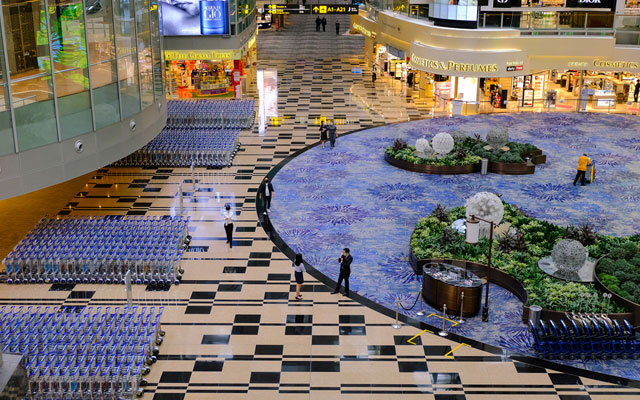
Singapore will unilaterally lift border restrictions on travellers from Taiwan starting from December 18.
The move comes as Taiwan has displayed successful control over the spread of the Covid-19 virus, having reported zero local cases over the past 28 days, said the Civil Aviation Authority (CAAS) on Friday (December 11). Hence, the risk of importation from Taiwan is low.
Taiwan visitors will be allowed to set foot in Singapore again from December 18
Visitors travelling from Taiwan can now apply for an Air Travel Pass (ATP) for entry into Singapore on or after December 18. Applicants must have remained in Taiwan in the last 14 consecutive days prior to departure. They must also travel to Singapore on direct flights without transit.
Upon arrival, they will have to undergo a Covid-19 polymerase chain reaction (PCR) test, and will be allowed to go about their activities in Singapore without serving a stay-home notice if they test negative.
The same rules will apply to Singapore citizens, permanent residents and long-term pass holders returning from Taiwan from December 18.
The travel advisory will be updated to allow travel to Taiwan, CAAS said, advising travellers to check the entry requirements imposed by Taiwan and take the necessary precautionary measures.
To facilitate the contact tracing process, visitors from Taiwan must download and register for the TraceTogether app on their mobile devices prior to departing for Singapore. They must keep the app activated during their stay here, and not delete it for 14 consecutive days after leaving Singapore.
Additionally, visitors must be responsible for their medical bills related to Covid-19 while in Singapore.
This latest initiative follows the earlier lifting of border restrictions for visitors from Australia, Brunei, mainland China, New Zealand and Vietnam.
As at December 10, CAAS has approved 9,284 applications for visitors from these places, and received 4,050 visitors. As at December 9, all visitors who have arrived in Singapore under the ATP have tested negative for Covid-19.
Firefly Airlines, which currently only operates turboprop services within Malaysia, will commence jet operations next month from its northern hub in Penang to three destinations – Kota Kinabalu, Kuching and Johor Bahru.
It will start with twice-daily services between Penang and Kota Kinabalu and Kuching, and thrice-daily services between Penang and Johor Bahru. These services will be operated with a trio of B737-800 narrow body jets using excess aircraft from sister company, Malaysia Airlines.
From January 2021, Firefly will operate jet services from Penang to Kota Kinabalu, Kuching and Johor Bahru
Firefly CEO Phillip See shared that the flights will be code shared with Malaysia Airlines and customers can accrue and redeem Enrich points. In terms of product differentiation, Firefly will offer low-cost carrier products where guests can select their desired products and services.
See described this as a “DIY concept”, while at the same time, guests will also enjoy full benefits of being part of Malaysia Aviation Group (MAG).
“Penang (as a northern hub for jet services) is a great place to start because it has a great mixture of leisure and corporate business,” said See, who was speaking at the fifth edition of BE@Penang, a two-day virtual conference organised by Penang Convention & Exhibition Bureau, which commenced on December 10.
The setup of Firefly’s Penang hub jet operations will require minimal investment by MAG in 2021, with an expected increase in production, measured in average seat per kilometre, by 36 per cent over the next five years.
Jetstar Asia has re-introduced onboard catering on all flights, as the airline ramps up services to eight key South-east Asian cities, including daily services to Jakarta and Kuala Lumpur.
Travellers are now able to pre-purchase light snacks and hot meals from jetstar.com prior to their flight and be served on board. From December 21, buy-on-board meals, drinks and snacks will also make a comeback. Inflight vouchers will also be accepted.
Pre-purchased food and drinks are now available on board Jetstar Asia flights
Clive Ashmore Butler, Jetstar Asia’s commercial lead, said the re-introduction of inflight services represented another big step forward in the airline’s recovery. “Enjoying a wide selection of delicious beverages, snacks and quality meals on board is part of the travel experience and are often key factors determining customer satisfaction,” he said.
For now, the on-board menu will offer Asian flavours, with a wider menu to be introduced when border restrictions ease further, and leisure travel returns. The buy-on-board menu can be downloaded on jetstar.com or by scanning the QR codes available at check-in and the boarding gates.
As part of Jetstar Asia’s Fly Well programme, initiatives introduced to improve safety and peace-of-mind when travelling, all Jetstar Asia (3K) flights will become cashless cabins. Customers will be asked to use inflight vouchers or cards to reduce contact between passengers and crew.
The Singapore Tourism Board (STB) has signed a three-year MoU with South Korean production company, Studio Dragon Corporation, to promote Singapore as a destination in South Korea and other regions through the production of Korean dramas in Singapore.
The MOU was signed by CK Kang, CEO of Studio Dragon Corporation, and Keith Tan, CEO of Singapore Tourism Board. This is the first collaboration between Studio Dragon – which produced global hits such as Crash Landing on You and Guardian: The Lonely and Great God – and a national tourism organisation.
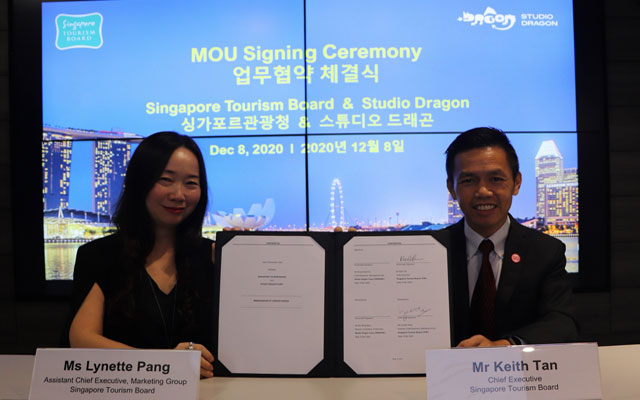
STB’s Lynette Pang and Keith Tan ink three-year deal with Studio Dragon to jointly promote Singapore through branded content during a virtual signing ceremony (Photo Credit: Singapore Tourism Board)
Filming of these Korean dramas, with Singapore as a backdrop, will begin when travel restrictions ease. During this process, STB will play an advisory role in determining the locations, products and cultures of Singapore to be featured.
Additionally, the two parties will collaborate on joint marketing and promotional activities related to the drama productions filmed in Singapore. These will be rolled out in phases determined by prevailing travel policies in target markets and consumers’ readiness to travel.
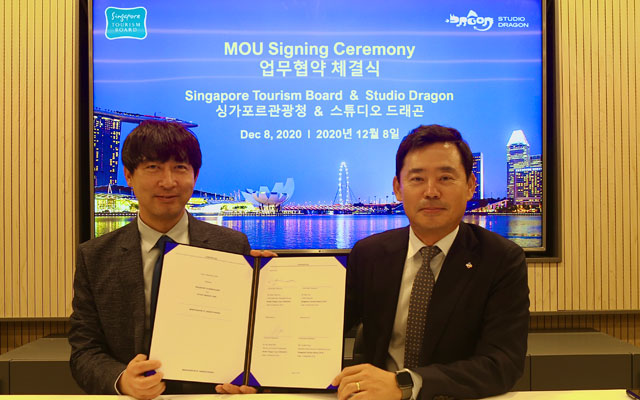
Studio Dragon’s Ryu Bong-Ryul (left) and CK Kang at the virtual signing ceremony with STB (Photo Credit: Studio Dragon Corporation)
Tan said: “Korean dramas are immensely popular around the world, and we hope this will generate more interest and conversations about Singapore. We are confident that this partnership will help to boost the recovery of our tourism sector and inspire more people to visit Singapore when the time is right.”
Kang added: “While it will be not easy to come together at this moment due to challenges brought about by the pandemic, we hope to be able to expand our partnership with the Singapore Tourism Board not just to feature Singapore as a travel destination for future visitors, but in various other IP-related projects focusing on dramas in future as well.”
This partnership forms one of the key pillars of STB’s marketing strategy in South Korea, a country that ranked ninth out of Singapore’s top 15 source markets in 2019. Some 646,000 South Koreans visited Singapore last year, a three per cent increase over 2018.
Royal Caribbean’s Quantum of the Seas has returned to port in Singapore, after an 83-year-old Singaporean tested positive for Covid-19 while on board the cruise ship.
The vessel, with 1,680 guests and 1,148 crew on board, arrived in Singapore at 08.00 on Wednesday (December 9), after turning back on day three of a four-day cruise to nowhere, reported The Straits Times.
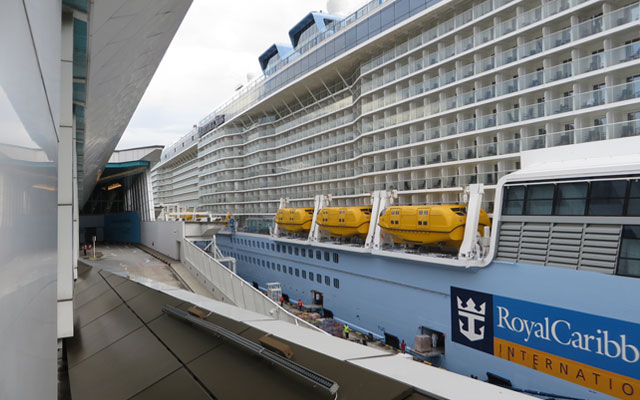
Quantum of the Seas parked at Marina Bay Cruise Centre in Singapore
The cruise line had last week resumed three- and four-night Ocean Getaways, as part of a pilot programme featuring enhanced safety protocols.
Annie Chang, director of cruise at the Singapore Tourism Board, said in a statement that the passenger had taken a mandatory Covid-19 polymerase chain reaction (PCR) test prior to boarding the cruise ship, and had tested negative.
He had reported to the onboard medical centre with diarrhoea, and underwent a mandatory PCR test as part of onboard protocols, said Chang. The passenger was immediately isolated and his initial close contacts were identified and isolated as well. Those close contacts have since tested negative for the coronavirus.
Passengers on board the ship who did not have close contact with the patient will be allowed to leave the ship, after further contact tracing has been carried out.
Chang also said emergency response plans had been activated according to guidelines, including immediate isolation of close contacts, contact tracing and deep-cleaning of the ship. All onboard leisure activities were also ceased immediately and all passengers were asked to stay in their cabins.
She added that all passengers had undergone a mandatory Covid-19 test prior to boarding, and stringent hygiene and safety measures were implemented throughout their journey.
In a health advisory issued to cruise passengers, the Ministry of Health (MOH) said the Covid-19 case’s contacts will be placed on quarantine or health surveillance. The other cruise passengers will be required to monitor their health for 14 days from the date of disembarkation and undergo a swab test at the end of the monitoring period, with the cost of those tests to be borne by the MOH. During that period, they are allowed to continue with their usual activities, including going to work or school.
Hotels and resorts eager to capture a larger slice of the domestic market are realising that the usual deals no longer appeal to an audience that is looking for fresh ways to satiate their wanderlust at a time when international travel is restricted.
To enhance guests experiences during their holidays at home, hotel and resorts are working with other organisations within and beyond the hospitality space to develop enriching programmes.
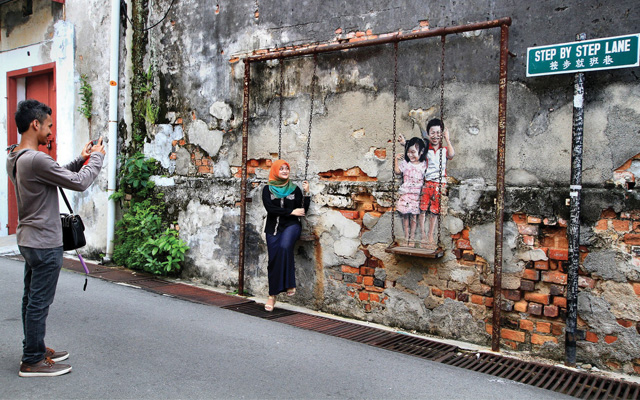
Penang Street Art. Photo by Jom Jalan
Far East Hospitality has a suite of experiential staycation packages that support local SMEs, such as homegrown aquaculture farm and floating restaurant, Smith Marine Kelong, and local photography studio StudioPlay.
These partnerships are needed as “staycationers value unique and highly enjoyable hotel experiences that they otherwise cannot get at home”, explained Arthur Kiong, CEO of Far East Hospitality. “In other words, they do not seek the standard room and breakfast.”
The new Capella Bangkok leverages its location on Bangkok’s oldest road to bring traditional experiences to its guests. Mindfulness sessions, for instance, are led by the head monk of Wat Yannawa, a two-hundred-year-old temple nearby while Muay Thai training is conducted by transgender boxing champion and movie star Parinya Kiatbusaba. The hotel also scoured the Charoenkrung area for Chinese herbal shops to bring traditional treatments to its Auriga Wellness Spa.
John Blanco, the hotel’s general manager, said these local experiences are appealing to domestic travellers, as they are “excited when presented with new ways to engage their heritage”.
Bangkok-headquartered Dusit International’s Local Experiences programme, launched in summer, also offers a chance for guests to appreciate local eats and souvenirs while supporting socially responsible enterprises.
Dusit hotels in Chiang Mai and Hua Hin are planning on similar local collaboration – by bringing wet markets into the properties on certain days of the month.
Over in Malaysia, Pullman Miri Waterfront went big with its guest experience upgrade. It hosted a three-day carnival, Trois Jois, which featured activities for all ages, with booth sales, fun games, live performances as well as cooking classes.
According to Joyce Surendra, cluster director of sales and distribution, representing both Pullman Miri Waterfront and Pullman Kuching, Trois Jois was well received by all who attended. There are plans to initiate a similar event in Pullman Kuching on November 21 and 22, and possibly turn Trois Jois into an annual event for Sarawak.
Trois Jois at Pullman Miri Waterfront
Local collaboration is also seen in Penang, where G Hotel Gurney works with top attractions, Tropical Spice Garden and Penang Batik Factory, as well as experienced local guides to introduce guests to the destination’s heritage and nature.
The partnerships with product owners brought guests cost savings and provided a hassle free experience as entrance tickets to tourist attractions are pre-booked. “In addition, the package includes perks at the hotel such as complimentary meals and bicycle rentals,” said Michael Hanratty, general manager of G Hotel Penang.
Hanratty sees such multi-player partnerships leading the future of hotel experiences, and intends to “continue or even expand on our partnerships” once Malaysia welcomes again international travellers. Should these packages be a hit, he hopes to take it beyond Penang through collaboration with domestic or international airlines, or to combine packages with those offered by tourism players in Langkawi to curate two-state packages.
Meanwhile, Kiroro Resort in Japan’s Hokkaido is already developing local and international collaborations to make its three hotels – Sheraton Hokkaido Kiroro Resort; The Kiroro, a Tribute Portfolio Hotel Hokkaido; and Yu Kiroro – more attractive to potential guests.
Kiroro taps its nearby, western-Hokkaido market, collaborating with other local businesses whose customers might appreciate what the area has to offer. Such activities includes luxury cruises in partnership with Otaru Port Marina, with F&B prepared and served by the resort’s team; exclusive wine-paired dinners for Yoichi Winery members; and a luxury driving experience to the resort for lunch in collaboration with a local car importer.
The company has even facilitated the creation of Akaigawa DMO. As part of DMO activities, Kiroro uses Akaigawa produce and is planning to offer a night village this winter as well as other entertainment. Hirofumi Watanabe, DMO leader and hotel general manager of Kiroro Resort, expects these activities to support local tourism long-term by making Akaigawa and other local towns more appealing as a year-round destination.
On Sado Island, Niigata Prefecture, hotels, ryokans and guest houses have joined the Sado Tourism Association’s new visitor membership club, Sadomaru. Launched in September, Sadomaru is an app that visitors download and show on arrival to earn points that can be redeemed for discounts on stays, as well as in restaurants and shops.
The scheme provides insight on the combinations of accommodations, activities and cuisine that tourists enjoy, to help local operators provide more extensive options for tourists long-term.
Sheraton Hokkaido Kiroro Resort
Room for growth
For some hotels, dangling complimentary experiences as an additional perk to their staycation packages has significantly boosted occupancy rates. One such example is lyf Funan Singapore which has hooked up with two tour agencies to weave free tours into its staycation experience.
These travel agency tie-ups are part of lyf Funan Singapore’s signature #lyfgoeslocal programme, where guests get to experience the neighbourhood’s local and authentic elements, shared Ervin Yeo, managing director for Southeast Asia, The Ascott.
“Since the launch of the joint offerings on August 1, 2020, we have seen an increase in enquiries and reservations on our staycation promotions, especially during the recent long weekends. lyf Funan Singapore was operating at near 100 per cent occupancy across the Hari Raya Haji and National Day long weekends,” he added. In comparison, the hotel was running at 85 per cent average occupancy rate from April to June 2020.
Beneficial for all
Hoteliers believe that working with other sector players will motivate travel desire, unlock new revenue streams, spread business around and uplift the entire tourism industry.
Kiong said: “Survival is the priority for many SMEs today amid the economic fallout from Covid-19 and many businesses have stepped up to help them weather the pandemic. As we continue to wrestle with the pandemic, we must not only worry about our own business survival but those of our key partners as well.
“Hospitality is a part of the tourism ecosystem and we must do all possible to help each other preserve core capabilities. If there is one takeaway from this crisis, it is – we will survive only when we consider others.”
Blanco acknowledged that Capella Bangkok’s work to enrich guest experiences with local expertise enables it to provide support to external entities and benefit from “relationships which allow us to collaborate deeper and in more creative ways”.
Bringing local partners into the hotel experience – literally – also has safety advantages. Dusit’s plans to bring wet markets into its Chiang Mai and Hua Hin hotels “generates a safer experience overall for guests and vendors”, opined Boon Kwee Lim, COO of Dusit International, as they can interact in an environment with enforced international-standard health and safety protocols.
At Trois Jois, tour operators, wedding and events service providers, independent artisans and cottage traders, and more were among the 21 commercial participants, allowing the carnival to function as a platform for local businesses to sell their products and services, thereby reaching benefits beyond travel and tourism.
One Farrer Hotel in Singapore is undergoing extensive refurbishments, which will see a redesign of the majority of its guestrooms, facilities and processes. And the experts shaping the hotel’s future look and feel are not just the usual designers – medical experts and technology specialists are also contributing their expertise to ensure the highest possible standards of hygiene and wellness for guests.
The works, costing more than S$2 million (US$1.5 million), will marry aesthetics that evoke positive and calming emotions with science to facilitate infection control best practices.
One Farrer Hotel
Carpets will make way for custom gapless vinyl flooring, while specialised wallpapers, moveable furniture and anti-viral fabrics will be used across guestrooms and common areas – all to make cleaning and disinfection a cinch.
At the same time, the hotel is reinventing its processes and including new measures to safeguard guests and employees. These include the launch of a Pillow Lab to improve the hygiene standards of its pillows through scientific research into material choices and cleaning processes. A menu of pillows has been curated to offer the best and most restful sleep experience for guests.
Other measures include contactless entry points, sterilisation processes using specialised UVC chests and lamps, as well as staggered check-in and check-out times.
Works will complete this December, paving the way for the launch of The Mint Hotel, a safe and hygienic concept making its debut under One Farrer Hotel’s ‘Hotels within a Hotel’ concept.
The Covid-19 pandemic has led the hotel team to recognise an opportunity for hotels to function as ancillary facilities for the care of non-emergent patients when critical healthcare facilities and hospitals are overrun.
The design principles of The Mint Hotel, such as movable furniture and materials that are suitable for terminal cleansing, make the property ideal for conversion to a ‘hospitel’ quickly should the need arise.
In redefining its dining concept for the age of safe distancing, the hotel is also launching the Nest at One Farrer to satiate the growing demand for private dining experiences.




















Singapore will unilaterally lift border restrictions on travellers from Taiwan starting from December 18.
The move comes as Taiwan has displayed successful control over the spread of the Covid-19 virus, having reported zero local cases over the past 28 days, said the Civil Aviation Authority (CAAS) on Friday (December 11). Hence, the risk of importation from Taiwan is low.
Visitors travelling from Taiwan can now apply for an Air Travel Pass (ATP) for entry into Singapore on or after December 18. Applicants must have remained in Taiwan in the last 14 consecutive days prior to departure. They must also travel to Singapore on direct flights without transit.
Upon arrival, they will have to undergo a Covid-19 polymerase chain reaction (PCR) test, and will be allowed to go about their activities in Singapore without serving a stay-home notice if they test negative.
The same rules will apply to Singapore citizens, permanent residents and long-term pass holders returning from Taiwan from December 18.
The travel advisory will be updated to allow travel to Taiwan, CAAS said, advising travellers to check the entry requirements imposed by Taiwan and take the necessary precautionary measures.
To facilitate the contact tracing process, visitors from Taiwan must download and register for the TraceTogether app on their mobile devices prior to departing for Singapore. They must keep the app activated during their stay here, and not delete it for 14 consecutive days after leaving Singapore.
Additionally, visitors must be responsible for their medical bills related to Covid-19 while in Singapore.
This latest initiative follows the earlier lifting of border restrictions for visitors from Australia, Brunei, mainland China, New Zealand and Vietnam.
As at December 10, CAAS has approved 9,284 applications for visitors from these places, and received 4,050 visitors. As at December 9, all visitors who have arrived in Singapore under the ATP have tested negative for Covid-19.