


Silversea offers agents bonus commission
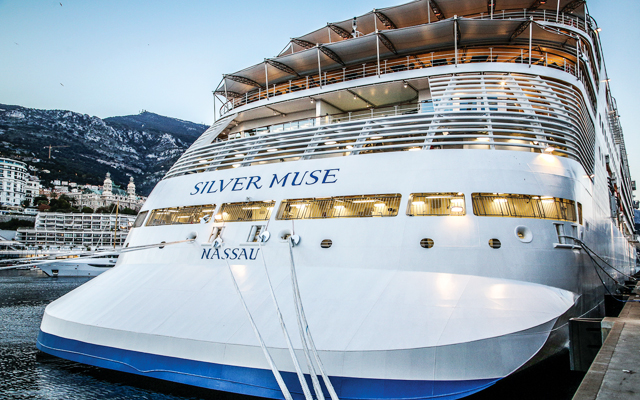
Silversea Cruises is offering travel agents a A$270 (US$200) bonus commission for new bookings made on any voyage departing between July 1, 2021 and December 31, 2021.
Available until February 28, 2021, the offer applies to 139 voyages.
“Our travel partners are extremely important to Silversea, playing a key role for us and our guests. We are therefore delighted to offer this added benefit to express our appreciation for their hard work, and make it even more rewarding to partner with us – especially during these challenging times,” said Roberto Martinoli, Silversea’s president and CEO.
Silversea has enhanced its range of initiatives aimed at supporting travel partners in recent months. This includes Marketing Central, an online suite of marketing resources and sales tools; Silversea Academy, an interactive training platform with over 18 modules; and Virtual Visits, a short informative video series, hosted by Silversea team members globally.
Silversea’s Cruise with Confidence programme allows guests to cancel their cruise booking up to 30 days prior to departure and receive a 100 per cent future cruise credit for the amount paid, with a two-year validity.
Mental health comes into WTTC’s focus

The WTTC has released a set of mental health guidelines to support tourism workers and help businesses build back better from the pandemic.
Suited for businesses of all sizes, the Mental Health Guidelines build on the Diversity & Inclusion Guidelines released by WTTC last year, going one step deeper to focus on mental well-being.

The guidelines come at a time when mental health could not be more important. With lockdowns, quarantines, job losses and uncertainty looming larger than ever all against the backdrop of winter, it is crucial that mental health support is given space in the conversations around recovery.
Gloria Guevara, president & CEO, WTTC, said: “After nearly a full year of insecurity and hardship that has come from the Covid-19 pandemic, the time could not be more appropriate to invest in the mental well-being of (the travel and tourism) sector.”
Research from the Chartered Institute of Personnel and Development showed that more than 95 per cent feel that poor mental health affects their performance at work, while 85 per cent say it is difficult to concentrate when struggling with poor mental health, and 64 per cent feel that it takes them longer to complete tasks.
Furthermore, research conducted by the WHO revealed a US$4 return in improved health and productivity, for every US$1 investment in improved treatment for common mental disorders.
As such, WTTC, alongside leading health authorities and private sector leaders, compiled the Mental Health Guidelines which are divided into four pillars: Developing a Supportive System, Creating Safe Spaces, Supporting an Agile System, and Exemplifying Support for Good Mental Health.
Some of the guidelines include:
• Provide appropriate mental health support within the organisational structure, including access to professional and specialised support through the local health authority and/or the business itself.
• Develop leave policies that offer equivalent time off and/or concessions for mental and physical health, without prejudice.
• Develop feedback systems that allow employees to share if and how the current systems are working well or not to meet staff needs.
• Foster an environment that respects the value of well-being, at all levels of the organisation, and does not ostracise those with mental health conditions, whether common or less common.
• Consider incorporating intentional wellness elements in the design of new buildings, offices, locations, and/or spaces.
• Engage with like-minded businesses and associations to share best practices and improve support for and awareness of mental health.
View the guidelines here.
Calls continue for uniform travel rules across Philippine destinations
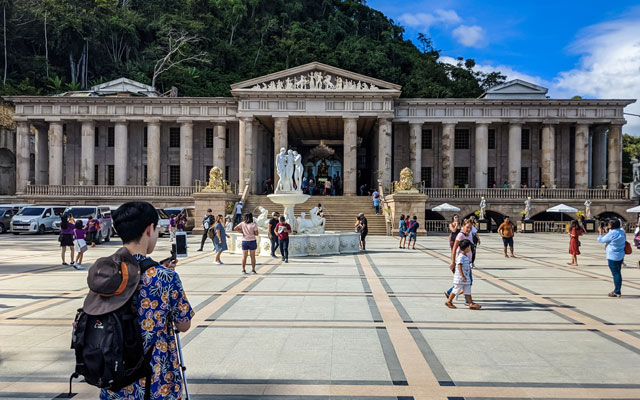
Philippine tourism players persist in battling for a uniform set of travel requirements to be implemented nationwide so as to facilitate ease of travel, noting that varying regulations across destinations stymies post-lockdown domestic tourism recovery efforts.
For instance, some local government units (LGUs) require travellers to undergo a rapid antigen or PCR test for Covid-19, with validity periods of the result varying across destinations. As well, some destinations do not require travellers to serve a quarantine period, while others do, with the quarantine period varying from three to 21 days.
Such a non-standardised approach to Covid-safe travel regulations across the country has proven a stumbling block for travel agents when it comes to selling multi-destination tour packages.
Rajah Travel Corporation president and chair, Aileen Clemente, said: “Where multiple entities do not follow a singular standard or treatment of the protocols… it becomes quite confusing to sell any tours, given that there are different rules to each part of one’s journey.”
Agreeing, Irine Maliwanag, general manager, im-active Tours, Events, MICE Management and Services, said the current varying domestic travel requirements confuse both the travel agencies and the travellers, making it tough to sell multi-destination packages, despite the reopening of domestic destinations towards the end of last year.
Clemente advised: “The authorities must really learn to work together in a coordinated fashion in order to also ensure full compliance. With different protocols (across different localities), you’re bound to find more violations, given the fact that it is very difficult to keep track of all the different rules”.
In support of LGUs adopting uniform travel requirements, tourism secretary Bernadette Romulo Puyat said: “Since tourists would wish to visit several destinations, it is confusing and cumbersome if LGUs have different apps, protocols and requirements to comply with. Thus, uniformity (would) make travel plans a lot easier and ultimately, more fun.”
SIA secures US$500m in US dollar debt debut
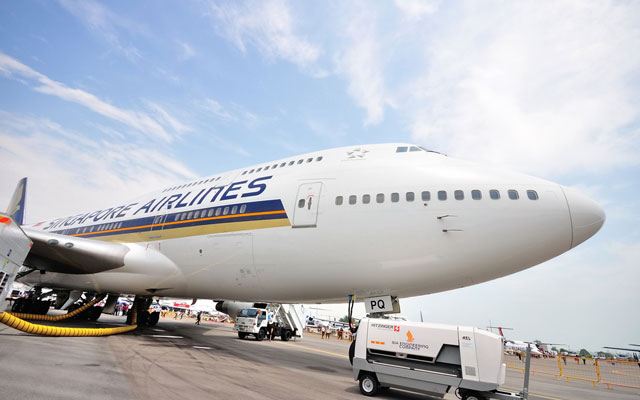
Singapore Airlines (SIA) has raised US$500 million in its first US dollar-denominated bond issue, which will go towards aircraft purchases, related payments and other general purposes including refinancing of existing borrowings.
The issuance was oversubscribed with the final demand totalling more than US$2.85 billon, anchored by high quality institutional investors including real money asset managers, SIA said in a press statement.
The bonds are being issued at an issue price of 99.573 per cent of their principal amount, with a maturity date of July 20, 2026, and will carry an annual coupon of 3.0 per cent per annum.
Citigroup was the sole global coordinator for the issuance; while Citigroup, HSBC and BofA Securities were the joint bookrunners.
SIA said the issuance further strengthens the company’s liquidity position, and provides it with the financial flexibility to capture medium- to long-term growth beyond the Covid-19 pandemic. The airline also reiterated that it “will continue to explore other means to further strengthen its liquidity as necessary”.
Since the start of the 2020/2021 financial year, including this issuance, SIA has raised approximately S$13.3 billion (US$10 billion) in additional liquidity. This includes S$8.8 billion from a rights issue, S$2 billion from secured financing, S$850 million via a convertible bond issue, as well as S$500 million via a private placement of new 10-year bonds.
Thailand mulls golf quarantine to boost tourism

A plan to allow foreign tourists arriving in Thailand to serve their quarantine in one of the country’s golf resorts is currently in the works, as the government seeks to boost the coronavirus-battered tourism industry.
According to a Bangkok Post report, Thailand’s tourism minister Phiphat Ratchakitprakarn recently told reporters that discussions are underway with the Public Health Ministry and the country’s coronavirus taskforce to “offer hotel and golf quarantine for tourists with medical certificates”.
If the plan is green-lit, foreign tourists would be able to spend their 14-day quarantine at a designated resort, roaming freely and playing golf on the premises, rather than just isolating in their rooms.
The plan comes as Thailand finds itself in the throes of a second wave of Covid-19 infections, after relative success in controlling the virus spread for months. As of January 12, Thailand has reported 10,834 Covid-19 infections, with a death toll of 67.
New hotels: The Hari Hong Kong, Pullman Khao Lak Resort, and more


The Hari Hong Kong, Hong Kong
Straddling the two vibrant districts of Causeway Bay and Wan Chai, The Hari Hong Kong is the second hotel to open under The Hari brand, following the launch of The Hari London in 2016. The hotel features 210 guestrooms, with all standard King Rooms and Twin Rooms boasting a two-seater sofa, while each of the more spacious Corner Rooms comes with a dressing room. A trio of rooftop suites, including the opulent The Hari Suite, each houses a five-piece bathroom, a separate sitting room and its own private terrace. Dining outlets include Italian restaurant Lucciola; as well as Japanese restaurant and terrace bar Zoku.

Pullman Khao Lak Resort, Thailand
Nestled on the soft sands of Bang Muang Beach, in the north of Phang Nga province, Pullman Khao Lak Resort features 253 rooms, suites and villas, all of which boast high-speed Wi-Fi, a sofa bed, and balcony. Every Family Suite comes with bunk beds and direct garden access, while each of the six Beachfront Pool Villas boasts a private plunge pool.
Guests can dine and unwind at a choice of two restaurants, two bars and a beach club, which focus on Thai dishes, fresh seafood and street food-inspired bites, alongside international favourites and craft beverages. Wellness facilities include a spa, 24-hour fitness centre, tropical pool, cycling trails, and beachfront platforms usable for outdoor activities such as yoga. For team-building activities, social soirées and weddings, the resort is also home to a 260m2 ballroom and two breakout rooms.

Higashiyama Niseko Village, Japan
Higashiyama Niseko Village, the newest resort in the Ritz-Carlton Reserve portfolio, has opened in the country’s northernmost island of Hokkaido. The YTL Hotels-owned resort, positioned at the base of Mount Niseko Annupuri in the heart of Niseko Village, is an integrated all-season alpine resort. The resort is set within the Niseko United ski area that offers 886ha of skiable terrain and access to extensive backcountry skiing. The area also has an international ski school, chairlifts and gondolas, a dining and retail venue, an outdoor activity park and two golf courses.
Higashiyama Niseko Village features 50 guestrooms and suites appointed with refined amenities. Guests can expect cuisine that mirrors the seasons with locally sourced produce at Yukibana, or quintessential dining experiences at Sushi Nagi that observes the omakase tradition. Customised cocktails, single malts and local brews may be savoured at Ume Lounge, with an array of Izakaya-style dishes. Wellness seekers can indulge in tailored treatments at the bespoke spa, work up a sweat at the fitness centre, or enjoy a soak in the mineral-rich waters of Niseko’s natural underground hot springs at the traditional Japanese onsen.

Sheraton Hong Kong Tung Chung Hotel, Hong Kong
Located atop T-Bay in Tung Chung, Lantau, Sheraton Hong Kong Tung Chung Hotel features 218 rooms and suites, all fitted with modern amenities including 49-inch LCD televisions and high-speed Wi-Fi. Four dining venues on offer include the Sunset Grill, a rooftop grill restaurant; Yue, a Chinese restaurant offering Cantonese and southern Chinese fare; Lobby Lounge for artisan coffee; and all-day diner Cafe Lantau.
The hotel also features a 24-hour fitness centre with a swimming pool deck, and the Kids Playroom with a wide range of activities to keep the young ones entertained. Designed to cater to MICE and wedding planners, the hotel boasts 3,400m2 of indoor and outdoor meeting spaces. For large-scale events, the pillar-free Grand Ballroom can accommodate 1,300 guests, and is divisible into three separate areas. For more intimate events, there are two outdoor terraces, including one with 270-degree ocean views, ideal for weddings; and four multi-function meeting rooms.

QT Auckland, Australia
Complementing QT Queenstown and QT Wellington, the 150-key QT Auckland is the third QT property in New Zealand and has been designed with the natural, wild beauty of the city’s surrounding landscape in mind. With public spaces bursting with local artwork and private function space steps from the water, QT Auckland will also boast a signature dining concept in collaboration with celebrated international chef Sean Connolly and a rooftop bar that offers sweeping views of Viaduct Harbour. Located at 4 Viaduct Harbour Avenue, QT Auckland is being developed in partnership with Russell Property Group and Lockwood Property Group.
Gordon Ramsay Bar & Grill to open first Asia outpost in Malaysia
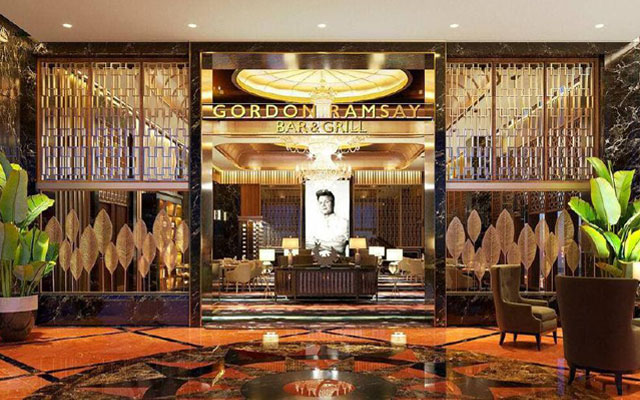
Gordon Ramsey will be bringing his Bar & Grill concept to Sunway Resort, the flagship of Sunway City Kuala Lumpur, in what will mark his Malaysian debut and the brand’s first outpost outside of London.
Set to open in June 2021, Gordon Ramsay Bar & Grill forms part of Sunway Resort’s ongoing revamp. Upon the resort’s reopening in April, guests can expect new family facilities, specialist rooms and suites, and exclusive lounges empowered by technology, such as smartphone key entry, motion sensors, live online fitness coaching, and chromotherapy showers.
Boasting floor-to-ceiling windows overlooking Sunway Lagoon, Gordon Ramsay Bar & Grill will be available for all-day dining, with private dining options. Diners can select from a menu which includes prime cuts of the finest meat, locally sourced and dry-aged in-house, as well as the very best elements from Gordon Ramsay’s signature dishes.
Guests staying in Sunway Resort’s specialist suites will have daily breakfast at Gordon Ramsay Bar & Grill included in their rate. Private rooms, booths and family areas will also feature in the restaurant.
Ramsay, a world-renowned chef and restaurateur, boasts a collection of acclaimed restaurants in the UK, Europe, the US and beyond, and holds seven Michelin stars. He is also the star of popular shows such as Kitchen Nightmares, Hell’s Kitchen, and MasterChef US.
IHG’s Holiday Inn bound for Riyadh
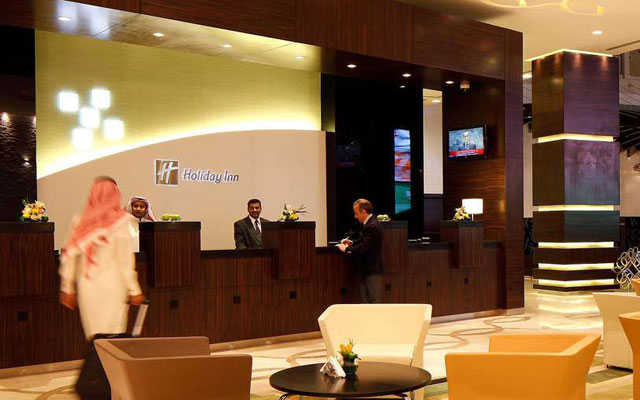
With sights firmly set on growing its presence in Saudi Arabia, IHG Hotels & Resorts has signed a management agreement with Lina Snacks Foods Company to open Holiday Inn Riyadh The Business District.
Expected to open in January 2022, the 138-room property will form part of the mixed-use development, The Business District, which will also comprise 20 offices, a coffee shop, mosque and a nursery. The hotel will be located close to King Khalid International Airport and the Riyadh Front, the new leisure destination of Riyadh developed in line with Vision 2030.
Holiday Inn Riyadh The Business District will feature two F&B outlets, an outdoor pool, a gym, business centre, and six meeting rooms spanning 1,216m² with the largest room boasting a capacity of 310 guests.
IHG currently operates 95 hotels across seven brands in the Middle East, with a further 42 in the pipeline due to open within the next five years.
Jeju Air, Travelport extend content deal

Travelport has signed a multi-year renewal of its content agreement with Jeju Air, Korea’s largest LCC, which will give more than 68,000 agencies continued real-time access to search, sell, and book the airline’s content and inventory.

Under the agreement, Jeju Air will also continue to use Travelport’s Rich Content and Branding merchandising tool, which gives travel agents a graphically rich experience when searching for and booking its branded fares, as well as greater access to its ancillary offers.
Myungsub Yoo, managing director, Jeju Air, said: “Looking to the future, it will be more important than ever to showcase the full range of our products to agencies across the breadth of our route network, as travel recovers.”








As it looks to revive its tourism sector, Kenya is banking on the Indian market to boost its international arrival numbers in the year ahead.
In 2019, Kenya welcomed a total of 122,649 travellers from the Indian market, according to official data. That number dipped to 25,251 from the period between January to October 2020, as the pandemic swept the globe and forced both country’s authorities to impose travel restrictions.
Now, as travel picks up in 2021, Kenya sees the Indian market as key to the country’s tourism revival going forward. Kenya Tourism Board CEO, Betty Radier, said the East African country’s tourism offerings hold greater appeal to Indian travellers over other destinations. “The Indian market is one that has continued to uptake our tourism offerings for many years. Kenya and India continue to have cordial relations, especially because both countries are bound by both history and culture,” she added. “It is certainly not by mistake that India has been one of our key source markets.”
Known for its picturesque tourist attractions and safari experiences, Kenya’s national parks and game reserves are a major draw for wildlife and adventure seekers. Alongside wildlife and rustic experiences, Kenya also offers up a myriad of other attractions including authentic African cuisine, exotic cultures, breathtaking beaches, and even, spectacular cityscape.
As part of health and safety protocols, all travellers entering Kenya must show a negative Covid-19 test result taken within 72 hours prior to departure. The yellow fever vaccine continues to be a mandate for all Indian travellers visiting Kenya, thus, they would need to possess a valid vaccine card upon arrival in Kenya. They also have to obtain an eVisa.
At present, Kenya Airways operates thrice-weekly direct flights from Mumbai to Nairobi.