

Aussie youth leads growing demand for responsible travel

People are more mindful than ever about travelling consciously following the Covid-19 pandemic, with younger travellers leading the charge in Australia, revealed a recent global survey by IHG Hotels & Resorts.
The research is commissioned as part of IHG’s launch of Journey to Tomorrow, a 10-year action plan committing to making a positive difference and helping shape the future of responsible travel.

Some 60 per cent of the 9,000 adults surveyed across the US, the UK, Germany, Greater China, the UAE and Australia agree that they want to be more environmentally and socially conscious on their travels. For Aussies, this was led by 70 per cent of younger travellers (aged 18 to 24), as compared to just 39 per cent of those 55 and over.
It appears travellers not only intend to do more for the planet and communities around them, they are willing to pay for it too. The research found that global consumers will spend an average of 31 per cent more on accommodation they know operates responsibly – with 51 per cent happy to fork out more than 20 per cent extra a night. And Down Under, younger Aussies are again leading the charge. While the average Aussie young adult would be prepared to part with up to 34 per cent more money for green accommodation, 55 and overs would only pay an extra 13 per cent.
Consumers are also now more mindful about preserving and connecting with the communities around them. Almost six in 10 Aussies say they care more about doing their bit for local communities and the planet while travelling now than they did 10 years ago (57 per cent globally). In fact, following the pandemic, more than half of Australian adults (55 per cent) are more likely to be mindful of supporting local communities when travelling, and 58 per cent will be more mindful of dining out and supporting local businesses.
Some 86 per cent of Aussies say it is important to get to know the local community when visiting somewhere new – a finding consistent across the globe. Of these, 80 per cent say they will do this by supporting local eateries, followed by shopping locally (77 per cent) and speaking with the locals (69 per cent).
A further three in 10 (31 per cent) of young Aussies aged 18-24 will choose to stay with travel companies that offer local community programmes. Interestingly, younger travellers are also almost four times as likely to get involved with volunteering when visiting somewhere new, as compared to the 55 and overs (23 per cent compared to six per cent, respectively).
The appetite for better, greener travel is ripe. An incredible 86 per cent of Aussie adults say they are committed to taking their everyday sustainable habits with them when they travel – compared to 82 per cent globally – with using the correct waste and recycling disposal for different items taking the top spot as the number one habit (81 per cent).
Leanne Harwood, managing director Australasia & Japan, IHG Hotels & Resorts, said: “There’s no doubt the past year has made us more conscious than ever about the world around us, and the choices we make to care for our people, communities and planet. Journey to Tomorrow embodies IHG’s strengthened commitment to make sure we do what’s right, not just what’s needed, so we can help shape the future of travel with our guests, hotels and partners.
“Through our new commitments, we are determined to contribute towards positive social and economic change, stand up for key issues such as diversity and inclusion and human rights, and to make more responsible environmental choices.”
An intelligent approach

How has the travel and tourism industry’s use of analytical data evolved over the last decade?
When we started speaking with our prospects over 10 years ago – and specifically DMOs – most of them did not have a ‘data’ budget. Nowadays, every promotion board or Ministry of Tourism’s destination strategy is not only driven by data but also staffed with people capable of getting that data to speak, to provide the right information to C-suite officers, stakeholders and marketers.
In fact, management personnel require that information to do their job these days.
I remember a tourism minister in Europe explaining how information is power, and how our data had changed the relationship the minister had with the rest of the government. By using ForwardKeys’ data, they finally had live information, rather than estimated monthly reports arriving with a one-month delay. In this case, there had been geopolitical tensions between this country and another and as such, they had never been able to measure in real-time, the full-scale impact of geopolitical tensions on (tourism) demand for the destination. With our data, they finally could.
Data is useful only when one knows how to interpret it and act on it. Do you think travel and tourism players know enough of the scope of traveller intelligence available and what they can do with it?
That’s still a work in progress, but we have seen most of our customers getting organised around the capability to make data-based decisions by employing the right data, the right tool and the right staff.
Management now needs to understand what’s happening before making decisions.
However, I’d argue that it is also a two-way street; it is also our responsibility to provide the right information to support the right decision. It’s our objective to remove the complexity from masses of data and make sure that we provide the two to three figures that our customer needs at a specific point in time. This information might come from the aggregation and the processing of half a dozen of different datasets, but that should not be the concern of our customers.
What is your most prized case study on how a travel and tourism organisation was able to revolutionise their business with the foresight offered by ForwardKeys analytics?
Tough question as we have so many good examples!
One that stands out is the Japan National Tourism Office (JNTO). They have been increasing access to our data, and now have 30 logins so that their overseas offices can get onto our platform to study their markets. Each of the overseas offices can now analyse how visitors of (their market) go to Japan versus other competing destinations. These overseas offices have the responsibility to plan the promotional strategy for JNTO in each market.
I don’t think they had nearly that much insight to such information before JNTO engaged ForwardKeys. Now, each market manager has a much better real-time understanding of what is happening within his/her market. No more working with government statistics on the previous year and that only gives information about Japan.
While we often reference past data to make forward projections, the unusual state of business in 2020 must have made it very difficult for companies to apply the same technique. Furthermore, travel conditions could change from month to month. How are ForwardKeys researchers dealing with such challenges to help travel and tourism industry clients get a better forward vision to support their planning?
Yes, (the pandemic) has made a big impact on the industry and our team. We had to reinvent some of our key datasets throughout this period to compensate for side effects brought on by the pandemic, and to also adjust to the new information our customers now need. It’s been a lot of work!
We faced the challenge of travellers making reservations but sometimes had their flight cancelled and their tickets left in limbo. We had to adjust the way we process data to reflect these quick changes.
On top of this, seat capacity data often was disconnected from reality. Airlines wanted to schedule lots of flights to survive but the restrictions were not allowing them to fly them. We had to check which of these flights were actually taking off!
And then, obviously, comes the forward-looking part of the job. How do you build forecasts without historical data? It’s difficult!! So, we spent part of the year re-inventing our algorithm or even combining different datasets to get a better view of how the trends are shaping up. We also had to create our own Travel Restriction Database because the key driver for the current market (is not) offer or demand – it’s what the government allows potential travellers to do.
We found ourselves inventing new metrics to measure recovery. It’s not relevant anymore to check on year-on-year information. It’s about processing multiple datasets in a sophisticated way to create indexes of recovery, for example.
Sounds like an adventure!
It’s been a busy year, and we have made all the efforts we could to re-invent ourselves and bring to our customers the new information they need. We are a happy and harmonious team, and every member of ForwardKeys made all this possible.
What was the most sought-after data in 2020 and so far this year? How is that different from BC, you know, Before Covid?
Today, our clients are interested in identifying where new business opportunities exist – because they do exist. Everyone is scrutinising the horizon to try to identify true early indications of recovery by location and type of travel market.
Has ForwardKeys brought in new services or client engagements during the height of the pandemic? Can you tell me about them and why are they needed?
Many customers in 2020 decided that the year was the right time to dig deeper into how they can best use data to make smarter business decisions. Years of crisis are always times for companies to reinvent themselves. We worked long hours to provide the market the data and the information that they wanted.
We launched the ForwardKeys Chinese Shopper Tracker to allow our customers to understand how the Chinese, who were not travelling abroad anymore, are now spending their money domestically and specifically in duty-free shops in local destinations such as Hainan.
We re-invented our forecasts in Traveller Statistics, with short-term forecasts over six months and long-term ones which show a 10-year worldwide plan.
As if all these were not enough, we also released our new solution for DMOs which provides selected, actionable information for the main stakeholders of a destination, from management to marketing and business development.
As you can see, even in a crisis your business shouldn’t stop evolving and developing new ideas. We clearly never stop thinking about how we can improve and offer better options for our clients.
What’s in the pipeline for ForwardKeys this year and next? Will you be expanding the team to support all the fresh things you’ve been churning out?
Every year we have been consolidating our team and this year we’ll be hiring at least 15 talents to build new and better products to remain even more relevant and supportive to our existing customers.
We have a long list of products and features that we hope to release to the market in different segment areas. Some are additional features that are required to understand what the data says, such as our Travel Restriction Database to identify how states open or close access to their market, and this is a key driver for recovery. Others will be brand new products and it’s too early to speak about those. You will just need to watch this space more closely.
Resorts World Genting puts final touches on new theme park

Genting Malaysia is readying its US$800 million outdoor theme park, Genting SkyWorlds, for a mid-year opening at Resorts World Genting.
Sitting 1,829m above sea level, Genting SkyWorlds takes in 10.5 hectares of space where 26 rides and attractions are housed. While slightly smaller than Universal Studios Singapore at sister property Resorts World Singapore, Genting SkyWorlds boasts the same number of attractions.

Besides presenting original Intellectual Properties (IPs), Genting SkyWorlds will also incorporate 20th Century Studios brands and IPs across its rides and attractions. These IPs include Ice Age, Night at the Museum and Planet of the Apes, among others. This will be complemented by a unique array of themed retail, dining, and entertainment experiences.
Lee Thiam Kit, head of business operations and strategies, Resorts World Genting, shared during a virtual press conference: “We are almost ready. We are putting the finishing touches to this amazing theme park, which we believe is South-east Asia’s most anticipated theme park. We believe we will deliver the very best experience to our guests throughout this journey.”
Lee said the park will cater to families and all age groups, while rides will welcome park visitors of at least 92cm tall.
Edward Arthur Holloway, executive vice president of leisure and hospitality, Resorts World Genting, said that the park will target domestic tourists for the immediate future while waiting for international borders to reopen.
Together with other offerings at Resort World Genting, he said families and leisure tourists will have enough to keep themselves occupied for at least two days.
The theme park was supposed to have opened last year, but construction was temporarily halted by Malaysia’s Movement Control Order.
India mulls e-tourist visa facility restart
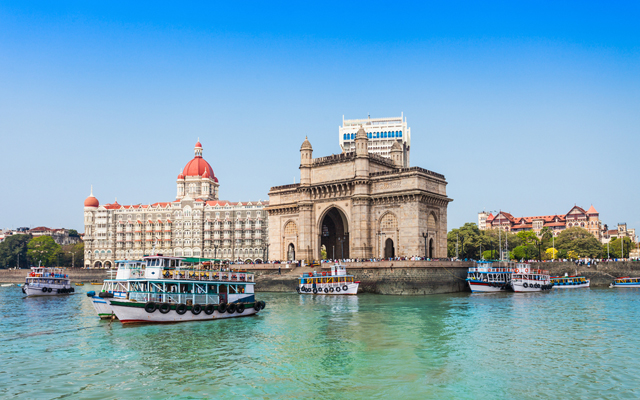
The Indian government is planning to resume the country’s e-tourist visa facility and scheduled international flights in phases, with priority given to countries that have an air bubble agreement with India.
Speaking at the inauguration of India Tourism Mart last week, Harsh Vardhan, union minister for health and family welfare, said that the Ministry of Health is in support of the Ministry of Tourism’s efforts to revive international tourism into India.
Some of the countries India has struck up air bubble agreements include Bahrain, Bangladesh, Canada, Germany, Japan, Maldives, Nepal, Oman, UAE, UK and the US.
Indian tour operators welcome the announcement, saying that the e-tourist visas will trigger a revival of inbound tourism.
E M Najeeb, chairman of ATE Group of Companies, told TTG Asia that travel restrictions in markets like Europe could encourage travellers from the region to stay on longer in India, to make the hassle worth it. “They could stay for one or two months, and opt for wellness treatments besides going for sightseeing,” he said.
Industry confidence has been climbing since the start of the government’s vaccination roll-out last month.
Najeeb said the decreasing number of Covid-19 positive cases in India, a successful vaccination drive, as well as local tourism players abiding by government health and safety protocol will work together to give international travellers confidence in India.
Some tour operators are predicting that Thailand and Japan will emerge as important source markets for India as tourism recovery begins.
“Considering the increasing number of Covid-19 cases in markets like Europe, we may not immediately see tourists coming from there. So, we need to look at Asian markets, especially those with a significant Buddhist population. It is a good time to promote our Buddhist circuit in such markets. We also need to ensure the highest cleanliness standards in our tourist destinations so that tourists planning to visit India feel confident,” said Lally Mathews, managing director, Divine Voyages.
Mathews, who is also running for the post of president in the forthcoming elections of the Indian Association of Tour Operators, has given highest priority to restarting e-visa in his election manifesto.
Marriott names new CEO and president

Marriott International’s Board of Directors has announced that Anthony Capuano and Stephanie Linnartz have been appointed CEO and president respectively, effective immediately.
Their appointments follow the unexpected passing of Marriott President and CEO Arne Sorenson on February 15, 2021.
Prior to this appointment, Capuano was group president, global development, design and operations services. In this role, he was responsible for leading global development and design efforts and overseeing the company’s Global Operations discipline.
Capuano began his Marriott career in 1995 as part of the market planning and feasibility team. Between 1997 and 2005, he led Marriott’s full-service development efforts in the Western US & Canada. From 2005 to 2008, Capuano served as senior vice president of full-service development for North America. In 2008, his responsibilities expanded to include all of US & Canada and the Caribbean and Latin America, and he became executive vice president and global chief development officer in 2009.
Capuano began his professional career in Laventhol and Horwath’s Boston-based Leisure Time Advisory Group. He then joined Kenneth Leventhal and Company’s hospitality consulting group in Los Angeles. He is also a member of the American Hotel and Lodging Association’s Industry Real Estate Financial Advisory Council.
As president, Linnartz will be responsible for developing and executing all aspects of the company’s global consumer strategy, including brand, marketing, sales, revenue management, customer engagement, digital, information technology, emerging businesses and loyalty strategies. In addition, Linnartz will oversee Marriott’s global development organisation, which is responsible for the strategic growth of the company’s 30 lodging brands, as well as the global design and operations services functions.
Prior to this appointment, Linnartz was group president, consumer operations, technology and emerging businesses, where she was responsible for brand, marketing, sales, revenue management, customer engagement, digital, information technology, emerging businesses and loyalty strategies. Linnartz played a pivotal role during Marriott’s acquisition of Starwood Hotels & Resorts, overseeing the integration of business-critical systems including reservations, property management, revenue management and loyalty.
Linnartz, who began her Marriott career in 1997, served as global chief commercial officer from 2013 to 2019; global officer, sales and revenue management from 2009 to 2013; senior vice president, global sales from 2008 to 2009; senior vice president, sales and marketing planning and support from 2005 to 2008; and prior to that, various roles in Marriott’s finance and business development department.
Travelport reveals new brand identity

Travelport has launched a new visual identity as part of its first end-to-end rebrand.
The company’s familiar blue logo has made way for a sharp black version, which is also available in a pastel shade known as Travelport Sand. A secondary palette of Travelport Olive and Travelport White, and an accent color of Travelport Coral is established too.
CEO Greg Webb, who oversees the rebranding efforts with CMO, Jen Catto, said: “We are now fully focused on what we do best – connecting buyers and sellers that share our passion for delivering exceptional travel experiences. We are also embracing our strengths – our agility, our independence and our ability to make the bold long-term decisions needed to simplify travel’s complex ecosystem.
“Our new brand reflects all this – who we’ve become, through our investments in the right people, products and technology and our vision for the future, as we get ready for a year of significant advances for Travelport. We’re proud to show it to the world today and are looking forward to following it up very soon with the launch our next-generation platform, which will change the game in travel retailing.”
Catto, who joined the company in September 2020, said: “While we’ve kept the essence of what makes Travelport great, we’ve refined our vision, what we stand for, how we act, how we look and how we market our business. Most importantly, this is a new promise we’re making to our customers; we’ll work harder for you than anyone else to build a better, simpler and smarter future for travel retailing.”
Travelport’s new visual identity can now be seen on its website and social media channels, which now include Instagram. The full rebrand of all assets, including products and office spaces, will be completed in the coming months.
Alma Resort goes contactless with mobile app
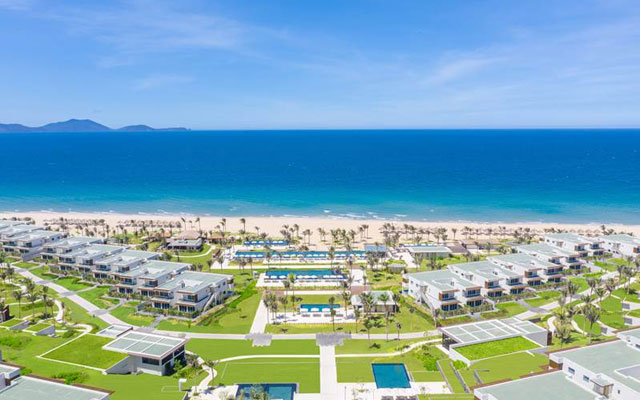
Vietnam’s Alma Resort has crafted a mobile app that offers contactless services and communications to provide guests with a peace of mind during the pandemic.
The app, available for downloads on Android, Apple, Windows and Amazon stores, contains menus, promotions and vouchers as well as live stream broadcasts and information about events and Covid-19 health and safety tips.
General manager Herbert Laubichler-Pichler regards the app as a “game-changer for Vietnam’s hospitality landscape”.
“There is no facet of our lives that remains untouched by this pandemic and under the ‘new normal’, this app is an effective and contactless way to connect with guests and staff,” said Laubichler-Pichler.
He believes that it will soon be incumbent for five-star resorts across Vietnam to offer the same technology.
The app will be enhanced through a second-phase development, expected to be completed in the next few months. With this development, users will be able to access weather information in real-time due to the installation of a live weather cam on the resort’s stretch of Long Beach.
Phase two will also usher in a payment gateway, allowing guests to settle bills in a cashless manner.
Alma’s commercial director Martin Koerner, said the app would continue to evolve. “Our aim is for our app to be a comprehensive one-stop shop for information and a weapon in our arsenal to combat Covid-19 and keep guests, staff and the community safe,” he said.
Singapore aviation workforce receives S$870m lifeline
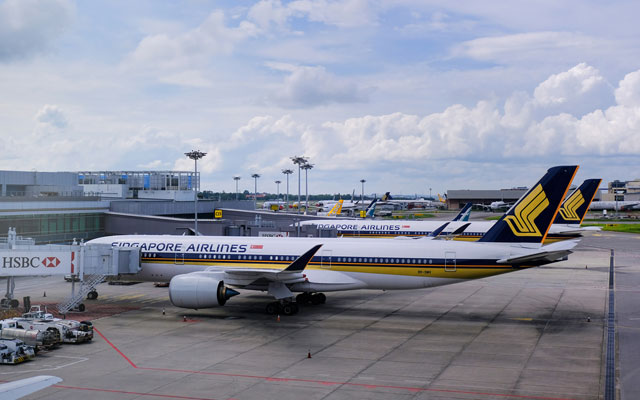
Singapore’s Ministry of Transport will drop a S$870 million (US$659 million) lifeline to support the country’s aviation sector, as part of its 2021 Budget. This scheme, coined the OneAviation Support Package, comes on top of the existing Job Support Scheme paid out by the Singapore government.
The OneAviation Support Package comprises two key components. The first will provide manpower support totalling S$330 million, comprising 30 per cent in support for wages paid from April to June 2021, and 10 per cent in support for wages paid from Jul-Sep 2021. Furthermore, an Aviation Workforce Retention Grant will dole out 50 per cent in support for wages paid to local employees from Apr-Sep 2021, capped at S$4,600 of gross monthly wages.
This is in addition to the existing Job Support Scheme, which took effect last year. Qualifying companies in the aviation sector can also receive 50 per cent in support for Jan-Mar 2021 wages, 30 per cent for Apr-Jun 2021 wages and 10 per cent for Jul-Sep 2021 wages.
Manpower support also comes in the form of the Enhanced Training Support Package, which funds and subsidises employee downtime training by up to 90 per cent and has been extended to December 2021. Singapore-based airlines will also receive support to train some existing pilots to operate multiple aircraft types in anticipation of eventual recovery.
The second component of the OneAviation Support Package comprises cost relief amounting to S$540 million. Existing rebates on fees and charges at Changi and Seletar Airport – such as landing and parking fees, rental for lounges and offices, as well as licence fees for ground handling and catering services – will be extended for another year. The rebate on fees payable by pilots, air traffic controllers and aircraft maintenance engineers will also be extended for another year.
Singapore’s minister for transport, Ong Ye Kung, said: “Aviation is one of the hardest hit sectors during this pandemic, if not the hardest hit, as Changi and its stakeholders have lost 97.5 per cent of its customers. Yet, for a city-state like Singapore, the air hub is essential to connect us with the rest of the world and continues to be our lifeblood. This support will help Changi tide through the crisis, while we explore ways to reopen borders safely.”
Deputy prime minister and finance minister Heng Swee Keat had said during his budget speech on February 16 that he expected the aviation sector to use this lull period to improve its capabilities and prepare for the recovery, particularly by investing in travel safety, reported CNA.
Taiwan’s ezTravel adopts Amadeus’ Travel API
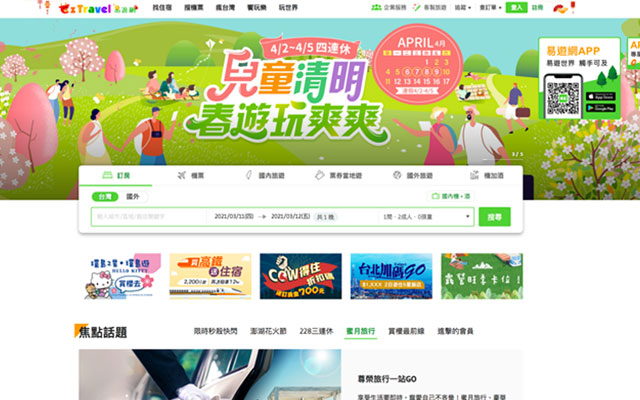
Taiwan’s online travel agency leader, ezTravel, is implementing Amadeus’ new NDC-enabled Travel API to gain access to both aggregated NDC and non-NDC content.
It is the first agency in the market to adopt an NDC-enabled web services solution for OTAs.
With this adoption, ezTravel also benefits from the main servicing capabilities that an agency typically requires once a booking via NDC has been made, such as changes, cancellations, or adding ancillaries.
Commenting on the move, Norma Lai, general manager of ezTravel, said: “In a diverse content environment, it is critical to have one single end-to-end process for booking and servicing NDC and non-NDC content. With Amadeus’ NDC-enabled Travel API solution, ezTravel will have richer airline content for our customers at their fingertips, ultimately helping us drive more tailored and differentiated travel experiences.
“With Amadeus as our preferred technology partner, we are excited to be part of its industry-leading NDC [X] journey to drive recovery and growth for the travel agency community in Taiwan and Asia-Pacific.”
Brian Chien, head of online travel agencies, Greater China and managing director, China, Amadeus, said: “This multi-year strategic NDC technology agreement is testament to our strong long-standing partnership with ezTravel. We are pleased to work hand-in-hand with ezTravel to jointly drive a clear future-proof NDC strategy, solid airline implementation roadmap and forge stronger collaboration with all industry stakeholders in Taiwan, Greater China and beyond.”
The Travel API, which integrates with travel agencies’ existing systems and allows them to build their own customised travel booking applications, is being rolled out globally.








Asia-Pacific’s hospitality sector is predicted to take on a V-shaped recovery, with a return to 2019 levels expected in 2023, according to Colliers International’s recently-released Hotel Insights 1Q2021 report.
Govinda Singh, executive director, head of hotels & leisure, Asia, commented: “The global economic outlook is expected to improve by 2H2021, with travel to rebound over the next three years to at least pre-Covid-19 levels. We anticipate some caution in the near term as borders reopen and the mechanism to facilitate mass travel is formalised between governments; nevertheless, we are of the opinion that travel will return.
“There will be changes and more emphasis on factors such as hygiene, but our inherent wanderlust, relatively cheap cost of travel and pent-up demand will drive our prediction of a V-shaped recovery for the sector over the next three to four years.”
While Melbourne hotels are expected to benefit from domestic demand in the near term, new supply may dampen performance of existing properties.
In 2019, Melbourne hotels performed at high levels, recording year-round occupancy levels of 84.2 per cent. In 2020, however, in line with the rest of Australia, performance was affected by Covid-19, with hotels operating at half the occupancy levels of the previous year’s figures and demand predominantly from those undertaking the mandatory quarantine period in hotels and a small proportion of intrastate leisure demand.
The extent of new supply to enter the market in 2021 is anticipated to affect existing hotels’ ability to recover. Melbourne city currently has the largest hotel development pipeline in Australia, with 19 hotels currently under construction, totalling over 4,800 new rooms (11 hotels of which are due to open in 2021). This is in a current market of 130 hotels with approximately 19,600 rooms. Hotel projects under construction that are scheduled to proceed include the Ritz Carlton, Shangri-La and Next Melbourne.
Gus Moors, head of hotels, valuation & advisory services, Australia, commented: “Melbourne has a great track record of absorbing supply in the past, and its strong event calendar, excellent domestic demand profile and extensive infrastructure projects position the city to emerge strongly as the economic recovery takes hold.”
Singapore hotels are expected to remain attractive to investors, with the outlook remaining positive and pricing firm, buoyed by the resumption of MICE activities.
The Singapore government has been actively promoting various tourism initiatives that should drive visitation in 2021, including the business travel lane, which allows corporate and diplomatic travellers to skip quarantine on arrival, and the launch of the Air Travel Pass Program, which allows leisure tourists to apply for travel to Singapore without undergoing the 14-day quarantine period. In addition, the World Economic Forum recently announced its plan to host its annual meeting in Singapore in August 2021, which would be a boost to Singapore’s MICE and hospitality sector.
Colliers expects investment interest in Singapore hospitality assets to remain, underpinned by sound hotel fundamentals. Planned new attractions and infrastructure projects scheduled between 2021 and 2030 – including the expansion of the two integrated resorts and Great Southern Waterfront – bode well for future visitation and, combined with the relatively low level of new room supply anticipated over the near term, this should continue to underpin hotel fundamentals over the medium term. Hotel projects expected to proceed include Pullman Singapore, Banyan Tree Mandai, Artyzen Cuscaden, Mondrian Duxton Hill and Club Street.
While green lanes for business travel are slowly emerging, investors are still on the lookout for high-value quality assets, with significant pricing adjustments making listed entities prime targets for M&A opportunities.
The most liquid markets were South Korea, China, and Japan, while markets such as Singapore and Malaysia saw little investment sales during the quarter. With international travel restrictions in place, markets with large domestic investment bases continue to have an advantage during times of challenged cross-border investment, as Tokyo and Seoul maintain their top positions.
Colliers expects investment activity to gain pace in the coming months as investors move to take advantage of any opportunities that will emerge, although cautious sentiment and stricter underwriting remain key given the evolving Covid-19 situation, coupled with economic volatility and uncertainty.
The land-based casino industry was one of the most hard-hit sectors globally. Recovery in 2021 will vary across Asian destinations, although all should witness some recovery, with most from 3Q2021. Colliers expects Macau and Cambodia to lead the way, with Singapore, the Philippines and Vietnam lagging behind.
Gaming markets with high local visitation will lead the recovery. Premium mass will drive the recovery in Macau, whilst the VIP segment will lead Cambodia’s. As governments across the region grapple with the effects of Covid-19, many are turning to integrated resorts to generate revenue and employment, a trend that is expected to continue. Once not thinkable, even Thailand is considering development of a gaming sector.