

Staybridge Suites to debut in India come 2023

IHG Hotels and Resorts has signed a management agreement with NR Greenwood Construction to debut its extended stay brand, Staybridge Suites, in India.
Expected to open in 1Q2023, the Staybridge Suites Bengaluru Thanisandra will sit in the ‘Silicon Valley of India’, Bengaluru, which is also recognised as the second fastest-growing major metropolis in the country.
The Staybridge Suites brand offers amenities such as a fully equipped kitchen in suites, a dedicated outdoor space, daily complimentary hot breakfast, and an evening social event three nights a week.
Targeting both business and leisure travellers, Staybridge Suites Bengaluru Thanisandra will offer 170 suites featuring kitchenettes, a pair of meeting rooms, a 300m2 dining room, a business centre and a gym.
Malaysia Airlines to roll out digital travel health pass
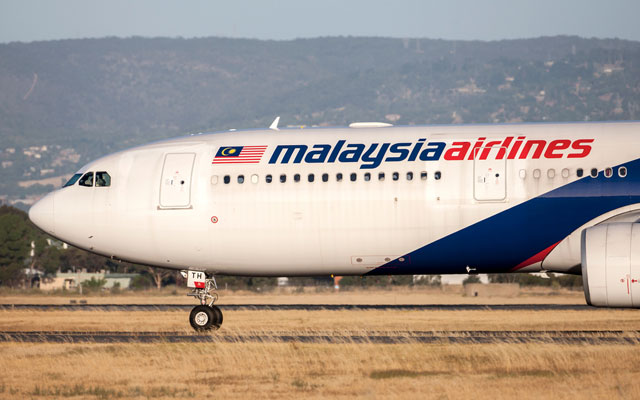
Malaysia Airlines (MAS) has plans to introduce the Digital Travel Health Pass to help streamline its passengers’ travel journey, in the latest effort by the airline to instil post-pandemic travel confidence.
The health pass, which will be integrated with the MAS mobile app, will allow passengers to easily make appointments with certified medical partners to carry out a Covid-19 RT-PCR test or include their Covid-19 vaccination certificate on their mobile phones.
In addition, passengers can verify their travel eligibility with the airline before their travels, making them aware and informed of the constantly developing travel policies worldwide.
The Digital Travel Health Pass will incorporate some modules of the IATA Travel Pass that have been developed on the basic principle to allow travellers to be in control of their journey while travelling around the world.
With that, passengers will be able to create a digital passport, verify their test/vaccination requirements and status, and share their “OK to Travel” status with the relevant authorities. This digital ID on the App will pave the way for MAS’ passengers to eventually take advantage of contactless technology options throughout the travel processes.
As part of the airline’s efforts to provide safe travels to its passengers amid the pandemic, the travel health pass is the one-step solution in ensuring all passengers can travel safely while maintaining that all the necessary precautions are taken in limiting the spread of the virus. Creating a contactless journey with travel documents stored securely on the platform, passengers will enjoy a safer, end-to-end seamless travel experience.
MAS said that it is working closely with the relevant authorities to roll out the health pass, with more details to be revealed “in the coming weeks”.
Fresh Covid spike thwarts Japan’s domestic air travel rebound
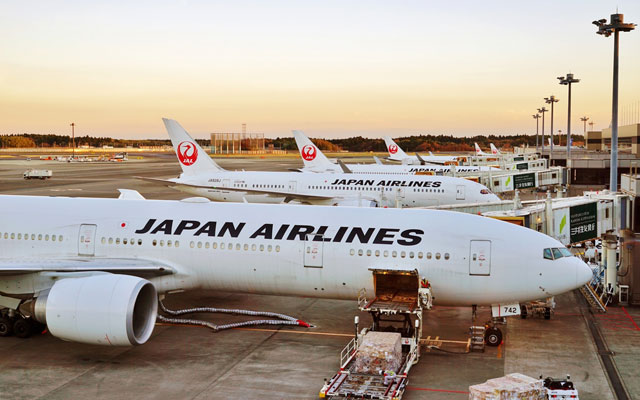
Japan’s domestic airlines have scaled back flight plans so far this year in response to the country’s third wave of Covid-19 infections.
In January and February, Japan Airlines (JAL) operated about 50 per cent of its normal domestic schedule, while All Nippon Airways (ANA) ran one- to two-thirds of its flights.
The move is further evidence that the country’s domestic flight rebound is being hampered by spikes in virus transmission, according to data from the Centre of Aviation.
In 2020, monthly domestic passenger volume in Japan dipped from almost 9 million in January to about 7.5 million in February, as news began to unfold about the novel coronavirus. It then plummeted to less than 1 million in May, marking a drop of 93 per cent year-on-year, the result of a freeze on international travel and a state of emergency declaration asking residents to stay home as much as possible from April 7 to May 6.
Since May, the number of domestic passengers per month rose sharply to exceed 2.5 million in July. Growth remained stagnant through August, the period of Japan’s second wave of infections, before reaching almost 5 million passengers in October, the last month for which data is available.
Japanese airline domestic capacity rate, too, appears related to the spread of Covid-19 in Japan. Following an initial plunge in March and April 2020 corresponding with the stay-at-home request, domestic capacity began to recover in June 2020, reaching more than 2.6 million seats. But this growth was lost in August, when a second wave of infections pushed capacity down to less than 2 million seats.
With the July 22 launch and subsequent promotion of Go To Travel, the government-sponsored domestic travel subsidy campaign, capacity began to recover. JAL and ANA announced plans to operate at about 85 per cent of their pre-pandemic schedule in December 2020, but the arrival of a third Covid wave and the suspension of Go To Travel on December 28, hurt the airlines again. Over the New Year period, JAL reported a 52 per cent reduction in domestic bookings year-on-year, while ANA reported a 58 per cent decline year-on-year.
Global airlines to continue burning cash through 2021: IATA

The airline industry is expected to remain cash negative throughout 2021, according to new analysis by the IATA, overriding a previous forecast that airlines would turn cash positive in the fourth quarter of 2021.
At the industry level, airlines are now not expected to be cash positive until 2022, IATA said in a statement.
Estimates for cash burn in 2021 have ballooned to the US$75 billion to US$95 billion range from a previously anticipated US$48 billion.
Factors that play into this estimate include a weak start for 2021, with it being evident that 1H2021 will be worse than earlier anticipated, due to governments tightening travel restrictions to combat new Covid-19 variants.
Forward bookings for summer (July-August) are currently 78 per cent below levels in February 2019 (comparisons to 2020 are distorted owing to Covid-19 impacts).
From this lower starting point for the year, an optimistic scenario would see travel restrictions gradually lifted once the vulnerable populations in developed economies have been vaccinated, but only in time to facilitate tepid demand over the peak summer travel season in the northern hemisphere. In this case, 2021 demand would be 38 per cent of 2019 levels. Airlines would burn through US$75 billion of cash over the year. But cash burn of US$7 billion in 4Q would be significantly improved from an anticipated US$33 billion cash burn in 1Q.
In the pessimistic scenario, airlines would burn through US$95 billion over the year. There would be an improving trend from a US$33 billion cash burn in 1Q reducing to US$16 billion in 4Q. The driver of this scenario would be governments retaining significant travel restrictions through the peak northern summer travel season. In this case, 2021 demand would only be 33 per cent of 2019 levels.
“With governments having tightening border restrictions, 2021 is shaping up to be a much tougher year than previously expected,” said Alexandre de Juniac, IATA’s director general and CEO.
“Our best-case scenario sees airlines burning through US$75 billion in cash this year. And it could be as bad as US$95 billion. More emergency relief from governments will be needed. A functioning airline industry can eventually energise the economic recovery from Covid-19. But that won’t happen if there are massive failures before the crisis ends. If governments are unable to open their borders, we will need them to open their wallets with financial relief to keep airlines viable.”
Erawan Group marches on with APAC expansion
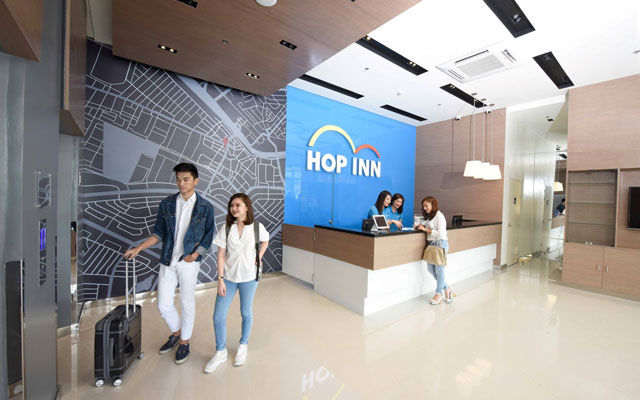
Thai hotel developer Erawan Group is set to expand its portfolio in Thailand and overseas, with the aim of becoming the leading budget hotel operator in Asia-Pacific by 2025.
As part of a five-year plan (2021-25), the group targets to raise the number of its Hop Inn hotels in Thailand to 100 from the current 46, which will bring the total room count from 3,600 to more than 7,200.
At the same time, the group has finalised deals to double its portfolio in the Philippines from five to 10 hotels, adding 937 rooms to the existing 843. The new properties will be situated in Cebu, Ortigas, Davao, Iloilo and North EDSA. An additional five new projects are underway.
Erawan Group’s president Petch Krainukul said the budget hotels will serve mainly the respective domestic markets, ahead of the large-scale return of international guests, which he predicts will not manifest until 2023.
Hop Inn holds bright prospects: Its only major rival in Thailand is the B2 Hotel brand, while it ranks among the top three players in the Philippines’ budget hotel sector.
Shifting its focus to overseas markets is the fourth phase of the group’s growth plan set into motion since 2016, following a focus on the luxury segment (before 2005), diversifying into other brands (2005-10), and moving into budget including the creation of Hop Inn (2011-15).
Besides Thailand and the Philippines, the group is also eyeing opportunities to acquire properties in other countries as well as seeking to raise three billion baht in capital to drive expansion.
In 2020, the group logged an accumulated loss of 1.71 billion baht (about US$57 million) due to the Covid-19 pandemic.
Budget hotels like Hop Inn are predicted to recover ahead of other segments. While the group’s major luxury flagship hotels including Grand Hyatt Erawan Bangkok, JW Marriott Bangkok and Renaissance Koh Samui Resort and Spa have been suffering from the decline of international visitors, its economy and budget segments have seen improvements.
ANA trials autonomous buses at Haneda Airport
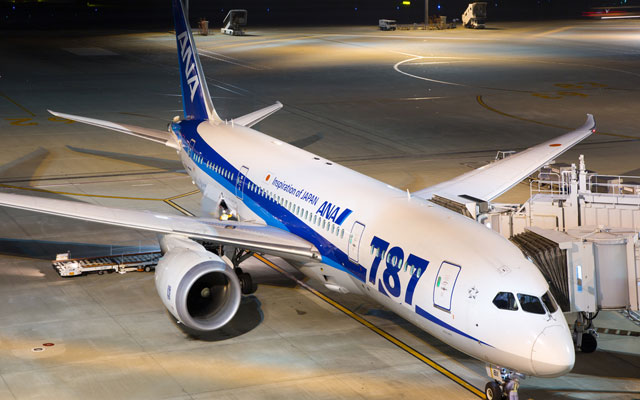
Japan’s All Nippon Airways (ANA) is eyeing the implementation of autonomous buses at Tokyo Haneda Airport by 2025, following a successful series of trials carried out this month.
Driverless buses are a central part of the airline’s vision for a “Simple and Smart” airport of the future, which ANA says can be achieved through widespread application of sustainable autonomous technology.
Masaki Yokai, senior vice president of ANA, said that use of the buses, which are powered by electricity rather than gasoline, will “result in fewer emissions and decreased carbon footprints at airports”. The company, he added, is “optimistic that (the completed trials) will give us the information we need to continue improving these technologies.”
The trials were carried out from February 1–12 in collaboration with Softbank’s Boldly mobility initiative, Advanced Smart Mobility and BYD Japan. Autonomous buses were used to transport almost 60 airport employees at any one time. Routes were limited to Terminal 2’s restricted area, where aircraft and cargo vehicles are located.
The technology allowed dispatchers to monitor the progress of the buses in real time and receive feedback to evaluate the journey at all times. Cameras displayed multiple views of the road and environment around the bus as well as the vehicle’s interior. A remote monitoring system was also used to manage bus departures and the opening or closing of bus doors, a first for ANA.
The February tests are the latest in a series of efforts by the airline to experiment with autonomous vehicles, which began in February 2018. They follow the successful trial of an autonomous towing tractor and automated baggage loader at Kyushu Saga International Airport from September 28 to October 5, 2020.
ANA says its next step is to test driverless buses to transport passengers, which is expected to be carried out in 2021.
Full recovery for APAC hotel demand not until 2023
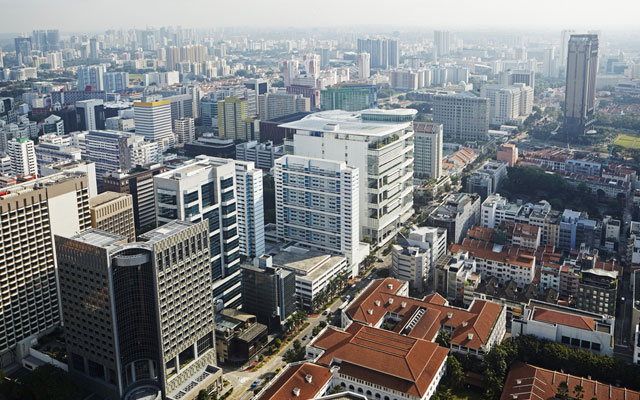
Asia-Pacific’s hospitality sector is predicted to take on a V-shaped recovery, with a return to 2019 levels expected in 2023, according to Colliers International’s recently-released Hotel Insights 1Q2021 report.
Govinda Singh, executive director, head of hotels & leisure, Asia, commented: “The global economic outlook is expected to improve by 2H2021, with travel to rebound over the next three years to at least pre-Covid-19 levels. We anticipate some caution in the near term as borders reopen and the mechanism to facilitate mass travel is formalised between governments; nevertheless, we are of the opinion that travel will return.
“There will be changes and more emphasis on factors such as hygiene, but our inherent wanderlust, relatively cheap cost of travel and pent-up demand will drive our prediction of a V-shaped recovery for the sector over the next three to four years.”
While Melbourne hotels are expected to benefit from domestic demand in the near term, new supply may dampen performance of existing properties.
In 2019, Melbourne hotels performed at high levels, recording year-round occupancy levels of 84.2 per cent. In 2020, however, in line with the rest of Australia, performance was affected by Covid-19, with hotels operating at half the occupancy levels of the previous year’s figures and demand predominantly from those undertaking the mandatory quarantine period in hotels and a small proportion of intrastate leisure demand.
The extent of new supply to enter the market in 2021 is anticipated to affect existing hotels’ ability to recover. Melbourne city currently has the largest hotel development pipeline in Australia, with 19 hotels currently under construction, totalling over 4,800 new rooms (11 hotels of which are due to open in 2021). This is in a current market of 130 hotels with approximately 19,600 rooms. Hotel projects under construction that are scheduled to proceed include the Ritz Carlton, Shangri-La and Next Melbourne.
Gus Moors, head of hotels, valuation & advisory services, Australia, commented: “Melbourne has a great track record of absorbing supply in the past, and its strong event calendar, excellent domestic demand profile and extensive infrastructure projects position the city to emerge strongly as the economic recovery takes hold.”
Singapore hotels are expected to remain attractive to investors, with the outlook remaining positive and pricing firm, buoyed by the resumption of MICE activities.
The Singapore government has been actively promoting various tourism initiatives that should drive visitation in 2021, including the business travel lane, which allows corporate and diplomatic travellers to skip quarantine on arrival, and the launch of the Air Travel Pass Program, which allows leisure tourists to apply for travel to Singapore without undergoing the 14-day quarantine period. In addition, the World Economic Forum recently announced its plan to host its annual meeting in Singapore in August 2021, which would be a boost to Singapore’s MICE and hospitality sector.
Colliers expects investment interest in Singapore hospitality assets to remain, underpinned by sound hotel fundamentals. Planned new attractions and infrastructure projects scheduled between 2021 and 2030 – including the expansion of the two integrated resorts and Great Southern Waterfront – bode well for future visitation and, combined with the relatively low level of new room supply anticipated over the near term, this should continue to underpin hotel fundamentals over the medium term. Hotel projects expected to proceed include Pullman Singapore, Banyan Tree Mandai, Artyzen Cuscaden, Mondrian Duxton Hill and Club Street.
While green lanes for business travel are slowly emerging, investors are still on the lookout for high-value quality assets, with significant pricing adjustments making listed entities prime targets for M&A opportunities.
The most liquid markets were South Korea, China, and Japan, while markets such as Singapore and Malaysia saw little investment sales during the quarter. With international travel restrictions in place, markets with large domestic investment bases continue to have an advantage during times of challenged cross-border investment, as Tokyo and Seoul maintain their top positions.
Colliers expects investment activity to gain pace in the coming months as investors move to take advantage of any opportunities that will emerge, although cautious sentiment and stricter underwriting remain key given the evolving Covid-19 situation, coupled with economic volatility and uncertainty.
The land-based casino industry was one of the most hard-hit sectors globally. Recovery in 2021 will vary across Asian destinations, although all should witness some recovery, with most from 3Q2021. Colliers expects Macau and Cambodia to lead the way, with Singapore, the Philippines and Vietnam lagging behind.
Gaming markets with high local visitation will lead the recovery. Premium mass will drive the recovery in Macau, whilst the VIP segment will lead Cambodia’s. As governments across the region grapple with the effects of Covid-19, many are turning to integrated resorts to generate revenue and employment, a trend that is expected to continue. Once not thinkable, even Thailand is considering development of a gaming sector.
Aussie youth leads growing demand for responsible travel

People are more mindful than ever about travelling consciously following the Covid-19 pandemic, with younger travellers leading the charge in Australia, revealed a recent global survey by IHG Hotels & Resorts.
The research is commissioned as part of IHG’s launch of Journey to Tomorrow, a 10-year action plan committing to making a positive difference and helping shape the future of responsible travel.

Some 60 per cent of the 9,000 adults surveyed across the US, the UK, Germany, Greater China, the UAE and Australia agree that they want to be more environmentally and socially conscious on their travels. For Aussies, this was led by 70 per cent of younger travellers (aged 18 to 24), as compared to just 39 per cent of those 55 and over.
It appears travellers not only intend to do more for the planet and communities around them, they are willing to pay for it too. The research found that global consumers will spend an average of 31 per cent more on accommodation they know operates responsibly – with 51 per cent happy to fork out more than 20 per cent extra a night. And Down Under, younger Aussies are again leading the charge. While the average Aussie young adult would be prepared to part with up to 34 per cent more money for green accommodation, 55 and overs would only pay an extra 13 per cent.
Consumers are also now more mindful about preserving and connecting with the communities around them. Almost six in 10 Aussies say they care more about doing their bit for local communities and the planet while travelling now than they did 10 years ago (57 per cent globally). In fact, following the pandemic, more than half of Australian adults (55 per cent) are more likely to be mindful of supporting local communities when travelling, and 58 per cent will be more mindful of dining out and supporting local businesses.
Some 86 per cent of Aussies say it is important to get to know the local community when visiting somewhere new – a finding consistent across the globe. Of these, 80 per cent say they will do this by supporting local eateries, followed by shopping locally (77 per cent) and speaking with the locals (69 per cent).
A further three in 10 (31 per cent) of young Aussies aged 18-24 will choose to stay with travel companies that offer local community programmes. Interestingly, younger travellers are also almost four times as likely to get involved with volunteering when visiting somewhere new, as compared to the 55 and overs (23 per cent compared to six per cent, respectively).
The appetite for better, greener travel is ripe. An incredible 86 per cent of Aussie adults say they are committed to taking their everyday sustainable habits with them when they travel – compared to 82 per cent globally – with using the correct waste and recycling disposal for different items taking the top spot as the number one habit (81 per cent).
Leanne Harwood, managing director Australasia & Japan, IHG Hotels & Resorts, said: “There’s no doubt the past year has made us more conscious than ever about the world around us, and the choices we make to care for our people, communities and planet. Journey to Tomorrow embodies IHG’s strengthened commitment to make sure we do what’s right, not just what’s needed, so we can help shape the future of travel with our guests, hotels and partners.
“Through our new commitments, we are determined to contribute towards positive social and economic change, stand up for key issues such as diversity and inclusion and human rights, and to make more responsible environmental choices.”
An intelligent approach

How has the travel and tourism industry’s use of analytical data evolved over the last decade?
When we started speaking with our prospects over 10 years ago – and specifically DMOs – most of them did not have a ‘data’ budget. Nowadays, every promotion board or Ministry of Tourism’s destination strategy is not only driven by data but also staffed with people capable of getting that data to speak, to provide the right information to C-suite officers, stakeholders and marketers.
In fact, management personnel require that information to do their job these days.
I remember a tourism minister in Europe explaining how information is power, and how our data had changed the relationship the minister had with the rest of the government. By using ForwardKeys’ data, they finally had live information, rather than estimated monthly reports arriving with a one-month delay. In this case, there had been geopolitical tensions between this country and another and as such, they had never been able to measure in real-time, the full-scale impact of geopolitical tensions on (tourism) demand for the destination. With our data, they finally could.
Data is useful only when one knows how to interpret it and act on it. Do you think travel and tourism players know enough of the scope of traveller intelligence available and what they can do with it?
That’s still a work in progress, but we have seen most of our customers getting organised around the capability to make data-based decisions by employing the right data, the right tool and the right staff.
Management now needs to understand what’s happening before making decisions.
However, I’d argue that it is also a two-way street; it is also our responsibility to provide the right information to support the right decision. It’s our objective to remove the complexity from masses of data and make sure that we provide the two to three figures that our customer needs at a specific point in time. This information might come from the aggregation and the processing of half a dozen of different datasets, but that should not be the concern of our customers.
What is your most prized case study on how a travel and tourism organisation was able to revolutionise their business with the foresight offered by ForwardKeys analytics?
Tough question as we have so many good examples!
One that stands out is the Japan National Tourism Office (JNTO). They have been increasing access to our data, and now have 30 logins so that their overseas offices can get onto our platform to study their markets. Each of the overseas offices can now analyse how visitors of (their market) go to Japan versus other competing destinations. These overseas offices have the responsibility to plan the promotional strategy for JNTO in each market.
I don’t think they had nearly that much insight to such information before JNTO engaged ForwardKeys. Now, each market manager has a much better real-time understanding of what is happening within his/her market. No more working with government statistics on the previous year and that only gives information about Japan.
While we often reference past data to make forward projections, the unusual state of business in 2020 must have made it very difficult for companies to apply the same technique. Furthermore, travel conditions could change from month to month. How are ForwardKeys researchers dealing with such challenges to help travel and tourism industry clients get a better forward vision to support their planning?
Yes, (the pandemic) has made a big impact on the industry and our team. We had to reinvent some of our key datasets throughout this period to compensate for side effects brought on by the pandemic, and to also adjust to the new information our customers now need. It’s been a lot of work!
We faced the challenge of travellers making reservations but sometimes had their flight cancelled and their tickets left in limbo. We had to adjust the way we process data to reflect these quick changes.
On top of this, seat capacity data often was disconnected from reality. Airlines wanted to schedule lots of flights to survive but the restrictions were not allowing them to fly them. We had to check which of these flights were actually taking off!
And then, obviously, comes the forward-looking part of the job. How do you build forecasts without historical data? It’s difficult!! So, we spent part of the year re-inventing our algorithm or even combining different datasets to get a better view of how the trends are shaping up. We also had to create our own Travel Restriction Database because the key driver for the current market (is not) offer or demand – it’s what the government allows potential travellers to do.
We found ourselves inventing new metrics to measure recovery. It’s not relevant anymore to check on year-on-year information. It’s about processing multiple datasets in a sophisticated way to create indexes of recovery, for example.
Sounds like an adventure!
It’s been a busy year, and we have made all the efforts we could to re-invent ourselves and bring to our customers the new information they need. We are a happy and harmonious team, and every member of ForwardKeys made all this possible.
What was the most sought-after data in 2020 and so far this year? How is that different from BC, you know, Before Covid?
Today, our clients are interested in identifying where new business opportunities exist – because they do exist. Everyone is scrutinising the horizon to try to identify true early indications of recovery by location and type of travel market.
Has ForwardKeys brought in new services or client engagements during the height of the pandemic? Can you tell me about them and why are they needed?
Many customers in 2020 decided that the year was the right time to dig deeper into how they can best use data to make smarter business decisions. Years of crisis are always times for companies to reinvent themselves. We worked long hours to provide the market the data and the information that they wanted.
We launched the ForwardKeys Chinese Shopper Tracker to allow our customers to understand how the Chinese, who were not travelling abroad anymore, are now spending their money domestically and specifically in duty-free shops in local destinations such as Hainan.
We re-invented our forecasts in Traveller Statistics, with short-term forecasts over six months and long-term ones which show a 10-year worldwide plan.
As if all these were not enough, we also released our new solution for DMOs which provides selected, actionable information for the main stakeholders of a destination, from management to marketing and business development.
As you can see, even in a crisis your business shouldn’t stop evolving and developing new ideas. We clearly never stop thinking about how we can improve and offer better options for our clients.
What’s in the pipeline for ForwardKeys this year and next? Will you be expanding the team to support all the fresh things you’ve been churning out?
Every year we have been consolidating our team and this year we’ll be hiring at least 15 talents to build new and better products to remain even more relevant and supportive to our existing customers.
We have a long list of products and features that we hope to release to the market in different segment areas. Some are additional features that are required to understand what the data says, such as our Travel Restriction Database to identify how states open or close access to their market, and this is a key driver for recovery. Others will be brand new products and it’s too early to speak about those. You will just need to watch this space more closely.








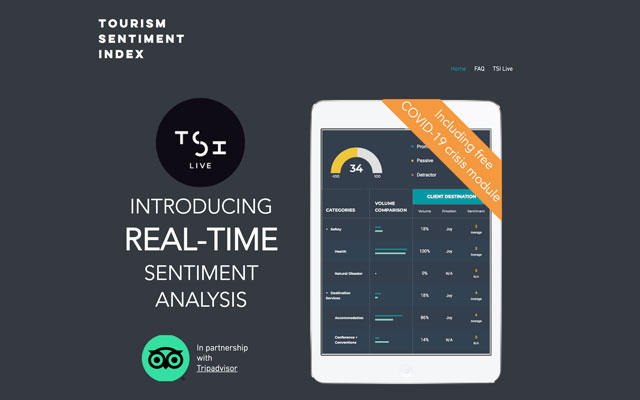
A new live data intelligence dashboard launched by Tripadvisor will allow destination marketers to gauge travellers’ sentiment towards destinations and travel, in order to drive their recovery strategies.
Powered by Tourism Sentiment Index, the offering is part of Tripadvisor’s wider suite of data intelligence products for DMOs, known as the Tripadvisor Insights Platform. The live dashboard provides clients with essential word-of-mouth insights about destinations, combining Tripadvisor’s each and traveller behaviour insights with Tourism Sentiment Index’s sentiment technology.
The Tripadvisor Insights Platform is a collection of measurement and insights tools intended to help partners in the travel and tourism industry manage their media campaigns and overall recovery activities. The solutions use Tripadvisor’s wealth of user behaviour data to measure performance, uncover competitive insights and track how destinations, accommodations, attractions and restaurants are performing over time.
The new sentiment dashboard for DMOs uplevels the service offering of the Tripadvisor Insights Platform by providing clients with daily actionable intelligence, using insights from across 50 tourism touchpoints – including air access, accommodations and attractions. The dashboard’s analytics are drawn from real-time conversations, across half a million platforms, including Tripadvisor.
Sentiment towards destinations and travel contribute to an overall score that reveals a destination’s popularity versus competitors, enabling them to update campaigns, product offerings and messaging faster and more effectively.
The sentiment dashboard also includes a crisis analysis module that tracks the impact of the pandemic in locations around the world by revealing emotional reactions to categories such as health services, government and economics.
“Recovery in the wake of Covid-19 is key this year. The Tourism Sentiment Index will equip DMOs with critical information and actionable insights that will allow them to better understand their travellers and the global landscape, resulting in more targeted and strategic marketing and media placement decisions”, said Sarah Mathews, Group Head of Destination Marketing APAC at Tripadvisor.
“Being able to put the right message out to the right traveller at the right time will give DMOs an advantage in campaign planning and execution, all with the goal of bringing the world back to travel safely.”