


Sydney Airport signs five-year technology deal with SITA
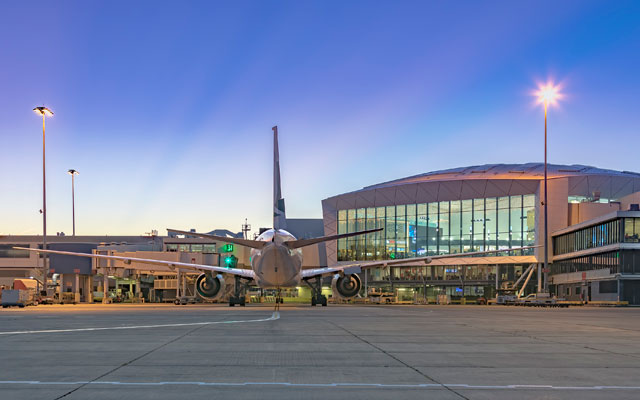
Sydney Airport has inked a five-year contract with SITA for the provision of common-use services which will enable the implementation of a low-touch passenger journey, an improved baggage experience, and significant operational efficiency benefits for the airport.
Launched on March 1, the solutions are deployed at both Terminal 1 (international) and Terminal 2 (domestic). They comprise SITA BagMessage, which eliminates the need for multiple baggage system interfaces between airlines and airports; as well as SITA Flex, a common-use platform that enables replacement of current traditional common-use touchpoints such as check-in, gate boarding, and service desks.
The latter also builds on existing infrastructures – such as on-site and off-site bag drops and kiosks – which can be re-used and repurposed as required, offering efficiency benefits in a time of economic uncertainty.
Sumesh Patel, SITA’s president of APAC, said: “We understand the harsh impact of Covid-19 on airports globally and we’ve adapted our solutions to deliver airport operations that are resilient, agile, and highly cost-efficient.
“SITA’s goal is to provide best-in-class technology solutions and to help Sydney Airport reshape its value proposition to all its stakeholders. A key element is to ensure maximum use of existing assets and technology infrastructure.”
Sydney Airport’s vision for development had been laid out in its 2039 Master Plan, and the core tenets of this plan mirrored SITA’s mission and technology roadmap. Enhancing the passenger experience, increasing efficiency, focusing on safety and security, and driving productivity were shared focal points.
Singapore Changi rolls out baggage disinfection service
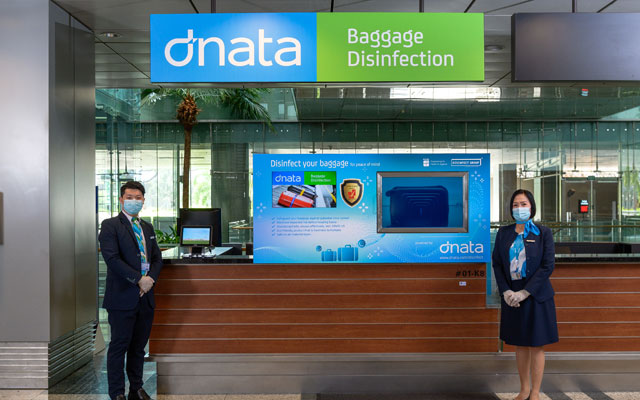
Singapore Changi Airport has unveiled a new baggage disinfection service for passengers arriving at Terminal 3, in its latest move to enhance the safety of travellers and restore confidence in air travel post-Covid.
Developed by dnata, in partnership with the Disinfect Group and Ecas4 Australia, the service allows passengers to have their baggage quickly and safely disinfected before leaving the airport. Disinfect Group’s equipment is “100 per cent natural, non-toxic, bio-degradable and can effectively kill over 99.99 per cent of bacteria and pathogens, such as coronavirus, on all types of baggage,” according to a press release by dnata.
The mist technology uses Ecas4 Australia’s electrolysed water that consists of salt and water, which are activated with an electrical process; and is “proven to be significantly more effective than bleach without the hazards of irritation to the skin, eyes, and respiratory systems”.
dnata said that the technology has been independently tested in private laboratories in Australia, the European Union, the UK and the US, and deemed completely safe for adults and children with approvals as a hospital grade disinfectant.
Services fees start from S$5 (US$3.71) per bag as an introductory price.
Plans are underway to roll out the service at other terminals and additional airports across the Asia-Pacific region in the second half of 2021.
Public-private partnerships key to Mekong’s tourism recovery

It is vital private sector players step up their game to coordinate unified tourism recovery across the Greater Mekong Subregion (GMS) countries in the wake of change at Mekong Tourism Coordinating Office (MTCO), say regional stakeholders.
Earlier this month, Jens Thraenhart, MTCO’s longest serving executive director, handed in his resignation, citing “personal values” as the reason for leaving his seven-year tenure.
He said: “It’s about standing up for my values and doing what I believe in. This office was formed to develop collaborative sustainable tourism across the Mekong region and we have created a very unique and powerful private-public partnership that does that. But in the current situation, it’s difficult.”
Thraenhart will continue his service during his 90-day notice period.
A special MTCO board meeting of GMS member governments will be held in April, where the six tourism ministries will decide how to move forward.
In the interim, regional tourism stakeholders say now is the time for the industry to unite and strengthen the innovative framework Thraenhart has created through MTCO; the secretariat of GMS Tourism Working Group of the six governments; and Destination Mekong, a DMO driven by the private sector; to move forward.
Willem Niemeijer, CEO of YAANA Ventures, noted: “MTCO is a powerful regional lobby and countries need to all come together as one. Stakeholders now have the chance to be part of the building back in tourism recovery. Post-Covid, regional tourism is going to be very important and discussions need to be had.”
Nick Ray, product director at Hanuman Travel, agreed, adding: “The challenge is that each country is working unilaterally. As we begin to reopen, there needs to be coordination and forward-looking countries really need to work together to promote the region.”
He added that while MTCO is driven by GMS governments, it is vital the private sector remains involved in decision-making. “It’s important that Destination Mekong carries on in tandem with MTCO – and the private sector needs to make that happen.”
Geoffrey Lipman, former WTTC president and president of International Coalition of Tourism Partners, said the region’s industry needs to seize this opportunity to strengthen.
“There is now the chance for the organisation to evolve and become much more of a public-private economy. The right components have been put in place by MTCO over the past few years, now, the private sector needs to get engaged to make Destination Mekong a sustainable regional DMO. Often, the private sector better understands the digital and travel world than governments, and they need to work together.”
Destination Mekong is also the driving force behind a series of initiatives, including award-winning Mekong Moments and Mekong Mini Movie Festival, Mekong Innovations in Sustainable Tourism (MIST), and Experience Mekong Collection and Showcases.
Thraenhart expects the majority to continue, with a tourism recovery campaign in development and a virtual internship platform slated to launch in the next few months.
With the military coup currently taking place in Myanmar, this has raised questions over how this will impact MTCO’s work promoting the region. Niemeijer said that while political distractions create a “challenge”, it is important to keep conversations flowing.
He added: “Tourism needs to remain on the table as a way to keep the international and regional community involved in Myanmar as a destination and not put it in isolation. I see this as difficult, but an opportunity for MTCO to keep Myanmar engaged.”
Malaysian agents urged to craft new tourism products for domestic crowd
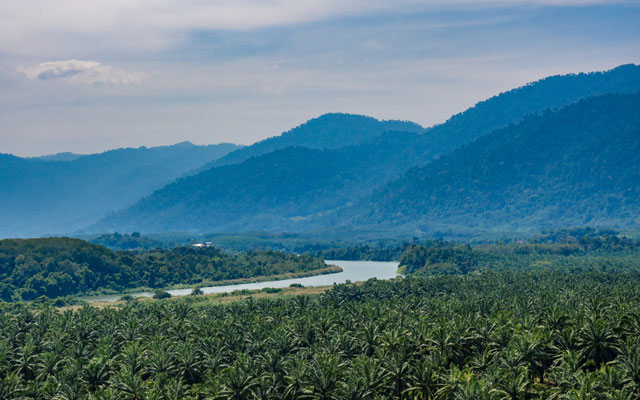
Malaysia Tourism Council (MTC) is taking the lead to encourage all tourism associations to develop new products and promote off-the-beaten-path destinations in Malaysia, in order to appeal to the domestic crowd.
It recently trained the local community at Lenggong Valley, a UNESCO certified site in Perak, to become product operators and tailor their services for the domestic market, while international borders remain closed.
MTC president, Uzaidi Udanis, shared: “It is important for the local community to benefit from tourism. Lenggong Valley has received UNESCO status since 2012, but not many Malaysians have been there as it is not well-promoted.”
Since the government allowed domestic tours to resume earlier this month – with travel limited to between recovery movement control order (RMCO) states, and via government-registered tour agencies – Uzaidi said MTC’s first project is to organise a technical visit for travel agents to Lenggong Valley early next month.
The purpose of the two-day, one-night visit is to connect travel agents with local operators and community leaders so they can network and explore business opportunities.
Uzaidi said: “In the pre-Covid period, many small operators in Malaysia did not develop their own tour products, but instead relied on selling tours developed by big wholesalers in Malaysia (that were designed) for the foreign inbound market.
“We are encouraging these smaller players to develop their own tourism products for the domestic market, (which can be marketed to) international inbound tourists when the border reopens.”
MTC also plans to host technical visits for agents to Pulau Tuba in Langkawi and the islands off Johor in June; as well as promote eco-tourism and community-based tourism in these destinations, in line with the National Tourism Masterplan.
Said Uzaidi: “In these challenging times, agents can no longer survive by selling dry rooms only as they will be competing directly with hotels.”
Travelport completes first Qantas flight with NDC bookings
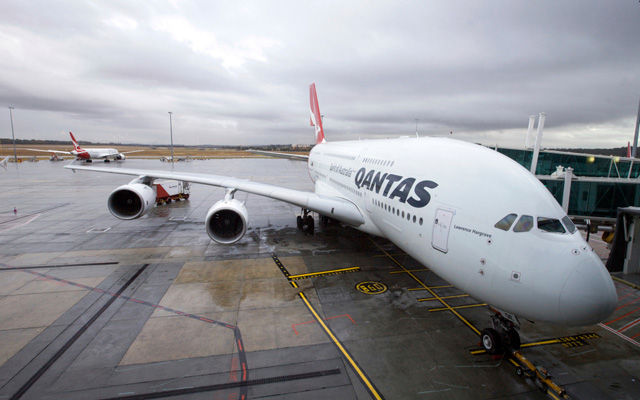
Travelport has started the roll out of bookings on Qantas using IATA’s New Distribution Capability (NDC), ahead of NDC booking capabilities being extended gradually to agencies across Australia and New Zealand from April.
Early adopters ATPI and Maxim’s Travel issued the first Qantas NDC tickets via Smartpoint, Travelport’s agency desktop solution. The first passenger to fly via an NDC booking travelled from Sydney to Melbourne on March 18.
With both Smartpoint and Travelport’s API connection now capable of booking Qantas’ NDC content, this successful step marks one of the final milestones in Travelport’s partnership with Qantas to launch its NDC-enabled Qantas Distribution Platform for agents.
From April, Travelport-connected agents in Australia and New Zealand who have signed up to the Qantas channel will be able to make NDC bookings using Smartpoint or Travelport’s API.
Kyle Moore, head of customer strategy at Travelport, said: “Passengers actually travelling on journeys created via NDC are the best testament to the rigorous efforts that Qantas, Travelport, ATPI, Maxim’s Travel and all our test agencies have invested in successfully enabling modern travel retailing.
“Sharpening our customers’ competitive edge by giving them access to unique and personalised content… is a key part of Travelport’s next generation platform being the best travel retailing platform available in the marketplace.”
Igor Kwiatkowski, Qantas executive manager, global sales & distribution, said: “Despite the significant impact of Covid on airlines globally, Qantas remains committed to progressing our NDC programme with our key partners like Travelport.
“We’ve launched a number of new features in recent months, including special price offers for our Frequent Flyers and the ability for agents to help their customers purchase carbon offsets. These benefits are all designed to deliver richer content and a better experience for our customers and agency partners.”
NDC bookings made through the Qantas Distribution Platform will empower agencies to deliver more enriched and personalised experiences for travellers.
Hilton banks on conversions to bolster growth in Thailand
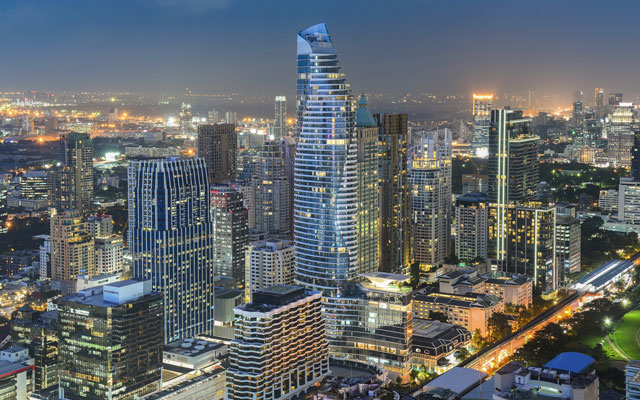
Hilton aims to convert up to 2,000 rooms over two years in Thailand, with a focus on its full service brands Hilton Hotels & Resorts and DoubleTree by Hilton, as well as focused service brand Hilton Garden Inn.
Despite the pandemic, conversion signings for Hilton across the globe in 2020 increased more than 30 per cent versus the prior year.
In recent years, Hilton has inked a number of signings in Thailand, paving the way for the market launch of its focused service brand Hilton Garden Inn in Phuket come 4Q2021, as well as the debut of its lifestyle brand, Canopy by Hilton, in the country in 2023.
Hilton said in a statement that Thailand is “poised for meaningful growth in the coming years”, as it holds the company’s largest portfolio in South-east Asia with 11 hotels across four brands and an additional eight in the pipeline, which will see the entry of two new brands into the market.
Guy Phillips, senior vice president, development, Asia and Australasia, Hilton, said: “The strength of our portfolio and commercial engines have helped preserve and optimise value for our owners throughout one of the most challenging years the industry has ever faced.”
He added that “steering our focus onto rebranding opportunities would allow us to help independent hotel owners in Thailand maximise the potential of their assets”.
Marriott expands Saudi Arabia portfolio
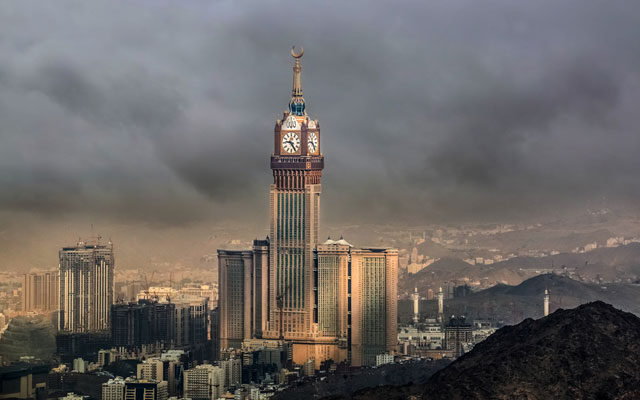
Marriott International has signed an agreement with Al Saedan Group, a real estate company in the Middle East, to open three hotels across Saudi Arabia by 2025.
The multi-project agreement includes the country and territory’s first Renaissance Hotel, the world’s largest Aloft Hotel and a Courtyard by Marriott in the Holy City of Makkah.
Renaissance Hotels is expected to make its debut in Saudi Arabia with the opening of Renaissance Riyadh Hotel. Situated in the business hub of the King Abdullah Financial District and within close proximity to Riyadh International Airport, Renaissance Riyadh Hotel will feature 266 suites, three F&B outlets, a spa, pool and fitness centre.
Aloft Makkah Taysir, which will be situated in the Holy City of Makkah, is set to be the brand’s largest hotel in the world with plans for 1,000 guestrooms. Located in the Taysir district and close to the Grand Mosque entrance, the hotel will be ideally located for guests visiting on pilgrimage. Aloft Makkah Taysir is slated to feature a lounge, a 24/7 grab-and-go gourmet menu, and a 24-hour fitness centre.
Lastly, the signing of Courtyard by Marriott Makkah Kudai will see the brand further expand its footprint in Saudi Arabia. Situated 2km from the Grand Mosque entrance, the hotel has plans for 438 guestrooms, its signature Grab n’ Go market, and a fitness centre.
Avis rolls out six-month car leasing service in Singapore
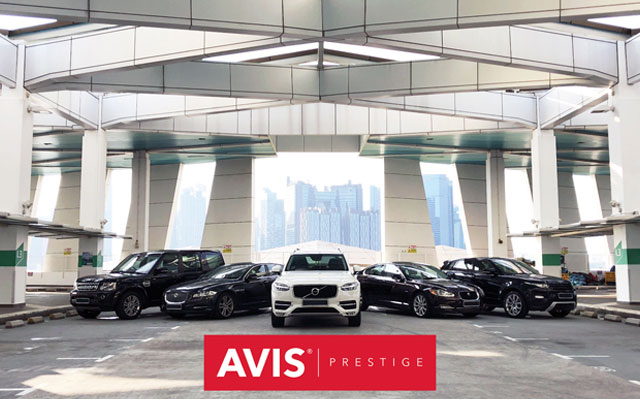
Avis Singapore has launched a six-month car leasing promotion for selected models at rates starting from S$1,228 (US$912).
The promotion runs from now until April 30, 2021. Car models available for rent include the Chevrolet Cruze, Mazda 3, Hyundai Elantra, Nissan Teana, Nissan X-Trail, and the Audi Q3.
The leasing fee includes all running costs, including maintenance, road tax, scheduled servicing and replacement of worn-out tyres. The fee also offers basic coverage such as theft protection and basic collision damage waiver, as well as a 24/7 mechanical breakdown assistance.
Preferred Hotels & Resorts promotes Jonathan Newbury

Preferred Hotels & Resorts has promoted Jonathan Newbury to executive vice president of Asia Pacific.
Newbury brings 30 years of international independent hotel experience to his new position, which carries the responsibility to drive the strategic direction and evolution of the Preferred brand in Asia Pacific, ensuring the success and retention of more than 150 member properties across the region, and overseeing the company’s associates who are based in offices across 10 cities.
As part of this transition, Newbury recently relocated from Chicago to Singapore with his family.
Newbury first joined Preferred in July 2008, intially serving as vice president of brand development and most recently as senior vice president of strategic development. During his time as senior vice president, he spearheaded a variety of global development initiatives that helped fuel a 20 per cent growth in the brand’s hotel portfolio over the past decade.
In addition to his development work, Newbury served as Preferred’s vice president of E-Commerce & Technology from July 2010 to March 2012.
Prior to joining Preferred, Newbury spent three years as vice president of global development for Small Luxury Hotels of the World. He has also served as operations director for VIP SKI, which operates luxury chalets, hotels, and resorts across the French and Austrian Alps, and held on-property sales and marketing positions with both The Langham Hotels and Resorts and Thistle Hotel brands.








The Indian government has extended the ban on international commercial passenger services to and from India until April 30.
The Directorate General of Civil Aviation (DGCA) said in a circular on Tuesday that the restriction does not apply to international all-cargo operations and flights specifically approved by DGCA.
It also added that international scheduled flights may be allowed on selected routes by the competent authority on a case-to-case basis.
The ban on overseas flights was initially slated to end on March 31, after a twelve-month gap.
Flights under the bilateral air bubble arrangements with select countries will continue to operate. Currently, India has air bubble agreements with about 27 countries, including Canada, Ethiopia, France, Germany, Iraq, Japan, Kenya, Kuwait, the Maldives, Nepal, the UAE, the UK, and the US.