Brought to you by Royal Cliff Hotels Group
Sabah imposes two-week interstate travel ban
Amid a continued surge in Covid-19 cases, Malaysia’s Sabah state has imposed a border control banning travel between the state and the peninsula, Sarawak and Labuan from October 12-25.
Exceptions will be granted for special cases such as emergencies, death in the family, and provision of essential services.

Senior minister (security cluster), Ismail Sabri Yaakob, said those who receive permission to travel must undergo Covid-19 screening conducted by the Health Ministry as soon as they arrive at their destination.
Those allowed entry into Sabah include Sabahans who are code “H” MyKad holders, spouses of Sabahans with valid immigration passes or with proof of marriage and birth certificate, those working in essential services and holding valid immigration passes, members of the federal civil service who are posted to the state, as well as non-Sabahan students with student cards or passes issued by the state immigration department.
Anyone entering Sabah must undergo Covid-19 screening upon their arrival.
Yesterday (October 6), Sabah recorded 219 Covid-19 cases out of the 691 new cases reported in the country – the highest single-day spike, which has prompted the federal government to consider limiting large congregations such as weddings and public gatherings to curb its spread.
Sabah’s capital, Kota Kinabalu, as well as the districts of Penampang and Putatan, have been placed under a conditional movement control order from midnight today (October 7), in efforts to flatten the curve. This means no one will be allowed to enter or exit the three districts except for those in essential services, including factories.
Restaurants are not allowed to receive dine-in customers and business operating hours for restaurants, food stalls, petrol stations, convenience shops and pharmacies will be shortened from 06.00 to 18.00 during this period.
UNWTO, IATA form alliance to get airlines flying again
Ahead of the G20 summit of the world’s largest economies, which includes a dedicated tourism segment, the UNWTO has signed an MoU with the IATA to restore consumer confidence in air travel, while placing sustainability at the centre of recovery and future growth.
As well as focusing on building and maintaining confidence in international travel, the new agreement will also see UNWTO and IATA work closely together to foster innovation and promote greater public-private collaboration. As tourism restarts, this MoU will help ensure recovery is sustainable and inclusive.

IATA director general Alexandre de Juniac said: “The safe opening of international borders to tourism is essential. Tourists want to feel safe, and they want to be confident that their travel plans won’t be affected by last-minute changes to rules and regulations. For this to happen, even greater collaboration between the public and private sectors is needed.”
IATA has been an affiliate member of UNWTO since 1978, providing a strong voice for the international air transport sector. IATA is also an active member of the board of the UNWTO’s affiliate members and contributed to the UNWTO Global Guidelines to Restart Tourism, released in May to help guide governments and the private sector in their response to the Covid-19 pandemic.
The guidelines included a distinct set of recommendations for the air transport sector, with a focus on the introduction of enhanced hygiene protocols to guarantee the safety of both passengers and airline workers. It also emphasised the need for strong partnership and coordination at every level of the airline sector.
THAI Smile teams up with Sabre to drive domestic tourism
THAI Smile has signed a new distribution agreement with Sabre Corporation that will amplify the airline’s presence in new and existing markets as it looks to lead Thailand’s ramped up domestic tourism drive.

Connecting to Sabre’s GDS platform will provide THAI Smile with access to Sabre’s rich global travel marketplace, which is comprised of more than 425,000 travel agents across the world, supporting the carrier as it plays a key role in Thailand’s domestic tourism recovery and future ramping up of regional operations.
THAI Smile’s CEO Charita Leelayudth said: “We remain focused on domestic and future regional growth opportunities as we navigate through this pandemic. As such, it was vital that we chose the right technology partner to enable us to fulfil an effective business continuity plan, empowering us to expand our geographical reach by ensuring content is distributed widely to our partners across the world.”
Go on a beach holiday

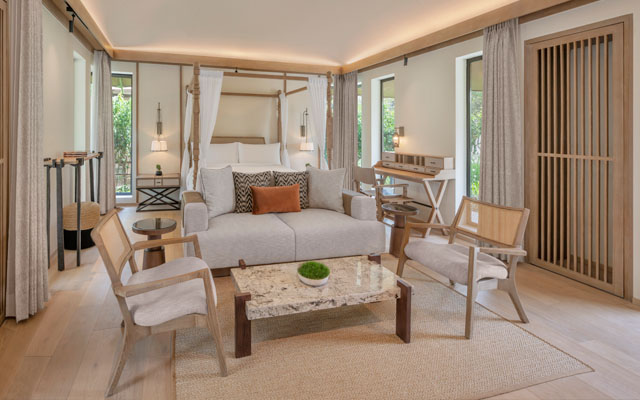
A silver lining is on the horizon for those who have pined for an escape to the tropics, or perhaps, a change in office scenary. Through the collaboration with international designers and architects – including Thailand’s architectural legend Duangrit Bunnag – the revamped Royal Cliff Beach Hotel presents a weave of Thai heritage with modern hospitality touches in its design and offerings. We take you through what’s new:
Alternatively, those looking to indulge in greater exclusitivity will find themselves at home with Royal Wing Suites & Spa, which overlooks the mesmerising Gulf of Thailand. Winner of the 2020 Tripadvisor ‘Best of the Best’ Traveller Award, the flagship property with only 83 suites is graced by multiple luminaries and dignitaries in epitomising luxury.

Accomodation sizes range from 54m2 to 336m2, and it makes for an intimate vacation experience, be in a honeymoon or family holiday. Each suite features a living area with separated bedroom, in-room circular jacuzzi, private balcony, IPTV, Wi-Fi 6 ultra high-speed internet and complimentary daily restock of the mini bar. Slink into luxurious linens and be spoilt by pillow menu choices designed to complement a good night’s sleep.
Presidential Suite guests will relish the access to a 24/7 personal butler and beachfront Sala (Thai-styled pavilion) with open air jacuzzi and sunbeds; including a private area available for small parties.

In addition, sun loungers are also reserved for all Royal Wing Suites & Spa guests throughout their stay at the property, which comes with a private pool on-site. It is also the only resort in Pattaya that maintains two private beaches for the exclusive use of in-house guests.


Need a place to unwind in solitude or hold cozy gatherings? Look no further than the Majestic Lounge, which offers a selection of finger food and hot beverages in a semi-alfresco setting.
Families can bond over activities at The Verge, featuring games, pool and karaoke and Funtasea, an indoor edutainment kids club.


To top off the holiday, visit Cliff Spa, where an array of spa treatments drawing inspiration around the world will spoil even the discerning spa fanatics.
Royal Cliff Hotels Group is also accredited with the “Amazing Thailand Safety and Health Administration: SHA” certification issued by the Tourism Authority of Thailand (TAT). Strict health and safety measures that are in line with World Health Organization and Centers for Disease Control and Prevention directives are implemented to prioritise guests’ and staff well-being, and prevent the spread of Covid-19.
Singapore works towards general travel resumption
Singapore will be negotiating air travel bubbles with safe countries and regions that have comprehensive public health surveillance systems as well as low rates of Covid-19 infection.
This arrangement is meant for general travellers and does not require a controlled itinerary. They are also different from reciprocal green lane arrangements meant for business and official travellers.

Travellers will have to apply for Air Travel Passes before their journeys, to allow Singapore to plan for their arrival and lower numbers if the epidemic situation changes.
Hong Kong has announced its intention to establish such bubbles with several countries, including Singapore.
The announcement by transport minister Ong Ye Kung comes on top of other recent measures such relaxed border restrictions, and are part of Singapore’s plans to revive her air hub and bring back jobs.
The minister also addressed other steps the country has to take to open up its borders and revive air travel.
Singapore will continue to pursue reciprocal green lane arrangements, which will come with compulsory swab tests before departure and on arrival to ensure travellers do not carry the virus, as well as controlled itineraries to minimise risk of community spread.
Countries currently under this arrangement are China, Japan, Malaysia, and South Korea.
Changi Airport will also continue to facilitate transfers. There are now about 2,500 transfer passengers weekly, according to The Straits Times.
Also, Singapore should also be prepared to lift her border restrictions to countries and regions that are deemed safe. As a precaution, these travellers will be tested for Covid-19.
Singapore unilaterally opened its borders to travellers from Brunei and New Zealand last month, and more recently to those from Vietnam and Australia – excluding the state of Victoria.
Airline woes continue with AirAsia Japan’s exit, Philippine Airlines’ resource reduction
The persistent slow restart to air travel has resulted in AirAsia Japan’s demise yesterday as well as Philippine Airlines’ (PAL) decision to slash up to 2,700 jobs.
Established at Chubu Centrair International Airport in July 2014, AirAsia Japan is the latest business casualty of the Covid-19 pandemic.

In a press statement, AirAsia Japan said travel restrictions and the uncertainties it created have severely curtailed demand for business and leisure travel, resulting in flight reductions, cancellations and grounding of aircraft. These factors have weighed heavily on the company’s ability to continue operations.
Representative director and COO of AirAsia Japan, Jun Aida, said: “Despite our unrelenting efforts to sustain operations through successive and wide-ranging cost reduction initiatives, we have concluded that it would be an extremely challenging feat for us to continue operating without any visibility and certainty of a post-pandemic recovery path.
“I would like to express our deepest gratitude and appreciation to our loyal guests and other stakeholders who have supported us all along. This painful decision to cease operations was decided neither in haste nor taken lightly. It was agreed upon after conducting a thorough business review.”
AirAsia Japan’s exit will be carried out in accordance with the applicable laws and regulations including the Japan Civil Aeronautics Act.
Meanwhile, PAL will cut up to a third of its workforce as it continues to struggle with suppressed demand. It is running less than 15 per cent of its normal daily flights eight months after the Philippine government imposed travel curbs.
“The collapse in travel demand and persistent travel restrictions on most global and domestic routes have made retrenchment inevitable,” PAL said in a statement.
Trip Affiliates Network grows into China
Singapore-based Trip Affiliates Network (TAN) has partnered with Shenzhen JL-Tour (JLT) to bolster its expansion across China, a move that will enable tour and activities operators to unlock new profitable paths to growth.
Shenzhen JLT, owned by Tongcheng Group, is one of China’s leading B2B hotel wholesaler. Its partnership with TAN will provide an open ecosystem to traditionally offline B2B channels such as travel agencies, wholesalers and corporate travel intermediaries. Both companies will work together on specialised Joint Destination Marketing Campaigns to drive awareness of selected destinations while expanding the network of partners in the region.

Joy Yan, product director at Shenzhen JLT, said: “We will enable Trip Affiliates Network to access a range of resources from the Chinese mainland and distribute them across many channels.”
Yan added that Shenzhen JLT would benefit from TAN’s “broad range of resources, solutions and connected partners across the region” as well as its partnerships with Siteminder and Rategain “which will enable JLT to connect with overseas hotel groups easily”.
Josef Foo, TAN managing partner, said the partnership is his company’s “first foray into the Greater China region and is testament to the exceptional team here”.
“We are gathering critical mass as an ecosystem, helping tour and activity wholesalers improve market share and grow their direct bookings, while focusing on their channel relationships and building on long term profitability.”
Mandarin Oriental Hotel Group, Oberoi Group enter strategic alliance
Mandarin Oriental Hotel Group and The Oberoi Group have forged a long-term partnership that will see them curate exclusive experiences and expand their global reach.
A press release on the global alliance states that both companies will retain their unique heritage and identity.

Tapping into the expertise of both brands, the alliance will work together to create unique culinary and wellness experiences and will also collaborate on innovation, sustainability and colleague learning and development. Joint efforts across these areas will provide synergies for both brands enabling both to further evolve the meaning of luxury hospitality.
Members of Fans of M.O. and Oberoi One, the brands’ respective recognition programmes, will have privileged access to over 50 luxury hotels in sought-after destinations, where they will receive superior recognition, exclusive experiences and offers, as well as invitations to bespoke events.
“We are delighted to launch this innovative partnership with The Oberoi Group, setting the stage for us to push the boundaries of luxury hospitality,” said James Riley, Mandarin Oriental’s group chief executive.
“We have long been ‘fans’ of Mandarin Oriental,” said Vikram Oberoi, managing director and CEO of EIH, the flagship company of The Oberoi Group. “Our brands complement each other extremely well as do our organisations values and culture. This exciting alliance will allow guests to experience new destinations and experiences in the legendary styles for which both companies are renowned.”


The debt-ridden longhaul arm of AirAsia has proposed a restructuring plan geared at facilitating an injection of fresh equity in a last-ditch effort to save the Malaysian budget carrier from going belly up.
Leading the restructuring is newly-appointed deputy chairman, Lim Kian Onn, who is a chartered accountant and former investment banker.
AirAsia X said in a statement that it is facing severe liquidity constraints, amid the prolonged Covid-19 crisis, and that “an imminent default of contractual commitments will precipitate a potential liquidation of the airline”.
In order to raise fresh equity which is essential to restart the airline, it needs to undergo a major debt restructuring and a renegotiation of its financial obligations, it added.
If approved, the restructuring plan will secure the airline’s continued ability to fly again, said AirAsia X. The carrier’s current total liabilities of RM10.3 billion (US$2.5 billion) exceeds its total assets of RM9.36 billion.
The group has proposed that the debts amounting to RM63.5 billion to unsecured creditors be reconstituted into an acknowledgement of indebtedness for a principal amount of up to RM200 million. It is also seeking for the balance amount to be waived.
It said that the move is “aimed at enabling the group to address its debt obligations in an orderly manner and to arrive at a debt structure that is sustainable from future operating cash flows”.
As well, the revision of the group’s business plan entails route network rationalisation, aircraft fleet right-sizing, cost base overhaul and workforce optimisation in order to ensure a leaner and more sustainable business.
Citing continued support from business partners as critical to drive the success of the proposed restructuring plan, the carrier said that it hopes to enter into agreements “that are reflective and supportive of the airline’s revised business plan upon successful completion of the restructuring”.
Under the proposed scheme, AirAsia Unlimited Pass holders and guests with valid flight bookings will receive travel credits with extended validity for future travel or purchase of seat inventory.
AirAsia X CEO Benyamin Ismail said: “We remain committed to our guests, Allstars, business partners and shareholders to ensure we build a viable and sustainable airline for the longhaul, and for the survival of this airline, the proposed restructuring plan is our only option.
“It has been extremely difficult for the airline during this period as we had to ground all scheduled flights, implement salary cuts and retrenchment for the first time in the company’s history as a consequence of the pandemic. Similar exercises are likely to continue during the restructuring process, but our focus is to ensure a successful restructuring to keep as many jobs as possible.
“We have a low cost base, we are in the right part of the market and many of our key markets are in green zones which are likely to reopen first. We have a robust recovery strategy in place, and with the continued support from our stakeholders, we will overcome all challenges and come out stronger.”
According to Ismail, the airline’s immediate focus is to obtain all necessary approvals and execute the proposed restructuring plan over the next few months.