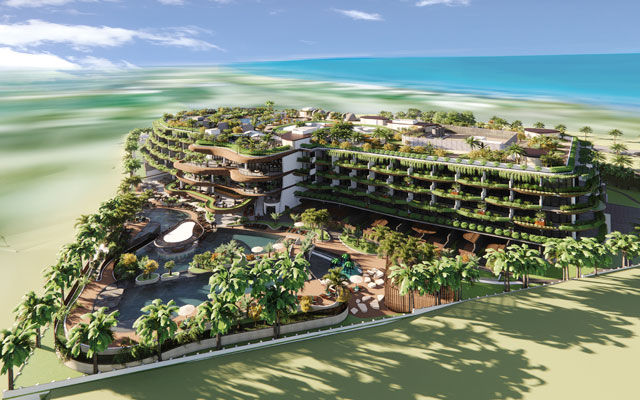
Accor will bring the luxury Fairmont brand to Australia for the first time, with the Fairmont Port Douglas set to open in Far North Queensland come 2023.
Set on the edge of two UNESCO World Heritage sites – the Great Barrier Reef and the Daintree Rainforest – the hotel in the coastal town of Port Douglas will boast 253 rooms. On-site amenities include several restaurants and bars, a spa, treetop walk and conference facilities, designed around resort-style pools.
Fairmont Port Douglas will bring a new level of sustainable luxury to Australia’s Far North
The hotel is also planning to work with the local Kuku Yalanji community, traditional owners of the land, to provide Indigenous Welcome to Culture and Smoking Ceremonies for special events.
As the first hotel in the region to achieve Ecotourism Australia’s Eco Destination Certificate, Fairmont Port Douglas has been recognised for its strong environmental credentials, winning the Communities & Culture Award at the Sustainable Destinations Awards in March 2020.
Singapore-headquartered Luxury Tours & Travel (LTT) has inked a digital partnership deal with B2B travel technology company Trip Affiliates Network (TA Network) to power regional expansion.
LTT provides travel services and content to its global trade partners, including airport transfers, sightseeing tours, worldwide hotel accommodations and tour packages. Also headquartered in Singapore, with offices in Indonesia and Thailand, TA Network provides a broad range of system solutions designed to streamline and automate business processes.
Luxury Tours’ partnership with Trip Affiliates Network comes as Covid-19 accelerates the need for digital business transformation
The LTT-TA Network partnership brings together deep know-how in business and technology elements. TA will be providing a broad range of cost-effective digital solutions, including online supplier connectivity, scalable channel distribution, digital payments and operations automation.
“Appropriate adoption of technology will be critical in a post-Covid era where travel agents will be faced with ever more dynamic travel demands and pricing,” said Jennifer Chang, LTT’s general manager and a travel veteran with more than 35 years of industry experience.
The DMC’s partnership with TA Network to embark on a complete digital transformation will “enhance our competitiveness and enable us to accelerate our regional expansion plans”, she added.
Josef Foo, Trip Affiliates COO and managing partner, said: “We are excited with the tremendous potential of travel agents to transform digitally and achieve higher revenue and operating margins. In the post Covid ‘new normal’, our agent clients with their human agents will be well positioned to provide personalised travel care and arrangements, be it for FIT, small group or large group tours.”
Minor Hotels has partnered with Thai developer M.K. Real Estate Development and VitalLife Scientific Wellness Centre, a subsidiary of Bumrungrad International Hospital, to launch RAKxa Fully Integrative Wellness and Medical Retreat in the Thai capital of Bangkok.
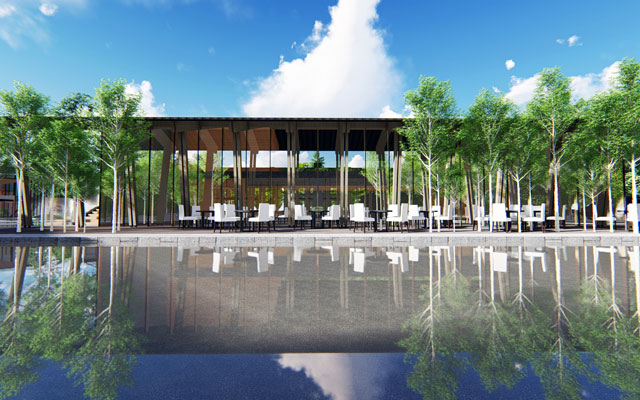
Launching in December 2020, RAKxa was conceived as a fully sustainable medical wellness retreat within Bang Krachao on the Chao Praya River, known locally as the ‘Green Lung’ of Bangkok. The concept aims to deliver bespoke healthcare in a relaxing environment.
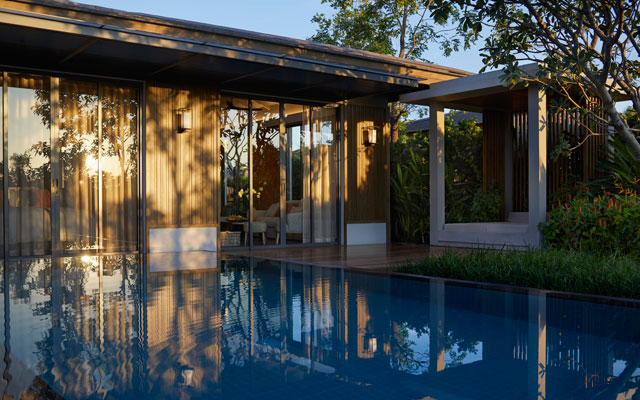
Minor Hotels will manage the luxury villas at RAKxa Fully Integrative Wellness and Medical Retreat; Rakxa pool villa pictured
RAKxa’s 60 private villas will be managed by Minor Hotels. In December, 27 garden villas spanning 80m2 will welcome the retreat’s first guests. Pool villas and a presidential villa are set to launch in early 2021.
William E Heinecke, chairman and founder of Minor International, owning company of Minor Hotels, said: “At a time when customers are reprioritising their health, the hospitality industry’s pivot to wellness is no longer a trend but a necessity. Refocusing on health is happening on the community level too, making the arrival of pioneering concepts such as RAKxa all the more important.”
Separated from the rest of Bangkok by a winding river, RAKxa is accessible by both boat and car, and is located approximately an hour from both Suvarnabhumi and Don Mueang international airports.
Residents in Asia-Pacific countries harbour an overall positive sentiment around tourism in the region, as compared to the global averages, with most ready to welcome visitors again with due attention to the traveller impact on environment and cleanliness.
Those are among the findings from PATA’s newly-launched report entitled The Impact of Health and Hygiene on Post-Covid-19 Destination Competitiveness in Asia Pacific.
PATA’s new report examines the impact of health and hygiene on post-Covid-19 tourism competitiveness in Asia-Pacific destinations
Report contributors include the co-founders of the Global Health Security Index, a project of the Nuclear Threat Initiative and the Johns Hopkins Center for Health Security; TCI Research, Tripadvisor, and the World Economic Forum (WEF).
With Covid-19 changing the way people travel, the report also found that health-related issues are among consumers’ top considerations when selecting travel destinations.
PATA chief of staff Trevor Weltman said: “Despite much remaining unknown about the future of travel post-Covid-19, this timely report highlights emerging trends about health and hygiene in travel and tourism concerning traveller booking behaviour and resident sentiment. Such insights can assist destination managers and marketers to get ahead of the curve to rethink, rebuild, and reposition their destination’s focus on health and hygiene beginning now.”
The report recommends that destination managers and other tourism stakeholders across the Asia-Pacific region begin creating close partnerships with public health officials, tourism supply chain businesses, and local communities to commence a coordinated renewal of traveller confidence in the health and safety of their destination.
Destinations that meet these expectations through investing in hygiene and safety measures and clearly communicate these changes to travellers and residents alike, will be well-positioned to win in the post-Covid-19 travel era.
The methods of analysis used in the report include social listening, sentiment analysis, and surveying. Furthermore, Part III of the report, which provides a destination competitiveness analysis, is a re-weighting of the “Health & Hygiene” pillar of the WEF’s 2019 Travel and Tourism Competitiveness Index (TTCI). The TTCI benchmarks the travel and tourism competitiveness of 140 economies to measure the factors and policies that enable the sustainable development of the sector.
Ultimately, multi-sectoral coordination between ministries of health, agriculture, tourism, and trade, and communication of the outcomes of these policy actions to the broader community, including travellers, will be critical to meeting these goals and restoring confidence in the tourism industry. “These preliminary findings are shared to provide an enhanced understanding of where the industry is heading, as well as an initial roadmap for how to get there,” Weltman added.
More about the report will be shared at the PTM Forum on The Impact of Health and Hygiene on Post-Covid-19 Destination Competitiveness in Asia Pacific on September 25, 2020 at 16:00 ICT, as part of Virtual PTM 2020. Speakers include representatives from TCI Research, Tripadvisor, Nuclear Threat Initiative, and WEF.
The webinar is open to all Virtual PTM 2020 delegates, PATA members, media, non-members and all interested parties. To register, click here.
Philippine hotels and resorts are evolving their products and services to adapt to changing demands and lifestyles during the pandemic, including pushing out packages with work, study and health components.
Andrea Mastellone, senior group general manager, Ayala Hotels and Resorts – Seda Hotels, noted an increase in demand for workations, with people now looking to work from hotels for a change of scenery, with recent surveys showing that working from home isn’t exactly a bed of roses.
Crowne Plaza Manila Galleria is among a growing number of Philippines hotels offering work from hotel packages
Workations is a growing market that can fill the hotel room void left by returning overseas Filipino workers, business process outsourcing staff, and health frontliners, Mastellone said in a webinar. However, he noted, while the workation trend may “give life to hotels” during the pandemic, it is “not sustainable” and “would be extinguished in the short-term”.
Hotel Sales and Marketing Association spokesperson Pearl Peralta Maclang agreed that workation is a new trend that many properties are hopping on, including Crowne Plaza Manila Galleria and Dusit D2 Davao.
The shift to distance learning for Philippine schools has also birthed a growing trend of hotels and resorts becoming alternative spaces for children to play and study, said Margie Munsayac, Bluewater Resorts vice president sales and marketing, in an HSMA online press briefing.
“People want to go on staycations on weekends and even on weekdays, and hotels are assuring them of stable Wi-Fi connection because children can study anywhere as long as there is stable Wi-Fi connection. People would love to go to hotels for a different environment and atmosphere,” she said.
Workation packages would be embraced by internationally travelling millennials, who are looking to explore destinations where they can mix work and leisure, Munsayac added.
As the populace becomes more health-conscious, another trend is hotels providing on-site medical consultations. Discovery Hospitality has partnered with Cardinal Santos Medical Center to have doctors on stand-by at its property Discovery Suites Ortigas. The Farm at San Benito also offers similar programmes.
Nathan Boublil, co-founder and CEO, Zen Hospitality Solutions, said that heightened hygiene standards adopted by hotels and resorts will give them an edge over serviced apartments and Airbnb, the latter now suffering due to an “amateur level of service”.
Also working in tech-savvy hotels’ favour amid the pandemic are technologies like smart room controls, mobile concierge and keyless check-ins that helps with social distancing, Boublil said.
IHG has signed a management agreement with Tokyo Century Corporation to open a Hotel Indigo property in the popular highland destination of Karuizawa come 2022.
Japan’s third Hotel Indigo to open in the popular highland destination of Karuizawa come 2022
In addition to its 155 rooms across three wings, Hotel Indigo Karuizawa will also feature meeting facilities, a spa, a gym, and dining options with a focus on local cuisine using seasonal ingredients.
The new property marks Japan’s third Hotel Indigo, following the opening of Hotel Indigo Hakone Gora in 2020, and the upcoming Hotel Inuyama Urakuen Garden, which will open in mid-2021.
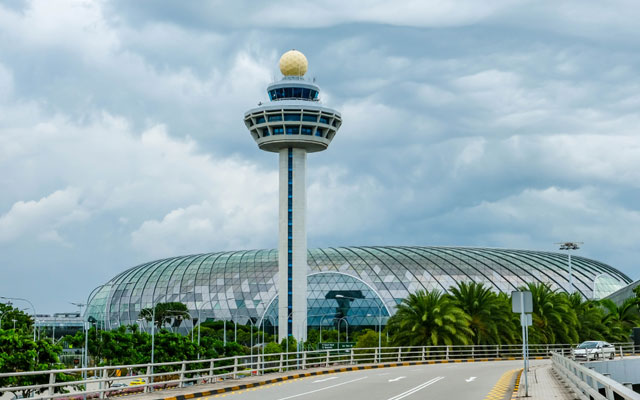
Singapore Changi has topped Safe Travel Barometer’s list of the world’s safest airports, which assessed more than 200 airports on their implementation of Covid-19 health and safety protocols.
Singapore Changi Airport posted a Safe Travel Score of 4.7 out of 4. Safety measures taken by the airport include the implementation of touchless initiatives to enhance the passenger experience across the landside and airside areas. These include sensor-based check-in kiosks and biometric- based immigration systems to eliminate fingerprint scanning.
Singapore Changi Airport has deployed new contactless technologies across its terminals amid Covid-19
The Safe Travel Score is an industry-first rating initiative, based on an independent audit of more than 200 airports and 20 traveller health and safety measures announced by airports.
Close on the heels of Changi Airport is Frankfurt Airport, Chengdu Shuangliu International Airport, and Delhi’s Indira Gandhi International Airport, each tied at a Safe Travel Score of 4.6 out of 5. UAE’s Abu Dhabi International Airport and Dubai International Airport are tied at 4.5 each.
Other airports which made it to the global top 10, achieving a Safe Travel Score of more than 4.3 out of 5, include Bengaluru Kempegowda International Airport, Hong Kong International Airport, Beijing Capital International Airport, and London Heathrow. Not a single airport from North America made it to the global top 10 list, primarily due to the relatively slow pace of implementation.
Anywhr, a Singapore-based travel company that curates surprise trips around the world for travellers, has launched a domestic initiative.
For S$30 (US$22) a day, the company will draw up a customised full-day itinerary with activity and restaurant recommendations across Singapore for residents.
The itinerary will be sent within 24 hours of the booking, with up to three revisions allowed. All reservations will be made on behalf of the guests, with each group booking capped at five persons.
Anywhr co-founder Zelia Leong shared the company decided to launch this offering because many of her previous clients felt “sad and stuck” in Singapore and have run out of things to do.
In addition, certain activities deemed high-risk during the coronavirus outbreak are now off-limits, while numbers at restaurants are limited to ensure social distancing.
Response to the new offering has been “positive”, Leong said, adding that the company does not take a commission or referral fee by recommending customers to certain partners.
She added: “We get our sources from many local partners and our Trips team who are experienced in curating custom itineraries, and travellers enjoy some special perks and discounts on activities we recommend.”
The South Australian Tourism Commission (SATC) has committed to a A$20 million (US$14.6 million) support package to encourage private investment in demand-driving regional tourism infrastructure, create jobs and aid Covid recovery.
Grants from A$20,000 to A$500,000 are available for new and improved regional accommodation, as well as quality tourism products and experiences that attract more visitors and a higher return.
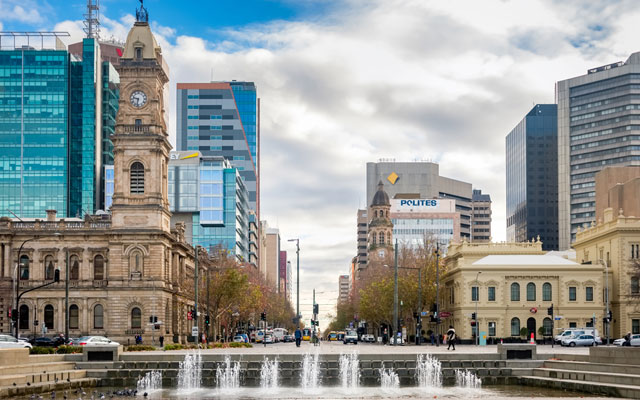
Tourism businesses across South Australia can leverage on grants to boost their offerings; Victoria Square in Adelaide, capital city of South Australia, pictured
The multi-million-dollar Tourism Industry Development Fund was announced by premier Steven Marshall on Sunday. Run over two years, the programme will assist regional tourism businesses to recover quicker and stronger and get more South Australians into work. It is part of a suite of support packages aimed at the tourism sector, which has been significantly impacted by bushfires and Covid-19.
Marshall said: “There’s no doubt the tourism industry is one of the hardest hit by the Covid-19 pandemic, but it’s also one of the most innovative and creative. We want to ensure that regional tourism businesses are supported to improve and diversify their offering so they can remain sustainable, increase visitor demand, and have visitors linger for longer.
“Regional tourism is playing a major role in rebuilding our state’s visitor economy and creating local jobs. We already know 43 cents in every tourism dollar is spent in our regions and early indications show this fund will create around 1,400 ongoing direct tourism jobs.
“One of the key strategic priorities identified across all regions for growing the visitor economy in our state is improved accommodation, products and experiences. That’s exactly what the Marshall government is doing, while getting shovels in the ground faster and more South Australians back into jobs.”
Applications to the Tourism Industry Development Fund are limited to private sector businesses. Projects must commence within three months from time of a successful application. A maximum of 30 per cent state government funding will be committed to the total project value.
Examples of eligible projects could include new accommodation or refurbishments to existing properties; the development or enhancement of tourism experiences, including innovative transport options; and infrastructure to enhance visitor engagement such as a new cellar door experience or an interactive display.
The funding programme is now open, and will run until March 31, 2022 or until all funds have been allocated. Applications will be assessed by a panel including representatives from the SATC and the South Australian Financing Authority.
Despite Covid-19 headwinds, Wyndham Hotels & Resorts managed to sign 59 new hotels across Asia-Pacific in 1H2020, a positive year-over-year growth signalling long-term confidence in the region.
Within South-east Asia and Pacific Rim (SEAPR), the company signed 21 new hotels in 1H2020, which is more than 30 per cent year-on-year growth compared to the same period in 2019. Highlights include an expansion of Wyndham’s presence in Japan with the debut of the Wyndham Grand and Wyndham Garden brands in the country, signing four new hotels in Bangkok, and the launch of La Quinta by Wyndham in New Zealand with two new-construction hotels in Queenstown and Auckland.
Wyndham Garden Nagaizumi (above) is one of 59 hotels across Asia-Pacific which Wyndham signed in 1H2020
In Greater China, 38 deals were directly signed in 1H2020, which is also more than 30 per cent year-on-year growth. Key signings in the country include Wyndham Grand Lishui, Wingate by Wyndham Weihai and Wyndham Garden Wuhan Jianghan, among others.
In early June, Wyndham merged its SEAPR and Greater China business units to form a new operating region, collectively known as Asia-Pacific.
The restructuring is part of a larger, company-wide initiative designed to realign Wyndham’s global business operations and maximise competitive advantage. This will allow Wyndham to strengthen its strategic positioning further to support existing operations, drive further expansion and create additional opportunities for cross-regional collaborations.
Across Asia-Pacific, Wyndham is closely monitoring regulations and guidance from relevant local authorities for restarting the industry. While international travel remains limited, the company is finding pockets of opportunities with a shift in focus to domestic travel in the region in countries like China, Thailand and Vietnam.














Minor Hotels has partnered with Thai developer M.K. Real Estate Development and VitalLife Scientific Wellness Centre, a subsidiary of Bumrungrad International Hospital, to launch RAKxa Fully Integrative Wellness and Medical Retreat in the Thai capital of Bangkok.
Launching in December 2020, RAKxa was conceived as a fully sustainable medical wellness retreat within Bang Krachao on the Chao Praya River, known locally as the ‘Green Lung’ of Bangkok. The concept aims to deliver bespoke healthcare in a relaxing environment.
RAKxa’s 60 private villas will be managed by Minor Hotels. In December, 27 garden villas spanning 80m2 will welcome the retreat’s first guests. Pool villas and a presidential villa are set to launch in early 2021.
William E Heinecke, chairman and founder of Minor International, owning company of Minor Hotels, said: “At a time when customers are reprioritising their health, the hospitality industry’s pivot to wellness is no longer a trend but a necessity. Refocusing on health is happening on the community level too, making the arrival of pioneering concepts such as RAKxa all the more important.”
Separated from the rest of Bangkok by a winding river, RAKxa is accessible by both boat and car, and is located approximately an hour from both Suvarnabhumi and Don Mueang international airports.