Location
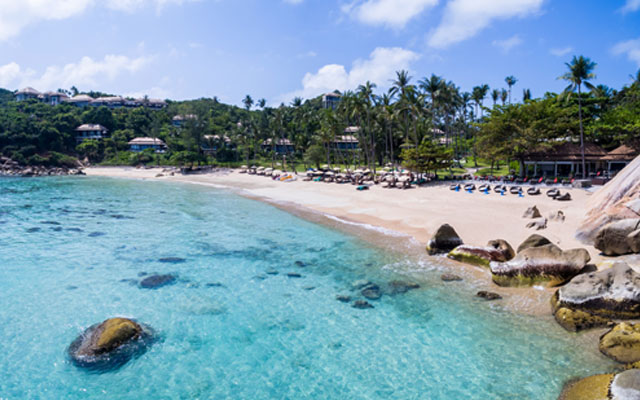
Banyan Tree landed on Samui in July 2010, the brand’s third property opening in Thailand. A defining feature of the property is the spacious, private pool villas nestled on the hillside overlooking the clear aqua waters of Lamai Bay, just 19km from Samui’s airport.
To get an idea of just how quiet and secluded the resort’s private beach is, during Thailand’s first Covid-19 lockdown in the summer of 2020, the resort made headlines when, lured by the absence of humans on the beach, a rare giant sea turtle trudged out of the water to lay her eggs on the stretch of sand in front of the resort.
Fascinatingly enough, Banyan Tree Hotels and Resorts’ official mascot is a green sea turtle named Felly, and during our stay we each received a tiny, adorable stuffed version of Felly as a keepsake.
Rooms
Arriving in the late morning of a bright and sunny day, we were ushered into the Lobby Lounge on the hill top for welcome snacks and drinks, where we were given a small pouch containing a smartphone with free calls, data coverage and the Banyan Tree app to guide our stay in the resort and on Koh Samui. I was also assigned a private villa host named Richard who would be on call throughout my stay to attend to my needs.
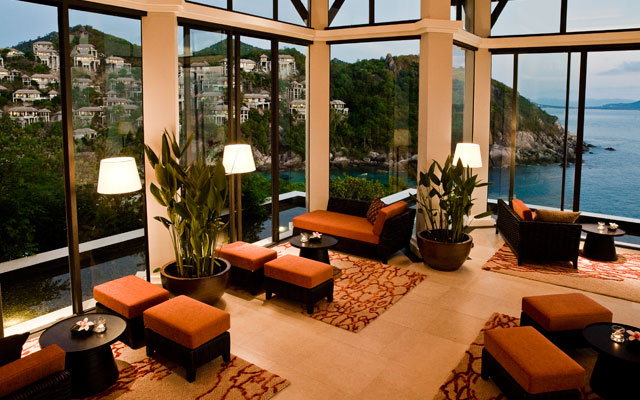
The Lobby Lounge is a great location for an afternoon tea; an airy, windowed space, its vantage point overlooks the entire resort, providing a bird’s eye view of the bay. Stepping out to its balcony, and wandering over to the viewpoint at The Edge nearby, we are met with stunning views of 88 ultra-luxury pool villas embedded in lush greenery.
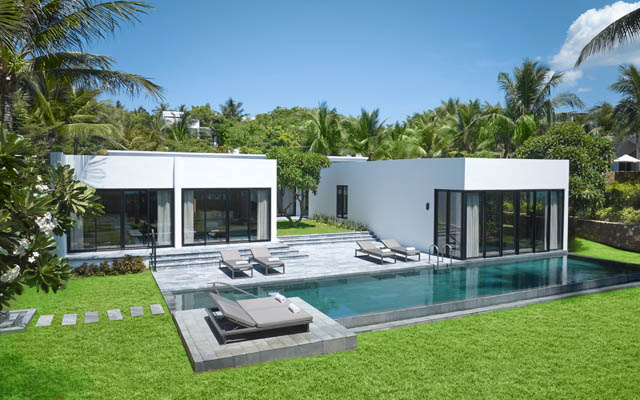
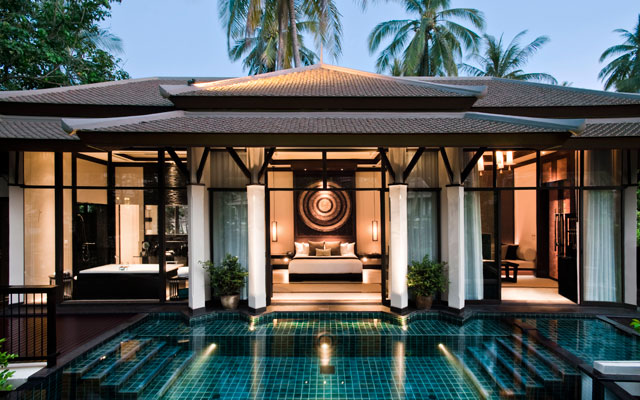
The sumptuous villas offer similar layouts, but different views depending on where on the mountain they are located. Each features an extensive plunge pool with swimming, wading and resting areas. The most luxuriant are the Higher Villa Types located on the hilltop with views completely free of obstruction, some of which also have jacuzzis.
The resort does not skimp on space. Sizes start at 130m2 for the Garden Pool Villa and go up to 316m2 for the Sanctuary Pool Villa.
Every villa features warm Thai decor accentuated with wood throughout. The double vanity bathroom contains a generous rain shower and deep, elongated bathtub, the latter of which impresses me as it’s one of the largest bathtubs I’ve encountered in all of my stays. Next to the bathroom is an atmospheric wooden walk-in closet.
The high-ceilinged open concept bedroom and living area have tall double doors which open to the private infinity pool backed by panoramic views of the bay. A private landscaped garden surrounds the room, with an outdoor lounge deck at the corner perfect for sunbathing or lounging in peace with a novel or curling up for an outdoor nap.
Every villa enclosure is gated at the back for additional privacy and intimacy. Each day, a new incense scent unique to the day of the week is lit during turn down, and a sweet treat of the day is placed on the nightstand. The room is dotted with tiny amenities for a sense of warmth. These small touches made me feel so much at home.
F&B
While many of the F&B outlets such as Saffron, The Edge, the Beach Bar and Pool Bar were closed during my stay due to the limited state of operations during the pandemic, we enjoyed many a luscious breakfast buffet and meal at Sands on the beach side.
The resort’s gluten-free bread served with each meal is some of the best that I’ve encountered, and the breakfast spread is notable for including champagne bubblies so guests can start their day with an additional dollop of luxury.
Guests can also opt for in-villa dining, including floating breakfasts on the pool.
Facilities
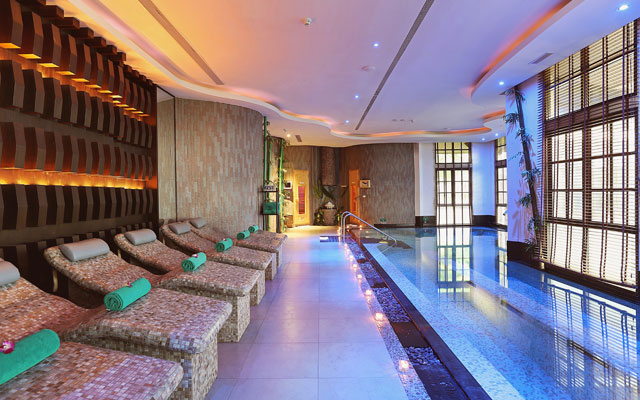
One of the highlights at Banyan Tree Samui is certainly the Banyan Tree Spa, the inaugural location of the Rainforest Spa, which became so popular with guests that the brand decided to open another location of its hydrothermal facilities in Bali.
We were given the opportunity to try the Rainforest Indulgence, a contactless fusion spa experience in which we were gently showered with cool water in the Rain Walk, treated to a steam room, drenched with ice buckets, and then pummelled with water fountains and Jacuzzis of various strengths in the Vitality Pool to revitalise every muscle in our bodies before finishing with a rest on the heat bed.
Staff were on hand to guide us through every element of the hydrothermal wellness journey.
While the resort is relatively secluded from the rest of Samui, guests will not lack activities during their stay.
We were given our pick of complimentary marine activities; yoga sun salutation, yoga asana classes or mat pilates at the yoga centre; pool table tournament on the recreation lawn; aqua exercises at the main pool; and an introduction to Thai boxing class to entertain us in the afternoons.
The Events Centre with five meeting venues including the Banyan Ballroom facility contains 268m2 of space in total, which can host up to 120 persons for small private events.
Service
Aside from having a villa host on call throughout our stay, staff were also ready at the drop of a pin to ferry us around in electric buggies. Given the mountainous terrain, every buggy ride is a mini-adventure. They are a good way to get around the resort, whose villas and facilities are relatively spread out throughout the hillside.
Those wishing to explore the island can also request free shuttle service to nearby towns.
Banyan Tree Koh Samui has hired Phakthima Naratthakit as its hygiene manager to implement the brand’s SafeSanctuary Programme, which is audited by Bureau Veritas. It includes checkpoints at the lobby and public areas, and hourly cleaning of high-touch public areas, among other elements.
Verdict
In this iteration of its property, the eco-conscious brand Banyan Tree brand has seamlessly integrated and translated its signature brand elements to match Samui’s lush and secluded island environment for extra intimacy. Pool villa lovers will not be disappointed, as the entire stay is a truly regenerative experience that can be enjoyed either alone, with family or friends, or as a romantic experience with a significant other.
It rained a lot of the time we were there, but this only added to the magical atmosphere. Rain or shine it is hard to match the rainforest ambience that Banyan Tree Samui transports every guest into.
Number of rooms 88 sea-facing villa pool suites
Rate 13,689 baht nett (US$439; the opening offer for the Deluxe Pool Villa at time of stay)
Contact details
Tel: +66 077 915 333
Email: samui@banyantree.com
Website: www.banyantree.com/en/thailand/samui







 The HSBC Women’s World Championship teed off on April 29 in the spectacular surroundings of Sentosa Golf Club. It is one of the first international sporting events to resume in Singapore since the pandemic.