


The Maldives, one of the few countries in Asia open to international tourists amid the ongoing pandemic, is likely to end 2020 with over 500,000 arrivals, marking a far cry from the record 1.7 million arrivals to the island resort in 2019, not to mention the targeted two million this year.
The island nation was the first in the region to lift border restrictions amid Covid-19, welcoming global tourists back on July 15, at first with no entry restrictions until a series of outbreaks across several resort islands had it tightening entry requirements in September. While at least 100 resorts have been in operation, the reopening of guesthouses were delayed until October 15.
According to government statistics, over 400,000 tourists arrived in the Maldives from the beginning of the year until the pandemic forced its border closure on March 27. Since its reopening on July 15 through October 14, the island nation has welcomed about 26,000 foreign visitors, with Russian tourists making up the majority with 4,817 arrivals.
Despite the slow uptick, industry officials retain an optimistic outlook going forward. “The pick-up is slow, but encouraging,” said Maldives Marketing and Public Relations Corporation (MMPRC) managing director Thoyyib Mohamed.
Tourism minister Abdulla Mausoom said during a tourism discussion on October 10 that over 100,000 tourist arrivals are expected to be recorded in the remaining months of the year.
In the meantime, the Maldives has launched a thee-tiered loyalty programme, Maldives Border Miles, touted as the first-of-its-kind in the world.
Slated to kick off on December 1, tourists who enroll in this programme will earn points based on the number of visits and duration of stay. Additional points will be awarded for visits to celebrate special occasions. There are three categories in this programme: Aida (bronze tier), Antara (silver tier) and Abaarana (gold tier). Each tier will be defined by a set of rewards, services and benefits, which will increase in value as members progress.
Initiated by Maldives Immigration, in collaboration with the Ministry of Tourism and the MMPRC, the scheme will allow eligible guests to enjoy free stays or upgrades in hotels and resorts. A discussion is also underway to bring airlines on board the programme.

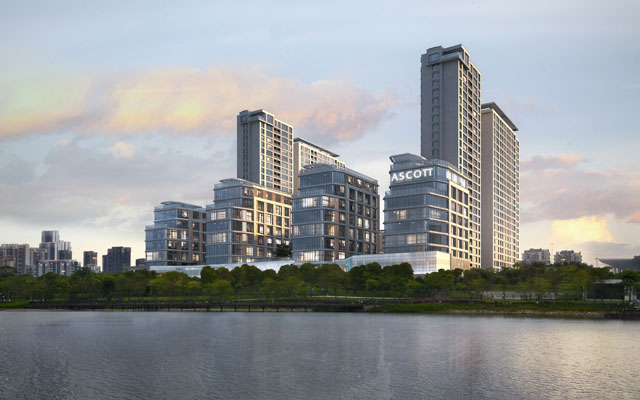










CapitaLand’s wholly owned lodging business unit, The Ascott Limited (Ascott), has secured more than 2,100 units across 12 properties in China over the last three months, bringing the number of new units to more than 5,600 across 26 properties in what marks a “record high” for the group.
This represents a 60 per cent year-on-year growth in units in China. Globally, Ascott has sealed new contracts for more than 3,700 units across 22 properties, with 60 per cent from China, while the rest are in various countries including Austria and Indonesia.
Signalling “strong recovery” in China on the operations front, Ascott’s apartment revenue in September 2020 reached close to 95 per cent of that in the same month last year. As well, Ascott has been maintaining a steady stream of openings, on the back of growing demand for extended-stay properties. In 2020, Ascott opened 17 properties with over 2,400 units, with about half of these units in China.
Ascott said that its base of long-stay corporate guests coupled with the strong domestic leisure travel market have enabled the group’s serviced residences in China to achieve “robust” occupancy rates.
In September 2020, close to 75 per cent of its guests in China were domestic travellers. During the same period, Ascott’s properties in tier one cities such as Beijing, Guangzhou, Shanghai and Shenzhen achieved an average occupancy rate of over 86 per cent. In Chongqing, despite facing the pandemic and the worst floods in decades, Ascott Raffles City Chongqing achieved a high occupancy rate of 80 per cent in August 2020, maintaining that momentum in the following month.
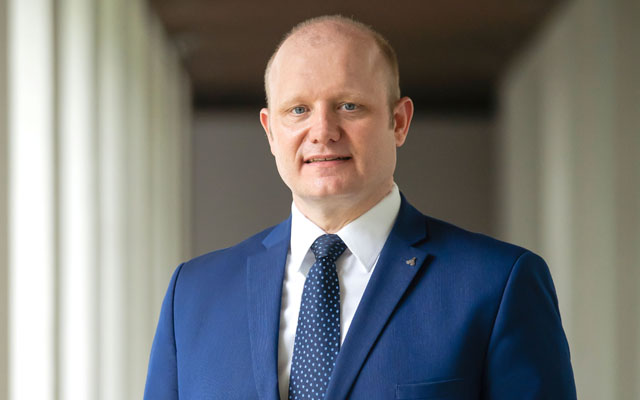
Kevin Goh, CapitaLand’s CEO for lodging and Ascott’s CEO, said: “The Covid-19 pandemic has brought the resilience and flexibility of Ascott’s business model to the fore. In 2020, we have signed more than 9,300 units in 48 properties worldwide, while expanding in China at a record rate. We are also planting new flags in markets such as Austria and Indonesia, offering our guests a wider network of Ascott properties.
“At the peak of the Covid-19 situation, many of Ascott’s properties worldwide remained open to provide a safe haven for our long-stay corporate guests, maintaining a robust average occupancy rate. With China being the first major economy to resume growth after the pandemic and the easing of domestic travel restrictions in the country, we are seeing strong recovery at our properties in China.”
Tan Tze Shang, Ascott’s managing director for China and head of business development for China, added that several of Ascott’s properties in cities such as Beijing, Shanghai, Hangzhou, Suzhou, Chongqing, Xi’an and Wuxi achieved 100 per cent occupancy during China’s Golden Week holiday from October 1-9. Apartment revenue for Ascott’s properties in China also saw year-on-year-growth during the Golden Week holiday, he added.
Tan also said that the 12 new properties secured in China will see Ascott making inroads into three new Chinese cities – Baotou, Ningbo and Yantai – while strengthening its presence in Changchun, Guangzhou, Hangzhou, Shanghai, Shenzhen, Suzhou and Xi’an. These properties are slated to open between December 2020 and 2026, and will bring the group’s total number of units in China to about 30,000 in more than 150 properties.