TTG Asia
Asia/Singapore Wednesday, 5th August 2026
Page 9

India tourism industry calls for reforms to drive inbound growth

0

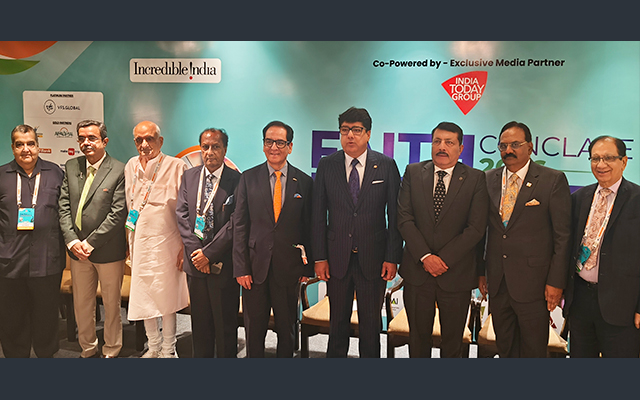
As India aims to increase the travel and tourism sector’s contribution to GDP to 10 per cent and boost foreign tourist arrivals from the current approximately 10 million to 100 million by 2047, the Federation of Associations in Indian Tourism & Hospitality (FAITH), the umbrella body representing the country’s leading travel trade associations, has presented a Tourism Growth Charter.

The charter outlines a set of key priorities that the industry believes will unlock the sector’s economic potential and strengthen India’s position as one of the world’s leading tourism destinations.

FAITH has outlined a series of recommendations aimed at strengthening India’s tourism sector and increasing international visitor arrivals; photo by Rohit Kaul

The charter was unveiled on the opening day of FAITH’s two-day conclave, held under the theme Incredible India: Invaluable Economics at Hotel Taj Palace, New Delhi, from July 16 to 17. The document includes recommendations for the central and state governments, including granting infrastructure status to the tourism industry, launching a dedicated global tourism promotion campaign under the Incredible India brand, expanding e-visa access and simplifying entry procedures for international travellers.

“Post-pandemic, the growth of domestic tourism has been phenomenal. However, the challenge is that we are still far from realising India’s full potential in the inbound tourism segment. The nearly 10 million foreign visitors we currently receive do not reflect our potential. In comparison, Paris alone attracts around 25 million international tourists annually. Measures such as granting infrastructure status to the tourism industry will enable businesses to access credit at more competitive rates, supporting faster growth and investment,” said Puneet Chhatwal, chairman, FAITH.

According to the India Tourism Data Compendium 2025 by the Ministry of Tourism, the tourism sector contributes 5.22 per cent to India’s GDP (total impact), with a direct contribution of 2.72 per cent.

In its recommendations, FAITH has urged the government to fast-track the development of the 50 tourism destinations announced earlier. It has also called for increased investment in tourism infrastructure, including last-mile connectivity, convention centres, wayside amenities, cruise terminals and digital infrastructure. Additionally, the industry body has recommended rationalising the tax regime to align with global benchmarks.

“The member associations of FAITH along with the central and state governments are working collaboratively to identify and implement measures required to position India as a leading global tourism destination. We are optimistic that these collective efforts will begin delivering tangible results over the next two to three years. India now needs an aggressive marketing strategy to showcase the diversity of its tourism offerings while also attracting greater foreign investment into the sector,” shared KB Kachru, president, Hotel Association of India.

Addressing delegates at the conclave, India’s minister of tourism and culture, Gajendra Singh Shekhawat, said the government’s vision is to position India among the world’s leading experiential tourism destinations. He added that, for the first time, the government is working towards establishing Destination Management Authorities across the country to develop well-managed, safe and sustainable tourist destinations.

Indonesia hotel developers slow expansion as investors turn cautious

0

Hotel developers are scaling back expansion plans and delaying projects in Indonesia to minimise risks as the rupiah continues to weaken and interest rates remain high.

Current market conditions are making investors more selective and changing the way they approach new opportunities.

High financing costs and a weaker rupiah are prompting some hotel developers in Indonesia to delay projects and reassess expansion plans

Eduard Pangkerego, COO of Artotel Group, said the impact is already being felt in the company’s pipeline, with some owners adopting a wait-and-see approach. Artotel currently has 39 hotel projects under development, with some taking longer than planned.

“Some projects that were expected to be completed within the next six to eight months are now taking longer as owners try to reduce risk,” Eduard said.

Maulana Yusran, secretary general of the Indonesian Hotel and Restaurant Association, said higher financing costs are putting greater pressure on investment decisions, making new hotel developments and expansion plans among the hardest-hit areas.

“Under the current condition, the risks are higher. Many investor are being more careful before expanding because develop a new hotel requires a large amount of capital,” he said.

Monica Koesnovagril, head of advisory services at Colliers Indonesia, said investors are increasingly favouring assets with stable returns.

“Hotels with stable cash flow are becoming more attractive as investors look for opportunities to improve existing assets. We are seeing more interest in hotel acquisitions, brownfield projects and asset repositioning, including rebranding, as owners look to increase the value of their properties,” she said.

According to Colliers Indonesia, at least five hotels in Jakarta have undergone rebranding over the past year, while several rebranded properties also opened in Bali in 1Q2026.

Mora Group has also seen growing interest from hotel owners seeking management partners for rebranding projects.

“Most of the owners coming to us are those whose contracts are about to expire, while some others are looking to maximise the value of their existing assets,” noted Andhy Irawan, CEO and founder of Mora Group.

Despite the cautious sentiment, Monica believes interest in Indonesia’s hospitality market remains strong, particularly among investors from China and Thailand.

“Indonesia’s advantage over other regional markets lies in its large domestic market, which generally serves as the end user base, as well as the relatively diverse investment opportunities still available,” she said.

She added that several investment discussions that began last year have entered the due diligence stage, although investors are taking more time before making final decisions.

Desaru Coast lands World Amateur Golfers Championship final for 2026

0

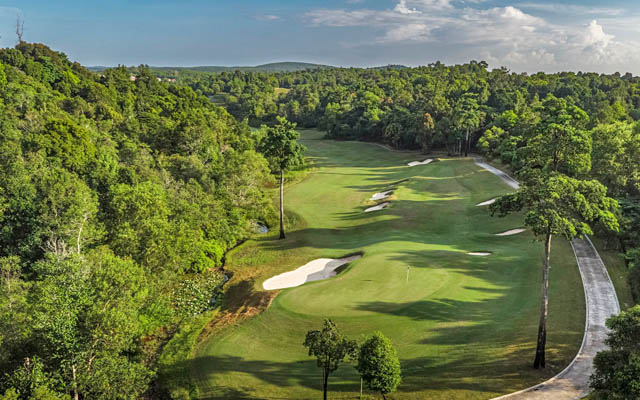
Desaru Coast will host the World Amateur Golfers Championship (WAGC) World Final 2026, further strengthening Johor’s position as a golf and sports tourism destination.

The tournament will take place from October 23 to 31, 2026, and is expected to attract around 650 amateur golfers and delegates from more than 50 countries.

Desaru Coast will host the World Amateur Golfers Championship World Final in October 2026, bringing participants from more than 50 countries to Johor; photo by Els Malaysia

The event adds to Desaru Coast’s portfolio of international sporting events, which includes Ironman 70.3 Desaru Coast, L’Étape Malaysia by Tour de France and the upcoming Desaru Coast Multisports Festival presented by Ironman. The latter is expected to draw more than 1,000 participants and supporters from across the region this July.

Participants in the WAGC World Final will compete at The Els Club Desaru Coast, whose Ridge Course recently reopened following upgrades to its fairways, bunkers, drainage system and landscaping.

Beyond the tournament, visitors will have access to Desaru Coast’s accommodation, dining and leisure offerings, as well as a Festival Village featuring local markets, cultural performances, workshops and food and beverage experiences throughout the championship.

The event also supports Visit Johor Year 2026 by bringing international visitors to the state and showcasing its tourism attractions.

Izrin Hashim, CEO, Desaru Development Holdings One, said: “We are delighted to welcome the WAGC World Final 2026 to Desaru Coast. It is a privilege to host a championship of this calibre and showcase the best of what Johor has to offer to a global audience.”

He added: “The WAGC World Final provides an important platform to showcase Johor’s tourism assets while creating tangible economic benefits for local businesses and communities.”

Hilton brings Tempo lifestyle brand to Asia-Pacific with China expansion

0

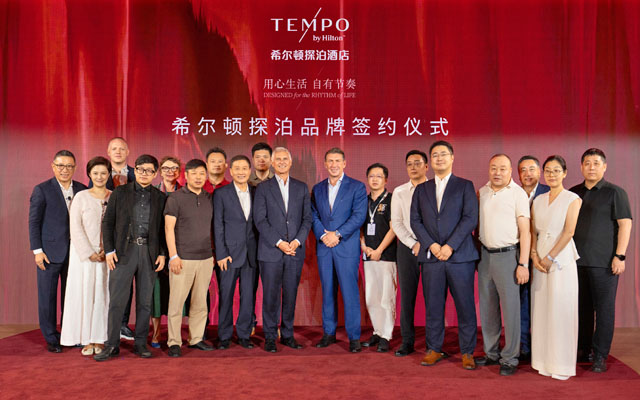
Hilton will debut its Tempo by Hilton lifestyle brand in Asia-Pacific, with the first properties planned across several destinations in China as the company expands its lifestyle portfolio in the region.

Development agreements have been signed for hotels in Xiamen, Beijing, Chengdu and Jiaxing, joining nearly 90 Tempo properties operating or in the global pipeline. The expansion targets growing demand from business and leisure travellers seeking lifestyle-focused accommodation.

Hilton will introduce its Tempo by Hilton lifestyle brand to Asia-Pacific, beginning with new hotels across several destinations in China

Launched in 2020, Tempo by Hilton is an upscale lifestyle brand with flexible public spaces, a Moonsong CAFÉ + BAR, and guestrooms designed for work and relaxation.

Hilton said the brand will support its strategy to grow its lifestyle portfolio in China. The company currently operates five lifestyle brands in the market: Canopy by Hilton, Curio Collection by Hilton, Tapestry Collection by Hilton, Motto by Hilton and Tempo by Hilton. It plans to double the number of lifestyle hotels in the country as part of its wider growth strategy in Asia-Pacific.

The Tempo expansion follows a series of recent lifestyle hotel signings in China, including The Mountain The Sea Hotel Dali, Curio Collection by Hilton, a Curio Collection property in Nanjing and a Tapestry Collection hotel in Wuxi. Xi Zhe Wuxi, Curio Collection by Hilton, is scheduled to open later this year, while Shanghai Parkview Hotel, Curio Collection by Hilton, will open in Pudong. Motto by Hilton Shanghai Wuliqiao is expected to open in 2027, marking the brand’s debut in China.

Tempo by Hilton debuted in New York’s Times Square and has since expanded to cities including Washington, DC, Savannah, Raleigh, Pigeon Forge and Nashville. The China signings follow the brand’s first European hotel agreement last year.

Alan Watts, president, Asia Pacific, Hilton, said: “As the brand expands in China, we will enable owners to unlock value through clear positioning, strong operational efficiency, superior commercial advantage and a growing network effect.”

Tal Shefer, senior vice president, brand management, Asia Pacific, Hilton, added: “Tempo by Hilton is a brand built for contemporary lifestyles. As Tempo enters China, we will blend our global philosophy with local insights to create experiences that resonate with Chinese travellers.”

Loop Wellbeing to make debut at Kimpton Aysla Mallorca

0

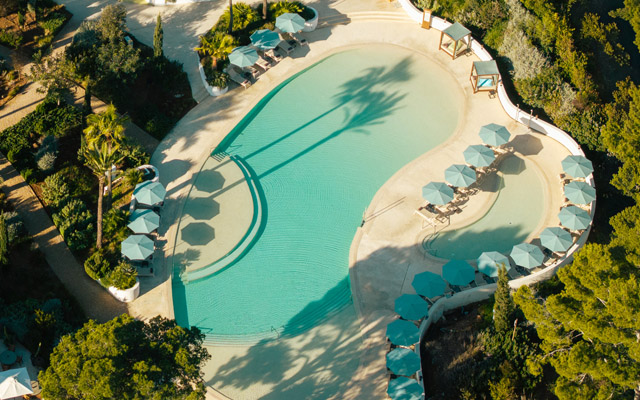
Kimpton Aysla Mallorca will host the inaugural Loop Wellbeing from October 22–26, 2026.

Organised by Lobster Experience, the B2B event will connect luxury hotels, well-being brands and medical wellness experts with specialist buyers, luxury travel agencies and tour operators from across Europe through business meetings, networking and presentations focused on the growing health and well-being travel sector.

Kimpton Aysla Mallorca will host the inaugural Loop Wellbeing from October 22–26, 2026

The event will take place at Kimpton Aysla Mallorca, home to Maison Codage wellness centre. Participants will also experience curated well-being programmes and regional dining across Mallorca. Supported by Calvià Tourism, the event aims to strengthen the island’s position as a destination for luxury health and well-being travel.

The crocodile effect

0

What was the original spark behind launching Cairns Crocodiles, and did you imagine it would become what it is today?
It certainly wasn’t the plan. We launched during Covid because Australians couldn’t travel to the Cannes Lions International Festival of Creativity in France. We thought there was a nice play on words with ‘Cannes in Cairns’. More importantly, there was an industry desperate to reconnect after lockdowns.

Initially, we thought it might be something we’d do once. But the industry got behind it immediately and said, ‘No, this has to continue’.

Since then, it’s evolved into Cairns Crocodiles, with its own identity. We’ve added the Crocodile Awards, the only awards in the region judged by clients, recognising the best creative work across Asia-Pacific, and the event has grown every year. Today, it’s become a genuine must-attend festival for advertising, media and marketing professionals across the region.

Attendance has grown again this year. What’s driving that momentum?
This year we welcomed just over 2,500 delegates, up from around 2,200 last year. About 14 per cent came from overseas, primarily India, Japan, Singapore and Thailand, with the US also well represented.

We’re really pleased with that growth because there were plenty of economic headwinds. The technology sector, which is a major part of our audience, has been going through significant change, and there was also uncertainty around international travel.

I think Cairns Crocodiles has simply reached the point where people know they need to be there. One of our partners told us they achieve three months’ worth of sales meetings in three days because everyone they needed to see was in Cairns. Once an event reaches that critical mass, it begins driving itself.

Cairns Crocodiles is often described as more of a festival than a conference. What makes that approach so successful?
The whole atmosphere is more relaxed.

Nobody wears suits. People are networking, hearing world-class speakers, then heading off to amazing lunches, dinners and parties before coming back for more content.

That changes how people connect. They’re no longer just having business conversations. They’re connecting as people. When that happens, they’re more open to ideas, they’re willing to challenge their own thinking and they have much deeper conversations.

I think the creativity becomes more authentic because people aren’t sitting inside boardroom mindsets anymore.

Why has Cairns proved to be such an effective destination for the festival?
Geographically, it has a unique advantage.

For delegates coming from Sydney, Melbourne, Singapore, Tokyo, Hong Kong or Mumbai, the flights are manageable. The weather in May is fantastic. It’s also a tourism destination, so it has the accommodation capacity, great restaurants and a convention centre that’s exactly the right size.

Just as importantly, Cairns has changed enormously over the past decade. The accommodation product has improved, the dining scene has matured and there are now some incredible venues that allow us to create experiences you simply couldn’t stage elsewhere.

Also, the council and Tourism Tropical North Queensland (TTNQ) are constantly helping us unlock venues and experiences that wouldn’t happen in most cities.

The welcome party became one of this year’s highlights. Why are experiences like that so important?
We always try to surprise people.

This year we transformed a sugar cane farm into a festival site with live-fire cooking by local restaurant Nu Nu, large-scale art installations, a bush band, DJs performing inside farm sheds and a drone show over the cane fields.

Last year we held a massive dance party inside a former Bunnings warehouse. Before that we staged a fairground-themed event in an old timber mill that had never been used as a venue. Another year we used Tanks, a former World War II oil tank complex in the Botanic Gardens.

Those kinds of venues aren’t easy to work with. For this year’s welcome party on the sugar cane farm, rain continued almost until bump-in, high winds damaged installations, and every generator, light, piece of staging and catering infrastructure had to be brought onto site.

Pulling it all together is complex, but that’s what excites us. We all love the problem and love the solution even more. Delegates remember those experiences because they’re unlike anything they’d expect from a business event.

The festival also now has its own mascot, Greg the giant gold crocodile. How did that happen?
It started as a throwaway idea. I said I wanted a giant crocodile and one of our partners rang me and said: “I think I’ve found you one.”

Greg is 10 metres long and every year he has to be transported on a logging truck before taking pride of place outside the convention centre. Then, once the festival is over, he gets wrapped in plastic and goes into hibernation for another 11 months.

Every year I repaint him because delegates climb all over him for photos and inevitably break a leg or two. This year I had to bandage one of his legs and left a marker pen beside him. A few hours later the bandage was covered in signatures from delegates.

He’s become part of the festival. Everyone wants a photo with Greg. It’s silly, it’s memorable and that’s exactly the point.

How important is the destination itself in encouraging delegates to extend their stay?

It’s a huge part of our thinking.

We deliberately start on a Tuesday and finish on a Thursday because it gives people the opportunity to add a weekend before or after the festival.

Many delegates bring their families, enjoy a few days beforehand, attend the event and then stay on afterwards to experience the Great Barrier Reef, the rainforest and everything else Cairns offers.

We know it’s a significant journey for someone travelling from Tokyo, Singapore or Mumbai, so if they’re making that commitment, we want to create every reason to stay longer.

How are you working with TTNQ to grow the festival internationally?
We’re completely aligned.

We both want to increase international visitation and extend length of stay, and we work very closely together to make that happen.

The Crocodile Awards are becoming a major driver because agencies across Asia-Pacific are increasingly competing against each other for recognition. This year, we saw very strong participation from Asia, and many of the awards were won by agencies from the region.

We’re also expanding the festival itself. This year, we introduced a film and screen stream, which exceeded expectations, and we’ll continue adding complementary creative industries over time.

At the same time, we want to keep attracting world-class speakers who don’t normally appear in Australia. Bringing someone like Taika Waititi to Cairns was a total highlight in all the feedback we’ve had, and was an absolute coup to get, as he rarely speaks publicly. This creates experiences delegates simply can’t access anywhere else.

What advice would you give destinations hoping to create their own signature business event?
Find some crazy people.

You need creative people who are willing to push ideas beyond what’s comfortable, but they also have to be clever enough to know when an idea isn’t working.

Only hindsight tells you whether an idea was brilliant or terrible, so you have to give creativity enough space to develop instead of shutting it down too early.

At the same time, you need the humility to throw an idea away if it isn’t right. That requires leaving your ego at the door.

For us, that’s been the biggest lesson. Keep pushing for experiences people have never had before because those are the ones they’ll remember.


Japan sees apartment hotel boom as travellers stay longer

0

Japan’s apartment hotel sector is expanding as developers respond to growing demand from large families, groups and long-stay visitors seeking shared social spaces, kitchens and laundry facilities.

Demand for these social and co-living accommodation options has increased since Japan reopened to international tourists in 2022. Interest is particularly strong among multi-generational families from South Korea, Taiwan and China, as well as travellers from longhaul markets including Australia, Europe and the US, who typically stay for 10 to 17 days.

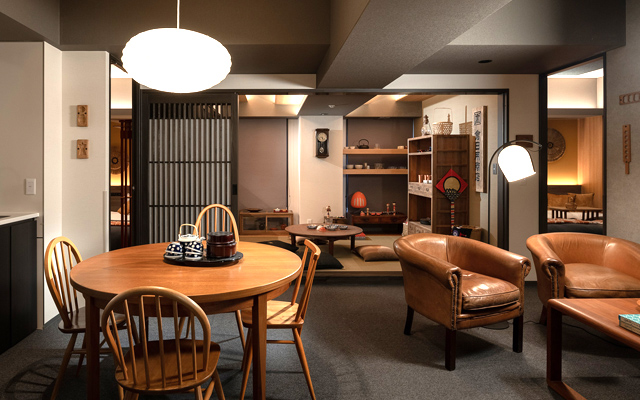
Apartment hotels in Japan are adding capacity as demand grows among families, groups and long-stay international visitors; Mimaru Suites Kyoto Central, pictured

“Travellers now demand a wider variety of accommodation options and value flexibility more than ever,” said Christian Baudat, country general manager, Ascott Japan.

Driven by inbound demand, Japan’s aparthotel, serviced apartment and co-living market is forecast to record a compound annual growth rate of 14.4 per cent from 2025, reaching projected revenue of US$7 billion by 2030, according to Grand View Research.

Mimaru, which operates 27 apartment hotels in Tokyo, Kyoto and Osaka, plans to open two properties in Osaka this year. Shinsaibashi Central will offer 66 rooms for four to six guests, including bunk beds and layouts designed for families and friends to socialise in shared living spaces. Namba Station Annex will feature 68 rooms designed for larger groups and longer stays.

Mao Mochizuki of Mimaru’s operating company, Cosmos Hotel Management Co., said the expansion reflects growing demand for accommodation that allows guests to stay together while maintaining privacy.

“In addition to multi-generational family trips, we are seeing more workcation stays that combine remote work with leisure travel, as well as group trips where families travel together with close friends,” she told TTG Asia.

The sector is also attracting new entrants.

Waypoint, an apartment hotel brand launched by Mitsubishi Estate Co. and Mitsubishi Estate Hotels & Resorts Co., entered the market in April. Its first property, converted from an existing building in Tokyo’s Tsukiji district, has 52 rooms accommodating up to six guests each. The companies plan to open 10 Waypoint hotels by 2030.

Private equity firm Keystone Partners has also invested in an apartment hotel fund to develop a 31-key property under the Sumu brand in Tokyo’s Akihabara district. Designed for multi-person stays, the hotel is scheduled for completion in 2028.

Radisson Hotel Group grows South-east Asia, Pacific pipeline

0

Radisson Hotel Group is expanding its presence across South-east Asia and the Pacific with new hotels and signings in Vietnam, the Philippines, Australasia, Thailand and Indonesia, taking its regional portfolio to 89 hotels with more than 17,000 rooms in operation and under development.

The group said it is pursuing a market-specific development strategy, matching brands and operating models to different destinations and owner requirements across business, leisure, meetings and extended-stay segments.

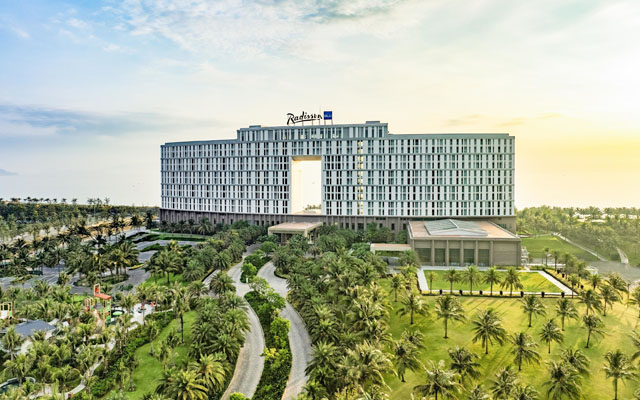
Radisson Blu Resort, Cam Ranh is part of Radisson Hotel Group’s growing portfolio in Vietnam

Vietnam remains a key growth market, where Radisson Hotel Group has 14 hotels and more than 3,100 rooms in operation and under development. Recent additions include the 352-key Radisson Blu Hotel, Ha Long Bay, while the 182-key Radisson Hotel Westlake Hanoi is scheduled to open in 2028. The developments add to the group’s presence in Cam Ranh, Danang, Phu Quoc and Hoi An.

In the Philippines, the group has eight hotels with 1,559 rooms in operation and 17 hotels with 3,762 rooms under development. It plans to introduce seven of its 10 brands in the country by 2030.

Recent openings include Lime Resort Bohol, a member of Radisson Individuals Premier, the first Radisson Individuals Premier property in Asia-Pacific, and Radisson Red Cebu Mandaue. The pipeline also includes projects in Metro Manila, Cebu, Boracay, Bohol and Cagayan de Oro, spanning lifestyle, luxury, urban and branded residential developments.

Across Australasia, the group is expanding through new openings, signings and repositioning projects in Australia, New Zealand, Fiji and Samoa. Recent milestones include the opening of Radisson Red Auckland, while Radisson Red Queenstown is scheduled to open in late 2028. In Fiji, Radisson Blu Mirage Resort, Fiji Naisoso Island and Mana Island Resort & Spa Fiji, a member of Radisson Individuals, are expected to open in 2027, while the group will also enter Samoa with Return to Paradise Resort, a member of Radisson Individuals.

In Australia, The Merchant Hotel, a member of Radisson Individuals, will mark the brand’s Brisbane debut, while Canterbury International Hotel Melbourne, a member of Radisson Individuals, will strengthen its presence in Melbourne.

In Thailand, Radisson Blu Resort Phuket Mai Khao and Radisson Resort Layan Phuket have opened, while the 118-key Radisson Serviced Apartments Rawai Phuket is scheduled to open in 2029. In Indonesia, the group has signed the 116-unit Anta Hotel Bali Canggu, a member of Radisson Individuals, which is expected to open in 2027.

Ramzy Fenionos, chief development officer, Asia-Pacific, Radisson Hotel Group, said: “South-east Asia and the wider Pacific region offer significant long-term growth potential, but success depends on being highly selective and relevant in each market.

“Our recent openings and signings demonstrate how we are working with both established and new partners to create distinctive hotels and resorts that are right for their destinations and positioned for long-term performance.”

Are aggregators hijacking the neighbourhood storyteller?

0

I have a deep and unapologetic love for the concept of the free walking tour. When it is done right, it is the purest transaction in the tourism industry.

A passionate storyteller stands at a pre-designated meeting point, invites a group of strangers to walk with them as they share their love letter to their home. At the end, the guest pays what they feel the story was worth.

When Indie Singapore started, this was our entire business model. Today, even as an established agency running premium culinary and corporate experiences, we still conduct free walking tours at a loss to the company. Our guides get to keep 100 per cent of their tip, while we pay for the administration and marketing.

We keep doing it because we believe in the philosophy. It is, truly, the most romantic and idealistic part of the company.

To this end, we need to talk about tour aggregators – the business model popularised by tech disruptors – and why they represent a crisis for independent guides and the industry at large.

The illusion of disruption
Operators have argued that free walking tours disrupted traditional paid tour agencies a decade ago, and now tech platforms are disrupting the walking tours.

These critics see this as a natural evolution of business. They point to companies like Sandemans New Europe, which popularised the tip-based model in the 2000s by charging independent guides a per-head marketing fee to join its network.

However, this is not a fair comparison. Sandemans New Europe built a brand, it trained guides, and created standard operating procedures. In many cities, Sandemans New Europe led the day-to-day operations of tours itself.

Tour aggregators today do none of that. They take zero risk. They do not train the guides. They do not create the narratives.

Instead, they use the money they extract from guides to bid on Google Search terms, and in doing so, artificially place themselves between the traveller and the local operator.

To put it crudely, this is not disruption, but SEO blackmail because passionate storytellers have to pay to not be buried.

The casino economics of guiding
For a local storyteller who wanted to show off his city, tour aggregators seem like a great starting point. The platform provides the eyeballs, after all.

However, over time, the financial structure reveals that the house always wins.

In the tour aggregator model, the platform’s revenue is guaranteed while the guides revenue is entirely variable. Tour aggregators charge the guide a fixed fee for every guest who books.

Should 20 people show up for the walking tour, the guide would owe the platform a fixed commission for every head.

Should it rain, or should guests choose to leave only a token two-dollar tip at the end of the tour, the guide would have to pay out of pocket for the privilege of working.

Defenders of these platforms are quick to point out that guides can dispute “no-shows” to claw back those fees. But this argument misses the point – this is an asymmetrical risk in which the platform receives its fixed cut while the guide absorbs 100 per cent of the shock.

What about accountability?

To placate operators, tour aggregators recently introduced guest ratings, allowing guides to flag serial no-shows or chronic bad actors. But guides will tell you that this process is largely performative. We routinely see guests with documented histories of ghosting tours allowed to remain on the platform free to book again.

Every user represents another guaranteed booking fee. The aggregator has no incentive to ban a bad guest.

The erasure of identity and intellectual property
Perhaps the most damaging long-term effect is the systematic erasure of the personal brand, and what makes each of the storyteller unique.

Today, if you were to go to a busy meeting point in any major city, you will see a chaotic scene of multiple guides holding similar umbrellas. When guests approach, they rarely ask the guide: “Are you from Indie Singapore?”.

Instead, they ask: “Are you from Guruwalk?”

The guide is no longer a storyteller with a brand. He is now white-labelled, just a commodity on a digital shelf.

This tightening grip is alarming. We are seeing platforms restrict “hobby” accounts – slashing the number of tours an independent guide can list from three down to one, and then monthly sign-ups are capped.

The worst development in my point of view is that platforms are now demanding guides to upload their proprietary, step-by-step itineraries just to remain listed. By doing so, platforms are absorbing the intellectual property of local passionate storytellers, who could have spent months perfecting a route. This information could then be used to train the platform’s own ecosystem.

How to build without the tollbooth
If you are a local who wants to start a walking tour company today, how do you survive without handing your margins and identity to an aggregator?

You need to own your digital real estate. Build a website – it does not have to be expensive. Start capturing the email addresses of every guest who walks with you.

Partner locally, not globally, and cross-pollinate with human beings in your neighbourhood. Do this by walking into the coffee shops, boutique hotels, and local bakeries on your route. Tell them you will bring them foot traffic if they let you leave a flyer at their counter.

Command your reviews. At the end of every tour, ask your guests to review you on Google or TripAdvisor under your company name, not on the tour aggregator platform. Those reviews are your armour against SEO hijacking.

The free walking tour is too beautiful a concept to be reduced to a labelled algorithm.

Tell your stories; own your own brand.