


Hey, who turned on the lights?: Defeating darkness with creativity

Singapore has just stepped back into partial lockdown this month due to new infection clusters and unlinked Covid-19 cases in the community. The current state also means yet another disruption to the highly-anticipated Singapore-Hong Kong Air Travel Bubble, which was supposed to materialise on May 26. At press time, both governments have agreed to revisit the arrangement on or before June 13, when Singapore’s Phase 2 Heightened Alert restrictions end.
In yet another blow for Singapore, who has taken pride in resuming many in-person business events safely since October 2020, the World Economic Forum decided on May 17 to cancel its special annual meeting in the city state. The high-profile meeting was scheduled for August this year, following postponements from mid-May to late-May and then to August because of pandemic uncertainties.
Disruptive as these developments may be to travel and tourism recovery, most of us know that such evolving conditions are something we have to take in our stride. We have a full year and more to observe how the virus impacts countries and communities, and we know that even the best in Covid-19 containment is not immune to sudden infection surges.
Maldives, the envy of many destination marketers for being able to safely resume international tourism in July 2020 when most international borders were still shut, has been dealing with a surge in cases since early May. Maldives has now withdrawn her welcome to travellers originating from high-risk countries and regions.
Taiwan, yet another success story in Covid-19 containment, is battling a growing number of local infections.
India, Malaysia and Thailand are still trying to quell troubling new waves.
Hopes of 2021 being better than 2020 are dashed! Or not. It depends on how we want to remember this crisis. This is either a time of darkness or a time of creative brilliance. I will gladly go with the latter. There are plenty of creative survival examples here in Asia.
We have seen hotels, resorts and serviced apartments do well with workation, staycation, long-stay and themed stay packages, some built for beloved pets and others for home owners waiting out home renovations. Some hotels have successfully turned to delivering gourmet delights to customers stuck at home, while others have become skilled destination story-tellers.
NTOs, tourist attractions and tour operators have devised out-of-the-box ideas to engage their customers and keep the travel dream alive, such as through virtual reality tours and online interactions with in-destination artisans, chefs, oenophiles, cave explorers, and many other subject matter experts that travellers would love to meet on their trips but might not always have the chance to do so.
Innovative partnerships with non-hospitality businesses have been forged to the benefit of travellers and guests.
We may be living in one of our darkest times in modern history, but these are also days of bright ideas that could forever change how we travel and appreciate destinations.
Karen Yue is group editor of TTG Asia Media. She sets the editorial direction for the company’s stable of travel trade titles and platforms, and produces content for them as well.
IATA predicts strong comeback for air travel by 2023
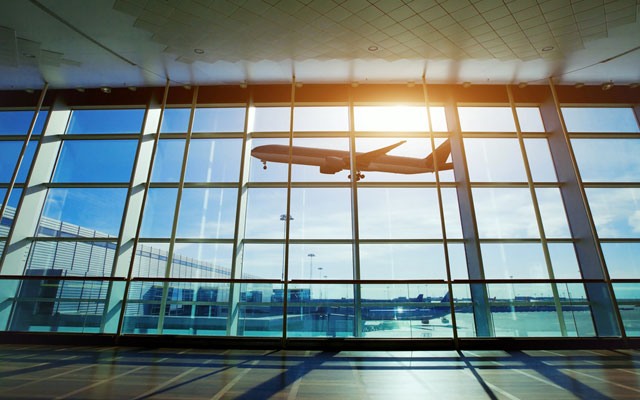
Global air passenger traffic is expected to recover to 88 per cent of pre-Covid levels by 2022, as the vaccine rollout and testing advancements see more travellers return to the skies, according to the IATA.
The report by the IATA and Tourism Economics which looked at a long-term view for post-Covid passenger demand recovery demonstrated that people remain eager to travel in the short- and long-term.
It also predicted that global passenger numbers are expected to recover to 52 per cent of pre-Covid levels (2019) by the end of this year, and surpass pre-Covid levels (105 per cent) by 2023.
By 2030, global passenger numbers are expected to have grown to 5.6 billion. That would be seven per cent below the pre-Covid forecast and an estimated loss of 2-3 years of growth due to Covid-19.
Beyond 2030, air travel is expected to slow, due to weaker demographics and a baseline assumption of limited market liberalisation, giving average annual growth between 2019 and 2039 of 3.2 per cent. IATA’s pre-Covid growth forecast for this period was 3.8 per cent.
The recovery in passenger numbers is slightly stronger than the recovery in demand measured in revenue passenger kilometres (RPKs), which is expected to grow by an annual average of three per cent between 2019 and 2039. This is owing to the expected strength of domestic markets like China with large passenger numbers and shorter distances.
“I am always optimistic about aviation. We are in the deepest and gravest crisis in our history. But the rapidly growing vaccinated population and advancements in testing will return the freedom to fly in the months ahead,” said Willie Walsh, IATA’s director general.
“And when that happens, people are going to want to travel. The immediate challenge is to reopen borders, eliminate quarantine measures and digitally manage vaccination/testing certificates.”
While the damage caused by Covid-19 will be long-lasting, IATA’s study showed that people have retained their need and desire to travel, with news of borders reopening met with an instant surge in bookings.
The most recent example is the 100-percentage point spike in bookings from the UK to Portugal when the UK’s “Green List” was announced in early May.
IATA also predicted that vaccination rates in developed countries, with the exception of Japan, should exceed 50 per cent of the population by 3Q2021.
“This should be a clarion call to governments to get ready. The travel and tourism sector is a major contributor to GDP. People’s livelihoods are at stake. To avoid greater long-term economic and social damage, restart must not be delayed,” said Walsh.
“Governments can facilitate a safe restart with policies that enable restriction-free travel for vaccinated people, and testing alternatives for those unable to be vaccinated. Governments must also be ready with processes to digitally manage the vaccine or test certificates – ensuring that a safe restart is also efficient.”
Spotlighting destination Hong Kong, one plate at a time
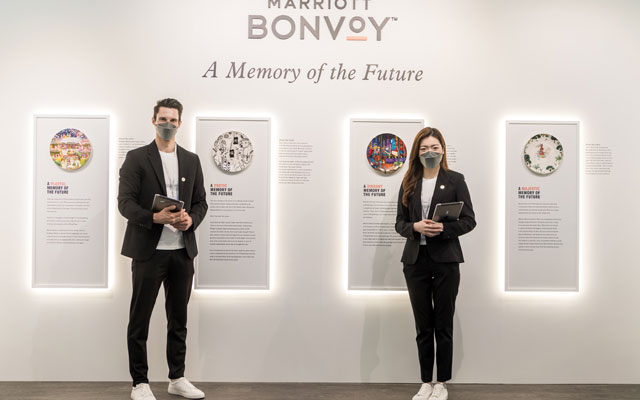
In collaboration with charitable organisation, The Plated Project, Marriott Bonvoy recently presented a series of artworks titled, A Memory of the Future, to spotlight Hong Kong as a destination through its arts and culture.
 Showcased at Art Basel Hong Kong 2021 from May 21-23, the artworks come in the form of four ceramic plate designs that pay tribute to the distinct art-forms that are intrinsically Hong Kong, such as hand-carved mahjong tiles, hand-made stencils, neon signs and Cantonese opera.
The limited-edition art plates are more than just eye candy, as proceeds from their sale at selected Marriott hotels in Hong Kong go to Foodlink Foundation Hong Kong – a charity dedicated to fighting hunger, building self-sufficiency, and fostering nutritional wellness among those in need, while reducing food wastage in Hong Kong.
For guests outside of Hong Kong, the plates are available for sale via The Plated Project website in support of Covid-19 relief efforts.
Trade urged to start planning as travel shows signs of strong rebound

Tour operators need to start laying the groundwork for travel rebound which is anticipated to come “fast and furious”, according to industry stakeholders.
At the Arabian Travel Market Virtual, Julia Randow, regional director of GetYourGuide, noted that globally, certain markets have picked up and swathes of the industry have been caught unprepared.

She said: “When recovery comes, it comes hard. You need to be prepared, have availability uploaded and a great inventory in place. You have to have all the opportunities for customers to make a booking.”
Ian Renton, director of sales at Atlantis, said it is essential to be “nimble and on your toes”. In preparation for the tourist influx as Dubai prepares for a strong peak season ahead, Atlantis has diversified its business and reached out to new key source markets.
“We have kept our fingers on the pulse, worked with government authorities and airlines, and shared information so that when things do come back – and they will come back quick – we’re ready,” said Renton.
Randow said Dubai experienced three to four times growth from the UK in November and December compared with 2019. This was triggered by a quarantine-free corridor between the destinations. “A strong travel sentiment is there,” she added.
Additionally, she noted the US is leading recovery, with bookings already surpassing 2019 numbers. This is a pattern that is starting to be seen in Australia and New Zealand.
Douglas Quinby, co-founder and CEO of Arival, noted a “supply constraint” in the US sparked by an unpreparedness for the “fast and furious” surge in travel demand. He said: “Operators are struggling to hire guides and there’s a labour shortage for restaurants and hotels that are trying to reopen quickly.”
A recent survey carried out by GetYourGuide in the US revealed 70 per cent of respondents plan to take a holiday within the next three months. However, only about eight per cent have booked.
Remarked Randow: “That’s very different to what we normally see but suggests many bookings are to come. This highlights the need to be on top of business in the long-term and short-term if you want to win this game.”
Banyan Tree to launch “no walls, no doors” resort concept in Bali
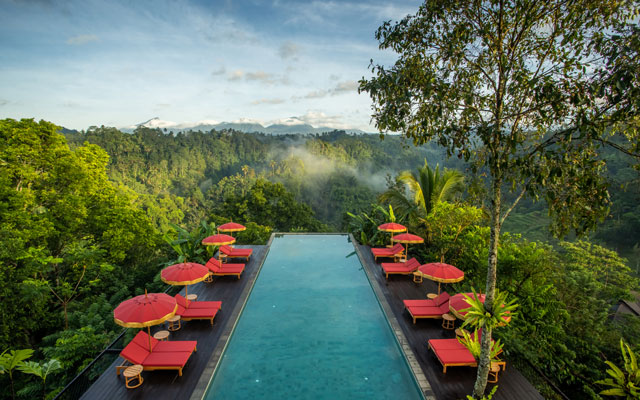
Banyan Tree is set to open its first Banyan Tree Escape in an off-the-beaten-track, untouched part of northern Ubud come September 2021.
Pioneering a “no walls, no doors” concept throughout the property and in each of its 16 villas, Buahan, a Banyan Tree Escape is situated in a quiet enclave surrounded by rice paddies and jungle, next to the Ayung River and waterfall, boasting a sweeping view of the seven majestic peaks.
At the resort’s heart are the Open Kitchen and Living Room – open dining and lounge spaces created to evoke a sense of community. Here, guests are invited to learn how the resort reinvents the basics of food and drink through its zero-waste farm-to-table concept, local sourcing philosophy and heritage techniques. The menu concept, 70 per cent of which is plant-based, is sourced locally within a one-hour drive from the property.
The Botanist Bar is centred around the use of local-grown natural ingredients and botanicals infused into its beverages, while Toja Spa celebrates the wellbeing traditions from Buahan village and its surrounding areas, with a unique “open” garden experience.
Elsewhere, secret Hideaway Spots draw on the element of being at one with nature, providing guests with a garden sanctuary for meditation, reading, or simply taking a moment to pause and unwind.
From daily ‘Happenings’ activities to collaborative events with visiting practitioners and local cultural festivities, a calendar of events guides guests towards a range of curated experiences around the three pillars: connecting to nature, a discovery experience, and community integration.
WorldHotels unveils brand refresh
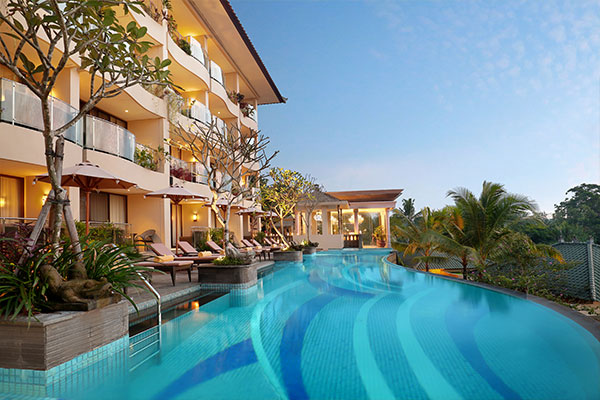
WorldHotels Collection has refreshed its brand identity, with new logos and updated vision and mission statements, as the brand celebrates its 50th anniversary this year.
“WorldHotels has always been at the forefront of innovation, and this year, we recognised a need to adapt our branding to align with the evolving digital and media landscape,” said David Kong, global president and CEO.
He added that the refreshed branding “will play a critical role in helping the brand and our hoteliers maintain a competitive edge, especially as we emerge from the pandemic”.
To identify the best way to evolve, the brand invested in research including interviewing key stakeholders and conducting a global member survey to better understand what motivates today’s luxury and lifestyle traveller.
The refresh is designed to enhance WorldHotels’ brand storytelling and ensure each WorldHotels collection has its own identity and personality. This is achieved with the following changes: refreshed Masterbrand logo, new logos for the brand’s four collections (Luxury, Elite, Distinctive and Crafted), as well as updated vision and mission statements that reflect the evolving culture and DNA of WorldHotels.
Marriott to debut Ritz-Carlton in Ningbo
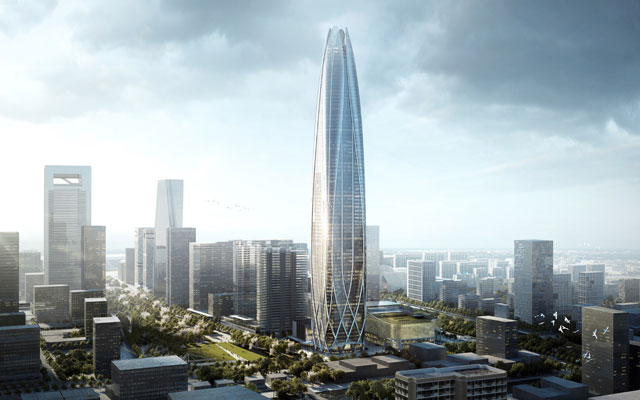
Marriott International has inked an agreement with the Ningbo Central Plaza Construction and Development to bring Marriott Bonvoy’s Ritz-Carlton brand to the heart of Ningbo.
Expected to open in 2025, The Ritz-Carlton, Ningbo is set to be the first addition to Marriott Bonvoy’s luxury portfolio in Ningbo.
Developed by Shanghai Construction Group, Shanshan Group, and Greentown China Holdings, the hotel is slated to occupy the 62nd to 80th floors of the 409m-tall Ningbo Central Plaza, which will also house offices, commercial and residential space with apartments, among other offerings.
The Ritz-Carlton, Ningbo is expected to feature 257 rooms and suites, alongside a Club Lounge and three F&B venues – an all-day dining outlet, a Chinese restaurant and a specialty restaurant. In addition to a lobby lounge, the hotel is set to include a destination bar to provide a nightlife hub for guests and locals alike. Elsewhere, planned banquet space spanning 1,700m² promises to accommodate a wide range of events.
One-night, one-dollar plan proposed to lure tourists back to Phuket
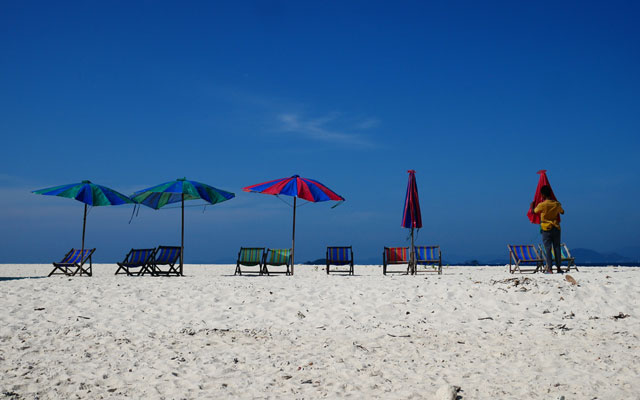
A catchily named campaign, One-night, one-dollar, has been proposed by the Tourism Council of Thailand (TCT) to attract international tourists back to Phuket, ahead of the popular resort island’s planned July reopening.
Under the plan, participating operators will offer to foreign tourists room rates at US$1 per night – for rooms that typically sell for between 1,000 baht (US$32) and 3,000 baht per night – with costs to be subsidised by the government, explained TCT president Chamnan Srisawat.
If the proposal is green-lit, tourism players in Thailand will roll out the campaign to international markets.
“TCT also discussed the idea with major wholesalers and online travel agents to prepare for the reopening of Phuket. And they are ready to help,” Chamnan said.
He expects that out of a total of 70,000 rooms on the island, nearly one million room nights would be up for sales, generating at least 40 billion baht into hotels and other services throughout July.
TCT’s proposal has been submitted to the Tourism Authority of Thailand and the Ministry of Tourism and Sports, and will be escalated to the cabinet for approval within June.
If Phuket’s One-night, one-dollar campaign proves successful, private sector players and the government may expand the campaign to other destinations such as Koh Samui, Pattaya and Bangkok.
“However, the current wave of Covid-19 infection could (impact the) final decision. But we have been suffering from the pandemic for 15 months now. Only mass tourism will save us,” Chamnan said.
Set to be the first Thai city to reopen to vaccinated foreign tourists in July, Phuket is expected to welcome 500,000 visitors through year-end, much lower than the 6.7 million arrivals in 2020, mainly from the first quarter.
In 2019, prior to the pandemic, Thailand received nearly 40 million visitors, generating 190 billion baht (US$60 billion) in revenue.
Work from Bali programme launched to boost domestic tourism
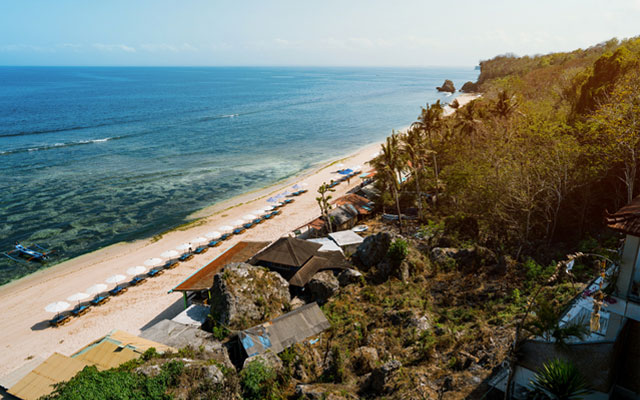
A government-led programme that will dispatch Jakarta-based civil servants to work remotely from Bali is set to be rolled out as part of efforts to revive domestic tourism in the pandemic-ravaged island.
The Work from Bali (WFB) programme led by the Coordinating Ministry of Maritime Affairs and Investment (CMMAI) will assign civil servants from the office and its seven subordinate ministries, including the Ministry of Tourism and Creative Economy, to work from hotels on the island.
Under the programme, Bali will host not only the ministries’ regular meetings but also international events for the year ahead to prove that the island is safe.
Depicting Bali as a Covid-safe destination is expected to lure more domestic tourists to the island and raise hotel occupancy during this pandemic, opined Odo Manuhutu, deputy for tourism and creative economy at CMMAI.
He recalled that when the government held the Bali Investment Forum in March, the host hotel saw a rise in occupancy from eight to 50 per cent within the week.
On May 18, CMMAI and Indonesia Tourism Development Corporation (ITDC) signed a MoU for the WFB programme to be launched in ITDC’s Nusa Dua complex, which is home to 16 hotels.
Sandiaga Uno, minister of tourism and creative economy, said that the WFB initiative is aimed at providing emergency help to Bali hotels struggling with record-low occupancy rates averaging at around nine per cent. He further noted that the island’s GDP contracted by 9.31 per cent in Q1 of this year, lowest among the 34 provinces in Indonesia.
“We hope that with WFB in place, Bali can see a positive economic growth in late Q3 or Q4,” he said.
Sandiaga added that the WFB programme is also part of the government’s effort to prepare tourism players in Bali to welcome foreign visitors once borders reopen. Nusa Dua is one of three green zones being prepared for international travellers under the Travel Corridor Arrangement.
CMMAI is still mulling the number of civil servants that will take part in the WFB programme, according to Sandiaga, but his office proposed 25 per cent of employees from each participating ministry.
He also expressed hopes for corporates in Bali and other regions to follow suit, and opt to remote work from the resort island.
I Putu Astawa, head of Bali Tourism Agency, said that the Bali administration would rope in pecalang (traditional Balinese guards) from 1,493 customary villages across Bali to help armies and police personnel monitor the WFB programme and ensure strict enforcement of health protocols on-site.
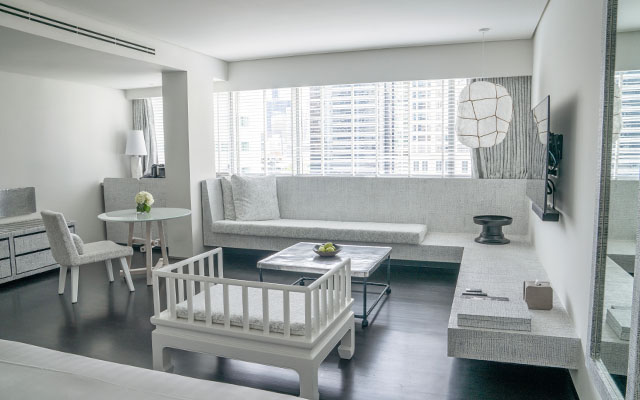






Hotel Okura has contracted with Mitsubishi Estate to manage a 60-key hotel in Japan’s ancient capital of Kyoto.
Slated to open in January 2022, Hotel Okura Kyoto Okazaki Bettei will overlook Marutamachi Dori in the Rakuto and Okazaki areas of Kyoto. The property will offer guestrooms ranging from 40m² in size, including eight 80m² suite rooms themed after mountain villas.
It will be located near the historic Okazaki Betsuin Temple, overlooking the temple grounds, with the suites and some other rooms offering guests changing views of the seasonal scenery in its Japanese gardens. The hotel will also feature a restaurant, a lounge, bar, and fitness centre.