

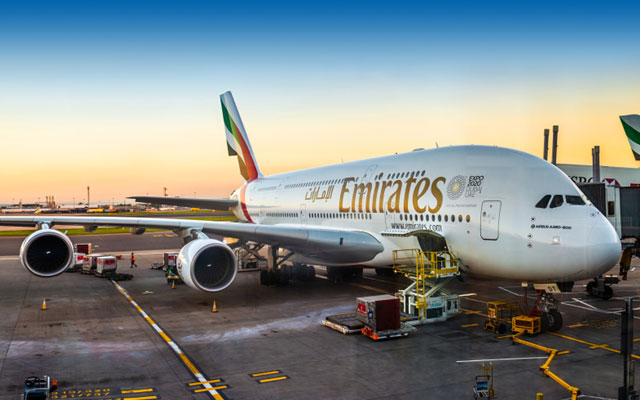
Radisson hotel to arrive at Beijing Daxing International Airport

Radisson Hotel Group continues to expand its presence in China with the signing of a Radisson-branded hotel at Beijing Daxing International Airport.
Scheduled to open in 1Q2022, Radisson Hotel Beijing Daxing Airport will be an upscale hotel located within the Airport Economic Zone, just 1.2km from the international terminal. The hotel will form part of an eco-friendly, mixed-use development comprising of hotels, Grade A-offices and retail outlets. It will also look to play a role in hosting athletes and attendees during the Beijing Winter Olympics 2022.
The 239-key newly constructed hotel will feature rooms averaging at 32m² and suites up to 109m², all equipped with contemporary interiors, modern amenities, and the Radisson brand’s signature sleep experience. For corporate events and meetings, the hotel will offer six function spaces including an intimate boardroom, four meeting rooms and a 300-pax ballroom, supported by a business centre and VIP reception area.
Leisure facilities include a gym, indoor pool, yoga room, retail boutiques, an all-day dining destination, Chinese restaurant, and lobby lounge.
Australia’s lockdowns curtail hotel bookings
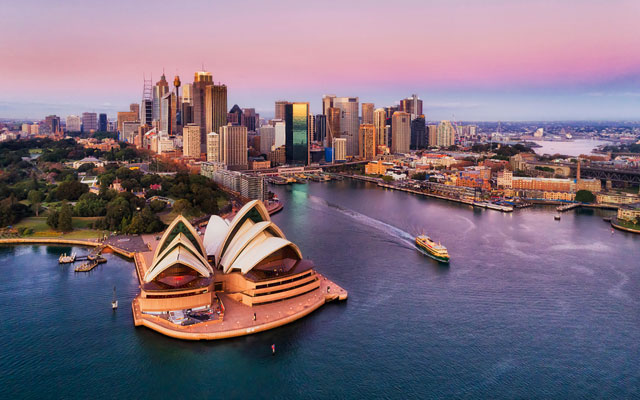
Key markets across Australia have recorded noticeably lower levels of occupancy on the books for the coming weeks due to recent Covid-19 outbreaks and lockdowns, according to data from STR’s Forward STAR.
Most notably, Sydney’s occupancy on the books is down an average of 13.8 per cent when comparing the June 28 data update with the data release from June 21. Occupancy for the week ending July 3 is unlikely to exceed the 20 per cent mark, which would be a 50 per cent decline from previous weeks.
“Since the second week of June, the delta strain of the virus emerged in the community, and lockdowns in Victoria followed by New South Wales, Queensland, Northern Territory and Western Australia have taken a toll on occupancy,” Matthew Burke, STR’s regional manager for the Pacific region, said in a July 2 press release.
“The lockdowns have been particularly damaging for what was expected to be a rise in demand entering a strong leisure period with winter school holidays.”
Australia has been one of the highest-performing countries during 2021 with improving mid-week demand alongside continued strength across weekends. Year to date through May, Australia’s revenue per available room (RevPAR), the key top-line performance indicator, had reached 74 per cent of 2019 levels.
“The Gold Coast was not yet in lockdown at the time we processed this latest forward-looking data, but because the Sydney basin is a large source market, the Gold Coast too saw more cancellations than new bookings for the coming two weeks,” Burke said. “North Queensland has been affected three straight weeks with cancellations outweighing new bookings even though this is peak season when people escape north to find the warmer weather. Occupancy on the books for July is presently at 77 per cent but isn’t likely to be as strong as expected a month ago because of the cancellations.”
The typical booking pace for the upcoming month has slowed dramatically across all Australian markets, leading to a lagging but sustained impact on actualised occupancies. For example, on a weekly basis, Adelaide was averaging a 11.4 per cent nightly pickup (change in bookings from one data collection to the next). In this past week’s update, pickup was just 3.4 per cent.
“Although Adelaide isn’t in lockdown, the uncertainty and lockdowns in other parts of the country have affected all markets,” Burke said. “To date, the silver lining in the data is that cancellations to this point seem to be isolated to the next two weeks. For now, if there are bookings beyond the next two weeks, consumers appear to be holding them, hoping that their travel won’t be affected. But if restrictions are extended, it will show through in more cancellations. The immediate impact is clear but there is a tail.”
Hotels left in the dark over Hong Kong govt’s quarantine rule change
Hong Kong’s government has come under fire over its decision to shorten the quarantine period for fully vaccinated travellers arriving in the city without prior consultation with quarantine hotel operators.
The two-phased scheme kicked off with Hong Kong residents on Wednesday (June 30), and will be followed by foreign travellers this month.
Under the new regulation, Hong Kong residents returning from countries in Group B and C, which are classified as high-risk and medium-risk respectively, need only serve a seven-day quarantine, down from 14. To qualify, they need to be fully vaccinated, as well as test positive for antibodies and negative for Covid-19 upon arrival at the airport.
Group B comprises of 29 countries including Cambodia, France, Italy, Japan, Malaysia, Singapore, Thailand, the UAE, the US and Vietnam. Meanwhile, Group C countries include all places outside mainland China and Macau that are not named in any of the other groups.
Winnie Chan, manager of the Hong Kong Federation of Hotel Owner Association, said that its members only learned about the new quarantine policy from news reports.
She explained that “the move drastically disrupts our booking system” as customers who have booked seven days for a stay at a quarantine hotel, but end up failing to pass the government requirements upon arrival would be required to extend their stay for another seven days.
This problem was echoed by acting COO of Hong Kong’s Ovolo Hotels, Marc Hediger. He told TTG Asia that the question remains whether travellers are required to secure and show proof of a hotel reservation confirmation for 14 nights before they can fly to Hong Kong, in the event that they do not meet the government requirements.
“If so, the majority of vaccinated travellers are highly likely to test positive for antibodies, and they will then end up amending their hotel stays (from 14 to seven days) with little to no notice after they arrive, creating a chaotic situation for hoteliers,” he said.
Hediger urged the government to consult hotel industry stakeholders before making such decisions in future, so as to better understand the implications of policy changes.
Additionally, operators are feeling the pinch from the wave of cancellations in bookings following the government’s sudden decision to ban flights from the UK since July 1 due to a surge in Covid-19 cases there.
Likewise, hoteliers were not consulted in advance. The Federation estimated a loss of 3,000 to 4,000 room nights resulting from the UK travel ban, and is seeking extra subsidies from the government.
Metropark Hotel Kowloon general manager, Raymond Liu, said the property recorded over 90 per cent of bookings for July, but following the announcement, 60 per cent of those bookings have been cancelled. This amounted to about 200 bookings and accounted for approximately HK$4 million (US$514,930). As such, he hopes the government could offer extra subsidies to operators that have been greatly impacted by the UK flight ban.
How the pandemic has changed the face of tourism in Siem Reap
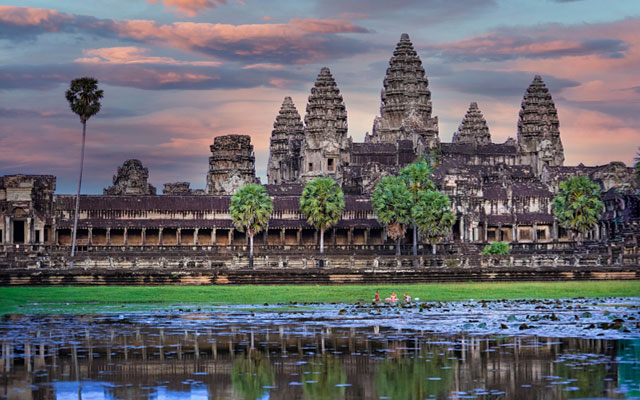
- Prolonged pandemic restrictions have left Siem Reap tourism in tatters
- Drying up of domestic tourism amid Covid surge this year has led to mass hotel closures, talent haemorrhage
- But pandemic downtime has provided opportunity for a sustainable recovery of Siem Reap tourism
It’s been almost 18 months since Cambodia closed its doors on international tourists, leaving its dominant tourism economy in tatters. Nowhere in the nation has felt it harder than Siem Reap, a city whose economy is heavily reliant on tourism.
While international arrivals to the town had already started to slow pre-pandemic, in 2019, Siem Reap welcomed 2.2 million international visitors to explore Angkor Wat alone. In April 2020, Cambodia closed to tourists in a bid to control the spread of Covid. Last year, it recorded zero deaths and less than 400 cases, mostly imported and caught at the border.
This threw one small lifeline in the form of domestic tourism. While volumes were far from enough to keep the tourist-centric town afloat, locals and expats flocked to Siem Reap on weekends and public holidays to experience the temples without tourists.
Pandemic’s long-term toll
However, this year has dealt additional blows. In February, coronavirus started spreading countrywide, triggering ongoing restrictions, including lockdowns, curfews and alcohol bans. It has also virtually brought domestic travel to a standstill.
According to David-Jaya Piot, president of the Cambodia Hotel Association in Siem Reap, only 10 per cent of 2019’s hotel rooms are available today, with rates hitting an all-time low. He said: “In the hotel business, this is quite difficult to come back from, especially after a crisis like this… Bankruptcies have harmed product diversity and there has been a drain in human capital as jobs have become scarce.”
In addition, the US$149 million 38 Roads project, which has seen all of the centre’s major roads torn up, has hammered another nail in the town’s coffin as surviving businesses struggle to stay afloat amid further uncertainty over when tourists will return.
Adam Rodwell, co-founder of Little Red Fox Espresso café, said: “The pandemic has changed the face of tourism in Siem Reap forever. With such a sudden and prolonged cut of income, we’ve lost so many incredible businesses. With that, we’ve also lost many incredibly skilled people. The long-term effects of that absence of skill can’t be understated.”
Hospitality staff returning to families to farm is common. Elsewhere, tour guides are delivering food and a hotel operations manager is working at a concrete factory. Nick Ray, product director at Hanuman Travel, noted: “Rescaling and rebuilding staff will be a major challenge. They’ve been in hibernation from tourism for 18 months now.”
Many hospitality businesses that have not closed have relocated to the capital in a bid to survive. Award-winning Wat Damnak shuttered its Siem Reap operations in April and relocated to Phnom Penh after reducing operations from five- to two-days a week proved economically unviable.
Co-owner and director, Nguon Vengchhay, said: “With the domestic market, two days a week wasn’t healthy for us in the long run. The plans to improve infrastructure also made it hard to keep open. At one point, we couldn’t access the restaurant for days.”
An opportunity to build back better
In spite of the unprecedented challenges the town faces along with other heavily tourism-reliant destinations worldwide, hopes remain high that Siem Reap has the strength to bounce back – how that will look, no one knows.
The 38 Roads project is slated to finish by December, and industry players hope borders will reopen by then. David Stirling, Little Red Fox Espresso co-owner, said the works are essential and being carried out when the city is void of visitors.
He added: “Siem Reap’s population growth before Covid-19 was absolutely insane. As a bustling tourist destination where the population could double or triple during peak holiday periods, it struggled with infrastructure pressure. This slowdown has given the time and opportunity to update infrastructure, which is long overdue.”
Ray also believes there is an opportunity to be had. Pre-pandemic, Siem Reap was suffering from an oversaturation in accommodation, a 15 per cent visitor downturn and strong seasonality. During peak months, hotels were regularly fully-booked while the rest of the year was a struggle.
He remarked: “We need to look at how to spread the load and transform Siem Reap into a year-round destination. It’s either that or become a destination that closes for six months of the year, like many across the globe.”
Rodwell added it will be tourists who dictate how Siem Reap emerges. He said: “It all depends on what kind of tourists come first and in what numbers. Will it be planeloads of tourists shuffled around on buses or a gentle flow reminiscent of Siem Reap at the turn of the century? The demands of the first few waves will essentially dictate which of us businesses survive.”
Piot added Siem Reap’s successful reopening will be dependent on consumer confidence and a fast vaccination rollout. On July 1, Cambodia remained the second most vaccinated South-east Asian country with 25.5 per cent of the population having received at least one dose. He added: “It’s certain demand exists. It’s all about how people can feel comfortable coming to Cambodia and returning home.”
Chhay, meanwhile, has not given up hope on reopening Wat Damnak’s Siem Reap operations. “We 100 per cent plan to reopen, when the time is right,” she said.
Bali pitches vaccine vacations to boost visitation
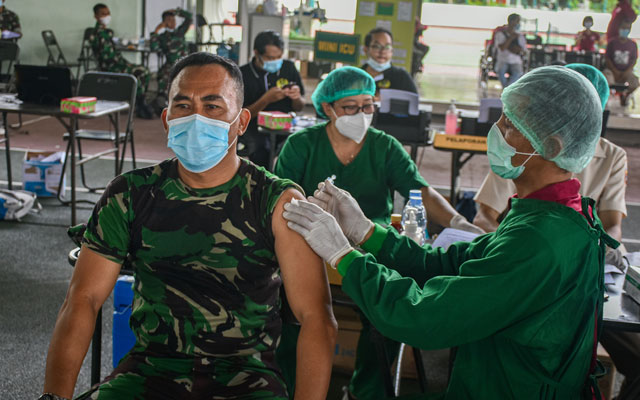
In a bid to inject some vitality back into Indonesia’s languishing tourism industry, the government has teamed up with travel companies on vaccine tour packages to lure domestic travellers, with Bali picked for the pilot project.
Sandiaga Uno, minister of tourism and creative economy, explained that the initiative is aimed at not only speeding up the country’s inoculation programme, but also, reviving Bali tourism as the vaccine programme would require travellers to stay for up to 15 days.
“We are targeting domestic tourists because according to our observation, Indonesians are attracted to vaccine tour packages offered in other countries, including the US,” he said, adding that the programme is run by appointed travel companies, which at this initial stage, are ATS Vacations, TX Travel and BMW Tours.
Tourist destinations that the customers will be visiting, he said, have already been issued CHSE (cleanliness, health, safety and environment) certificates. Covid-19 vaccines offered in the packages range from Sinovac and AstraZeneca to Pfizer and Novavax, depending on availability.
TX Travel has launched six types of vaccine tour packages, all of which include a 14-day hotel stay, two-shot vaccine and travel insurance. Prices range from 4.1 million rupiah (US$281) to 14.7 million rupiah, depending on the type and location of the accommodation.
Anton Thedy, CEO of TX Travel, told TTG Asia that the agency’s vaccine tours have received positive feedback from the domestic market, with interest coming in from various regions, including Bangka Island and Cianjur in West Java.
“We get a lot of inquiries from small cities, where the distribution of vaccines remains uneven. In Jakarta, vaccines are available (in various places), but in small cities, people are still confused about how to get a vaccine. So, they are keen to go to Bali not only for vaccination, but also for a vacation,” he said.
Jeffry Budiman, managing director of BMW Tours, said that with the government backing the vaccine programme, the agency can benefit from not just promotional support, but also a guarantee on vaccine availability. The agency’s clients also enjoy priority for booking a vaccination slot, and can skip the queue to get jabbed first upon arrival at the vaccination site.
He expects greater uptake of the vaccine programme among domestic travellers, who would no longer need to travel abroad to countries like the US but could opt for a domestic trip to Bali to get inoculated instead.
Indonesia places Bali and Java under two-week lockdown
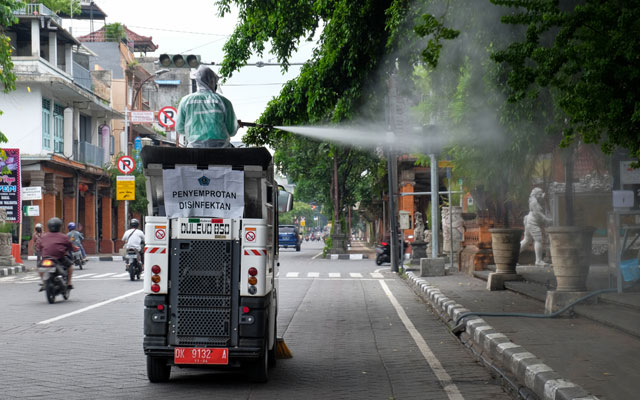
The Indonesian government will tighten restrictions across parts of Java and Bali islands for two weeks starting July 3, to curb a surge in cases driven by the Delta variant.
In an address to the nation, president Joko Widodo said: “The Covid-19 pandemic has been growing rapidly in the last few days because of the new variant, which has also been causing problems in many countries. The situation requires us to take more assertive measures in order to stem the spread of Covid-19.”
Under the new restrictions which will last until July 20, all shopping malls, trading centres, places of worships, public spaces, and sports facilities will have to remain closed.
Restaurants and eateries are only allowed to serve takeaways, while markets and supermarkets must close by 20.00, and operate at 50 per cent capacity.
Public transport will operate at up to 70 per cent capacity, while passengers on intercity buses, trains and airlines must show a negative PCR test result or non-reactive antigen test result, carried out at most 48 hours and 24 hours respectively before boarding.
Offices are required to have 100 per cent of their staff working from home with the exceptions of essential sectors including banking, finance, stock exchange and the export industry which will be allowed to have 50 per cent of their staff in the workplace. Critical sectors like energy, health, transportation and industries related to people’s basic needs are allowed to operate fully, with strict implementation of health protocols.
In the last few days, the number of new daily Covid-19 infections has surpassed more than 20,000. The latest data showed that the number reached 21,807 in a single day, the highest since the start of the pandemic.
On June 30, a total of 239,368 active cases were recorded across the country, with 467 deaths.
Covid-19 impact on tourism could cause US$4 trillion loss to global economy: UN report
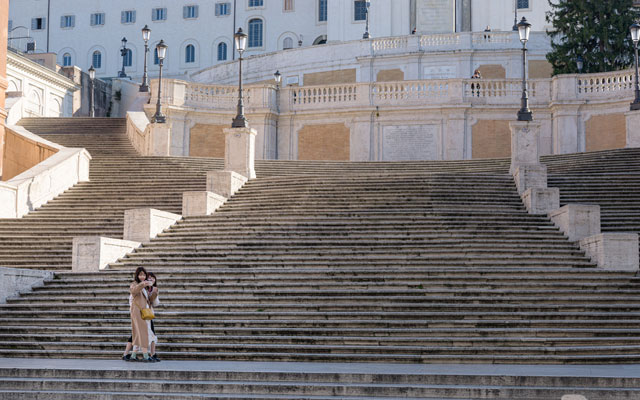
The crash in international tourism due to the coronavirus pandemic could cause the global economy to lose more than US$4 trillion for the years 2020 and 2021, according to a recent United Nations Conference on Trade and Development (UNCTAD) report.
The estimated loss has been caused by the pandemic’s direct impact on tourism and its ripple effect on other sectors closely linked to it.
The report, jointly presented with the UN World Tourism Organization (UNWTO), said international tourism and its closely linked sectors suffered an estimated loss of US$2.4 trillion in 2020 due to direct and indirect impacts of a steep drop in international tourist arrivals.
UNCTAD warned that a similar loss may occur this year, and that the tourism sector’s recovery will largely depend on the uptake of Covid-19 vaccines globally.
“The world needs a global vaccination effort that will protect workers, mitigate adverse social effects and make strategic decisions regarding tourism, taking potential structural changes into account,” UNCTAD acting secretary-general Isabelle Durant said.
UNWTO secretary-general Zurab Pololikashvili said: “Tourism is a lifeline for millions, and advancing vaccination to protect communities and support tourism’s safe restart is critical to the recovery of jobs and generation of much-needed resources, especially in developing countries, many of which are highly dependent on international tourism.”
The report also noted that tourism losses are reduced in most developed countries where Covid-19 vaccinations are more pronounced, but vaccine inequality has left developing countries still reeling in the doldrums.
Covid-19 vaccination rates are uneven across countries, ranging from below one per cent of the population in some countries to above 60 per cent in others.
According to the report, the asymmetric rollout of vaccines magnifies the economic blow tourism has suffered in developing countries, as they could account for up to 60 per cent of the global GDP losses.
A faster tourism recovery is expected in countries with high vaccination rates, such as France, Germany, Switzerland, the UK and the US, said the report.
However, UNWTO highlighted that experts don’t expect a return to pre-Covid international tourist arrival levels until 2023 at the earliest, due to travel restrictions, slow virus containment, low traveller confidence and a poor economic environment.
While a rebound in international tourism is expected in the second half of this year, the UNCTAD report still showed a loss of between US$1.7 trillion and US$2.4 trillion in 2021, compared with 2019 levels.
The report assessed the economic effects of three possible scenarios – all reflecting reductions in international arrivals – in the tourism sector in 2021.
Figure 1: As tourism falls world GDP takes a hit in 2021 (3 alternative scenarios)

The first one, projected by UNWTO, reflects a reduction of 75 per cent in international tourist arrivals – the most pessimistic forecast – based on the tourist reductions observed in 2020.
In this scenario, a drop in global tourist receipts of US$948 billion causes a loss in real GDP of US$2.4 trillion, a two-and-a-half-fold increase. This ratio varies greatly across countries, from onefold to threefold or fourfold.
Figure 2: Estimated losses in GDP by region from reduction in tourism (percentage)
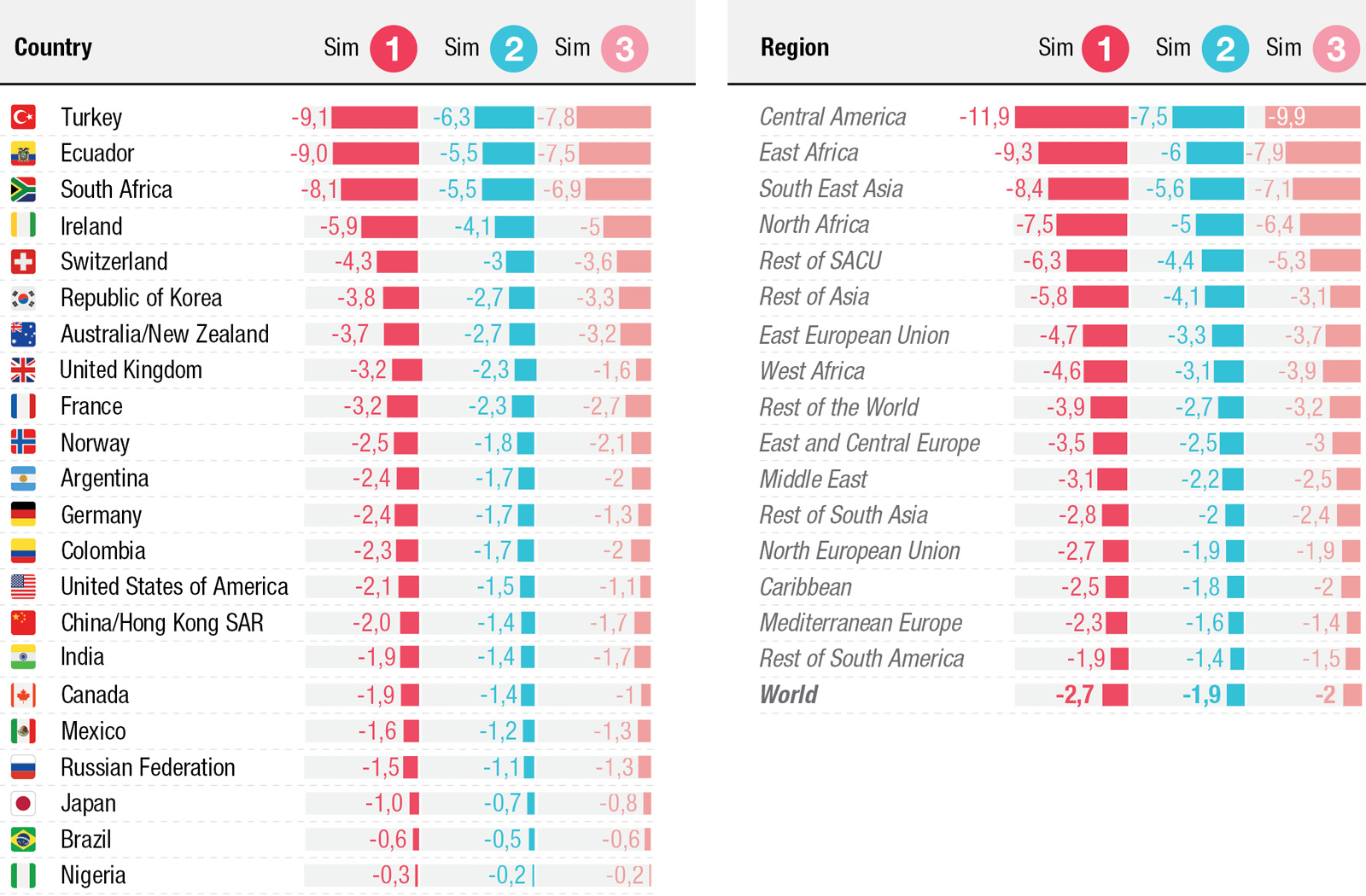
The second scenario reflects a 63 per cent reduction in international tourist arrivals, a less pessimistic forecast by UNWTO.
And the third scenario, formulated by UNCTAD, considers varying rates of domestic and regional tourism in 2021.
It assumes a 75 per cent reduction of tourism in countries with low vaccination rates, and a 37 per cent reduction in countries with relatively high vaccination rates, mostly developed countries and some smaller economies.
UNCTAD said that losses are worse than previously expected. In July last year, the conference estimated that a four- to 12-month standstill in international tourism would cost the global economy between US$1.2 trillion and US$3.3 trillion, including indirect costs.
But that projection has turned out to be “optimistic”, as international travel remains low more than 15 months after the pandemic started, UNCTAD said.
According to UNWTO, international tourist arrivals declined by about one billion or 73 per cent between January and December 2020. In the 1Q2021, the UNWTO World Tourism Barometer points to a decline of 84 per cent.
Figure 3: International tourist arrivals (in thousands)

Developing countries have borne the biggest brunt of the pandemic’s impact on tourism. They suffered the largest reductions in tourist arrivals in 2020, estimated at between 60 per cent and 80 per cent.
The most-affected regions are North-east Asia, South-east Asia, Oceania, North Africa and South Asia, while the least-affected ones are North America, Western Europe and the Caribbean.
Pandemic shutters KL’s Hotel Istana
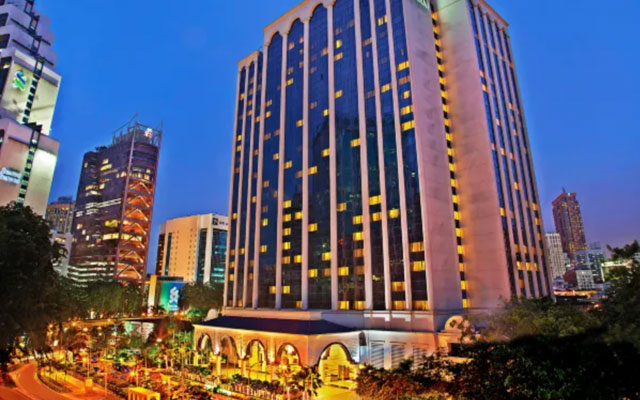
Hotel Istana Kuala Lumpur, a five-star property in the heart of the city, will close its doors come September 1, following 30 years of operation.
The hotel’s employees will be offered a voluntary separation scheme, general manager Noorazzudin Omar said in a notice of cessation to staff dated June 30.
“We have arrived at this decision after considering the present circumstances and all available options. We are left with little choice other than to proceed with this closure,” he said.
“Many of you will be aware that our competitive advantage has declined over a period of time in the face of stringent competition from new or neighbouring hotels and serviced apartments. The situation has now been aggravated by the Covid-19 pandemic which has and continues to impact our industry and its ability to achieve normality.
“This has impacted our business rates, returns and occupancy, despite our best efforts. Even as a quarantine hotel, we are incurring monthly operational losses. As such, after a proper evaluation of the hotel and its viability, we have decided to cease operations.”
Owned by Tradewinds Corporation, the 486-key hotel started operations in 1992 and ranked as the top five five-star hotels at the time in Jalan Bukit Bintang. It was also the venue of choice for many government and corporate meetings.
Phuket Sandbox kicks off, sparks hope of tourism recovery
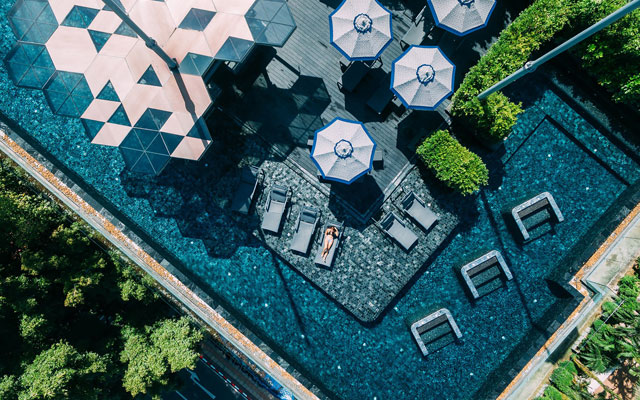
Thailand’s traditional low travel season this July and the next two months will take a different turn for Phuket, which kicks off the Phuket Sandbox tourism resumption arrangement today.
In anticipation of the post-pandemic milestone, several hotels in Phuket have rolled out attractive deals to entice guests.
Banyan Tree Group, for one, has aligned its Phuket Is Open Campaign with the Phuket Sandbox programme, with a number of experiential offerings at its Banyan Tree Phuket, Angsana Laguna Phuket and Cassia Phuket resorts.
The Group’s Laguna Phuket integrated resort also joined up with Bangkok Hospital to launch the first hotel-based PCR test centre for Phuket Sandbox arrivals, allowing guests to access and clear their compulsory tests quickly and conveniently.
All Phuket Sandbox arrivals are required to take a PCR test upon arrival at Phuket International Airport, and again on the sixth and 12th day of their stay.

IHG Hotels and Resorts has also rolled out a warm welcome to its IHG Rewards members, who will earn 5,000 bonus points for every stay at a participating Phuket hotel (InterContinental Phuket Resort, Hotel Indigo Phuket Patong, Holiday Inn Resort Phuket and Holiday Inn Express Phuket Patong Beach Central) along with perks such as daily breakfast, guaranteed room upgrade, F&B discounts and early check-in and late check-out, when they book a five-night stay by July 25 for fulfilment between July 4 and December 23 December, 2021.
Group CEO of Dusit Thani, Suphajee Suthumpun, said Dusit Thani Laguna Phuket was one of the first tourism players to support the scheme. Today, the property welcomed the first batch of Phuket Sandbox arrivals, made up of Dutch and Thai residents flying in from Singapore.
In the lead up to July 1, the Dusit Thani team had inspected Phuket to ensure all sectors were ready for the reopening.
“The hotel can learn and prepare for the high season that comes the end of the year. (The Phuket Sandbox) is a model to expand to other areas as well,” Suphajee said.
Presently, Phuket province has 1,389 business establishments awarded with the Amazing Thailand Safety and Health Administration (SHA) Plus Certificate. These include 882 hotels, and some will welcome about 350 to 400 tourists coming to the island under the Phuket Sandbox programme.
Rajit Sukumaran, managing director for South East Asia and Korea at IHG Hotels and Resorts, said the reopening of Phuket to vaccinated travellers marks a positive step not just for Thailand, but for Asia too.
He said in a press statement: “We are making more meaningful progress towards global recovery, with vaccine rollouts, ease of restrictions and an acceleration in economic activity. We are confident that Thailand’s booming tourism industry will return – history has shown us this before as we know there’s pent up demand for travel when people can do so again.”
Access to Phuket over the next four days of reopening will be facilitated by major airlines linking Phuket with important cities such as London, Frankfurt, Dubai, Abu Dhabi, and Singapore. – Additional reporting by Karen Yue







Travelport and Emirates have reached a commercial agreement that will allow Travelport-connected travel agencies to avoid the airline’s surcharge on bookings via GDS.
Further, the companies have inked a new long-term agreement to enable the distribution of Emirates’ NDC content via Travelport’s platform, Travelport+, and an extension to its longstanding IT agreement.
As of July 1, Travelport’s global network of travel agency partners have automatically been upgraded to a dedicated channel that provides access to un-surcharged content. These agencies will also continue to benefit from a graphically-rich experience when searching for and booking Emirates-branded fares, as well as greater access to its ancillary offers, thanks to a long-term extension of the airline’s existing agreement to use Travelport’s Rich Content and Branding merchandising tool.
As part of the deal, Travelport-connected agencies will be able to gain simplified access to Emirates’ NDC content and services via Travelport Smartpoint and the company’s enhanced RESTful / JSON APIs once the agencies sign new NDC-specific agreements with both companies.
Travelport and Emirates said in a joint statement that they continue to progress the NDC technical solution for travel retailers worldwide and are now in the process of developing enhanced features and functionality that will gradually be rolled out upon completion.
Travelport will also continue to provide Emirates with its pricing, shopping and ticket rebooking technology as part of the agreement, to support the airline in the delivery of advanced shopping and rebooking options within its own internal sales channels, including its NDC channel and website.