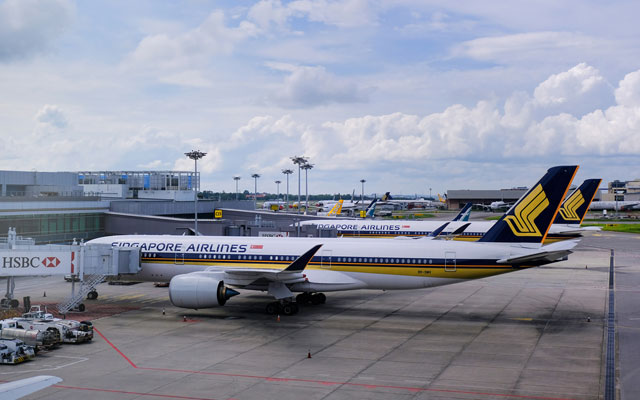
Singapore Airlines (SIA) has successfully raised S$500 million (US$372.4 million) via a private placement of new 10-year bonds, which will be used for general purposes including refinancing of existing borrowings.
The offer was launched at an offer size of S$300 million in response to an initial expression of interest, and was increased to S$500 million after strong appetite was apparent from a select group of private investors.
Latest round of financing will strengthen SIA’s liquidity
DBS Bank and United Overseas Bank acted as joint lead managers of the issue.
SIA CEO Goh Choon Phong said the support for the bond issue reflected “strong confidence that investors have in the ability of Singapore Airlines to navigate the near-term challenges”.
Since the start of the 2020/2021 financial year, including the November 24 issuance, SIA has raised approximately S$12.7 billion in additional liquidity. This includes S$8.8 billion from SIA’s successful rights issue, S$2 billion from secured financing, S$850 million via a recent convertible bond issue, and more than S$500 million through new committed lines of credit and a short-term unsecured loan.
For the period up to July 2021, SIA also retains the option to raise up to S$6.2 billion in additional mandatory convertible bonds that would provide further liquidity if necessary.
Eager to revive Indonesia’s ailing tourism industry, the Ministry of Tourism and Creative Economy has rolled out an incentive programme dubbed Big Promo to draw domestic travellers to tourist destinations in 12 locations across Indonesia, such as Belitung Island, Yogyakarta, Bali, Lombok, and Manado.
Under the programme, the government has readied 50,000 vouchers to help subsidise tourism expenditure, comprising a 225,000 rupiah (US$16) voucher which can be spent on staycations, tours and attractions; a meal voucher worth 100,000 rupiah; and a shopping voucher worth 75,000 rupiah.
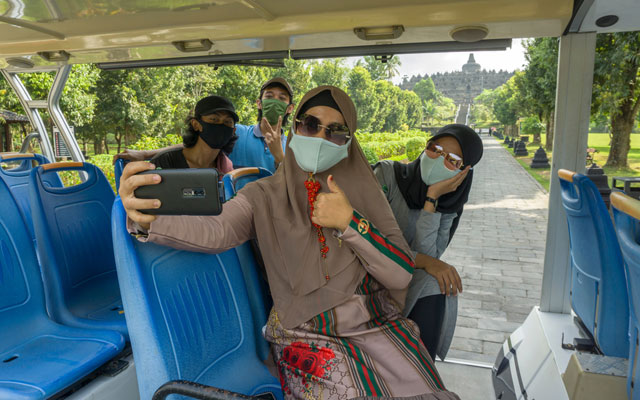
Indonesia is the latest country to distribute tourism vouchers to citizens to encourage local spending; friend group taking a selfie at the Borobudur temple in Central Java, Indonesia pictured
Valid through year-end, the vouchers can be redeemed by domestic travellers when they purchase hot deals offered by participating hotels, restaurants, travel agencies and SMEs on the website bigpromo.co.id.
Christine Besinga, head of Big Promo organising committee, hopes that more industry players will join the Big Promo programme, and to lure travellers by crafting attractive deals.
While acknowledging that the programme will not fully make up for the losses sustained by businesses hard hit by the pandemic, she believes that it will at least help businesses “to survive until the end of this year”.
As of November 17, 1,208 subsidised packages are displayed on the website. Under the subsidy scheme, a superior room at the One Legian Hotel in Bali is going for 225,000 rupiah per night, as compared to its usual rate of 450,000 rupiah. Elsewhere, KCBJ Tours has slashed the price for its Nusa Penida One Day Trip from 930,000 rupiah to 705,000 rupiah, while its 2D1N Staycation package at The Alena Resort in Gianyar, Bali, is priced at 275,000 rupiah per night, a 45 per cent markdown.
Taufik Nurhidayat, coordinator of tourism marketing for regional area one at MoTCE, said that Big Promo was designed to get pandemic-fearful locals travelling again domestically, without neglecting health protocols.
Travel providers have welcomed the programme with open arms, as it is expected to boost consumption and cushion the pandemic’s blow on economic activities.
Krishnadi, chairman of Indonesia Hotel & Restaurant Association Jakarta chapter, said that the vouchers will encourage locals to travel, especially those facing pandemic fatigue and boredom.
With over 200 million people in Indonesia, a swifter recovery of the country’s tourism industry could happen on the back of intra-state travel, he added.
However, Bahriyansyah, owner of Bee Holiday and deputy secretary general of ASITA, bemoaned the programme’s belated launch, despite acknowledging that the incentives will be “quite helpful” to sector players.
According to him, nearly 1,000 packages have been submitted by ASITA members to the Big Promo committee since its November 16 launch – a “small” figure, considering the association has around 7,000 members across the country.
He attributed the low participation rate to the government’s sudden launch of the programme, and the lack of promotions surrounding it. As such, many ASITA members did not have sufficient time to meet the requirements, such as the need for an active tourism business certification (TDUP) or business identification number (NIB).
“Many members have yet to extend their TDUP or obtain an NIB because the majority of ASITA’s regional boards are inactive and their offices are also closed due to the pandemic,” Bahriyansyah said.
Jongki Adiyasa, executive director of Ina Leisure Tour and Travel and co-founder of Indonesia Inbound Tour Operator Association, opined that the vouchers would help hotels, restaurants, and retailers like souvenir shops, but it will provide little relief to tour operators.
Jongki explained that most tour operators do not sell individual components, but tour packages which include accommodation, transport, and meals. He cited the example of how the 225,000 rupiah voucher which can be spent on attractions will “mean nothing” to potential customers of tour operators, if the price of a tour package were, say, four million rupiah.
He, therefore, urged the government to give tour operators a meatier incentive that covers the whole package, not just an individual component like staycation or meal voucher.
Mark Stanford has been appointed as general manager of Mamaka by Ovolo, the first urban lifestyle resort in Bali.
Ahead of the hotel’s soft opening on November 6, Stanford had been leading the pre-opening team to manage the development of the hotel.
The Australian brings a wealth of hospitality experience and knowledge spanning over 25 years, specialising in resort and hotel operations management with a passion for luxury and alpine resorts.
Stanford has helmed the creation of eight hotels and resorts, five of which have been in the role of general manager, and three of which have been in Bali, including Mamaka by Ovolo.
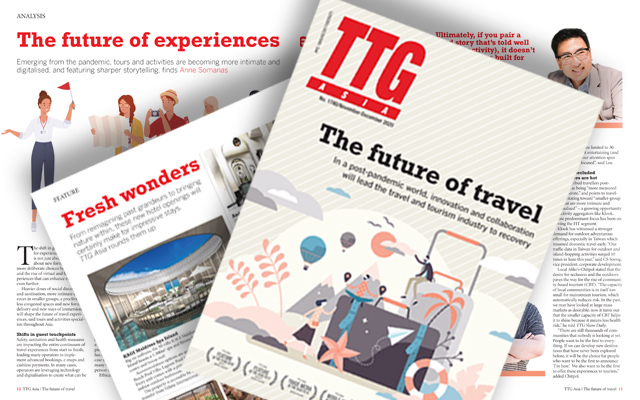
The pandemic has forced a change in the way people approach travel and events decisions, leading travel, tourism and MICE players to evolve the way they promote their products and deliver their experiences.
In the TTG Asia and TTGmice dual masthead year-end special, TTG Asia Media’s editorial team cast their eyes into the future, checking in on how business strategies are changing, what lies ahead for tours and activities, what is needed for air travel to rebound, what destination managers and marketers are doing to stay in a positive light, how will hotels rewrite their creative catering playbook for face-to-face events, and more.
TTG Asia: The Future of Travel and TTGmice: The Future of Travel and Events are presented as a single publication, available in print and online.
The impact of the global pandemic has left few facets of our lives and the world unchanged. Travel too will be forever re-shaped by this extraordinary moment. But the big question remains – when is it right to travel again, how will we do this safely, and how different will the world look?
Our research at Booking.com indicates that travellers will look for a heightened level of travel safety and more sustainable travel offerings, as well as evolve their preferences for where they will travel to and with whom. Newfound appreciation for doorstep delights will endure alongside an abiding love of the far flung, and travellers will find new ways to blur the lines between work and travel; all of which will catapult a demand for deeper value from the trips we book in the future.
These overarching trends will certainly shape the travel industry in 2021 and beyond – but what are their exact implications? Here are the four key imperatives for travel recovery.
Instill trust
Consumers will only travel when they feel it’s safe to do so. They are seeking enhanced transparency and it is critical that the travel industry is open and forthcoming about precautionary Covid-19 measures undertaken. With 73 per cent of Singapore travellers noting they will only book a particular accommodation if it’s clear what health and hygiene policies are in place, properties need to be able to showcase the measures they have implemented and whether they’ve met safety standards.
This empowers consumers to book with confidence with the transparency provided which, in turn, offers long-term loyalty. The same applies to cancellation policies, refund processes and trip insurance options – properties can better manage and meet guest expectations through price transparency, allowing guests to make well-informed decisions during the booking process which would ultimately result in better reviews for the property.
Provide greater flexibility
Some 53 per cent of Singapore travellers consider refundable accommodation a must-have for their next trip, as do 42 per cent when it comes to the flexibility to change dates without being charged. Flexibility as an offering is the best tool for guest reassurance, alleviating concerns driven by the pandemic’s uncertainty. The industry will need to come together to respond and offer deeper value, better choice, increased flexibility and transparency, as well as more thoughtful experiences for tomorrow’s travellers as they scrutinise spend in 2021 and beyond.
Elevate experience through technology
It is now more important than ever before for the industry to leverage technology to create a seamless, frictionless experience, perfectly tailored to each and every customer. Predictive search, targeted offers and other services will become smarter, and the more intelligent they become, the more value they will add to the travel experience.
5G impact on internet speed and latency will also greatly enhance a traveller’s experience by providing helpful, real-time suggestions based on concurrent situations and local information.
Technological innovation will define the way we search, book and enjoy travel – moving far beyond the transaction itself and looking end-to-end at the customer journey, from discovery to experience to post-trip.
Inspire new ways of working and living
We see an increase in digital nomads as people pine for a change of scenery, with travellers potentially extending the length of their trips and working while they are away. In fact, more than half of Singapore travellers (59 per cent) said they would take the opportunity to extend any business trip to also enjoy leisure time at the destination. Part of innovating the search experience includes enabling search for whole accommodations or properties that are work-friendly, including features such as laptop compatibility, free Wi-Fi and proper spaces to work.
2020 has been a year like no other and while it will be some time before travel returns to pre-pandemic levels, all signs point to the fundamental and enduring role that travel plays in all our lives. It continues to bring moments of joy and inspiration to people across the globe during times of uncertainty, whether through dreaming and planning, or cherishing the trips we have been able to take. Looking ahead, the travel industry needs to continue to remain agile, by adopting a more sustainable mindset, supporting local community recovery and continuing to evolve to meet changing traveller demands with an emphasis on health and safety.
While domestic trips are poised to remain popular among Thai travellers going into 2021, search data shows that they are also eager to return to Asian destinations close to home, found Expedia Thailand’s 2021 Travel Trends Report.
The report analysed traveller data to uncover the biggest takeaways amid the pandemic this year and what travellers can expect in the year ahead.
Japan, South Korea and Singapore are among Thai travellers’ top-searched destinations for travel in 2021
In addition to tapping into its own database of search and demand data, this year, Expedia partnered with the Airlines Reporting Corporation (ARC) for a deep dive on the effect of the pandemic on air travel.
According to the report, which looked at top-searched destinations for 2021 and beyond, Thais dreaming of their next trip fall into one of two categories: island escapist and the short-haul destination traveller.
Looking at the top 20 destinations, half are islands and popular beach destinations. These include Phuket (#1), Pattaya (#5), Koh Samui (#6), Krabi (#9), Hua Hin (#11), Trat (#12), the Maldives (#14), Pang Nga (#15), Nakhon Si Thammarat (#16), and Koh Lipe (#16).
Famous among Thais are cities within Asia that are a few hours flight from Bangkok. Though these cities haven’t seen their usual tourist bustle over the past year, search results show that Thai travellers are eager to return and enjoy these all-time favourite destinations close to home.
These include Tokyo, Japan (#3); Osaka, Japan (#7); Seoul, South Korea (#8); Sapporo, Japan (#10); Hokkaido, Japan (#13); Taipei, Taiwan (#18); Yamanashi, Japan (#19); and Singapore (#20).
This year, backyard beaches and outdoorsy escapes have taken the place of exotic international destinations. The top 10 trending destinations for 2020 are Bangkok, Pattaya, Chiang Mai, Phuket, Hua Hin, Rayong, Chonburi, Khao Yai, Chiang Rai and Songkla.
The study also found that in 2021, flexibility will continue to be top of mind for Thai travellers. Luckily, flexibility is more affordable than ever: Expedia lodging data shows average daily rates for refundable bookings were more than 50 per cent cheaper in 2020 compared to 2019.
In the year to come, concerns about staying safe while travelling will continue to impact every aspect of trip planning, from what type of accommodations to choose to where to go to who to travel with. Since May, nearly 300,000 properties have added health and cleanliness information on Expedia.co.th, including enhanced cleaning, contactless check-in, social distancing, and other guest safety measures.
According to ARC data, in 2019, the average Thai traveller booked flights around 26 days in advance of their departure date, but during the onset of the pandemic, that window shrunk to 18 days. The new normal (since August) is just 14 days out – the average advance purchase dropping below the 15-day mark for the first time in years – and illustrating how travellers have adapted to the rapidly changing environment. However, with airlines eliminating change fees, travellers may feel more confident booking further out, knowing they can always change their plans down the road.
As well, Thais have shown increasing concern for the environment, culture, tradition and sustainable interest of the planet – both as travellers and tourism professionals. Initiatives have been taken by both private and public sectors to promote eco-tourism. For instance, the Tourism Authority of Thailand, together with the Department of Marine and Coastal Resources and Ko Tao’s public and private sectors, launched The One for Nature project in January to promote responsible tourism in the country.
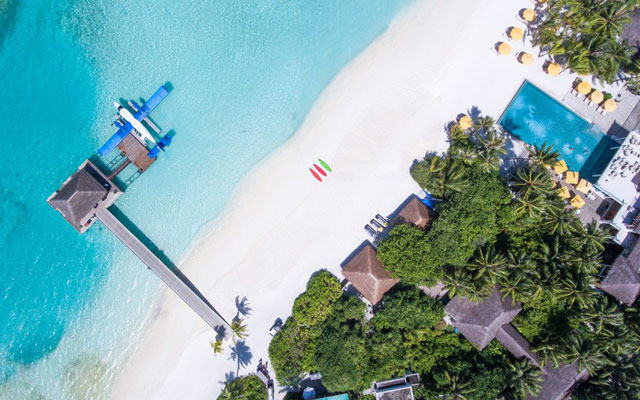
Visit Maldives has commenced a month-long global media campaign to promote the island nation as one of the most preferred tourist destinations to key global markets across various platforms.
These markets are India, the UK, Russia, Middle East, France, German-speaking markets, Turkey, Singapore, South Africa, Italy, Hong Kong and Asia-Pacific.
Visit Maldives continues its marketing efforts to promote the destination as a “safe haven” for visitors
Under the slogan “Rediscover Maldives…the sunny side of life”, the campaign will utilise local and international media channels in mainstream and travel trade print to promote the destination in these key markets, said the Maldives Marketing and Public Relations Corporation (MMPRC) in a statement.
Key points highlighting the safety and unique selling points of the destination will be featured across several mediums including ads and advertorials placed on leading global publications. Alongside digital media publications, the decision to utilise print media was made as it remains a vital source in reaching travel trade across various markets. Emphasis will also be placed on all tourism products in the Maldives to showcase the unique experiences available to tourists.
An online brochure will be circulated which details essential information for tourists before their visit to the Maldives, including an introduction on the destination’s loyalty programme and Covid-19 travel insurance for tourists, as well as data on flight connectivity from various parts of the world. Furthermore, it will touch upon the international safety recognition the Maldives has received; the Safe Travels Stamp granted by the WTTC; and the Airport Health Accreditation by the Airport Council International.
According to recent data, over 50,000 tourists have arrived in the Maldives since the reopening of borders. With the gradual increase in tourist arrivals, MMPRC anticipates that this rate will “peak in the foreseeable future”.
The International Air Transport Association (IATA) Travel Pass, a digital health passport that will support the safe reopening of borders, is now in the final phase of development and will see its first cross-border pilot later this year as well as a launch slated for 1Q2021.
As governments begin to rely on testing as a replacement of quarantine measures to limit the risks of Covid-19 importation when reopening their borders to travellers, the IATA Travel Pass will support the procedure by managing and verifying the secure flow of necessary testing or vaccine information among governments, airlines, laboratories and travellers.
IATA Travel Pass will manage and verify the secure flow of necessary testing or vaccine information among governments, airlines, laboratories and travellers
The IATA Travel Pass incorporates four open sourced and interoperable modules which can be combined for an end-to-end solution. The first module covers a global registry of health requirements, which enables passengers to find accurate information on travel, testing and eventually vaccine requirements for their journey.
The second covers a global registry of testing / vaccination centre, enabling passengers to find testing centres and labs at their departure location which meet the standards for testing and vaccination requirements of their destination.
The third module takes in the Lab App, which enables authorised labs and test centres to securely share test and vaccination certificates with passengers.
Lastly, the Contactless Travel App enables passengers to create a digital passport; receive test and vaccination certificates and verify that they are sufficient for their itinerary; and share testing or vaccination certificates with airlines and authorities to facilitate travel. This app can also be used by travellers to manage travel documentation digitally and seamlessly throughout their journey, improving travel experience.
IATA Travel Pass is based on industry standards and IATA’s proven experience in managing information flows around complex travel requirements. IATA’s Timatic, which is used by most airlines to manage compliance with passport and visa regulations, is the base for the global registry and verification of health requirements.
IATA’s One ID initiative, which was endorsed by a resolution at its 75th Annual General Meeting in 2019 to securely facilitate travel processes with a single identity token, is the base for the IATA Contactless Travel App.
IATA and International Airlines Group (IAG) have been working together in the development of this solution and will undertake a trial to demonstrate that this platform combined with Covid-19 testing can reopen international travel and replace quarantine.
“Today borders are double locked. Testing is the first key to enable international travel without quarantine measures. The second key is the global information infrastructure needed to securely manage, share and verify test data matched with traveler identities in compliance with border control requirements. That’s the job of IATA Travel Pass. We are bringing this to market in the coming months to also meet the needs of the various travel bubbles and public health corridors that are starting operation,” said Alexandre de Juniac, IATA’s director general and CEO.
Nick Careen, IATA senior vice president, airport, passenger, cargo and security, commented: “Our main priority is to get people travelling again safely. In the immediate term that means giving governments confidence that systematic Covid-19 testing can work as a replacement for quarantine requirements. And that will eventually develop into a vaccine programme. The IATA Travel Pass is a solution for both.”
Careen explained that the IATA Travel Pass’s interoperability will allow it to be used in combination with other providers or as a standalone end-to-end solution.
Throughout the travel and tourism crisis, IATA has advocated the use of rapid, accurate, affordable, easy-to-operate, scalable and systematic Covid-19 testing for all passengers before departure as an alternative to restrictive quarantine measures in order to re-establish global air connectivity.
Earlier in June, Juniac had expressed: “Imposing quarantine measures on arriving travelers keeps countries in isolation and the travel and tourism sector in lockdown.”
Even with the halt on inbound tourism, new opportunities are emerging for luxury providers in Japan as the micro-tourism trend gains steam among domestic travellers.
The small-scale style of travel has seen an uptick across the country, given impetus by the government’s July launch of a subsidised travel campaign offering 50 per cent off trips. Most participants so far have opted for single-destination trips within a few hours’ drive of home and, due to the discount, have been happy to splurge.
Holidaymakers in Japan favour luxury hotels offering well-rounded experiences and wellness facilities like hot springs that are away from crowds; an outdoor onsen at a hot spring inn in Yamagata Prefecture pictured
Keen to shun crowded attractions and facilities, many travellers with mid to high disposable income have been seeking hotels that can offer an all-rounded experience, including relaxation (a hot spring or spa), various F&B options, activities (a pool or gym) and local interaction (exclusive mini-tours). This trend is enabling luxury hoteliers to maximise on the rebound in the domestic market.
Hoshino Resorts, for instance, is targeting locals living within a 60-minute drive from its properties, with the lure of meals, hot springs and relaxation in a private space. Footfall has risen, with more Japanese consumers favouring “travel closer to home and in a safe space”, said Jiseon Lee, the company’s area manager of global marketing.
At Small Luxury Hotels of the World (SLH), guests are showing a keen interest in enjoying their hotel and its surrounds in a way that suits the new normal.
Mark Wong, SLH’s senior vice-president Asia-Pacific, said: “The reservations team has been receiving more requests to make restaurant reservations, spa appointments and local city excursions.
“We are also partnering with local experiential travel providers to curate activities that are off-the-beaten-track. (Our) partners have specifically identified and curated safe tour itineraries that avoid crowded places, so guests have that added security.”
Properties that average about 50 rooms are also enjoying a resurgence in hotel buyouts as social distancing becomes the norm. Since the pandemic, SLH’s trio of Japan hotels that offer buyouts have seen an uptick in enquiries from families and groups of friends for exclusive use at the end of 2020 and into 2021.
In response to that demand for privacy and seclusion, the company launched its Stay Small, Stay Exclusive programme to offer enhanced health and detailed safety guidelines, promising peace of mind to potential guests. Standards established under the programme are safeguarded by SLH’s partnership with the Global Biorisk Advisory Council and the latter’s GBAC STAR accreditation.
Even before the coronavirus struck, most luxury providers had placed a premium on small-scale, bespoke trips to off-the-beaten-track destinations, rendering them particularly poised to tap rising demand for micro-tourism.
Case in point: Bespoke luxury DMC Discover Shikoku, which has always put privacy and separation at the heart of its operations. Managing director Sean Brecht noted that no “significant leap” was needed for the company to adapt to the realities of travel in a post-pandemic world.
Some luxury travel providers who once solely targeted foreign visitors have successfully pivoted to the domestic market, thanks to micro-tourism business opportunities.
One such provider is itinerant hotel brand 700,000 Heures, whose properties operate in each location for six months. After launching near Kyoto in May, the hotel began to attract locals keen on micro-trips due to its European atmosphere.
In the face of prevailing uncertainty around inbound tourism, the owner saw an opportunity, dialling up the hotel’s European elements, and even making the switch from Japanese to European cuisine.
Julia Maeda, co-founder of boutique travel agency Okuni, which utilises 700,000 Heures in its trips, said the hotel was booked solid by Japanese residents following the pivot.
In the long run, the rise of micro-tourism in Japan is expected to provide a welcome boost to the luxury market via a greater number and variety of products and services.
Moreover, as micro-tourism also enhances collaboration among nationwide and regional companies and local experts, this approach can improve industry operations, according to Hoshino Resorts’ Lee.
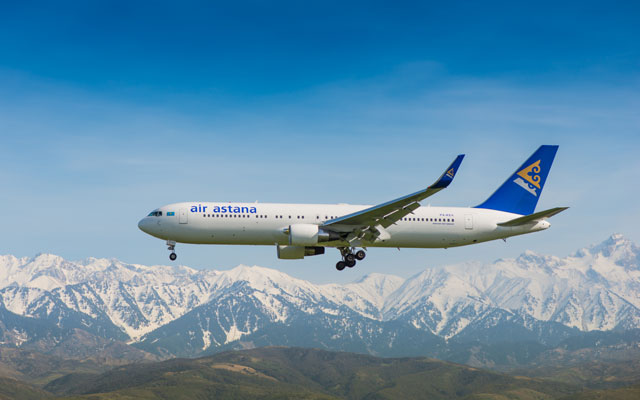
Air Astana, the national carrier of Kazakhstan, will commence twice weekly flights between Almaty and Male from December 5, with a third new service December 21 to cope with the high demand expected this holiday season.
The flights on Wednesdays and Saturdays will be operated by an Airbus A321LR aircraft, configured with 16 Business class seats and 150 Economy class seats. They will depart Almaty at 01.20 local time and arrive in Male at 07.05 local time.
Air Astana to launch new services to the Maldives on December 5
The additional service for the high season will depart Almaty every Monday at 01.30 local time and arrive in Male at 07.15 local time.
During the high season from December 16, 2020 to January 16, 2021, flights will be operated by the wide-bodied Boeing 767 aircraft, providing additional seat capacity.
Passengers are required to comply with national immigration regulations, which include submission of a compulsory medical health declaration 24 hours before arrival in the Maldives, and a mandatory PCR Test certificate in English with a negative result and which will remain valid for 96 hours from the moment of taking the test until the scheduled flight arrival time.















Eager to revive Indonesia’s ailing tourism industry, the Ministry of Tourism and Creative Economy has rolled out an incentive programme dubbed Big Promo to draw domestic travellers to tourist destinations in 12 locations across Indonesia, such as Belitung Island, Yogyakarta, Bali, Lombok, and Manado.
Under the programme, the government has readied 50,000 vouchers to help subsidise tourism expenditure, comprising a 225,000 rupiah (US$16) voucher which can be spent on staycations, tours and attractions; a meal voucher worth 100,000 rupiah; and a shopping voucher worth 75,000 rupiah.
Valid through year-end, the vouchers can be redeemed by domestic travellers when they purchase hot deals offered by participating hotels, restaurants, travel agencies and SMEs on the website bigpromo.co.id.
Christine Besinga, head of Big Promo organising committee, hopes that more industry players will join the Big Promo programme, and to lure travellers by crafting attractive deals.
While acknowledging that the programme will not fully make up for the losses sustained by businesses hard hit by the pandemic, she believes that it will at least help businesses “to survive until the end of this year”.
As of November 17, 1,208 subsidised packages are displayed on the website. Under the subsidy scheme, a superior room at the One Legian Hotel in Bali is going for 225,000 rupiah per night, as compared to its usual rate of 450,000 rupiah. Elsewhere, KCBJ Tours has slashed the price for its Nusa Penida One Day Trip from 930,000 rupiah to 705,000 rupiah, while its 2D1N Staycation package at The Alena Resort in Gianyar, Bali, is priced at 275,000 rupiah per night, a 45 per cent markdown.
Taufik Nurhidayat, coordinator of tourism marketing for regional area one at MoTCE, said that Big Promo was designed to get pandemic-fearful locals travelling again domestically, without neglecting health protocols.
Travel providers have welcomed the programme with open arms, as it is expected to boost consumption and cushion the pandemic’s blow on economic activities.
Krishnadi, chairman of Indonesia Hotel & Restaurant Association Jakarta chapter, said that the vouchers will encourage locals to travel, especially those facing pandemic fatigue and boredom.
With over 200 million people in Indonesia, a swifter recovery of the country’s tourism industry could happen on the back of intra-state travel, he added.
However, Bahriyansyah, owner of Bee Holiday and deputy secretary general of ASITA, bemoaned the programme’s belated launch, despite acknowledging that the incentives will be “quite helpful” to sector players.
According to him, nearly 1,000 packages have been submitted by ASITA members to the Big Promo committee since its November 16 launch – a “small” figure, considering the association has around 7,000 members across the country.
He attributed the low participation rate to the government’s sudden launch of the programme, and the lack of promotions surrounding it. As such, many ASITA members did not have sufficient time to meet the requirements, such as the need for an active tourism business certification (TDUP) or business identification number (NIB).
“Many members have yet to extend their TDUP or obtain an NIB because the majority of ASITA’s regional boards are inactive and their offices are also closed due to the pandemic,” Bahriyansyah said.
Jongki Adiyasa, executive director of Ina Leisure Tour and Travel and co-founder of Indonesia Inbound Tour Operator Association, opined that the vouchers would help hotels, restaurants, and retailers like souvenir shops, but it will provide little relief to tour operators.
Jongki explained that most tour operators do not sell individual components, but tour packages which include accommodation, transport, and meals. He cited the example of how the 225,000 rupiah voucher which can be spent on attractions will “mean nothing” to potential customers of tour operators, if the price of a tour package were, say, four million rupiah.
He, therefore, urged the government to give tour operators a meatier incentive that covers the whole package, not just an individual component like staycation or meal voucher.