

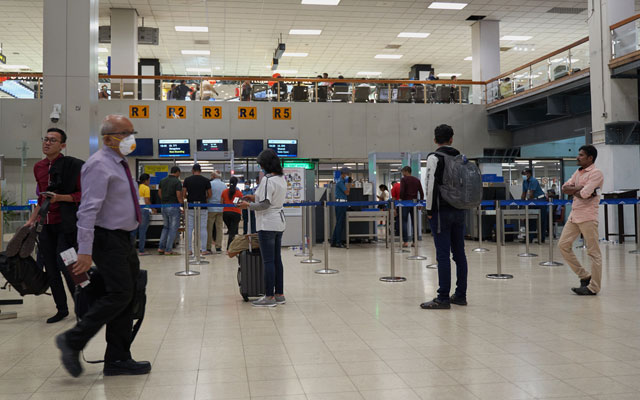
Sri Lanka is now allowing fully vaccinated international travellers to enter the country without undergoing quarantine, as the country looks to restart its tourism engine.
Vaccinated tourists are required to only spend 24 hours in a dedicated hotel facility to await their on-arrival PCR test results. Once they test negative, they will be allowed to leave the hotel and go about their activities. On the other hand, non-vaccinated tourists have to undergo a 14-day quarantine in a safe and certified hotel.
Meanwhile, tourism authorities are forging ahead with a campaign to inoculate all tourism industry workers by October. Sri Lanka’s vaccination rollout campaign is also speedily moving ahead, with plans to complete vaccinating all those above 30 years of age by September.
Kimarli Fernando, chairperson of Sri Lanka Tourism, the state tourism promotion agency, said that with the success of the national vaccination rollout programme, Sri Lanka is ready to welcome fully-vaccinated foreign travellers while ensuring the safety and security of local communities.
Sri Lanka Hotels Association president Sanath Ukwatte, while welcoming the relaxation for fully vaccinated visitors, urged the authorities to further ease restrictions at restaurants which are now limited to 25 per cent capacity.
The national tourism agency is also working together with national carrier SriLankan Airlines to launch a buy-one-get-one-free air ticket campaign next month across 18 key markets. They are the UK, Germany, Australia, Singapore, Malaysia, South Korea, Japan, Kuwait, UAE, Qatar, Bahrain, Oman, Saudi Arabia, Kenya, Pakistan, Bangladesh, India and the Maldives, according to sources at the national carrier.
As of June 30, 16,908 tourists have visited Sri Lanka this year, a decline of 96.7 per cent over last year where 507,311 tourists visited the country from January to March 18 (the day the airport was closed to inbound travellers owing to the pandemic).
According to official data, Kazakhstan, Ukraine, Germany, China and India were Sri Lanka’s top five source markets from January to June this year. Leading the pack was Kazakhstan which contributed to 19 per cent of the total traffic, followed by Ukraine (16 per cent), Germany (nine per cent), China (seven per cent) and India (six per cent).
Sri Lanka Tourism’s Fernando said that the CIS markets are “low-hanging fruits” as the countries have no travel restrictions and have limited warm weather destination options currently.
Last week, the government relaxed Covid-19 restrictions, allowing restaurants, bars, shopping malls, wildlife parks and other places of tourist interest to open amid the steady rollout of the vaccination drive.
As of July 18, Sri Lanka recorded 283,512 Covid-19 cases and 3,733 deaths.



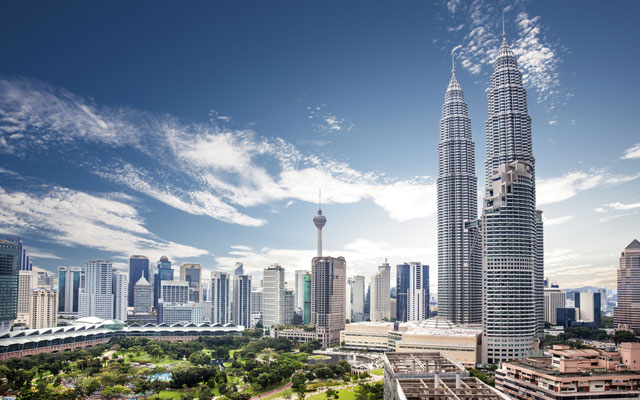

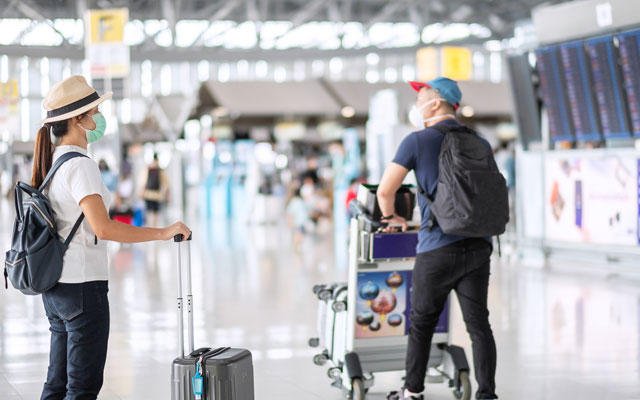

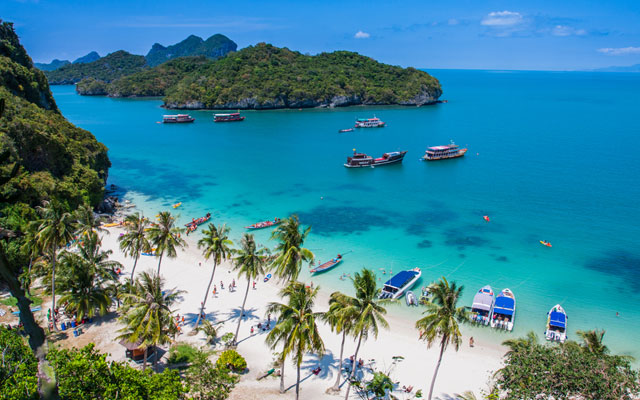








One-third of travel industry experts in Asia-Pacific expect travel to resume to pre-pandemic levels by 2023, according to a new survey by Collinson.
While most travel experts (89 per cent) believe that it is safe to travel, they are pessimistic about the industry’s recovery – whether due to the policies being put in place, wider perceptions of safety, or both. The data highlights that 31 per cent of respondents in Asia-Pacific expect travel to return to pre-pandemic levels by 2023, closely followed by 2024 at 25 per cent, and late 2022 with 17 per cent.
The survey was carried out in April 2021 by Collinson in partnership with Centre for Aviation (CAPA), polling more than 330 C-Suite and senior managerial-level travel experts globally from leading travel industry brands.
Most travel experts in Asia-Pacific surveyed overwhelmingly believe that it is now safe to travel – with 11 per cent saying it is “extremely safe” and 30 per cent saying it is “quite safe”, with a further 48 per cent saying it is “extremely safe provided preventative solutions are adhered to”. However, over half (56 per cent) are “very concerned” at reports of fraudulent Covid-19 test results and vaccination passports.
Global herd immunity is a key driver of the return to normality; and yet, because of public resistance to the vaccine in certain locations, coupled with vaccine inequality – this will take a considerably long time.
When asked what they thought was the most plausible scenario by 2022, 30 per cent of experts in Asia-Pacific believed herd immunity would be reached in the US, the UK and a select few developed nations. By contrast, 27 per cent believed a handful of smaller nations would do so, with the rest of the world including the US and the UK failing to do so. Only 16 per cent believed that most countries in the developed world would achieve herd immunity by next year.
A high number of respondents believed that leisure travel would recover significantly faster than business travel, while in both categories, shorter-haul flights will make a faster comeback.
When asked to select the most plausible scenario in 2022 for the recovery of leisure travel, 27 per cent of respondents in Asia say they expect 41-60 per cent of 2019 levels next year.
Meanwhile, the outlook for business travel markets is weaker than leisure. For short-haul flights, 31 per cent expect to see 41-60 per cent of 2019 levels next year; while 35 per cent of respondents expect longhaul business travel in 2022 will be only 20-40 per cent of 2019 levels.
Most Asia-Pacific respondents (51 per cent) expect that robust testing protocols will remain key to reopening global borders until end of 2022. Almost one-third (32 per cent) of respondents believe robust testing protocols will remain key for the next three years, while just 13 per cent expect testing will be phased out in 2021 in line with the vaccine rollout.
As such, almost half (49 per cent) of Asia-Pacific respondents believe quarantine measures will be phased out by 2022, with a further 11 per cent expecting quarantine measures to be lifted by mid-2021. Yet, 30 per cent still believe quarantine measures will remain in place beyond 2021.
Most Asia-Pacific respondents (58 per cent) expect aviation market access arrangements by governments to evolve at different rates, depending on the region/market through 2021. Over a quarter (27 per cent) expect aviation market access arrangement by governments to “remain the same until at least 2022”, while only five per cent expect access arrangements to “substantially ease” or even just “start to ease” as we go through 2021.
It is, therefore, critical for governments and members of the travel ecosystem to come together and collaborate for the safe return of global travel.
Asia-Pacific respondents overwhelmingly (75 per cent) shared the view that vaccine passports were of “vital importance”, as governments won’t reopen borders without them. Meanwhile, only 18 per cent said they were “not important” as some governments will allow access regardless of digital health documents. A further seven per cent said they were “not relevant” compared to other issues, such as mutual recognition of vaccines.
Asia-Pacific respondents were also overwhelmingly (76 per cent) concerned by reports of fraudulent Covid-19 test results and vaccination passports surfacing, with only six per cent saying they were “not concerned”.
In light of this, Collinson is supporting the development of accredited testing solutions, along with Verifly, CommonPass and IATA, including the piloting of digital health passports aimed at reducing the chance of fraudulent activity – while expediting the safe return of global travel.
“The global travel recovery won’t be immediate, but we do have the unique opportunity to make things better than ever before by working together to evolve current practices,” said Todd Handcock, Asia Pacific president for Collinson.
“This joint research with CAPA has helped shine a light on the areas that require immediate, combined focus and effort from government bodies and private organisations – particularly those in the travel ecosystem – in order to remove remaining barriers and help achieve the safe, long-term return of global travel.”