Airlines in Thailand have halted domestic flights through end of this month, as authorities further tighten travel restrictions in response to several consecutive days of record infections.
On Wednesday (July 21), Thailand recorded 13,002 new Covid-19 cases, up from 5,533 recorded on July 1. Daily death toll also doubled to 108, from 57 on July 1.
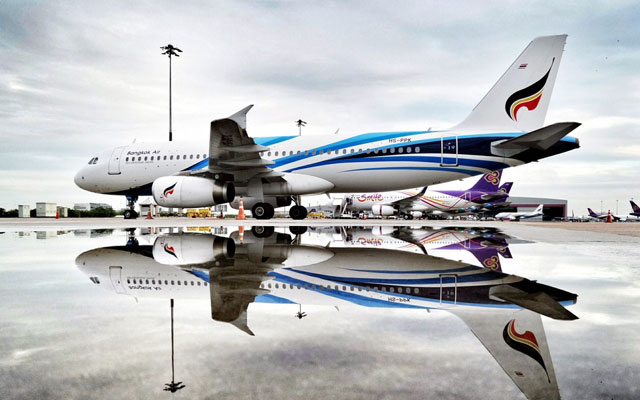
Bangkok Airways among several airlines in Thailand to halt local flights
A professor from Mahidol University has warned that in the worst-case scenario, Thailand could record 32,000 daily cases over the next three months.
In response to the escalating situation, authorities have imposed the highest and strictest control measures on Bangkok and 12 other dark-red zone provinces, including a nighttime curfew and a ban on travel outside those areas. The new measures which kicked in yesterday (July 20) will last until August 2.
The Civil Aviation Authority of Thailand has announced that domestic flights to and from Bangkok and other provinces classified by the Thai government as at high-risk from Covid-19 will be suspended from today.
Six member airlines of the Thai Airlines Association (TAA) have announced flight changes and cancellations.
Nok Air has cut all flights to and from Don Mueang International Airport, from today until month-end. Meanwhile, THAI Smile has suspended services on all domestic routes from today until August 3.
Thai Vietjet Airlines and Thai Lion Air have also stopped serving domestic routes from today through August 1 and 3, respectively. Last week, Thai AirAsia announced that it will suspend all domestic services starting today until July 31.
Bangkok Airways has also paused some flights on the Bangkok-Koh Samui route from today. It will postpone flights planned to operate next month on other routes including those from Bangkok to Chiang Mai, Phuket, Sukhothai, Lampang, and Trat.
However, the airline will continue operating three daily Bangkok-Koh Samui services and four weekly Koh Samui-Phuket flights to support the Sandbox campaign.
Puttipong Prasarttong-Osoth, president of the TAA, which was formed early this year, has called on the government to provide financial support to help airlines tide through this period.
Currently, seven TAA members (including Thai AirAsia X) are grounding more than 170 planes but still need to pay as much as 900 million baht (US$27,380) per month for staff wages.
Said Puttipong: “Over a year-and-a-half since the outbreak of Covid-19, the seven airlines have done their best to deal with the crisis to stay (afloat). Now, we are calling on the government to process soft loans for (these airlines) as soon as possible as this will be (their) last breath.”
Despite the trying times the prevailing Covid-19 situation has afflicted on tourism businesses in Malaysia, industry stakeholders have stepped up to lend a helping hand to the needy and less fortunate in society.
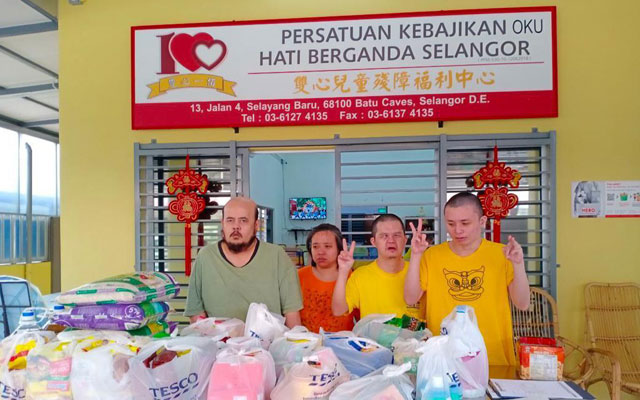
Asian Trails in Kuala Lumpur, for instance, has been passing the hat to raise funds for the less fortunate since the start of the pandemic. The tour agency’s latest efforts saw it raising RM2,500 (US$589) to purchase food items to help 523 orphans, refugees and the disabled in Selangor in May.
Asian Trails conducted an initiative to donate food items to a centre for the disabled in Selangor
Abu Fadzil, head of operations and customer service at Asian Trails, shared: “We are doing our part to make the lives of the less fortunate a little easier. The pandemic, which has resulted in lockdowns, has affected businesses and people’s livelihoods in a very big way. In future, we plan to provide assistance to marginalised communities living in rural areas within and beyond Selangor.
He added that the agency plans to help the indigenous people in Taman Negara once inter-district travel is allowed.
Laili Basir Event Adventure, a tour company that specialises in tours in Semporna, Sabah, is assisting 500 families in the Bajau Laut (Sea Gypsy) community in Semporna to secure basic food supplies, to save them from making a grocery trip to town and being exposed to a higher risk of Covid-19 infection.
Company founder, Laili, shared: “We get donations from NGOs as well as our previous clients who have been with us on trips to Semporna and are sympathetic to our cause.”
The staff and business associates are also volunteering their time to provide basic education to 36 street children in Semporna town, in a collaborative effort with the villages at Kg Bangau Bangau.
Independent and group hotels are also doing their part to help the needy, despite their own internal cost-cutting measures to reduce operational expenses amid the travel standstill.
Cottage by the Sea by Frangipani Langkawi is helping the less fortunate by donating fruit and vegetables grown on its 0.4ha farm. Its founder, Anthony Wong, is also collaborating with local NGOs to identify lower-income families keen to learn the ropes at organic farming from Wong and his team. Wong said: “My philosophy is not to give them a fish to eat for a day, but to teach them how to fish.”
Hotels in Sunway City Kuala Lumpur have also embarked on a number of initiatives to help ease the burden faced by the country’s most at-risk communities.
Early this year, Sunway Resort, Sunway Pyramid Hotel and Sunway Clio Hotel – assisted by the Rotary Club Malaysia and ADAB Youth Garage, a Bangi-based NPO – donated more than 200 home items such as beds and furniture, amounting to over RM10,000, to flood victims in the worst-hit districts of Pahang.
Through Sunway Group’s community initiatives and partnership with the Selangor Youth Community, items were also donated to several orphanages.
Alex Castaldi, senior general manager of Sunway City Kuala Lumpur Hotels, shared that in another of the group’s initiatives, food items were donated to around 30,000 Malaysians during the holy month of Ramadan and Hari Raya. Beneficiaries include those in the lower-income category, Covid-19 frontliners, senior citizens and their caregivers, as well as prison inmates across the Klang Valley, Penang, Perak, Johor and Kelantan.
In conjunction with World Hand Hygiene Day in May, hotels in Sunway City Kuala Lumpur also donated 1,000 handmade bars of repurposed soap to inmates at Sungai Buloh Prison.
Michael Tang has joined Dorsett Putrajaya in Malaysia as general manager.
In his current role, Tang has been tasked with ensuring the profitability and sustainability of Dorsett Putrajaya’s operation, a role he takes on during this challenging period of Covid-19.
The seasoned industry professional has over 25 years of hospitality experience, and is no stranger to group, having been the general manager of Upper View Regalia Hotel, Kuala Lumpur since 2018; a hotel owned and managed Mayland Group of Companies and affiliated to Dorsett.
The Malaysian first began his hospitality career in 1996 in his hometown in Penang with the Casuarina Beach Resort, where he learnt sales and marketing. In 2001, he took up his next sales position with Equatorial Cameron and was based out of Kuala Lumpur.
Other positions he has held include associate director of sales for Concorde Kuala Lumpur, then a stint in Berjaya Hotels & Resorts where he took charge of four of the group’s properties, and HPL Hotels & Resorts as director of sales & marketing.
Outrigger Hospitality Group has completed its purchase of the Manathai Hotels and Resorts brand, inclusive of three beach resorts in southern Thailand.
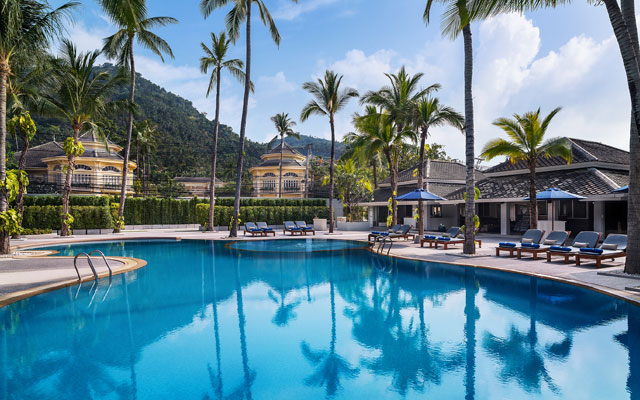
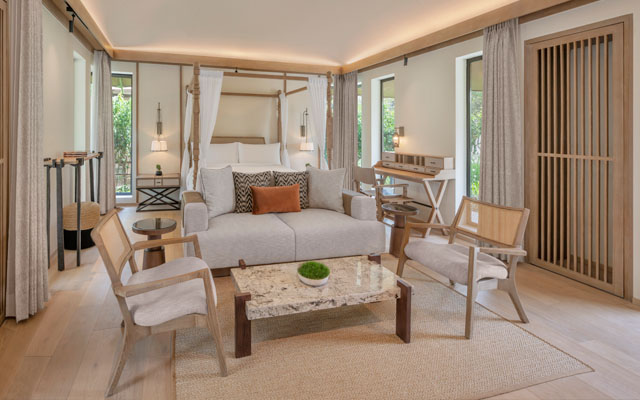
The former Manathai Koh Samui, Manathai Khao Lak and Manathai Surin Phuket will be refreshed, before rebranding and reopening by year-end as Outrigger Koh Samui Beach Resort, Outrigger Khao Lak Beach Resort and Phuket Manathai by Outrigger, respectively. The three properties have a combined total of 372 keys.
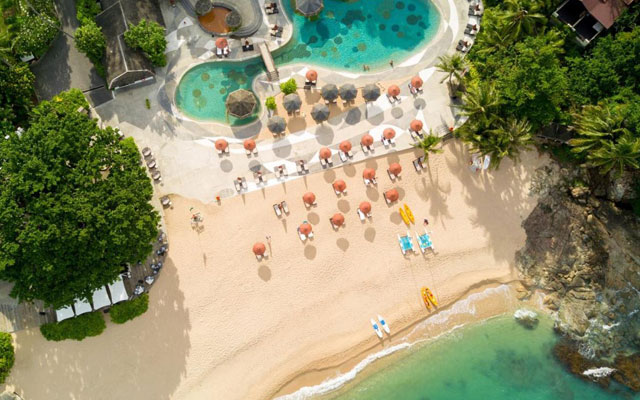
Following refurbishment, Outrigger Koh Samui Beach Resort will reopen to guests year-end
The 148-key Outrigger Koh Samui Beach Resort is located on the quiet sands of Lamai Beach on the east coast of Thailand’s second-largest island, which is a 70-minute flight from Bangkok and 55 minutes from Phuket. The property includes 34 suites, a spa, three restaurants, a kids’ club and facilities for weddings and events.
In Khao Lak, a 75-minute drive north of Phuket airport, the 158-key Outrigger Khao Lak Beach Resort sits on Bang Sak Beach, a long stretch of fine sand coastline with uninterrupted views of the Andaman Sea. The property’s room portfolio includes 12 suites and villas. There are two restaurants, a bar, a pool with ocean views, and a kids’ club.
In Phuket, 30-minutes south of the international airport, the Phuket Manathai by Outrigger is a 66-room boutique property on the edge of the powder white sands of Surin Beach. Thirty-seven of the rooms are suites. The property features one main restaurant, a pool bar, and spa.
Preferred Hotel Group has unveiled a series of enhancements to its I Prefer Hotel Rewards loyalty programme, including all-new membership tiers, expanded earning and redemption options, and a Refer-A-Friend bonus offer.
With the addition of the two new membership tiers – Explorer and Authority – member benefits for the existing Insider and Elite tiers have also been revised.
Preferred Hotel Group updates loyalty programme with new tiers and more benefits; The Tongsai Bay pictured
New Insider members (0-24,999 points) automatically receive Insider status upon enrolment, earning points for every eligible stay and accessing benefits, room upgrades, complimentary Internet, a Beyond Green Stay Benefit Bonus, and digital access to Preferred Travel Magazine.
The new Explorer tier (25,000-49,999 points) offers all Insider benefits, a welcome amenity, and 20 per cent bonus points earning per eligible stay.
Elite members (50,000+ points) will enjoy all benefits of Insider and Explorer memberships plus 50 per cent bonus points earnings, a digital anniversary gift, and a F&B offering.
The new Authority tier (invite-only access) includes all Insider, Explorer, and Elite benefits, in addition to complimentary daily breakfast for two, concierge lounge access, a dedicated reservation line, and the ability to gift Elite status to three friends per calendar year.
Additionally, members now also have the option to use their points to book Reward Nights. For as little as 15,000 points per night, members can book stays at a selection of participating properties across North America.
As well, through the loyalty programme’s new Refer-A-Friend bonus initiative, members can receive points by referring friends and family to I Prefer by sharing a unique referral link via social, email or messenger.
Members earn 1,000 bonus points for each new sign-up, with bonus points also extended to each new member. The 1,000-point bonus is also being offered to travel advisors who onboard new members to the programme.
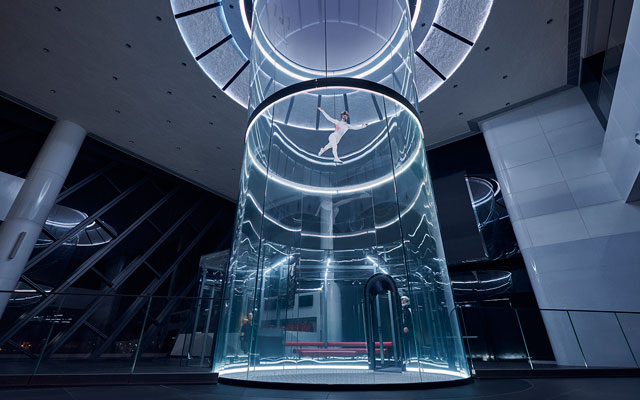
GoAirborne has soft opened its first indoor skydiving centre, featuring a 15m tall, competition standard wind tunnel, within the Lisboeta Macau integrated resort.
Guests will be able to experience the true free-fall sensation of skydiving from 3657-914m in the state-of-the-art facility that has been designed to suit everyone from first-timers to professional skydivers.
GoAirborne Macau features an international competition standard wind tunnel
Upon arrival at GoAirborne, guests will complete a check-in to an experiential area where they will be outfitted with professional flight gears, and go through a pre-flight training session before their actual skydives.
Each GoAirborne experience lasts approximately 90 to 120 minutes, and is supervised at every step by highly trained and internationally certified tunnel instructors. This allows everyone from as young as four years old to experience going airborne in a safe, all-weather controlled wind tunnel that is fully air-conditioned.
First-timer packages available include The Teaser Package; The GoAirborne Package, where flyers double down on the fun; and the Trial Training Package. The wind tunnel is outfitted with high-speed cameras to record photos and videos that are available for visitors to purchase.
Starting from MOP4,000 (US$500), memberships are available for enthusiasts who want to try indoor skydiving as a sport, or professional flyers who are looking to improve and train under the coaching of GoAirborne world champion trainers. Members enjoy exclusive benefits as well as savings of more than 60 per cent.
Education tours, private parties and corporate activities will also be available for booking soon.
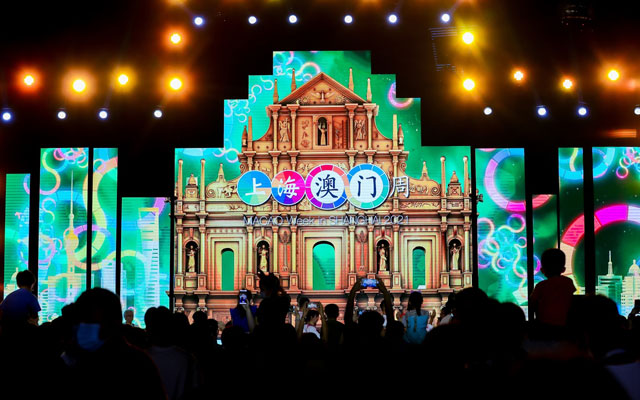
MGTO brought the vibrance of Macao right to Shanghai’s Yuanmingyuan Road Pedestrian Street
In a big show of all the exciting experiences Macao has to offer, the Macao Government Tourism Office (MGTO) threw a recent mega party along Yuanmingyuan Road Pedestrian Street at Waitanyuan, Huangpu District in Shanghai.
The Macao Week in Shanghai, held from June 3 to 7 this year, brought together 40 different enterprises and businesses to showcase the territory’s tourism, trade and commerce, culture and creativity, sports, entertainment and many more “tourism +” dimensions.
Some 300,000 visitors enjoyed 117 sessions of artistic and cultural performances, such as dragon and lion dances, Portuguese folk dances, and Wing Chun martial arts demonstrations performed by the Inventory of Intangible Cultural Heritage of Macao, as well as fun entertainment provided by the lovable Macao tourism mascot, MAK MAK, along with Macanese singers and music band Tuna Macanese.
The mapping shows were a crowd-puller
Another stunning element in the line-up was a series of mapping shows that were projected on the façade of the Gothic-style Union Church, bringing sights of Macao right before the eyes of Shanghai residents.
To spur Shanghai residents into travel planning, some RMB110 million worth of special travel deals were offered in the form of air tickets, hotel accommodation, dining and other tourism products for sale at the roadshow and supporting platforms during the Macao Week in Shanghai.
Harnessing multiple channels
In support of Macao Week in Shanghai, MGTO utilised various online and offline channels across the mainland. Information was distributed through official accounts on WeChat, Weibo, Xiaohongshu and Douyin, as well as TV, newspapers, travel apps and more.
Sixteen KOLs specialising in travel, lifestyle, culture, gastronomy and other fields conducted 13 livestreams and posted content on the event on different platforms, such as Yizhibo and Trip.com. These livestreams garnered 44.36 million live views and playback throughout the event, while the hashtag #MacaoWeekinShanghai attracted over 40 million pageviews on Weibo.
The roadshow also earned extensive live coverage by Macao and mainland China media.
Multiple draws, one destination
Roadshow visitors were invited to explore Macao’s multifaceted draws through various zones: an overview of Macao and tourism events; Macao’s World Heritage, Intangible Cultural Heritage, Macao Good Shop; MAK MAK Shop; Macao’s sport events; trade, commerce and economy of Macao; and a showcase of Macao’s tourism industry presented by integrated tourism enterprises and airline company.
Lively Portuguese folk dances were among 117 artistic and cultural performances that were put up during Macao Week in Shanghai
Visitors also enjoyed a literal taste of Macao through the elaborate Macao Week in Shanghai – Taste of Macao Food Promotion. The gastronomic presentation, created by MGTO, Bellagio by MGM Shanghai and MGM Macau, spotlighted Macao’s UNESCO Creative City of Gastronomy status. Through the deft hands of MGM Macau’s head chefs Tiago Reis and Lou Kam Meng, 12 Macanese and Portuguese delicacies were dished out at Café Bellagio, located within the hotel Bellagio by MGM Shanghai.
Chef Lou joined travel KOLs in an interactive live broadcast on June 4 to introduce Macanese and Portuguese dishes, earning even more eager eyeballs.
Visitors and participants accessed RMB110 million worth of special travel deals in the form of air tickets, hotel accommodation, dining and other tourism products
Alongside the roadshow, Macao’s business events prowess was played up through the Macao Tourism and MICE Presentation Seminar on June 4. Organised by MGTO and the Macao Trade and Investment Promotion Institute, the event connected some 150 delegates from Shanghai and Macao’s tourism and MICE industry.
The success of Macao Week in Shanghai is expected to carry through other major regions and cities in mainland China, with similar destination roadshows planned for Xiamen, Tianjin, Chongqing, Chengdu and Taiyuan.
The 9th Macao International Travel (Industry) Expo featured conferences, pre-scheduled meetings, destination presentations, live sales as well as retail opportunities
Visions of Macao
Macao’s presence in the marketplace continues to shine through two major events that kicked off in July.
The 9th Macao International Travel (Industry) Expo took place on July 9 to 11 in a hybrid event format. Supported by the Ministry of Culture and Tourism of the People’s Republic of China, organised by MGTO and coordinated by the Macau Travel Agency Association, the Expo featured five major highlights and “tourism +” elements, and provided a platform for tourism and related business to deepen connections, conduct trade discourse, and identify opportunities for mutual collaboration and growth.
In his welcome address, secretary for economy and finance, Lei Wai Nong, expressed hopes that industry participants could ride on the Expo to explore cooperation opportunities and develop innovative travel products in preparation for the resumption of international travel.
Man Hongwei, secretary of the Bureau Party Committee and inspector at level 1 of the Bureau of International Exchanges and Cooperation of the Ministry of Culture and Tourism, also took the chance to spotlight Macao and Mainland China’s ongoing efforts to rebuild and revitalise tourism exchange.
The in-person component of the Expo was held at The Venetian Macao’s Cotai Expo, occupying 23,000m2 and featuring 708 booths held by 394 exhibitors. Besides 341 buyers from China and across the world, the Expo also welcomed members of the public.
Participants benefitted from a pre-scheduled appointment system across 14 days, a Cloud Contract-signing tool, Cloud Live Promotion interactive destination promotion resource, and Cloud Live Broadcast function that delivered live sale with influential streamers from the mainland and Macao on popular e-commerce platforms.
The Expo also marked the launch of MGTO’s Official Flagship Store on Ctrip App, during which an e-commerce workshop was conducted by Trip.com, as well as the debut of the Incubation Plan for Macao’s KOL in Tourism.
Art Macao will bring enterprises and artists from all over the world together in Macao
Meanwhile, between July and October, Macao will transform into a vibrant gallery and art garden, thanks to Art Macao: Macao International Art Biennale 2021. The international event brings government agencies, enterprises and artists from all over the world to create visual arts under the theme, To Create for Well-being, and to underline Macao’s reputation as a world heritage city. The show features several sections: Main Exhibition, Special Exhibition of Resorts and Hotels, Public Art Exhibition, Creative City Pavilion, Selected Works by Local Artists and Collateral Exhibition, and more.
For more travel updates and inspirations, follow Mak Mak Macao (on Instagram), Stopover Macao (on Facebook), and Macao Moments (on Twitter), or visit the Macao Government Tourism Office website.
Dining-in at F&B establishments will be suspended and group sizes for social gatherings will be reduced from five to two, as Singapore returns to Phase 2 (Heightened Alert) to stem a surge in Covid-19 community cases.
The tightened measures will kick in from Thursday (July 22) until August 18 and will supersede those that were introduced on July 19, said the Ministry of Health (MOH) in a press release. It added that a review of the measures will be done two weeks after implementation, and will be adjusted further based on the infection situation at that time.
Dining-in will be banned at F&B establishments in Singapore from July 22 until August 18
Both indoor and outdoor dine-in F&B establishments, including hawker centres and food courts, will only be able to offer takeaway and delivery options. The number of distinct visitors per household per day will also be capped at two, from the current five.
The Covid-19 multi-ministerial task force decided not to differentiate the measures for those who are fully vaccinated, but will consider doing so when vaccination rates are higher or when the situation has stabilised, a Channel NewsAsia report quoted task force co-chair Gan Kim Yong as having said during a press conference on Tuesday.
Work-from-home will continue to be the default at workplaces, and employers must ensure that employees who are able to work from home do so, said MOH.
Strenuous indoor exercise classes, or strenuous individual and group indoor sports and exercise activities, will also have to cease.
Event sizes will also be scaled down and event size caps will be reduced “to minimise the likelihood of large cluster formations”, said MOH.
For live performances and MICE events, up to 100 persons may be allowed with pre-event testing, and up to 50 persons without testing. For spectator and participatory sports events, up to 100 persons may be allowed with testing. Testing would not be required if there are 50 persons or less.
Attractions will be required to reduce their operating capacity to 25 per cent from the current 50 per cent. Indoor and outdoor shows may proceed with up to 100 persons with testing, and up to 50 persons without testing.
Museums and public libraries will be allowed to operate at a reduced capacity of 25 per cent.
Cinema halls may accommodate up to 100 persons with testing, and up to 50 persons without testing. The prevailing group size of two applies, and food and beverages may not be sold or consumed in the cinema.
The multi-ministry task force had earlier announced a tightening of community measures under Phase 3 (Heightened Alert) from July 19 to August 8, in response to growing Covid-19 clusters at KTV lounges and nightclubs. Since then, more clusters linked to a wholesale fish market and hawker food centres have emerged.
MOH said that unlike the KTV cluster, the current wave of infection affects a wider spectrum of the population including many seniors.
“At the current rate of transmission, it is likely that infection cases will rise sharply, and many people in the community will catch the virus. While close to 50 per cent of the population have completed their vaccination regimen, there remains a number of vulnerable individuals, such as our seniors, who have yet to take up vaccination,” the ministry said.
“Unvaccinated individuals are at higher risk of being infected, and higher risk of being seriously ill if infected. Hence, in the meantime, we must act decisively to contain the current outbreak and minimise the risk of our hospital capacity being overwhelmed, while we race ahead to vaccinate those who have not completed or started their vaccination.”
According to MOH, Singapore remains on track to having two-thirds of its population complete the vaccination regimen by National Day.
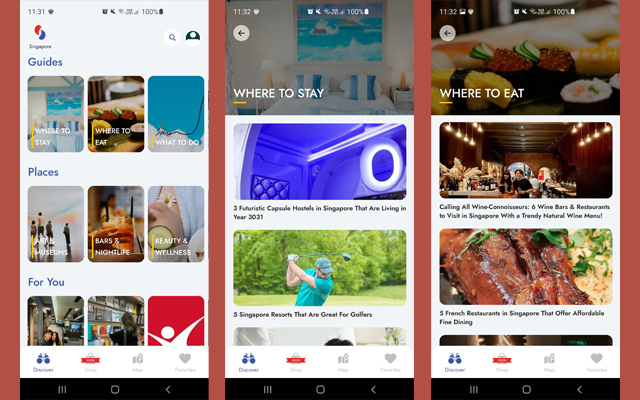
Singapore-headquartered travel tech company Smoove Xperience has launched a new eponymous AI-powered app that aims to provide a seamless travel experience through curated guides and user-generated content, itinerary planning tools, and local deals.
Unlike most travel apps that are more localised and only address certain aspects of the journey, the “traveller-centric” platform not only focuses on improving every aspect of the travel journey, but also curates hyperlocalised travel guides, deals, and promotions.
Francis Ong, executive chairman of Smoove Xperience, said that the idea to launch an all-in-one travel app was born after a difficult and complicated trip to China in January 2020, shortly before Wuhan went into the world’s first coronavirus lockdown.
Following his return to Singapore from Beijing, Ong and his team started discussing the idea during Singapore’s circuit-breaker period last April.
Ong explained: “If you have ever been to China, you will understand the challenges we, as travellers, have to go through during our trips. Taking a cab to the hotel, finding a good restaurant nearby, learning about interesting places to visit, and most importantly, using their local digital payment systems.
“A few of my local friends tried helping me by recommending at least eight to 10 different apps, and you can probably imagine what a headache it was for a trip lasting just a few days. With this challenge in mind, we envisioned what the next generation of travel apps would be like.
“We realised that this is a very common problem not only for those going to China, but travellers going to any country. That is also how our company slogan ‘Your local companion’ was born.”
Soft launched in January 2021, the Smoove Xperience app also provides simple navigation and transportation options, easy F&B bookings, tax refunds, and smooth digital payment via its multi-currency e-wallet.
Other in-built tools include the option for business travellers to book a workstation or meeting room at their destination, and the facilitation of processes such as pre-departure Covid testing and e-visa application for medical tourism purposes.
Currently, the lifestyle travel app has more than a dozen partners onboard, including prominent names such as China T-Union, a nationwide contactless card initiative, and online maps provider Here Maps.
The app also provides the latest and most accurate epidemiological data of the user’s chosen destination, by working with an undisclosed third-party vendor; and showcases a range of medical travel services offered by its multi-country medical partner.
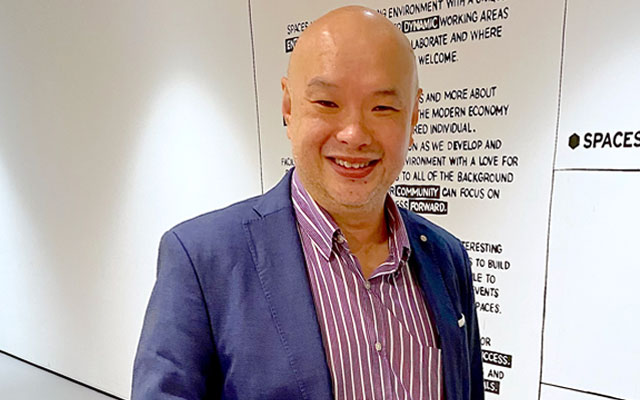
Ong: Single digital platform that serves all traveller needs key to post-pandemic travel industry
With the pandemic having converted many people to digital natives who rely on digital tools for everything, the travel market must adapt to change, said Ong.
“That is why we believe that a single digital platform addressing all the needs of a traveller will be key to the post-pandemic travel industry. We aim to be the new breed of innovators, using this opportunity to modernise and push the travel industry towards new frontiers,” he said.
The app caters to a variety of travellers – from business and family travellers to FITs – and is focused on the travel industry in China and South-east Asia.
As the world gradually recovers from the pandemic, Ong foresees that the Asia-Pacific region will be among the first to return. In-region travel will also likely be at the centre of the recovery, where according to an ILTM report, an estimated 57.5 per cent of Asia-Pacific traveller outbound spend will be captured within the region.
Ong noted that Asia-Pacific has been the fastest-growing wealth region, with China also being one of the largest contributors to travel-related spendings – not just in Asia, but across the globe.
He said: “Given our team’s familiarity with China and the South-east Asian market, we chose to start with these markets first, and have plans to expand to the wider Asia-Pacific region and beyond.”
Sri Lanka is now allowing fully vaccinated international travellers to enter the country without undergoing quarantine, as the country looks to restart its tourism engine.
Vaccinated tourists are required to only spend 24 hours in a dedicated hotel facility to await their on-arrival PCR test results. Once they test negative, they will be allowed to leave the hotel and go about their activities. On the other hand, non-vaccinated tourists have to undergo a 14-day quarantine in a safe and certified hotel.
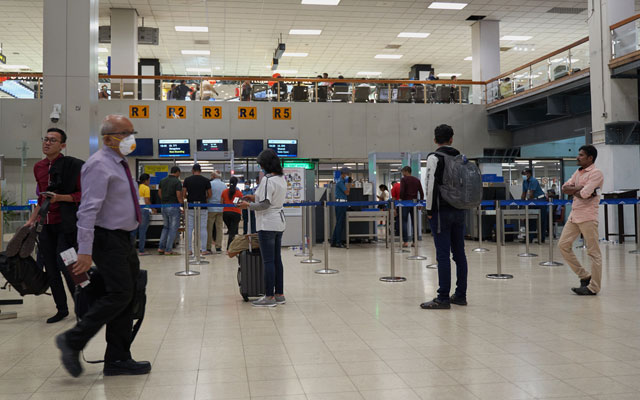
Sri Lanka eases quarantine rules for fully vaccinated foreign visitors; Colombo Airport in Sri Lanka pictured
Meanwhile, tourism authorities are forging ahead with a campaign to inoculate all tourism industry workers by October. Sri Lanka’s vaccination rollout campaign is also speedily moving ahead, with plans to complete vaccinating all those above 30 years of age by September.
Kimarli Fernando, chairperson of Sri Lanka Tourism, the state tourism promotion agency, said that with the success of the national vaccination rollout programme, Sri Lanka is ready to welcome fully-vaccinated foreign travellers while ensuring the safety and security of local communities.
Sri Lanka Hotels Association president Sanath Ukwatte, while welcoming the relaxation for fully vaccinated visitors, urged the authorities to further ease restrictions at restaurants which are now limited to 25 per cent capacity.
The national tourism agency is also working together with national carrier SriLankan Airlines to launch a buy-one-get-one-free air ticket campaign next month across 18 key markets. They are the UK, Germany, Australia, Singapore, Malaysia, South Korea, Japan, Kuwait, UAE, Qatar, Bahrain, Oman, Saudi Arabia, Kenya, Pakistan, Bangladesh, India and the Maldives, according to sources at the national carrier.
As of June 30, 16,908 tourists have visited Sri Lanka this year, a decline of 96.7 per cent over last year where 507,311 tourists visited the country from January to March 18 (the day the airport was closed to inbound travellers owing to the pandemic).
According to official data, Kazakhstan, Ukraine, Germany, China and India were Sri Lanka’s top five source markets from January to June this year. Leading the pack was Kazakhstan which contributed to 19 per cent of the total traffic, followed by Ukraine (16 per cent), Germany (nine per cent), China (seven per cent) and India (six per cent).
Sri Lanka Tourism’s Fernando said that the CIS markets are “low-hanging fruits” as the countries have no travel restrictions and have limited warm weather destination options currently.
Last week, the government relaxed Covid-19 restrictions, allowing restaurants, bars, shopping malls, wildlife parks and other places of tourist interest to open amid the steady rollout of the vaccination drive.
As of July 18, Sri Lanka recorded 283,512 Covid-19 cases and 3,733 deaths.













Outrigger Hospitality Group has completed its purchase of the Manathai Hotels and Resorts brand, inclusive of three beach resorts in southern Thailand.
The former Manathai Koh Samui, Manathai Khao Lak and Manathai Surin Phuket will be refreshed, before rebranding and reopening by year-end as Outrigger Koh Samui Beach Resort, Outrigger Khao Lak Beach Resort and Phuket Manathai by Outrigger, respectively. The three properties have a combined total of 372 keys.
The 148-key Outrigger Koh Samui Beach Resort is located on the quiet sands of Lamai Beach on the east coast of Thailand’s second-largest island, which is a 70-minute flight from Bangkok and 55 minutes from Phuket. The property includes 34 suites, a spa, three restaurants, a kids’ club and facilities for weddings and events.
In Khao Lak, a 75-minute drive north of Phuket airport, the 158-key Outrigger Khao Lak Beach Resort sits on Bang Sak Beach, a long stretch of fine sand coastline with uninterrupted views of the Andaman Sea. The property’s room portfolio includes 12 suites and villas. There are two restaurants, a bar, a pool with ocean views, and a kids’ club.
In Phuket, 30-minutes south of the international airport, the Phuket Manathai by Outrigger is a 66-room boutique property on the edge of the powder white sands of Surin Beach. Thirty-seven of the rooms are suites. The property features one main restaurant, a pool bar, and spa.