

ASM releases 2021 predictions on air travel recovery

Global route development consultancy ASM has made 10 predictions for 2021, including forecasts that consumer economic pressure will restrain air fare rises and low-cost carriers (LCC) will make major market share gains.
ASM, which organises the Route events and also provides data analytics and training services, is optimistic 2021 will mark the start of “the recovery in earnest”.
Managing director David Stroud who produced ASM’s reports in its Route to Recovery Route Development for 2021 series, said: “Of the 10 predictions*, I think the point about testing regimes replacing quarantine will have the most impact in Asia.
He continued: “As we move through 2021, my belief is that testing regimes will improve further and as vaccination programmes continue to roll out, the border restriction will progressively ease and markets will open more, driving routes and traffic.”
ASM’s tracking of border restrictions shows only six per cent of corridors that are open do not require a quarantine or self-isolation period out of a total of 49,266 intra-state borders.
Stroud noted projections for next year show global passenger traffic reaching 71 per cent of that for 2019, because fast forward to this time next year, testing capabilities should have advanced to deliver on accuracy, speed and unit cost.
“When this is achieved, testing will be a natural part of the passenger journey and will reduce the impact of time and capacity demands on infrastructure,” he added.
On the changing traveller mindset, Stroud commented: “In 2021, passenger trust and confidence will move away from the issues surrounding health and wellbeing, to the airline schedule itself, with travellers asking – ‘Will my booked flight stay in place? Will airlines need to change operations last minute, altering flight times, even cancelling? What happens to my booking if this happens, and, most important, how safe is my money?’”
Passenger demand will be driven by the two forces of personal and corporate economics, he noted, and whether consumers have enough disposal income to commit to fly for VFR or vacation purposes, and if businesses either have the budgets, or given the prevalence of Teams and Zoom, have the inclination to spend on business travel.
Stroud said: “We predict that fundamentally those airlines that can keep fares low and competitive will secure more and more share of the market going forward, and the immediate future looks stronger for the LCCs.
“While the LCC market in Asia may not have the same market shares as in Europe and the US, all countries and markets have been growing their LCC presence, and aside from specific LCCs, many of the legacy carriers have been developing LCC brands,” Stroud said. He also noted that LCCs have been the most agile in trying to reopen markets in 2020 and were best equipped to focus on operating cost reduction and less fixed with regard to operating bases, and less wedded to connectivity.
Also, aircraft fleet developments – the Boeing 737 Max, the Airbus 321 and their engine variants and long-range models – are more suited to LCC operations, with reduced unit costs and flexibility around sector lengths, he pointed out.
If consumer and business spending power is reduced, they will gravitate to lower fares, Stroud said, adding: “All of these factors for me are why LCCs will make more gains in markets than legacy carriers, even though big trunk routes and connecting hubs should be strong in the aftermath of the pandemic.
“This trend plus the reasons above will accelerate in Asia, and aircraft like the A321LR is also suited to the longer range required in many Asia markets.”
*The following are ASM’s 10 predictions for 2021:
• A number of vaccination programmes will start to be rolled out, raising consumer confidence
• Test regimes will replace quarantine protocols, as such, borders will start to open
• There will be further consolidation of airlines and more airlines globally will be under state ownership
• There will be consolidation of airports, some closures and mothballing
• Tourism will be the driving force of air travel. Summer 2021 will be the season when a new baseline of schedules and operations is set
• Traffic demand will surge through the Summer vacation period, nearing 2019 levels
• Physical events, conferences and exhibitions, will re-establish themselves and become the initial catalyst for the re-emergence of business travel
• Consumer economic pressure will restrain air fare rises
• Low-cost carriers will make major gains of market share
• The airline-airport-destination relationship will bond more closely together, driven by the collective need to collaborate to secure traffic recovery
New tourism minister for Indonesia

Indonesia President Joko Widodo’s cabinet reshuffle has produced six new ministers and five new vice ministers, including a fresh minister of tourism and creative economy/head of Tourism and Creative Economy Board.
Sandiaga Uno, a politician and former vice governor of Jakarta with a prominent business background, has taken over from Wishnutama Kusubandio, who has held the post since October 2019.

Speaking during the hand-over ceremony on December 23, Sandiaga revealed that his first assignment from the president was to have the country’s five super-priority destinations ready for tourism business, in terms of infrastructure, cultural attractions, service readiness and talents, within a year.
His second assignment was to create calendar of events, ranging from small scale to national and mega world-class events.
Meanwhile, Sandiaga shared that Indonesia vice president Ma’ruf Amin had emphasised on the importance of making the creative economic sector the engine of tourism development and job creation. As such, product innovations like halal tourism and village tourism were areas of focus for the vice president.
While Sandiaga acknowledged that tourism recovery would be very challenging amid the pandemic, he expressed commitment to the ministry’s development programmes and to overcoming the crisis.
To achieve his goals, he has developed a strategy of technology innovation and will be focusing on health and safety as priority, and will be collaborating with all related parties.
Opportunity in crisis

Even as the pandemic rages on, Santika Indonesia Hotels and Resorts (SIHR) continues to seize new growth opportunities, positioning itself to capitalise on an eventual upturn.
With an eye on long-term potential, this year, the hotel chain signed two new hotel management contracts, and is on the prowl for more, according to Sudarsana, its corporate general manager of business development and marketing communications.
He reasoned: “It takes two to three years to develop a hotel so the idea is to build the hotels during this (lull) period and have them ready when business returns.”
The hotel group also plans to open two out of six hotels targeted this year, with Hotel Santika Bukittinggi in West Sumatra welcoming guests on October 18, followed by Amaris Hotel Tasikmalaya in West Java on November 11.
Sudarsana let on that hotel occupancy in the city of Bukittinggi is still above 50 per cent, while its existing Hotel Santika Tasikmalaya is faring well, allowing room for growth.
Sudarsana added that the company, which now manages 113 hotels, is on track to operating 150 hotels by 2024.
As more consumers turn to digital platforms to meet their needs amid the pandemic, SIHR has shift its focus online in a bid to grow direct booking sales from corporate and FIT travellers.
“We have done two online travel fairs during this pandemic where MyValue (the hotel’s loyalty programme) members can buy room vouchers which are valid up to May 2021. The response has been positive,” he said, adding that the programme targeted the domestic market to generate cash flow for the group’s properties.
In 2019, SIHR launched MySantika, an online booking app available for its MyValue members.
“We want to focus and make it our new unique selling point (USP), in addition to the Indonesian hospitality service and our authentic local cuisine which have been our USP over the years,” he said.
How travel agents can seize the moment this holiday season


Brought to you by Amadeus
As 2021 fast approaches, there are many challenges and unknowns that still lie ahead with Covid-19. Even with the advent of a vaccine, there is no clear date of when international travel will resume, with the delay of bubbles between countries like Hong Kong and Singapore underlining a hurdle to travel recovery.
What we do know is that millions of travellers are out there dreaming of their next adventure. The majority of travellers in Asia-Pacific are steadfast in their commitment to resume their leisure travels by 4Q2021, with 70 per cent indicating a “strong desire” to travel domestically once restrictions ease.
From our recent Destination X: Where to Next survey, we have a very clear picture of what travellers are willing to consider at the moment. We can also see the potential for travel sellers to materialise the bigger role in helping consumers navigate through all the twists and turns of their trip planning experience.
Here are some insights for travel sellers looking at new opportunities this holiday season:
- Travel planning is alive and strong
Relationships are a significant driver fueling the desire to resume travel for travellers in the Asia-Pacific region. More than half of travellers want to reconnect with family or friends, whether in familiar or unfamiliar surroundings. Only 8 per cent of travellers surveyed expressed interest in group, or guided tour packages of more than 50 people.
Travel spontaneity is also a thing of the past, with majority of Asia-Pacific travellers seeking thoughtful guidance over a period of time before they book their next getaway. For travel sellers, this means incorporating multi-touch or multi-channel to help nurture or shape their customers’ future travel purchase decisions.
- Covid-19 is top of mind
The severity of the Covid-19 health crisis at the destination is now one of the most critical factors influencing purchasing decisions for travellers. More than two-thirds of travellers rank the health and safety measures of airports, airlines and hotels highly when it comes to planning trips.
As the pandemic poses a conundrum to commercial flights, travel sellers will need to work with airlines to demonstrate that it is safe to travel again. New technology such as mobile boarding passes; coupled with policies like mask compliance, and removing middle seats, could help to boost confidence.
- Timing and support is everything
As travellers contemplate exploring new destinations again, their trip planning complexity is becoming increasingly challenging. New regulations around quarantines, visas and more, plus everchanging flight availability requires a greater pool of knowledge, experience and time to ensure the best outcome.
Our survey shows that travellers in Asia-Pacific now place a higher premium on problem solving. Travel sellers that can provide support and look for opportunities to continuously engage customers with hyper-personalised recommendations can help mitigate unforeseen issues and build trust and loyalty over time.
This holiday season, travellers across Asia-Pacific will try and make the most of what they can do to fulfil their holiday needs. Travel sellers that can provide the right information on Covid-19 status and government restrictions and policies in a timely manner, will help the industry rebound in the New Year.
Princess Cruises unveils 35 Japan itineraries for 2022
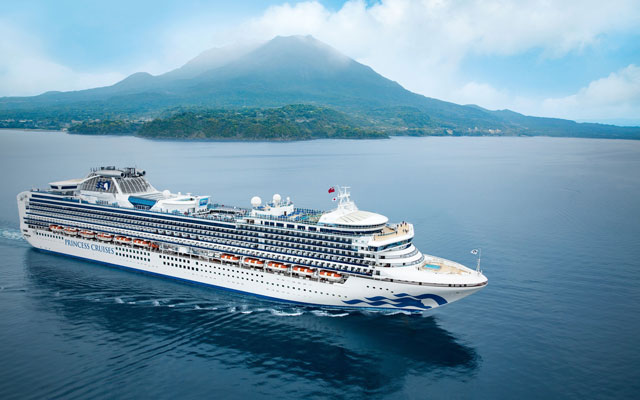
Come summer 2022, Princess Cruises will sail out of Tokyo (Yokohama) and Kobe on diverse itineraries spanning from the southern tropical islands of Okinawa to the northernmost island of Hokkaido.
Now on sale, the cruise line’s 2022 Summer Japan programme offers 35 departures onboard Diamond Princess during May through September 2022, covering 31 destinations across four countries. Cruises range from five to 19 days, featuring 10 UNESCO World Heritage Sites, such as the historic monuments of ancient Kyoto, Buddhist monuments and the Hiroshima Peace Memorial.
For guests with more time to explore Japan, the Highlights of Japan cruise tour combines an eight-, nine- or 10-day cruise with two nights in Kyoto and three nights in Tokyo.
The season offers nine opportunities to visit local festivals, such as Kyoto Gion Festival featuring massive, handcrafted “yama” and “hoko” floats, and Kumano Fireworks Festival showcasing a display of 10,000 fireworks.
Other featured festivals include Osaka Tenjin Festival, Aomori Nebuta Festival, Akita Kanto Festival, Kochi Yosakoi Dance Festival and Tokushima Awa Dance Festival.
In Tokyo, guests can enjoy shopping in the Ginza district or exploring the Imperial Palace plaza. The 2022 season features the maiden port call to Hitachinaka, for access to the shrines and temples of Nikko. Ten ports offer More Ashore late-night stays including Akita, Aomori, Kochi, Osaka and Tokushima on Summer Festival dates.
Guests can also lap up the serenity in Kanazawa’s Kenrokuen Garden, one of Japan’s Three Great Gardens; experience a traditional tea ceremony while overlooking Mt. Fuji; or enjoy a good soak in an onsen (hot spring).
Built in Japan, Diamond Princess offers a cruise experience connected to the local Japanese culture. Guests dine on authentic cuisine at Kai Sushi, soak in a traditional Izumi bath, and enjoy folkloric shows and regional entertainment.
In 2022, Diamond Princess will feature the cruise line’s exclusive Princess MedallionClass Experience, delivering highly personalised service and enabling touchless interactive experiences and entertainment.
ITB China plans two 2021 events
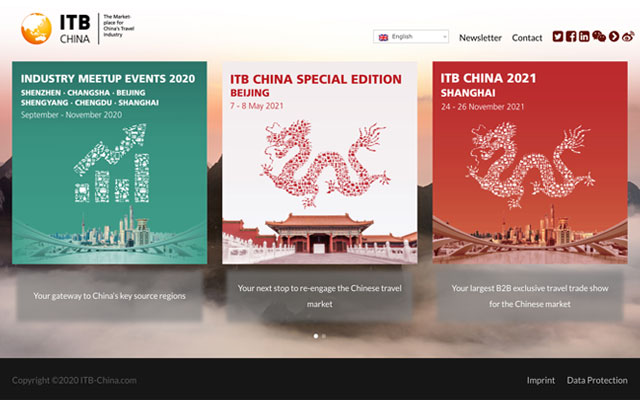
The ITB China organisers will launch an ITB China Special Edition in 2021, a two-day business event which will make its debut in Beijing from May 7-8, delivering an innovative showcase for business exchanges while providing a stage for sharing industry insights for the travel industry.
The newly designed and hybrid event, which is expected to attract 1,500 participants, will feature pre-scheduled meetings with Chinese buyers, networking events as well as a series of content sessions by industry experts, focusing on new traveller demands and travel trends.
Additionally, the ITB China Special Edition will offer suppliers a solution for remote participation with an easy-to-exhibit package. Keynote speeches and panel discussions during the conferences will be accessible to a global audience online through instant live-streaming, with simultaneous AI-based translation in different languages offered for all content sessions.
The announcement of a special edition of the annual trade show follows the premiere of the ITB China Industry Meetup event series in six major cities across China from September to November 2020. It also comes on the back of traveller confidence recovering swiftly in China, with ITB China’s general manager David Axiotis saying that the organisation expects “a promising outlook on cross-border travel and emerging business opportunities” at the time of the event.
Meanwhile, the regular edition of ITB China 2021, alongside its accompanying ITB China Conference, which was originally scheduled for May 13-15, has been postponed to November 24-26.
Set to be held at the Shanghai World Expo Exhibition and Convention Centre, ITB China will keep revitalising business relations between the Chinese and global travel industry, and help global suppliers and Chinese agencies to chart the newly developed travel business landscape in China.
Crowne Plaza expands Thai footprint

InterContinental Hotels Group (IHG) has signed a franchise agreement with long-term partner Kew Green and real estate developer Siamese Asset to expand its Crowne Plaza brand in Bangkok.
Come 2025, the Crowne Plaza Bangkok Rama 9 hotel will open in a prime city location, close to the Thai capital’s new CBD.
The hotel will be located in the mixed-use development, Siamese Rama 9, which also houses high-end apartments, office space and a mall. It will feature dining outlets, meeting rooms, a fitness centre, swimming pool and rooftop garden. The Plaza Workspace, a new take on the traditional hotel lobby, will provide a space for guests to work, meet and socialise.
The signing marks IHG’s first franchise agreement in Thailand, made possible by a joint venture between Kew Green and Siamese Asset. It comes after the signing of Crowne Plaza Bangkok Grand Sukhumvit last month, expanding the brand’s footprint to three hotels in the capital.
IHG currently has 31 hotels in Thailand operating under seven brands: Six Senses, InterContinental, Crowne Plaza, Hotel Indigo, Holiday Inn, Holiday Inn Express, and Staybridge Suites; with another 30 in the pipeline.
The Delivering Group, Valor Hospitality partner to cater for growing white-label hotel management demand in APAC

White-label hotel management specialist, Valor Hospitality Partners (VHP), and Asian hospitality and tourism marketing company, The Delivering Group (DG), have joined forces to help independent Asian hotel properties and chains re-energise their business as the region looks to a gradual improvement in market conditions in early 2021.
Atlanta-based VHP currently owns and operates more than 75 hotels in the US, Africa, Asia and Europe. Based in Hong Kong, DG provides tailored sales and marketing organisational reviews, strategic plans and business solutions for hotels, resorts and tourism companies.
The two companies have signed a global partnership to jointly leverage their services and client bases to provide white-label hotel/resort operational management services as well as sales and marketing support to hotels and resorts across Asia-Pacific and beyond. The alliance will focus on hotels in the Asia-Pacific/Greater China markets, which are likely to be the first to rebound from the pandemic next year.
According to DG co-founder and director Mark Simmons, a growing number of independent hotel owners in Asia wanted to expand under their own brand but needed support to take their business to the next level. “Through our partnership with Valor Hospitality, we can help them get there with clear and cost-effective solutions in operations management and sales and marketing solutions,” he said.
VHP director of operations & business development, Asia, Tomas Kastberg Andersen, added: “We’re keen to tap into the group’s expertise in sales, marketing and distribution to complement the suite of management services we currently provide our hotel clients.”
The alliance with VHP is the latest move by DG to form a coalition of sales, marketing, PR, digital, distribution solutions providers targeting the travel and hospitality sector. In the last three months, the group has signed agreements with AI chat specialist HiJiffy, technology consultancy Cube and tailor-made online booking experts Book Tech.
Simmons, who co-founded DG with industry leaders Joe Cauchi and Mike Yates, said many hospitality and tourism companies have been struggling with the challenge of sourcing the right partners for their business when there were so many different suppliers and platforms to choose from.
He elaborated: “Now we have a friendly, affordable and highly efficient one-stop shop for owners and developers to connect with the leading players in everything from contract and revenue management to sales and marketing, AI solutions, digital marketing and customer engagement – The Delivering Group and our Affiliate Partners.”
Heart of hospitality
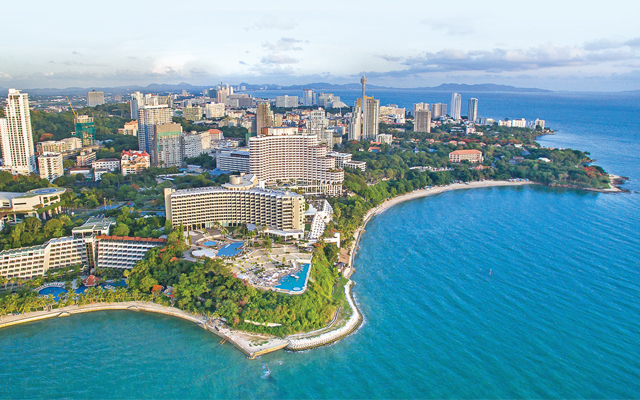
Having been in the business for 46 years, Royal Cliff Hotels Group is no stranger to a tourism downturn and has been agile in developing initiatives that resonate with the current climate.
Take the pandemic for example: the Group collaborated with Thailand’s Ministry of Health and Thailand Convention and Exhibition Bureau to develop a Prevent and Protect programme to ensure safe experiences at its hotels and meeting venues, mirroring directives laid down by World Health Organization’s Centers for Disease Control and Prevention.

Along with pricing adjustments, domestic market campaigns, flexible cancellations, sustainability efforts, and staff training to keep up with health and safety measures, the Group is going the distance to meet the needs of travellers today.
Meanwhile, frequent communications with guests via e-newsletters and social media are vital in expressing the “human touch” in the age of social distancing, shared Maria Gequillana, director of marketing and digital, Royal Cliff Hotels Group and Pattaya Exhibition and Convention Hall (PEACH).
Keeping up to date with evolving consumer demands, Gequillana said Royal Cliff Beach Hotel recently renovated its rooms and facilities, and launched the multifunctional event space, Majestic Lounge at Royal Wing Suites & Spa.
PEACH is also staying competitive by implementing social distancing practices, hardware upgrades, and sustainability initiatives to cater to new business norms as well as the growing demand for hybrid meetings.
A first for Pattaya hotels, the Group also introduced ultra high-speed Internet, Wi-Fi 6, across its properties – an investment that will be appreciated by events today that rely more heavily on live-streaming.







The International Air Transport Association (IATA) has unveiled key design elements of the IATA Travel Pass, a mobile app to help travellers easily and securely manage their travel in line with any government requirements for Covid-19 testing or vaccine information.
Alexandre de Juniac, IATA’s director general and CEO, said: “Testing is the immediate solution to safely reopen borders and re-connect people. And eventually, this is likely to transition to vaccination requirements. In either case, a secure system to manage Covid-19 testing or vaccination information is critical.
“The IATA Travel Pass is a solution that both travelers and governments can trust. And it is being built with data security, convenience and verification as top priorities.”
Scheduled for release in 1Q2021 for Android and iPhone, the IATA Travel Pass will boast three critical design elements:
1. Putting travellers in control of their personal information for top level data security and data privacy. The IATA Travel Pass stores encrypted data including verified test or vaccination results on the mobile device of the traveller, who controls dissemination of information to airlines and authorities. No central database or data repository is storing the information, thereby, ensuring the highest standards for data privacy.
2. Global standards recognised by governments to ensure verified identity and test/vaccine information.
a. Verified identity: A government issued ePassport is used to verify the identity of the user. It also serves to create a digital representation of the user’s passport to allow the information to be sent electronically in a secured way that is linked to their verified identity.
b. Verified test results or vaccine information: Currently, the main vaccination requirement for entry into some countries is for yellow fever. Under the International Health Regulations, this is managed by the “yellow card” or International Certificate of Vaccination and Prophylaxis. The World Health Organization is developing digital standards that will make these vastly more secure and will dramatically reduce fraud. When ready, the IATA Travel Pass will be able to accommodate such new global standards.
Until a Covid-19 vaccine is widely available to the general public, the priority is on Covid-19 testing. Laboratories have well-established safety standards for managing and verifying test results to individuals. IATA is partnering with selected and established laboratories to securely link their test results with the verified identity of the IATA Travel Pass holder.
3. Convenience and biosafety will be enhanced with integration into contactless travel processes. The ICAO CART recommendations for biosafety include the use of contactless travel processes to reduce the risk of virus transmission when documents need to be exchanged in the travel process.
The industry has been developing contactless travel processes as part of a One ID transformation programme for several years. The IATA Travel Pass digital identity management module uses the principles of One ID (which are, in turn, based on ICAO standards). For the passenger, this means that the IATA Travel Pass will also unlock the potential for convenient contactless travel processes from check-in to boarding.
IATA is developing the IATA Travel Pass in four independent modules that can interact with each other. These modules will cover registries for regulatory entry requirements and labs/test centres, verified certificate issuance, digital identity and the possibility for passengers to share their tests results along their journey via their mobile device. Open standards enable the modules to be used as one solution or to complement capabilities being developed by other solutions providers.