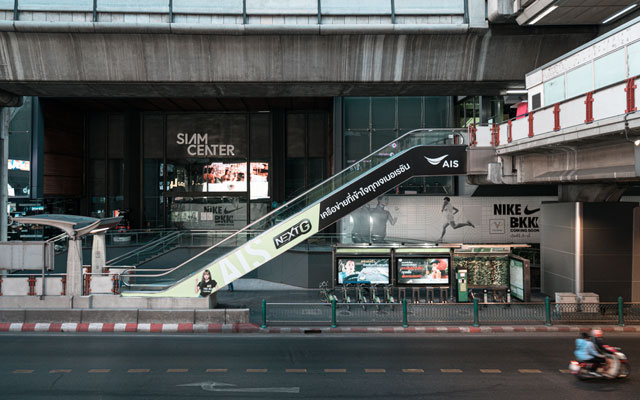
Thailand will extend lockdown restrictions in Bangkok and 12 other dark-red zone provinces for another two weeks starting Tuesday (August 3), with 16 more provinces to come under the curbs, amid a Covid-19 surge.
Provinces marked as a dark-red zone are placed under the strictest of restrictions which includes a night curfew, a ban on dine-in services, and curbs on inter-provincial travel.
Bangkok and 28 other high-risk zones will be placed under the strictest lockdown measures to curb Delta surge
The restrictions will be evaluated after two weeks, said the Centre for Covid-19 Situation Administration (CCSA). If the situation does not improve, the restriction period may be extended until August 31, with more areas expected to be added.
The 16 provinces which have been added to the dark-red zone are: Kanchanaburi, Tak, Nakhon Nayok, Nakhon Ratchasima, Prachuap Khiri Khan, Prachin Buri, Phetchabun, Rayong, Ratchaburi, Lop Buri, Sing Buri, Samut Songkhram, Saraburi, Suphan Buri, Ang Thong and Phetchaburi.
With the new additions, a total of 29 areas in Thailand – or more than one-third of the country – will be under the tightest restrictions.
In the meantime, 37 provinces have been declared as red-zone or maximum controlled places, while 11 provinces are in orange or controlled areas.
Thailand has been listed as among the top 10 countries last week for recording the highest daily Covid-19 infections. On August 1, the country reported 18,027 infections and 133 deaths, bringing the cumulative total to 615,314 cases and 4,990 fatalities.
Due to the severity of the situation, Thai AirAsia has announced that it will temporarily suspend all business operations in Thailand until the end of August, but hopes to resume services in September.
Meanwhile, some hotel operators and travel companies in Phuket said that the ongoing semi-lockdown has taken a further toll on tourism businesses. They also claimed that the Phuket Sandbox programme has yielded no benefit for small operators as most returnees to the island are regular guests of big hotel chains.
Local media reported that more hotels have decided to pause operations amid the Covid surge.
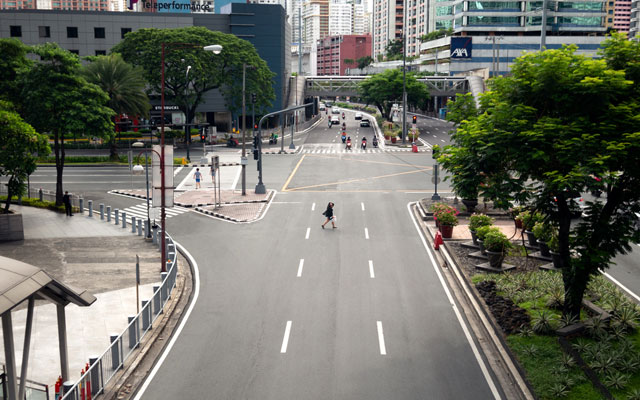
In yet another setback for the Philippines’ tourism industry, the government has announced that metro Manila will be placed under the most restrictive enhanced community quarantine (ECQ) from August 6 to 20 to stave off a surge of the highly contagious Delta variant of Covid-19.
Under the ECQ, only essential industries are allowed to operate and public transportation either suspended or limited.
Metro Manila to be placed under enhanced community quarantine for third time since the outbreak of Covid-19
This comes after authorities extended the general community quarantine (GCQ) with heightened and additional restrictions in metro Manila, from July 30 to August 5, with leisure and business travel being prohibited.
Various destinations throughout the Philippines are in varying levels of lockdown.
Philippine Airlines and Cebu Pacific have cancelled a number of domestic flights following the immediate suspension of point-to-point flights for leisure. Returning flights are for tourists residing in the NCR Plus (metro Manila plus Bulacan, Cavite, Laguna and Rizal).
Tourism secretary Bernadette Romulo-Puyat had informed the travel and tourism sector that from July 30, hotels are not allowed to accept leisure or staycation guests. Staycation guests residing in areas outside metro Manila have to shorten their stay and return to their place of residence.
Essential meetings and social events are prohibited and dining is not allowed in restaurants in metro Manila during the GCQ with heightened restrictions and ECQ.
Indoor tourist attractions have already been closed, and while outdoor attractions may operate at 30 per cent of maximum venue capacity, they will have to suspend operations by August 6.
Since July 30, point-to-point travel for leisure from NCR Plus areas has been banned. Accredited establishments outside NCR Plus areas are not allowed to accept leisure guests coming from NCR Plus areas, regardless of the date of the booking.
On August 1, the Philippines recorded 8,735 new Covid-19 cases, and 127 deaths. The country has reported 216 cases of the Delta variant, but health experts say the real number could be higher.
This is the third time metro Manila has entered ECQ, including the first at the onset of Covid-19 in March last year.
Orchid Haven, a new 280m² space to host changing orchid displays as well as permanent orchid exhibits, has opened within Gardens by the Bay’s Cloud Forest cooled conservatory.
Launched by minister for national development Desmond Lee on Friday (July 30), the dedicated space will feature more than 1,000 orchids at any one time.
Orchid Haven launches with the Flight of the Moth Orchid display
This is the first time since 2017 that a major area has been revamped in Cloud Forest, whose changing orchid displays have featured a plethora of orchids from Central and South America to East Asia. The new Orchid Haven is about three times the size of the original space.
While development works of Orchid Haven began last year, they were put on hold because of the pandemic.
The first changing orchid display to be showcased in Orchid Haven has been dubbed Flight of the Moth Orchid, and launches fortuitously just before Singapore’s National Day. The exhibit is a tribute to the Phalaenopsis orchid, a diverse genus whose floral form resembles that of a moth in flight. In this display, more than 800 Phalaenopsis orchids of 17 taxa are showcased in a breathtaking “waterfall” of cascading blooms.
Gardens by the Bay’s CEO Felix Loh said: “Our latest creation Orchid Haven is a way for our horticulturists to pay tribute to the nation on its 56th birthday, and amidst the current setback, the Flight of the Moth Orchid display expresses our confidence that Singapore will soar again in our battle against the pandemic.”
The Qantas Group will work with the International Air Transport Association (IATA) to roll out a digital health pass when international flights resume.
The IATA Travel Pass connects customers to certified testing labs so that their Covid test results and vaccination information can be uploaded to the platform, allowing customers to verify their health status securely with border or health officials and airline staff before boarding their flights.
Qantas to adopt IATA Travel Pass following trials of several digital solutions on the airline’s international repatriation flights in recent months
The app also matches a customer’s health information against a specific flight; checks the entry requirements for the country they are travelling to; and provides clearance to travel on that flight, to both the customer and airline.
Final development work is now underway to ensure the app is ready for use on Qantas and Jetstar international flights when they resume, the airline said in a press release.
Qantas Group CCO, Stephanie Tully, said: “We want to get our international flights back in the air and our people back to work and a digital health pass will be a key part of that.
“Many governments are already requiring proof of vaccine or a negative Covid test result for international travel. Even if it wasn’t a government requirement, Qantas has always been a leader in safety and we have a responsibility to our customers and crew.
“A digital health pass will connect customers with Covid testing facilities, health authorities and airlines, and ultimately enable the opening of more travel bubbles and borders.”
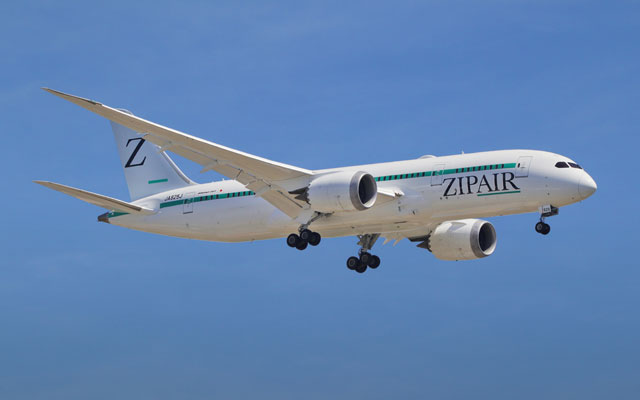
Japan Airlines’ low-cost carrier, Zipair Tokyo, will be expanding its international network with the launch of a weekly service between Tokyo and Singapore on September 7.
Singapore will be the airline’s four destination, alongside Bangkok, Seoul, and Honolulu. The two-way service will be operated on Tuesdays using a Boeing 787 configured aircraft, initially as a weekly service which will be increased to twice weekly from late October.
Singapore will be Zipair’s four destination, alongside Bangkok, Seoul, and Honolulu
Flight ZG53 will depart Tokyo Narita at 14.00, and arrive at Singapore’s Changi Airport at 20.25. Return flight ZG54 will take off from Changi at 21.55 and land at Tokyo Narita at 06.05 the next day.
Shingo Nishida, president of Zipair Tokyo, said: “Due to the impact of Covid-19, restrictions on entry into both countries are still in effect, but we hope that our new service to Singapore will provide a new convenient option for those who need to travel to and from Japan for business or pleasure.”
Hong Kong Sharper culture and heritage draws
Hong Kong’s tourism appeal continues to evolve, with a slew of new and iconic cultural attractions set to rise in the next six to eight months.
The long-awaited M+ in West Kowloon Cultural District is expected to steal the limelight. Scheduled to open in late-2021, this 60,000m2 world-class large-scale contemporary art museum will be the largest of all recent museum openings in the region.
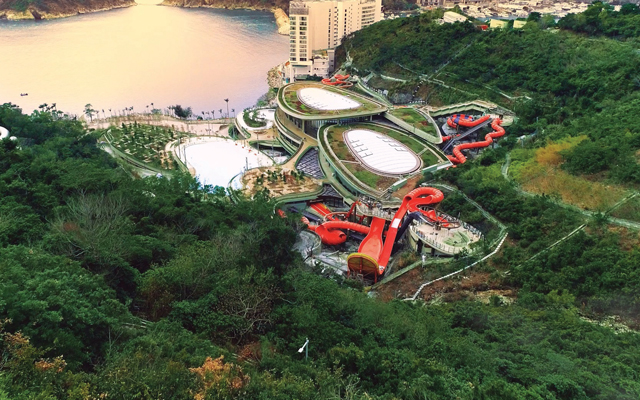
Ocean Park, Hong Kong’s Water World
In unison with the museum’s opening, the Hong Kong Tourism Board will extend its Hong Kong Neighbouhoods promotional campaigns to the West Kowloon Cultural District, which includes Yaumatei, Jordan and Tsimshatsui, to provide an all-encompassing art, cultural and historic experience.
On the other side of the harbour, the 82-year-old Bauhaus-style Central Market has been given a new lease on life as a new-age marketplace, set to open in 3Q2021. The 134-year Pokfulam Farm (Old Dairy Farm Senior Staff Quarters) is expected to reopen in July as a heritage hub bringing together the 60-plus historical spots around the Pokfulam neighbourhood.
That’s not all for culture vultures and history buffs – Tai Hang Fire Dragon Heritage Centre will launch in 4Q2021, tantalising visitors with exhibits that harness augmented and virtual reality technologies. It will also host workshops, seminars and talks.
Fun-seekers can also look out for the new Water World attraction within the Ocean Park water theme park this summer.
Discova’s country manager, Sandy Ho, said Hong Kong’s new attractions would inspire greater interest from longhaul markets and even encourage longer stays.
Gunther Homerlein, Destination China’s general manager/owner, is particularly excited about the M+ museum and the developments within the West Kowloon Cultural District. He said: “It will always be beneficial (for Hong Kong) to have a museum of international standard. Hopefully, it will have some signature pieces that can put it on the map.”
He added that the West Kowloon Cultural District has strong potential for events. – Prudence Lui
Japan All-rounded additions
Post-pandemic travellers to Japan can look forward to more adventurous attractions and regional offerings than ever before as tourism development continues through 2021 and 2022.
A series of new launches will allow visitors to enjoy the outdoors, local experiences and unique accommodation, powering up Japan’s existing wellness and cultural appeal.
National Ainu Museum and Park Upopoy, Hokkaido, Japan/Courtesy of The Foundation for Ainu Culture Upopy
In Hokkaido, the National Ainu Museum and Park Upopoy, which are dedicated to Japan’s indigenous people, the Ainu, opened in July 2020.
Over in Kyushu, there is a spike in activities, resorts and glamping options. Simon Metcalfe, representative of Kyushu Tourism Promotion Organization, attributed these developments to Kyushu’s “steady preparations” for tourists pre-pandemic as well as its “lush nature, surrounding oceans and many islands.” He also noted the region’s “connection to and co-existence of nature and the locals”.
Many new cycling tours have been launched in Kyushu, including Hassenba in Hitoyoshi and Kumagawa. The three-hour, 4.5 km route takes in key sightseeing spots such as Hitoyshi Castle ruins.
Cycling tours are also poised for growth in other regions once inbound visitors return, thanks to an uptick in interest among domestic travellers during the pandemic.
Japan’s unique accommodation inventory is set for expansion, with several interesting openings to come.
Sea Cruise Glamping Kumamoto Amakusa, which offers ocean views from all rooms and dolphin-spotting, will open in July 2021.
Hoshino Resorts KAI Poroto will open its doors in January 2022. Located near Hokkaido’s Upopoy, the resort is designed to provide a place for guests to experience Ainu culture and “understand what co-living with different ethnic groups is,” according to the hotel company.
Treeful Treehouse, a sustainable resort powered by solar energy in the north of mainland Okinawa, is slated to open in the 12 months. The luxury riverside treehouses will boast panoramic views, beautiful interiors as well as modern comforts including air-conditioning.
Major theme parks are also joining Japan’s tourism portfolio. They include the newly opened Super Nintendo World in Osaka and Studio Ghibli Theme Park in Nagoya, which is expected to welcome visitors in 2022.
Popular local theme park Fuji-Q Highland has added another fun element – the 55m Fujiyama Tower, comprising a Sky Deck with sky walks and a Slider tube-type ride to the bottom. There is also an observatory offering views of Mount Fuji. – Kathryn Wortley
Macau Bright lights, family delights
The glittery city of Macau is expanding its family fun repertoire, with unique museums, theme parks and adventure games to charm travellers of all ages.
Studio City Water Park debuted in May this year, showing off a variety of spectacular aquatic rides and adventures. The attraction is the result of a major revamp that Studio City Macau integrated resort undertook.
Studio City Water Park, Macau
The rejuvenated Macao Grand Prix Museum followed next, with an opening on June 1. Now occupying a larger space, the museum showcases the history and thrill of the Macau Grand Prix in an innovative way, with several interactive games and entertainment for everyone.
Coming up next, Lisboeta Macau will launch ZipCity, a zipline experience, and GoAirborne, an indoor skydiving facility.
Destination specialists are certain that Macau’s latest attractions will appeal to travellers from a younger age bracket as well as mainland Chinese travellers, who tend to gravitate towards novel offerings. – Prudence Lui
Singapore Next play hub for young and young-at-heart
Singapore’s garden city reputation may have to make space on the pedestal for a new label, judging by the attractions that have opened this year as well as those coming up in 2022.
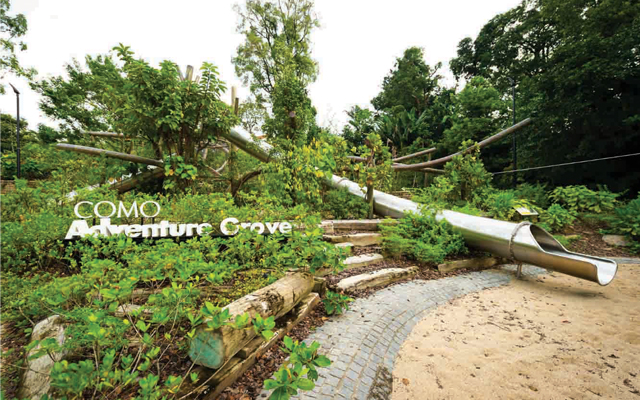
COMO Adventure Grove, Singapore
Fresh fun picks that have emerged this year, such as the COMO Adventure Grove nature playground at the Singapore Botanic Gardens, Coastal PlayGrove at East Coast Park and ForestPlay SG adventure park on Sentosa, are boosting Singapore’s family travel appeal. Their outdoor play approach also speaks to the growing preference for activities in open spaces that allow for good ventilation and safe distancing.
Adding to Singapore’s growing play hub status is US-based experiential attraction Museum of Ice Cream (MOIC), which will open its first international outpost in Singapore this August.
Located in Dempsey, MOIC will feature 14 never-before-seen installations dedicated to the celebration and experience of enjoying ice cream. These include a fully functional, Singapore-inspired Dragon Playground; a pink and yellow jungle with 10,000 bananas; and the largest MOIC sprinkle pool ever created.
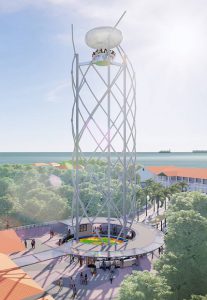
SkyHelix, Singapore
Later this year, Slingshot thrill ride will debut at Clarke Quay. It is said to be the tallest ride of its kind in Asia, with the ability to catapult riders almost 70m into the air at high speed.
Singapore’s attraction inventory will continue to grow in 2022, with Sentosa launching SkyHelix, the city-state’s first open-air panoramic attraction to offer scenic views of the resort island and Southern Waterfront. Guests can enjoy a drink as the rotating gondola gently ascends 35m above ground.
In revealing some of the new tourism developments back in April 2021, Singapore Tourism Board’s (STB) chief executive Keith Tan emphasised that Singapore was not in “hibernation mode” despite the pandemic, and the new products would “help us get ready for recovery” and the eventual return of international tourists.
In addition to new draws, work is also underway to update existing attractions and tourism precincts. A new event space is set to emerge on the Orchard Road shopping belt in 2022, while a vacant site in the same prime district has been earmarked for a new attraction concept.
To further strengthen the lifestyle appeal of the Orchard Road district, STB is working with the Orchard Road Business Association to scale up the programming of the annual Christmas on a Great Street and Orchard Road Black Friday events later this year.
Tan described these projects as “a welcome breath of fresh air among the Covid-19 negativity in the past year”. – Karen Yue
Vietnam Fresh destinations to explore
The pandemic has failed to halt tourism development across Vietnam, as new destinations have sprung to life.
Secondary destinations such as Pu Luong, Mai Chau, Phu Yen and Yen Bai have become shining stars during the pandemic, as domestic travellers seek new spots to explore.
Centara Mirage Resort, Mui Ne, Vietnam
Pham Ha, CEO of Lux Travel DMC, said: “New destinations and resorts have become trendy with local travellers looking for authentic and unique experiences. This will provide new experiences for international visitors once they can travel.”
Exclusive Avana Retreat Mai Chau opened its doors in April, and is already proving popular.
In Mui Ne, the new Centara Mirage Resort, owned by Novaland, will appeal to families with its multiple pools, child-friendly zones, and gaming and technology-based entertainment for teenagers and young adults.
Linh Le, founding partner of Luxperia DMC, said ‘tween-agers’ are particularly drawn to indoor entertainment, and Vietnam’s destination operators will do well to offer such activities.
Sungroup has also rolled out multiple projects on Phu Quoc island. Most notable is Sun Premier Village Primavera, a destination built to resemble the Italian Amalfi coast – complete with shophouses, restaurants, residential properties and hotels.
Also on Phu Quoc, VinGroup officially launched its US$2.8 billion Phu Quoc United Center in April. It takes in VinWonders Phu Quoc, said to be Vietnam’s largest theme park; an animal conservation park; an 18-hole golf course; a shopping and entertainment precinct; business events facilities; multimedia shows; 24-hour street markets; and even a hospital.
With cruising gaining fans among the local crowd, Ha noted that Lan Ha Bay and Cat Ba archipelago now offer even more cruising options that will also benefit international visitors. – Marissa Carruthers
A total of 96 travellers boarded a Kota Kinabalu-themed “flight to nowhere” flying out of Incheon International Airport on July 25.
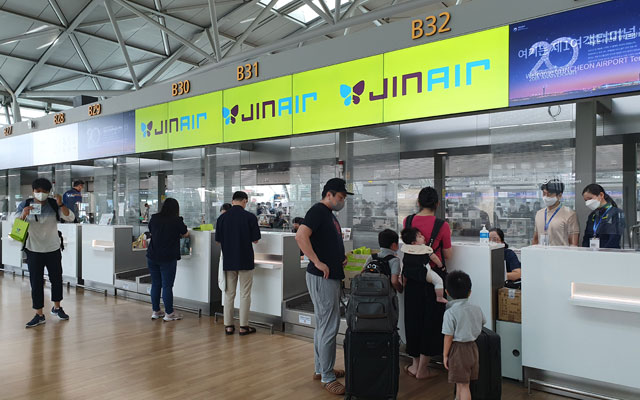
Operated by South Korean LCC Jin Air, the flight departed Incheon International Airport at 12.40 and took passengers low-flying over Daegu, Busan, and partially Japanese airspace, before landing at the same airport at 14.30.
The Kota Kinabalu-themed sightseeing flight operated by Jin Air featured special inflight activities
“Flights to nowhere”, also known as scenic flights or sightseeing flights that take off and land in the same place, have become a new revenue stream for airlines and a novel way to indulge travel-starved locals amid ongoing travel restrictions during the pandemic.
To aid the local aviation industry and duty-free sectors in South Korea amid the global crisis, the South Korean government gave the green light early this year for local-based airlines to operate “flights to nowhere”.
The Kota Kinabalu-themed sightseeing flight, which sought to inspire travel to the capital of Malaysia’s Sabah state, was conducted with the support of Sabah Tourism Board and assistance from Tourism Malaysia.
The flight featured a variety of perks and special inflight activities, and each passenger was given a goodie bag prepared by Jin Air and Sabah Tourism Board. Major duty-free shops in South Korea – namely, Shilla, Lotte, and Shinsegae – also offered duty-free services on board.
The cabin crew kept passengers entertained with quizzes and a lucky draw. Prizes included round-trip tickets from Incheon to Kota Kinabalu that were sponsored by Jin Air, as well as hotel and sunset cruise vouchers sponsored by the Sabah Tourism Board.
“People clearly miss the experience of flying. These experiences will surely offer opportunities for them to remember Kota Kinabalu, Malaysia as a top-of-mind tourist destination,” Shaharuddin Yahya, director of Tourism Malaysia Korea, said in a press release issued by Sabah Tourism.
Sabah Tourism and the Tourism Malaysia Seoul office said they plan to extend this activity to other Korean airlines including Air Busan and Jeju Air, with an increased number of flights in August 2021.
Sabah had been one of the top holiday destinations in South-east Asia among the South Koreans prior to the pandemic. Nearly 400,000 South Koreans visited Sabah in 2019, with 67 direct flights departing from Incheon, Busan, and Muan to Kota Kinabalu.
Air New Zealand (Air NZ) has introduced its new snack offerings onboard its domestic flights, following six-week-long trials ran across 100 flights and involving more than 7,000 customers.
Throughout the trials, the airline tested a range of things from trolley signage on Koru Hour flights, Grab & Go snack boxes in its lounges, and plenty of new food offerings.
Air New Zealand’s new inflight snack menu includes popcorn, crisps, muesli bars and chocolate
An array of snack products from New Zealand including popcorn, crisps, muesli bars and chocolate will be rotated on a monthly basis. But the airline assured customers that its popular inflight cookie and Air NZ lollies are here to stay.
Air NZ general manager customer Leeanne Langridge said the new inflight offerings will give customers the variety they desire.
She elaborated: “What we learnt throughout the trials was that our customers value variety and change throughout the day. Going forward, we’re going to be more time specific with what’s on offer – from danishes in the morning to antipasto in the evening – because we know a cookie at 06.00 isn’t for everyone. Having options for different dietary requirements is also a big trend so we’ve added more gluten-free options.
“On our shorter sectors, customers told us our food and beverage service felt rushed, so we’ve simplified our menu by removing tea and coffee on Koru Hour flights under 50 minutes.”
The airline said that it will work with innovative New Zealand companies to showcase other food products, and issued an invitation for local producers to get in touch with product recommendations.
The World Travel & Tourism Council (WTTC) has released a new report which signals how the global travel and tourism sector can help eradicate human trafficking.
The report, titled Preventing Human Trafficking: An Action Framework for the Travel & Tourism Sector, is released with support from the Carlson Family Foundation, and builds on WTTC’s Human Trafficking Taskforce, which was launched in 2019 at its Global Summit in Seville, Spain.
WTTC report will help travel and tourism sector to better identify and prevent human trafficking
With its report, WTTC aims to strengthen cooperation across stakeholders and share best practices to raise awareness about how the sector can, and does, make a difference, to proactively address this global crime.
The report details an action framework to tackle human trafficking, around four main pillars: Awareness, Education & Training, Advocacy, and Support.
The International Labour Organization has estimated that on any given day in 2016, more than 40 million people around the world were victims of human trafficking. With the pandemic exacerbating pre-existing inequalities, this has accelerated the urgent need for targeted actions within the travel and tourism sector, WTTC said.
The report offers solutions both within the sector and beyond, as the complexity of these transnational crimes require multi-disciplinary efforts and concerted coordinated action by stakeholders, such as states, private companies, and international organisations around the world.
For the travel and tourism sector, this means involving the expertise of all stakeholders, including survivors, as well as civil society organisations to establish joint initiatives.
Launched in conjunction with the World Day Against Trafficking in Persons, the in-depth report highlights the need to work on facilitating an approach which will enhance the understanding of the crime of human trafficking, enable better identification, prevention, and mitigation of potential and actual impacts of the sector, and further public-private collaboration to ensure that appropriate steps are taken by governments when human trafficking is detected.
Virginia Messina, senior vice president and acting CEO, WTTC, said: “Human trafficking is a global crime which preys on the vulnerable, continues to grow and affect the lives of millions around the world.
“This vital report offers a framework for the travel and tourism sector to play its part to help combat human trafficking. Given the sector’s inadvertent position in the path of human traffickers, we need to shoulder our responsibility to ensure that the travel and tourism sector offers a safe and welcoming environment for those who work within it.
“Ultimately, travel is something that brings people together, and it is critical that we proactively help address this crime. The sector needs a cohesive approach and focus its efforts on driving forward advocacy related to human trafficking by engaging all key stakeholders. We hope that this report can aid in that task.”
A few months into the pandemic that ravaged Malaysia’s hospitality industry, a pair of co-living space owners operating in the city centre was approached by a neighbourhood hotel in Kuala Lumpur to help fill up its vacant hotel rooms.
Leveraging on their co-living experience, the duo managed to help the hotel secure 30 guests staying for one month or longer within the first few months.
Liew: Hotel rental platform Roomah aims to deliver a seamless booking experience for customers
Buoyed by their success, the savvy pair, Jordan Liew and Henry Liu, got the idea to work alongside hotels in Malaysia to convert a portion of their rooms into medium and long-stay accommodation. Thus was born Roomah, a Malaysia-based rental accommodation startup focusing on providing flexible monthly stays to renters.
As movement restrictions and the remote working paradigm shift funnel guests towards extended-stay hotels, Roomah aims to capture this growing demand and help put heads in beds during the pandemic.
Liew, co-founder and chief experience officer of Roomah, said that he and Liu, co-founder and CEO, saw a gap in the market for hotel booking platforms that allow users to book longer stays, with existing platforms targeted at short-term stays.
Alongside the team’s CTO, Kevin Ong, they decided to create a rental platform for hotels to list their accommodation bookable on a monthly basis at affordable rates.
Roomah was launched in May 2021, after a year-long pilot test. Filling hotel rooms aside, Roomah also aims to make the booking process seamless for guests, allowing them to book move-in ready or plug-and-play hotels for long stays with just a few clicks.
Explained Liew: “We have designed our platform (such that the) user can complete the whole booking process in five minutes via a web page or soon-to-launch mobile app.”
“Unlike traditional year-long leases, we want to ensure users don’t have to go through various channels, multiple viewings, price comparison and lengthy negotiations to find a suitable accommodation for longer stays. We make this happen by providing a standardised renting experience, both online and offline.”
Besides giving detailed information on each hotel listing, Roomah also provides virtual tours of each property to give users the confidence to book immediately.
All listings on the Roomah platform come fully furnished, with weekly cleanings, 24/7 online concierge and high-speed Wi-Fi. Resident perks include special merchant discounts, complimentary laundry services, yoga mat and other amenities.
New opportunities, new challenges
With selling long-term hotel stays, the biggest challenge is to educate the market about hotel living as users are not accustomed to the idea of staying long-term in a hotel, opined Liew. “In general, renters finding a place to stay for long-term will only look for conventional accommodations such as apartments and landed houses,” he said.
Liew added that the team strives to bring about a mindset shift by promoting the benefits of hotel living such as having all-inclusive rentals, fully furnished space, weekly housekeeping and 24/7 concierge support.
The Roomah team is currently in discussions with several hotels to redesign their rooms for a better long-stay experience.
Amenities wise, Roomah operates a hybrid model, according to Liew. The company allows hotels to list on its platform just like Booking.com and Agoda, while at the same time providing these hotels some long-stay amenities at their own expense.
All hotels on Roomah are situated at locations offering great accessibility and convenience to guests
Converting hotel guestrooms designed for short-term stays into medium and long-stay accommodations come with its own set of challenges.
“We identified the lack of kitchen facilities and readily available laundry services as main challenges to welcome longer-stay guests,” said Liew. He added that the company partners with laundry providers to provide pick-up and drop-off laundry services to its residents, and is currently in discussion with several hotels to build a communal kitchen so residents have the option to cook.
“There is also an alternative to include an induction cooker and microwave in each hotel room, however, that will be subject to each hotel’s approval,” he said.
Roomah for growth
Opportunities to optimise hotel inventory in Malaysia existed even before the pandemic.
Liew noted that pre-pandemic statistics showed that the average occupancy rate of hotels in Malaysia hovers around the 65 per cent mark, with occupancy rates for even the best-performing hotels rarely exceeding 80 per cent.
“This means at any given time, there will be 20 per cent of hotel rooms left vacant, and we hope to work with hotels to continue unlocking values of these unutilised hotel rooms by accommodating long-stay guests,” he said.
The hybrid work format and tighter budgets as a result of Covid-19 have placed hotels in a sweet spot to capitalise on the growing extended-stay demand by marketing themselves as a cost-effective lodging option to price-sensitive renters.
Opined Liew: “The various lockdowns imposed by the (Malaysian) government have caused the depletion of cash reserves of many individuals. Now, renters would prefer lower upfront-cost accommodation options such as hotel living and co-living.”
Since its launch, Roomah has received about 100 bookings, with average length of stay about three months now. Liew observed that customers are staying longer in a hotel now as compared to when they were just starting out, with the platform’s guests largely made up of interns, new hires, digital nomads and contract workers.
Roomah typically charges between 10-18 per cent of commission for each hotel listing, depending on the types and prices of rooms being advertised.
While Roomah’s business has been battered by Malaysia’s protracted lockdowns, Liew said they are using this downtime to improve their product features and work closely with more hotels and new partners to prepare for the eventual upturn.
Currently, there are 10 hotels on the Roomah platform, ranging from three- to five-star properties, with all situated in the Klang Valley. The company aims to reach 20 hotels in the Klang Valley to cover all key areas in the short-term, said Liew.
“We also aim to form strategic partnerships with start-ups, corporates, or student organisations that could add value to the ecosystem such as job portals, smart locker providers, BPOs and co-working spaces,” he added.
The company also plans to expand into Penang and Johor Bahru by year-end, and beyond its home ground to other regional cities, starting with Bangkok and Ho Chi Minh City in 2022.
However, the team’s ambitions go beyond the extended hotel stay segment.
Said Liew: “Hotel living is just the beginning. We are constantly working with hotels to think of ways to create more product offerings that fit the needs of users. In addition, we plan to work with boutique hotel owners to convert their hotel into a co-living building. This will create more affordable and flexible options for renters to live within the cities.
“In a nutshell, our vision is to create a world where people have the freedom to choose where to live and work. Roomah does this by repurposing and unlocking spaces that were once difficult to access or unsuitable to become more accessible and convenient.”
Looking ahead, Liew predicts Malaysia’s tourism recovery will be “sluggish” for the next six months, after which a vaccine-led rebound will be steered by domestic tourism. “In terms of international travel, it will be harder to predict as it depends on vaccination progress and travel restrictions imposed by other countries,” he said.
Overall, Liew expects that tourism will not return to pre-pandemic levels until earliest 2023. As such, he believes “it is imperative for hotel owners to take a proactive approach in exploring new ideas and alternative approaches in running their hotels over the next few years, while waiting for full travel to return”.



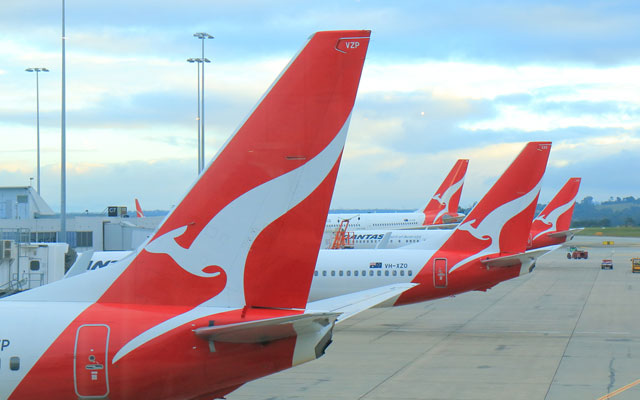














The Qantas Group will work with the International Air Transport Association (IATA) to roll out a digital health pass when international flights resume.
The IATA Travel Pass connects customers to certified testing labs so that their Covid test results and vaccination information can be uploaded to the platform, allowing customers to verify their health status securely with border or health officials and airline staff before boarding their flights.
The app also matches a customer’s health information against a specific flight; checks the entry requirements for the country they are travelling to; and provides clearance to travel on that flight, to both the customer and airline.
Final development work is now underway to ensure the app is ready for use on Qantas and Jetstar international flights when they resume, the airline said in a press release.
Qantas Group CCO, Stephanie Tully, said: “We want to get our international flights back in the air and our people back to work and a digital health pass will be a key part of that.
“Many governments are already requiring proof of vaccine or a negative Covid test result for international travel. Even if it wasn’t a government requirement, Qantas has always been a leader in safety and we have a responsibility to our customers and crew.
“A digital health pass will connect customers with Covid testing facilities, health authorities and airlines, and ultimately enable the opening of more travel bubbles and borders.”