


Dubai Tourism ropes in Hollywood stars Jessica Alba and Zac Efron for new global campaign

Dubai Tourism has launched a new global campaign, Dubai Presents, showcasing the Middle Eastern city via a series of blockbuster trailers featuring Hollywood A-listers Jessica Alba and Zac Efron.
The campaign invites global travellers to put themselves in the picture, write their own script and appear in their very own cinematic adventure, with Dubai’s locations providing the backdrop.
Filmed by award-winning director Craig Gillespie, the campaign features a series of six short trailer films across different genres, each taking viewers on a captivating journey across the city. Kicking off with the spy action genre, the campaign will also see Alba and Efron in a series of trailers across multiple genres launching in sequence over a period of four months.
The campaign is Dubai Tourism’s latest effort to keep the city top-of-mind among travellers in key international markets during the pandemic.
Designed to be a 360 global campaign, Dubai Presents launched across 27 global markets including India on August 5. It is available in over 15 languages including English, Mandarin, German, Italian, French and Dutch. In India, the campaign will appear across channels including OTT, digital and social.
In addition to the six celebrity-led trailers, the campaign also features a series of teaser assets to highlight gastronomy, nature, active and self-indulgent holidays in Dubai.
Dubai recently marked one year since its reopening in July 2020, with data from Dubai Tourism highlighting that the city welcomed 3.7 million overnight visitors, of which 811,600 visitors were from India, during the 11-month period from July 2020 to May 2021.
DoubleTree by Hilton to debut in Osaka
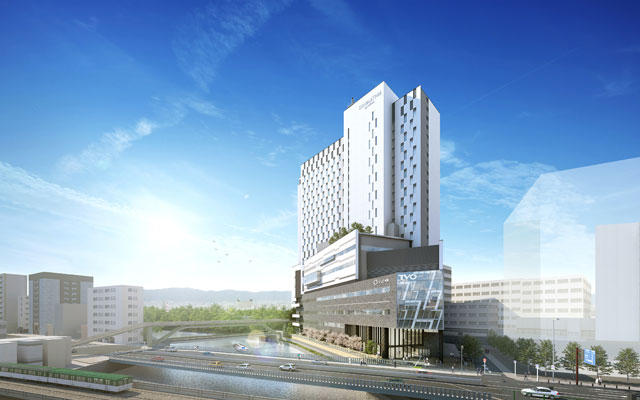
A 377-key DoubleTree by Hilton branded property is set to make its debut in Osaka come 2024, under a management agreement between Hilton and Daiwa House Industry Co..
DoubleTree by Hilton Osaka Castle is scheduled to open in the spring of 2024, and will be the third Hilton-managed hotel in Osaka, joining Hilton Osaka and Conrad Osaka in the city.
The hotel will be situated to the northwest of the almost 450-year-old Osaka Castle, and within walking distance of the castle.
Occupying 15 levels of a newly-constructed building complex when it opens, DoubleTree by Hilton Osaka Castle will feature an indoor pool, a fitness centre, meeting facilities and an executive lounge. F&B options will include the hotel’s all-day dining Grab & Go, and a lobby lounge and bar.
Sandbox scheme nets Phuket US$24.8m in revenue within first month
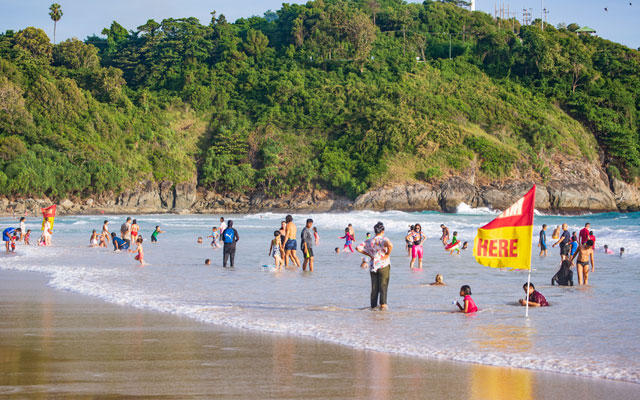
In the first month of the Phuket Sandbox programme which launched on July 1, more than 14,000 foreign tourists visited Phuket, generating 829 million baht (US$24.8 million) in revenue for the local economy.
From July 1-31, Phuket welcomed a total of 14,055 international arrivals, with the largest source market being the US with 1,802 arrivals, according to the Tourism Authority of Thailand (TAT).
This was followed by the UK with 1,558 arrivals, Israel with 1,455 arrivals, Germany with 847 arrivals, and France with 839 arrivals.
TAT expects 100,000 foreign tourists will visit Phuket in 3Q2021 (July-September) and inject some 8.9 billion baht in revenue into the local economy.
The Phuket Sandbox programme allows fully vaccinated international travellers to enter Phuket without the need to quarantine, as part of Thailand’s plans to gradually reopen to tourism in a bid to revive the pandemic-hit economy.
These first tourists to return to Thailand came on direct international flights operated by major airlines from points around the world. This included Thai Airways International from Copenhagen, Frankfurt, Paris, London, and Zurich; Singapore Airlines from Singapore; Etihad Airways from Abu Dhabi; Emirates from Dubai; Qatar Airways from Doha; and EL AL Israel Airlines from Tel Aviv.
Accommodation-wise, the arrivals for July saw 190,843 room nights booked at SHA Plus certified hotels. August has a further 109,694 room nights in advance bookings and September another 9,182 room nights, altogether amounting to 309,719 room nights for the July-September period.
Tourists are required to stay at SHA Plus certified hotels on Phuket for their added safety. SHA Plus certification indicates a hotel meets the safety measures to control Covid-19, and also that 70 per cent of its workforce has been fully vaccinated.
The 829 million baht in revenue for July included 282 million baht spent on accommodation, 194 million baht on the purchase of products and services, 175 million baht on food and beverage, and 124 million baht on health and medical services. Among the 14,055 tourist arrivals, the average cost of their vacation to Phuket was 58,982 baht.
Crucially, one of the key benefits of the Phuket Sandbox programme has been the creation of 210 million baht in salaries for the local employees in the accommodation, restaurant, and other sectors.
Singapore eases border measures for travellers from Taiwan
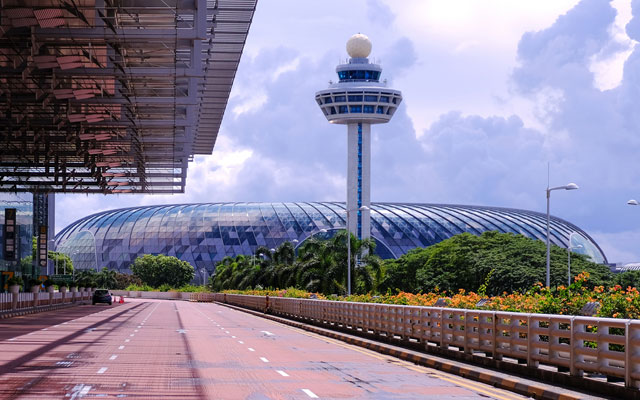
Travellers entering Singapore from Taiwan will not need to serve a 14-day stay-home notice (SHN) period from 23.59 on August 7, if they test negative for Covid-19 upon arrival.
In a statement Thursday, the Ministry of Health (MOH) said all travellers entering Singapore with travel history to Taiwan within the last 21 days prior to departure will undergo a Covid-19 polymerase chain reaction (PCR) test upon arrival, and will be allowed to go about their activities in Singapore if they test negative.
The same rule applies to short-term visitors with travel history to Taiwan within the last 21 days before departure for Singapore. They can now apply for an air travel pass for entry into Singapore on or after August 12.
The easing of border measures for Taiwan travellers comes as the Covid-19 situation in Taiwan has improved, MOH said.
Currently, travellers from Taiwan are subjected to an on-arrival Covid-19 PCR test, a 14-day SHN at a dedicated facility or place of residence, and another PCR test before the end of the SHN period.
MOH also said that travellers who are already serving their 14-day SHN at their place of residence as of 23.59 on August 7 will still be required to complete their 14-day SHN and exit swab.
Malaysia’s extended lockdown puts eco-tourism attractions in precarious state

The ongoing Movement Control Order (MCO) 3.0 in Malaysia, enforced since June 1, has put eco-tourism operators in distress, as their main source of income, the collection of entrance fees, continues to be disrupted by extended closures. Most are digging into their own coffers for maintenance.
With the closure of Farm in the City in Seri Kembangan Selangor, KL Tower Mini Zoo and The Bentong Farm in Pahang, the three parks are now largely dependent on the company’s savings to care for over 200 species of animals in residence.
Y Rajagopal, general manager (business development and marketing), who represents the parks, said help had also streamed in from well-wishers who contributed food for the animals.
To ensure self-sustenance, The Bentong Farm has started to grow fruits and vegetables, mainly to feed the animals in all three parks, but is also selling mangosteens and rambutans to cover operational costs.
A month ago, Farm in the City started selling online tours. While these helped with income, earnings are not big, shared Rajagopal.
Rajagopal told TTG Asia: “The uncertainty of not knowing when the parks will be able to reopen hampers the planning of manpower needs and marketing efforts.”
The Habitat Penang Hill has been relying on generous shareholders for survival. According to managing director, Allen Tan, the upkeep of the 7.3-hectare park costs hundreds of thousands of ringgit monthly.
He described the uncertainty of not knowing when the MCO would end as “crippling”.
Since the start of the pandemic, The Habitat Penang Hill has initiated cost cutting measures, including right sizing its staff. Said Tan: “We are now working on half the size we used to have. Moving forward, everyone will be expected to do more multi-tasking.”
The company is also looking at alternative revenue streams away from the usual park activities. This includes building an e-commerce and lifestyle platform to sell The Habitat products, while at the same time promoting sustainability through the sales of sustainably-sourced products.
Another revenue stream is to offer nature activities and tours under The Habitat brand where The Habitat Foundation has projects. Said Tan: “We hope to inspire people to reconnect with nature while at the same time promoting sustainable tourism, education and research.”
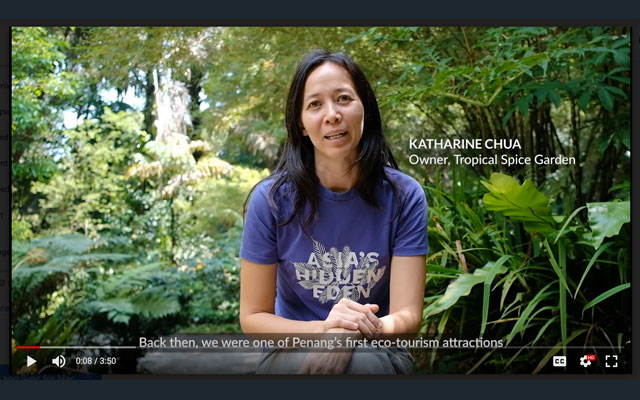
Penang’s other popular eco-tourism attraction, the Tropical Spice Garden (TSG), is also in dire straits. It launched on August 1 a crowdfunding campaign, Join the Family, Save the Garden, to raise the vital funds it needs to remain operational. Funds would primarily come through subscription to its community-powered garden membership programme, Spice Fam, although donations from the public are also accepted.
The membership is priced at RM25 (US$5.90) per month.
Katharine Chua, owner and managing director of TSG, said: “Because of Covid, our doors have been open and shut for the last 16 months, and our existence is hanging by a thread.
“Although we’ve always prided ourselves on running a sustainable business, one that is environmentally-conscious and places people at its heart, nothing could have prepared us for this challenge. So, we urgently need the community’s support to help keep this garden open for future generations to come.”
Chua emphasised that the Spice Fam subscription is TSG’s “lifeline to stay open” and to allow it to reopen once the lockdown is over.
“We want to be able to continue to share this unique and special place which does so much for bringing the community together, nurturing a love for nature and educating young and old alike. And in this new normal, now more than ever, we need green, healing spaces. Every cent raised will go into maintaining the Garden and growing the Spice Fam community,” Chua said.
New hotels: The St. Regis Qingdao; dusitD2 Hua Hin; Holiday Inn Werribee
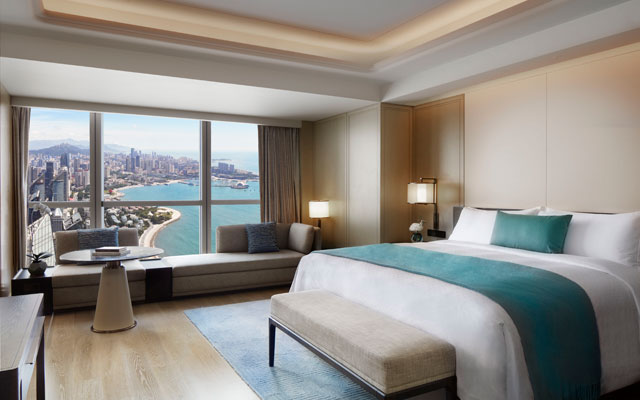
The St. Regis Qingdao, China
Strategically located within the landmark Haitian Center in the heart of historic Qingdao, the 233-key The St. Regis Qingdao is the first Marriott International luxury brand to open in China’s north-eastern Shandong.
Occupying the 58th to 78th floors of the 369-meter-tall Haitian Center, the hotel treats guests to panoramic vistas of the Yellow Sea and picturesque coastal scenes.
Drawing inspiration from the brand’s rich heritage, renowned Singapore-based interior design firm, LTW Designworks, subtly infused local Qingdao influences with St. Regis’ avant-garde aesthetic. This includes a crystal chandelier inspired by a legendary dress of golden thorns that Caroline Astor, mother of St. Regis founder John Jacob Astor IV and doyenne of New York high society in the Gilded Age, wore to one of her famed Midnight Suppers. A brilliantly-lit grand staircase offers the perfect venue for the celebrated St. Regis tradition of sabering a bottle of champagne to mark the transition from day to night. The backdrop of the grand staircase is a 74m-high atrium art wall that reflects the delicate traces left on the beach by the ebb and flow of the Yellow Sea.
Facilities within the hotel include The Drawing Room where afternoon teas are served, Yan Ting Cantonese restaurant, all-day dining Social, The Carvery steakhouse, and The St. Regis Bar. There are also more than 2,000m2 of events space on offer.
dusitD2 Hua Hin, Thailand
Dusit International has launched dusitD2 Hua Hin, an upscale pet-friendly retreat that is designed with families and groups in mind.
Alongside 152 contemporary guestrooms and suites ranging in size from 30m2 to 92m2, including selected rooms equipped with pet-friendly amenities for up to two pets, the bright and airy property offers a wide range of facilities for work, rest and play.
Dining facilities include all-day dining restaurant Cafe Soi; Som Bar, a vibrant rooftop bar inspired by Hollywood party pads; and Dusit Gourmet bakery and coffee shop.
Alongside a rooftop infinity pool, a large garden, and a fully equipped gym, the hotel also offers an extensive kids club that comprises a children’s swimming pool, a play area with a sandbox and a treehouse, and a wide range of activities for children aged three to 15.
Guests seeking to stay on top of work during their travels will find plenty of quiet, thoughtfully designed corners to focus on their important tasks. There is also a selection of function rooms.
Holiday Inn Werribee, Australia
Opened on July 30, Holiday Inn Werribee in Melbourne features 150 contemporary and modern rooms, an open lobby, onsite bar and restaurant and versatile meeting spaces.
Encompassing the top four floors of 22 Synnot Street, Werribee, the hotel offers striking, unparalleled views over Werribee and towards Melbourne’s city skyline.
The Open Lobby concept is new to the Holiday Inn brand within Australasia. The Open Lobby is built on the understanding of how people use space at home to give guests the most flexibility, to eat, relax, work, or socialise in one space.
Designed with the needs of the modern traveller in mind, public spaces feature a contemporary lounge area and an e-Bar for those who need to catch up on the day’s news or work, while still being part of the social vibe of that space.
F&B service is offered at Rosana Bistro & Bar, which serves up modern Australian cuisine with a menu full of fresh local produce, sourced from within the Werribee region.
The hotel offers easy access to attractions such as the Werribee Open Range Zoo, Werribee Mansion, Victorian State Rose Garden, and the National Equestrian Centre. It is also located within easy walking distance of the burgeoning foodie hub of Watton Street and is a short drive away from Werribee Mercy Hospital.
Trip.com Group donates oxygen concentrators to Indonesia
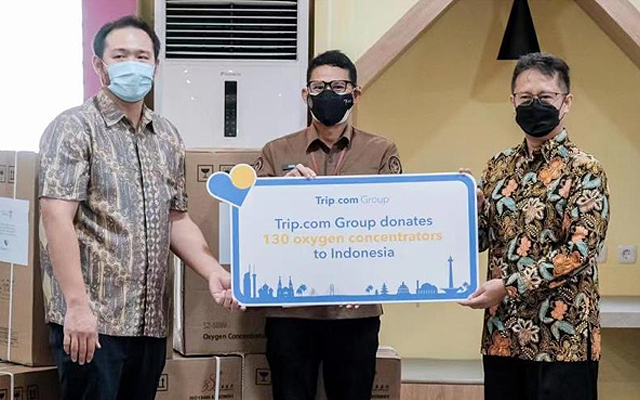
Some 130 oxygen concentrators have made their way to Indonesia, courtesy of Trip.com Group, to help the country battle a surge in Covid-19 infections.
The equipment arrived at Soekarno-Hatta International Airport on Wednesday morning, and were received by tourism and creative economy minister Sandiaga Uno and health minister Budi Gunadi Sadikin.
Sandiaga said the oxygen concentrators would be distributed by the Health Crisis Centre, Ministry of Health, to support patients with respiratory conditions.
Trip.com Group had earlier donated 100,000 surgical masks to Indonesia.
Jane Sun, CEO of Trip.com Group, said: “We have been deeply concerned about the effect of the pandemic in Indonesia, and the safety and well-being of the local communities amid the lack of oxygen supplies. I would like to extend my gratitude to the Indonesian authorities for their support in ensuring the smooth delivery of the oxygen concentrators.”
Sun added that the company would continue its work to “support various communities to overcome the shared challenges of Covid-19”.
Between the outbreak in 2020 and August 1 this year, Trip.com Group has donated three million medical masks and 680 oxygen concentrators to more than 25 countries and regions around the world.
The Standard picks Singapore for its next Asian venture
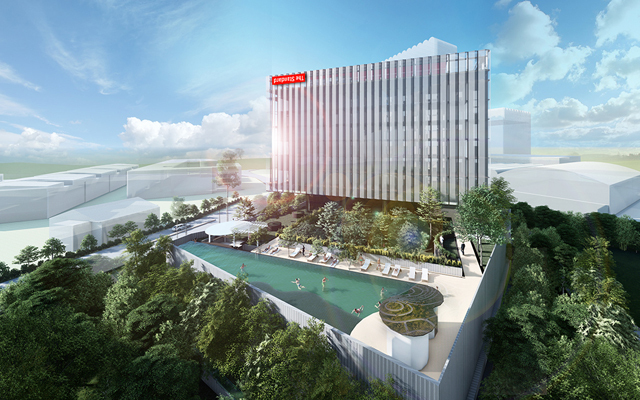
Standard International will bring The Standard hotel brand to Singapore come 2023, furthering its Asian expansion which includes two upcoming properties in Thailand’s Hua Hin and Bangkok and one in Australia’s Melbourne.
The Standard, Singapore, to be built on Orange Grove Road, will feature 143 guestrooms. It will be one of the few ground-up hotels to be built in proximity to Orchard Road, Singapore’s premier shopping destination.
The location will grant hotel guests easy walking access to the Singapore Botanical Gardens, a UNESCO World Heritage Centre, through the picturesque Nassim neighbourhood.
The hotel will feature The Standard’s signature restaurant and nightlife vibrancy, and arts and cultural programming along with an infinity pool and pool bar set within a lush botanical courtyard.
“Singapore is a culturally rich and dynamic city that is ready to embrace the creativity and personality of The Standard,” said Standard International CEO, Amar Lalvani.
“New hotel licenses in the city are rare and highly coveted and we feel very fortunate to partner with Invictus Developments to bring this project to life. Although the global travel dynamics remain challenging at the moment, we continue to build landmark projects around the world in anticipation of a brighter future,” added Lalvani.
The Standard, Hua Hin is set to open in November 2021 while The Standard, Bangkok Mahanakhon will open in 2022. The Standard, Fitzroy in Melbourne is expected to be ready in 2023.
Visit Maldives gets Qatar Airways’ support for destination promotion
Visit Maldives has kicked off a year-long marketing campaign with Qatar Airways to promote the destination as a safe-haven for travellers from Europe, the Middle East and the Americas.
Scheduled to run from July 2021 until June 2022, the campaign will consist of a combination of digital and offline activities.
Qatar Airways support in the new campaign reflects its faith in the destination. It was the first airline to land when the Maldives reopened borders to international travellers on July 15 last year, and has increased flight frequency to the Maldives since July 1 this year.
To promote the Maldives, the airline will feature the destination in tactical campaigns, newsletters and on its homepage. It will also target industry members and promote the Maldives through destination newsletters, destination push-through sales, joint advertising with trade partners, trade webinars, trade workshops and so on.
Familiarisation trips are also on the cards.
Since restarting international tourism in 2020, Visit Maldives has launched major global campaigns with organisations such as SkyScanner, TripAdvisor, Expedia and TripZilla to target key and emerging markets. As of July 7, 2021, the Maldives has welcomed over 528,157 travellers.
Visit Maldives believes that welcoming over half a million travellers ensures that the destination is on the path to achieving pre-pandemic arrival figures.







Chatrium Hotels & Residences (CHR) has signed an agreement with Trip Affiliates Network (TA Network) to collaborate for its online direct booking services for agents, wholesalers and corporates within the TA network ecosystem.
TA Network’s turnkey solutions and connectivities bring together Asia-Pacific travel wholesalers, operators and DMCs onto a single platform.
CHR manages seven properties across Thailand, Myanmar and Japan, including the Chatrium Hotel Riverside Bangkok, Emporium Suites by Chatrium, and Chatrium Residence Sathon Bangkok.
The TA Network platform leverages technology solutions adopted by hotels to facilitate their direct connectivity, and automate their inventory management processes with their traditional offline contractors.
In addition, TA Network’s digital payment solutions enable hotel clients with virtual card or virtual bank account services to process payments from their global contractors, thereby minimising cross border & FX fees.
TA Network’s managing partner Ho Siang Twang said: “In a post-Covid new normal, hotels are increasingly looking for more dynamic tools to broaden and deepen direct online booking partnerships with their preferred agents and corporates, and yet with greater administrative ease using process automation solutions and seamless online payment services.”
Pawarisa Hirantanes, group director – revenue & digital distribution of CHR, added: “TA Network solutions have enabled Chatrium Hotels & Residences to manage the conservative wholesale contract digitally with the full functionality of lead time, booking windows or stay pattern promotion, which makes our B2B faster.
“We can also manage dynamic rates with the same level of function as OTAs to work with dynamic wholesalers. Additionally, we will have access to business opportunities to work with several major channels integrated with the TA Network and our contracting process with new partners is faster.”