

IHG to debut new luxury and lifestyle brand Vignette Collection in Thailand and Australia
IHG Hotels & Resorts has introduced a new luxury and lifestyle brand, Vignette Collection, with hotels in Australia and Thailand the first to join the collection.
Vignette Collection is the sixth addition to IHG’s brand portfolio in the past four years, taking it to 17 in total across nearly 6,000 hotels in more than 100 countries.
IHG’s Vignette Collection will give owners of independent hotels the opportunity to retain their distinctive identity, while benefitting from the group’s global scale, luxury and lifestyle expertise, and IHG Rewards loyalty programme.
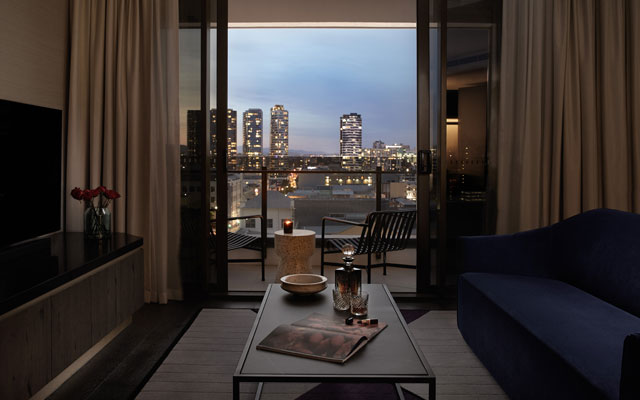
Among the first hotels to join IHG’s Vignette Collection will be Hotel X, a five-star hotel in the centre of Brisbane’s Fortitude Valley, Australia.
Thailand’s Pattaya Aquatique hotel will also join the collection, through a collaboration with Thai real estate group Asset World Corporation.
Properties under Vignette Collection will seek to provide one-of-a-kind stays in urban and resort locations. The group expects Vignette Collection to attract more than 100 properties globally over the next decade.
Gold Coast tourism lures locals with digital campaign
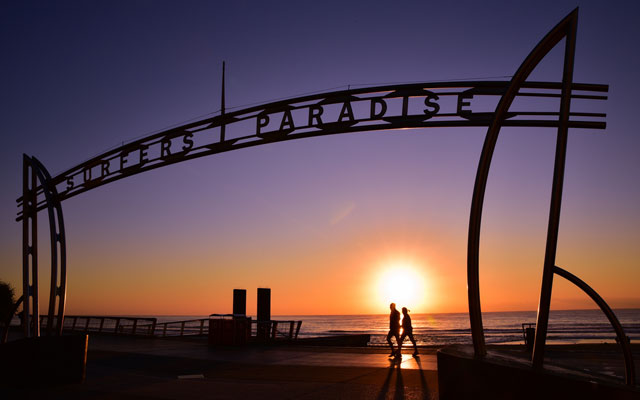
Destination Gold Coast has rolled out a new digital campaign to showcase the Gold Coast attractions, tours and experiences to Brisbanites, targeting commuters in the CBD and surrounding suburbs.
The geo-targeted adverts feature social media placements and 42 digital billboards across high-traffic areas and roads throughout Brisbane.
Destination Gold Coast CEO Patricia O’Callaghan said the marketing activity is aimed at enticing Queenslanders back to the Gold Coast as restrictions in Queensland continue to ease.
“Gold Coast’s status as a safe and spacious family destination is a priceless attribute that continues to attract Queenslanders and is instrumental for our recovery in both the short and long-term,” she said.
“We’ve seen Gold Coast operators and businesses giving it their all during what has been an exceptionally challenging 18 months for tourism, and we can’t wait to welcome visitors back once again after an estimated A$550 million (US$398 million) was wiped from our economy in the last two months.
The billboards feature 110 key experiences which have been specially designed to include the driving time from the site location to the Gold Coast, O’Callaghan added.
The four-week billboard campaign will be visible to an estimated one million people each week until September 12.
To support businesses struggling due to interstate Covid lockdowns, Destination Gold Coast has also launched the A$3 million Play Money Rewards programme, funded by the City of Gold Coast. The programme provides Gold Coast residents with 60,000 vouchers worth A$50 each to spend at eligible Gold Coast businesses from September 16.
Gold Coast businesses can now apply to be part of the programme here. Eligibility criteria includes operating tours and attractions (including arts and culture experiences), accommodation, restaurants, and local retail businesses. Applications close 17.00 AEST, August 27.
M Social to open first European outpost in Paris
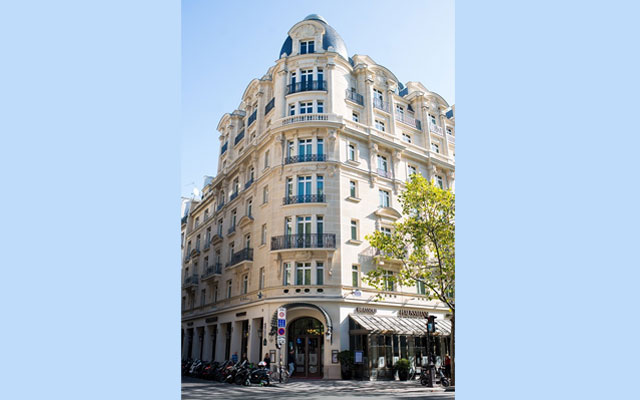
Millennium Hotels and Resorts is marking M Social’s first outpost in Europe with the opening of M Social Hotel Paris Opera come September 9.
The 163-room hotel is located at 12 Boulevard Haussmann, in the heart of Opéra, and within walking distance to some of the city’s most famous landmarks including the Louvre, the Sacré-Cœur and the Moulin Rouge.
A sum of €5.4 million (US$6.3 million) was spent on refurbishing the former Millennium Paris Opera into more contemporary lodgings. The creative architects at StudioCaid, who are behind the newly renovated areas, have incorporated into the design the artistic styles of the surrounding iconic infrastructures such as the Opera Garnier and the Louvre.
Accommodation choices range from cosy yet spacious Signature rooms that overlook the hotel’s inner courtyard to Grande Sweetie suites that offer separate living areas and views of the Opera Garnier or the Sacré-Cœur.
The M Social brand was launched in Singapore in 2016. M Social Hotel Paris Opera is the fourth location for the brand with other outposts in New York, Singapore and Auckland.
Correction: An earlier version of this article stated that M Social Hotel Paris Opera will be opening at the end of this month. The hotel’s opening date has since been pushed back to September 9.
Hotel Okura adds third property to Shanghai portfolio
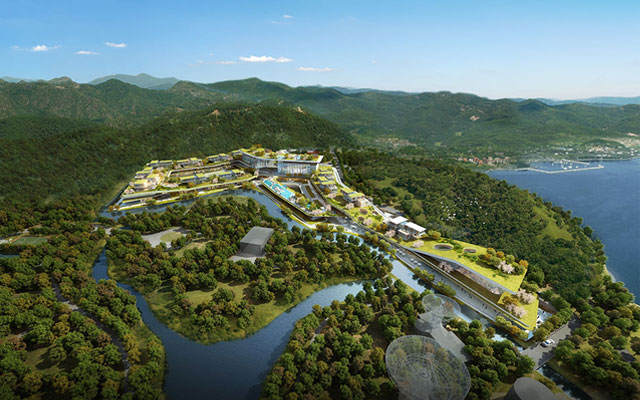
Hotel Okura Co. will open a two-storied hotel in Sheshan, a scenic forested mountainous area bordering the city of Shanghai, come 2024.
Hotel Okura Shanghai Sheshan will be built on a site of approximately 40,000m². It will offer about 280 guestrooms, each with a standard area of about 50m². The hotel will also feature a variety of restaurants offering Japanese cuisine, all-day dining and Chinese cuisine.
Other facilities include a lobby lounge, a banquet hall and multi-purpose meeting rooms, a fitness facility, and spa with an indoor pool.
Hotel Okura Shanghai Sheshan will be the third Hotel Okura Group property to be inaugurated in Shanghai. The property will be situated about 18km from the Shanghai Hongqiao International Airport.
Government’s quarantine U-turn leaves Hong Kong hotels reeling
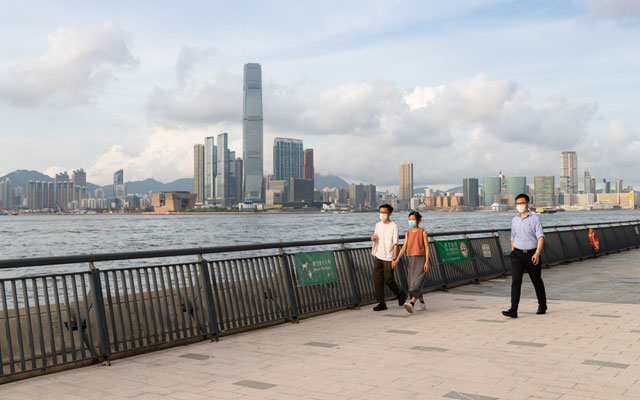
Abrupt changes in quarantine rules for entry into Hong Kong has thwarted travel plans and created chaos for designated quarantine hotels (DQHs).
Citing concerns about the more transmissible Delta variant, the Hong Kong government announced on August 17 that it would be imposing a 14-day quarantine minimum for all arrivals from medium-risk countries from August 20, scrapping a plan to shorten the period for those who test positive for Covid-19 antibodies.’
Additionally, it abruptly moved 15 additional countries to its high-risk category, including the US, France and the UAE. The quarantine period for vaccinated travellers arriving from those countries were extended from 14 to 21 days, while unvaccinated travellers who had been in any of those countries in the previous 21 days were barred from entering Hong Kong.
That policy U-turn has left DQHs like Ovolo Southside fielding hundreds of calls and emails from customers requesting for either an extension of their stay or a cancellation of their entire booking, said Sonesh Mooi, Ovolo Hotels’ operations manager.
Up until last week, the majority of the hotel’s guests were requesting to change their booking to before August 20.
The Federation of Hong Kong Hotel Owners executive director Michael Li said that the authorities’ decision to move 15 countries to its high-risk category had left quarantine hotels inundated with requests from passengers to change their arrival dates to before August 20.
The sudden change had resulted in a temporary shortage of hotel room supply and upended the travel plans of hundreds, said Li. “Travellers’ desire to visit Hong Kong would be dampened if the government keeps changing the policy,” he added.
The government announced on July 30 the list of DQHs for the fifth cycle of the Designated Quarantine Hotel (DQH) Scheme. While the fourth cycle had 35 DQHs (10,800 rooms), there will be a total of 36 hotels (about 10,000 rooms) – with Ovolo Central added to the list – under the fifth cycle running from September 1 to November 30.
The extension of quarantine requirement means higher occupancy rates at DQHs like Nina Hotel Island South.
“Although the September-November period isn’t a peak season compared to summer, we are experiencing very high demand (during that period) due to the announcement,” said a spokesman from Nina Hotel Island South. The hotel is expecting full occupancy through October.
When asked if the list of DHQs will be further expanded to cope with rising demand, a government spokesman told TTG Asia: “The impact of the tightening arrangement on overall room demand of the 36 DQHs under the fifth cycle remains to be seen.
“The government will continue to closely monitor the demand for hotel rooms and consider the need for releasing some 1,500 reserve rooms in individual DQHs if and where necessary.”
BeMyGuest integrates with Google for tours and activities booking links

Singapore-based tours and activities aggregator BeMyGuest has launched a new integration with Google, allowing attractions and tour operators to show free ticket booking links directly on Google Search.
This new functionality, which allows suppliers to show their offers to potential customers without paying for advertising campaigns, will help drive bookings by making it easy for users to click through and book tickets directly on supplier websites.
Using BeMyGuest’s Xplore booking system, the company will push all sales leads generated from Google directly to the operator’s website. Xplore is a modular booking system launched in Singapore, providing full circle digitisation of all direct sales channels, including three key modules for e-commerce, point of sale, as well as B2B management.
The additional sales from Google will be processed via the Xplore system, and proceeds from the new direct sales channel delivered to the operator’s preferred payment gateway.
“It’s a real boost for operators who have been struggling over recent times to help them rebuild their revenue streams through what should be an additional and very powerful direct sales channel,” said Blanca Menchaca, CEO of BeMyGuest.
“We’re currently speaking to a number of our operators, welcoming them with the opportunity to be included in the integration. As a B2B company, our priority is to empower them with as many sales channels as possible, so we’re very happy to support Google and our operators in this way.”
Lotte Hotel World invests in contactless technology
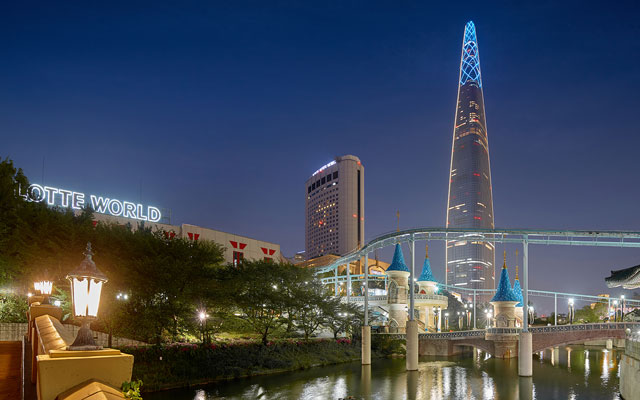
Lotte Hotel World in Seoul has reopened its doors following its first renovation work in more than 30 years.
As part of its revamp, the hotel has upgraded its contactless technology services by grafting state-of-the-art technologies. The Delivery Robot being operated as a service helper in the lobby provides welcome amenities, adding convenience and fun.
Each room is also equipped with the AI speaker “GiGA Genie,” which allows guests to request amenities or concierge services as well as to control air conditioning, heating, lighting, and various online streaming services.
Smart concierge provides information on popular attractions and restaurants in Seoul, and unmanned currency exchange kiosk offers contact-free service.
New rooms and a club lounge have also been added to the hotel’s facilities following the revamp. Design of the rooms put family visitors in mind, offering ample space for four guests without additional beds. The 255 rooms span 19 types in three classes – deluxe, premier and suite – with some rooms also boasting sofa beds and bunker beds.
Suite rooms offer premium air purifier by Molekule, which kills 99.9 per cent of viruses, and air shower that quickly dries up the body after shower. These additions are in light of the added focus on hygiene and cleanliness post-Covid.
Massage chairs and thermal massagers are provided as well which is another endeavour of the hotel to care about the health of guests. Furthermore, exotic and healthy menus such as hummus, pita bread and poke are offered in line with the wellness trend.
The Club Lounge has been designed as a place for guests to find a balance between work and rest, following lifestyle changes caused by Covid-19. Noteworthy is the L-Library offering a convenient reading environment with tablet devices. Visitors have unlimited, complimentary access to about 60,000 e-books. Also available via application streaming are newspapers, magazines and multimedia content such as YouTube.
Meeting rooms have been fitted with smart TV on which one can make high-definition presentation, as well as electronic blackboard and signage TV.
AirAsia enters Malaysia’s ride-hailing scene
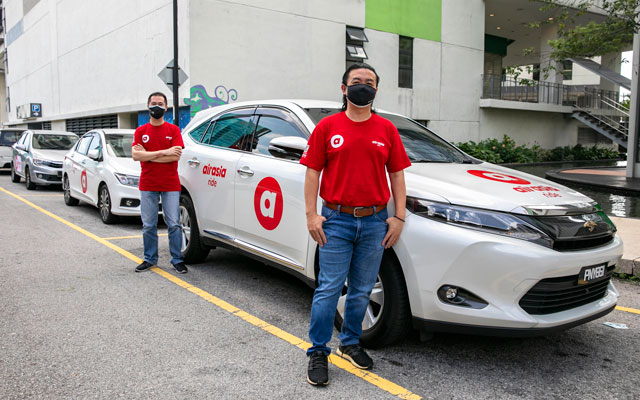
AirAsia has expanded into the ride-hailing market in Malaysia with the launch of AirAsia Ride, the group’s newest offering under its super app.
Services are currently available in the Klang Valley, with expansion to more cities in Malaysia planned throughout the year. The AirAsia Ride e-hailing service can be booked by clicking on the ‘Ride’ icon on the AirAsia Super App, or via the website airasia.com/ride.
Amanda Woo, CEO of AirAsia Super App, said: “AirAsia Ride inherits the DNA of running a low-cost model which enables savings to be passed on to guests and strives to offer the lowest fares on the road, introducing great value to the highly competitive e-hailing ecosystem.”
Lim Chiew Shan, CEO of AirAsia Ride Malaysia, commented: “What sets AirAsia Ride apart from others in the market would be the unique insights and data that we have due to our position as a super app that owns an airline, and have strong vertical products on e-commerce, fintech, logistics, and now e-hailing.
“This enables us to leverage on AirAsia Group’s rich and vast data and algorithm to provide a seamless and connected journey experience for our passengers where they will be able to perform in-path booking for both their flights and pre-book their ride to the airport and even for their return journey at the same time, all within the convenience of one single itinerary and without having to leave the AirAsia Super App.”
Lim added that passengers will soon be able to use their BIG Points to pay for their rides, and can also choose their preferred vehicle type and even drivers. AirAsia Ride boasts a 100 per cent fully-vaccinated driver fleet.
Currently, AirAsia Ride has about 1,500 registered drivers, and with its nationwide expansion, another 5,000 are expected to come onboard in the next six months, said Lim. Drivers take 85 per cent of the net fares, higher than other ride-hailing providers in the market, according to a release.
Fares on AirAsia Ride are set at an average of RM1 (US$0.24) per kilometre, and passengers are able to book on-demand rides, or even pre-book their rides in advance. A special feature allows passengers to book an ‘Allstar Ride’ and be chauffeur driven by AirAsia pilots and cabin crew.
IHG brings Holiday Inn Resort to Halong Bay
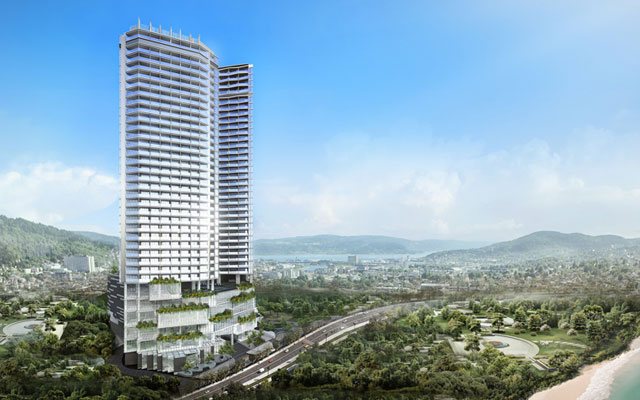
IHG Hotels & Resorts has partnered with Ha Long Bay Hotel Joint Stock Company to develop its flagship Holiday Inn Resort in Vietnam, set to open in Halong Bay come 2023.
Holiday Inn Resort Halong Bay will be the second Holiday Inn Resort to open in Vietnam, after Holiday Inn Resort Ho Tram Beach.
The 208-key property will be situated at the heart of a mixed-use development project also featuring resort apartments and a retail podium.
Facilities at Holiday Inn Resort Halong Bay will include three restaurants and bars, over 1,300m² of meeting space including a banquet hall, an adult-only infinity pool, an indoor kids’ adventure pool, a fitness centre and spa.
A 50-minute drive from Haiphong Cat Bi International Airport, Holiday Inn Resort Halong Bay will be located along Bai Chay Road and within walking distance of Sun World theme park and a public beach.







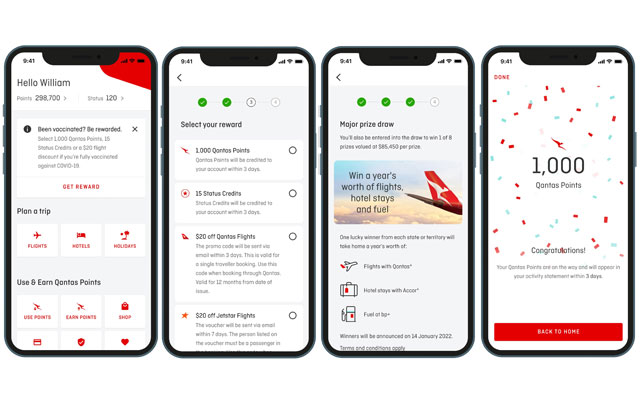
The Qantas Group has launched a reward campaign dangling free flights, accommodation and fuel to Australians who are fully vaccinated against Covid-19, in a bid to help boost the country’s immunisation rates.
From now until year-end, fully vaccinated Australian-based Frequent Flyers aged 18 and over can claim their reward through the Qantas App by choosing one of three options: 1,000 Qantas points, 15 status credits (which help Frequent Flyers move up between Silver, Gold and Platinum tiers), and A$20 (US$14.50) flight discount for Qantas or Jetstar.
Members will then be automatically entered into a mega prize draw to win a year’s worth of flights, accommodation and fuel. Ten mega prizes will be up for grabs with a winner selected from each state and territory and two mega prize winners as part of a national TV campaign.
Winners of ten mega prizes will receive a year’s worth of flights to take off to more than 60 destinations around Australia, with free accommodation across 345 Accor properties. They will also be able to top up their cars with free fuel from any of bp’s 1,400 service stations across the country.
Additionally, winners can take off to any Qantas and Jetstar international destination when borders reopen.
Qantas Group CEO Alan Joyce said the vaccine rollout is critical for protecting public health and key to breaking the cycle of lockdowns.
“Getting vaccinated is an important step that every Australian can take that brings us that little bit closer to life as we knew it. As the national carrier, we want to recognise those who have made the effort to protect themselves and the community,” he said.
“This is one of the biggest giveaways we’ve ever done. The impact of the pandemic on the travel industry and our own Qantas Group team members means we have a clear vested interest in the success of the vaccine rollout.
“Our crews can’t wait to get back to reuniting family and friends, taking people on holiday and putting some energy back into the whole tourism industry. For us, getting the vaccine rate up to 70 and 80 per cent means thousands of people can go back to work.
“With the federal government’s vaccine programme ramping up across the country, now is the ideal time to say thank you to Australians for stepping up and protecting themselves and others.”