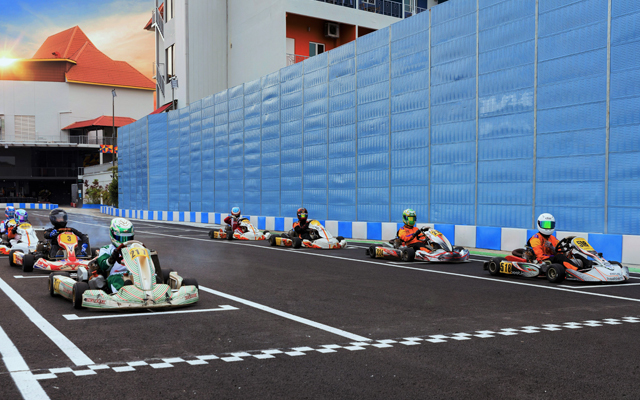
The Karting Arena in Singapore has opened its second track in Jurong, offer both professional and leisure karters a new space to fulfil their adrenaline rush while uncovering the Jurong district.
Karters can look forward to racing on a 700m long track with 11 technical turns. There are ample overtaking opportunities for karters to take on the wider straights while putting their skills to the test as they accelerate out of the corner to hit top speeds.
The Karting Arena welcomes both leisure and professional karters
More room on the track means group events of up to 30 go-karts can take place at any one time.
Designed to host professional race events with a race control room, track cameras and a viewing gallery on the second storey, the open-air circuit offers an ideal vantage point to capture the excitement of racing while watching the karters in action.
Besides the new track design, a fresh fleet of renowned BirelArt petroleum-powered go-karts are available to ensure all karters will get to compete to the best of their ability.
The Karting Arena at Jurong is available for corporate and private bookings, with competitive F1 Grand Prix packages available.
JW Marriott Maldives Resort & Spa, W Maldives, Sheraton Maldives Full Moon Resort & Spa and The Westin Maldives Miriandhoo Resort from the Marriott Bonvoy portfolio in the vacation paradise are dangling package deals that are crafted to appeal to families and lovebirds.
The deals include round-trip transfers from/to Velana International Airport and lavish dining options.
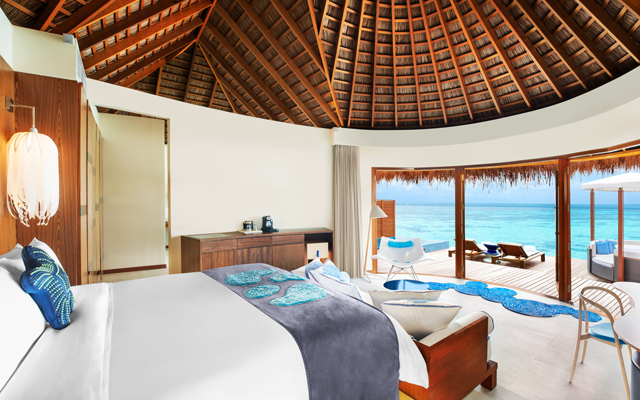
The luxurious W Maldives is one of four properties in the destination to offer attractive Fly/Cruise & Dine deals
At JW Marriott Maldives Resort & Spa, the Fly & Dine package comes with a complimentary half-board package inclusive of daily breakfast and lunch or dinner at select venues as well as complimentary return shared seaplane transfers from/to Velana International Airport for two. A minimum booking of three nights is required.
At W Maldives, the Fly & Dine package includes daily buffet breakfast, daily three-course dinner in a designated restaurant for two, complimentary return shared seaplane transfers from/to Velana International Airport for two, complimentary in-room W MIX BAR for non-alcoholic beverages, and complimentary non-motorised activities and snorkeling gear when guests book for a minimum of three nights.
At Sheraton Maldives Full Moon Resort & Spa, the Cruise & Dine package includes accommodation in a premium water bungalow or water villa awaits guests, an extravagant five-course dinner at a designated dining venue paired with a selection of premium wines that accompany each course, a couple treatment at the award winning Shine Spa, as well as shared and scheduled round-trip transfers for two by speedboat.
At The Westin Maldives Miriandhoo Resort, the Fly & Dine package includes daily breakfast at Island Kitchen, daily two course lunch and three course dinner at Island Kitchen (International) or a meal credit at The Pearl (Japanese), complimentary return shared seaplane transfers from/to Velana International Airport for two, a daily wellness session, the use of snorkelling equipment and ocean kayaks for up to two hours as well as access to the Westin Kids Club®and WestinWORKOUT Fitness Studio.
For more information about the Fly/Cruise & Dine offer, click here
Vietnam’s Alma integrated resort has created a one-of-a-kind Back of House Tour that will answer guests’ burning questions about hotel operations that they were too shy to ask.
The rare insight will be offered once the integrated resort resumes operations after the country regains control over the latest Covid-19 flare-up.
The Back of House Tour will take participants into Alma’s water treatment plant and other facilities usually hidden from hotel guests
The tour will be conducted every Tuesday and Thursday from 15.00.
Tour stops include the pastry room, staff canteen, engineering workshop, loading dock, laundry and uniform rooms, electric buggy station, generator station, air conditioner centralised plant, water treatment plant, and CCTV and fire panel room.
The experience will allow participants to appreciate some fascinating operational fast facts, such as the amount of laundry that is washed a week; the number of Danish pastries, croissants, bread rolls and muffins that are baked a week; the number of smoke detectors and sprinklers that are planted across the vast property; the weight of garbage that is processed a day; and the amount of drinkable water and ice that is produced every week via reverse osmosis.
Indonesia will proceed with the infrastructure development on Rinca Island, one of the three major islands that make up the Komodo National Park, despite UNESCO urging the government to halt the project due to the potential impact on the park’s outstanding universal value (OUV).
At the 44th session of the World Heritage Committee (WHC) last July, UNESCO urged the government to suspend all tourism infrastructure projects in and around the national park, especially those with the potential to affect the park’s OUV.
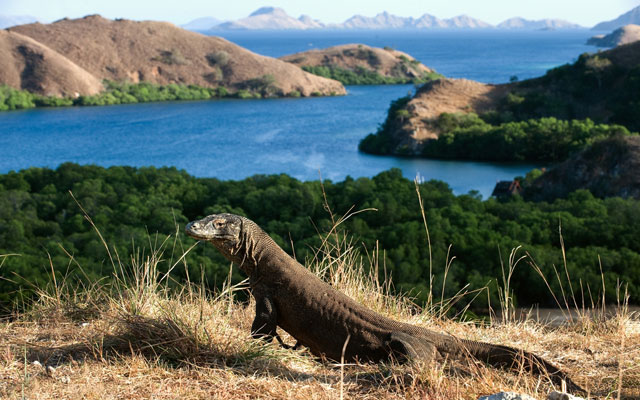
Indonesia claims that the Rinca Island development project will not endanger the Komodo dragon population
It also requested the government to submit a revised environmental impact analysis (EIA), along with details of its plan on how to safeguard the park’s OUV, for review by the International Union for Conservation of Nature (IUCN).
Wiratno, director general of Natural Resources and Ecosystem Conservation (KSDAE) of the Ministry of Environment and Forestry (LHK), said that the government has ensured that the development on Rinca Island would not have a negative impact on the ecosystem and the ongoing conservation efforts, and thus, would continue the project.
He said the project located at Loh Buaya Valley would cover only an area spanning 1.3ha of a total 198km² that makes up Rinca Island, and that the construction is to replace facilities to meet international standards.
The new design is intended to limit tourists’ direct interaction with the wildlife, minimising animal disturbance and ensuring quality ecotourism activity. “This model will make it easier for us to control the number and concentration of visitors, as well as their behaviour,” Wiratno added.
As such, Wiratno claimed that the development would not cause or result in a negative impact on the park’s OUV.
He also pointed out that the construction site is only home to 13 out of the 60 Komodo dragons that reside in the Loh Buaya Valley. “The total population of Komodo dragons in the Komodo National Park is 3,100 and they are not only found on Rinca Island,” he added.
He said the environmental experts and members of other related agencies conducting the EIA were continuously adjusting the guidelines in accordance to the regulations set by the IUCN.
“New assessments are being prepared and we expect to submit the EIA in September so that they can be reviewed by the IUCN and the WHC before the 45th WHC session in 2022,” Wiratno shared.
Elsewhere, the development of Labuan Bajo, the gateway to the Komodo National Park and one of the five super priority development destinations, also follow the quality and sustainable tourism development principles, according to Sandiaga Uno, minister of tourism and creative economy.
Part of that effort will include an analysis on demand and supply of the Labuan Bajo development in the Integrated Tourism Master Plan (ITMP) for Labuan Bajo in the making.
Sandiaga said: “In the ITMP, we will set a projection on the number of tourists in accordance with the carrying capacity, travel paths and integrated development strategies.”
TProfile, a UK-based travel technology company, is planning a cutting-edge addition to its existing suite of travel apps that will boast a concept similar to open banking, benefiting travellers and travel suppliers alike.
Tony Evans, TProfile CEO, coined it as the “open traveller” approach, wherein users can store their personal information such as their travel documents, hotel and flight booking reservation details, and much more, in a single place that is easy to retrieve.
Evans: TProfile’s new solution will allow suppliers to access traveller data upon permission and customise offerings for holidaymakers
Users can also choose to share all or select information stored with travel suppliers of their choice, in order for the travel professional to tailor-make a personalised holiday experience based on their preferences.
Evans shared: “We are approaching the development of this layer in our platform with similar thinking to that of open data concept within banking. The benefits gained in the financial services sector could also be delivered in travel. I foresee that in the new normal, holidaymakers will be looking for more personalised services, and providers that can meet these new demands will stand to gain.”
TProfile’s development of this additional functionality is currently in beta testing stage and in continued development. It is expected to be released in 1Q2022, and is targeted at both the FIT and group traveller.
With personal and sensitive information stored in the app, security is of utmost importance. Evans shared there will be multiple security levels and the compliance of all general data protection regulation requirements will ensure the highest level of security.
TProfile’s business to date has been providing a platform and a suite of advanced applications that allow its travel customers to deliver B2C or B2B2C workflows. The company has a broad range of customers in the UK, the US, and Canada.
This latest development, with a customer-centric approach, will give both existing and new TProfile business customers access to more enquiries and wider markets. Evans said the aim is “to deliver an exceptional experience for travelling customers and genuine growth opportunities for TProfile business customers”.
TProfile current business model is based on SaaS (software as a service) licence and transaction fees and it is expected this development will follow a similar approach.
Fully vaccinated foreign travellers to Phuket now have the option to spend the first seven days in the resort island, before travelling to the southern Thai provinces of Krabi, Phang Nga or Surat Thani for the next seven days.
According to the Tourism Authority of Thailand (TAT), the Phuket Sandbox programme has received the green light from the Centre for Covid-19 Situation Administration to be upgraded as the Phuket Sandbox 7+7 Extension, providing fully vaccinated international travellers with more options to visit multiple Thai destinations without the need to quarantine.
Vaccinated international tourists can now choose to stay seven days in Phuket, before moving on to Krabi, Phang Nga, or Surat Thai
Launched on August 16, the Phuket Sandbox 7+7 Extension programme allows travellers to reduce the mandatory stay in Phuket from 14 to seven days, after which another seven nights can be spent in Krabi (Koh Phi Phi, Koh Ngai, and Railay), Phang Nga (Khao Lak and Koh Yao), or Surat Thani (Koh Samui, Ko Phangan, and Koh Tao).
Under the Phuket Sandbox 7+7 extension programme, travellers looking to spend another seven nights outside of Phuket must obtain a Transfer Form issued by their hotel in Phuket indicating that they have stayed in Phuket for seven nights. They will be required to show the form along with the negative results of their two Covid-19 tests conducted on day 1 and day 6 or 7 during their stay in Phuket.
Travelling from Phuket to the selected areas in Krabi, Phang Nga, or Surat Thai is available only via approved routes and modes of transport.
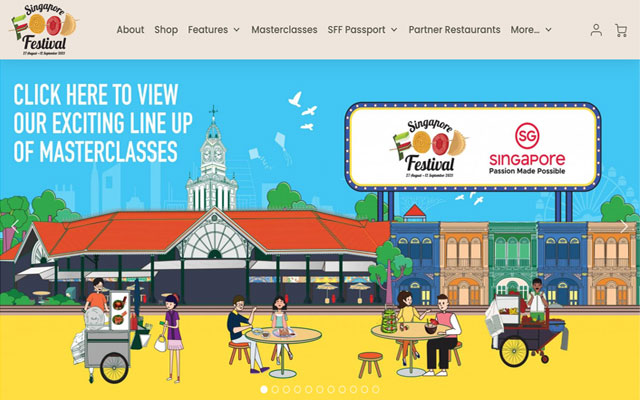
Into its 28th edition, the Singapore Food Festival (SFF) will take place in a hybrid format for the first time over three weekends from August 27 to September 12.
With the theme Savour Singapore In Every Bite, SFF 2021 will feature more than 50 gastronomic and drinking experiences on a hybrid platform – double the number compared to last year’s virtual edition.
This year’s festival line-up comprises four components: live masterclasses, virtual food experiences, partner events and workshops, and SFF food merchandise.
A range of live masterclasses, some free-to-view and others pay-to-view, will feature renowned chefs, bartenders, and food personalities on Singapore’s culinary scene. Selected masterclasses will also offer ingredient boxes and food bundles that participants can purchase and get delivered to their doorstep in Bangkok, Chengdu, Manila and Singapore.
The festival will also showcase virtual food experiences in interactive formats, including a docu-feature spotlighting Kok Fah Farm, a soil and hydroponics farm; and recipe videos like Kitchen Insider: Sustenir, which educate foodies on modern farming in Singapore, suggesting ways to incorporate local produce into everyday dishes.
There will also be virtual food tours of Little India and Tiong Bahru presented by popular food host, Nikki Muller.
Some of these virtual tours will also be presented in physical formats as part of partner events held across the island. Foodies can learn more about the colourful spices that go into Indian dishes at the Heritage Tour of Little India, or embark on the Kim Guan Guan Factory Tour to uncover the history and heritage behind one of Singapore’s oldest kopi (coffee) suppliers.
For a hands-on experience, SFF workshops will also be held islandwide. Foodies can try their hand at making the traditional red turtle cake nyonya-style at the Make Your Own Ang Ku Kueh Workshop by Ji Xiang Ang Ku Kueh, held at CapitaLand Bugis Town. Cocktail lovers can learn how to mix their own Hendrick’s gin and ice cream cocktails at the Museum of Ice Cream’s MOIC Cocktail and Ice Cream Pairing Workshop: Sips and Scoops.
Exclusive SFF food merchandise will also be available for purchase. Local small-batch granola brand Nommish has partnered with Kim Guan Guan to present Kopi Granola and their own rendition of Milo Granola – the Malted Chocolate Granola. Meanwhile, local bakery Old Seng Choong has created Nyonya Sambal Nasi Lemak Cookies, a unique rendition of the classic local dish.
Paying tribute to the iconic pandan flavour that Singaporeans love, bubble tea brand LiHO Tea will push out two new drinks, Singa-Pandan Lime and Singa-Pandan Shake, which will be available in LiHO stores in Singapore, Brunei, Malaysia, and Shanghai.
For the full list of activities, visit singaporefoodfestival.sg.
Hotelbeds has sealed a partnership with Thailand’s Centara Hotels & Resorts, giving the bedbank’s clients access to special rates and exclusive offers at the group’s properties across Thailand and the Middle East.
In return, Centara Hotels & Resorts will expand its global reach by gaining access to Hotelbeds’ network of 60,000 travel trade buyers in more than 140 source markets worldwide, including high value channels such as travel agents, tour operators, airlines and points redemption programmes.
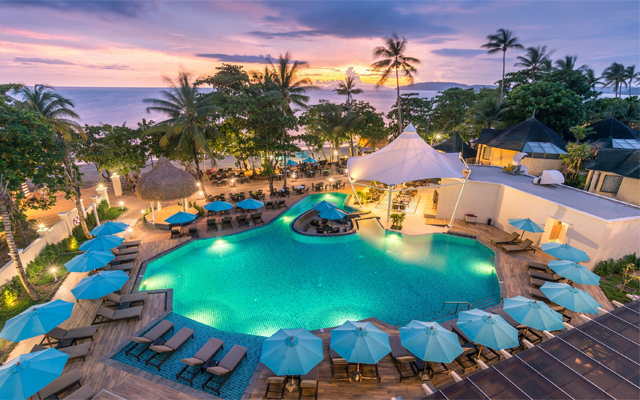
Hotelbeds’ partnership with Centara will provide its clients with access to special offers at the group’s properties across Thailand; Centara Ao Nang Beach Resort & Spa Krabi pictured
Centara Hotels & Resorts operates six brands: Centara Reserve, Centara Grand, Centara, Centara Boutique Collection, Centra by Centara, and COSI Hotels.
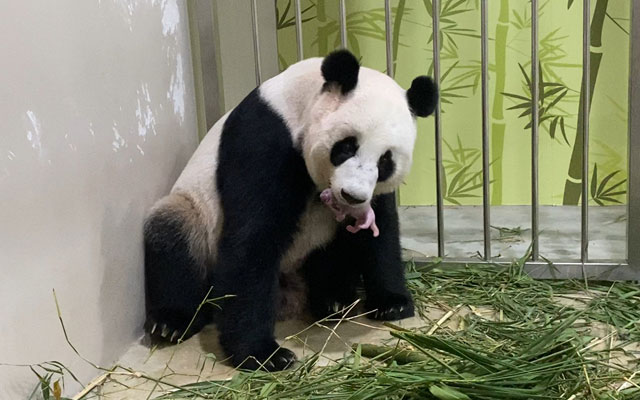
Singapore welcomed her first giant panda cub born to parents Kai Kai and Jia Jia on August 14 at the River Safari.
The gender of the cub, which weighs about 200g, is yet to be determined and will be announced later, according to a release by Wildlife Reserves Singapore (WRS), which manages the River Safari. Meanwhile, mom and baby are in an off-exhibit den to give them time to nurse and bond.
Singapore’s first giant panda cub was born at 07.50 on August 14 at the River Safari (Photo Credit: Wildlife Reserves Singapore)
In April this year, 13-year-old Kai Kai and 12-year-old Jia Jia displayed signs of being in heat, officially entering their seventh breeding season. Working closely with the China Conservation and Research Centre for Giant Panda (CCRCGP), WRS’ animal care team initiated the breeding plan for this year, emphasising natural mating with assisted reproductive technology as back-up if required.
There was optimism that the pandas would naturally breed this year, after the pair had shown improvements in their mating techniques the year before.
To make the most of the once-a-year breeding season, CCRCGP experts advised WRS’ vets to perform artificial insemination before the end of the receptive period. The procedure was carried out by the in-house veterinary team at WRS’ Wildlife Healthcare and Research Centre, using frozen semen collected from Kai Kai before the mating season.
Caring for Kai Kai and Jia Jia in Singapore contributes to the conservation efforts of giant pandas which remain a threatened species, WRS said. It cited a recent study suggesting that giant pandas in the wild are more fragmented and isolated than they were 30 years ago, and that the species continues to face a high risk of extinction.
Radisson Blu Resort Maldives has appointed Gavin Sanders as General Manager, who brings more than 30 years of extensive experience in all areas of hotel management, operations and sales.
Prior to this move to the Maldives, Sanders was general manager of Radisson Golf and Convention Centre Batam commencing July 2017, his first international assignment.
Sanders embarked on his hospitality journey in 1987 at Radisson Edwardian Vanderbilt Hotel in London. He built his career at Radisson Edwardian Hotel Heathrow from 1989 to 2012, holding various positions until he became general manager. He was then assigned to Radisson Blu Edwardian hotels in New Providence Wharf, Bloomsbury, and Kenilworth.














JW Marriott Maldives Resort & Spa, W Maldives, Sheraton Maldives Full Moon Resort & Spa and The Westin Maldives Miriandhoo Resort from the Marriott Bonvoy portfolio in the vacation paradise are dangling package deals that are crafted to appeal to families and lovebirds.
The deals include round-trip transfers from/to Velana International Airport and lavish dining options.
At JW Marriott Maldives Resort & Spa, the Fly & Dine package comes with a complimentary half-board package inclusive of daily breakfast and lunch or dinner at select venues as well as complimentary return shared seaplane transfers from/to Velana International Airport for two. A minimum booking of three nights is required.
At W Maldives, the Fly & Dine package includes daily buffet breakfast, daily three-course dinner in a designated restaurant for two, complimentary return shared seaplane transfers from/to Velana International Airport for two, complimentary in-room W MIX BAR for non-alcoholic beverages, and complimentary non-motorised activities and snorkeling gear when guests book for a minimum of three nights.
At Sheraton Maldives Full Moon Resort & Spa, the Cruise & Dine package includes accommodation in a premium water bungalow or water villa awaits guests, an extravagant five-course dinner at a designated dining venue paired with a selection of premium wines that accompany each course, a couple treatment at the award winning Shine Spa, as well as shared and scheduled round-trip transfers for two by speedboat.
At The Westin Maldives Miriandhoo Resort, the Fly & Dine package includes daily breakfast at Island Kitchen, daily two course lunch and three course dinner at Island Kitchen (International) or a meal credit at The Pearl (Japanese), complimentary return shared seaplane transfers from/to Velana International Airport for two, a daily wellness session, the use of snorkelling equipment and ocean kayaks for up to two hours as well as access to the Westin Kids Club®and WestinWORKOUT Fitness Studio.
For more information about the Fly/Cruise & Dine offer, click here