Bali & Beyond Travel Fair was last hosted in 2019 and will return to Bali this June
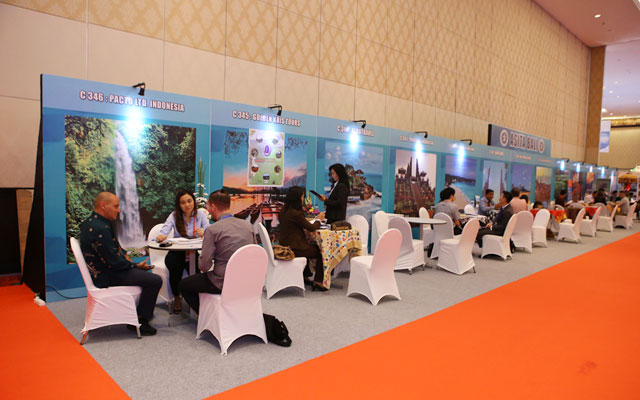
Indonesia’s Ministry of Tourism will host the seventh Bali & Beyond Travel Fair (BBTF) in Bali from June 8 to 12 this year, taking on a hybrid form with health protocols in place for the in-person programme.
As with its pre-pandemic editions, BBTF 2021 will gather both international and domestic trade buyers to meet with tourism sellers from Bali and other priority Indonesian destinations.
Bali & Beyond Travel Fair was last hosted in 2019 and will return to Bali this June
Tanto Ruwiyadi, vice committee chairman of BBTF told TTG Asia that international buyers would participate at the show virtually while domestic participants meet offline.
BBTF 2021 will focus on the theme, Exploring Sustainable and Wellness Tourism. A number of activities and forums led by reputable speakers will address new opportunities, trends and industry insights, as well as highlight the diversity of Indonesia’s regional cultures as a strategic asset for responsible tourism growth.
Recognised as the country’s leading international travel and tourism fair, BBTF is part of Indonesia’s strategy to promote new business opportunities and facilitate the industry’s recovery from the current crisis.
While innovation and creativity thrive in times of crisis, most of the changes made by the travel and tourism trade to survive the Covid-19 crisis have not been true inventions, opines PATA CEO Mario Hardy.
However, stakeholders’ accelerated application of existing technologies in tough times has moved the industry forward in a positive way.
In this new episode of TTG Conversations: Five questions video series, Mario Hardy, CEO of PATA, talks about innovation for survival, current investor appetite for travel and tourism solutions, and more.
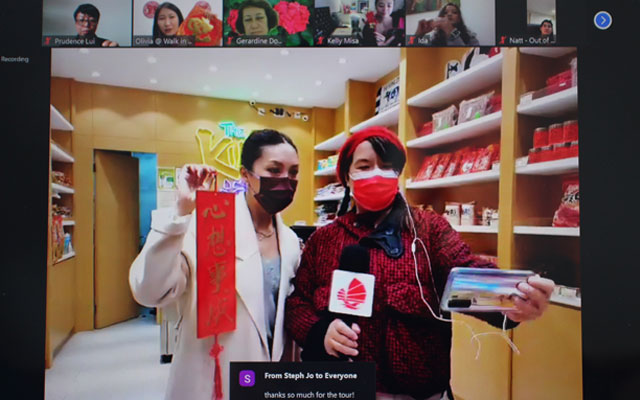
For a city where Lunar New Year celebrations are traditionally large-scale, vibrant and a serious tourist magnet, creative solutions must be sought to combat the now-familiar travel and movement restrictions during the pandemic.
To convey the Lunar New Year festive spirit to the destination’s Super Fans around the world, Hong Kong Tourism Board ran a series of virtual tours and programmes across the week of February 8. Participants were able to visit Man Mo Temple in Central, a feng shui décor store in Lascar Row, a fai chun stand in Shin Hing Street, and a traditional candied fruit store from the safety and comfort of their home, while picking up wisdom around Lunar New Year taboos and tips.
As the coronavirus continues to stalk global tourism, Singapore is sparing no effort to revive the country’s ailing sector, with the domestic market coming into play.
In December 2020, the Singapore Tourism Board threw a lifeline to struggling tourism businesses by giving every adult citizen S$100 (US$75) in SingapoRediscovers Vouchers (SRV) to spend on hotel staycations, attraction tickets and tours, valid through June 30, 2021. This was accompanied by the Singapoliday campaign, detailing promotions and offerings available in 10 precincts, including the Civic District, Kampong Gelam and Sentosa.
Infinity Space, Singapore Flyer Time Capsule
As the tourism economy leans on the whims of domestic demand, experiences once suited for international travellers must now be adapted for the trained local eye. Looking beyond providing simple heritage trails and cultural walking tours, businesses are reinventing themselves to keep the tourism engine running.
Collaboration is key
While Singapore is no stranger to innovative tours, operators are upping their creative game to capture locals’ attention, driven by collaborative efforts. In response to the SRV scheme, Monster Day Tours (MDT) and DMC Xperience Singapore Events & Travel have partnered with a variety of local brands to roll out a slew of unique experiences, some on a limited-time basis.
For instance, foodies can embark on a gastronomic journey exploring award-winning dining spots along the Singapore River, through a collaboration between Singapore River One and MDT. The agency, together with Marina South Ferries, is also offering a guided sunset sail through the Southern Islands.
Xperience Singapore, meanwhile, is offering exclusive back-of-house sessions, such as a “declassified” tour of the Singapore Zoo and a journey through the relatively unknown colonial remnants of Seletar, followed by a visit to a private aircraft hangar in Seletar Aerospace Park.
“The SRV campaign has provided a much-needed boost to the tourism industry in Singapore. December was an especially crazy month for us as we had tours every day. 2020 taught us that collaboration and adaptation of new technologies is key,” shared TY Suen, founder & CEO of Woopa Travels, the parent company of MDT.
Jane Goh, Xperience director, Xperience Singapore Events & Travel, shared that while the agency’s previous tours were generally not targeted at locals, its new offerings were specially curated for the SRV scheme.
She said: “The non-mainstream tours have been very popular, and this healthy exposure has (helped us) create brand awareness in the local market. We are curating new exclusive tour experiences for when the SRV programme ends in June 2021.”
A special touch
The SRV scheme has also proved a saving grace for local hotels and attractions, with locals finding more than the regular staycation or express ticket on sale. Along with a selection of room types or family packages, guests have the option to embark on an exploratory tour during their staycation, or enjoy a rare, memorable experience in a popular attraction.
At One Farrer Hotel & Spa, for instance, guests may choose a 3D2N stay that includes a two-hour guided trail of Jalan Besar and Little India; a Tekka Market to Table Tour; an educational session in the hotel’s own 11,000m² urban farm; and a culinary masterclass with lunch at award-winning restaurant Escape. The package was created in collaboration with destination specialist Tour East Singapore and PPP Coffee.
Putting a twist on the staycation concept, Singapore Marriott Tang Plaza Hotel launched its 8-Hour English High Tea Daycation, inclusive of an eight-hour day use of a deluxe room, high tea for two and access to select leisure facilities.
Attractions, as well, are getting in on the action. Resorts World Sentosa turned its S.E.A. Aquarium into dining concept Aqua Gastronomy, which has been extended for the final season into spring. To complement its Sky Dining Experience, Singapore Flyer unveiled an immersive, multisensory attraction accompaniment. The Time Capsule takes visitors through Singapore’s 700-year history, concluding with a sweeping view of the city-state’s transformation from its Giant Observation Wheel.
Ringo Leung, general manager of Singapore Flyer, shared that to present the Singapore story in a fresh light to a domestic audience, a light-hearted approach was taken, with “the story of Sang Nila Utama finding Singapore (in 1299) told from the perspective of the lion on the island”.
Why
With plenty of idle time on my hands amid the ongoing nationwide lockdown, I found myself considering a virtual vacation to satisfy my pent-up wanderlust. Upon hearing that a new, virtual 360-degree tour of Old Kuala Lumpur, hosted by seasoned guide Jane Rai, was drawing considerable domestic and foreign attention, my interest was piqued.
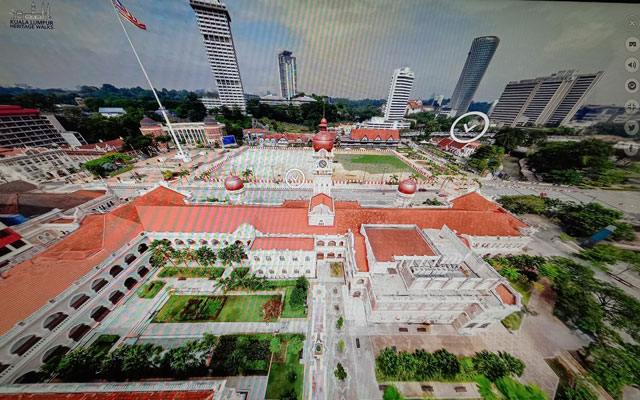
Aerial view of Independence Square and its surroundings
What
The tour, dubbed Old Kuala Lumpur East-West Connection, gives a glimpse of the city’s history, dating back to its tin mining past in the 19th century, through a jaunt along the older parts of Kuala Lumpur.
The term “East-West Connection” references early settlements, trade and structural developments that took place close to the confluence of two rivers (the Klang River and the Gombak River) that ran through the city.
The title also alludes to the relationship and co-existence of the diverse communities who settled at the east and west banks of the two rivers. Legacies left behind by the early migrant settlers, pioneers and British colonisers are still very much visible today in modern Kuala Lumpur.
During the 90-minute interactive tour, Jane regaled me with tales of former leaders who had contributed to the city’s growth and family-run businesses that have stood the test of time, and are operated by descendants of the early founders in their original buildings.
How
The virtual tour is an adaptation of the physical 1km heritage walking tour that Jane ran prior to the lockdown.
To simulate the physical tour, she partnered with a local travel technology company which had the expertise to take aerial shots and street images with 360-degree views of the entire route in high-resolution.
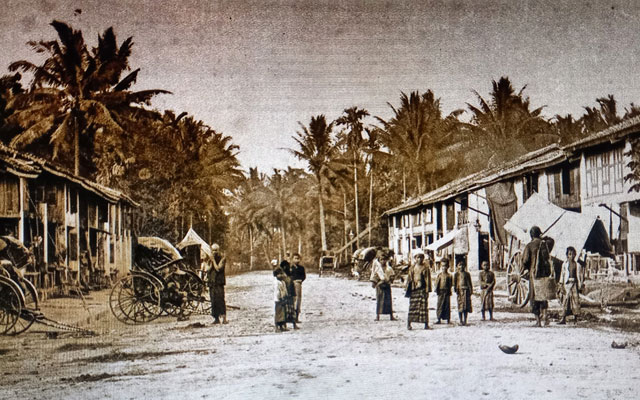
On the virtual tour, a pre-recorded video of present-day old Kuala Lumpur was juxtaposed with painstakingly-sourced pictures of the place in historic times. Staring at the steady stream of old images evoked in me a sense of nostalgia, and I found myself wistful for a bygone era when life was much simpler and people were less caught up in materialistic pursuits.
Photos of people riding on pushcarts and sampans, then the main mode of transportation near the Malay village and Java Street, now renamed as Jalan Tun Perak, is a hark back to the good old days.
An old photograph of Kampung Rawa in 1890 from the National Archives of Malaysia is shown to visitors on the tour
A virtual 360-degree tour meant I was able to revisit certain places along the touring route and zoom in for a close-up look at places and objects that intrigued me.
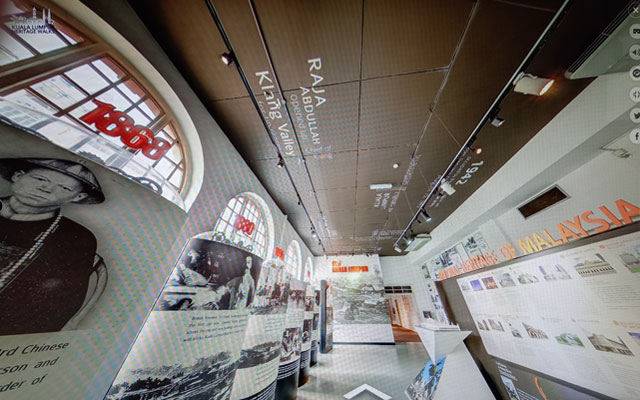
For example, I could zoom in to read the writings on the ceiling inside the Kuala Lumpur City Gallery’s Hall of History – something which had escaped my eyes during my previous visits to the gallery.
Kuala Lumpur City Gallery’s Hall of History
Verdict
I loved this highly interactive, one-on-one tour as I was given Jane’s undivided attention and could shoot as many questions as I fancied at her, without fear of holding others up. The greatest perk to virtual touring is that we could hop from one spot to another, retrace our steps to revisit a place, or skip areas along the walking path – all at the click of a button. Jane matches her commentary based on where we chose to venture, and her in-depth storytelling brought those places to vibrant life. Those who appreciate a deep dive into the country’s cultural heritage, architecture and history will find this virtual jaunt back in time to be right up their alley.
Rate: RM50 (US$12) per person Contact:
Website: http://loka.fun/old-kl-east-west
Email: info@kualalumpurheritagewalks.com
Mobile: +6019 6992668
Following the global travel freeze brought on by the pandemic, people are yearning to travel again to reconnect with loved ones and to make new memories this year, revealed a new survey by IHG Hotels & Resorts.
Close to 60 per cent of survey respondents said they cancelled up to four leisure and business trips last year. More than half the travellers surveyed said they have now rebooked cancelled trips or plan to rebook them, with family vacations and visiting loved ones topping travel wishlists for 2021.
IHG’s survey shows renewed optimism and resolve for human connection
The rollout of vaccines is igniting hope and optimism, as respondents across all age groups, ranging from 18 to 55+, said spending time with family and friends is a primary motivator for travel this year.
When borders reopen, one in five respondents said they plan to make up for the lack of travel in 2020 by going on more trips in 2021. The same percentage said they hope to travel to a place on their bucket list in 2021, with that being true for one in three travellers aged 18 to 24.
Younger travellers were five times as likely to say that volunteering for a community in need would be a primary motivator for travel.
However, more than a third of all those surveyed, including 50 per cent of those 55 and older, said they plan to hold off travelling until the Covid-19 vaccine is more widely available.
Hoteliers in Malaysia have been quick to adapt and innovate in order to survive since the ongoing movement control order (MCO) was reimplemented, prohibiting hotels from accepting leisure guests.
Since then, a slight rolling back of restrictions now permits hotels to provide dine-in services at their F&B outlets, capped at two persons per table. However, the rule of travel within a 10km radius from home still applies, while interstate travel remains banned.
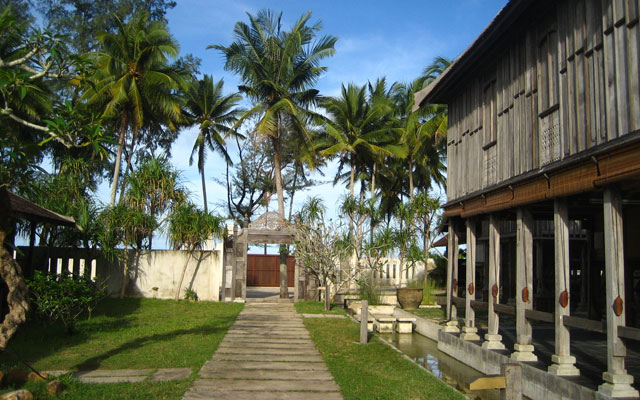
Terrapuri Heritage Village has turned to selling vintage furniture and handmade decorative items during MCO 2.0
Under these trying circumstances, some local hotels are thinking outside the box to generate some much-needed income – looking beyond food takeaways and meal deliveries, which has become the norm during MCO 2.0.
The team at G Hotel Gurney in Penang, for example, has recently started offering a drive-through laundry service where guests can drop off their dirty linen for washing.
A customer picking up her clothes at G Hotel Gurney’s drive-through laundry facility
It is also selling its in-room amenity collection, hand sanitisers, face masks, anti-bacterial wipes, and Eloura eco-friendly toiletries repackaged as corporate giveaways.
G Hotel Gurney’s general manager, Michael Hanratty, shared: “As the crisis continues to evolve, we will get through this by being able to adapt and outlast the pandemic, and come out even stronger. It is no doubt that international tourism will not recover anytime soon, but we believe that the tourism industry in Malaysia will rise again.”
Terrapuri Heritage Village in Kampung Penarik, Terengganu, which houses a collection of 22 traditional Malay houses, ranging from 100 to 250 years old, has also had to pivot its business model to survive.
Its CEO, Alex Lee, who has a love for antiques, said the hotel is selling vintage furniture and handmade decorative items on its website and social media platforms, while also providing consultations on interior design and landscape gardening for a fee. Lee said: “We are just about surviving.”
Kingston Khoo, director of sales and marketing at Mutiara Taman Negara, said the resort is promoting buy now, stay later packages which are valid until the end of the year – a move which has helped pump up cash flow.
Mutiara Taman Negara offers buy now, stay later packages with long validity periods to attract business
He said: “These are well-received because of the long validity period, attractive rates and flexible conditions.” Rooms are going for nearly 50 per cent off pre-Covid rates which were running at RM680+ (US$168) for a three-day/two-night all-inclusive package with activities.
Customers are also not required to fix a travel date, and are allowed to postpone or cancel their trip by giving a 24-hour advance notice.
Phuket’s sizeable mega-villa property sector has experienced an unexpected surge in multi-million-dollar sales over the past year as Thai buyers sought refuge in the global Covid-19 crisis.
Over five billion baht (US$167 million) in primary and secondary high-end properties transacted at the height of the pandemic.
Phuket’s newest luxury development is the Residence at Tri Vananda Integrative Wellness Community
According to new market research from C9 Hotelworks, transactions in 2020 in top-tier real-estate hit its highest level in five years, despite flat trading levels in the broader marketplace. Expansive tropical island mansions with four, six or more bedrooms have struck a chord with wealthy Thais who have been unable to travel overseas and are fatigued by mounting air pollution issues in the nation’s capital.
Speaking about the transaction-charged revival in the island’s mega-villa sector, C9’s managing director Bill Barnett said that “country living and estate villas in the age of pandemic are a strong reaction driven by both internal and external factors.”
He added: “Thailand’s wealthy have been effectively stranded in the country for nearly a year and the impact has seen them revisiting and falling in love with Phuket. Resort real estate remains an emotional proposition and this is a contributing factor in reigniting luxury property sales.”
Aside from the Thai segment, there is more to the Phuket real estate backstory. There’s off plan and completed properties in the primary market, whereas secondary or resales has seen some deep discounting of large villas to overseas buyers. C9’s research has identified one source of these to be the global luxury marketplace Concierge Auctions, which has effectively harnessed competitive tension by means of an auction and induced demand though the perception of value creation.
Locations recording mega-villa trades are all on the West Coast of the island, namely, Millionaires Mile in Kamala, Layan and Nai Thon Beach, revealed C9 data. On the East Coast, Cape Yamu continues to perform strongly with the new Headland project. Phuket’s luxury footprint is now also firmly expanding over the Sarasin Bridge into a Greater Phuket catchment with the Aquella integrated golf course community underway.
Noting how proximity of projects is key to success and that there is often only one degree of separation between buyers in mega-villa estates, Barnett pointed out that “one of the most successful twining of projects last year has been the ultra-luxury Layan Residences by Anantara and Avadina Hills by Anantara. The synergy of having a hospitality overlay and hotel-style management to the developments has helped enormously”.
While forecasting how 2021 and beyond will see the Phuket luxury property market fare, Barnett voiced optimism for primary residences, saying that “we are seeing considerable interest from Bangkok high-net worth individuals and key regional capitals like Hong Kong and Singapore who are drawn to the island by clean air and space, quality international schools, and strong support infrastructure”.
He added: “We are on the cusp of seeing a series of new inland integrated communities such as Tri Vananda in Thalang come on stream and this is expected to shift a larger slice of demand towards luxury single family homes. Covid-19 has refocused an entire generation on the value of work-life balance and proven work from home is a viable ongoing alternative.”
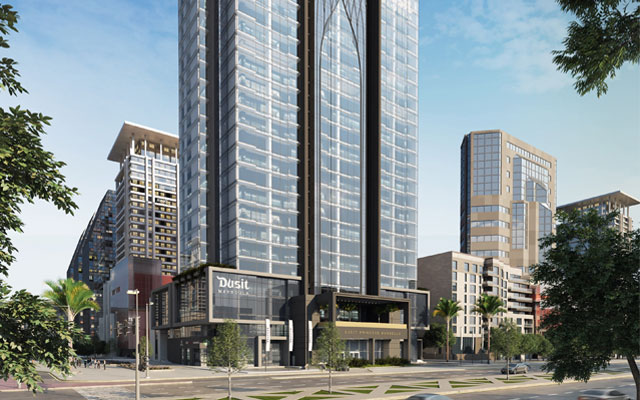
Thailand’s Dusit International has signed a hotel management agreement with Al Fajer International Holding Company, a Kuwait-based private real estate company, to operate the first Dusit-branded hotel in the country.
Slated to open in 4Q2023, Dusit Princess Mahboula Kuwait will comprise 180 rooms and 70 serviced apartments under the group’s upper-midscale Dusit Princess brand. The property will be located in the Mahboula district, an industrial and commercial coastal area just 25 minutes by car from both the city centre and Kuwait International Airport.
Dusit continues Middle East expansion with its first hotel in Kuwait
The new property will be equipped to cater to both transient and long-stay guests, including associates of local oil and gas companies seeking lodgings near their workplaces. The property’s serviced apartments have been specifically designed for families.
Alongside an all-day dining venue, a specialty restaurant, and a lobby lounge, the property will offer a swimming pool, a 900m² gym, and a spa. Four meeting rooms with capacity for 120 people, and a ballroom accommodating up to 350 guests, will cater to the local corporate and events market.
The ASEAN Tourism Association (ASEANTA) has called on South-east Asia leaders to take urgent action to reboot the travel and tourism industry in the region by Q2 this year, and save the tourism industry from collapsing under the weight of the pandemic.
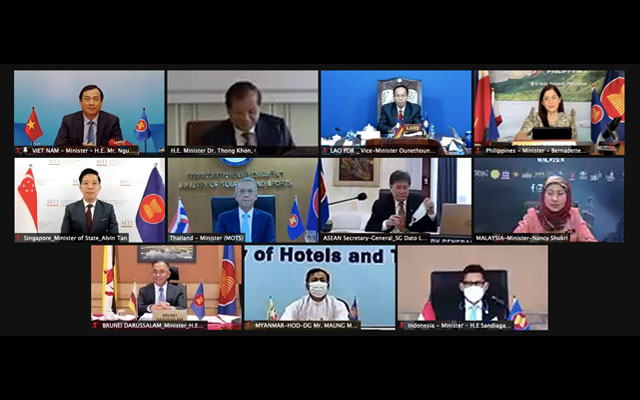
During the recent 24th Meeting of the ASEAN Tourism Ministers, which took place virtually last week and was hosted by Cambodia, ASEANTA laid down a series of recommendations to the ministers, including continuing their respective governments’ support in a fair and equitable manner to ensure survival of the industry. This includes government guaranteed loan, tax reliefs, subsidies, incentives, and other relevant fiscal policies.
24th Meeting of the ASEAN Tourism Ministers
The association also called on the respective governments to prepare for the reopening of borders by laying down frameworks for cross-border travel, standard operating procedures (SOPs) for the whole tourism ecosystem, and guidelines on testing and vaccination by Q1 this year. That also covers the possible development of a common ASEAN health passport, with the potential integration of existing contact tracing or health declaration apps.
In addition, they urged the tourism ministers to facilitate the resumption of all types of travel – including business, leisure and VFR travel – by Q2 this year, in accordance with the ASEAN Travel Corridor Arrangement (TCA) framework.
The ASEAN TCA framework, which was issued last November by the South-east Asia leaders, aims to develop a common set of pre-departure and post-arrival health and safety measures, led by the Indonesian foreign affairs ministry. The development of ASEAN TCA would help restart cross-border travel by laying down a common set of requirements across countries.
Under the ASEAN TCA, ASEANTA proposed for business travel corridors to include the following safety measures: pre-departure and arrival testing, self-isolation for only one to two days until PCR test-on-arrival results are released, a controlled itinerary or allowance for business travellers to travel for leisure after as long as it’s sponsored by the company, and no quarantine for returning business travellers.
The association also floated the possibility of quarantine-free travel bubbles to allow leisure and VFR travel between low-risk countries, with no quarantine imposed on both incoming and returning travellers. The plan would entail the need for mutually recognised testing procedures, alongside common vaccine documentation for ease of verification.
Business travel alone will not be enough to restore intra-ASEAN traffic to healthy levels, ASEANTA said, noting that intra-ASEAN traffic is 35 per cent of the total international O&D passenger traffic in South-east Asia. It also pointed out that reciprocal green lane (RGL) arrangements have not generated significant volumes of air traffic, citing official data showing that Singapore received only around 835 inbound travellers from the South-east Asia region travelling under the RGL arrangements between June 8 to December 25 last year.
If reopening of borders is limited to essential business travel, passenger traffic between South-east Asian countries will likely remain at less than five per cent of normal levels for most of 2021, it added.
ASEANTA also emphasised the important role of the travel and tourism sector to South-east Asia’s economy. In 2019, the travel and tourism sector contributed US$380 billion or 12.1 per cent to South-east Asia’s GDP and created 42.3 million jobs or 13.3 per cent of total employment in the region.



 For a city where Lunar New Year celebrations are traditionally large-scale, vibrant and a serious tourist magnet, creative solutions must be sought to combat the now-familiar travel and movement restrictions during the pandemic.





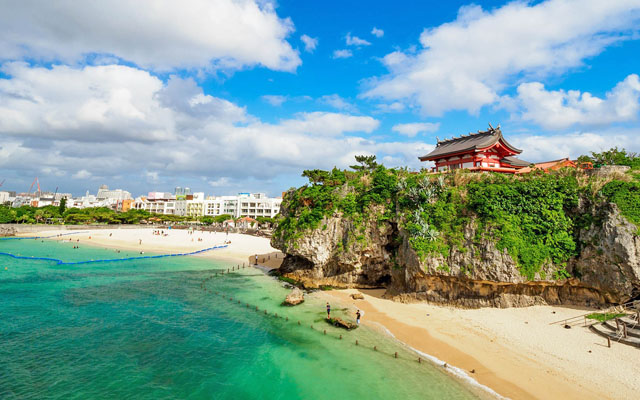






Following the global travel freeze brought on by the pandemic, people are yearning to travel again to reconnect with loved ones and to make new memories this year, revealed a new survey by IHG Hotels & Resorts.
Close to 60 per cent of survey respondents said they cancelled up to four leisure and business trips last year. More than half the travellers surveyed said they have now rebooked cancelled trips or plan to rebook them, with family vacations and visiting loved ones topping travel wishlists for 2021.
The rollout of vaccines is igniting hope and optimism, as respondents across all age groups, ranging from 18 to 55+, said spending time with family and friends is a primary motivator for travel this year.
When borders reopen, one in five respondents said they plan to make up for the lack of travel in 2020 by going on more trips in 2021. The same percentage said they hope to travel to a place on their bucket list in 2021, with that being true for one in three travellers aged 18 to 24.
Younger travellers were five times as likely to say that volunteering for a community in need would be a primary motivator for travel.
However, more than a third of all those surveyed, including 50 per cent of those 55 and older, said they plan to hold off travelling until the Covid-19 vaccine is more widely available.