

Brought to you by Wyndham Hotels & Resorts
Destinations beef up attraction lineup to entice visitors

Destinations in Asia are coming up with new products and experiences as part of their post-pandemic tourism recovery strategies.
Azerbaijan, which is now open to fully vaccinated travellers from 29 countries, is focusing on developing its ecotourism and heritage potentials; while Nepal is expanding its destination focus from adventure tourism to cultural and entertainment to cater to different types of visitors.
Speaking at PATA Travel Mart Forum last week, Florian Sengstschmid, CEO, Azerbaijan Tourism Board, said that there are a lot of ongoing renovation and restoration works at cultural and historical sites, such as Khinalig, the highest village in Azerbaijan, which is on the tentative list of UNESCO’s World Heritage Sites.
Being home to 80 per cent of the world’s mud mountains, the country aims to highlight that attraction with a Mud Volcano Visitor Centre project. “It will be an experience centre where travellers can not only look at the volcanoes but also zipline over them or drive off-road around them,” Sengstschmid said, adding that new hiking trails are being built around the area to cater to different types of visitors.
A new e-learning platform dubbed Azerbaijan 101 has also been launched to engage overseas travel companies with live events, virtual fam trips and various learning courses, according to Sengstschmid.
Nepal, whose government is finalising the entry policy to welcome fully vaccinated travellers without quarantine and reinstate visa-on-arrival, is focusing on products which are different, available year-round, and suitable for all groups.
Dhananjay Regmi, CEO, Nepal Tourism Board, said: “Nepal is divided into three ecological zones. In the past, we focused on (the adventure zone of) the Himalayan mountains. Now, we are also (promoting hilly) Pahad in the middle areas and Terai (low lands).”
Pahad highlights include hill stations and mid-hill cultural trails, while Terai boasts wildlife, culture and entertainment centre. “We are also reviving the camping treks in the less dense Eastern and Western regions, like the Khaptad-Badimalika Region trek, by prioritising on the lost trails,” Regmi said.
Air 7 creates new marketing arm in Singapore to tap rising private jet charter demand

With the Covid-19 pandemic fuelling greater demand for private jet services, a pair of Singapore-based businessmen and aviation professionals saw a promising business opportunity in the lack of dedicated, locally-based charter services applicable to US-registered aircraft.
That led to Jamie Lenox and Stefan Wood setting up Air 7 Asia as a joint venture with Air 7, LLC, a private aviation jet services organisation. The company also aims to tap on renewed interest in better-value private jet charters.
Launched this year, Air 7 Asia acts as the Singapore-based branding and marketing arm for the services of Air 7, LLC. Owners of US-registered private aircraft in Asia can now request to join the Air 7, LLC Air Carrier Certificate to make their jet available for charter-back, thus allowing the owner to profit from their asset.
Through Air 7, LLC, Air 7 Asia can provide the services from its brand-new base at Seletar Airport in Singapore.
According to Wood, executive director of Air 7 Asia, over the past year, through sister company Singapore Air Charter, the majority of the charter work has been in the repatriation sector.
While tourism recovery in South-east Asia remains uncertain, Thailand’s Phuket Sandbox scheme sparked interest, along with the ease of travel in the Maldives. Currently, there is also an uptake in private jets for business and tourism-related travel for the Brunei and German travel lanes.
Air 7 Asia facilitates more aircraft for charter, which is timely as Wood expects pent-up demand for such specialised transportation to be huge. As evident in Europe and the US, private jet travel has been at an unprecedented high, as soon as Covid-19 restrictions eased.
Come December, Air 7 Asia’s first aircraft, Cessna Citation XL Eagle, will touch down in Seletar Airport, for chartering in the South-east Asia region.
Wood said: “We already have two aircraft coming under our umbrella in the next few months, with many more enquiries. The more aircraft we have available, the more options for every sector of private jet travel. We believe that this is a unique offer for the private jet owners of Singapore.”
STB kickstarts SingapoReimagine Global Conversations forum series on the future of travel

The Singapore Tourism Board (STB) has launched SingapoReimagine Global Conversations, a new forum series that puts industry game-changers on the global stage.
Featuring speakers across different sectors, disciplines and locations, the series outlines new travel experiences and business models that demonstrate how the travel industry has innovated and adapted for the future in the wake of the pandemic.
STB CEO Keith Tan said: “The needs and expectations of travellers are changing significantly. As borders gradually reopen around the world, the tourism industry must work together to innovate, develop solutions and reimagine what the new travel experience can and should be. With SingapoReimagine Global Conversations, we hope to provide a platform for such innovation, and a voice for leaders in the tourism sector and beyond.”
SingapoReimagine Global Conversations is a key part of STB’s SingapoReimagine initiative, which was launched last year to affirm the destination’s commitment to shape a new standard for travel, through safety, technology, experiences and sustainability.
The series comprises three key forums, with overseas adaptations. The first forum, titled Reimagine Experiences, is available on-demand in four video episodes released weekly on STB’s website and YouTube channel starting today. The episodes will tap into the top minds in tourism and lifestyle, through a rich blend of interviews, rapid-fire questions, and data insights, to inspire new collaborations and ideas.
The other two forums, which will focus on the themes of travel journeys as well as sustainability and wellness, will be introduced later this year and in 1H2022.
In the first episode, global trend forecaster and data partner WGSN unveils deeper insights into three future traveller profiles – The Wander Must, The Mindful Explorer, and The Slow Pacer – that will influence the future of the travel industry, as well as actionable steps for industry stakeholders.
Reimagine Experiences will spotlight different topics with featured speakers from across the attractions, design, entertainment, events, hospitality, sports, technology, and MICE industries. These include Warner Music Group; travel and lifestyle company Blue Sky Escapes; local experience curator Tribe; National Gallery Singapore; sporting events organiser Ironman Group; as well as Raffles Singapore and Double Confirm Productions & Sight Lines Entertainment, which collaborated to produce a first-of-its-kind interactive virtual play within the hotel’s premises.
To further discussions on reinventing the travel experience, SingapoReimagine Global Conversations will be rolled out in overseas markets in localised formats.
These include the US where SingapoReimagine Global Conversations will partner with The New Yorker Festival to feature a moderated panel session on food and sustainability. In China, it will take place as STB China MICE conference, which will include a panel discussion on topics such as tech-enabled experiences and sustainability. In the UK and Dubai, it will take the form of a panel session on sustainable travel and building liveable cities.
To catch all episodes of SingapoReimagine Global Conversations, visit bit.ly/globalconvos.
TTG Asia’s Loyalty Wars bags PATA Gold Award

An analysis on hotels’ growing competition for guest loyalty has won the PATA Gold Awards 2021 for Business Article.
Titled Loyalty Wars, the article was authored by TTG Asia Media’s senior correspondent, Caroline Boey. It was published within the TTG Asia + TTGmice Hospitality Special edition in July 2020.
This is TTG Asia‘s first PATA Gold Awards win for Business Article, and the eighth for TTG Asia Media’s stable of English language trade titles. TTG Asia Luxury won the award in 2016; TTGmice won the award in 2008, 2011, 2013, 2014, 2018 and 2020.
Plaza Premium Group to transform passenger experience at Bangalore International Airport
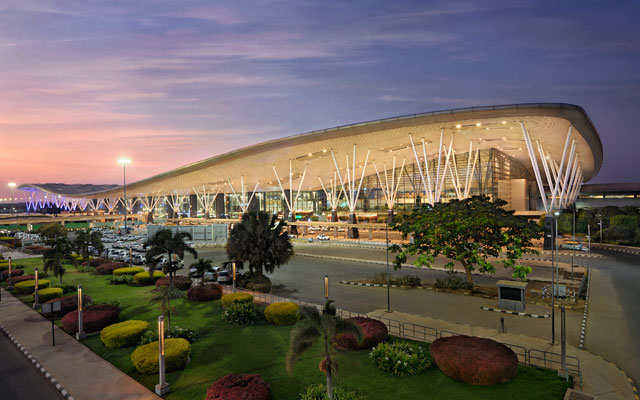
Plaza Premium Group (PPG) has been appointed by Bangalore International Airport (BIAL) to manage and enhance passenger services at the Kempegowda International Airport, Bengaluru (BLR Airport).
The 10-year full-service management appointment covers the entire portfolio of BLR Airport’s 22 services. The 360-degree airport service delivery scope includes: service delivery, control centre, training centre, customer engagement, marketing communications, sales and distribution as well as technology. More services will also be introduced to enable an end-to-end and globally connected passenger journey.
The 360-degree airport service delivery scope includes: service delivery, control centre, training centre, customer engagement, marketing communications, sales and distribution as well as technology.
BIAL and PPG will collaborate in addressing the desires of travelling in the new normal – with seamless service delivery, world-class standards and quality, technology and innovation, as well as commercialisation optimisation.
In order to deliver seamless, optimal and data-driven operation excellence, PPG has teamed up with global IT services provider Tata Consultancy Services to develop an end-to-end passenger services technology platform. The new platform will be built based on the existing PPG operating platform with tailored architecture that suits the needs of BIAL’s passengers.
The platform will include an omni-channel booking engine which enables worldwide sales and distribution; a customer engagement centre with customer profiling and personalisation capabilities; a service delivery platform for dispatch and real-time incident management; and a back office system which powers HR, administration, asset and information management.
PPG is also partnered with one-stop customer engagement technology service provider oneDirect to ensure passenger interactions are managed through one-single platform via various touchpoints.
Song-Hoi-see, founder & CEO of PPG, said: “PPG is no stranger to the Indian travel market and we see huge potential in the travel market, therefore we have strategised to invest over US$15 million and will deploy a workforce of over 800 staff over the 10 years, supported by our Hong Kong-based headquarters with the hope to grow with BIAL in the years to come.”
IHG adds Holiday Inn hotel to Singapore portfolio

IHG Hotels & Resorts has extended its partnership with RB Capital to bring the Holiday Inn brand to Singapore with the rebranding of a property in Little India.
The 300-room Holiday Inn Singapore Little India, formerly the Park Hotel Farrer Park, will undergo a renovation before relaunching with a vibrant fresh identity and positioning.
The hotel is situated in the heart of Little India – adjacent to Farrer Park Hospital and next to 24-hour shopping mall Mustafa Centre and City Square Mall – providing direct access to Farrer Park MRT station through its lobby.
Holiday Inn Singapore Little India will be the first in Singapore to introduce the new Holiday Inn brand hallmarks including a new dining and workspace concept with a globally recognised F&B partner.
With the new signing, IHG now manages three of RB Capital’s Singapore hotels, including Holiday Inn Express Clarke Quay and InterContinental Singapore Robertson Quay.
Wyndham is ready to welcome guests back whenever, wherever
With approximately 1,600 hotels spanning 14 trusted brands across Asia Pacific, Wyndham Hotels & Resorts holds a leading presence in key business and leisure destinations across the region. Wyndham is committed to elevating hotel experiences at every price point through its vast global scale enabling guests to enjoy more choices and better value.
Check out these latest openings:

The rebranded hotel is equipped with a total of 278 high-quality and elegant guestrooms and suites. Rooms are decorated with ink and wash style combined with modern design, full of Jiangnan charm and oriental flavour. It is located in Fenhu Lake, an ancient lake with history that can be traced back to 770BC.

This 317-room luxury beachfront resort is located on Cat Ba Island in north-east Vietnam. Guests can enjoy a wealth of facilities including an indoor swimming pool, Japanese onsen, spa, fitness centre, and multiple restaurants.
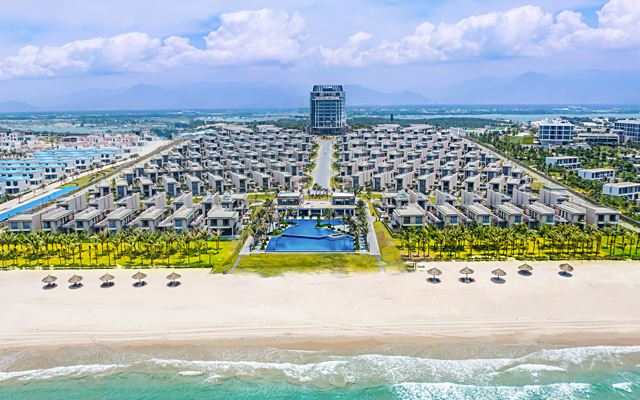
This 241-room hotel is nestled on the scenic Cam Ranh Peninsula, overlooking the golden sands of Long Beach. The resort features a collection of spacious villas and premium amenities to ensure a comfortable and relaxing stay.

This newly-built 256-room hotel forms part of a major commercial complex, adjacent to a 17,000m2 convention centre in the Nanjing Airport Economic Core. The hotel is a convenient 15 minutes’ drive from Nanjing Lukou International Airport.

Located in the popular business precinct of Newmarket just off the Auckland motorway, this 93-room hotel is perfectly positioned to cater to both corporate and leisure guests. It features apartment-style rooms and onsite parking.

Located in the heart of New Zealand’s capital city, this new 117-room hotel is walking distance from the scenic Wellington Waterfront Walk and Museum of New Zealand. There’s also an on-site gym for guests.
Although leisure holidays and business trips aren’t happening just yet, whenever – or wherever – the decision is made to travel, be assured that Wyndham Hotels & Resorts will provide the best available rates, flexible booking policies, and member perks when booking direct.
Wyndham Hotels & Resorts is also committed to the health and safety of their guests and team members, and have taken important steps to ensure health and safety protocols are in place under the global Count on Us initiative.
Loyalty is very highly regarded at Wyndham Hotels & Resorts, which is why Wyndham Rewards offers a guaranteed 1,000 points with every qualified stay. The programme’s free nights, starting at just 7,500 points, are among the most attainable in the industry.
Sri Lanka Tourism returns to overseas trade show floors
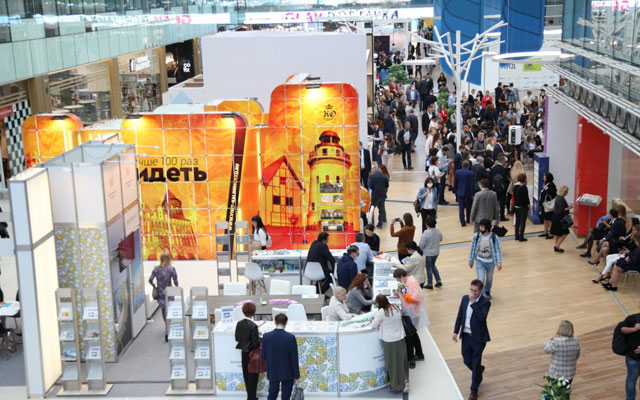
Sri Lankan tourism officials will resume attending physical overseas trade exhibitions and fairs, kicking off with Moscow’s three-day International Trade Fair for Tourism and Travel starting today (September 7).
Sri Lanka has been represented only virtually at these fairs over the past 18 months, after the Covid-19 pandemic restricted global travel.
Officials of state-run Sri Lanka Tourism (SLT) said about 13 Sri Lankan companies are participating in the Moscow fair, with the delegation including tourism minister Prassanna Ranatunga and SLT chairperson Kirmali Fernando, both of whom will also be attending a travel show in Ukraine thereafter.
Plans are also underway to send delegations to attend the IFTM fair in France (October 5-8) and the World Travel Mart (November 1-3) in the UK, but vaccination requirements in host countries could pose a stumbling block, officials said.
While about 10 companies have already confirmed their participation at the IFTM fair, officials say that there are entry issues since France, for example, has not approved the Sinopharm vaccine which has been the most widely-administered Covid-19 vaccine in Sri Lanka.
They added that in the case that entry is not permitted, overseas representatives of these companies along with officials from the Sri Lankan embassy will represent the country instead.
Chandra Wickramasinghe, hotelier and chairman of travel firm Connaisance De Ceylon, stressed on the importance of a physical presence at international trade shows. “Travel fairs have a major influence on tourism destinations,” he said.
Nalin Jayasundere, managing director of Aitken Spence Travels, Sri Lanka’s biggest inbound travel agency, said it was important to attend these fairs for marketing purposes.
Sri Lanka’s physical presence at travel trade fairs comes at a time when the industry is hoping for tourism to recover by the coming winter season by which time 75 per cent of those aged above 30 in the country would have been fully vaccinated.
Air France and Swiss carrier Edelweiss have announced plans to restart flights to Sri Lanka in November.
Meanwhile, health authorities said on Sunday that fully vaccinated tourists will be permitted to visit places of interest across the island and patronise restaurants amid a nationwide lockdown enforced since August 20. The initial 10-day lockdown has been extended twice, and is due to end on September 13.
Trade reacts to Philippine Airlines’ restructuring plan

While Philippine Airlines’ (PAL) financial restructuring has no immediate impact on the travel sector, it will be a smaller airline with its future determined by the pandemic’s duration and how long its recovery plan can be sustained, according to the travel trade.
Tourism Congress of the Philippines president, Jojo Clemente, does not see an immediate effect to the airline pursuing a corporate rehabilitation programme, “especially if PAL can manage to keep fares competitive and affordable”.
In the medium term, however, PAL’s recovery “will depend on how the measures they adopt in the short-term pan out,” Clemente said. “If they are able to keep demand or if the pandemic situation gradually improves, they may be able to sustain the recovery programme.
“However, if the current situation persists a few more months, emerging from the rehabilitation may prove to be more difficult. They, and other players in the aviation industry, may be in deep waters.”
Agreeing, Ritchie Tuano, immediate past president of the Philippine Travel Agencies Association, opined that “(the situation) is just so fluid as of this time and forecasting what is going to unfold in the medium and long-term is nothing but a guess”.
Former tourism secretary and founder of consultancy Asia Pacific Projects, Narzalina Lim, said “PAL will be a smaller airline”. The airline’s fleet will shrink by 25 per cent, as it will return 22 aircraft, leaving it with a fleet of 70. PAL will also delay the delivery or cancel orders for 13 Airbus aircraft.
Lim believed that with PAL chairman Lucio Tan infusing US$505 million – a portion of which will be converted to equity – into the restructuring plan, alongside US$150 million of additional debt financing from new investors, the airline will not require the help of the Philippine government to bail it out.
At any rate, Tuano said that “the government has just too much on its plate right now and I am uncertain they should drop everything to throw a lifeline to a single company”.
If passenger demand does not pick up as expected next year, an option is for PAL to convert some of its aircraft into cargo aircraft as “the cargo business can be more lucrative than passenger”, said Lim. “Companies always have to reinvent themselves to survive and PAL is no exception,” she added.
The government has to act on the request of the Air Carriers Association of the Philippines – PAL, Cebu Pacific and AirAsia Philippines – for loan guarantees so that banks can open their credit lines to airlines, considered as poor credit risk in this time of pandemic.
Hospitality consultant Jerome de la Fuente said the government should have come in by now to help PAL as the airline is “the pride and glory of the country”. “It is the national flag carrier, and the oldest airline in Asia with 80 years of history. It is a legacy carrier. Can you imagine a flag carrier owned by a foreigner?” he added.
He said many airlines will be interested to buy out PAL, which is partly owned by Japan’s ANA, because of those attributes alongside having Asian routes that PAL already flies to.
De la Fuente said that somewhere along the line, more money had to be pump into PAL to keep it afloat, just like Malaysian Airlines, Japan Airlines and other carriers that are still surviving after having declared bankruptcy.

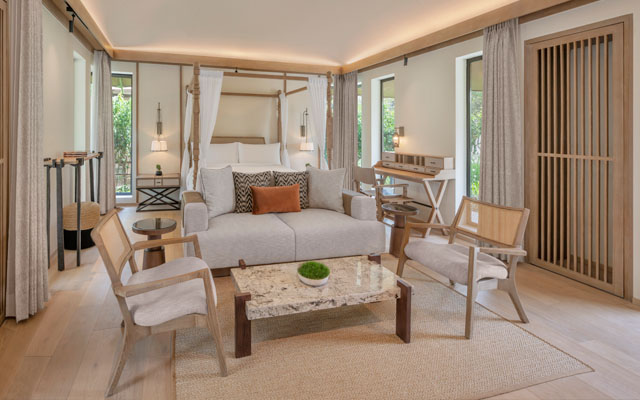






Hilton has signed an agreement with Vietnamese real estate developer Sun Group to launch a new resort under Curio Collection by Hilton in Phu Quoc, Vietnam.
Set to open in 2023, the 197-key La Festa Phu Quoc, Curio Collection by Hilton will represent Hilton’s first resort in the country, joining three other Hilton-managed hotels in Vietnam including Hilton Hanoi Opera, Hilton Garden Inn Hanoi and Hilton Da Nang.
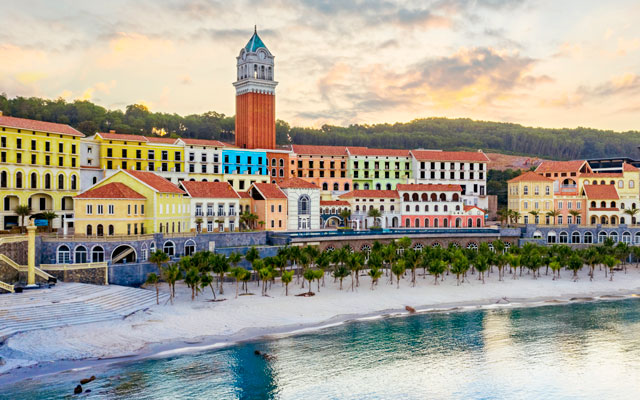
Located 20km from the Phu Quoc International Airport, the resort will sit within the Sun Premier Village Primavera, a local tourist attraction which reflects elements of the iconic Amalfi town of Italy.
Facing the island’s popular Kiss Bridge and within close proximity to the Gondola Cable Car station, the resort will feature bold Mediterranean-inspired architecture and join an array of restaurants, bars and entertainment facilities in the vicinity. Guests at the resort will enjoy direct access to the beach.
The resort will also feature an all-day dining restaurant, a specialty restaurant, a lobby lounge and a bar. Leisure amenities will include a pool, fitness centre, spa and kids’ club.