


Meliá hires cluster DOSM for brand’s first two Thai properties
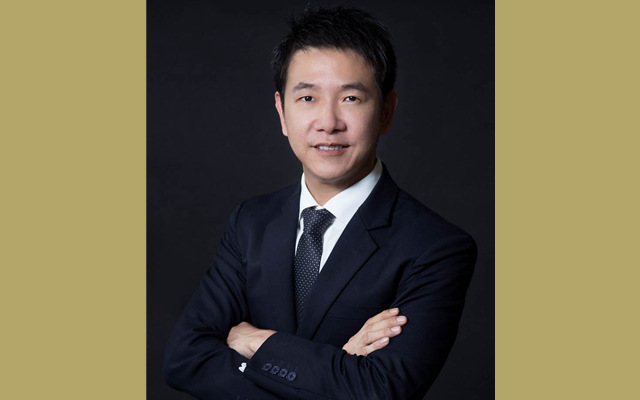
Meliá Hotels International has appointed Wuttipong Tanteraponchai as the cluster director of sales and marketing (DOSM) for both Meliá Koh Samui and Meliá Chiang Mai, the brand’s first two properties in Thailand.
The Thai most recently worked as DOSM at The Sukhothai Bangkok, leading a team of sales and marketing communication professionals to manage the hotel’s transition to a hybrid alternative state quarantine (ASQ) hotel in the wake of Covid-19.
Prior to that, he worked at The Okura Prestige Bangkok for more than seven years, firstly in the role of director of sales (DOS) for two years before being promoted to DOSM. He has also spent time as cluster DOS at Pan Pacific Hotels Group Singapore, DOS (corporate & MICE) at The Bangkok Marriott Resort & Spa, and DOS at The Westin Grande Sukhumvit, Bangkok.
Wuttipong embarked on his hospitality career in the early 1990s as a tour coordinator at The Royal Cliff Beach Resort. From there, he steadily rose up the ranks as a guest service agent at The Mansion Kempinski Bangkok and The Royal Orchid Sheraton & Towers before becoming the assistant front office manager at The Embassy Suite Windsor Palace.
He then progressed to senior sales management positions with The Novotel Bangkok on Siam Square, The Bangkok Marriott Resort & Spa, and The Oriental Bangkok.
Tour operators appeal to Indonesian president for financial aid
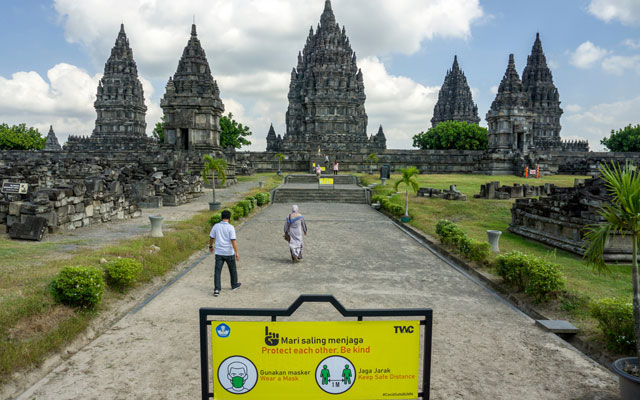
The Indonesian Inbound Operators Association (IINTOA) has sent a letter to president Joko Widodo seeking financial relief for its members, after repeated cries for support to help alleviate some of the stress caused by Covid-19 went unheard.
In the letter sent last weekend, cc’d to the minister of finance and minister of tourism and creative economy, IINTOA chairman Paul Edmundus Talo and secretary general Ricky Setiawanto pleaded for grants and soft loans to enable their members to restart their businesses after the pandemic.
In a dialogue with the media last week, Paul said the pandemic had forced the majority of tour operators in the country to cease operations, with many forced to switch industries or change careers in order to survive.
Kuswadi Rawit who runs tour agency Batu International Wisata in Malang, East Java, for example, had to let go of all his staff due to the economic impact of Covid-19 and he now uses his office space to pack staple food packages for sale. Elsewhere, in North Sulawesi, Jouvendi Rompis, owner of Adventurindo Tours, has pivoted to become a chicken farmer.
Many have sold their business assets and shed workers. Horas Tours, for instance, has lost 77 per cent of its staff, according to executive director Indra Fadjar. That loss in trained and experienced talent means inbound players like him would face difficulty restarting their businesses in the wake of the pandemic, he said.
Meanwhile, Freddy Rompas, inbound general manager of Pacto, opined that it will be a challenge for inbound operators to approach foreign business partners again post-pandemic without the government’s assistance because it is costly.
IINTOA’s Paul said the association had approached banks for soft loans, but was rejected. As such, the association formed a task force to approach and lobby officials from the Ministry of Tourism and Creative Economy and State-Owned Banks Association for financial aid, he added.
During their meetings, the government had agreed to help inbound tour operators, but failed to follow through with that promise, revealed Jongki Adiyasa, deputy chairman of IINTOA.
Tour operators, for example, were left out in the grant scheme given to the tourism and creative economic industry, according to Jongky. As well, the government’s promise to fund a programme rewarding health workers with tour packages offered by association members did not materialise.
In a last-ditch attempt to have their voice heard, IINTOA has sent the aforementioned appeal letter directly to the president.
Museum of Ice Cream
We are submerged waist-deep in a giant pool, bordered by millennial pink walls. Except this is not your typical pool. It is brimming with sprinkles, and fully-vaccinated visitors like us can frolic in multi-coloured plastics shaped like the dessert toppings.
Dubbed the sprinkle pool, the pièce de résistance at the newly-opened Museum of Ice Cream (MOIC) Singapore – the first MOIC outpost outside of the US – was inspired by founder, Maryellis Bunn, who dreamt of swimming in an ocean filled with sprinkles.


Why
MOIC started out as a New York pop-up in 2016, marketing itself as “a playground of boundless creativity for the ice-cream obsessed”.
Since then, MOIC has become a cultural phenomenon, creating a new type of experience called “experiums”. It has welcomed more than two million visitors to locations in Los Angeles, San Francisco, Miami and New York. As one of the world’s most Instagrammed museums, MOIC has copped more than a little sprinkling of celebrity stardust, with fans like Beyoncé, Katy Perry, David Beckham, Ryan Reynolds, and the Kardashians.
Now, the newest, creamiest attraction to hit our local shores promises to bring some sweet relief to a travel-deprived local crowd.
Bunn said: “Ice cream is a universal symbol of joy that brings happiness to everybody, regardless of age and across all walks of life. Museum of Ice Cream is for the kid in all of us, and in a time when every little dose of positivity is needed, we hope to uplift spirits, and bring people together to make the world a happier place, one ice cream at a time.”
What
Located at 100 Loewen Road, in the tranquil neighbourhood of Dempsey, MOIC Singapore is 5,574m² of whimsy doused in every shade of pink.
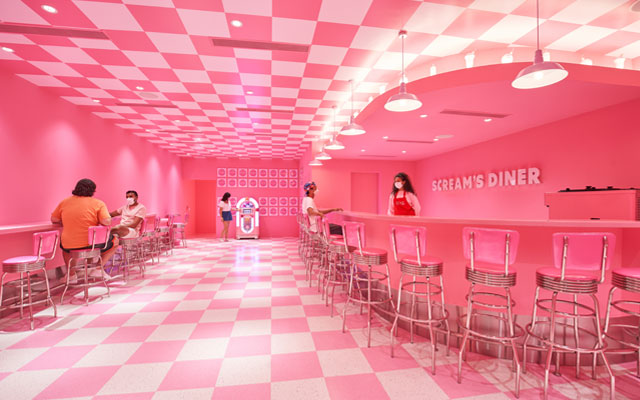
Each room in this ode to the frozen dessert transports visitors to a different space. Scream’s Diner, furnished with retro pink payphones and a vinyl jukebox, is a throwback to the 1920s soda fountain shop that was a landmark of American culture.
Nostalgics will also love the unicorn playground, a striking spin on the iconic dragon playgrounds that dotted Singapore’s public housing estates in the 1970s.
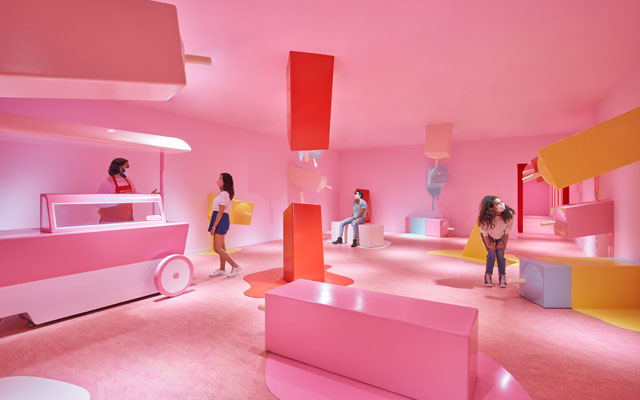
Elsewhere, the Melted Infinity room treats visitors to a Yayoi Kusama-esque mirrored vista of seemingly endless melted ice cream – neon-lit, no less.
Free-flow ice cream is the cherry on top of an MOIC Singapore visit. The frozen dessert served at this establishment come with a local twist, such as pulut hitam potong ice cream, as well as lychee bandung and taro milk tea ice cream sandwiches.
How
Every nook and cranny of this pinked-out paradise serves up a photo opportunity. Think banana swings, a potong playground, and an arch-shaped banana split-inspired tunnel made up of 10,000 artificial bananas in yellows, pinks and reds.
Upon entry, visitors navigate an interactive experience, from creating a virtual ice cream to stringing together letters on a magnetic alphabet wall. They can also build their own MOIC ice cream truck and a Mercone – an amalgam of a Merlion and an ice cream – standee out of cardboard as unique momentos to take home.
The Mercone also fronts some of the merchandise at the retail shop, from lapel pins to caps, as well as limited-edition activewear, under a partnership with local brand Kydra. MOIC Singapore has also collaborated with other homegrown brands to push out exclusive merchandise such as a pink guava and raspberry flavoured beer with Brewlander, and a citrus grapefruit scented candle with Artisan of Sense.
Verdict
Despite being an imported attraction, MOIC Singapore is no mere copy-and-paste clone, boasting never-been-seen exhibits, some with a distinctly local flavour. In particular, this museum will draw in the social media-obsessed crowd and families with young children.
But while MOIC Singapore is less educational institution, and more selfie playground, there is more to this museum than Instagrammable installations.
Trivia about the frozen dessert presented in bite-sized chunks line the walls across 14 multi-sensory installations. Which country buys the most ice cream in the world? How much ice cream can a single cow make in a lifetime? Whoever knew that soft serve was born out of a flat tire? Or that air is an important ingredient in ice cream?
So even if you are not into selfies, or jumping on a Barbie pink bouncy castle and grooving in a disco room is not your kind of fun, you can still binge on fun ice cream facts in this Insta-worthy wonderland.
Rate: From S$38 (US$28) per person; free entry for children aged two and below
Dates: Thursdays to Sundays, from 10.00 to 23.00 (last entry at 21.00)
Website: www.museumoficecream.com/singapore
Booking.com spotlights inspiring travel stories to reignite wanderlust

In a bid to spark travel inspiration, Booking.com has launched the Booking Explorers campaign, unveiling a series of powerful stories by leading personalities in Asia-Pacific.
The campaign celebrates trailblazers and explorers, showcasing how they have remained explorers at heart and continue to responsibly experience the world – or their backyards – despite challenges brought about by the pandemic. It is a celebration of their mindset and spirit of travel – embodying a relentless desire to experience and explore.
The campaign showcases Amazing Race Australia winners, Tim and Rod, who have travelled the world proudly representing the freedom to love as well as advocated making travel more inclusive for the LGBTQ+ community.
Other featured personalities include Indian multiple Grand Slam champion, Sania Mirza; Korean alternative pop band, Leenalchi, Vietnamese global fashion model, Chau Bui; as well as Japanese illustrator Kaori Watanabe.
“As we begin thinking about a return to travel, this campaign is a heartfelt reminder of its transformational impact and celebrates the spirit of travel through the voices of our Explorers,” said Laura Houldsworth, managing director and vice president for Asia Pacific.
“Like many of us, they were forced to look inwards during this time and found new inspiration in travel where it was possible, while advocating for their greatest passions from home. With travel slowly resuming, it is my hope that these stories will bring a message of hope to our Asian travellers; and continue to broaden our horizons on how we can still experience our world responsibly, when it’s safe to do so.”
Six Senses takes the hassle out of travel

Six Senses guests now enjoy the option of travelling light by sending their bags ahead of time to any of the brand’s properties worldwide, hence skipping the hassle of carrying and claiming baggage at the airport, thanks to the hospitality group’s partnership with Luggage Free.
The convenient door-to-door shipping service also covers a wide range of items including golf clubs, skis and snowboards.

With a team fluent in international shipping policies, Luggage Free will also complete any required customs paperwork when travelling abroad.
Guests can book this service under the ‘Destination/How to get there‘ tab on sixsenses.com, after selecting the resort of their choice on the website.
Luggage Free’s online booking platform allows guests to generate a customised quote or process an order in seconds. Reservations may also be placed over the phone with a personal travel concierge or at any Six Senses destination.
Luggage Free offers no-contact pickups at the guests’ preferred time of day from a residence, business, hotel, resort, and more. The service also includes complimentary insurance, real-time tracking, and an on-time delivery guarantee.
TTG Conversations: Five questions with Angie Stephen, Royal Caribbean Group

Cruises have resumed, and successful sailings have been built on a foundation of meticulous planning, clearly defined health and safety measures, and crisis readiness – all of which have been tested rigorously with trial voyages, reveals Angie Stephen, vice president of Asia Pacific with Royal Caribbean Group.
In this episode of TTG Conversations: Five questions video series, Stephen also talks about Covid-19 Delta variant’s impact on cruise recovery and current operations, the company’s cruise resumption in Asia, and ongoing efforts to engage travel trade partners.
STB taps ClassPass to promote Singapore’s wellness offerings
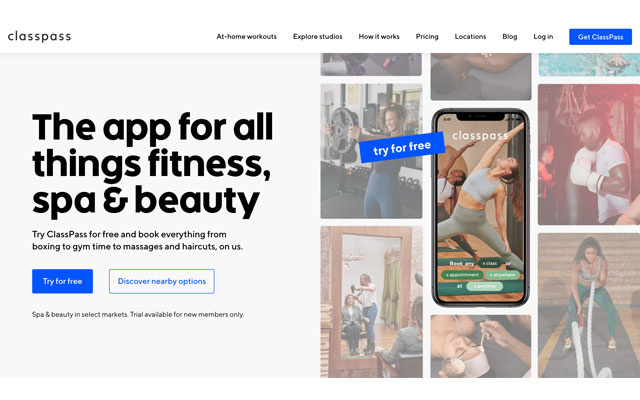
The Singapore Tourism Board (STB) has entered into a one-year partnership with global fitness and wellness aggregator ClassPass to jointly promote Singapore’s wellness offerings and enhance the city’s attractiveness as an urban wellness destination.
This is the first such partnership in Singapore for ClassPass. It is also STB’s first since outlining Singapore’s goal to be a leading urban wellness haven at the Tourism Industry Conference in April 2021.
The partnership aims to provide health and fitness businesses a global platform to share their offerings with local and international audiences, while raising awareness for wellness in Singapore. It will drive demand for wellness experiences available on ClassPass as well as expand the variety of such products and services on the platform.
Come 1Q2022, ClassPass and STB will jointly launch a domestic campaign to encourage locals to participate in wellness and fitness activities through the ClassPass platform. As part of the campaign, ClassPass will launch challenges that reward participants when they book a variety of wellness experiences on the ClassPass platform.
To further raise awareness and advocacy for local wellness experiences, ClassPass and STB will collaborate to develop video content that will be featured across the social media channels of both organisations. The first series will highlight wellness offerings within different Singapore neighbourhoods, while a second series will spotlight innovative wellness businesses on the ClassPass platform.
As Singapore prepares to reopen its borders progressively, the partnership will also showcase Singapore’s wellness and fitness offerings through engaging content to drive consideration among international visitors.
To start, ClassPass will work with its partners to organise a series of wellness activations against the backdrop of popular landmarks in Singapore. The live-streamed activations will be complemented by a tour of the location where the activity takes place, showcasing Singapore to ClassPass’ global audience.
ClassPass and STB will also work together to expand the inventory on ClassPass to include a broader range of wellness experiences, ranging from complementary health therapies such as Traditional Chinese Medicine, to wellness-related attraction tickets and mental wellness services such as personal coaching and sound healing therapy.
Ong Ling Lee, director, sports, STB, said: “With rising interest and demand for wellness products and services both locally and internationally, Singapore is well-positioned to provide accessible and innovative wellness experiences that can rejuvenate and invigorate locals and visitors alike.
“This partnership with ClassPass supports our goal of establishing Singapore as a leading urban wellness haven. As travel gradually resumes, we hope it will boost our destination attractiveness and drive visitorship to Singapore, with visitors leaving feeling physically and mentally better than when they arrived.”
Interested businesses can now sign up at classpass.com/partners/singapore-tourism-board or reach out to ClassPass at singapore@classpass.com for more information on the campaign. An additional sign-on bonus of S$200 (US$148) will be awarded to those that join ClassPass within the month of September.
Klook brings operators onto Google Things to do platform
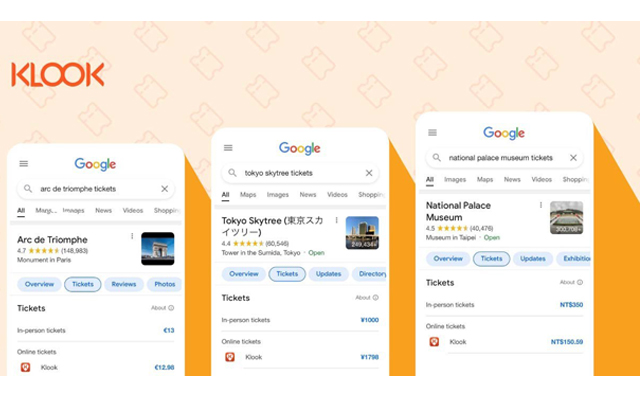
Klook has integrated with Google to bring the Things to do platform into its digital suite of offerings for travel operators, improving the latter’s access to consumers.
Google Things to do is a display feature that allows consumers to discover, plan and compare prices across activities and attractions around the world. It also allows for the availability of products to be updated and booked in real-time through a partner’s website.
“With the integration of Google Things to do, we continue to build on our strong momentum of digitising the travel experiences sector and supporting the digital transformation of operators,” said Wilfred Fan, chief commercial officer at Klook.
“This demonstrates Klook’s commitment to equip and support travel operators with advanced capabilities and tools to achieve online success. Working with Klook will open new doors for travel operators, tapping into the latest developments in online user engagement behaviours that are evolving faster than ever,” Fan added.
With Klook as a connectivity partner, travel operators can provide an official site listing on Google Things to do without any technological development efforts and help drive even more bookings from Google. Leveraging the company’s proprietary Digital Solutions, operators can manage their prices, ticketing, inventory management, and even marketing, while Klook manages the technology from API integration to payment enablement.
Additionally, they can enjoy increased global presence and outreach with Klook’s support in 14 languages and 41 currencies, including over 30 payment methods globally.
In this new travel environment, Klook has seen an uptick in demand from operators who are eager to digitise their businesses. In 1H2021 alone, Klook has seen a 185 per cent increase in sign-ups from operators across Asia-Pacific. The list includes a variety of operators such as Manila Ocean Park, Suzuka Circuit Park, The Habitat Penang Hill, Utsunomiya Zoo, and Sunlight Air.
Frasers Hospitality upgrades staycation deals for school breaks
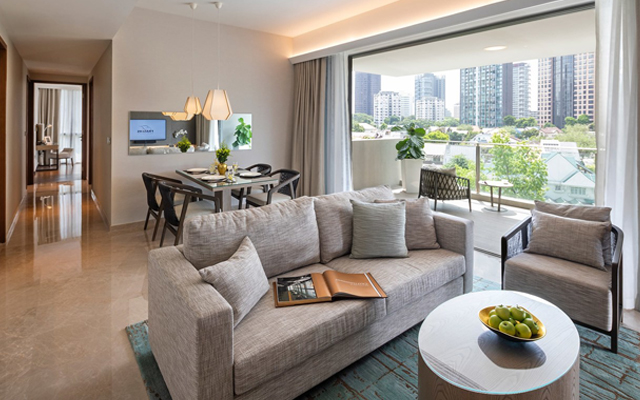
Singapore families looking for relaxing local getaways with their children during the upcoming school holidays can now do so with Frasers Hospitality’s plethora of staycation packages.
The Get Me Out of Home package allows guests to check into Gold Standard serviced apartments at Fraser Residence Orchard, Fraser Suites, and Fraser Place Robertson Walk for a week of pampering.
Prices are from S$168+ (US$124.32) per night for a Studio Deluxe at Fraser Residence Orchard; and S$199+ per night for a One-Bedroom Apartment at Fraser Suites and Fraser Place Robertson Walk.
A S$100 massage voucher, complimentary parking and a welcome hamper are included in this promotion which requires a minimum stay of six nights and is valid till December 31, 2021.
For weekend escapes, turn to Capri by Fraser, Changi City, where studios are designed with fully equipped kitchenettes, so guests can make the most of their Capri experience without having to venture out.
The Capri Master Chef Staycation package takes guests on a stay-in culinary journey, with easy-to-follow QR code recipe guides as well as complimentary breakfast for two.
Families with little ones can also opt for the Capri Master Chef JUNIOR Staycation package. Children get a ‘Little Chef’ cooking starter kit to whip up their choice of pancakes. This package includes complimentary breakfast for up to two adults and one child.
For those in need of some me time, the Capri Great Escapade package provides the ultimate solo getaway at Capri by Fraser, Changi City.
Guests can take part in the ‘Spot the Spot” challenge to win exclusive prizes. All they have to do is locate iconic spots around Capri by Fraser, Changi City and snap photos to win Capri merchandise.
For those looking for a spur-of-the-moment vacation, CapriXclusive offers Best Rate Guaranteed and free stays for all children below 11 years old who do not require an extra bed.






Empty airports and grounded planes became ubiquitous scenes over the last 18 months, with COVID-19 dramatically impacting the aviation industry financially and operationally. Many pitfalls kept airports, airlines, and governments scrambling to adapt to changing passenger numbers, entry regulations, and health requirements. From social distancing measures and PCR test validation to ensuring planes were maintained effectively while out of use and pilots didn’t become rusty due to inactivity – the challenges were varied and relentless.
As we finally see the graphs moving in the right direction, and as travel bubbles and pre-travel clearance forms become more familiar to passengers and staff, the industry must shift its focus forward to prevent an impending air travel crisis. Passenger numbers are climbing globally, particularly in western Europe, the US, and India, where short-haul and domestic journeys have shown that the demand is there.
It is evident passengers require a safe process and loosening of restrictions to return to the skies. SITA data shows The Global Air Traffic activity continues its recovery posting -32 per cent YoY from this week. India exhibited domestic improvement operating at 60 per cent of 2019 volume.
Increasing fuel costs are exacerbating the situation for airlines as crude oil remains around US$70 a barrel. While airlines remain cautious, replacing older aircraft with newer and more efficient ones will offset this cost and bring an essential cut to operating expenses in the future. We see many airlines seizing an opportunity to let go of older aircraft, modernise their fleet and reduce operating costs which will benefit them in the long run and ensure a more sustainable future.
A slow start to recovery
The lifting of border restrictions in many western countries has sparked splurges on shorthaul vacations. European vacation destination countries like France, Spain, Turkey, and Italy see the highest flight volumes in Europe as lockdown fatigued holidaymakers take advantage of newfound freedoms.
However, the Asia-Pacific region faces additional challenges without a unified regional or global approach to open travel with every country defining its own criteria for opening borders. While some countries such as Australia have done well to limit cases with good border controls, in part supported by SITA Health ETA, or Singapore, which is now looking to achieve more than 70 per cent vaccination by end of August, but quarantines and strict border restrictions remain with passenger numbers still under -90 per cent of 2019 levels.
India is recovering fast, administering around 4.5 million per day on average, and their sizeable domestic market giving respite to the carriers.
On the other hand, Indonesia, Myanmar, Malaysia, and Thailand face severe second or third waves. South Korea, Japan, and many other countries in the region have also seen a spike in COVID-19 cases.
There is now a growing recognition that this pandemic will be with us for a long time, and countries cannot keep borders closed for too long or risk severely damaging the economy. Travel is essential for most economies to prosper, and countries will have to have a higher risk appetite, striking a balance of acceptable case numbers while opening up borders. We do now see positive signs in this area, with countries like Singapore taking the lead. We see a close coupling with opening measures linked to vaccination and ease of restrictions for the vaccinated population everywhere.
Are we ready?
Data suggests that while the industry has started a slow recovery, we expect it to quickly gain pace in the coming months with rising vaccination levels. The question is now if many airports are ready to handle it. While passenger numbers will recover slowly till the flood gates are opened, new processes with additional health regulations are here to stay. Research reveals that average passenger processing and waiting times have doubled from pre-crisis peak time – reaching three hours despite travel volumes hovering at around 30 per cent of pre-COVID-19 levels and expected to be about 5.5 hours with 75 per cent of pre-covid levels.
Airports especially are looking at a significant challenge of managing rising and eventually recovered passenger volumes, with passengers staying in the airports longer, the following distancing and going through more processing but within the same physical space. Automation and digitisation are crucial to give passengers the confidence and control back to travel and manage efficiently reduce processing times to acceptable levels ensuring passenger satisfaction.
The Asia-Pacific region is a patchy situation regarding automation and digitisation. Some countries are making good progress in investing in the right areas to allow seamless passenger travel and easy processes to adhere to multiple health regulations; others are lagging. The region needs to achieve ‘collective digital maturity in these areas, especially for international volumes to come back.
This is a critical time that will define the companies which will survive and thrive in this new and complex landscape. By investing in the right areas and creating an experience aligned with customer’s needs and expectations, airlines, airports, and governments can help reignite the travel market and boost economies in the process.
Process digitisation and automation
A simple and mobile enabled process to declare health and travel credentials is key along with reducing wait times in the airport. It is essential to digitise and automate passenger processing, to ensure the same physical space can handle the recovery and passengers have control over their journey. Also, passengers should have time and energy to use the airport retail and other facilities for an enjoyable experience helping airports to survive with additional revenue streams.
Automating the passenger processing health process from submission to validation and verification – mitigates forged paper certificates and cuts inefficiencies associated with manual document checking. This in turn offers passengers peace of mind about meeting all requirements and gives governments the ability to automate policy application and checks.
Touchless and connected onboard experience
Another key area is the onboard passenger experience and improving passenger safety with a connected experience using the passenger’s own devices minimising touchpoints onboard. SITA’s Passenger IT Insights 2020 showed that more than two-thirds of all passengers opt to use their own device onboard to stay connected or access entertainment. Touchless and personal device enabled experience onboard is clearly the market demand and is fast becoming the new industry standard. Passengers now expect to be connected while using their own apps of choice and not be limited in the content available to them.
Operational efficiency
Doing more with less, is the common goal for the industry now, but as traffic recovers those in the industry who have truly adjusted to leaner operations and better infrastructure will reap immediate benefits and bounce back quickly. Airports and airlines must ensure their technology infrastructure is flexible with cloud and API enabled platforms and next-gen connectivity solutions, to enable the use of next generation common use capabilities, remote and mobile enabled operations coupled with cost efficiency and flexible operational scalability.
For any airline, their fleet is by far their biggest capital outlay. There is immense opportunity to leverage the connected aircraft to drive new cost efficiencies. Given the cost pressure on airlines, it is not surprising that there is a growing demand to provide solutions which help airlines to do so. In addition to more efficient newer aircraft, new systems such tablet enabled weather monitoring applications give pilots better visibility on weather conditions and chart better route changes leading to large fuel savings in each flight.
At SITA we remain committed to help the industry recover and thrive and continue to bring new solutions and strategies for the industry. Our ‘Runway to Success’ website takes a deeper look at the key challenges faced by the industry.